
In this guide
- What is a virtual data room?
- Why series B makes the VDR question more serious
- How risky is a series B fundraising?
- What investors actually check in your data room
- Must-have features in a series B data room
- Best virtual data rooms for series B?
- How to build your series B data room
- Common mistakes teams make
- FAQ
You're raising a series B. Your investors have more questions. Their lawyers have more questions. And suddenly Google Drive isn't cutting it anymore.
This guide walks you through everything about virtual data rooms for series B fundraising - what they are, what to put in them, what they cost, and which one might work for your situation. No sales pitch, just the information you need to make a good decision.
What is a virtual data room?
A virtual data room (VDR) is a secure online space where you store and share confidential company documents with investors, lawyers, or acquirers during a transaction.
Think of it as a controlled environment. You decide who sees what. You track who opened which file. You can revoke access at any moment. Nothing gets forwarded without your knowledge.
Before VDRs existed, due diligence happened in actual physical rooms. Bankers flew to your office, sat in a conference room, reviewed paper documents under supervision, and went home. That was the original "data room." The virtual version does the same thing - just without the plane tickets.
A VDR is different from cloud storage. Google Drive lets people download, forward, and share anything. A proper VDR tracks every action, restricts downloads, applies watermarks, and generates audit logs. That difference matters a lot when you're sharing your cap table and customer contracts with strangers.


Why series B makes the VDR question more serious
At pre-seed or seed, most deals close on a handshake and a pitch deck. Maybe you share a folder with your financials and move on. Series A gets a bit more formal.
Series B is different. You're talking $10M-$60M check sizes. Institutional funds, not angels. Multiple investors reviewing simultaneously. Legal teams on both sides. That means a proper due diligence process - weeks, sometimes months.
At this stage, your data room isn't just a document dump. It's part of how investors judge your operational maturity. A chaotic, unorganized room with missing files signals exactly the kind of thing that makes investors nervous. A clean, well-structured room tells them you run a tight ship.
You also have more to protect at series B. You're a real company now with real customers, real contracts, and real revenue. A data breach or a document leaking to a competitor at this stage can cause actual damage. Security stops being a checkbox and starts being something you genuinely care about.
The VDR is where this investigation happens. You populate it with documents, the investor's team reviews them, and their lawyers flag issues or request additional materials.
Here's what the process typically looks like during a series B:

Stage 1 - you receive a term sheet and a due diligence checklist. The checklist is usually a long list of document categories the investor wants to review.
Stage 2 - you build your data room and start uploading. You share access with specific people on the investor's team.
Stage 3 - reviewers go through your documents. They leave questions. You respond and upload additional materials.
Stage 4 - legal teams take over. They run their own review. More questions, more documents.
Stage 5 - if everything checks out, the round closes.
Throughout this process, your VDR is generating an audit log. Every document viewed, every download, every login - all recorded. This protects you as much as it protects them.
How risky is a series B fundraising?
This is a question investors are trying to answer when they review your data room. Understanding their perspective helps you build a better room.
Series B startups have cleared a lot of early risk. You have product-market fit (or something close to it). You have revenue. You have a team. The pre-seed "will this work at all" question is largely answered.
But series B introduces a different kind of risk. Scale risk. Can you grow from $3M ARR to $15M without breaking? Can you hire 50 people and keep culture intact? Can your infrastructure handle 10x the load? Can you open a new market?
From a statistical standpoint, series B failure rates are lower than seed but still significant. Roughly 30-40% of series B companies don't make it to series C. The main failure modes are:


Your data room is where investors measure these risks. Missing documents or messy records in any of these categories will slow down or derail your raise.
What investors actually check in your data room
Different funds have different checklists. But after a few series B rounds, the pattern is pretty consistent. Here's a realistic document list organized by category:


You won't have everything on day one. That's fine. Build what you have, label what's missing, and note when you'll have it ready. Investors respect transparency more than they penalize gaps.


Must-have features in a series B data room
Not all VDRs are the same. Here's what you actually need for a series B and why each feature matters:
Granular permissions
Different people need access to different things. Your lead investor sees everything. Their legal team sees legal documents but not your full financial model. Associates on the fund see your pitch deck. You need to control this at the folder or document level, not just at the "give everyone access" level.
Document-level analytics
Knowing who opened your data room is useful. Knowing which specific documents they spent the most time on is invaluable. If the investor's team spent 45 minutes on your customer contracts and 2 minutes on your financials, that tells you something. You can proactively address concerns before they ask.
Audit logs
A complete timestamped record of every action taken in the room. This protects you legally and operationally. If a document is later contested, you can prove exactly who accessed it and when.
Dynamic watermarking
Every document printed or viewed gets stamped with the viewer's name and timestamp. This discourages leaking and helps identify the source if something does leak.
NDA gating
Require viewers to sign a non-disclosure agreement before accessing the room. You can do this inside the VDR itself, without back-and-forth emails.
Controlled downloads
You should be able to disable downloads on sensitive documents while still letting people view them. Alternatively, allow downloads only for specific files.
Q&A or communication tools
Some VDRs let investors submit questions directly inside the platform and route them to the right person on your team. This keeps everything organized instead of scattered across email threads.
Revocable access
If a deal falls apart or a potential investor drops out of the process, you need to cut their access instantly. A good VDR makes this a one-click action.
If you're only doing one investor at a time and the deal is straightforward, you might not need all of these. But if you're running a competitive series B process with multiple term sheets, you'll use every one of these features.
Best virtual data rooms for series B
1. Ellty
Best for: Teams that want professional data room features without enterprise pricing and complexity

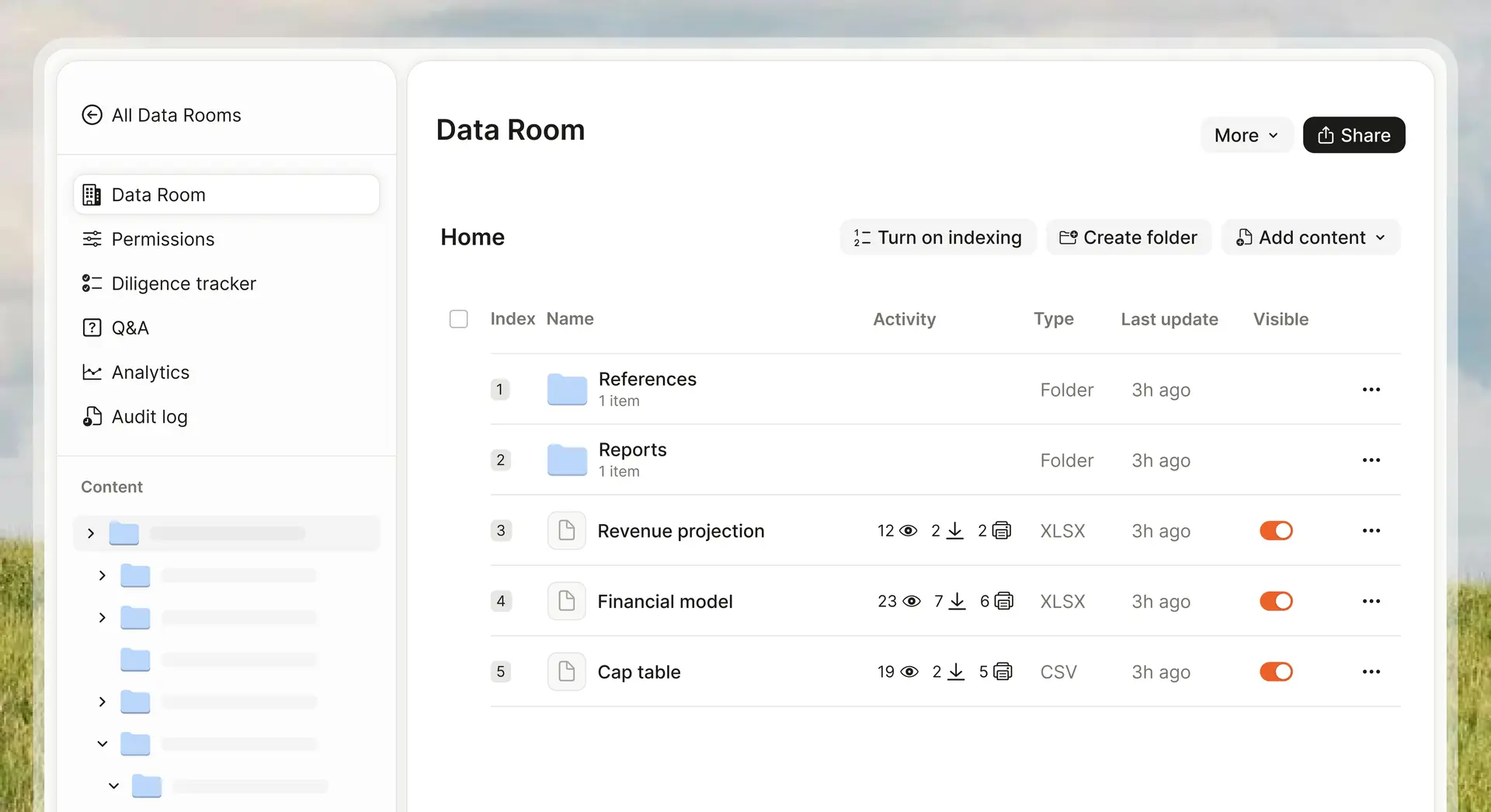
Ellty is purpose-built for secure document sharing and works exceptionally well for Series B fundraising. At this stage, you're dealing with sophisticated investors, detailed due diligence requests, and sensitive documents that need proper protection and tracking.
Ellty gives you granular permissions so different investors see only what you want them to see. Real-time analytics show exactly who opened which document, how long they spent on it, and how many times they came back. NDA gating ensures nobody enters the room before signing. Watermarking protects against leaks, and a full audit trail keeps everything documented.
There's no per-user pricing, which matters at Series B when you're sharing with multiple funds, lawyers, and advisors simultaneously. The Data Room plan starts at $149/month, a fraction of what legacy VDRs charge for the same core functionality.

2. Carta
Best for: Startups already managing their cap table on Carta

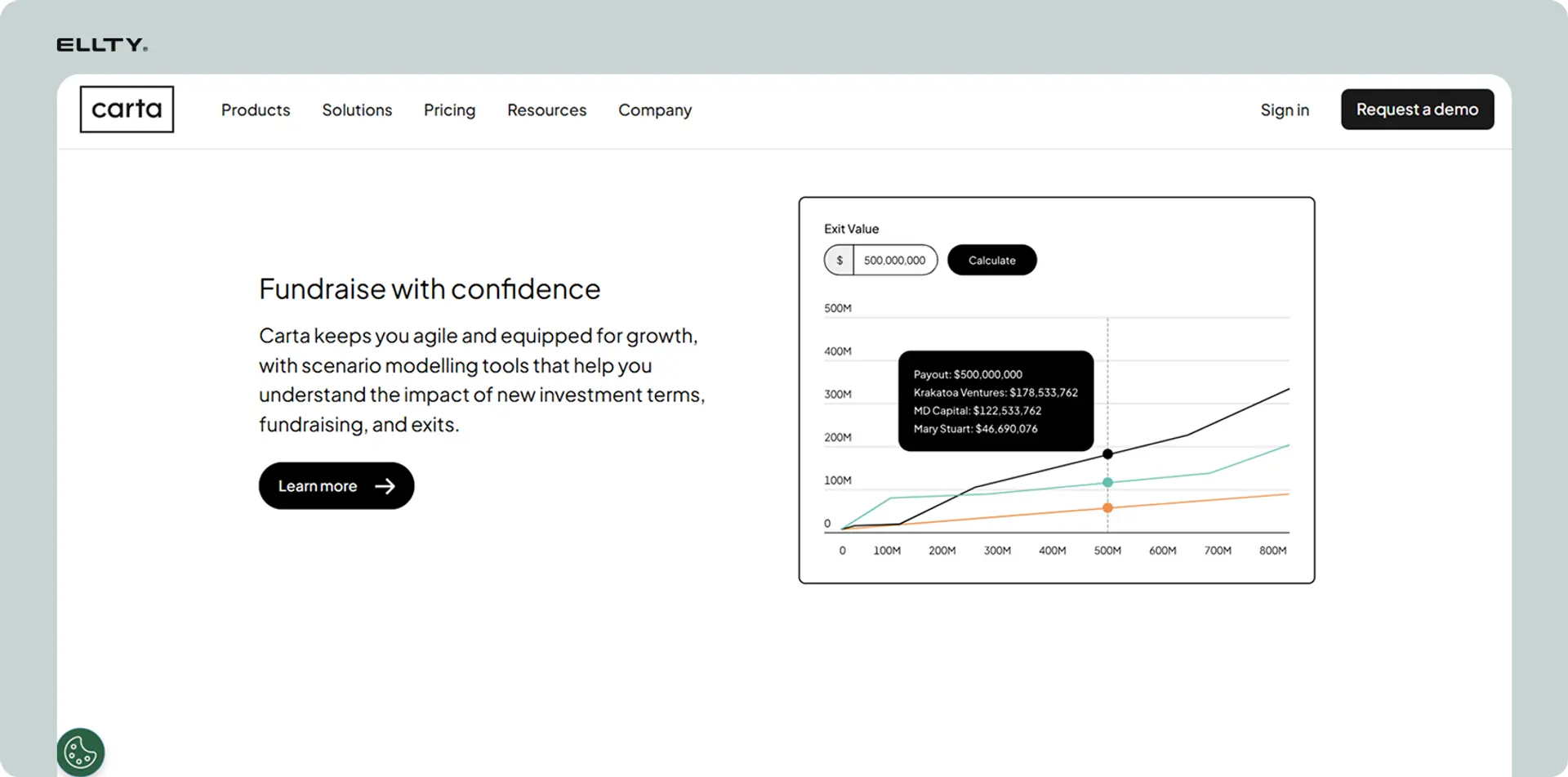
Carta started as a cap table management tool and has grown into a broader equity and fundraising platform. For Series B founders, the biggest advantage is integration. If your cap table already lives in Carta, sharing it with investors during due diligence becomes significantly more straightforward. Investors can view ownership structure, option pools, and historical rounds without you having to export and re-upload documents manually.
Carta also offers a data room feature that connects directly to your equity data, which reduces errors and saves time during a process where accuracy matters enormously. The platform is well-recognized among institutional investors and VCs, which adds a layer of credibility. The downside is that Carta is primarily an equity management tool first and a data room second. So, if you need advanced document security features like watermarking or NDA gating, you may find it somewhat limited compared to dedicated VDR platforms.
3. DocSend
Best for: Founders who want strong document analytics alongside their data room

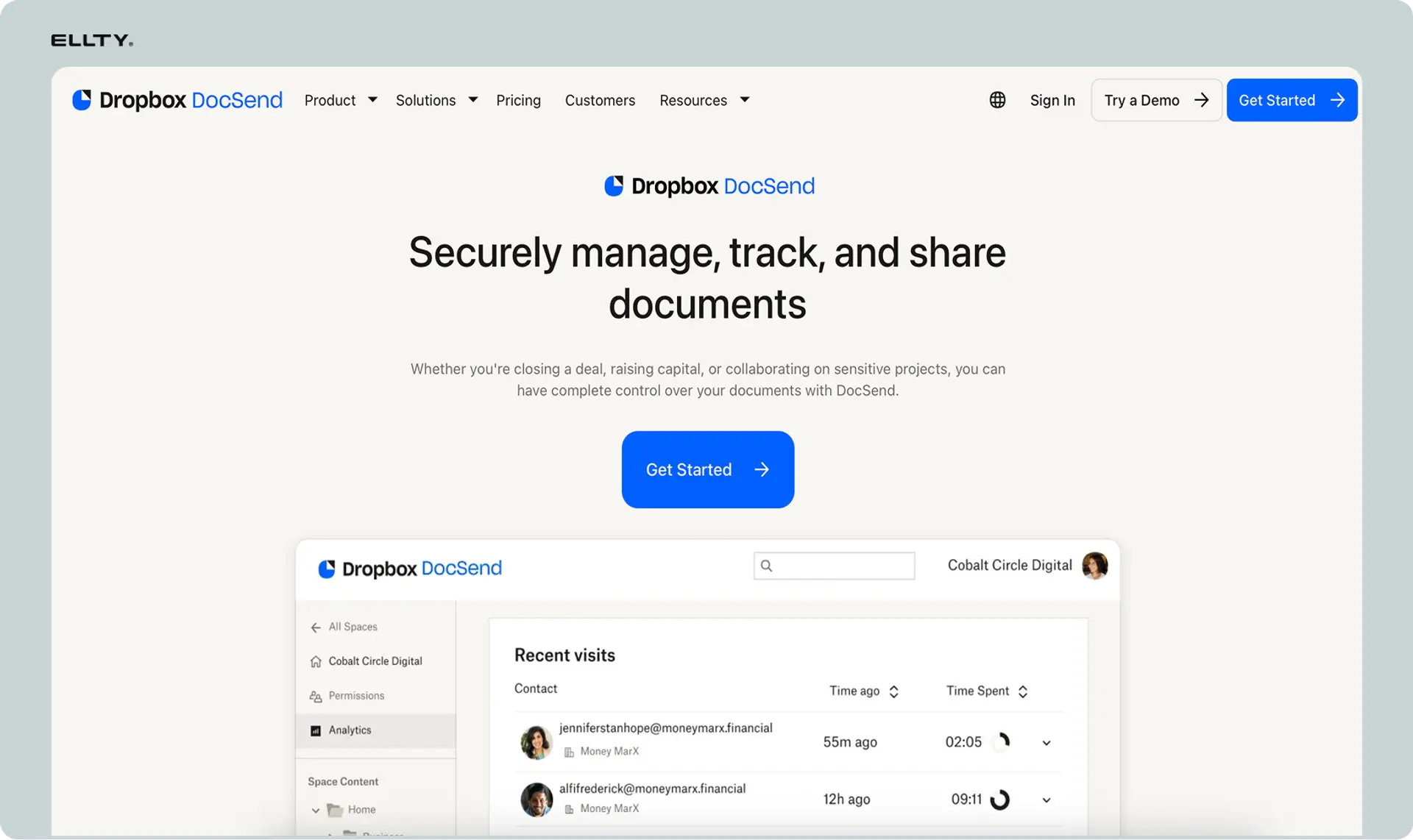
DocSend is widely used across the startup and VC ecosystem, which makes it a familiar and trusted choice at Series B. Its core strength is document analytics. You can see exactly how investors are engaging with every page of every document, which gives you meaningful signal about where interest is high and where attention drops off.
For Series B due diligence, DocSend supports data rooms with NDA gating, link-level permissions, and the ability to revoke access instantly. You can organize documents into folders and control exactly what each visitor can see. The per-page heatmaps are particularly useful when sharing financial models or pitch decks, you know which slides are getting scrutiny and which are being skipped.
The main limitation is cost. DocSend pricing scales with users and features, and for a full Series B data room with multiple stakeholders, the monthly bill can climb quickly compared to flat-rate alternatives.
4. Ansarada
Best for: Teams running a structured, process-heavy Series B with multiple bidders or investors


Ansarada is a professional-grade VDR platform built around the concept of deal readiness. It's used heavily in M&A and private equity, but works well for serious Series B fundraises where the process is formal and involves multiple parties reviewing documents simultaneously.
What sets Ansarada apart is its AI-powered deal tools. It can flag missing documents, score how prepared your data room is, and help you anticipate what investors are likely to ask for. It also includes a built-in Q&A module, which is useful when multiple investor teams are submitting information requests at the same time.
The platform offers strong security features including watermarking, granular permissions, full audit logs, and fence view - a feature that blurs documents to prevent photography. It's a more complex tool than most startups need, but for a well-resourced Series B with institutional leads and detailed diligence requirements, it's a serious option.
5. Intralinks
Best for: Startups working with bulge-bracket banks or large institutional investors who expect enterprise-grade infrastructure

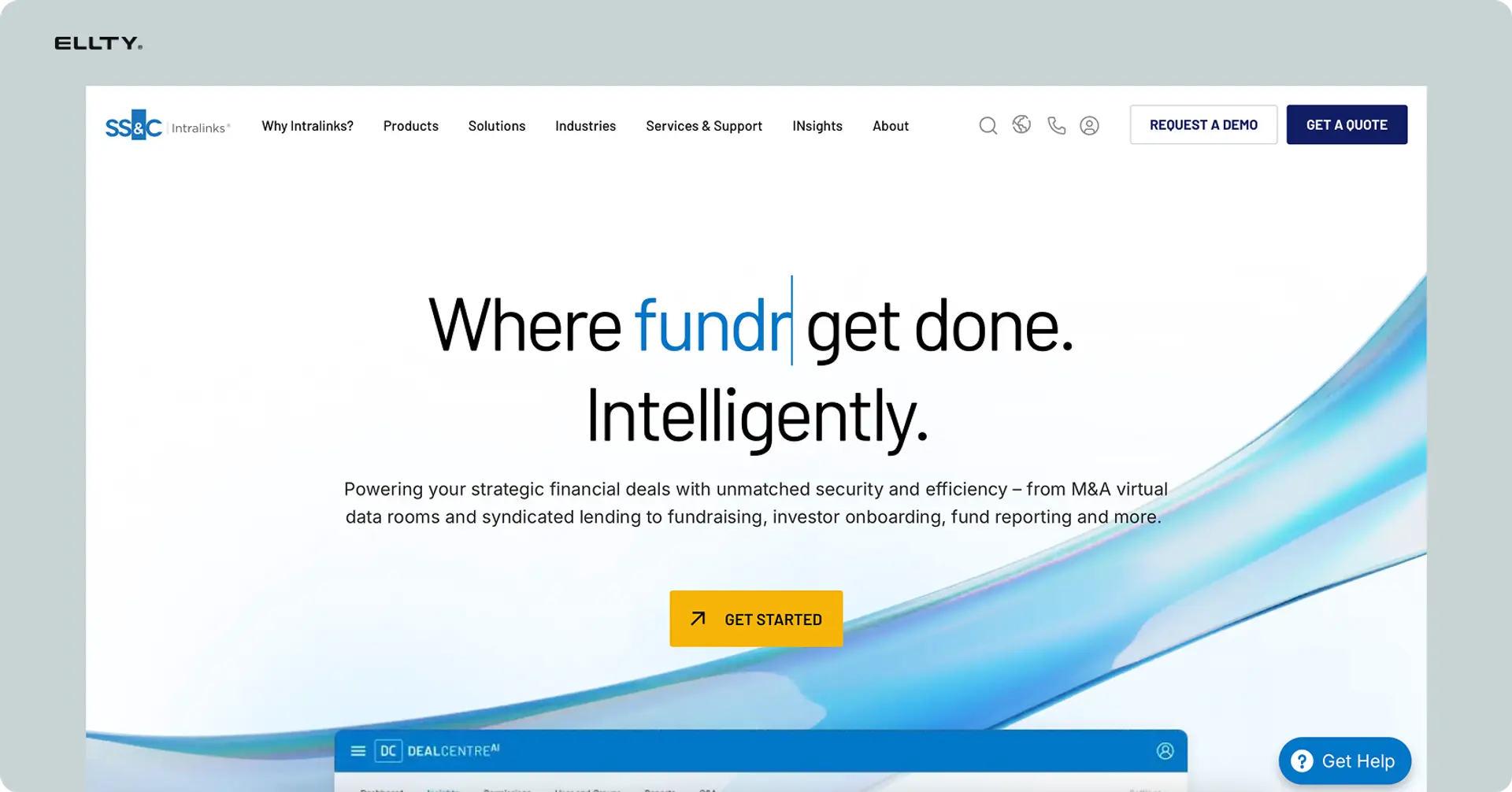
Intralinks is one of the oldest and most established names in the VDR space. It was built for enterprise M&A and has been used in some of the largest transactions in history. For a Series B where the lead investor is a major institutional fund or the deal involves cross-border complexity, Intralinks carries a level of credibility and infrastructure that newer platforms don't yet match.
Security is extremely robust - dynamic watermarking, activity monitoring, IRM-protected documents, and compliance certifications across multiple international standards. The platform also supports large document volumes without performance issues, which matters when due diligence involves hundreds of files.
The tradeoff is cost and complexity. Intralinks is expensive, typically in the $1,000–$2,000/month range, and the interface feels dated compared to modern alternatives. For most Series B fundraises, it's more than what's needed. But for the right deal profile, it's hard to beat on security and reliability.
6. Firmex
Best for: Startups in regulated industries like fintech, healthtech, or biotech where compliance documentation is heavy
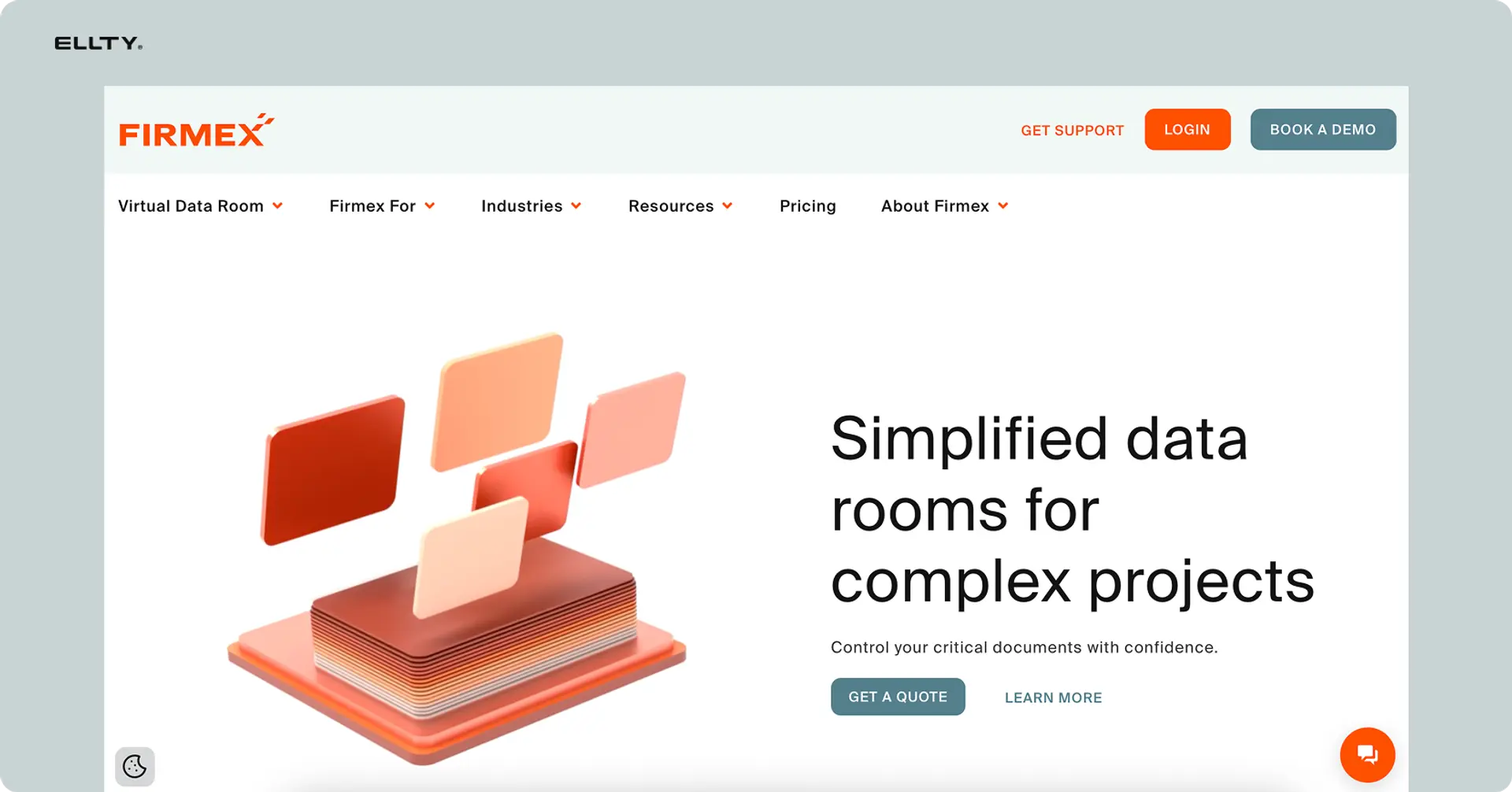
Firmex is a well-respected VDR platform with a strong track record in regulated industries. If your Series B involves a large volume of compliance, clinical, or regulatory documents - common in biotech, medical devices, or financial services - Firmex handles that volume and complexity well.
The platform offers detailed permission controls, full audit logging, bulk upload, and document versioning, which is important when materials are being updated frequently during an active diligence process. Investor Q&A is built in, reducing the back-and-forth that typically happens over email.
Firmex also has a reputation for strong customer support, which matters when you're in the middle of a time-sensitive fundraise and something isn't working. Pricing is custom and tends to be on the higher end, but for companies in heavily regulated sectors where document accuracy and compliance trails are non-negotiable, the cost is generally justified.
7. Digify
Best for: Startups that want strong document security without the complexity of a full enterprise VDR


Digify sits in a practical middle ground - more secure and feature-rich than tools like Notion or Google Drive, but simpler and more affordable than enterprise platforms like Intralinks or Ansarada. For a Series B where the core need is controlled document sharing with tracking and security, Digify covers the bases well.
Key features include document watermarking, access expiry, screenshot protection, download controls, and remote file deletion, meaning you can revoke access to a document even after it has been downloaded. That last feature is particularly useful during fundraising, where you may share materials with a firm that ultimately passes and you want to limit ongoing access.
The interface is clean and setup is quick. Pricing is more accessible than legacy VDRs, though it can increase depending on the number of users and storage needed. For lean Series B teams that want serious document security without a lengthy procurement process, Digify is a strong practical choice.
How to build your series B data room
Here's a practical structure that works for most series B rounds. Build this before you start investor conversations, not after you've already signed a term sheet.


A few practical notes on building this:
Number your folders. Investors will refer to documents by folder number in their questions. "Can you send me the document in folder 03?" is much cleaner than "that financial thing."
Use consistent file naming. Date-stamped file names help a lot. "Acme_FinancialStatements_2024.pdf" is better than "Financials final v3 FINAL.pdf".
Don't upload everything at once. Build the room in stages. Start with the overview folder and financials. Add legal and HR once you're deeper in the process. This also lets you see what investors are most interested in before you expose everything.
Set up permission groups before inviting anyone. Decide upfront who gets access to what. A typical setup might be: "Full access" for the lead investor, "Financial + commercial only" for associates, "Legal documents only" for their counsel.
Common mistakes teams make with their data rooms
These come up again and again. Avoid them and you'll save yourself significant time and deal risk.
Waiting until after the term sheet
Build your data room before you start investor conversations. Due diligence can start immediately once there's interest. If you're scrambling to find documents while investors are waiting, it creates a bad impression and can kill momentum.
Using Google Drive
Google Drive has no meaningful document-level permissions, no download controls, no audit logs, and no way to revoke access to a specific file after it's been downloaded. It's fine for sharing a pitch deck early in the process. It's not a data room.
Giving everyone full access
Don't share your entire room with everyone on the investor team from day one. Associates don't need to see employment contracts. Junior analysts don't need access to your top customer agreements. Restrict by role and expand access as needed.
Leaving gaps without explanation
If you don't have a document yet (pending litigation resolution, contract being finalized), say so explicitly in the room. Create a placeholder with a note explaining the status. Unexplained gaps raise red flags. Explained gaps are just normal business.
Not tracking engagement
Your VDR analytics are a tool. If an investor's team spends 40 minutes in your customer contracts folder, that's a signal. Check your analytics weekly and adjust your follow-ups accordingly.
Sharing the same room with competitors
If multiple investors are in your process and some are competitors, don't give them access to the same room without thinking carefully about permissions. Some information (like your full customer list) should be restricted until very late in the process.
Your data room is part of your pitch.
Ellty lets you set up a secure, organized data room and track exactly how investors engage with every document - all before your next investor call. Start free and upgrade when your round gets serious.
FAQ
What is the best virtual data room for series B?
It depends on your process. For founder-led rounds with 5-50 investors, modern platforms like Ellty offer the core features you need - granular permissions, document analytics, NDA gating, and audit logs - without the complexity or cost of enterprise VDRs. For structured sale processes run by investment banks with many bidders, platforms like Datasite or Intralinks are more standard. The "best" VDR is the one that matches your actual deal complexity, not the most feature-rich one on the market.
What is a virtual data room?
A virtual data room is a secure online platform for storing and sharing confidential documents during a financial transaction or due diligence process. Unlike regular cloud storage, VDRs give you granular access controls, document-level activity tracking, audit logs, watermarking, and the ability to revoke access at any time. They're used in fundraising rounds, M&A transactions, IPOs, and any situation where sensitive documents need to be reviewed by external parties under controlled conditions.
What is VDR in DD?
VDR in due diligence means using a virtual data room as the central hub for the investor's review of your company. You upload documents into the VDR, the investor's team accesses them, and the platform tracks who viewed what and when. It replaces the old process of physical document rooms or insecure email attachments. The VDR generates an audit log throughout the process, which protects both parties and keeps the review organized.
How much does a VDR cost?
VDR pricing varies widely. Enterprise platforms used for large M&A deals typically run $1,000-$3,000/month or more, often with per-user or per-page charges on top. Mid-market platforms run $400-$800/month. Modern platforms built for startups and smaller transactions typically run $69-$350/month with flat-rate pricing. For example, Ellty Data Room plan is $149/month with 3 users included and no per-user fees, while the Data Room Plus plan at $349/month adds audit logs and group permissions. Always check for overage fees and storage limits before committing to a plan.
Can I use Google Drive as a data room for series B?
You can share documents through Google Drive, but it's not a real data room. It has no document-level permissions, no download controls, no viewer analytics, no watermarking, and no proper audit trail. Investors' legal teams increasingly expect a proper VDR, and sharing sensitive documents through Drive without controls creates genuine security and legal risk. For anything beyond initial deck sharing, use a proper platform.
When should I set up my data room for a series B?
Before you start active investor conversations, not after you receive a term sheet. When an investor says they want to move forward, you want to be able to share a room within 24-48 hours, not spend two weeks scrambling to find documents. Build the room with whatever you have, label what's missing, and populate it as you go. The act of building it also helps you identify document gaps before investors find them.
What documents go in a series B data room?
The core categories are: corporate documents (incorporation, bylaws, cap table, board minutes), financials (3 years of statements, ARR/MRR breakdown, cohort data), legal (IP assignments, litigation history, material contracts), customer documents (top contracts, churn analysis), HR (org chart, employment contracts, equity schedules), product (roadmap, metrics, architecture overview), and compliance (privacy policy, relevant certifications). Not all of this needs to be ready on day one - build it in stages as the process progresses.
Do investors actually care how my data room is organized?
Yes, more than you might expect. Investors see hundreds of data rooms. A well-organized room with clearly labeled documents signals operational maturity. A chaotic folder structure with inconsistently named files signals the opposite. It's not the main factor in a deal decision, but it's a signal. It also makes the due diligence process faster for everyone, which means less time before you close.
What security certifications should a VDR have?
SOC 2 Type II is the main certification to look for in VDR platforms. It means the platform has had an independent audit of its security controls. ISO 27001 is another common standard, more prevalent in European platforms. GDPR compliance matters if you or your investors are in Europe. Don't just take a platform's word for it - ask for their certification documents or check their security page directly. Never assume a certification exists without verifying it.
Author

Anika Tabassum Nionta is a Content Manager at Ellty, where she writes about secure document sharing, virtual data rooms, M&A, due diligence, fundraising, and sales enablement. With over 6 years of writing experience, she helps professionals understand how to share confidential documents securely, track engagement, and manage deals more effectively. Anika holds both a BA and MA in English from Dhaka University. Outside of work, she enjoys reading, exploring new cafes in Dhaka, and connecting with entrepreneurs and dealmakers in her community.

