
If you're in the middle of a deal, a fundraise, or any process where sensitive documents need to change hands, you already know the basic problem. Multiple parties need access to your documents. Those documents need to be organized, secure, and easy to navigate. And you don't want to spend weeks or thousands of dollars setting up a platform before anything meaningful has even happened.
This guide cuts through the noise. We'll cover what a virtual data room actually does, what makes one worth using, and which tools make sense depending on your situation and the scale of what you're working on.
Let's get into it.
What is a virtual data room in due diligence?

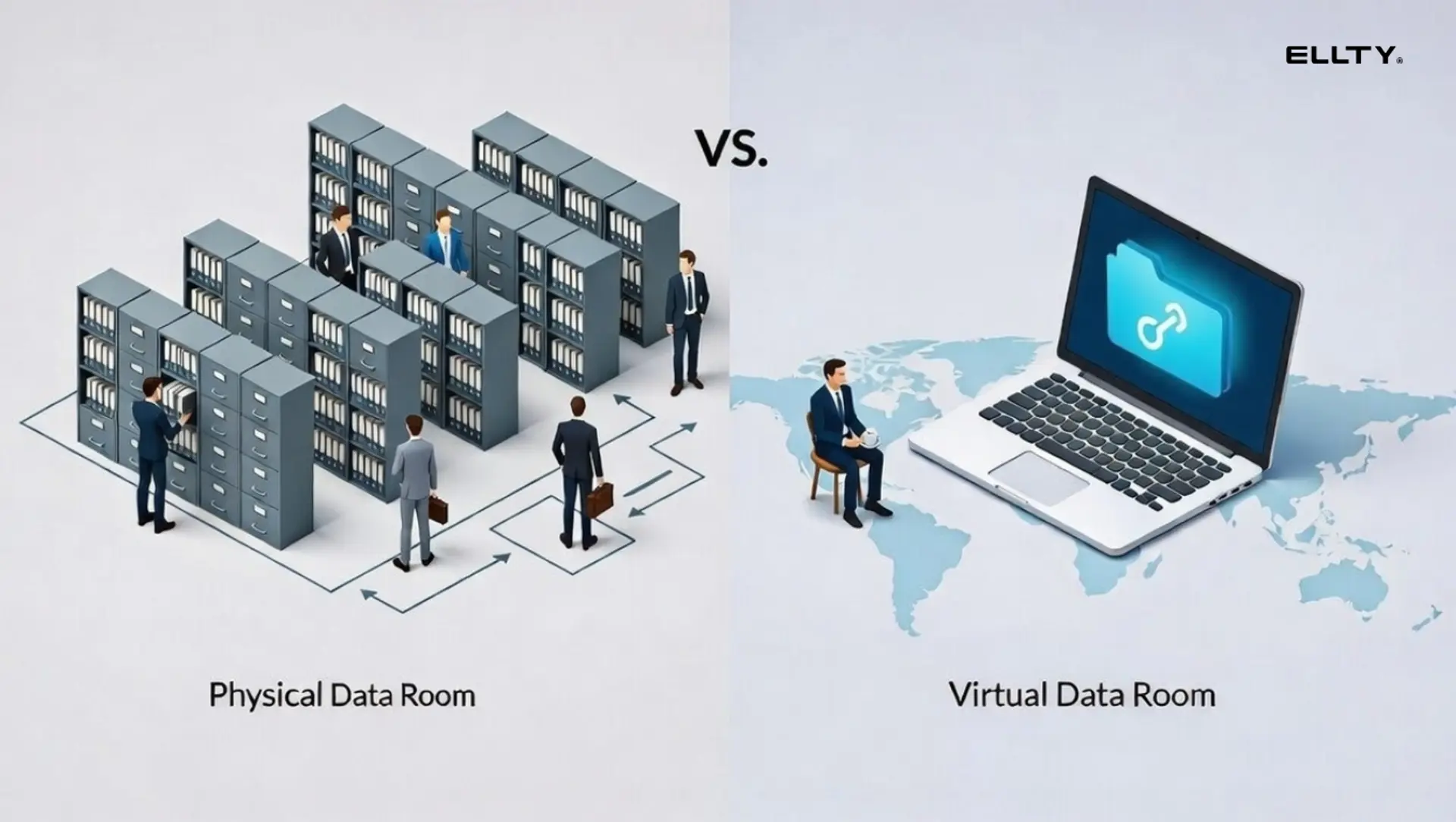
A virtual data room (VDR) is a secure online space where you store and share confidential documents during a deal process - think fundraising, M&A, audits, or legal transactions.
Before VDRs, companies used physical data rooms. Buyers and investors would fly to a location, review paper documents under supervision, and leave without copies. It was slow and expensive. Digital data rooms replaced all of that.
In a due diligence context, a VDR lets you:
- Upload and organize your company documents in one place
- Control who sees what - by folder, document, or person
- Track activity so you know who looked at what and for how long
- Communicate with reviewers without exposing documents over email
- Restrict downloads, screenshots, or printing for sensitive files
The key thing that separates a VDR from a shared Google Drive or Dropbox is the control layer. You're not just storing files - you're managing access, tracking engagement, and maintaining an audit trail that may matter later in a deal.
What should a good virtual data room actually include?
Not every feature matters for every deal. But here's what you genuinely need for a clean due diligence process:
Core features to look for
- Document-level access control so your lawyer sees different files than your potential acquirer (Granular permissions)
- A full record of who accessed which documents and when. Essential for M&A deals and legal reviews (Audit logs)
- Dynamic watermarks with the viewer's name on sensitive documents deters unauthorized sharing (Watermarking)
- Require visitors to accept an NDA before accessing the data room (NDA gating)
- A structured way to handle questions during due diligence, instead of managing email threads (Q&A functionality)
- Viewing time per document, per user, per page. This tells you where investor interest is concentrated (Analytics)
- You'll have a lot of files. Drag-and-drop bulk upload saves hours (Bulk upload)
- Invite-only access via secure links, not email attachments (Secure link sharing)
Nice-to-haves depending on your deal: e-signatures, custom branding, mobile access, and integrations with tools like Slack or CRM systems.
Virtual data room pricing: what you'll actually pay
Pricing is the biggest pain point with most VDR software. Enterprise providers have historically charged per-page or per-user, which means costs spike exactly when you're busiest in a deal.
Here's how the main pricing models work:


For most businesses, flat-rate or tiered monthly pricing is the most predictable. You'll want to know your all-in cost before a deal starts, not when you're deep in it.
Want predictable pricing without per-user fees?
Ellty data room plans start at $69/month with users included. See plans at ellty.com
Best virtual data room providers for due diligence
There's no single best virtual data room for every situation. The right choice depends on what you're doing, how complex the process is, and what you're willing to spend. Here are six options worth considering, starting with the one that hits the best balance for most use cases.
1. Ellty

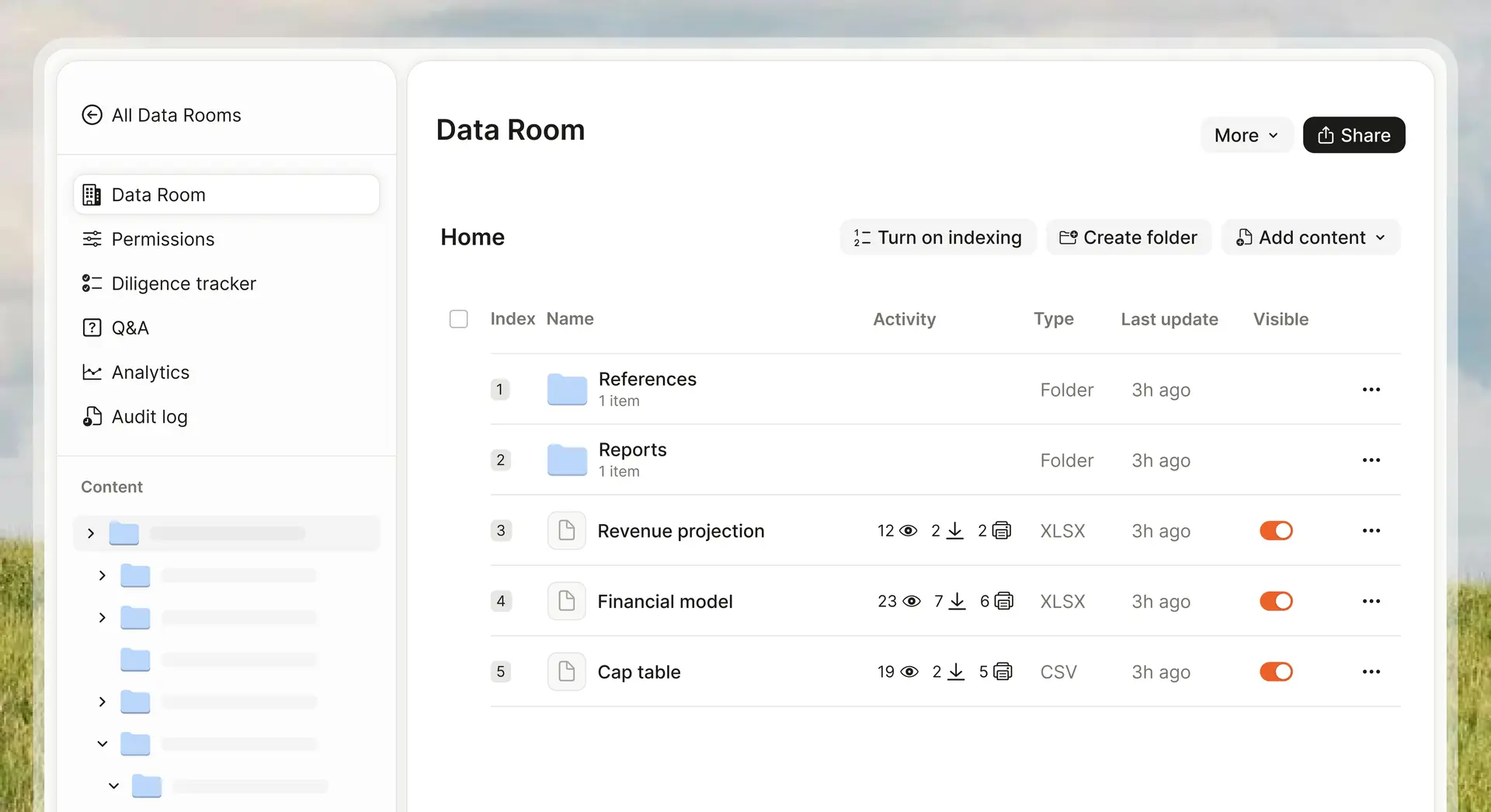
Ellty is a document sharing and analytics platform that includes data room functionality. Ellty offers data room features with granular permissions, NDA gating, dynamic watermarking, and real-time analytics at a flat monthly rate with no per-user pricing. It works well when you need a secure, trackable data room fast and don't want enterprise-tier complexity. Here's what it actually offers and who it's built for.
Plans relevant to due diligence


The core value is visibility. Once you share documents through Ellty, you can see exactly who opened them, which pages they spent the most time on, how many times they came back, and whether access was passed to someone you didn't authorize. Real-time notifications tell you the moment someone views your files. That kind of engagement data is genuinely useful, it changes how you follow up and where you focus your energy.
On the security side, Ellty covers what most due diligence processes actually need: NDA gating before access, dynamic watermarking, granular permissions, view-only controls, and a full audit log on the higher tiers.
Pricing runs from a free plan with basic tracking, up to $349/month for larger deal processes with group permissions and up to 4,000 assets per data room. No per-user fees, no setup costs, no sales process required to get started.
It won't replace a purpose-built enterprise platform for a $100M acquisition with 30 parties. But for fundraising rounds, early to mid-stage M&A, consulting engagements, real estate transactions, and most professional document sharing situations, it covers the ground well.
Best for: Founders, M&A advisors, consultants, real estate professionals, and deal teams who need a professional data room without enterprise complexity or pricing.

2. Datasite

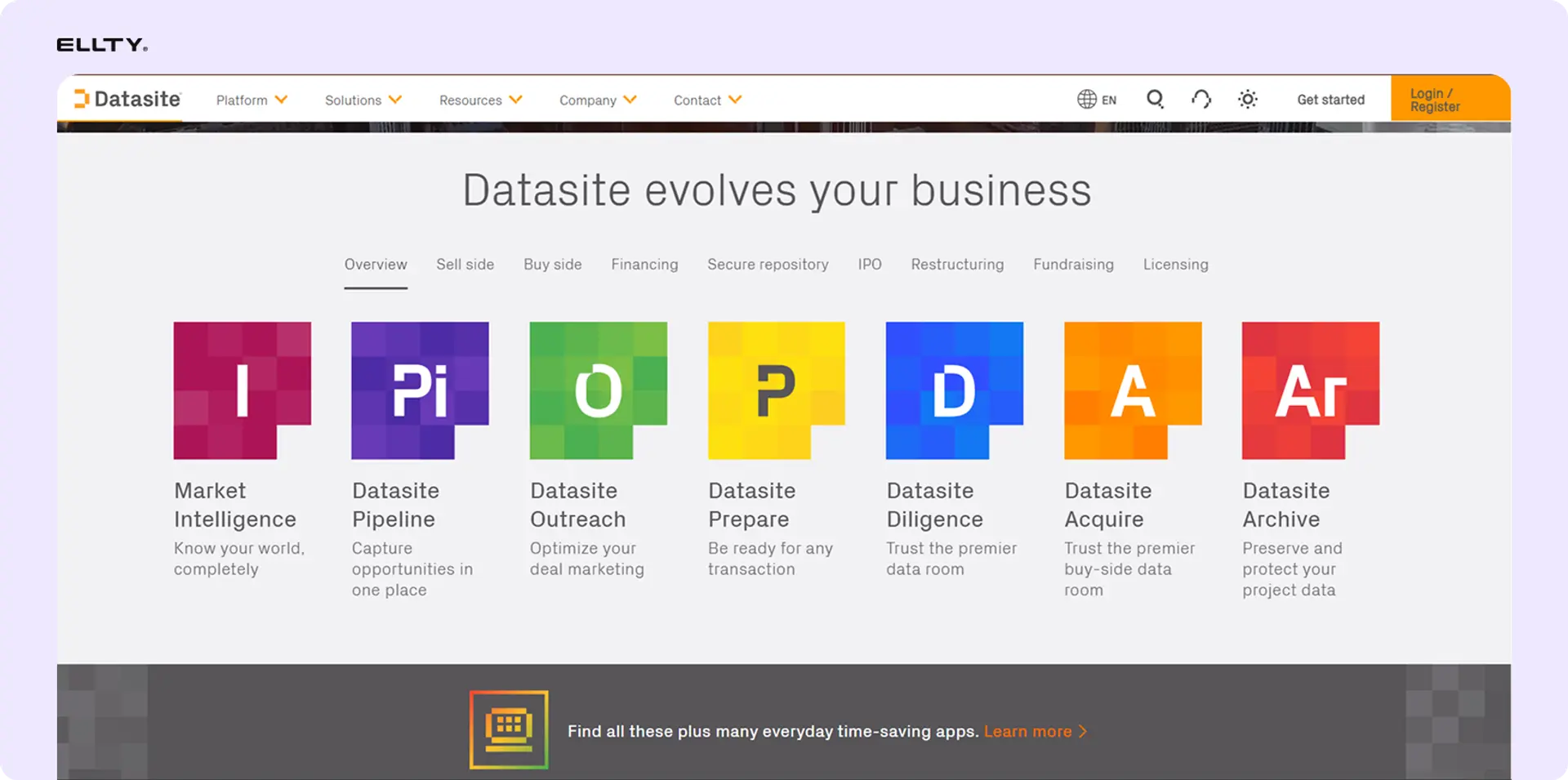
Datasite is one of the most established names in enterprise VDR software. It's built specifically for complex M&A transactions - the kind that involve multiple bidder groups, large legal teams, and months of structured due diligence.
The platform goes well beyond document storage. Datasite includes a full Q&A workflow that keeps diligence questions organized and traceable across multiple parties, AI-assisted redaction to automatically identify and remove sensitive information before sharing, and detailed audit logs that become part of the legal record of the transaction. Version control keeps documents current across a large reviewer pool without creating confusion about which version is live.
Where Datasite stands apart is in its ability to manage complexity at scale. Running a competitive sale process with three bidder groups working in isolation? Datasite handles that cleanly. Coordinating document review across deal teams in multiple countries and time zones? It's designed for that.
The tradeoff is cost and complexity. Datasite pricing is typically in the range of $1,500 to $3,000 or more per month depending on deal size and features, and it's overkill for anything below mid-market M&A. Setup takes time, and the platform assumes you have people who know how to run a structured deal process.
Best for: Investment banks, PE firms, and M&A advisors running mid-to-large transactions where deal complexity justifies the cost.
3. Intralinks

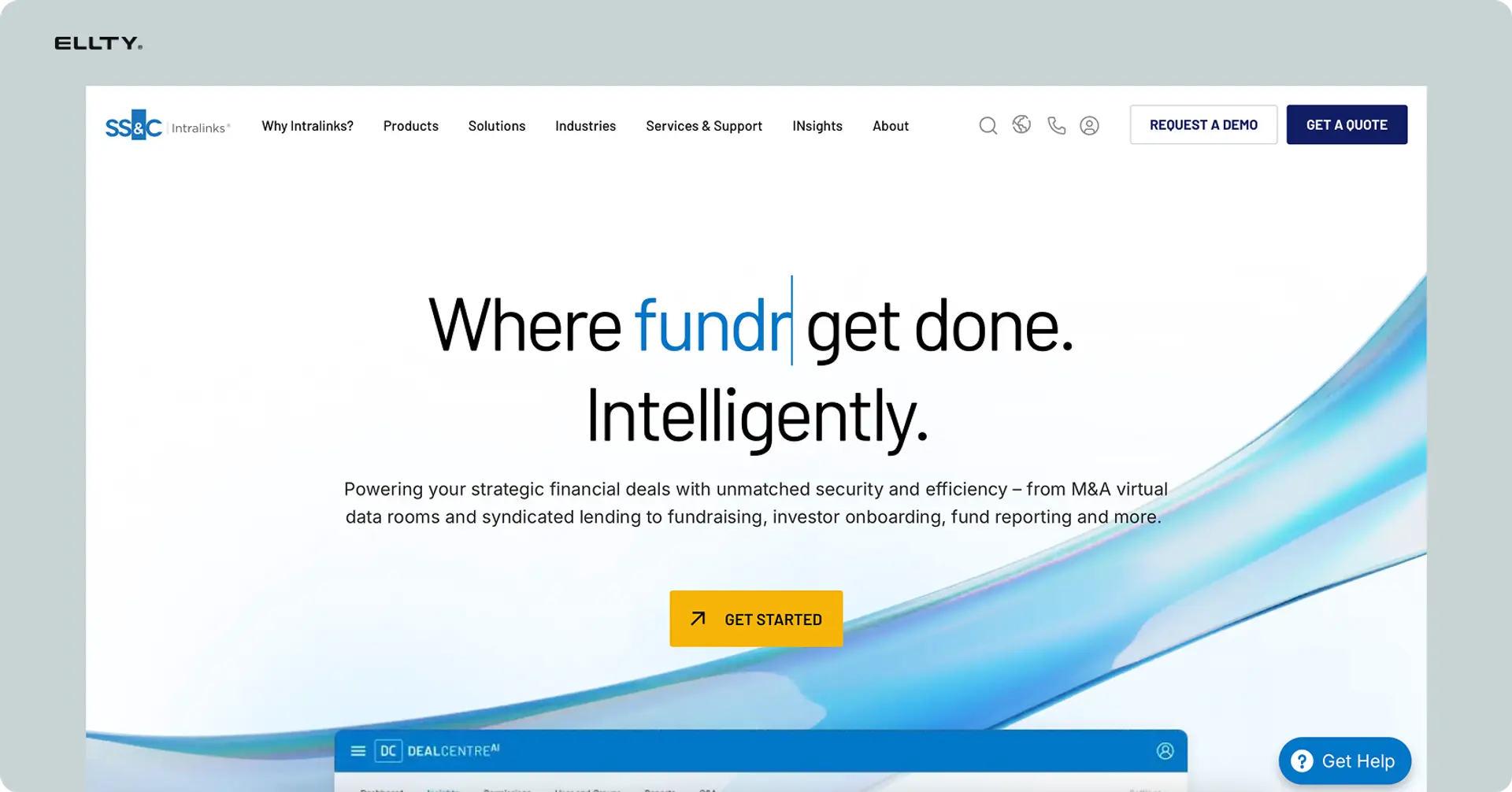
Intralinks has been in the VDR space for decades and is one of the most recognized platforms in capital markets and large-scale M&A. It's used heavily by bulge bracket banks, large law firms, and Fortune 500 companies running transactions that require enterprise-grade security and compliance.
The platform is built for deals where regulatory compliance isn't optional. Intralinks holds certifications including ISO 27001, SOC 2, and various regional data protection standards, which matters when counterparties are major financial institutions or regulated entities with specific platform requirements. Its security infrastructure is designed to meet the standards those organizations impose.
Feature-wise, Intralinks covers everything you'd expect at the enterprise level - advanced Q&A workflows, AI-powered document review assistance, granular permission controls, full audit trails, and support for very large document sets across many simultaneous users.
The honest downside is that Intralinks is expensive, and the platform reflects its enterprise positioning in both price and complexity. It's not designed for small teams or straightforward processes. Getting set up typically involves a sales conversation, and pricing is customized rather than published.
Best for: Large financial institutions, bulge bracket advisory firms, and transactions where compliance certifications and enterprise security infrastructure are non-negotiable.
4. iDeals


iDeals sits in an interesting spot in the market - more capable than lightweight tools, more accessible than the top-tier enterprise platforms. It's a strong option for mid-market M&A, private equity transactions, and deal processes that need real VDR functionality without the pricing and complexity of Datasite or Intralinks.
The platform includes the features that matter most for structured due diligence: Q&A workflows, granular permission controls, detailed audit logs, dynamic watermarking, and version control. The interface is cleaner and more intuitive than many enterprise VDRs, which matters when you're onboarding external parties quickly and don't want to spend time on training.
iDeals also holds ISO 27001 and SOC 2 certifications, which satisfies the compliance requirements of most institutional counterparties without stepping up to the full enterprise tier.
Pricing is more transparent than some competitors, though it's still structured around deal size and user count rather than a flat monthly fee. For smaller teams or simpler processes, costs can add up faster than expected, so it's worth modeling out the total before committing.
Best for: Mid-market M&A, private equity, and deal teams that need full VDR functionality at a more accessible price point than the top enterprise platforms.
5. Ansarada


Ansarada takes a slightly different approach to the VDR space. Beyond standard document management and access controls, it layers in deal intelligence features - tools designed to help advisors and deal teams understand where a transaction stands and what needs attention.
Its AI-powered deal readiness scoring surfaces which areas of a data room are incomplete or underprepared, which is genuinely useful for advisors helping clients get ready for a sale or fundraising process. The platform also includes structured Q&A workflows, automated redaction, and detailed engagement analytics across all documents and users.
One thing Ansarada does particularly well is templates. It provides pre-built data room structures based on deal type - M&A, fundraising, IPO, tender offers - which saves meaningful setup time and helps less experienced teams organize materials the way buyers and investors expect to see them.
Pricing is tiered and published, which is more transparent than most enterprise VDR providers. It's not the cheapest option, but it's more accessible than the top-tier platforms and better suited for teams that want guidance built into the product rather than just infrastructure.
Best for: M&A advisors, corporate development teams, and deal teams who want deal intelligence and structured guidance alongside standard VDR functionality.
6. Digify


Digify is a document security and sharing platform that prioritizes simplicity and speed over enterprise feature depth. It's designed for teams that need document tracking, access controls, and basic data room functionality without a long setup process or a complex interface.
The core features cover the essentials well: trackable links, real-time open notifications, page-level analytics, dynamic watermarking, access expiration, and the ability to revoke access at any time. For teams sharing sensitive documents in a professional context - pitch materials, proposals, due diligence packages - it handles the fundamentals cleanly.
Where Digify is a natural fit is for smaller deal processes, consulting firms sharing client deliverables, or anyone who needs more control than Google Drive but doesn't need the full feature set of an enterprise VDR. Setup is fast, the interface requires no training, and pricing is straightforward.
The limitations show up in more complex scenarios. Digify doesn't have the advanced Q&A workflows, deep compliance certifications, or large-scale multi-party access management that structured M&A transactions require. For those use cases, a more capable platform is the right call.
Best for: Small to mid-size teams, consultants, and deal processes that need professional document security and tracking without full VDR complexity.
Virtual data room features for M&A due diligence
M&A due diligence is the most demanding use case for a VDR. You're dealing with multiple buyer parties, sensitive financial information, competitive intelligence, and a compressed timeline. The VDR needs to hold up under pressure.
Key features that matter specifically for M&A:
- Bulk upload - you'll have hundreds or thousands of documents
- Folder templates based on standard M&A checklists (IP, financials, HR, legal, contracts)
- Multiple buyer group permissions - show buyer A different documents than buyer B
- Full Q&A module for managing buyer questions in one place
- Detailed audit log with user-level activity tracking
- Dynamic watermarking on all sensitive documents
- Automatic virus scanning on uploads

Sample M&A due diligence folder structure
📁 Due diligence data room
│
├── 📁 01 - Company overview
│ ├── Pitch deck
│ ├── Cap table
│ ├── Org chart
│ └── Executive bios
│
├── 📁 02 - Financials
│ ├── Historical P&L (3 years)
│ ├── Balance sheet
│ ├── Cash flow statements
│ ├── Financial projections
│ └── Bank statements
│
├── 📁 03 - Legal
│ ├── Certificate of incorporation
│ ├── Shareholder agreements
│ ├── Board meeting minutes
│ └── Regulatory filings
│
├── 📁 04 - Contracts
│ ├── Customer agreements
│ ├── Vendor contracts
│ └── NDAs
│
├── 📁 05 - Intellectual property
│ ├── Patents and applications
│ ├── Trademarks
│ └── Software licenses
│
├── 📁 06 - HR
│ ├── Key employee contracts
│ ├── Option pool and vesting schedules
│ └── Benefits overview
│
├── 📁 07 - Technology
│ ├── Architecture documentation
│ ├── Security policies
│ └── Hosting and infrastructure agreements
│
└── 📁 08 - Insurance
├── Current policies
└── Claims history
How to set up a virtual data room for due diligence
Setting up a data room isn't complicated, but most teams make the same organizing mistakes. Here's a process that works.
Step 1: Build your folder structure before you upload
Don't just drag files into a room. Organize first. A standard due diligence structure looks like this:
- 01 - Company overview (pitch deck, cap table, org chart)
- 02 - Financials (historical P&L, balance sheet, projections, bank statements)
- 03 - Legal (incorporation docs, shareholder agreements, board minutes)
- 04 - Contracts (customer contracts, vendor agreements, NDAs)
- 05 - Intellectual property (patents, trademarks, software licenses)
- 06 - HR (key employee contracts, option pool, org chart)
- 07 - Technology (architecture docs, security certifications, hosting agreements)
Step 2: Set permissions before you invite anyone
Decide who sees what before sending any invites. Common permission structures:
- Lead investor: full access to all folders
- Co-investor or observer: limited to financial and company overview folders
- Legal counsel: legal and contracts folders only
- Technical due diligence team: technology folder only
Step 3: Enable security features
Turn on NDA gating before anyone gets access. Set up dynamic watermarking on your most sensitive documents (financials, IP, key contracts). Restrict downloads or printing where it makes sense.
Step 4: Send invites with context
When you invite reviewers, tell them what's in the room, what the timeline is, and how to ask questions. A brief email with these details saves everyone time.
Step 5: Monitor activity and follow up
Watch the analytics. If an recipient spent 40 minutes on your financials section, follow up. If they haven't opened the room in 48 hours, check in. Analytics give you real data to work with instead of guessing.
Ready to set up your data room? Get started with Ellty in minutes - no procurement process, no per-user fees.
Virtual data room software: how to evaluate it before you commit
Don't make a decision based on a feature list. Ask these questions when evaluating any VDR:
- How long does it take to go from signup to a live, secure data room? (Test this yourself if you can)
- What happens if I need to add 5 more investors? Does the price jump?
- What security certifications does the platform carry? (SOC 2 Type II, ISO 27001 are the ones to look for)
- Can I see an audit log after the fact, or only in real-time?
- What does the mobile experience look like for investors reviewing on the go?
- What's the support response time if something breaks during an active deal?
- Can I export the audit log for legal purposes?
Most VDR vendors will give you a free trial. Use it. Upload real documents (redacted if needed), set up a permission structure, and invite a trusted colleague to simulate what an investor would experience.
Security certifications: what they mean and what to look for
When a VDR claims to be 'secure,' ask for specifics. Here's what the main certifications actually cover:
- The most relevant one for US companies. An independent audit verifying how a platform handles security, availability, and confidentiality of data over time. Type II is more rigorous than Type I. SOC 2 Type II
- International standard for information security management. Common for European providers and deals involving EU entities. ISO 27001
- Relevant if you're sharing data involving EU residents. Verify where data is stored and how it's processed. GDPR compliance
- Standard for data at rest. Most reputable VDRs include this - if a provider can't confirm it, move on. 256-bit AES encryption
- Encrypts data as it moves between servers and browsers. TLS encryption in transit
Don't just ask if a provider is 'SOC 2 compliant' - ask for their most recent SOC 2 Type II report and confirm the scope covers the specific services you're using.
Frequently asked questions
What's the difference between a virtual data room and a shared Google Drive?
Google Drive lets you share files. A virtual data room lets you control, track, and audit everything about how those files are accessed. With a VDR you can restrict downloads, watermark documents, require NDA acceptance before entry, see exactly which pages a reviewer spent time on, and export a full activity log. Google Drive doesn't offer any of that natively. For informal document sharing, Drive is fine. For investor due diligence, it's not built for the job.
How much does a virtual data room cost?
It depends heavily on who you're buying from. Enterprise VDR platforms like Intralinks and Merrill Datasite don't publish pricing - you'll need to request a quote and expect four-figure monthly costs minimum. Mid-market platforms run $400-1,500/month. Startup-focused tools range from free to $349/month. Ellty data room plans start at $149/month with users included and no per-user charges on top. The biggest hidden costs to watch for are per-user fees and storage overages.
What is the best data room for due diligence for startups?
For most startups at Series A or earlier, you don't need an enterprise VDR. You need something that gets you live fast, has solid permission controls, tracks document activity, and doesn't charge you per user. Ellty, Digify, and similar platforms cover the core use case well. For complex M&A processes with sophisticated acquirers, you may eventually need to step up to a mid-market platform. Match the tool to your actual situation, not to what sounds most impressive.
What documents go in a due diligence data room?
The standard categories for a due diligence data room are: company overview (incorporation docs, cap table, pitch deck, org chart), financials (P&L, balance sheet, cash flow, projections), legal (shareholder agreements, board minutes, regulatory filings), contracts (customer agreements, vendor contracts, NDAs), intellectual property (patents, trademarks, open source licenses), human resources (key employee contracts, option pool details), and technology (architecture documentation, security policies, hosting agreements). The depth of each section depends on your stage and deal type.
How long does it take to set up a virtual data room?
With user-friendly VDR tools, you can have a live data room in under an hour if your documents are already organized. The setup itself is fast - it's the document organization that takes time. Building a clean folder structure, gathering all the relevant files, and applying the right permissions is typically a 4-8 hour process for a typical data room. Enterprise platforms take longer due to more complex onboarding. Ellty is designed for fast setup without requiring an implementation process or IT support.
What should I look for in a virtual data room for M&A?
For M&A specifically, you need: bulk document upload, multi-party access controls (different permission groups for different buyers), a full audit log, Q&A management tools, dynamic watermarking, and NDA gating. The audit log is particularly important in M&A because it becomes part of the deal record. You also want to think about whether the acquiring party has a preferred VDR platform - if they do, you'll likely need to use theirs. Confirm this early in the process.
Is Dropbox or Google Drive OK for due diligence?
Technically, you can share documents through Dropbox or Google Drive. But they're not built for due diligence, and it shows. You can't require NDA acceptance before access. You can't watermark documents dynamically. You don't get page-level analytics. There's no meaningful audit trail. And permission management at the document level is clunky. For informal information sharing early in a relationship - sure. For actual due diligence where you need control and a paper trail - no.
What's the difference between virtual data room pricing models?
The main models are: per-page (you pay for every page uploaded or accessed - gets expensive fast), per-user (monthly charge per seat - costs spike when you add investors and advisors), flat monthly (predictable cost regardless of users or pages - best for startups), and freemium tiers (free or low base cost, paid for features). Watch out for storage overage charges, which can hit even flat-rate plans. Ellty offers flat monthly pricing with users included in the Data Room plan ($149/month) and Data Room Plus plan ($349/month), so you know what you're paying before a deal starts.
Can I use Ellty for M&A due diligence?
For M&A, Ellty Data Room Plus plan covers the core requirements: granular permissions, audit logs, dynamic watermarking, group visitor permissions, and NDA gating. For very large, complex M&A transactions with multiple buyer groups and sophisticated compliance requirements, you may need a dedicated M&A platform. Be honest about the complexity of your deal and choose accordingly. Ellty team can help you assess fit.
Still have questions about what Ellty covers?
Chat with the team at ellty.com - no sales demo required, just answers.
The bottom line
A virtual data room doesn't need to be complicated or expensive. For most businesses, the goal is simple: get a secure, organized access to your documents, track who's looking at what, and maintain control throughout the process.
Enterprise VDR platforms are built for situations with that level of complexity. If you're not there yet, you don't need to pay for it.
Match your tool to your deal.
Ellty covers everything well, with a Data Room plan at $149/month that doesn't charge per user. For more complex M&A, check Ellty Data Room Plus plan and evaluate based on deal requirements.
Whatever you choose, get it set up before you get asked for it. You don't want to be organizing files under a 72-hour due diligence deadline.
Set up your data room in under an hour. Start free with Ellty - upgrade when you need more.
__________________________________________
Ellty is a virtual data room and pitch deck analytics platform.
Author

Anika Tabassum Nionta is a Content Manager at Ellty, where she writes about secure document sharing, virtual data rooms, M&A, due diligence, fundraising, and sales enablement. With over 6 years of writing experience, she helps professionals understand how to share confidential documents securely, track engagement, and manage deals more effectively. Anika holds both a BA and MA in English from Dhaka University. Outside of work, she enjoys reading, exploring new cafes in Dhaka, and connecting with entrepreneurs and dealmakers in her community.

