
Whether you're running a buyout process, preparing a portfolio company for exit, managing LP capital raises, or navigating a secondary transaction - at some point, the other side is going to ask for a data room. It's not a formality. LPs, co-investors, acquirers, and their legal and financial advisors all expect one before they'll commit to anything serious.The problem is most firms set one up wrong. Either they over-engineer it with bloated enterprise software that adds cost without adding value, or they stitch something together in a shared drive and signal to counterparts that their process isn't buttoned up.This guide covers what a virtual data room actually is in a PE context, what goes inside one, and how to pick the right tool without overpaying.
What is a virtual data room?
A virtual data room (VDR) is a secure online space where you store and share confidential documents with LPs, potential acquirers, lenders, or legal teams during due diligence. Think of it as a locked deal room that only approved parties can enter, except you get a full log of who looked at what, when, and for how long.
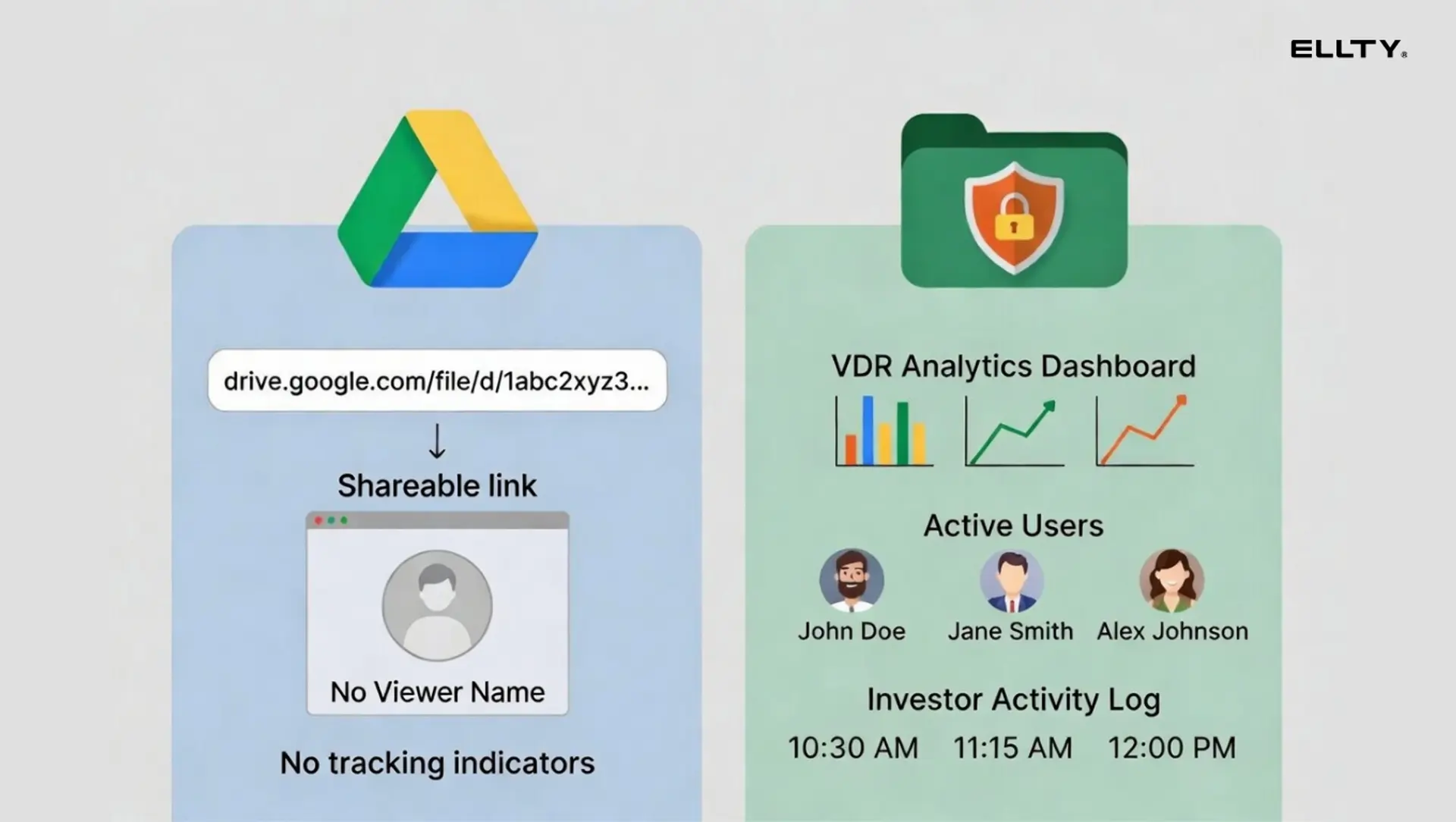
It's not the same as file storage. SharePoint, Google Drive, and Dropbox are fine for internal team collaboration. But they weren't built for deal processes. They don't give you granular access controls, audit trails, NDA gating, or document-level analytics. A proper VDR does and that difference matters when you're sharing sensitive portfolio financials, cap tables, or fund terms with outside parties.

Why private equity firms require a data room
PE firms are doing a job when they review your company. They're responsible to their LPs. They have internal processes, legal teams, and investment committees that all need to sign off. They can't do that with a zip file attached to an email.
Here's why they need a proper VDR:
- Liability - they need a record of what was disclosed and when
- Access control - analysts see different documents than partners
- Due diligence coordination - multiple parties (legal, financial, technical) review simultaneously
- Audit trail - if a deal falls apart, they need to prove what happened
- Efficiency - they're reviewing 10-20 deals at a time and need structured information
For you as a company, the data room signals something important: that you're organized, that you've done this before (or at least prepared properly), and that you respect their process. A messy data room kills deals. Not because the documents are wrong, but because it signals operational chaos.
Ready to set up your data room before your next meeting?
Ellty lets you create a secure, trackable data room in under 30 minutes - no sales call required. Start free.
How private equity due diligence actually works
Understanding this helps you build a better data room. PE due diligence typically runs in phases:
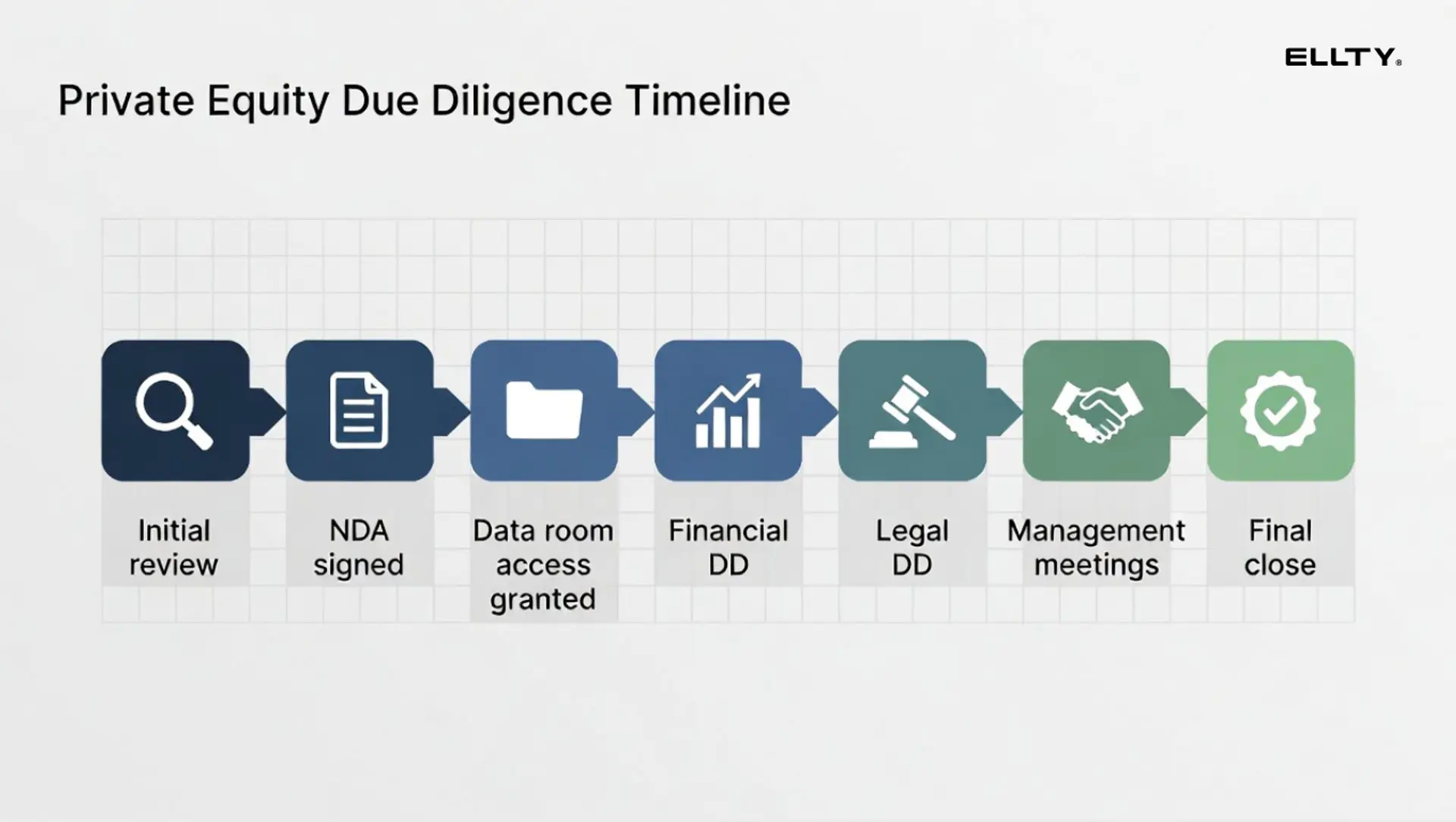
Phase 1: Initial screening
The deal team reviews your pitch deck, teaser, or CIM. No data room access yet. They're deciding whether to keep going.
Phase 2: NDA and data room access
Once there's serious interest, you share a limited data room. Key financials, org structure, product overview. They're validating the story before committing resources.
Phase 3: Full due diligence
The data room opens fully. Legal, financial, technical, and commercial teams are in simultaneously. This is where organization matters most. If they can't find what they're looking for, they'll ask you. Every request you field manually is time you're not spending on your business.
Phase 4: Management presentations and final review
The data room stays live as a reference during management meetings and while they draft the purchase agreement. Changes and updates get added in real time.
Data room for PE investors checklist: what to include
This is the most practical thing in this guide. Here's what PE investors expect to find in a data room, organized by category.

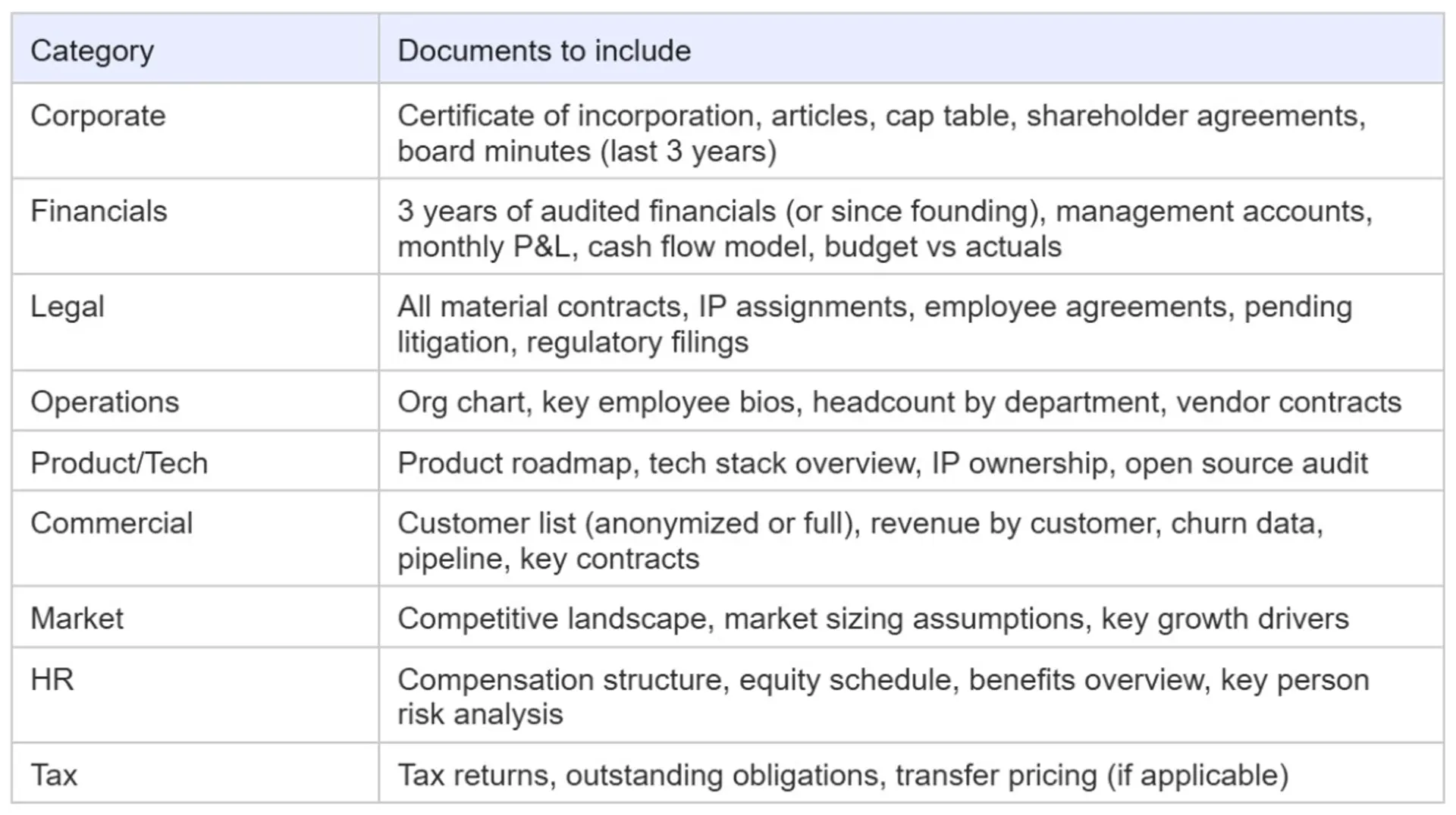
You won't need every single one of these for every deal. A seed round investor needs far less than a PE buyout. But having these ready means you're not scrambling when someone asks.

Virtual data room for private equity M&A: what's different
M&A deals are usually more complex. The stakes are higher, more parties are involved, and the timeline is usually compressed. Here's what changes:
- More parties - sell-side advisors, buy-side legal teams, management teams, external auditors all need different access levels
- Longer timeline - M&A data rooms stay open for months, not weeks
- More documents - full legal, environmental, and technical diligence on top of the standard financial review
- Watermarking - every document download is tied to a specific user. If something leaks, you know who did it
- Q&A module - buyers submit questions through the platform, and you respond inside the same environment
- Redaction tools - you might need to black out specific data before sharing with certain parties
If you're entering a formal M&A process - even as the target of an acquisition - you'll want a VDR that can handle these features.
7 best virtual data room providers for private equity
1. Ellty

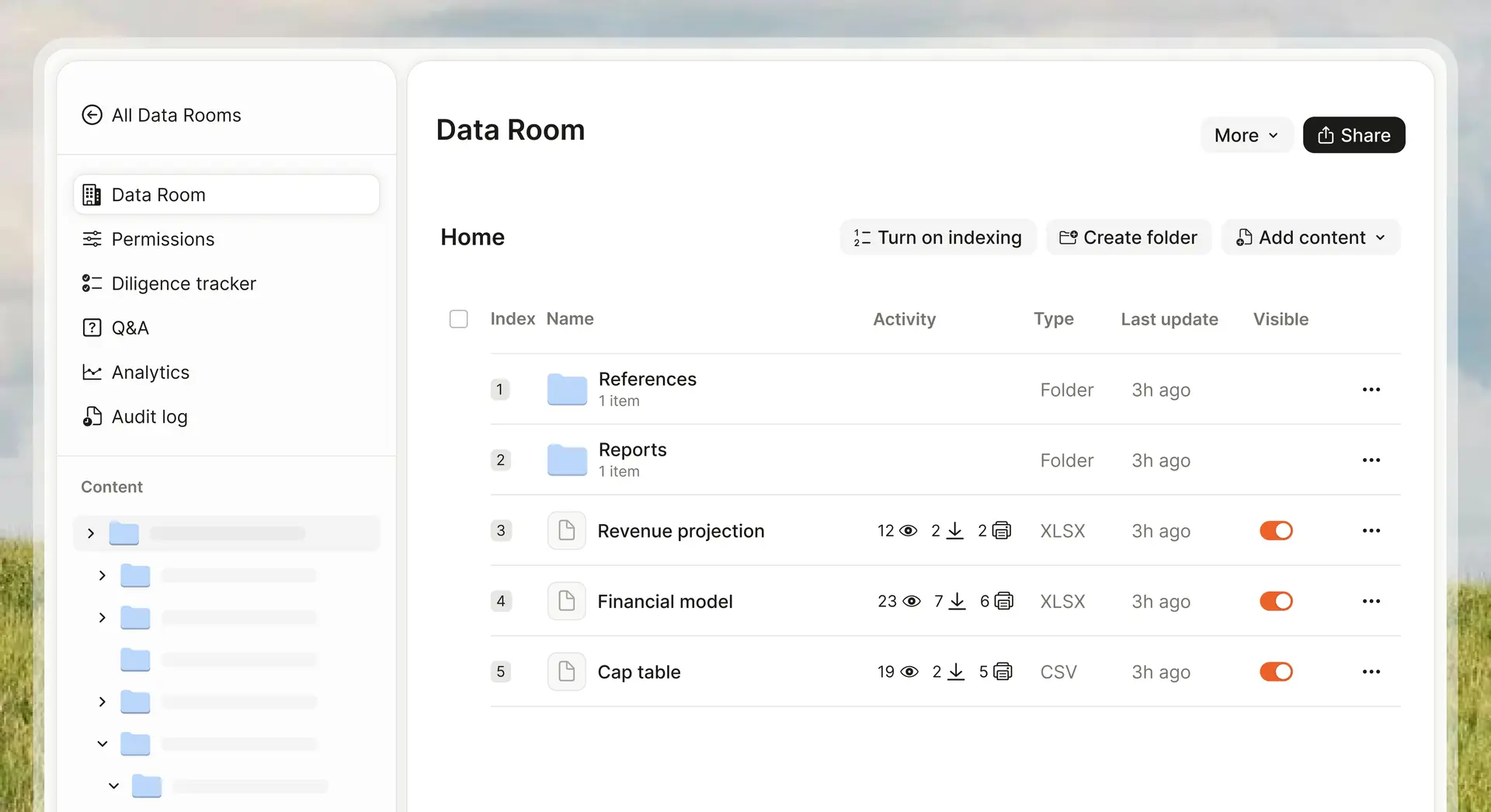
Ellty is a clean, straightforward data room built for people who need professional document sharing without the enterprise price tag. You get secure file sharing, permission controls, audit logs, and NDA gating - everything a PE deal actually needs - in an interface that doesn't require a training session to figure out. Unlike legacy VDR providers that charge per page or lock features behind expensive tiers, Ellty keeps things simple and accessible. You can organize documents by folder, assign different access levels to different parties, and track exactly who viewed what. It works equally well for fundraising, M&A, real estate, consulting, and any situation where confidential documents need to move between parties securely.
Whether you're a founder preparing for your first acquisition conversation or an advisor managing multiple deals at once, Ellty gives you everything you need without the bloat. The setup takes minutes, not days. Pricing is transparent and straightforward, making it a strong choice for smaller firms, independent advisors, and growing teams who want a professional data room without paying for features they'll never use.

2. Datasite

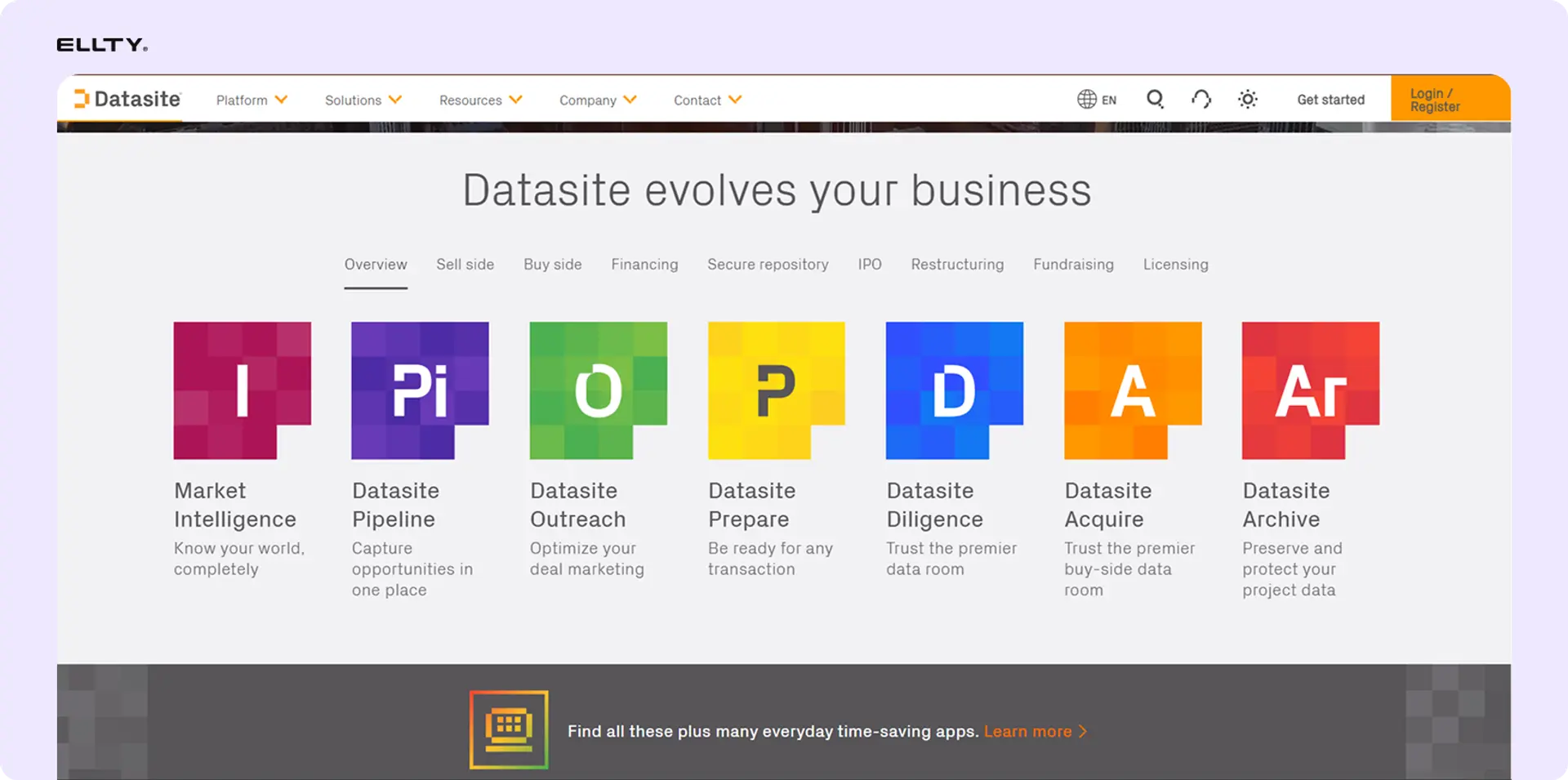
Datasite is one of the most established names in M&A data rooms and is widely used by investment banks, PE firms, and corporate development teams on large, complex transactions. It comes loaded with advanced features - AI-powered document redaction, automated translations, detailed engagement analytics, and robust workflow tools designed to manage multi-party deals with dozens of reviewers. For a major sell-side M&A process involving multiple bidders and tight legal requirements, Datasite holds up well. The platform is purpose-built for high-stakes deals where thoroughness matters more than speed or simplicity.
That said, it comes with a significant price tag, and the complexity of the platform can feel like overkill for smaller transactions. If you're running a mid-market deal or a standard PE fundraise, you may find yourself paying for capabilities you never touch. Datasite makes the most sense for large-cap deals managed by experienced transaction teams who need every feature available and have the budget to match.
3. Intralinks

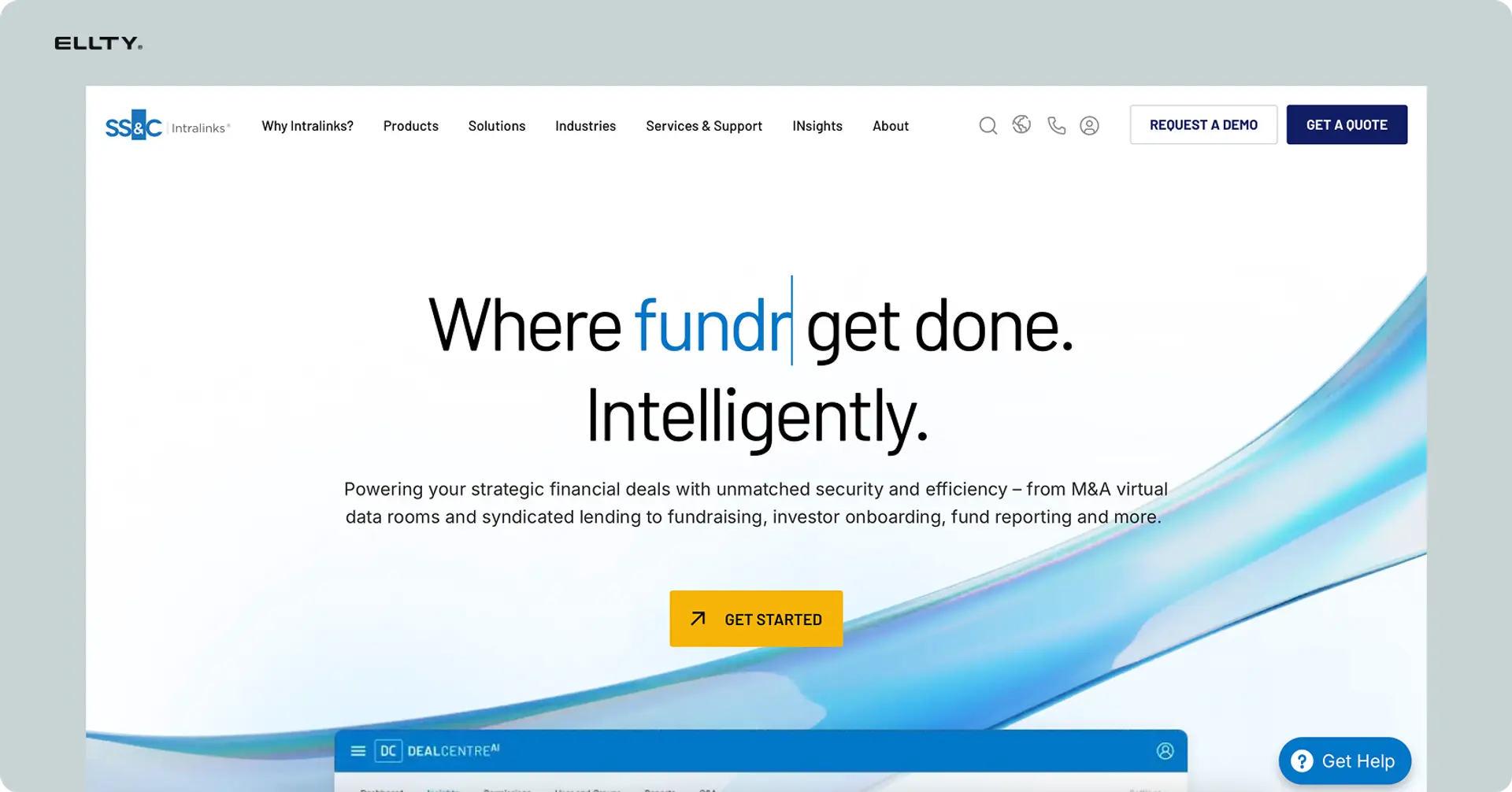
Intralinks is one of the oldest virtual data room providers in the market and has deep roots in M&A, leveraged finance, and capital markets transactions. It's trusted by major investment banks and large PE firms for deals that require a proven, audit-ready platform with a long track record. The platform includes strong security features, detailed permission controls, and solid document management tools that hold up well in high-volume due diligence processes. It also integrates with some enterprise workflows, which matters for larger deal teams operating across multiple systems.
The downsides are well known in the industry - the interface feels noticeably dated compared to newer platforms, and onboarding can take longer than it should. Pricing is on the higher end and not always easy to navigate upfront. For a large institution running a complex cross-border transaction, Intralinks remains a credible choice. But for smaller deals, independent sponsors, or anyone who values ease of use, the experience can feel unnecessarily heavy for what you actually need.
4. Ansarada


Ansarada positions itself around the concept of deal readiness, the idea that how prepared your data room is directly affects deal outcomes. The platform includes AI-powered tools that score your data room against benchmarks, flag missing documents, and help sellers understand how ready they are before inviting buyers in. It also offers structured Q&A workflows, bidder engagement tracking, and pipeline management tools that go beyond basic document sharing. For sell-side advisors who run multiple M&A processes a year, these features can genuinely speed things up.
Ansarada also covers a range of deal types beyond M&A, including capital raising, tenders, and board reporting. The platform has a modern interface and is easier to navigate than older enterprise tools. The main consideration is pricing. Ansarada's more advanced features sit in higher tiers, and for straightforward deals, you may not need everything the platform offers. It's best suited for advisors and mid-market M&A teams who run frequent processes and want a platform built around optimizing deal outcomes, not just storing files.
5. iDeals


iDeals is a well-regarded virtual data room that hits a practical middle ground between enterprise-grade security and everyday usability. It's used across M&A, real estate, legal, and fundraising transactions and has built a reputation for responsive customer support - which matters more than people expect when you're in the middle of a live deal and something isn't working. The platform includes the core VDR features you'd expect: granular permission settings, audit trails, NDA management, bulk document uploads, and detailed activity reports. The interface is cleaner and more intuitive than older platforms like Intralinks, and setup is relatively straightforward.
iDeals also supports multiple languages, which is useful for cross-border transactions. Pricing is more accessible than top-tier enterprise tools, though it still sits above some of the newer, leaner options on the market. For mid-market M&A teams, legal advisors, and real estate professionals who want a reliable, full-featured platform without fully committing to an enterprise contract, iDeals is a solid and dependable choice that rarely disappoints.
6. Firmex
Firmex is a Canadian-based virtual data room that has carved out a strong reputation in legal, financial, and M&A transactions, particularly in the mid-market. It's known for being straightforward to use - the interface is clean, permissions are easy to configure, and document management doesn't require much technical knowledge to get right. Law firms and financial advisors make up a large part of its user base, and the platform reflects that: it handles high-volume document sharing well and includes solid audit logging, watermarking, and access controls.
Firmex also offers unlimited users on some plans, which is a meaningful advantage when you're dealing with large deal teams on both sides of a transaction. Customer support is frequently highlighted as a strength. The platform isn't as feature-heavy as Datasite or Ansarada, but for many deals, that's actually a plus - you get what you need without the noise. If you're a legal or financial advisor running regular due diligence processes and want a dependable platform that your clients can navigate without hand-holding, Firmex is worth a close look.
7. Merrill DatasiteOne
Merrill DatasiteOne, now fully merged under the Datasite brand, was historically one of the go-to platforms for large institutional transactions, particularly in the US market. It carried the reputation of Merrill Corporation's long history in financial document services and was trusted by bulge-bracket banks and large PE firms for complex, high-stakes deals. The platform offered strong security, deep permission controls, and the kind of audit trail documentation that satisfies both legal teams and regulators. Since the full integration into Datasite, many of its features and workflows have been consolidated into the broader Datasite platform.
For teams already operating within the Datasite ecosystem, the transition has been largely seamless. For those evaluating it as a standalone option, it's worth noting that the combined platform inherits both the strengths and the cost structure of enterprise-grade VDR software. It's best suited for large institutional deals where budget is secondary to reliability, compliance, and the ability to handle massive document volumes across multiple workstreams simultaneously.
What to actually look for in VDRs
When evaluating a VDR provider, these are the things that actually matter:
Security
Look for SOC 2 Type II certification as a baseline. This means the provider has been independently audited on security, availability, and confidentiality. Also check for data encryption at rest and in transit (AES-256 and TLS 1.2+ are standard), two-factor authentication, and where your data is physically hosted — this matters more for cross-border transactions.
Access controls
In a PE deal process, different parties need different visibility. Your management team shouldn't see LP terms. A potential co-investor shouldn't see documents meant for the lead acquirer. You need folder-level and document-level permissions, the ability to set access expiry dates, and view-only modes that prevent downloading sensitive materials.
Audit logs
Every action should be logged, who opened what, when, and how long they stayed. During active due diligence, this tells you which parties are doing serious work and which are going through the motions. After close, it gives you a clean legal record of what was disclosed and to whom.
Analytics
Beyond basic logs, you want to know which documents are getting the most attention and which pages buyers are spending time on. If a prospective acquirer is deep in the reps and warranties or the management accounts, that's a signal worth acting on. If they opened the room once and disappeared, that's worth a follow-up call.
Ease of use
Advisors, counterpart legal teams, and management will all be navigating the room. If it's hard to set up, it'll be hard for them to use. A clunky interface in a high-stakes process reflects poorly on you. You should be able to get a working, organized data room live in under an hour.
Pricing structure
Per-user pricing becomes expensive fast. Between your deal team, legal counsel, financial advisors, and the counterpart's team, you'll hit double digits in users before the process even gets going. Look for flat-fee or per-room pricing so costs don't spiral mid-process.
Ellty Data Room plan starts at $149/month for 3 users and includes granular permissions, NDA gating, dynamic watermarking, and restricted visitor access. No surprises.
Common mistakes people make with data rooms

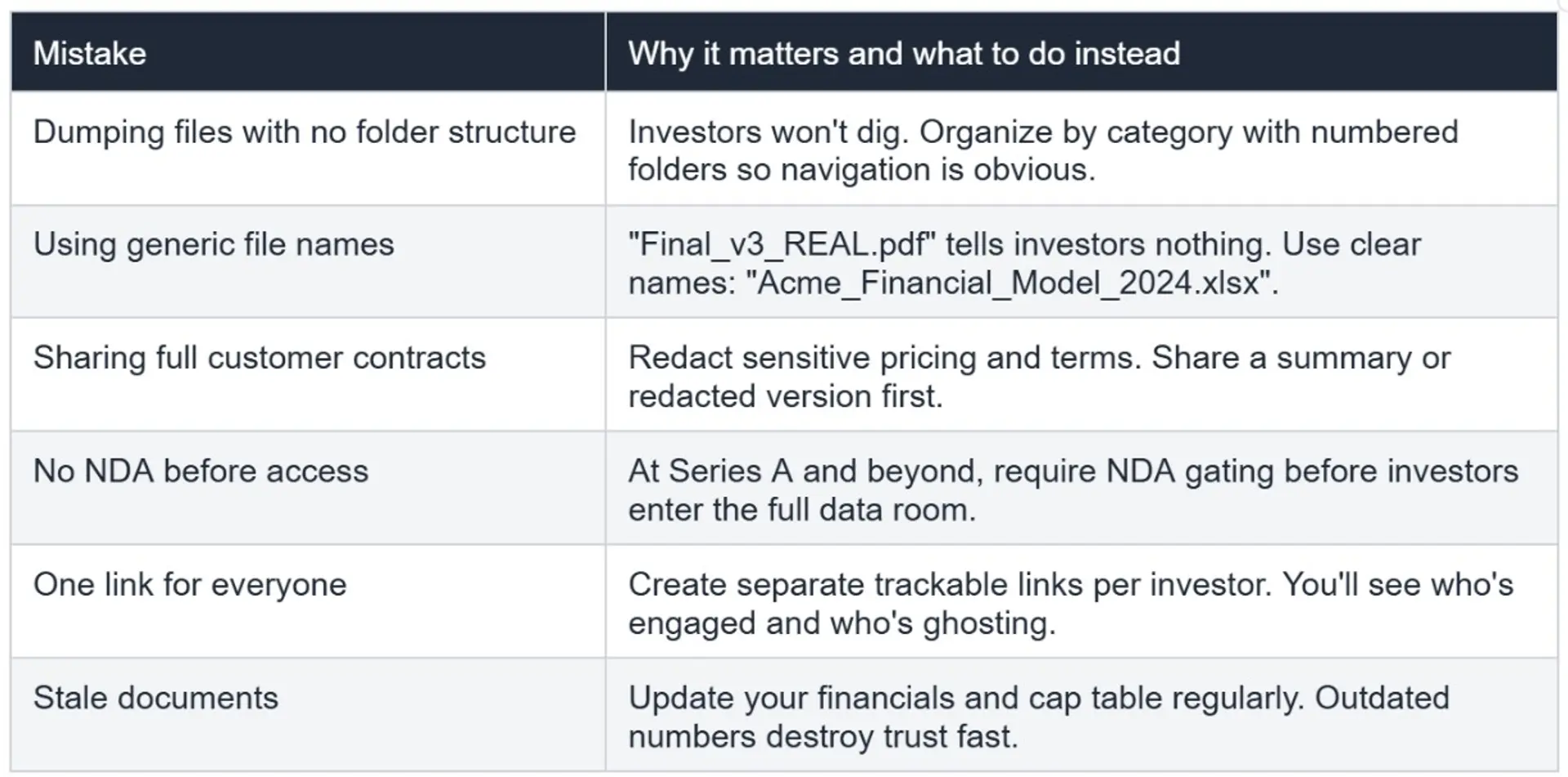
A few things that quietly hurt deals:
Opening the full room too early
Don't hand over full data room access at first contact. Share a teaser or CIM first. Once NDAs are signed and you have genuine interest from a qualified party, then grant staged access, starting with the commercial story before moving into financials and legal.
No structure
In a competitive process, buyers and their advisors are reviewing multiple opportunities simultaneously. A disorganized data room with hundreds of files dumped into one folder signals a poorly run process and makes their job harder. Organize by workstream - financials, legal, operations, management, etc. Standard PE deal structure exists for a reason.
Stale financials
If your management accounts are three months out of date, serious buyers will notice. Keep financials current throughout the process. Gaps or inconsistencies in financial documentation slow diligence down and can put pressure on valuation.
Using a shared drive
No audit trail. No access controls. No analytics. No NDA gate. In a PE deal context, it also raises questions about how the firm operates more broadly. Use a purpose-built tool.
Giving everyone the same access level
Be deliberate about permissions from day one. Prospective acquirers get read-only access. Your advisors may need upload rights. Your deal team needs admin. Carve out separate virtual rooms for competing bidders so no party sees information meant for another.
Ignoring the analytics
Your data room is giving you live intelligence on the deal. A party that opened the room and never returned probably needs a nudge or has lost interest. Either way, you want to know. Heavy activity in the legal section might mean their counsel has flagged something. Use what the data is telling you.
How to set up your data room: a step-by-step process

This takes less time than you think if you've prepared your documents in advance.
- Step 1: Gather your core documents - don't wait until everything is perfect. Get the key items in first.
- Step 2: Set up your platform - create your account, configure NDA gating if needed, set watermarking preferences.
- Step 3: Upload and organize - drag files into the appropriate folders. Label them clearly. 'Q3 2024 Management Accounts' is better than 'financials_v3_FINAL'. Create your folder structure: Corporate, Financial, Legal, Commercial, Operations, Product/Tech. Keep it simple. Investors know what to look for.
- Step 4: Set permissions, then invite - don't invite people before you've set access controls.
- Step 5: Test it yourself - go through the viewer experience before you share. Can you navigate it easily? Does the NDA flow work? Is everything visible?
- Step 6: Monitor engagement - this involves tracking, and analyzing activity.
Frequently asked questions
What is a virtual data room for private equity?
A virtual data room for private equity is a secure online platform where companies share confidential documents with potential investors or acquirers during due diligence. It gives you control over who sees what, tracks document engagement, and creates a verifiable record of disclosure. PE firms require them because their internal processes demand a structured, auditable environment.
What's the difference between a VDR and Google Drive?
Google Drive is general-purpose file storage. A VDR is purpose-built for deals. The differences that matter: audit logs, NDA gating, document-level access controls, watermarking, and analytics that show you who viewed what and when. Google Drive has none of these. If an investor asks for a 'data room' and you send them a Drive link, it signals you haven't done this before.
When should I set up a data room?
Don't wait for someone to ask. Having a data room ready signals preparation and accelerates the process. At minimum, set it up when you receive a term sheet or letter of intent. Ideally, it's ready before your first serious meeting so you can share it within 24 hours of being asked.
What security certifications should a VDR have?
SOC 2 Type II is the baseline for any reputable VDR provider. This means an independent auditor has verified their security controls around availability, confidentiality, and processing integrity. Also look for AES-256 encryption at rest, TLS 1.2+ encryption in transit, and two-factor authentication. Don't take a provider's word for it - ask to see their compliance documentation.
Can PE investors download documents from a data room?
That's up to you. Most VDR platforms let you control download permissions at the document or folder level. You can allow viewing while blocking downloads entirely. Or allow downloads for specific users only. With watermarking enabled, every download is tied to the specific user who requested it, which deters unauthorized sharing.
What is NDA gating in a data room?
NDA gating means a visitor has to digitally agree to a non-disclosure agreement before they can access your data room. The agreement is timestamped and logged. This is standard for PE and M&A due diligence because it creates a legal record that the investor agreed to keep your information confidential. Ellty Data Room plan includes this feature.
The bottom line
A data room isn't a competitive advantage. It's a baseline expectation. PE investors and institutional VCs expect a clean, organized, secure place to review your company. Not having one - or having a poor one - slows deals down and signals operational immaturity.
The good news is that setting one up isn't complicated or expensive. Pick a platform that matches your stage, organize your documents properly, set your access controls, and monitor the analytics. That's it.
Don't wait until someone asks for a data room. Set one up now at ellty.com - free to start, ready when you need it.
Author

Anika Tabassum Nionta is a Content Manager at Ellty, where she writes about secure document sharing, virtual data rooms, M&A, due diligence, fundraising, and sales enablement. With over 6 years of writing experience, she helps professionals understand how to share confidential documents securely, track engagement, and manage deals more effectively. Anika holds both a BA and MA in English from Dhaka University. Outside of work, she enjoys reading, exploring new cafes in Dhaka, and connecting with entrepreneurs and dealmakers in her community.

