
You're deep in an M&A deal. The buyer's team says they're ready to start due diligence. Then comes the question: where do you want to share documents?
If your answer is a Google Drive folder, you don't have a data room and that's a problem.
This guide covers what a virtual data room is, why it matters specifically in M&A, how to choose the right one, and what smart document preparation looks like in practice. Whether you're a founder preparing for an exit, an investment banker running a sell-side process, or an advisor managing due diligence on behalf of a client, this is for you.
What is a virtual data room?

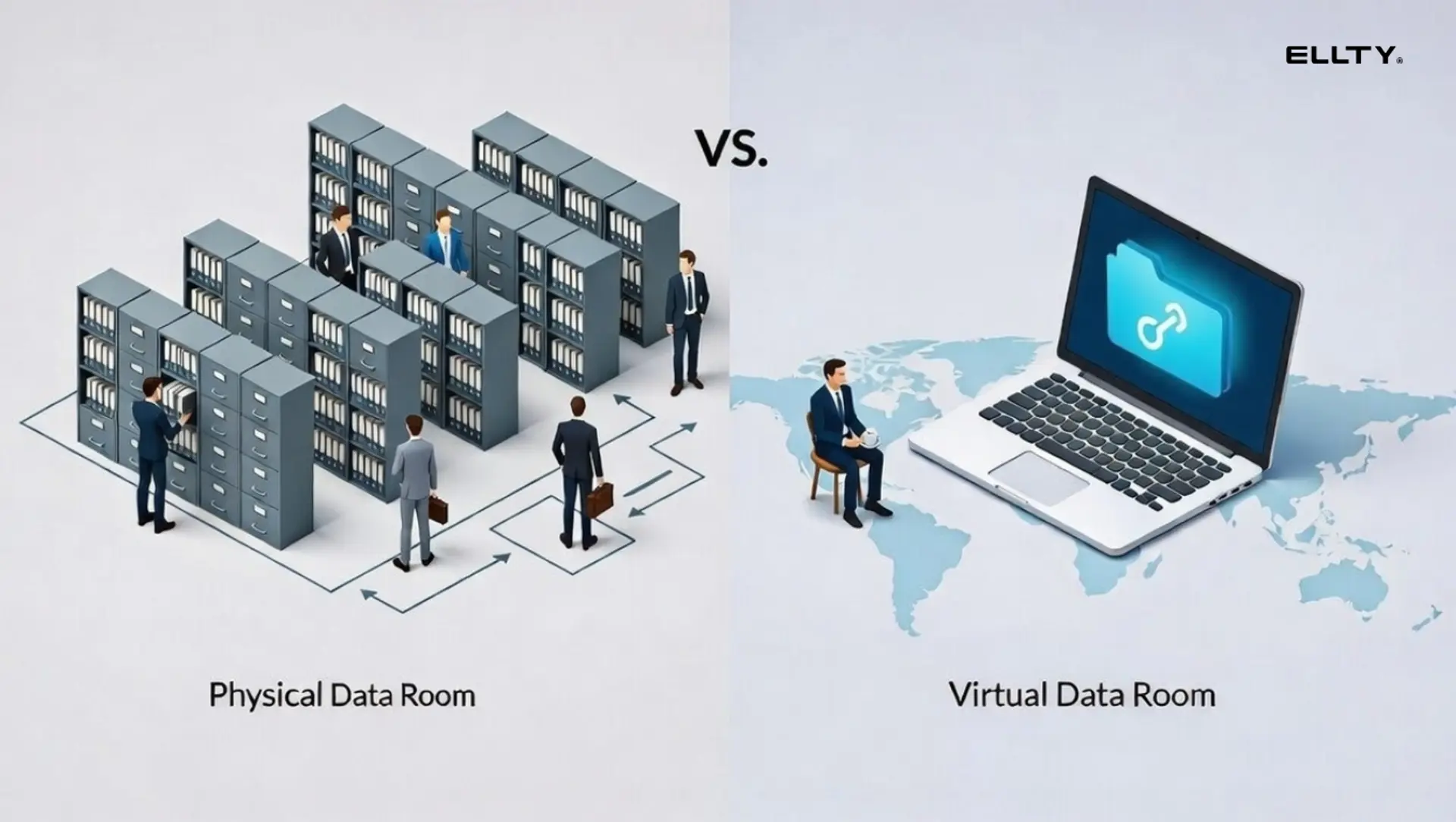
A virtual data room (VDR) is a secure online space where companies store and share confidential documents during M&A transactions. It's the modern replacement for the physical "data room", the locked room in a law firm or investment bank where buyers would once sit and review documents in person during a deal.
In M&A, a VDR is where the seller shares everything a buyer needs to evaluate the business: financial statements, legal agreements, customer contracts, IP documentation, HR records, and more. It's not just storage, it's a controlled environment where you decide who sees what, for how long, and with what level of access.
You can track every action: who opened a document, which pages they read, how long they spent on each section. You can revoke access the moment a buyer drops out of the process. That kind of control matters when the documents inside could move markets or end up with a competitor.
Setting up a data room doesn't have to take weeks. Ellty lets you create a secure data room in minutes.
Start for free - no credit card required.
Why Google Drive won't cut it for M&A
Google Drive is fine for internal collaboration. It's not built for due diligence. Here's the practical difference:


The issue isn't just security. It's control and accountability. In M&A, you need to know who is looking at what and when. You also need to prove - to your lawyers, your board, and yourself - that sensitive data was handled appropriately throughout the process.
When do you actually need a virtual data room?
Not every business needs a dedicated VDR. But there are clear situations where a proper data room stops being optional and starts being the obvious choice.
You probably need one when:
- You're raising a Series A or later round and investors want formal due diligence
- You're in active M&A conversations - whether you're buying, selling, or merging
- You're a real estate professional managing a property sale or lease with multiple parties reviewing documents
- You're a consultant or agency delivering sensitive research, reports, or strategies to clients who expect confidentiality
- You're going through a secondary transaction, investor exit, or recap
- You need to share sensitive contracts, financials, or IP with more than one outside party at the same time
- You want a documented record of what was shared, who saw it, and when - for legal protection or compliance purposes
- You're a law firm or advisory team managing document review across a transaction
The common thread across all these situations is the same: sensitive documents, multiple outside parties, and a need to know exactly who saw what.
What goes into an M&A data room?
Every deal is different, but most M&A data rooms include documents across these categories. Organize them clearly from day one, buyers notice if you haven't.


Don't dump everything in at once. Start with the documents buyers most commonly request in early due diligence, then add depth as the deal progresses. Staged disclosure is standard practice and protects you if talks fall through.

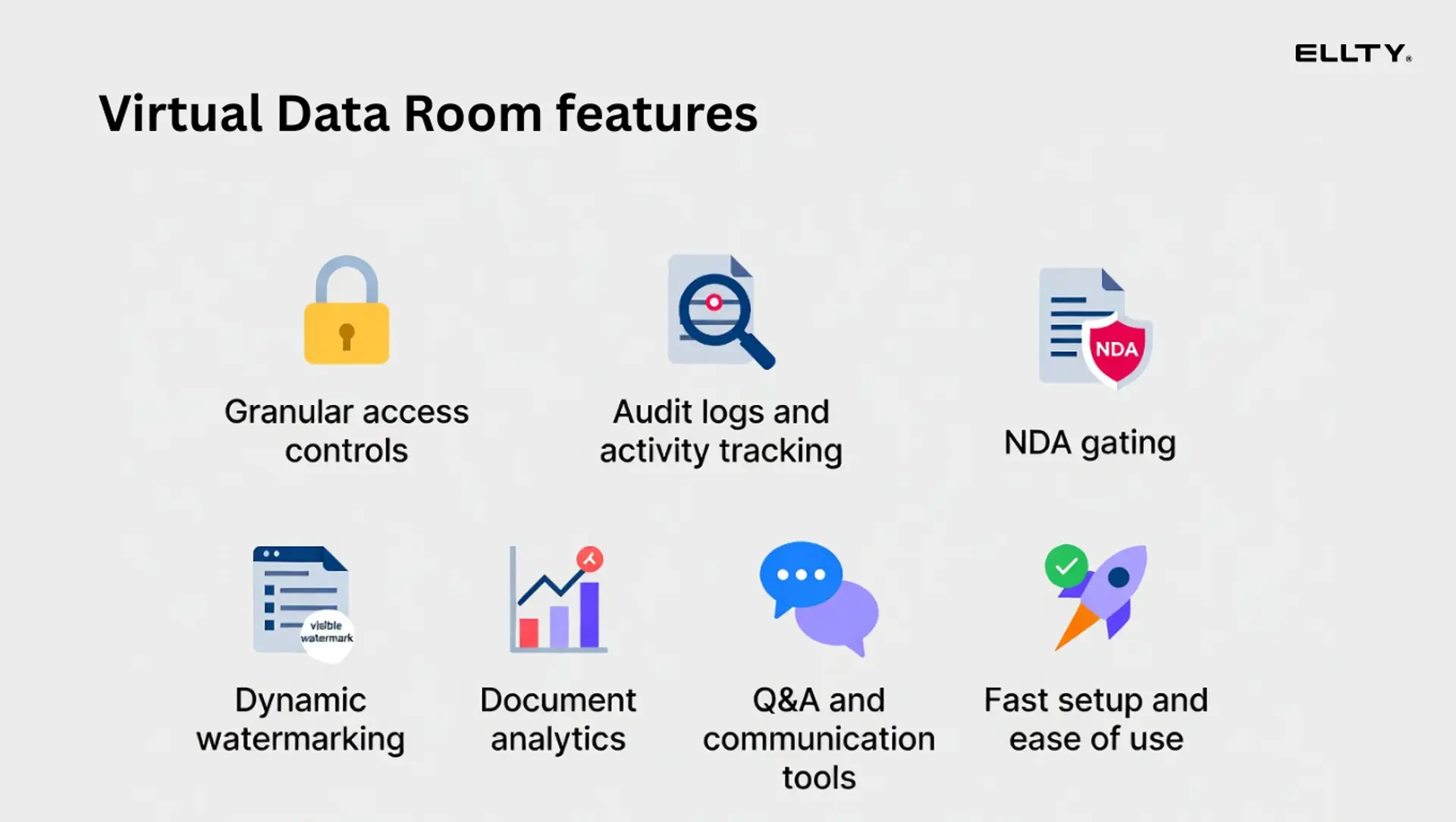
Key features to look for in a M&A virtual data room
Not every VDR is built for the demands of M&A. Here's what actually matters when a deal is on the line.
Granular access controls
In M&A, different workstreams run in parallel. Legal, financial, and technical advisors all need access, but not to the same things. You need folder and document-level permissions, not just room-level access. Look for role-based controls that let you restrict printing, downloading, or copying on a per-user or per-group basis.
Audit logs and activity tracking
A full audit trail is non-negotiable in M&A. You need to see exactly who viewed which document, on which date, and for how long. This protects you legally if a deal falls apart and confidentiality is disputed. It also gives you deal intelligence, if a buyer's team is spending significant time on your customer contracts, that tells you where their head is at.
NDA gating
Every user should have to accept an NDA before they can see a single document. Some VDRs let you customize the NDA language to match your deal terms. In M&A, this is a basic legal protection, not optional.
Dynamic watermarking
Every page a buyer views should carry their name and email address as a watermark. In M&A, your data room contains financial projections, customer lists, and proprietary information that could cause real damage if leaked, especially if you're still running a competitive process with multiple bidders.
Document analytics
Good VDRs go beyond simple view counts. You can see which pages were read, which sections were skipped, and where buyers spent the most time. In a live deal process, this is valuable signal. If a buyer's advisors are deep in your litigation disclosures but barely touched the financial model, you want to know that before your next conversation with them.
Q&A and communication tools
In structured M&A processes, particularly sell-side mandates with multiple bidders, a built-in Q&A workflow keeps everything organized. Buyers submit questions, you respond in one place, and every exchange is on the record. It also prevents individual advisors from going back and forth over email and creating version-control headaches during a live deal.
Fast setup and ease of use
By the time you're setting up a data room, a deal is already in motion. You don't have time to spend days configuring software. Look for drag-and-drop uploads, bulk permission settings, and an interface clean enough that your lawyers, counterparties, and their advisors won't push back on using it.
6 virtual data room providers for M&A
M&A due diligence is the most document-intensive process most businesses will ever go through. You're sharing financials, contracts, employee agreements, legal history, and IP documentation with a buyer or their advisors - often under tight timelines and with serious legal consequences if something goes wrong.
The tool you use matters. Here are six worth considering.
1. Ellty

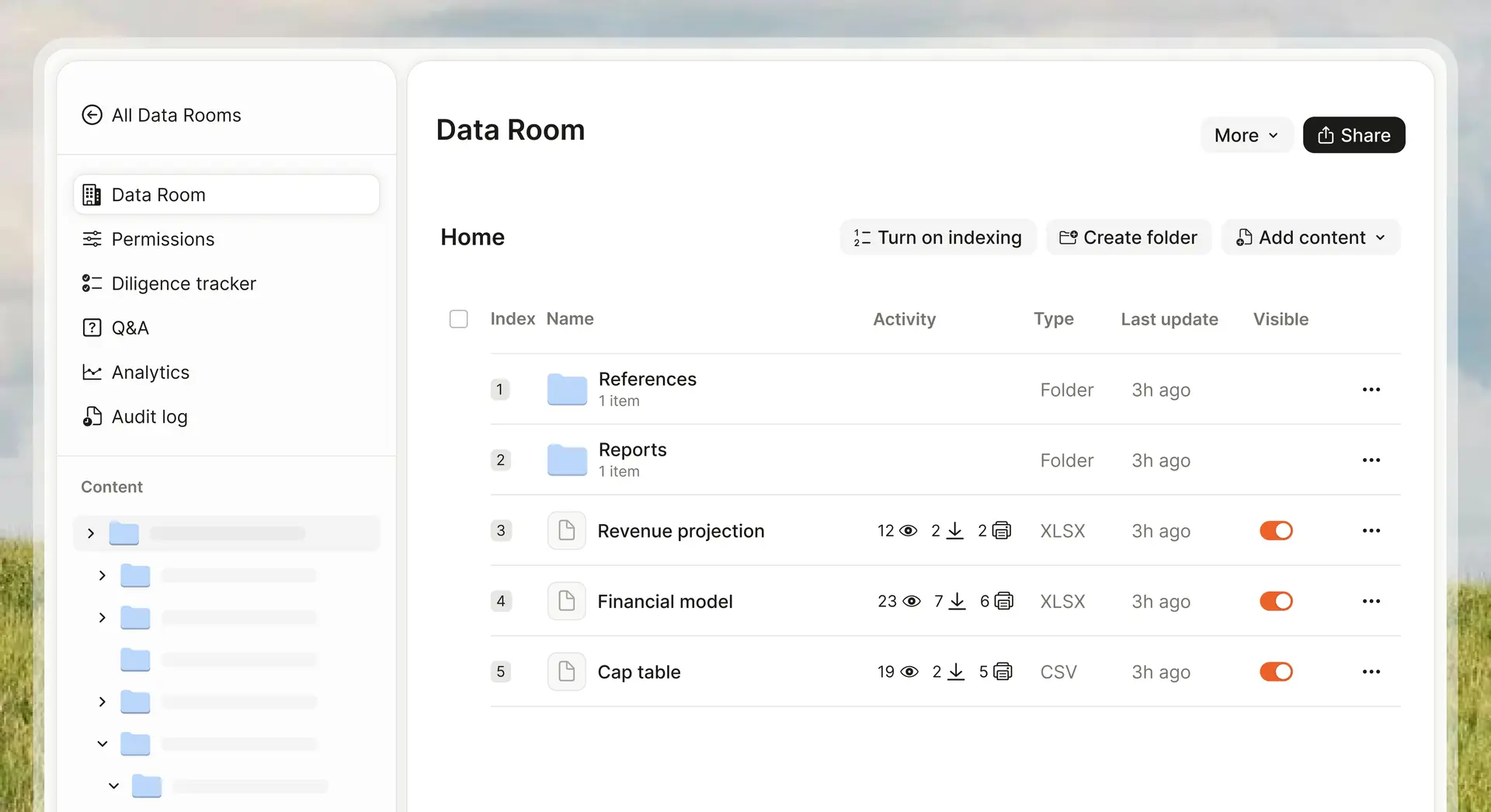
Ellty is a strong choice for small to mid-market M&A deals where you need a professional, secure data room without the cost and complexity of enterprise software. If you're a founder being acquired, a business owner selling, or an advisor managing a transaction in the $1M to $50M range, Ellty gives you everything that actually matters - branded rooms, granular access controls, NDA gating, watermarking, and a full audit trail showing exactly who accessed which documents and when. That audit trail isn't just useful during the deal; it's important legal protection after it closes.
Setup is fast, the interface is clean, and you don't need a dedicated IT team or a lengthy onboarding process to get started. Ellty is particularly well suited to situations where you're working with a small number of counterparties - a single buyer, their legal counsel, and a financial advisor. And you want full visibility into their activity without drowning in complexity. For businesses going through their first acquisition process, Ellty removes the friction of figuring out enterprise software at one of the most stressful moments in their company's life.

2. Datasite

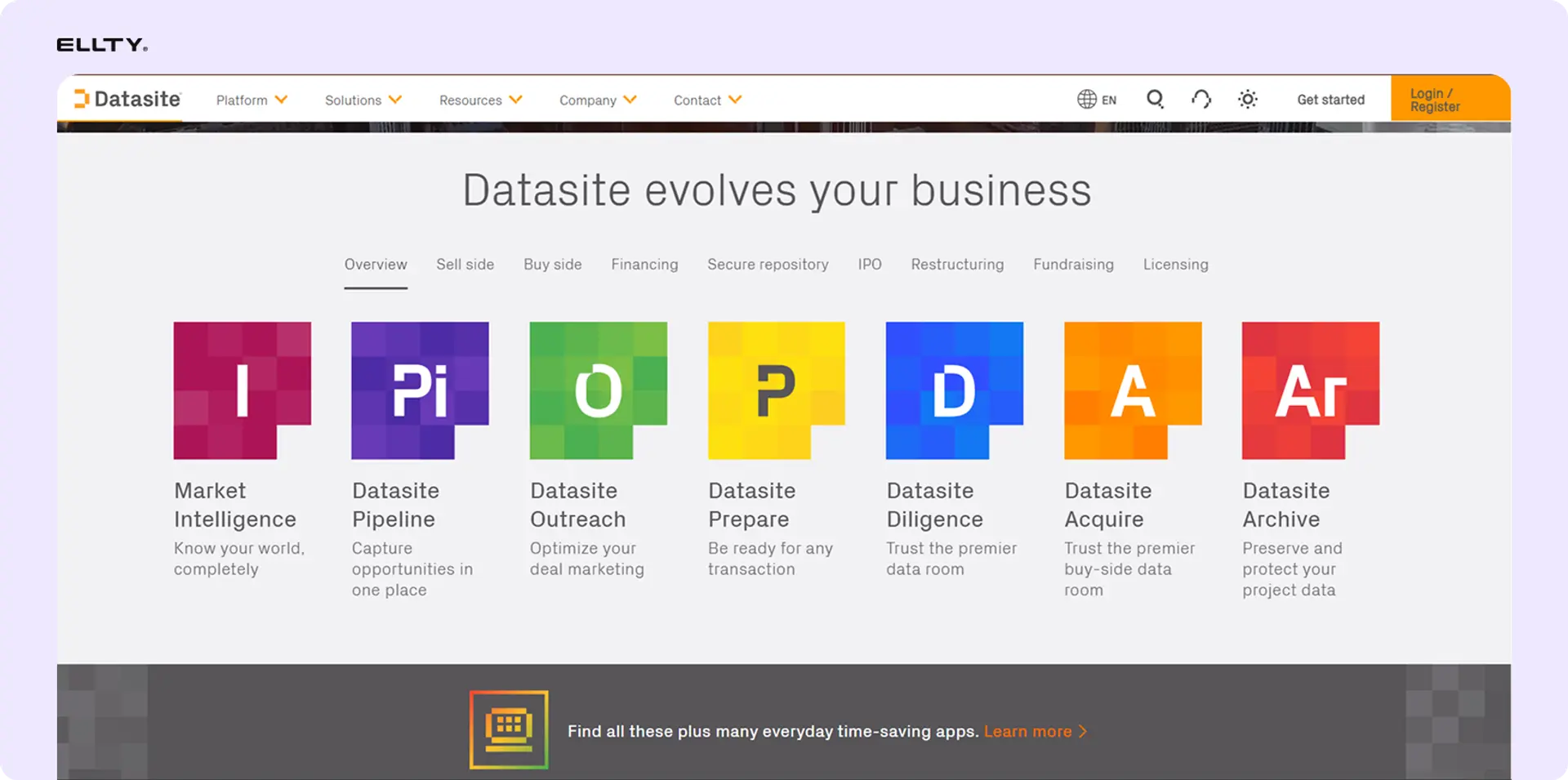
Datasite is the gold standard for large, complex M&A transactions. It's used by major investment banks, private equity firms, and corporate development teams running deals that involve hundreds of documents, multiple bidders, and tight regulatory requirements. It's trusted by institutions like Goldman Sachs, Blackstone, and Johnson & Johnson, which tells you the level of deal it's built for. Its AI capabilities include redaction with unredaction, smart indexing from diligence trackers, and automated document organization features that genuinely save time when you're processing thousands of documents under deadline pressure.
It also supports full-text search across documents in multiple languages, making it useful for cross-border transactions. The trade-off is cost and complexity. Datasite is expensive, pricing is custom and quote-based, and the platform is significantly more than most small business acquisitions or mid-market deals require. If you're running a $500M transaction with multiple bidders, institutional advisors, and a 90-day timeline, Datasite is worth every dollar. If you're a team selling a $5M SaaS business to a single strategic buyer, it's almost certainly overkill.
3. Intralinks

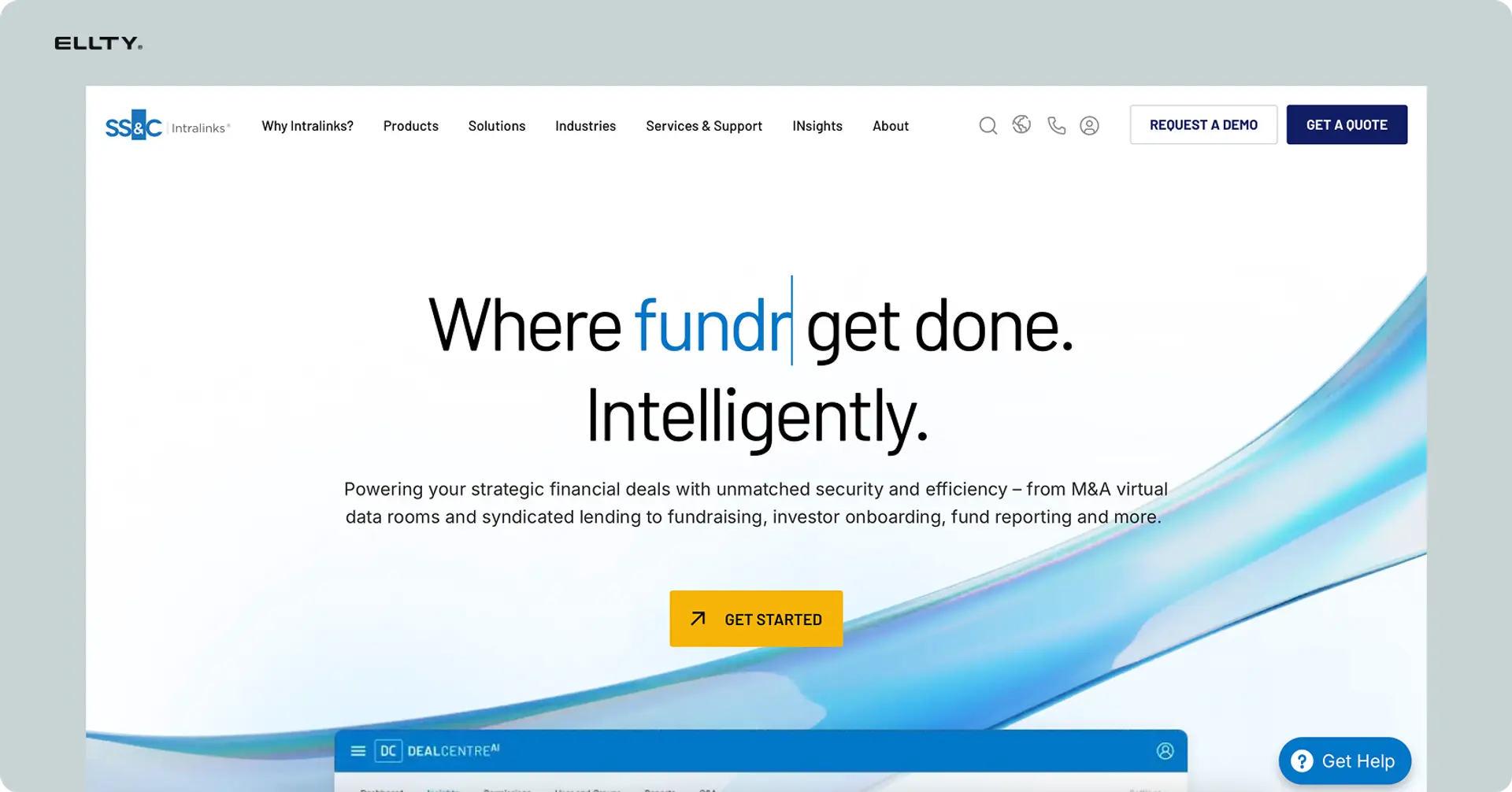
Intralinks has been in the market for over 25 years and facilitates more than 10,000 M&A deals annually. It's one of the most established names in the VDR space and is particularly popular with investment banks and private equity firms that need institutional-grade security and a proven track record. The platform offers AI-powered redaction, built-in video conferencing, structured Q&A workflows, and 16 distinct user permission roles supporting over 140 languages - which matters on cross-border deals with multiple stakeholders in different countries. Its standout feature is UNshare®, which allows administrators to retract access to documents even after they have been downloaded - a capability that's genuinely unique and particularly valuable in competitive M&A processes where information control is everything.
The downside is that Intralinks is built for large institutional deals, and smaller teams often find the pricing opaque and the interface more complex than necessary. If you're a mid-market advisor or corporate development team running multiple concurrent processes, Intralinks is a serious contender. For smaller transactions, simpler and more affordable alternatives will serve you better.
4. DealRoom


DealRoom is purpose-built for buyer-led M&A and is particularly well suited to corporate development teams and serial acquirers running multiple deals simultaneously. What separates it from most VDRs is that it doesn't just handle document storage - it integrates pipeline management, due diligence tracking, and post-merger integration into a single platform. For a company that acquires businesses regularly, having the entire deal lifecycle in one tool rather than scattered across a VDR, a project management tool, and a spreadsheet is a real operational advantage. It includes AI-driven tools for document analysis, redaction, and summary generation, which speeds up due diligence and reduces manual work. The Q&A module is also well designed, making it easier to manage the back-and-forth between buyer and seller teams during diligence.
DealRoom is less suited to one-time sellers or founders going through their first acquisition - the platform's depth is most valuable when you're running deals repeatedly and need a systematic process. For corporate acquirers and M&A advisors managing several transactions at once, it's one of the most complete platforms available at a reasonable price point.
5. Ansarada


Ansarada is one of the most AI-forward VDR platforms available, serving businesses in over 180 countries. For M&A specifically, its standout feature is deal intelligence - the platform's AI analyzes bidder document viewing patterns and predicts deal outcomes with claimed high accuracy, which helps sell-side advisors prioritize which buyers are genuinely engaged and which are going quiet. That kind of insight can meaningfully change how you manage a competitive sale process. Its Pathways feature provides structured checklists and guided workflows to help streamline due diligence and compliance processes, which is particularly useful for first-time sellers who aren't sure what a complete diligence package looks like.
The freemium model is also genuinely useful, you can set up and organize your room for free, only paying when external parties join, which means you can prepare thoroughly before the deal clock starts ticking. Worth noting: Ansarada was acquired by Datasite in 2024 but continues to operate independently. A strong choice for mid-market M&A where deal intelligence and structured workflows matter.
6. Firmex
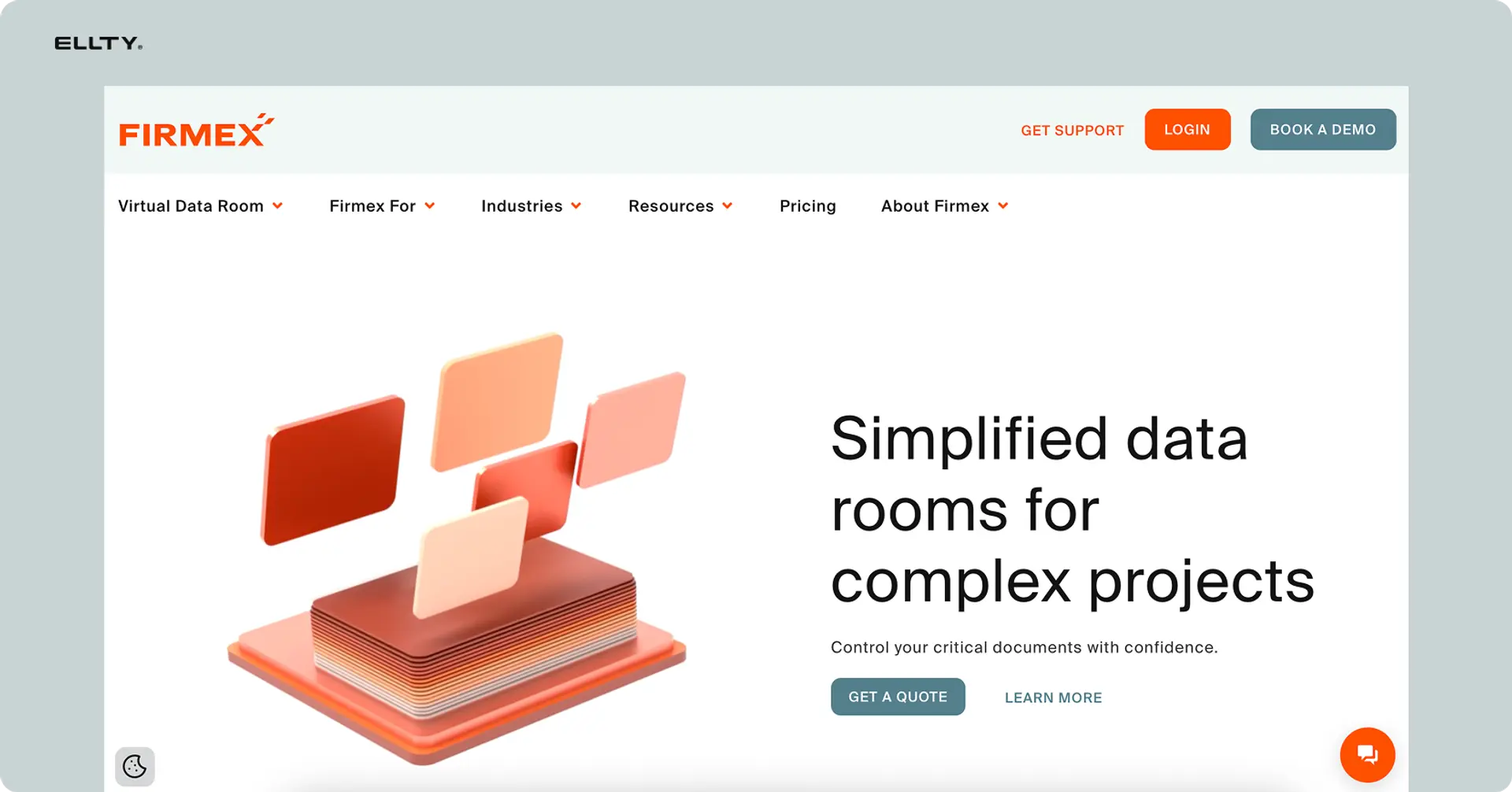
Firmex has been around since 2006 and has quietly built one of the most loyal followings in the mid-market M&A space. It's particularly popular with law firms, investment banks, and boutique advisory firms that run multiple transactions a year and need a reliable, no-nonsense platform they can count on. Firmex offers flat-rate pricing with no per-page or per-user surprises - which is a genuine differentiator in a market where hidden fees are frustratingly common. The platform handles large document volumes well, with bulk upload, granular permissions, dynamic watermarking, and detailed activity reporting that gives you a clear picture of buyer engagement throughout the process.
The interface is practical rather than flashy, which suits professional services teams who prioritize reliability over aesthetics. Firmex is particularly well suited to deals in the $10M to $500M range - complex enough to need a proper VDR, but not so large that you need the full weight of an enterprise platform like Datasite or Intralinks. If transparent pricing and consistent performance matter more to you than cutting-edge AI features, Firmex is one of the most dependable options in the market.
M&A due diligence puts more pressure on your data room than almost any other use case. The document volumes are higher, the stakes are bigger, and the legal implications of getting access controls wrong are real. Choose a platform that matches the size and complexity of your deal, not the most expensive one in the market, and not the simplest one either.
How to set up a virtual data room for M&A
Setting up a VDR doesn't have to be complicated. Here's a step-by-step process that works for most M&A situations.

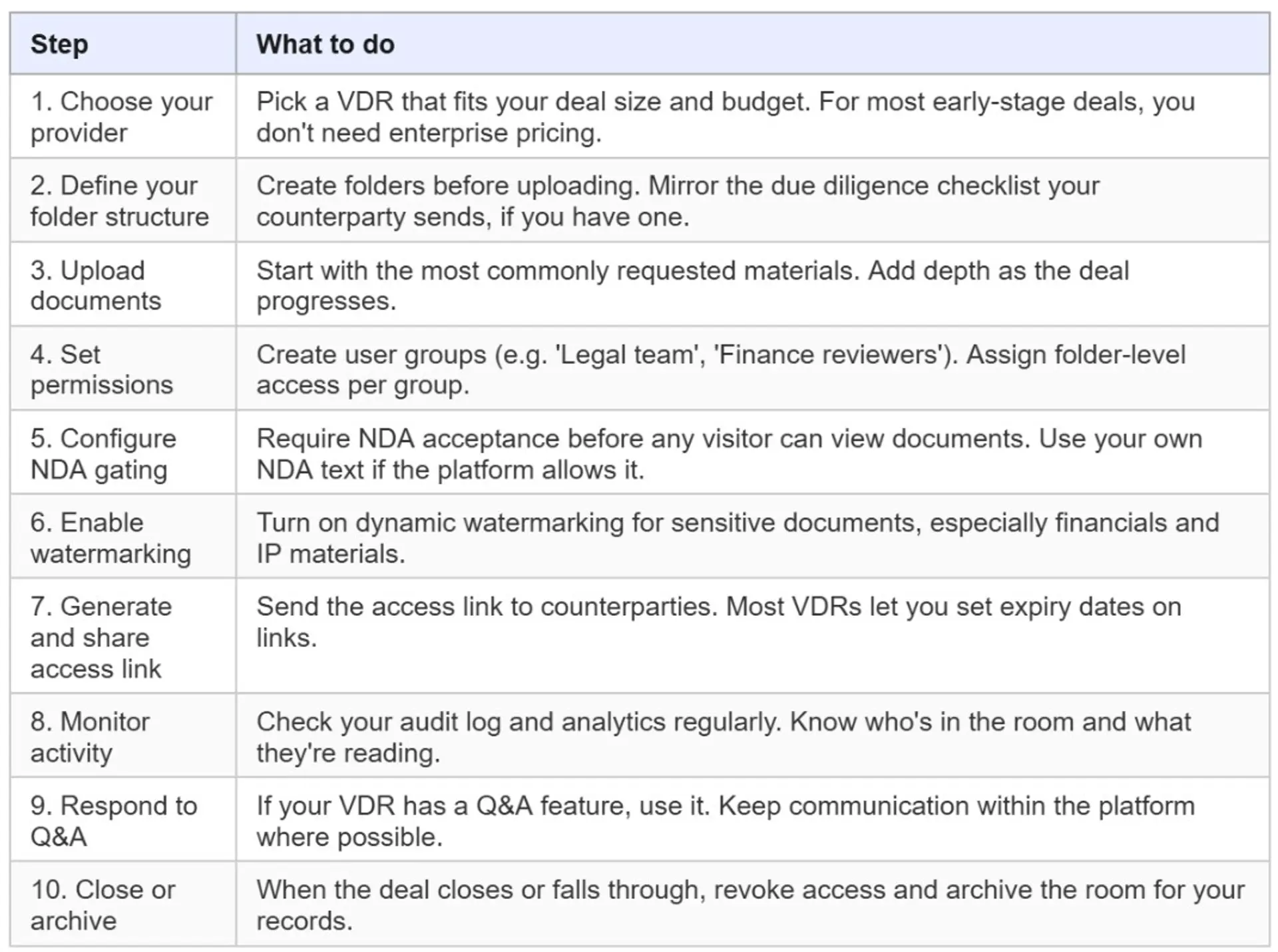
Virtual data room security: what actually matters
Security is where VDR marketing gets the most inflated. Every provider claims 'bank-level security.' Here's what to actually verify:
- SOC 2 Type II certification - this is the baseline standard for data handling. Ask for the report, not just the logo.
- ISO 27001 certification - international standard for information security management.
- Data residency - where is your data stored? EU-based companies should check GDPR compliance carefully.
- Encryption - documents should be encrypted at rest (AES-256 is standard) and in transit (TLS 1.2 or higher).
- Access control - MFA, IP restrictions, and session timeouts should be available.
- Uptime and availability - check SLA commitments, especially if you're running a time-sensitive deal.
Don't just take marketing copy at face value. Ask for the actual security documentation. Reputable providers will share it without hesitation.
Common mistakes teams make with M&A data rooms
M&A due diligence is stressful enough without making avoidable mistakes that slow the process down, spook the buyer, or create legal problems after the deal closes. Most of these mistakes aren't about the platform you use, they're about how you prepare and manage the room.
Here are the ones that come up most often.
Starting too late
The most common mistake by far. Most sellers don't think about their data room until a buyer is already at the table asking for documents. At that point you're scrambling - pulling together financial records, chasing lawyers for formation documents, and realizing your contracts are scattered across three different folders and someone's personal email. A buyer who has to wait two weeks for basic documents loses confidence fast. The fix is simple: start building your data room before you need it. Even if a deal is six months away, having your documents organized and in one place means you're ready when the conversation gets serious.
Sharing too much too soon
There's a natural instinct to appear cooperative by giving buyers access to everything from day one. That's a mistake. In a competitive sale process, you want to release documents in stages - enough to keep buyers engaged and moving forward, but not so much that you've handed over your most sensitive information before you have a signed LOI or a clear sense of who's serious. Share your company overview and headline financials early. Hold back full customer contracts, employee agreements, and detailed IP documentation until later in the process when commitment is clearer.
Sharing too little for too long
The opposite problem is equally damaging. Some sellers are so protective of their information that buyers can't complete diligence on a reasonable timeline. Incomplete rooms - missing financial statements, unsigned contracts, or placeholder documents that never get filled in - frustrate buyers and their advisors. In a competitive process, a buyer who can't get answers moves on to the next deal. Be organized, be responsive, and fill gaps quickly when they're flagged.
No version control
M&A processes take months. Financial models get updated. Contracts get revised. Legal documents get amended. If you're not managing versions carefully, buyers end up reviewing outdated documents without knowing it and that creates real problems, both during diligence and after signing. Always label documents clearly with dates or version numbers, archive old versions rather than leaving them alongside current ones, and make sure the room always reflects the most up-to-date picture of the business.
Wrong people getting access to the wrong documents
In a competitive sale process, you may have multiple bidders in your data room at the same time. Giving every party access to everything - including your full customer list, detailed employee compensation, or proprietary technology documentation - before they've earned that level of trust is a serious risk. Use permission controls properly. Create different access levels for different parties and different stages of the process. Your first-round bidders don't need the same access as your preferred buyer in final diligence.
No audit trail
If a deal falls apart and a dispute arises later, you need to be able to show exactly what was shared, with whom, and when. A data room with a proper audit trail gives you that protection. A Google Drive folder or an email thread does not. This isn't just about legal protection for the seller, buyers and their counsel also want to know that the diligence process was documented properly. If you can't produce a clear record of what was disclosed, it creates doubt about the integrity of the whole process.
Ignoring buyer engagement data
Most VDR platforms tell you exactly who opened which documents and how long they spent on each one. Most sellers barely look at this data. That's a missed opportunity. If a buyer hasn't opened your financial model in two weeks, that's a signal worth acting on. If they've spent three hours in your customer contracts section, that tells you where their concerns are focused. Engagement data helps you have smarter conversations with buyers and their advisors and it helps you identify early when someone is losing interest so you can address it before it kills the deal.
Disorganized folder structure
Buyers and their advisors are reviewing multiple deals at the same time. If your data room is a mess - inconsistent naming, documents in the wrong folders, no logical order - it signals poor operational discipline. That's not the impression you want to create when someone is deciding whether to spend tens of millions of dollars on your business. A clean, logical folder structure takes a few hours to set up and pays dividends throughout the entire process.
Not having an NDA gate
Letting anyone access your data room without first signing an NDA is an unnecessary risk. Competitors, tire-kickers, and parties with no genuine interest in your business can request access during a sale process. An NDA gate doesn't stop determined bad actors, but it does create a legal record and a meaningful barrier. Any serious VDR platform will let you require NDA acceptance before granting access. Use it.
Leaving the room open after the deal closes
Once a deal is done or falls apart, access to your data room should be reviewed immediately. Former bidders who didn't win should have their access revoked. Advisors who were involved in the process should be removed unless there's an ongoing reason for access. Leaving a room open with sensitive documents accessible to people who no longer need them is a security risk that's easy to avoid and surprisingly easy to forget about in the chaos of closing.
The underlying theme across all of these is the same: treat your data room as a managed process, not just a folder. The teams that run the cleanest diligence processes aren't just better organized, they close deals faster, at better valuations, with fewer surprises at the finish line.
FAQ: virtual data rooms for M&A
What is a virtual data room in M&A?
A virtual data room is a secure online platform used during M&A due diligence to share confidential documents between buyers, sellers, and their advisors. It replaces physical document rooms and gives the seller control over who accesses what, with full audit logging.
What is the best virtual data room for M&A?
There's no single best option, it depends on deal size and complexity. Enterprise deals often use Datasite, Intralinks, or Ansarada. For mid-market deals, providers like Ellty, Digify, and Firmex offer solid functionality at a lower cost. Ellty is a strong fit if you want fast setup, document analytics, and flat pricing without per-user fees.
How much does a virtual data room cost?
Prices range from around $69/month for basic document sharing platforms to $500+/month for enterprise VDRs. Ellty Data Room plan starts at $149/month with NDA gating, dynamic watermarking, and granular permissions. Enterprise providers like Datasite typically price by deal and can cost several thousand dollars per transaction.
What documents go in an M&A data room?
Typically: corporate structure documents, financial statements, legal contracts, IP documentation, employee agreements, customer contracts, and tax records. Exact requirements vary by deal type. Your legal advisor or the buyer will usually provide a due diligence checklist.
How long does it take to set up a virtual data room?
With modern platforms, the technical setup takes less than an hour. The real time investment is organizing and uploading your documents. Most teams underestimate this part. If your documents are well-organized internally, you can have a functional data room ready in a day or two.
Is Google Drive secure enough for M&A due diligence?
No, not for formal due diligence. Google Drive lacks NDA gating, page-level view tracking, dynamic watermarking, and granular audit logs. It's fine for internal collaboration, but it's not designed to give you the legal protection and document intelligence you need in an M&A process.
Can I use a virtual data room for fundraising, not just M&A?
Yes. VDRs are increasingly used for Series A and later fundraising rounds, not just acquisitions. Investors often request formal due diligence access even before term sheets. Ellty is built for both use cases, secure data rooms for due diligence and trackable pitch deck sharing for earlier-stage investor conversations.
What security certifications should a virtual data room provider have?
Look for SOC 2 Type II and ISO 27001 as the minimum. Also check that data is encrypted at rest and in transit, that MFA is available, and where your data is physically stored. If you have GDPR obligations, make sure the provider offers EU data residency or is compliant.
Final word
A virtual data room isn't just a place to dump documents. It's how you control your narrative during one of the most high-stakes processes you'll go through. The right setup protects you legally, gives you deal intelligence, and signals to buyers, clients, and investors that you're organized and serious.
You don't need to spend thousands a month on enterprise software to achieve that. For most deals, a well-organized data room on the right platform is entirely sufficient.
If you're starting from scratch, set up an Ellty data room today. Upload your pitch deck, create a trackable link, and see what your visitors are actually reading. It's free to start, and you can upgrade to a full data room plan when you're ready to go deeper into due diligence.
Author

Anika Tabassum Nionta is a Content Manager at Ellty, where she writes about secure document sharing, virtual data rooms, M&A, due diligence, fundraising, and sales enablement. With over 6 years of writing experience, she helps professionals understand how to share confidential documents securely, track engagement, and manage deals more effectively. Anika holds both a BA and MA in English from Dhaka University. Outside of work, she enjoys reading, exploring new cafes in Dhaka, and connecting with entrepreneurs and dealmakers in her community.

