
Mergers and acquisitions are not simple. They involve large amounts of money, sensitive documents, multiple teams, tight deadlines, and a lot of moving parts. One small mistake, a document shared with the wrong person, a missed due diligence step, or a delay in communication, can slow down or even kill a deal.
That is where M&A software comes in.
Whether you are a startup founder raising capital, a private equity firm running a deal, or a legal team managing a complex acquisition, having the right tools in place can make the whole process faster, safer, and much less stressful.
This guide covers everything you need to know: what M&A software is, why it matters, how AI is changing the space, and our top 7 picks for 2026.
What Is M&A, and How Can Software Help?
Mergers and acquisitions (M&A) refer to the process of combining two businesses, either by one buying the other (acquisition) or two companies merging into one. It also includes smaller deals like asset purchases, strategic investments, and joint ventures.
The M&A process typically involves several stages: initial discussions, letter of intent, due diligence, negotiations, regulatory approvals, and finally, closing. Each of these stages involves a large number of tasks, documents, and stakeholders.
Software helps by bringing structure and control to this process. Instead of emailing spreadsheets back and forth or managing document access manually, M&A software gives everyone involved a central place to work. Securely, efficiently, and with a full record of everything that happens.
The right tool can save weeks of back-and-forth, reduce risk, and help deals close faster.
What Is M&A Software?
M&A software is a broad category. It includes any tool specifically designed to support the mergers and acquisitions workflow, from sharing documents to managing tasks, tracking communications, and running financial models.
The most well-known type is the Virtual Data Room (VDR), a secure online space where companies share confidential documents with buyers, investors, or legal teams during due diligence. But M&A software also includes project management tools, financial modeling platforms, CRM systems built for deal flow, and communication tools.
Some businesses use a single platform that covers everything. Others build a stack of specialized tools that work together. The right approach depends on the size and complexity of your deals.
Why Businesses Need M&A Software
Here is the honest truth: deals done without the right software are slower, riskier, and harder to manage. Here is why dedicated M&A tools are worth the investment:
Better document control
In any deal, there are hundreds, sometimes thousands of documents. Contracts, financial statements, IP filings, employee agreements, property records. Managing all of this through email or shared folders is chaotic. M&A software gives you control over who sees what, when, and for how long.
Faster due diligence
Buyers need to review a lot of information before they commit. A well-organized data room speeds this up significantly. Sellers can prepare documents in advance, and buyers can move through the review process without constant back-and-forth.
Reduced risk
Sensitive information shared over email can be forwarded, screenshotted, or accessed by the wrong people. M&A software includes features like access controls, NDA gating, and watermarking that protect your information throughout the deal.
Clear audit trails
If something goes wrong or if there is a dispute later, you need a record of what happened. Good M&A software logs every action: who accessed a document, when, for how long, and what they did with it.
Team coordination
M&A deals involve lawyers, accountants, advisors, and executives, often across multiple organizations. Software keeps everyone aligned without the chaos of unstructured communication.
How AI Is Transforming M&A
Artificial intelligence is making a real difference in how M&A deals get done. It is not just a buzzword, AI is already being used across several parts of the deal process.
Due diligence review.
Reviewing thousands of documents manually takes weeks. AI-powered tools can scan, classify, and flag relevant clauses in contracts in a fraction of the time, reducing the burden on legal teams and helping surface risks faster.
Document summarization.
AI can read a 50-page agreement and give you a clear summary of the key terms in minutes. This helps deal teams move faster and focus their attention on what matters.
Risk identification.
AI tools can scan documents for red flags such as unusual clauses, missing provisions, inconsistencies, and alert the deal team before they become problems.
Data extraction.
For deals involving large amounts of financial or operational data, AI can extract key figures from unstructured documents and populate models automatically, work that used to take days.
Workflow automation.
From automatically organizing uploaded documents into the right folders to sending reminders when tasks are overdue, AI helps teams run smoother processes with less manual work.
AI does not replace the judgment of experienced deal professionals. But it does give them more time to focus on strategy and decisions, rather than administrative tasks.
Key Features to Look For in M&A Software
Not all M&A software is created equal. Here are the most important features to evaluate before choosing a platform:
Granular access controls
You need to be able to control exactly who can see which documents, by role, by group, or by individual. In a deal with multiple potential buyers, each party should only see what they are supposed to see.
Audit logs and activity tracking
Every action in the platform should be logged. You should be able to see who viewed a document, how long they spent on it, and when. This gives you visibility into buyer interest and provides a record if anything is disputed later.
NDA gating
Before a user can access sensitive documents, they should be required to sign an NDA. The best platforms handle this automatically, so no one can access your data room without agreeing to your terms first.
Dynamic watermarking
Watermarks that include the viewer's name and timestamp discourage unauthorized sharing. Even if a document is printed or screenshotted, you can trace it back to the source.
Bulk upload and document organization
Deals involve a lot of documents. The platform should make it easy to upload large numbers of files and organize them into a logical folder structure.
Secure sharing and permissions
You should be able to set expiry dates on access, revoke permissions instantly, and prevent downloading for sensitive materials.
Ease of use
This is often overlooked. A platform that takes weeks to set up or requires extensive training slows deals down. The best tools are intuitive for both the deal team and the external parties reviewing documents.
Transparent pricing
Many legacy platforms charge per user, per page, or require custom enterprise quotes. Look for tools with clear, predictable pricing so you are not surprised by the bill at the end of a deal.
How to Choose the Best M&A Software
Before you start comparing platforms, it helps to be clear about what you actually need.
- Start with your deal type. A startup raising a Series A has different needs than a private equity firm running a full acquisition. The size, complexity, and frequency of your deals should guide your decision.
- Think about your team size and structure. How many people will be using the platform? Will external parties such as lawyers, advisors, buyers, also need access? Some platforms charge per user, which can make costs unpredictable as deal teams grow.
- Consider the stage of the deal. Some tools are better suited to early-stage document sharing. Others are built for complex, multi-party due diligence with hundreds of document requests and multiple buyer groups.
- Evaluate the full cost. Look beyond the headline price. Factor in user fees, storage costs, overage charges, and the time it takes to set up and manage the platform.
- Try before you commit. Most good M&A software platforms offer a free trial or a free tier. Use it. The experience of actually setting up a data room or running a deal workflow will tell you far more than a feature comparison table.
- Check support quality. During a live deal, you may need help quickly. Responsive, knowledgeable support is worth a lot more than a slightly lower subscription fee.
7 Top Picks: Best M&A Software for 2026
1. Ellty - Best VDR for Transparent Pricing and Easy Setup

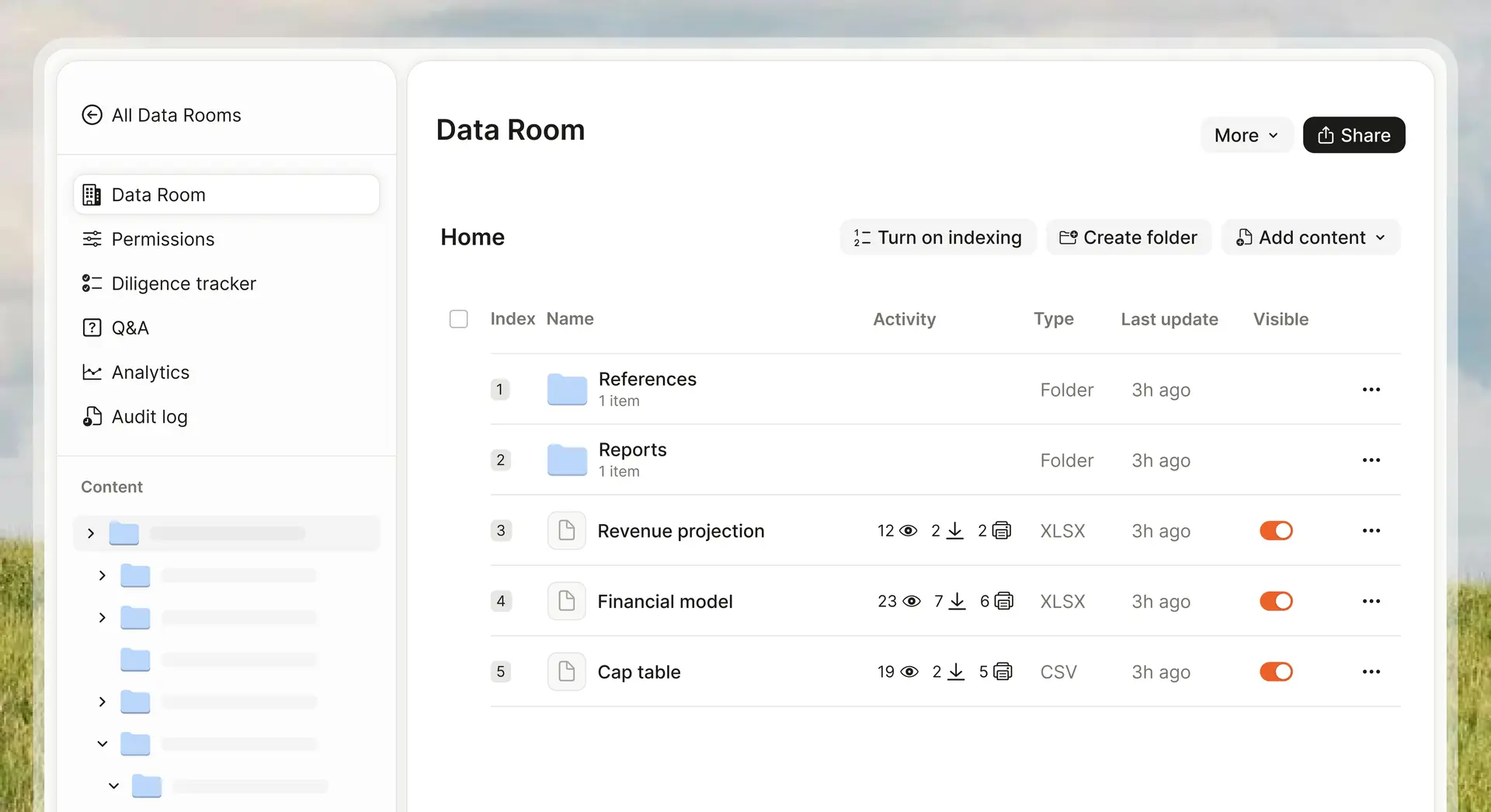
Ellty is a secure document sharing and analytics platform with full virtual data room functionality. It is designed for anyone who needs to share sensitive documents in a controlled, trackable way, whether you are raising a funding round, closing a property deal, running a consulting engagement, or managing an acquisition.
What makes Ellty stand out from older VDR platforms is its simplicity and pricing model. There are no per-user charges, no per-page fees, and no enterprise contracts that take weeks to negotiate. You pick a plan, get set up quickly, and know exactly what you are paying.
Key features:
- Granular access controls and group visitor permissions
- Real-time activity tracking and document analytics
- NDA gating so no one gets in without signing
- Dynamic watermarking to discourage unauthorized sharing
- Full audit logs for every document and user action
- eSignatures and custom branding on paid plans
- Support for up to 4,000 assets per data room (Data Room Plus)
Pricing:


Best for: SMBs, property professionals, consultants, and anyone running a deal who wants a professional data room without the complexity or cost of legacy platforms.

2. DealRoom - Best for M&A Project Management


DealRoom is built specifically for the M&A workflow. Where most data rooms focus on document storage and access, DealRoom combines a VDR with a full project management layer, including due diligence checklists, task assignments, and deal pipeline tracking.
It is particularly well-suited for teams that run multiple deals at once and need a structured way to track progress across all of them. The platform supports integration with tools like Salesforce and Slack, which helps keep deal communications connected to the broader workflow.
Best for: M&A advisors, investment banks, and corporate development teams that need to manage complex deals with many moving parts.
3. Datasite - Best for Large Enterprise Deals

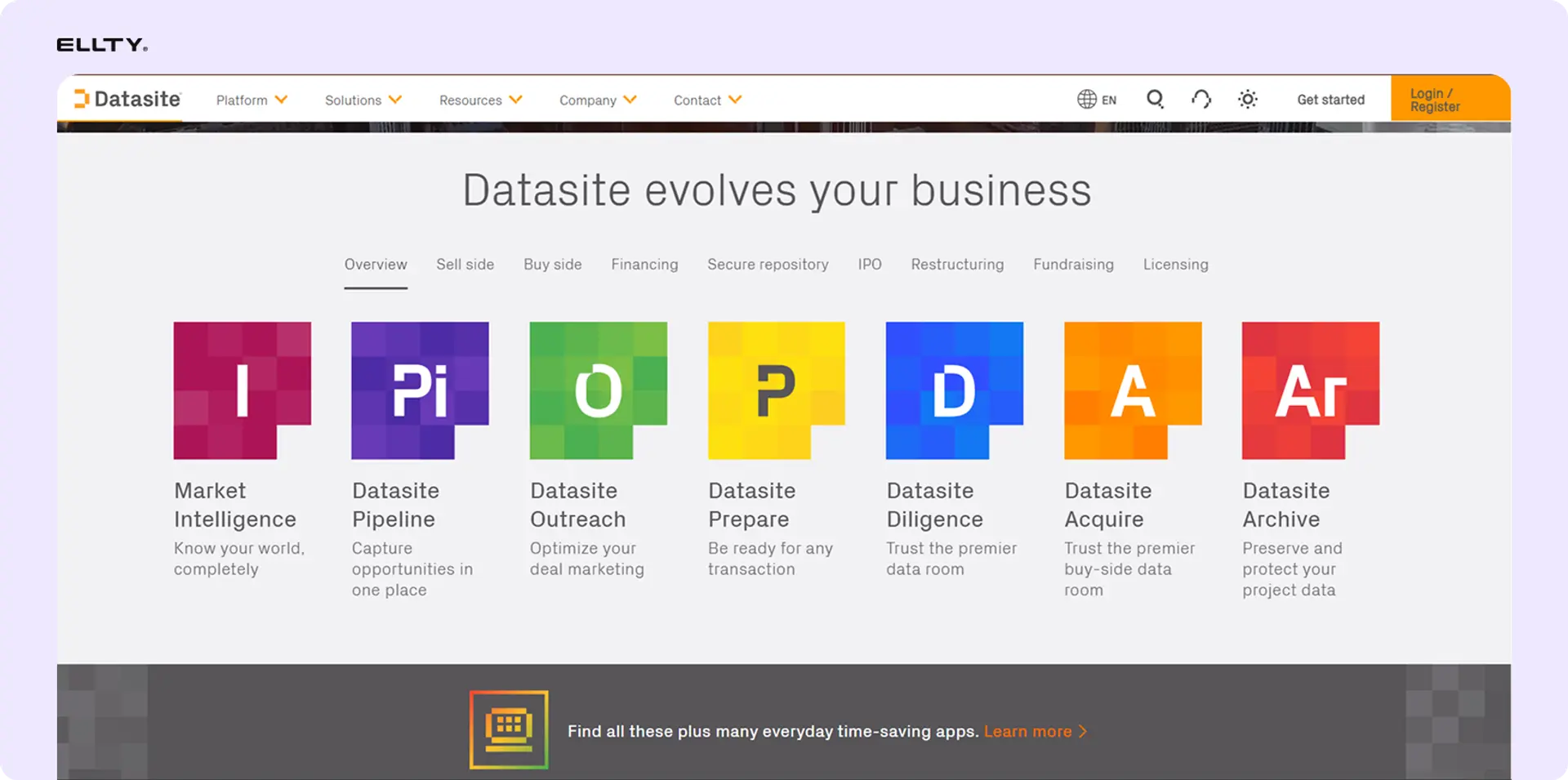
Datasite is one of the most established names in the VDR space. It is designed for large, complex transactions, full acquisitions, IPOs, restructurings, where the deal team is large and the document volume is high.
Datasite includes AI-powered due diligence tools that can automatically redact sensitive information, classify documents, and flag issues in contracts. It also offers deal marketing features for sell-side processes, including the ability to manage a formal buyer outreach and manage access for multiple bidder groups.
The platform is comprehensive, but it is also priced at the enterprise level. For smaller deals or teams, it may be more than what is needed.
Best for: Investment banks, large law firms, and corporate teams running high-value, multi-party transactions.
4. Ansarada - Best for Deal Readiness and AI Insights


Ansarada takes a slightly different approach to the M&A space. In addition to a solid VDR with the standard features you would expect, Ansarada offers a deal readiness score that assesses how prepared a company is for a transaction, based on the completeness of their documents and organizational data.
The platform also uses AI to surface insights during due diligence, helping deal teams identify gaps and risks more quickly. This is particularly useful for companies that are preparing for a sale and want to present as strong a picture as possible to potential buyers.
Best for: Companies preparing to go to market who want to improve their deal readiness, and advisors who want more analytical depth in the due diligence process.
5. Slack (with integrations) - Best for Deal Team Communication


Slack is not an M&A-specific tool, but it has become a core part of how many deal teams communicate, particularly in North America and tech-heavy industries. When used alongside a VDR and project management tool, it fills the real-time communication gap well.
Deal teams use Slack to discuss documents, coordinate tasks, share updates, and move fast. Integrations with tools like Google Drive, Notion, Jira, and most major VDR platforms make it easy to connect conversations to the actual work being done.
The key is to keep sensitive deal information inside your VDR and use Slack for coordination, not document storage.
Best for: Fast-moving deal teams that rely on real-time messaging and want to stay connected across internal and external stakeholders.
6. Carta - Best for Cap Table and Equity Management in M&A

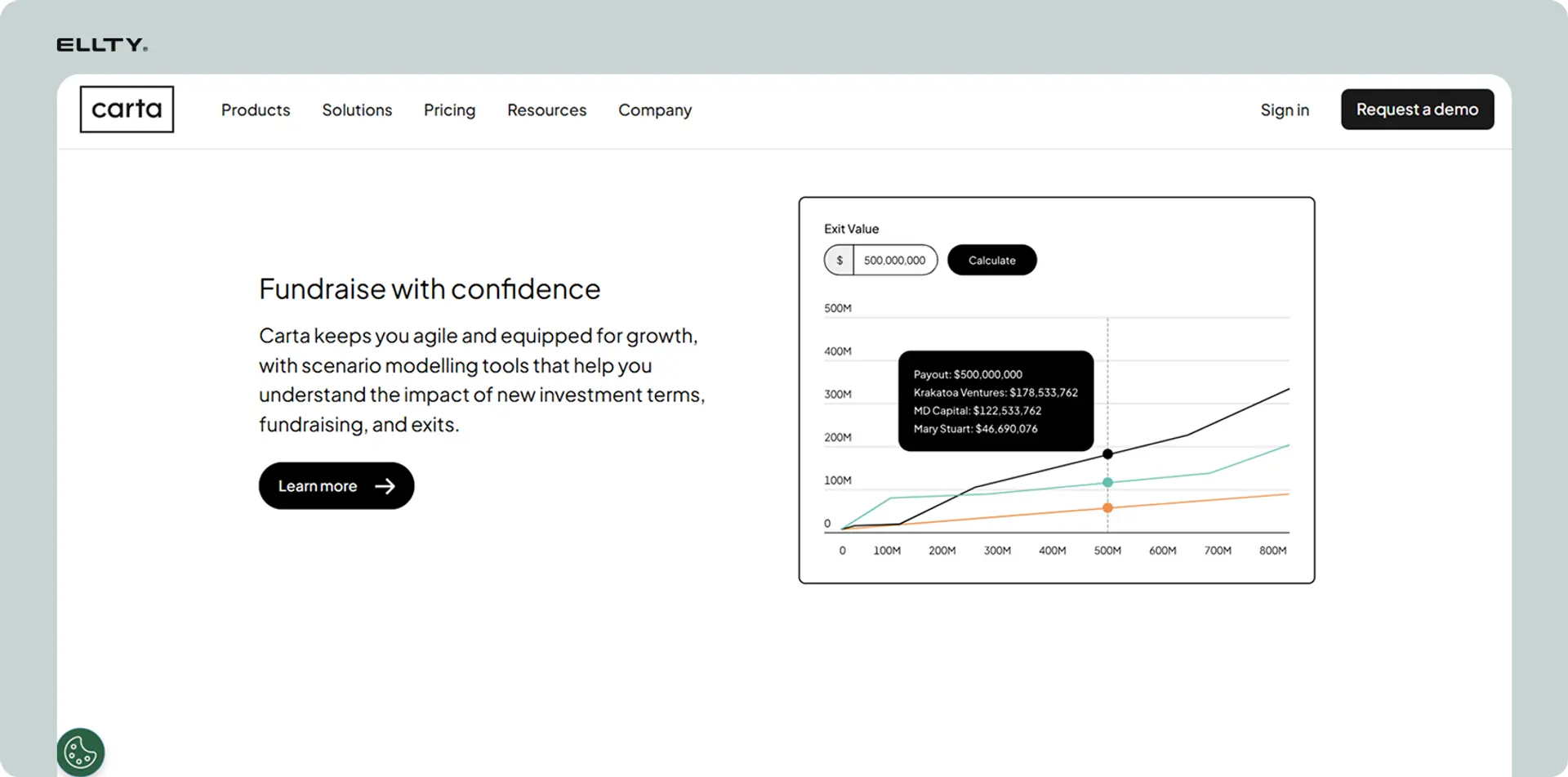
For startup acquisitions in particular, cap table complexity can be one of the most time-consuming parts of the due diligence process. Carta is the leading platform for equity management, tracking ownership, option grants, convertible notes, and investor relationships.
During an acquisition, having a clean, up-to-date Carta cap table significantly speeds up the legal review. Buyers can quickly understand the ownership structure, outstanding obligations, and what the payout waterfall looks like at close.
Carta also supports secondary transactions and tender offers, making it a useful tool beyond just primary fundraising.
Best for: Startups and growth-stage companies that need clean equity records ahead of a fundraise or acquisition.
7. Notion - Best for Internal Deal Documentation and Knowledge Management


Notion is a flexible workspace tool that many M&A teams use for internal documentation such as deal wikis, process playbooks, meeting notes, and knowledge bases. It is not a data room, and it is not secure enough for sharing confidential documents with external parties. But for keeping the internal deal team organized and aligned, it works very well.
A deal team might use Notion to document their due diligence framework, track open questions, maintain a deal timeline, and store internal notes, while using Ellty or another VDR for the actual document sharing with counterparties.
Best for: Deal teams that want a well-organized internal workspace for knowledge management and process documentation.
How to Choose the Right Mergers and Acquisitions Tool for Your Business
With so many options available, choosing the right tool comes down to your specific situation. Here is a simple framework to help:
If you are a startup or small business: You need something quick to set up, easy to use, and affordable. You likely do not need enterprise-level complexity. Ellty flat pricing and clean interface make it a natural fit, start on the free plan and upgrade as the deal progresses.
If you are a mid-market company running regular deals: You need a proper VDR with strong access controls and audit functionality, combined with a project management layer to keep the process on track. Ellty for document management and DealRoom or Notion for workflow coordination is a solid combination.
If you are an investment bank or large corporate team: You are likely running multiple complex deals simultaneously with large document volumes and multiple buyer groups. Datasite or Ansarada may be worth the enterprise price tag, given the scale and sophistication you need.
If equity complexity is a major part of your deal: Make sure Carta is in your stack, especially for startup acquisitions. A clean cap table saves significant time in legal review.
If your team is highly distributed: Add a proper communication layer. Slack or a similar tool, used alongside your VDR, keeps the team moving without turning the data room into a messaging platform.
The most important thing is to avoid stitching together tools that do not connect well. Pick a core platform for document management, add what you need around it, and make sure the whole stack is set up before the deal process begins, not in the middle of it.
FAQs
What is the difference between a VDR and regular cloud storage like Dropbox or Google Drive?
Standard cloud storage tools are not designed for deals. They lack features like NDA gating, granular permissions by user group, dynamic watermarking, and full audit logs. They also make it easy for recipients to share links further, which is a serious risk in an M&A context. A VDR is specifically built for controlled document sharing where security and traceability matter.
How much does M&A software typically cost?
It varies widely. Legacy enterprise VDR platforms can cost thousands of dollars per month, often with per-user or per-page fees that make the final bill unpredictable. More modern platforms like Ellty offer flat monthly pricing starting from $0 (free), with full data room features available from $149/month. Project management and communication tools like Notion and Slack have their own separate pricing.
Do I need a VDR for every deal, or only large ones?
Any deal where you are sharing sensitive documents with external parties benefits from a VDR. Even a small fundraising round involves financial statements, cap tables, and contracts that you do not want to share over email. A VDR gives you control, a clear record, and a professional experience for the people reviewing your documents.
Can I use M&A software if I am not a finance professional?
Yes. Modern M&A platforms are designed to be used by business owners, lawyers, property professionals, consultants, and founders, not just investment bankers. Tools like Ellty are deliberately simple to set up and do not require technical expertise or extensive onboarding.
What is NDA gating and why does it matter?
NDA gating means that a user must sign a non-disclosure agreement before they can access your data room. This is important because it creates a legal record that the user agreed to confidentiality terms before seeing your documents. Without NDA gating, you have no signed record that someone agreed not to share or misuse what they saw.
How long does it take to set up a data room?
With a modern platform like Ellty, you can have a basic data room set up in under an hour. You create a data room, organize your folders, upload documents, set permissions, and invite users. More complex setups with multiple buyer groups and custom permission structures take longer, but even these can typically be done in a day rather than a week.
Is it safe to share documents through an online data room?
Yes, provided you use a platform that takes security seriously. Look for features like end-to-end encryption, access controls, IP restrictions, and audit logs. Reputable VDR platforms are generally far more secure than sharing documents over email, where you have no control over what happens after the message is sent.
Why Ellty is the go-to platform for M&A teams

M&A deals are high-stakes, time-sensitive, and complex. The right software does not make the deal happen, but it removes the friction, reduces the risk, and gives everyone involved the confidence that the process is under control.
The tools in this list cover different parts of the M&A workflow. Some are purpose-built for document sharing and due diligence. Others help with project management, equity tracking, or team communication. The best stack for your business depends on the type and size of deals you run.
If you are looking for a place to start, particularly for the document sharing and data room side of things, Ellty is worth a close look. The pricing is transparent, the setup is quick, and you get all the core VDR features you need without an enterprise contract or a confusing per-user pricing model. Whether you are running a single deal or managing several at once, it is built to make the process simpler.
The bottom line: invest in the right tools before the deal starts, not when you are already in the middle of it.
Author

Anika Tabassum Nionta is a Content Manager at Ellty, where she writes about secure document sharing, virtual data rooms, M&A, due diligence, fundraising, and sales enablement. With over 6 years of writing experience, she helps professionals understand how to share confidential documents securely, track engagement, and manage deals more effectively. Anika holds both a BA and MA in English from Dhaka University. Outside of work, she enjoys reading, exploring new cafes in Dhaka, and connecting with entrepreneurs and dealmakers in her community.

