
Need secure document sharing for high-stakes deals?
You're closing an acquisition. You're raising a Series B. You're going through due diligence for a major partnership.
And you need to share hundreds of confidential documents with lawyers, investors, buyers, and advisors. You need to control who sees what. You need to know who's actually reviewing the materials. You need an audit trail for compliance.
Virtual data rooms solve this. They're secure online spaces where you organize sensitive documents, control access with granular permissions, and track every interaction. You see who downloaded which files, when they accessed them, and how long they spent reviewing.
Ansarada is one of the established players in the VDR space, particularly known for M&A and capital raising transactions. But is it the right choice for your deal?
This guide breaks down everything: what Ansarada is, how it works, what it costs, where it falls short, and what alternatives exist.
What is Ansarada?

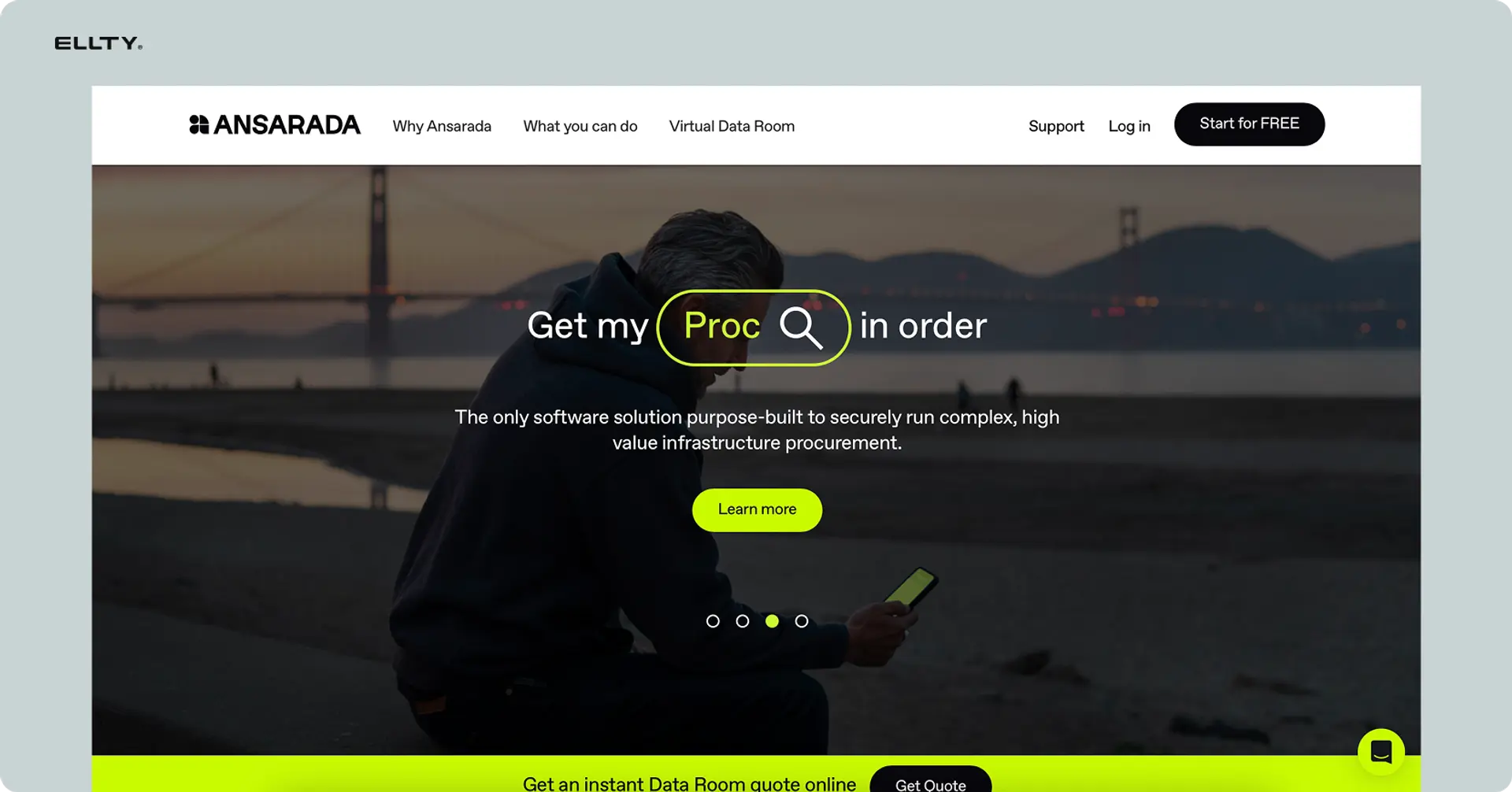
Ansarada is a virtual data room (VDR) platform designed for managing complex business transactions like mergers and acquisitions, capital raising, IPOs, and due diligence processes.
Instead of sharing sensitive documents through email or basic file storage, you upload them to Ansarada's secure environment. You organize documents into structured folders, grant specific people access to specific files, and monitor exactly who reviews what. The platform tracks every action and provides analytics on stakeholder engagement throughout your transaction.
Document management and organization: You upload financial statements, legal contracts, intellectual property documents, employee records, and any other materials needed for due diligence. Ansarada lets you organize these into logical folder structures matching how due diligence typically flows. You can bulk upload thousands of documents or add them individually. The platform supports automatic indexing and categorization to speed up organization.
Access control and permissions: You decide exactly who can see which documents. You can give a potential buyer access to financials but restrict them from HR documents until later in the process. You can set view-only permissions, allow downloads, or require watermarks on everything. You create user groups (like legal team, financial advisors, potential buyers) and apply permissions to entire groups at once. You can revoke access immediately if a deal falls through or someone leaves the transaction.
Activity tracking and analytics: Every document view, download, and interaction gets logged. You see which stakeholders are actively reviewing materials and which haven't engaged. You can identify red flags early if buyers aren't looking at key documents. The platform generates engagement scores and reports showing who's most interested. This helps you prioritize follow-ups and gauge deal momentum.
Use cases: Companies use Ansarada during M&A transactions to share due diligence materials with potential buyers. Startups raising capital create data rooms with pitch decks, financials, and legal docs for investor review. Public companies manage IPO preparation by organizing regulatory filings and financial disclosures. Private equity firms conduct due diligence on acquisition targets. Legal teams manage complex litigation discovery processes.
What makes Ansarada different:
Different from basic file sharing: Dropbox and Google Drive let you share files, but they're not built for transactions. They lack granular permissions, detailed audit trails, and compliance features required for M&A and fundraising. Ansarada is purpose-built for high-stakes deals where security and accountability are critical.
Different from general document tracking tools: Platforms like DocSend track document engagement, but they're designed for simpler use cases like sharing pitch decks or sales proposals. Ansarada handles thousands of documents with complex permission structures, compliance requirements, and workflow automation that simple tracking tools can't support.
Different from legacy VDR providers: Older VDR platforms like Intralinks or Merrill DataSite pioneered the space but are often criticized for clunky interfaces and expensive pricing. Ansarada positions itself as more modern and user-friendly while maintaining enterprise-grade security.
Market position: Ansarada is based in Australia and has expanded globally since launching in 2005. They're one of the established names in VDR, particularly strong in APAC markets. The company has facilitated over 30,000 transactions worth more than $1 trillion. They've evolved beyond pure VDR to offer AI-powered tools for deal management and automation.
How Ansarada works


Using Ansarada involves setting up a data room, organizing documents, controlling access, and monitoring stakeholder activity throughout your transaction.
Step-by-step process:
1. Create your data room: You start a new data room project for your specific transaction. Ansarada provides templates based on transaction type (M&A, fundraising, IPO, audit) with pre-structured folder hierarchies that match typical due diligence requirements. You can customize the structure or use the template as is.
2. Upload and organize documents: You drag and drop files or bulk upload entire folder structures. Ansarada automatically indexes documents and can use AI to categorize them based on content. You can create nested folder structures as deep as needed. You add metadata and tags to make documents searchable. The platform handles virtually any file type including PDFs, spreadsheets, presentations, images, CAD files, and videos.
3. Set up user groups and permissions: You create user groups for different stakeholder types (buyers, legal advisors, financial advisors, internal team). You define what each group can access. You can set folder-level permissions so buyers see financials but not employee records until later stages. You control whether users can download, print, or only view documents. You can require watermarks with user names on all downloads.
4. Invite stakeholders: You send secure invitations to participants via email. They receive login credentials and access the data room through their browser. They don't need to install software. Each user gets access only to the documents their permissions allow. You can add or remove users throughout the transaction as needed.
5. Monitor activity in real-time: You access a dashboard showing who's logged in, which documents they've viewed, how long they spent, and what they downloaded. You get alerts when specific stakeholders access key documents. You can see engagement scores indicating which parties are most active. This helps you gauge deal momentum and identify which buyers are serious.
6. Manage Q&A and communications: Ansarada includes built-in Q&A functionality. Buyers and advisors can submit questions about documents directly in the platform. You track all questions, assign them to appropriate team members, and respond within the system. This creates an audit trail of all communications and keeps everything organized in one place instead of scattered across emails.
7. Generate reports and audit trails: Throughout and after the transaction, you can generate detailed reports showing all activity. These reports satisfy compliance requirements and provide evidence for legal proceedings if needed. You can see exactly who accessed what documents and when, with timestamps and IP addresses logged.
Additional features:
AI-powered insights: Ansarada's newer features include AI analysis of documents to identify potential issues or missing materials. The system can flag inconsistencies in financial statements or highlight clauses in contracts that might require attention. It provides readiness scores indicating how prepared you are for due diligence based on the completeness of your document set.
Deal pipeline management: Beyond individual data rooms, Ansarada offers tools to manage multiple deals simultaneously. You can track deal stages, set milestones, automate workflows, and get overview dashboards of your entire transaction pipeline. This is useful for PE firms or M&A advisors managing many concurrent deals.
Integrations: Ansarada connects with tools like Salesforce, Microsoft Teams, Slack, and various CRM platforms. You can sync deal data, receive notifications in Slack when stakeholders access key documents, and integrate with existing workflows. They also offer API access for custom integrations.
Compliance and security certifications: The platform maintains ISO 27001 certification, SOC 2 compliance, and meets requirements for GDPR, HIPAA, and other regulatory frameworks. They offer data residency options so you can choose which geographic region hosts your data. This matters for transactions involving regulated industries or cross-border deals with data sovereignty requirements.
Typical workflows:
A private equity firm acquires a manufacturing company. They create an Ansarada data room with 5,000 documents organized into financial, legal, operational, and HR sections. They invite 12 potential buyers and give each limited access initially. As buyers sign NDAs and progress through stages, the firm gradually opens more folders. They track which buyers review materials most thoroughly. Three buyers emerge as serious based on engagement data. The firm focuses negotiations on those three and ultimately closes with the most engaged buyer.
A Series C startup prepares for fundraising. They organize pitch decks, financial models, cap tables, customer contracts, and IP documentation in Ansarada. They share access with 20 VC firms. They see that five firms spend significant time reviewing financials and customer data. The startup prioritizes those five for follow-up meetings and receives term sheets from three of them.
What are the limitations of Ansarada?
Ansarada works well for enterprise transactions, but it has real limitations you should understand before committing.
Enterprise pricing puts it out of reach for small deals
The issue: Ansarada doesn't publish transparent pricing. They quote custom prices based on transaction size, number of users, and features needed. Industry reports suggest data room costs typically start at $5,000-$10,000 for small deals and can exceed $50,000 for large M&A transactions.
Why it matters: If you're a seed-stage startup raising $500K or a small business with a simple transaction, paying thousands for a data room is disproportionate to deal size. The cost can represent a significant percentage of funds raised.
Who this affects: Early-stage startups, small businesses, advisors managing lower-value transactions, anyone who needs data room functionality but can't justify enterprise pricing.
Complex setup and learning curve
The issue: Ansarada is feature-rich, which means it's also complex. Setting up your first data room, configuring permissions correctly, and understanding all the features takes time. The interface assumes you understand deal processes and due diligence workflows.
Why it matters: If you need a data room urgently or don't have experience with VDRs, the learning curve slows you down. You might configure permissions incorrectly or miss important features because you don't know they exist.
Who this affects: First-time founders raising capital, teams without dedicated deal support, anyone running their first M&A process, small companies without transaction experience.
Overkill for simple sharing needs
The issue: Ansarada is built for complex, multi-party transactions with thousands of documents. If you just need to share a pitch deck with a few investors or organize 50 documents for a straightforward fundraising round, the platform is more than you need.
Why it matters: You pay for features you won't use and deal with unnecessary complexity. The overhead of setting up and managing an enterprise VDR isn't justified by simpler use cases.
Who this affects: Early-stage fundraising (pre-seed, seed), simple partnerships requiring limited document sharing, anyone with straightforward needs that don't require enterprise functionality.
Limited transparency on pricing and contracts
The issue: Ansarada requires you to contact sales for quotes. You can't see pricing upfront. Contract terms often include minimum commitments or charges based on usage metrics that aren't clear until you're deep in negotiations.
Why it matters: You can't evaluate whether it fits your budget without a sales conversation. You might discover the price is 5x what you expected after investing time in demos and evaluation.
Who this affects: Anyone with fixed budgets, teams that need to compare costs before sales calls, organizations requiring predictable pricing for budgeting purposes.
AI features require higher-tier plans
The issue: Ansarada markets AI-powered document analysis and readiness scoring, but these features are only available on premium plans. Basic VDR functionality comes without the AI tools that differentiate the platform.
Why it matters: If you're interested in Ansarada specifically for AI capabilities, you'll pay significantly more than base pricing. The features that make Ansarada compelling versus competitors may be financially out of reach.
Who this affects: Teams attracted by AI marketing but operating on limited budgets, anyone expecting AI features to be standard across all plans.
User experience still feels corporate
The issue: While Ansarada is more modern than legacy VDR providers, the interface still feels like enterprise software. It's not as intuitive or visually polished as consumer-grade tools founders might be used to.
Why it matters: Your stakeholders (investors, buyers, advisors) need to navigate the data room easily. If they find the interface confusing, they might disengage or miss important documents, which slows your deal.
Who this affects: Anyone sharing with stakeholders who aren't familiar with VDR platforms, startups used to modern, simple tools, situations where user experience impacts engagement.
When limitations become dealbreakers:
If you're raising a seed round under $2M, enterprise VDR pricing likely doesn't make economic sense compared to alternatives.
If you need a data room set up in the next 24 hours and don't have VDR experience, the learning curve will frustrate you.
If you're sharing documents with a small group (under 10 people) for a straightforward transaction, the complexity isn't justified.
If transparent pricing and month-to-month flexibility are requirements, Ansarada's sales-led model won't work.
If your stakeholders need an extremely simple, consumer-friendly experience, the corporate interface might reduce engagement.
Who uses Ansarada?
Ansarada serves specific user profiles who need enterprise-grade virtual data rooms for high-value transactions.
Private equity and M&A advisors
Who they are: PE firms acquiring companies, investment banks advising on M&A transactions, M&A lawyers managing sell-side and buy-side deals.
How they use Ansarada: They create data rooms for every deal in their pipeline. They organize thousands of documents covering financials, legal agreements, operational data, and HR materials. They control which buyers see which documents at each stage of the process. They track buyer engagement to identify serious parties and deprioritize tire-kickers.
Why it works for them: They manage multiple concurrent deals worth millions or billions. They need enterprise security, detailed audit trails for compliance, and sophisticated permission controls. Cost is less of an issue because data room expenses are typically covered by transaction fees.
Example scenario: A PE firm acquires a healthcare company for $100M. They create an Ansarada data room with 8,000 documents. They invite 25 strategic buyers and 10 financial buyers. They track who reviews which materials and identify three buyers with the highest engagement. They focus negotiations on those three and close the deal with the party that showed the strongest interest in strategic synergies.
Growth-stage startups raising Series B and beyond
Who they are: Startups raising $10M+ in later-stage funding rounds where due diligence becomes extensive and investor expectations for professional data room management increase.
How they use Ansarada: They organize pitch decks, detailed financial models, customer contracts, IP documentation, employee agreements, and regulatory filings. They share access with lead investors and let them invite their own technical and financial advisors. They track which investors and advisors spend time on which materials to understand where concerns or interest lies.
Why it works for them: Later-stage due diligence is thorough. Investors expect professional deal management. Having a proper VDR signals that the company is mature and organized. The detailed tracking helps founders understand investor concerns and address them proactively.
Example scenario: A Series C SaaS company raising $30M creates an Ansarada data room with financials, customer data, technical architecture docs, and legal agreements. They share with 8 VC firms. They see that two firms spend significant time reviewing customer retention metrics and churn analysis. The founders prepare detailed retention presentations for those firms and successfully address their concerns, leading to term sheets.
Public companies managing IPOs and regulatory processes
Who they are: CFOs and legal teams at companies preparing for public offerings or managing ongoing regulatory compliance and audit processes.
How they use Ansarada: They organize SEC filings, financial statements, board minutes, executive compensation docs, and other materials required for IPO prospectuses. They share with underwriters, auditors, and legal teams. They maintain audit trails for regulatory compliance. They update documents as regulatory requirements evolve.
Why it works for them: IPOs involve extensive document management and strict compliance requirements. Ansarada's audit trails and compliance certifications meet regulatory standards. The platform handles the volume and complexity of public company disclosure requirements.
Example scenario: A tech company preparing for IPO uses Ansarada to organize three years of audited financials, governance documents, material contracts, and risk disclosures. They share with underwriters, the SEC-designated law firm, and external auditors. The detailed activity logs satisfy regulatory requirements for document control.
Corporate development teams managing multiple deals
Who they are: Corp dev professionals at large companies who run frequent acquisitions as part of corporate strategy.
How they use Ansarada: They manage a pipeline of potential acquisitions simultaneously. They create data rooms for each target company they're evaluating. They track deal progress across multiple transactions and coordinate internal stakeholders (finance, legal, operations) as they review materials. They use reporting features to update executives on deal status.
Why it works for them: Corp dev teams need to manage many deals at once. Ansarada's pipeline management tools let them track multiple data rooms, see aggregate deal flow, and ensure nothing falls through the cracks. The platform scales to support high deal velocity.
Example scenario: A corporate development team at a Fortune 500 evaluates 15 acquisition targets per quarter. They use Ansarada to organize due diligence materials for each target. They track which internal stakeholders have reviewed which deals. They generate reports for the board showing deal pipeline status and key findings from due diligence.
Law firms managing complex litigation and discovery
Who they are: Litigation attorneys and legal teams managing large-scale document discovery, regulatory investigations, or complex legal proceedings.
How they use Ansarada: They organize millions of pages of discovery documents, emails, contracts, and evidence. They control access so opposing counsel sees only what they're entitled to see. They create redacted versions of sensitive documents. They maintain detailed audit trails showing exactly who accessed which documents for legal proceedings.
Why it works for them: Large litigation involves massive document volumes and strict requirements for document control. Ansarada handles the scale and provides the audit trails courts require. The platform supports privileged document management and redaction workflows.
Example scenario: A law firm manages discovery for a patent litigation case involving 2 million documents. They use Ansarada to organize materials, create privilege logs, and control exactly which documents opposing counsel can access. The detailed audit trail proves to the court that they've properly managed document production.
Real estate firms managing property transactions
Who they are: Commercial real estate investors, REITs, and property developers managing property acquisitions or portfolio sales.
How they use Ansarada: They organize property financials, leases, environmental reports, zoning documents, and engineering studies. They share with potential buyers and their advisors. They track which properties in a portfolio attract the most buyer interest. They manage multiple property transactions simultaneously through a single platform.
Why it works for them: Commercial real estate deals involve extensive documentation. Buyers need access to detailed property information before bidding. Ansarada lets sellers organize complex property data and control how it's shared throughout the sales process.
Example scenario: A REIT sells a portfolio of 30 office buildings. They create an Ansarada data room with documents for each property. They invite 15 institutional buyers. They track which properties each buyer reviews most carefully. They use this data to structure the auction process and maximize sale prices.
Company sizes:
Ansarada primarily serves mid-market to enterprise companies. The typical customer is a company raising $10M+ or managing deals worth millions. Very early-stage startups (pre-seed, seed) rarely use Ansarada due to cost. Enterprise Fortune 500 companies use it for major transactions.
Industries:
Common in finance (PE, VC, investment banking), technology (later-stage startups), healthcare (hospital acquisitions, pharma M&A), real estate (commercial property), and energy (oil and gas deals). Less common in retail, hospitality, or small service businesses.
When Ansarada is NOT the right fit:
If you're raising a seed round under $2M, the cost doesn't justify the value. Simpler tools work fine.
If you're a solo founder without deal experience, the complexity will overwhelm you without support.
If you need a data room set up immediately (within hours), the learning curve and setup time are prohibitive.
If you're managing a simple transaction with under 100 documents and 5 stakeholders, you're paying for features you don't need.
If you need month-to-month flexibility without long-term contracts, Ansarada's enterprise model won't work.
If transparent, self-service pricing is a requirement, the sales-led quoting process is a dealbreaker.
Ansarada pricing and plans
Ansarada uses custom enterprise pricing without published rates. They quote prices based on your specific transaction needs.
Quick pricing overview:
Ansarada doesn't publish pricing on their website. They require you to contact sales for quotes. Based on industry discussions and user reports, pricing typically starts around $5,000-$10,000 for smaller data rooms and can exceed $50,000 for large M&A transactions. Pricing factors include number of users, data room size, transaction complexity, and contract length.
Detailed plan breakdown:
Standard VDR:
- Basic virtual data room functionality
- Document management and organization
- User access controls and permissions
- Activity tracking and basic analytics
- Q&A functionality
- Standard support
- Pricing varies based on transaction scope
VDR Plus:
- Everything in Standard
- AI-powered document analysis
- Deal readiness scoring
- Advanced analytics and reporting
- Enhanced security features
- Priority support
- Pricing significantly higher than Standard
Enterprise:
- Everything in VDR Plus
- Multiple concurrent data rooms
- Deal pipeline management
- Custom integrations
- Dedicated account management
- White-label options
- Custom contract terms
Pricing factors that affect cost:
Transaction value: Larger deals typically cost more because Ansarada prices partially based on transaction size.
Number of users: More users accessing the data room increases cost.
Data volume: Larger document sets may incur higher fees.
Contract length: Longer commitments might offer better rates but lock you in.
Add-on features: AI tools, advanced analytics, and integrations often cost extra.
Hidden costs:
You might face overage charges if user count or data volume exceeds initial estimates. Some advanced features require upsells that aren't clear in initial quotes. If your transaction takes longer than expected, time-based pricing models can get expensive. Support beyond standard business hours may cost extra.
Discounts available:
Some accelerators and startup programs offer discounted Ansarada access for portfolio companies. Annual contracts versus deal-specific pricing might offer savings if you run multiple transactions per year. Non-profits may qualify for discounts but need to inquire directly.
Cost comparison to alternatives:
Ansarada sits in the mid-to-high range of VDR pricing. Legacy providers like Intralinks or Merrill DataSite are often more expensive for comparable features. Modern alternatives like Firmex or CapLinked may offer lower pricing with similar functionality. Purpose-built tools for specific use cases (like Ellty for fundraising) can be 10x cheaper but offer narrower feature sets. General document tracking tools (like DocSend) cost much less but lack VDR-specific capabilities.
For a Series B startup raising $15M, Ansarada might quote $8,000-$15,000 depending on features. For a $100M M&A deal, pricing could reach $30,000-$50,000+. These are estimates based on industry reports since Ansarada doesn't publish rates.
Ansarada pros and cons
Here's a balanced assessment of what Ansarada does well and where it falls short.
Pros (Advantages)
Enterprise-grade security meets strict requirements. Ansarada maintains ISO 27001, SOC 2, and other certifications that regulated industries and large corporations require. For deals involving sensitive data or regulatory compliance, the security infrastructure is solid.
Detailed audit trails satisfy legal and compliance needs. Every document access, download, and interaction gets logged with timestamps, IP addresses, and user details. This creates the paper trail lawyers and auditors need for regulatory proceedings.
Granular permission controls handle complex deals. You can set folder-level, document-level, and even section-level permissions. You can create user groups with different access rights and adjust permissions as deals progress through stages.
AI-powered features identify potential issues. The platform can analyze documents, flag inconsistencies, identify missing materials, and provide readiness scores indicating how prepared you are for due diligence.
Q&A functionality keeps communications organized. Instead of due diligence questions scattered across emails, everything stays within the platform. You track questions, assign them to team members, and maintain an audit trail of all communications.
Pipeline management helps with multiple concurrent deals. For PE firms or M&A advisors managing many deals, Ansarada provides overview dashboards showing deal status, key milestones, and aggregate activity across your entire pipeline.
Strong track record with large transactions. Ansarada has facilitated over 30,000 transactions worth more than $1 trillion. They've proven they can handle complex, high-value deals.
Data residency options address sovereignty requirements. You can choose which geographic region hosts your data. This matters for cross-border deals or transactions involving countries with strict data residency laws.
Built-in templates speed setup. Pre-configured folder structures for M&A, fundraising, IPOs, and other transaction types help you get started faster instead of building from scratch.
Integration ecosystem connects with existing workflows. Ansarada integrates with Salesforce, Microsoft Teams, Slack, and other tools so deal data flows into platforms you already use.
Cons (Disadvantages)
No transparent pricing makes evaluation difficult. You can't assess whether Ansarada fits your budget without a sales call. This wastes time if the price is significantly higher than you can afford.
Enterprise pricing excludes smaller deals and early-stage startups. If you're raising under $2M or managing a small transaction, the cost is disproportionate to deal value.
Complex interface has a steep learning curve. Setting up your first data room, understanding all features, and configuring permissions correctly takes time. First-time users often feel overwhelmed.
Sales-led process delays getting started. You can't sign up and start using Ansarada immediately. You need to schedule demos, wait for quotes, and negotiate contracts before accessing the platform.
Overkill for simple sharing needs. If you just need to share documents with a few stakeholders for straightforward transactions, Ansarada's enterprise functionality is more than necessary.
AI features require premium tiers. The differentiated capabilities that make Ansarada interesting are locked behind higher-priced plans, not available at entry levels.
User experience feels corporate, not consumer-friendly. While more modern than legacy VDRs, the interface still has enterprise software aesthetics. Stakeholders used to consumer apps might find it less intuitive.
Contract terms often include minimum commitments. You might be locked into longer contracts than your transaction timeline requires, paying for access you don't need after deals close.
Mobile experience is limited. Managing data rooms from mobile devices is clunky. You'll do most work from desktop, which limits flexibility.
Customer support quality varies. User reviews note inconsistent support experiences, especially when the system goes down. Premium plans get dedicated account managers, but lower tiers rely on standard support channels that can be slow.
Ansarada alternatives to consider
If Ansarada doesn't fit your needs or budget, several alternatives offer different approaches to secure document sharing and virtual data rooms.
Ellty - Document tracking without enterprise complexity

What it is: Ellty is a document sharing, tracking, and virtual data room platform built specifically for startup fundraising. It focuses on simplicity and affordability without sacrificing essential analytics, eSignatures, or security features.
Key features:
- Upload documents and organize fundraising materials into structured virtual data rooms
- Share trackable links with investors and track engagement in real-time
- See who viewed which documents, which pages they focused on, and how long they spent
- Get instant notifications when investors access your materials
- Secure access controls including password protection, email verification, NDA gating, and dynamic watermarking
- eSignatures built in, no separate tool needed
- Flat-rate pricing regardless of team size or user count
Pricing: Ellty starts free forever for core tracking and analytics. Paid plans start at $69/month for unlimited documents, eSignatures, and full data room functionality - one flat rate whether you're a solo founder or a team of 20. No per-user fees, no overage charges, no custom quotes.
Best for: Seed to Series B startups raising capital, small teams that need full data room functionality without enterprise pricing, founders who want setup completed in minutes not days, anyone who needs document tracking, eSignatures, and due diligence management under one affordable roof.
vs. Ansarada comparison:


When to choose Ellty:
You're raising a seed or Series A round and need a professional way to share documents with investors without enterprise VDR costs. You want transparent pricing you can budget for without sales negotiations. You need to get a data room running today, not next week. Your transaction is focused on fundraising rather than M&A or regulatory processes. You value simplicity and modern UX over comprehensive enterprise features.
When to choose Ansarada:
You're managing a complex M&A transaction worth tens or hundreds of millions where cost is less of a concern. You need extensive compliance certifications and audit trails for regulatory requirements. You're running multiple concurrent deals and need pipeline management tools. You have a team experienced with VDRs who can handle the complexity. Your organization already budgets for enterprise software and prioritizes features over cost.
Firmex - Mid-market VDR with clearer pricing
What it is: A virtual data room provider focused on mid-market M&A, fundraising, and due diligence with more transparent pricing than legacy providers.
Key differentiator: Firmex publishes pricing tiers on their website, making it easier to evaluate cost before sales calls. They position themselves as more affordable than enterprise VDRs while maintaining similar security and features.
Pricing: Plans start around $500/month for basic VDR functionality, with higher tiers for advanced features. Still significantly more expensive than simple document tracking tools but cheaper than Ansarada for comparable deals.
Best for: Mid-market M&A transactions, companies that want VDR functionality with more pricing transparency, teams that don't need the most advanced features.
vs. Ansarada: Firmex is generally less expensive and has a simpler interface, but offers fewer AI-powered features and less sophisticated analytics. Choose Firmex if cost and transparency matter more than cutting-edge functionality. Choose Ansarada if you need the most advanced features regardless of price.
CapLinked - Affordable VDR for smaller deals
What it is: A virtual data room platform targeting smaller transactions and teams that don't need full enterprise VDR capabilities.
Key differentiator: Lower pricing than traditional VDRs with self-service setup. You can start immediately without sales conversations. Plans include flat monthly rates rather than per-deal pricing.
Pricing: Starts at $149/month for basic plans, with professional plans around $599/month. Much more affordable than Ansarada for small to mid-sized transactions.
Best for: Small businesses managing acquisitions, Series A/B startups needing data rooms, anyone who needs VDR features on a limited budget.
vs. Ansarada: CapLinked is significantly cheaper and easier to get started with, but lacks the advanced AI features, pipeline management, and enterprise support that Ansarada provides. Choose CapLinked if you need basic VDR functionality at affordable prices. Choose Ansarada if you're managing complex, high-value deals where advanced features justify the cost.
Intralinks - Legacy enterprise VDR
What it is: One of the oldest and most established VDR providers, focused on large enterprise M&A and regulatory processes.
Key differentiator: Deep experience with massive, complex transactions. Extremely robust security and compliance features. Handles the largest deals in the market.
Pricing: Custom enterprise pricing, typically more expensive than Ansarada. Pricing is opaque and requires sales negotiations.
Best for: Fortune 500 companies, billion-dollar transactions, situations where proven track record with massive deals matters more than cost or user experience.
vs. Ansarada: Intralinks handles larger, more complex deals but has an older interface and is generally more expensive. Choose Intralinks if you're managing the largest, most complex transactions and need the most established provider. Choose Ansarada if you want more modern features and better user experience while still maintaining enterprise capabilities.
Google Drive with third-party permissions tools - Budget option
What it is: Using Google Drive for document storage combined with third-party tools that add permission management and basic tracking.
Key differentiator: Extremely affordable. Most teams already use Google Drive. Tools like AODocs or DocSend can add permission controls and tracking on top of Drive storage.
Pricing: Google Drive is free for basic use, $12/user/month for business. Third-party permission tools add $10-50/user/month depending on features.
Best for: Very early-stage startups with minimal budgets, simple transactions with small document sets, teams already using Google Workspace who need slightly better controls.
vs. Ansarada: Google Drive with add-ons lacks the security, audit trails, compliance certifications, and professional features that VDRs provide. It's adequate for simple sharing but not for serious M&A or regulated transactions. Choose this approach only if budget is the primary concern and your transaction doesn't require formal VDR capabilities. Choose Ansarada if you need professional VDR features for serious deals.
Is Ansarada safe?
Yes, Ansarada implements enterprise-grade security appropriate for high-stakes transactions. They maintain ISO 27001 certification, SOC 2 Type II compliance, and meet requirements for GDPR, HIPAA, FINRA, and other regulatory frameworks. They use bank-level encryption for data in transit and at rest. They offer two-factor authentication, detailed access controls, and comprehensive audit trails. They provide data residency options so you can choose which geographic region hosts your data, addressing sovereignty requirements for international deals. For M&A, fundraising, IPOs, and other transactions involving sensitive financial and legal data, Ansarada provides the security infrastructure you need.
Is Ansarada right for you?
Ansarada makes sense if you're managing high-value, complex transactions where security, compliance, and detailed audit trails are critical. It's particularly appropriate for M&A deals, later-stage fundraising (Series B+), IPOs, and situations where enterprise features justify enterprise pricing. However, if you're an early-stage startup, managing a simple transaction, or need transparent pricing without sales negotiations, alternatives better match your needs. Evaluate whether the complexity and cost align with your deal size and organizational capabilities.
Getting started with virtual data rooms
Why use a VDR: Virtual data rooms transform how you handle due diligence and sensitive document sharing. Instead of chaotic email threads and files scattered across platforms, everything lives in one secure space. You control exactly who sees what, you track stakeholder engagement, and you maintain audit trails for compliance. For any transaction involving multiple parties and sensitive information, a VDR makes the process more professional, secure, and efficient.
How to begin: Start by auditing what documents you'll need to share. For fundraising, that's pitch decks, financials, legal docs, customer contracts, and IP materials. For M&A, it's financial statements, contracts, employee records, operational data, and legal agreements. Organize these into logical categories before uploading. Choose a VDR that matches your transaction complexity and budget. Don't over-engineer - if you're raising seed capital, you don't need the same platform as a billion-dollar acquisition.
Best practices: Structure folders logically so stakeholders can find what they need without asking questions. Create clear naming conventions for documents. Set permissions carefully - don't give everyone access to everything immediately. Stage access so sensitive materials only become available after NDAs or at specific deal milestones. Track engagement actively and follow up with stakeholders who show strong interest or haven't engaged at all. Generate reports regularly to understand deal momentum. Keep the data room updated as new documents become available or circumstances change.
Frequently asked questions
How much does Ansarada actually cost?
Ansarada doesn't publish pricing. Based on user reports, expect $5,000-$10,000 minimum for smaller transactions and $30,000-$50,000+ for large M&A deals. You need to contact sales for specific quotes based on your transaction.
Can I try Ansarada before committing?
Ansarada offers demos and sometimes trial access, but you need to go through their sales process first. There's no self-service trial you can start immediately without sales conversations.
What's the difference between Ansarada and Dropbox?
Dropbox is file storage. Ansarada is a virtual data room built for transactions. Ansarada provides granular permissions, detailed audit trails, Q&A functionality, compliance certifications, and analytics that Dropbox doesn't offer. Use Dropbox for general file storage. Use Ansarada for M&A, fundraising, and due diligence processes.
How long does it take to set up an Ansarada data room?
Setup time varies based on transaction complexity. Organizing and uploading documents can take days or weeks for large deals with thousands of files. Configuring permissions and user groups adds time. Simple data rooms might be ready in a few days. Complex M&A data rooms often take weeks to fully prepare.
Does Ansarada work for seed-stage fundraising?
Technically yes, but it's often overkill. Seed-stage due diligence rarely requires enterprise VDR features. The cost is disproportionate to typical seed round sizes. Most seed-stage founders use simpler, more affordable tools and only move to enterprise VDRs at Series B or later.
Can multiple team members manage the same Ansarada data room?
Yes. You can have multiple administrators with full control over the data room. You can also assign team members to manage specific folders or respond to certain Q&A topics. Permission management lets you control what internal team members can do.
What file types does Ansarada support?
Ansarada handles virtually any file type including PDFs, Microsoft Office documents, images, videos, CAD files, and more. There are file size limits (typically up to several GB per file) but standard business documents work without issues.
Does Ansarada integrate with Salesforce?
Yes. Ansarada offers Salesforce integration so deal data and activity can sync to your CRM. This requires setup and may be available only on higher-tier plans.
Can I revoke access after sharing an Ansarada data room?
Yes. You can revoke individual user access immediately at any time. You can also expire entire data rooms or specific documents on set dates. This gives you ongoing control even after stakeholders have been granted access.
What happens to my data after the transaction closes?
Your data remains in Ansarada according to your contract terms. You typically have ongoing access for some period after the deal closes so you can retrieve documents if needed. Understand retention policies before uploading sensitive materials.
Is Ansarada HIPAA compliant?
Yes. Ansarada can provide HIPAA-compliant environments for healthcare transactions. You need to ensure this is specified in your contract and properly configured for your specific data room.
How does Ansarada pricing compare to competitors?
Ansarada sits in the mid-to-high range. Legacy providers like Intralinks are often more expensive. Modern alternatives like Firmex or CapLinked are generally cheaper. Purpose-built tools for specific use cases (like Ellty for fundraising) cost a fraction of Ansarada but offer narrower functionality.
Author

Anika Tabassum Nionta is a Content Manager at Ellty, where she writes about secure document sharing, virtual data rooms, M&A, due diligence, fundraising, and sales enablement. With over 6 years of writing experience, she helps professionals understand how to share confidential documents securely, track engagement, and manage deals more effectively. Anika holds both a BA and MA in English from Dhaka University. Outside of work, she enjoys reading, exploring new cafes in Dhaka, and connecting with entrepreneurs and dealmakers in her community.

