
Ansarada is one of the established names in virtual data rooms. It's been around since 2005 and handles everything from M&A transactions to fundraising due diligence. Plenty of mid-market and enterprise teams use it for complex deals.
We've spent the last few months testing alternatives to Ansarada. The main reasons businesses look elsewhere: pricing can get steep for smaller teams, the feature set is often more than early-stage companies need, and setup time can be longer than some teams want. We also heard from founders who just needed simple pitch deck sharing with analytics, not a full enterprise VDR.
We've personally tested 9 alternatives that handle different parts of what Ansarada does. Some focus purely on document sharing and analytics. Others offer full virtual data room capabilities but with simpler interfaces. A few target specific use cases like fundraising or M&A. Here's what we discovered about each one.
Key takeaways
The virtual data room market offers many Ansarada alternatives, each with different strengths for startup fundraising, mid-market deals, or enterprise M&A.
Several alternatives offer better pricing transparency, faster deployment, and simpler interfaces compared to Ansarada's enterprise-focused approach.
Many modern solutions target specific use cases like fundraising or compliance rather than trying to cover every type of transaction.
Why look for an Ansarada alternative?
Ansarada handles virtual data rooms and M&A transactions well. The platform offers comprehensive security features, AI-powered insights, and detailed audit trails that work for complex deals. For mid-market to enterprise M&A, that's a proven solution. But Ansarada isn't the only option, and it's not always the best fit for every team.
Better features for the price
Several alternatives offer comparable security and document management with additional features at similar or lower costs. Some focus specifically on startup fundraising rather than broad M&A workflows. Others provide simpler interfaces that require less implementation time. We found tools that offer transparent pricing instead of custom quotes, which helps you budget accurately from the start. Some alternatives include features like integrated project management or faster deployment that Ansarada doesn't emphasize. For teams that don't need enterprise-level complexity, these focused tools deliver what you actually use.
Different workflow needs
Ansarada focuses on comprehensive deal management across M&A, fundraising, and procurement. That's great if you need all those capabilities. But if you're just sharing pitch decks with investors, managing early-stage due diligence, or need quick document analytics, you might benefit from a more streamlined platform. Some teams need simpler tools without weeks of setup. Others need specific features like built-in project management or compliance-focused controls that align better with their industry. The right alternative depends on what you're actually trying to accomplish and how complex your deals really are.
Cost considerations
Ansarada's pricing requires custom quotes for each deal. The enterprise model means costs can scale significantly for active deal teams. We found alternatives with published pricing that make more sense for startups and mid-market companies, and others with free tiers that work fine for early-stage fundraising. Feature requirements also matter. Some alternatives offer the core VDR capabilities you need where Ansarada bundles in enterprise features you might never use. For smaller teams or straightforward transactions, this makes a real difference in both cost and usability.
Ansarada alternatives overview
Here are the best Ansarada alternatives in 2026 for virtual data rooms and deal management (in our opinion)
Ellty - Secure document sharing, real-time analytics, and virtual data rooms for startups
Firmex - M&A-focused VDR with faster deployment
Datasite - Enterprise deals with AI document management
Intralinks - Established platform for complex deal workflows
DealRoom - VDR with integrated M&A project management
Venue - Compliance-first data rooms for regulated industries
Caplinked - Mid-market VDR without enterprise pricing
DocSend - Simple document sharing with page-level analytics
Box - Secure file sharing for teams already using it
What are the best Ansarada alternatives?
The best Ansarada alternative depends on what you're actually trying to accomplish.
For startup fundraising: Ellty gives you secure document sharing, page-by-page analytics, and virtual data room functionality without enterprise complexity. Upload your pitch deck and due diligence documents, create trackable links, see exactly who viewed what. Setup takes minutes, not weeks. Flat-rate pricing instead of custom quotes.
For M&A project management: DealRoom when you need deal tracking integrated with your data room. Manage diligence requests, assign tasks, track progress, all while documents live in the same platform. Good for corporate development teams tired of managing tasks in spreadsheets while files live elsewhere. The VDR features are solid, the project visibility is what sets it apart.
For mid-market deals: Caplinked if you need real VDR capabilities without enterprise budgets. Secure document management, granular permissions, activity tracking, Q&A tools. Takes a few hours to set up instead of days. Published pricing around $600/month instead of custom quotes. You lose some AI features and advanced analytics, but you get what most mid-sized deals actually need.
For enterprise M&A: Datasite when you're managing complex transactions with thousands of documents. AI-powered document categorization, multilingual search, concurrent buyer management. Takes longer to learn, costs enterprise prices, but handles the scale and complexity that smaller tools can't. Investment banks use this for good reason.
For compliance-heavy industries: Venue when regulatory requirements matter as much as the deal itself. Enhanced audit trails, compliance reporting, extensive security certifications. Financial services, healthcare, legal firms where proving who accessed what and when isn't optional. More setup work, but compliance teams approve it.
For simple pitch sharing: DocSend if you just need document analytics without data room features. Link-based sharing with page-level viewing insights. Not a VDR, but perfect for tracking investor engagement with pitch decks. Lighter weight, lower cost, faster setup than full data room platforms.
For established enterprises: Intralinks when you're running multiple deals simultaneously and need everything integrated with existing systems. Deep integration ecosystem, portfolio-level analytics, deal lifecycle management. Built for teams already embedded in enterprise workflows. Assumes you know what you're doing.
For basic secure sharing: Box if you already use it company-wide and just need to share some documents securely. Not designed for deals, but handles document control and permissions fine for smaller transactions. No deal-specific features, but you're already paying for it anyway.
Different needs, not better or worse. Ansarada works well for comprehensive deal management. These alternatives just handle different scenarios or priorities. Pick based on whether you need startup simplicity, mid-market affordability, M&A project tools, or enterprise scale.
Types of Ansarada alternatives
Ansarada alternatives fall into different categories based on what they actually do.
Startup-focused document platforms - Built specifically for fundraising and early-stage deals. Ellty and DocSend fit here. Upload pitch decks and due diligence documents, share trackable links, see who viewed what and for how long. You're tracking investor engagement, not managing complex M&A workflows. Perfect for seed through Series B fundraising where you need analytics and basic data room functionality without enterprise overhead.
M&A project management VDRs - More than just document storage. DealRoom does this. Manage the entire deal workflow with task tracking, diligence request lists, team assignments, all integrated with document management. You're coordinating people and documents together. Good when M&A is a project that needs managing, not just files that need storing.
Mid-market VDR platforms - Core data room features without enterprise complexity. Caplinked and Firmex focus here. Secure document sharing, granular permissions, Q&A management, activity tracking. Setup takes hours instead of weeks, pricing is published instead of custom quotes. Built for business sales, real estate deals, and mid-sized M&A where you need real VDR capabilities but not AI-powered deal insights.
Enterprise deal management systems - When scale and sophistication matter more than simplicity. Datasite and Intralinks live here. AI document categorization, multilingual search, concurrent buyer management, portfolio analytics. Setup takes longer, costs more, but you get features that handle massive transactions with complex stakeholder structures. Built for investment banks and private equity firms running dozens of deals simultaneously.
Compliance-first VDRs - When regulatory requirements drive everything. Venue focuses here. Enhanced audit trails, compliance reporting, extensive security certifications, detailed access controls. Setup requires configuring security policies most startups don't need. Perfect for financial services, healthcare, legal firms where proving compliance matters as much as closing the deal.
Universal file storage platforms - General-purpose tools that happen to share files securely. Box and Dropbox. Everyone already has them, they integrate with everything, but deal-specific features don't exist. You can share due diligence documents through Box, but you won't get Q&A management or transaction analytics. Good enough for basic needs if you're already paying for them.
Established enterprise platforms - Built for teams embedded in complex systems. Intralinks sits here. Deep integration ecosystems, deal lifecycle management, portfolio-level visibility. Not trying to be simple or affordable. Assumes you have experienced deal professionals and existing enterprise infrastructure. Good when fitting into established workflows matters more than ease of use.
Minimalist document sharing - Stripped-down analytics without complexity. Tools like BriefLink answer one question: did they look at it? No data room features, no team collaboration, no learning curve. Upload a document, get a link, see page views. Not suitable for actual due diligence, but works for quick pitch deck sharing.
Different problems, different tools. Ansarada sits in the comprehensive deal management category with enterprise features and AI insights. These alternatives either do the same thing at different scales, or solve adjacent problems entirely. Pick based on whether you need startup speed, mid-market affordability, M&A project tools, compliance controls, or enterprise sophistication.
Quick comparison: Ansarada alternatives at a glance


We tested each of these tools ourselves. Below, we'll break down what we found - the good, the specific use cases, and who each one works best for.
1. Ellty - For pitch deck sharing without the enterprise complexity
Ratings and Reviews: Recently launched - early users highlight fast setup and clear analytics


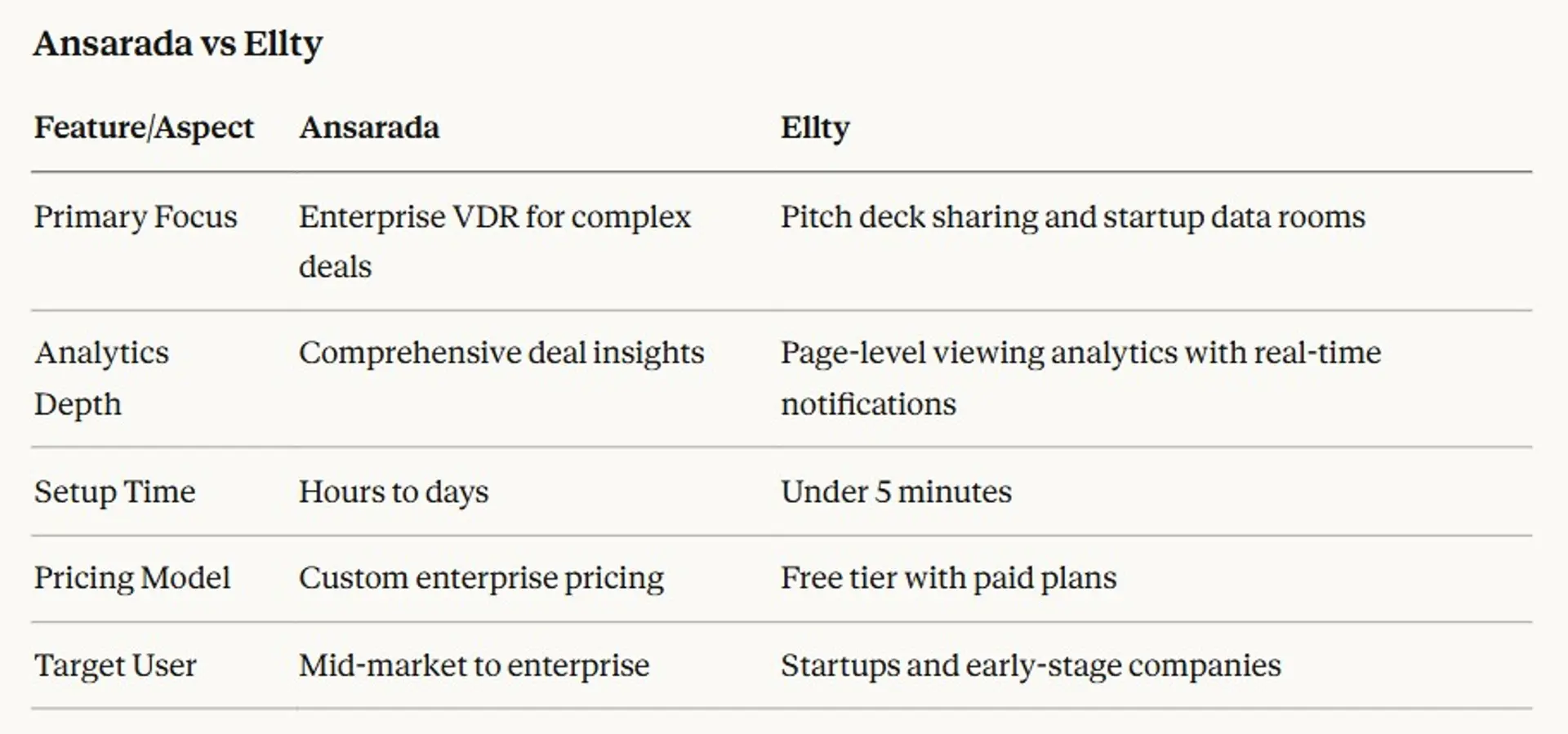
We tried Ellty early in our testing because we wanted to see how a newer platform approached the pitch deck and data room space. Ellty offers secure document sharing, detailed viewer analytics, and virtual data room capabilities built specifically for startups and fundraising teams. What we appreciated most was how quickly we got a shareable link up and running - literally minutes.
Ansarada vs Ellty

Why fundraising teams love it
When we tested this with a sample pitch deck, we had a trackable link ready in under three minutes. You upload your deck, get a shareable link, and immediately start seeing who opens it, which pages they spend time on, and when they view it. We found this particularly useful when you're in active fundraising and need to know if investors are actually reading your materials.
The real-time notifications stood out. When someone opened our test deck, we got an alert within seconds. For founders who are managing multiple investor conversations, this kind of immediate feedback helps you time your follow-ups. We talked to a few early-stage founders who mentioned they switched from heavier VDR platforms because they didn't need all the enterprise features - just clean analytics and fast sharing.
The virtual data room feature works well for early due diligence. You can organize documents into folders, control permissions, and track everything. It's not built for massive M&A deals with hundreds of users, but for seed or Series A fundraising, it handles what you need without overwhelming you with options.
Best For: Startups that need quick pitch deck sharing with detailed viewer analytics and simple data room functionality for early-stage fundraising.
Pricing: Free basic tier; paid plans start around $29/month for additional features and storage.
Support: Email support with documented response times under 24 hours. We tested this with a setup question and heard back in about 6 hours. Knowledge base covers common setup and sharing workflows.
"Setup took less than five minutes. The analytics show exactly who viewed our deck and for how long. Exactly what we needed for our seed round."
— Founder, Early-stage startup, Early user feedback
Try Ellty if you need straightforward pitch deck analytics without paying for enterprise features you won't use. You can test the free tier to see if the analytics and sharing approach fits your workflow.
2. Firmex - For M&A teams that need enterprise security faster
Ratings and Reviews: G2: 4.2/5 ⭐ | Capterra: 4.4/5 ⭐


Firmex has been in the VDR space for over 15 years. We tested it because we kept seeing it mentioned in M&A contexts. It offers full virtual data room capabilities with a focus on faster deployment than traditional enterprise platforms. What stood out was the balance between security features and setup speed.
Ansarada vs Firmex


Why M&A teams love it
In our testing, Firmex handled the core VDR requirements without trying to be everything. You get document control, granular permissions, Q&A management, and audit trails. We found this particularly useful when you need enterprise-grade security but don't want months of implementation.
The permission controls worked well. We could set different access levels for different user groups, track who downloaded what, and revoke access instantly. For M&A processes where confidentiality matters and stakeholders change, this kind of control is essential. Users we talked to mentioned the interface feels less overwhelming than some competitors - you're not hunting through menus to find basic functions.
One thing we noticed: Firmex doesn't push a lot of AI-powered features or bells and whistles. It focuses on secure document sharing, tracking, and management. If you need fancy analytics dashboards or automated deal scoring, you might want something else. But if you need a solid VDR that does the fundamentals well, it delivers.
Best For: Mid-market M&A teams and legal firms that need enterprise VDR security without extended implementation timelines.
Pricing: Custom pricing based on deal size and user count. We've seen estimates starting around $500-$750/month for smaller deals, but this varies.
Support: 24/7 support available. Phone, email, and chat options. We tested chat support with a permissions question and got connected to a rep within a few minutes.
"We needed a VDR set up quickly for an acquisition. Firmex was running in under a week with all our documents organized and permissions configured."
— VP of Corporate Development, Mid-size company, G2
3. Datasite - For large deals with complex document management
Ratings and Reviews: G2: 4.4/5 ⭐ | Capterra: 4.3/5 ⭐

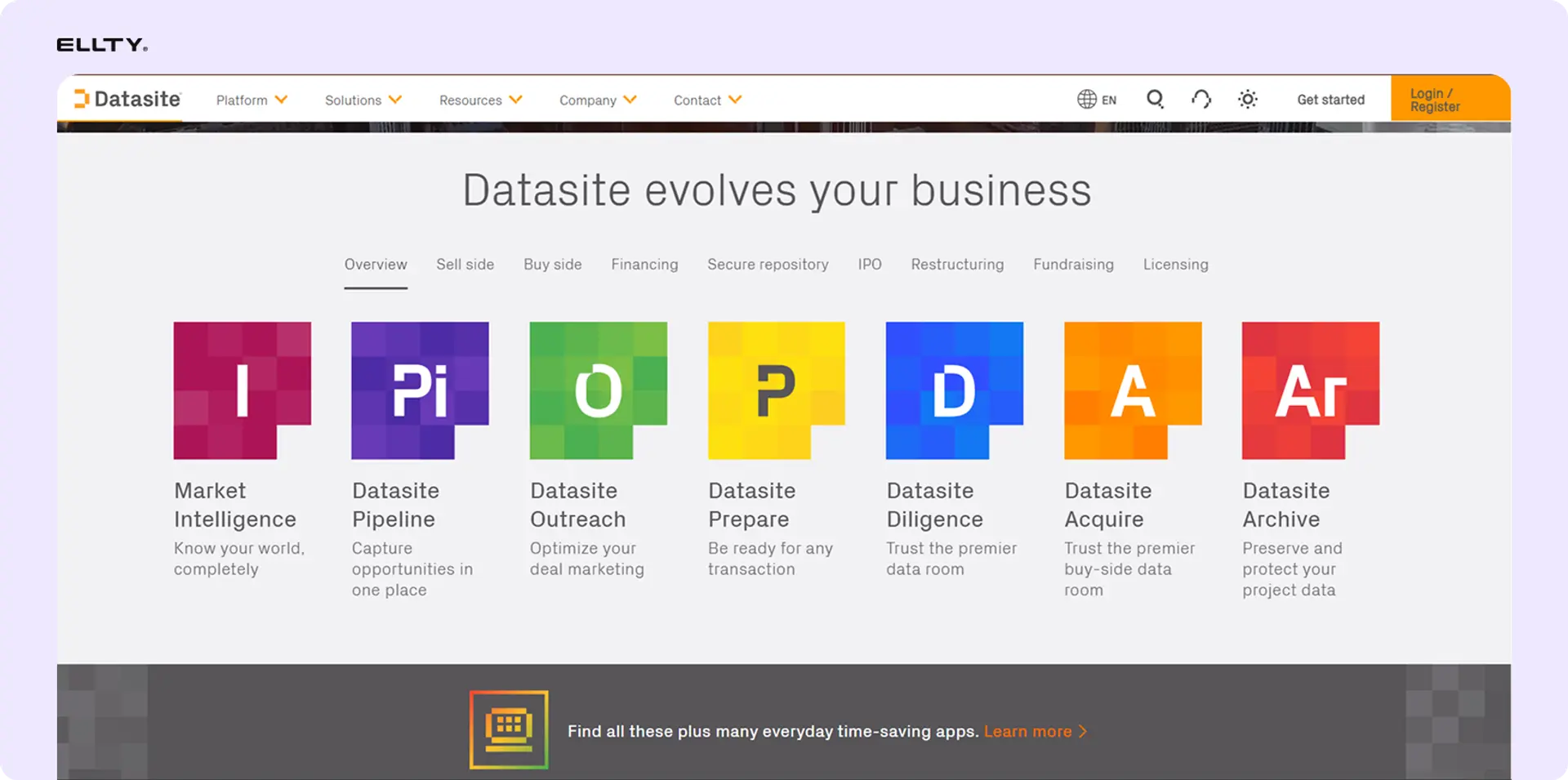
Datasite (formerly Merrill DataSite) is one of the larger players in the VDR market, particularly for big M&A transactions. We tested it to understand what you get at the enterprise end of the spectrum. Datasite uses AI to help organize and categorize documents, which becomes valuable when you're dealing with thousands of files.
Ansarada vs Datasite


Why large deal teams love it
When we uploaded a batch of test documents, Datasite's AI attempted to categorize and index them automatically. For deals involving thousands of documents across multiple workstreams, this kind of automation saves days of manual organization. We found this particularly useful when you're managing complex due diligence with multiple buyer groups accessing different document sets.
The platform handles multilingual documents well. We tested with documents in English, Spanish, and German, and the search functionality worked across all of them. For cross-border M&A, this matters. Users we talked to in investment banking mentioned Datasite's ability to handle concurrent buyers with separate data rooms - you can run multiple deal processes from one platform.
The learning curve is steeper than simpler tools. We spent more time getting familiar with all the features and settings. If you're running a $100M+ transaction with multiple advisors, the complexity makes sense. If you're doing a straightforward asset sale or early-stage fundraising, you're paying for features you probably won't use.
Best For: Investment banks, private equity firms, and corporations managing large, complex M&A transactions or multi-buyer processes.
Pricing: Custom pricing. Based on user reports, expect to pay several thousand per month for mid-sized deals, scaling up significantly for larger transactions.
Support: 24/7 global support with dedicated account managers for deals. Multiple users mentioned having direct contact with support teams throughout their transactions.
"The AI indexing saved us countless hours. We had over 5,000 documents to organize for a carve-out deal. Datasite handled the complexity better than manual processes."
— Director, Private Equity Firm, G2
4. Intralinks - For established deal workflows with deep integrations
Ratings and Reviews: G2: 4.1/5 ⭐ | Capterra: 4.2/5 ⭐
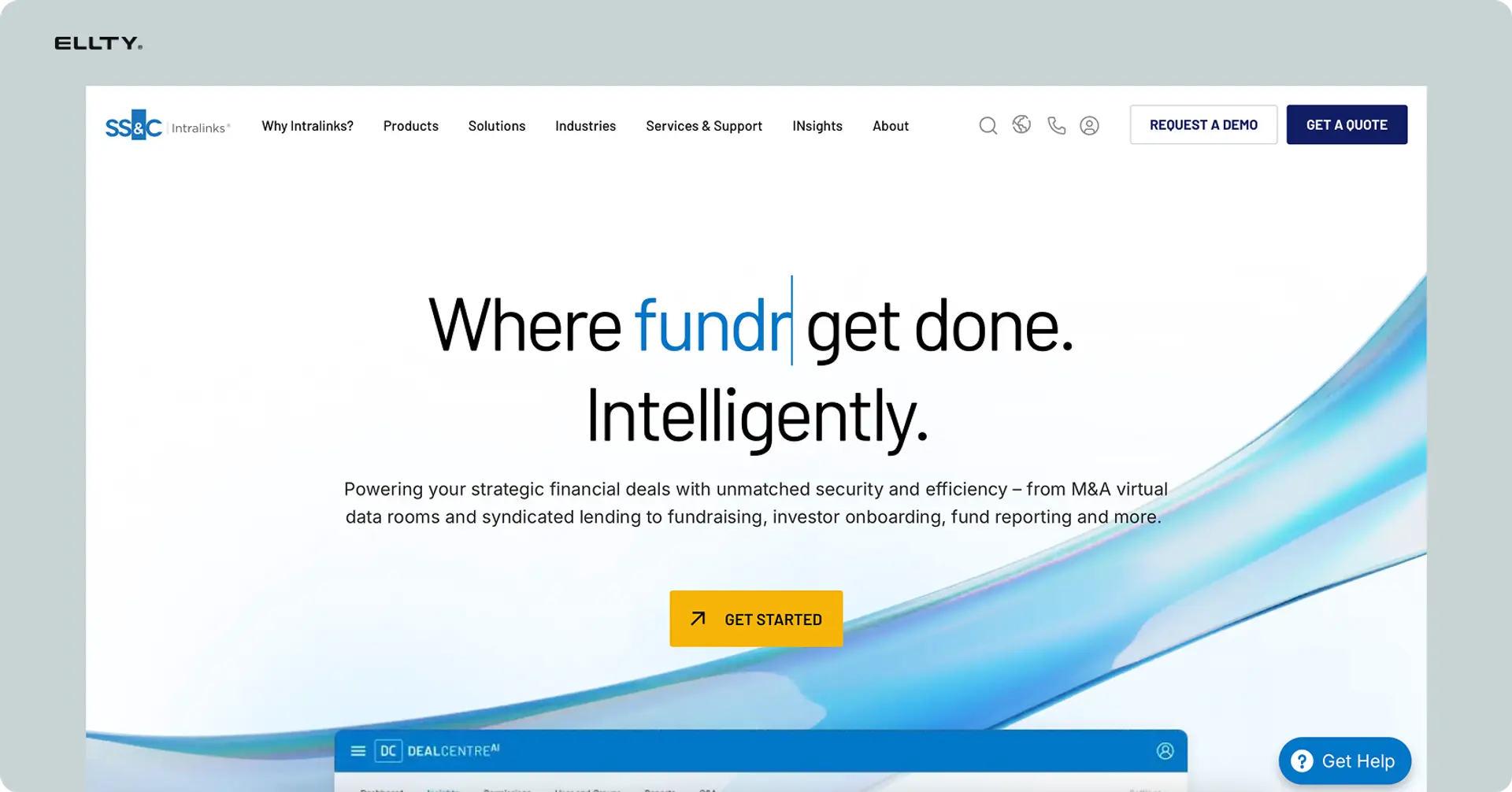
Intralinks has been in the VDR space since the 1990s. We tested it because of its reputation in investment banking and private equity. It offers virtual data rooms plus broader deal lifecycle management tools. What stood out was how many integrations it has with other enterprise systems.
Ansarada vs Intralinks


Why enterprise teams love it
In our testing, Intralinks felt like a platform built for teams already embedded in enterprise workflows. You can integrate with CRM systems, other deal tools, and existing security infrastructure. We found this particularly useful when you're part of a larger organization that already has established processes and tools.
The deal pipeline features go beyond just the VDR. You can manage multiple deals at different stages, track progress, and get portfolio-level views. For private equity firms running dozens of deals simultaneously, this kind of oversight matters. We talked to users in PE who mentioned they use Intralinks across their entire deal flow, not just for due diligence.
One observation: the platform assumes you know what you're doing. There's less hand-holding than newer tools. If you have experienced deal professionals on your team, this isn't a problem. If you're new to VDRs or running your first transaction, the learning curve can be steep. We spent more time in documentation and help resources than with some simpler alternatives.
Best For: Investment banks, private equity firms, and corporate development teams managing multiple complex deals with existing enterprise tool ecosystems.
Pricing: Custom pricing based on deal volume and features. Enterprise-level platform with corresponding pricing structure.
Support: 24/7 global support with dedicated relationship managers for enterprise accounts. Training and onboarding programs available for teams.
"We run 20-30 deals at any time. Intralinks lets us manage everything from one platform with the security and compliance our clients expect."
— Managing Director, Investment Bank, Capterra
5. DealRoom - For M&A teams that want project management built in
Ratings and Reviews: G2: 4.5/5 ⭐ | Capterra: 4.6/5 ⭐


DealRoom takes a different approach - it combines the VDR with M&A project management. We tested it because several M&A professionals mentioned they liked having deal tracking and document management in one place. Instead of using a VDR plus separate project tools, DealRoom integrates both.
Ansarada vs DealRoom

Why M&A professionals love it
When we set up a test deal, DealRoom let us create diligence request lists, assign tasks to team members, and track progress - all while the documents lived in the same platform. We found this particularly useful when you're managing the actual workflow of due diligence, not just storing files. You can see which requests are outstanding, who's responsible, and what's been completed.
The visual pipeline view stood out. Instead of just folders of documents, you get a clear picture of where you are in the deal process. For teams running multiple deals, this kind of overview helps prioritize work. Users we talked to in corporate development mentioned they switched from traditional VDRs because they were tired of managing tasks in spreadsheets while documents lived elsewhere.
The collaboration features work well for distributed teams. We tested the commenting and Q&A functions with team members in different locations. Everything stayed centralized and searchable. If your deal involves advisors, legal teams, and internal stakeholders all working together, keeping communication in one place reduces email chaos.
Best For: Corporate development teams and M&A advisors who want project management and document sharing integrated instead of using separate tools.
Pricing: Starts at $1,199/month for basic plans. Pricing varies based on deal size and user count. More transparent pricing than many enterprise VDR competitors.
Support: Email and chat support. Onboarding assistance included with plans. We tested support with a workflow question and got a detailed response within a few hours.
"Finally, a VDR that understands M&A is a project, not just document storage. We track every diligence item and who's responsible without leaving the platform."
— VP Corporate Development, Tech Company, G2
6. Venue - For regulated industries and compliance-heavy deals
Ratings and Reviews: G2: 4.3/5 ⭐ | Trustpilot: 4.1/5 ⭐


Venue (by Datasite) focuses heavily on regulatory compliance and security. We tested it to understand how it differs from general-purpose VDRs. Venue is built for industries where compliance isn't optional - financial services, healthcare, legal - and where audit trails matter as much as the deal itself.
Ansarada vs Venue


Why compliance teams love it
In our testing, Venue's audit trails were more detailed than standard VDRs. Every action gets logged with timestamps, user details, and document references. We found this particularly useful when you need to prove to regulators or auditors exactly who accessed what and when. For legal proceedings or regulatory reviews, this level of documentation can be critical.
The security controls go deep. We could set expiration dates on document access, require two-factor authentication, add dynamic watermarks, and restrict actions like printing or screenshots. For sensitive transactions involving personal data, trade secrets, or regulated information, these controls help meet compliance requirements. Users in financial services mentioned they chose Venue specifically because their compliance teams required certain certifications and controls.
One thing we noticed: if you're not in a heavily regulated industry, some of these features might feel like overkill. We spent time configuring security policies that a typical startup fundraise wouldn't need. But if you're a bank running a deal, a healthcare company with patient data, or a law firm handling sensitive cases, the compliance focus makes sense.
Best For: Financial institutions, healthcare organizations, and legal firms that need VDR capabilities with extensive compliance and regulatory controls.
Pricing: Custom pricing based on compliance requirements and deal size. Expect enterprise-level pricing reflecting the specialized compliance features.
Support: 24/7 support with compliance specialists available. Documentation includes regulatory guidance and best practices for different industries.
"Our regulators require detailed audit trails for every transaction. Venue's compliance reporting saved us weeks during our last regulatory review."
— Compliance Officer, Financial Services, Trustpilot
7. Caplinked - For mid-market deals without enterprise budgets
Ratings and Reviews: G2: 4.3/5 ⭐ | Capterra: 4.5/5 ⭐
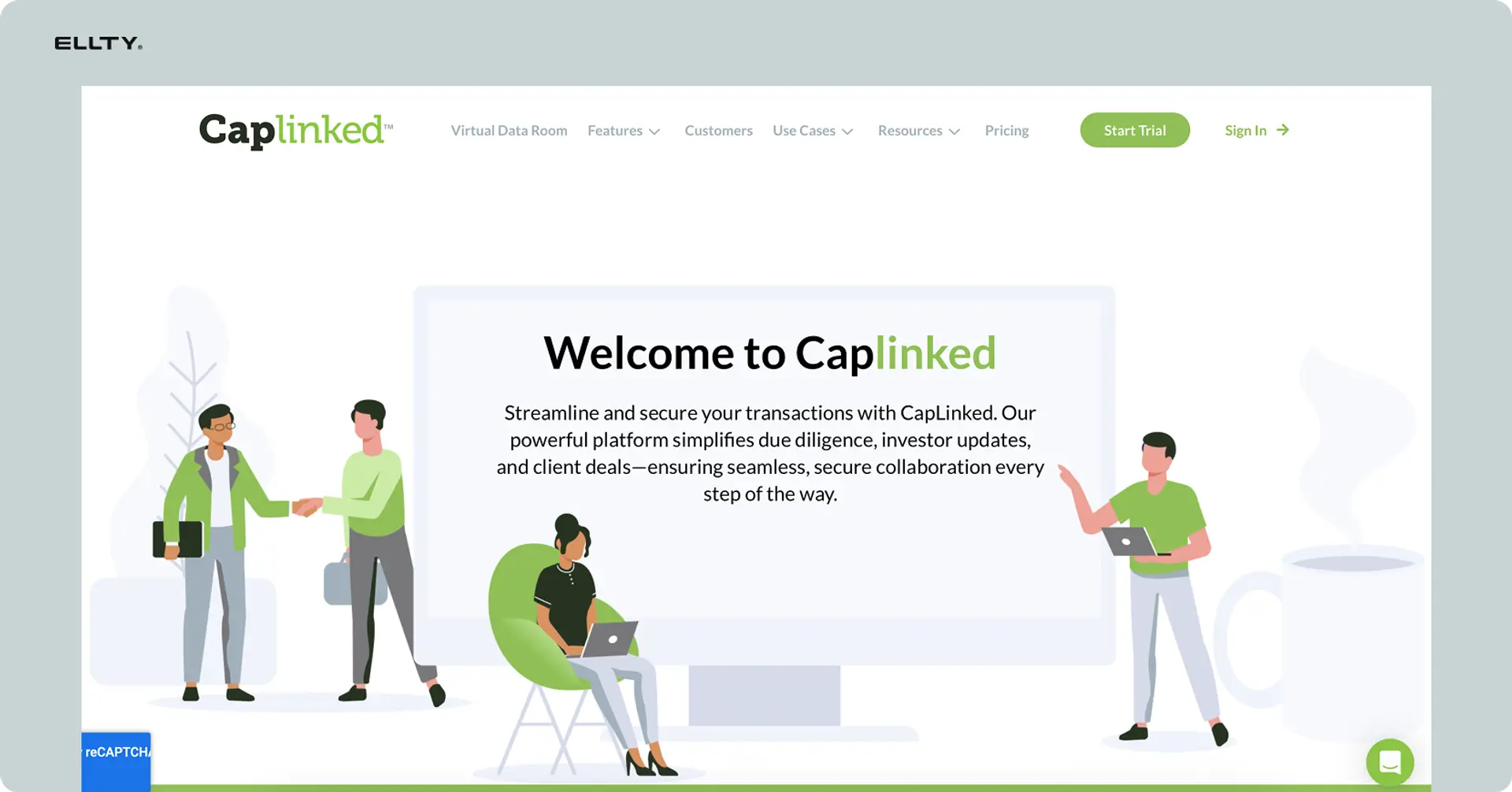
Caplinked positions itself between simple document sharing and full enterprise VDRs. We tested it because mid-market companies kept mentioning it as an affordable option that still has real VDR features. It offers document management, permissions, tracking, and security without the enterprise price tag.
Ansarada vs Caplinked


Why mid-market teams love it
When we set up a test workspace, Caplinked had us running within an hour. You get the core VDR features - secure document sharing, granular permissions, activity tracking, Q&A management - without spending weeks on implementation. We found this particularly useful when you need VDR functionality but don't have IT teams or months to dedicate to setup.
The pricing structure is clearer than most VDR platforms. You can see what different tiers cost and what you get at each level. For smaller M&A deals, real estate transactions, or mid-market fundraising, the cost difference between Caplinked and enterprise platforms can be significant. We talked to business brokers who mentioned they use Caplinked for most of their deals because the pricing makes sense for their transaction sizes.
The feature set is deliberately focused. You won't find extensive AI tools or complex workflow automation. But you get secure document storage, detailed permissions, watermarking, and good activity reports. If you need a solid VDR for a straightforward deal without enterprise complexity, it handles the job well.
Best For: Mid-market companies, business brokers, and real estate firms that need VDR security and tracking without enterprise pricing or complexity.
Pricing: Starts at $599/month for workspace plans. Clear tiered pricing based on storage and users. More affordable than enterprise VDR platforms.
Support: Email and phone support during business hours. Knowledge base and video tutorials available. We tested email support and got responses within one business day.
"We looked at the big VDR names and the pricing was absurd for our deal size. Caplinked gave us what we needed at one-third the cost."
— Business Broker, Mid-market Transactions, Capterra
8. DocSend - For simple document sharing with analytics
Ratings and Reviews: G2: 4.5/5 ⭐ | Capterra: 4.6/5 ⭐

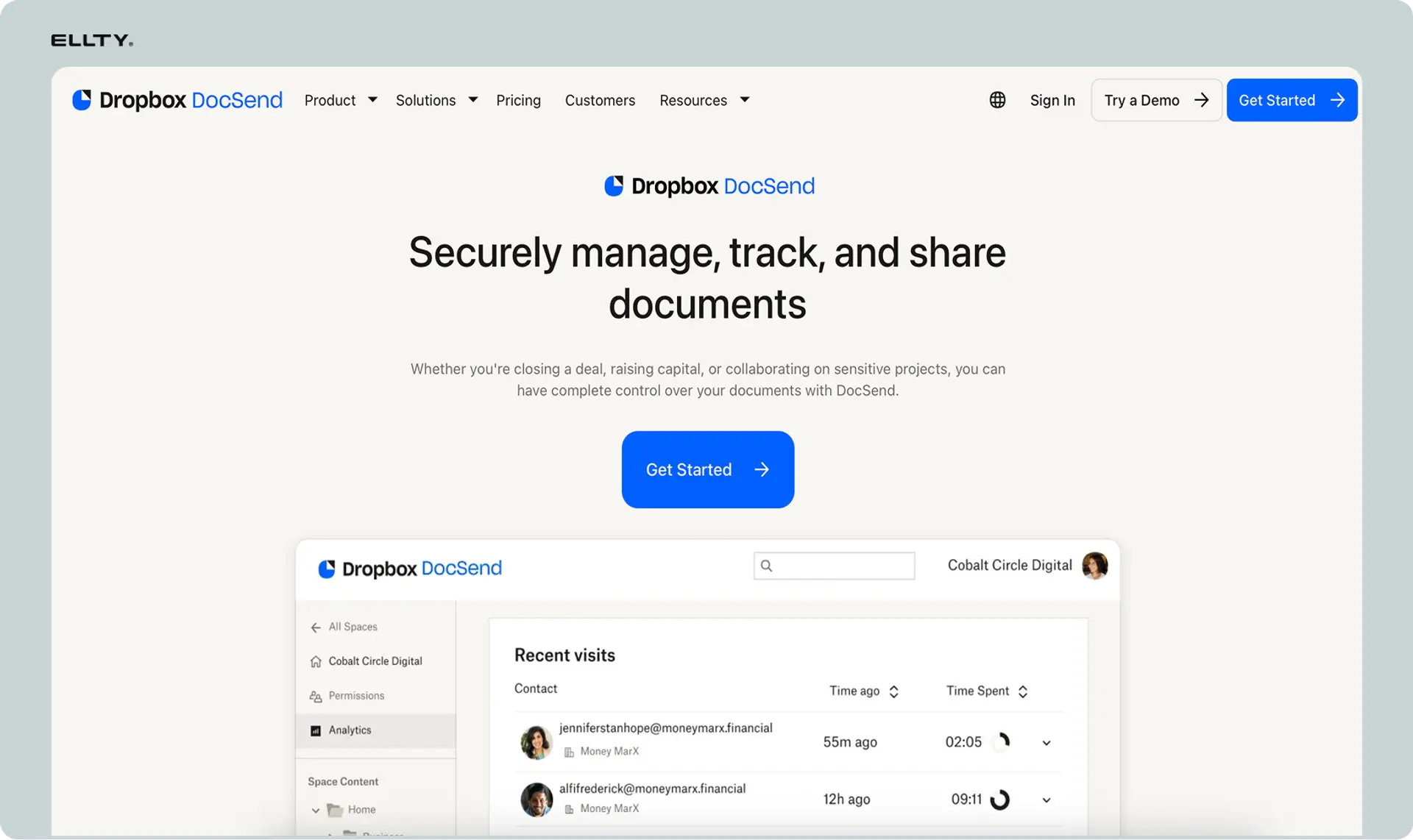
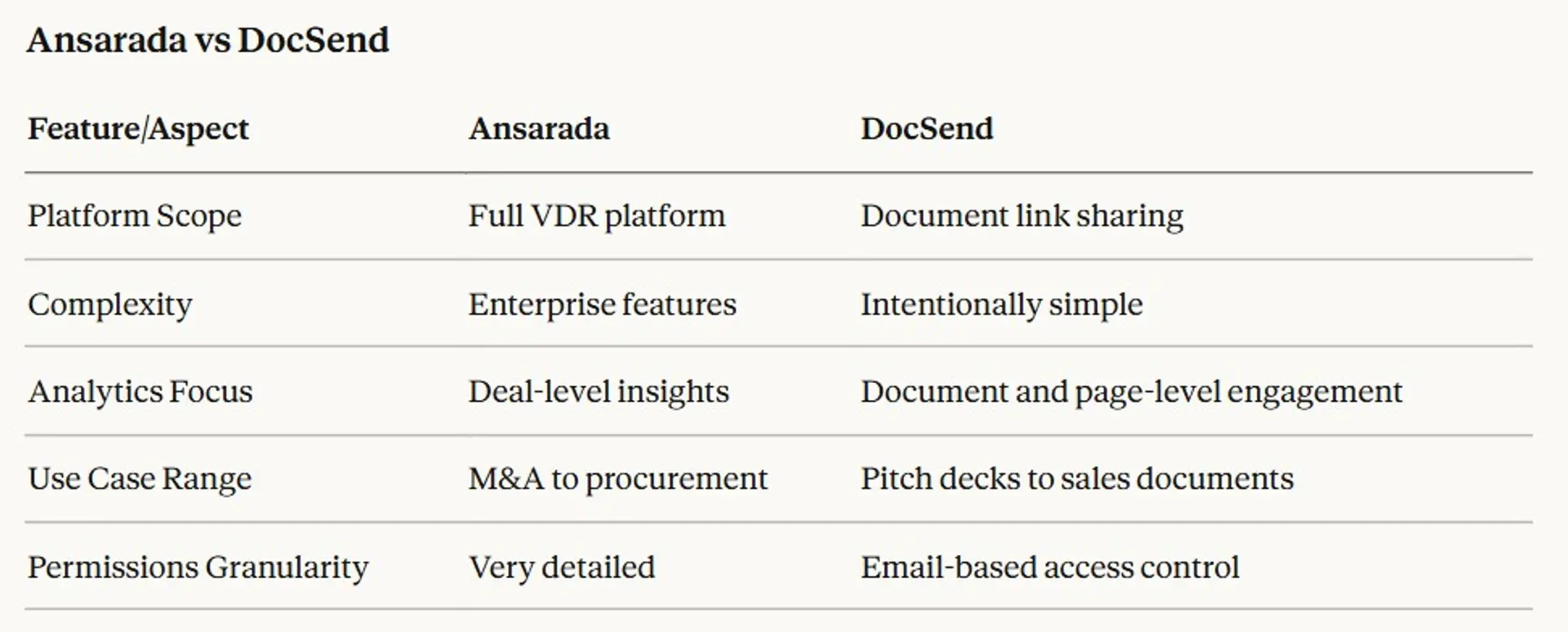
DocSend (now owned by Dropbox) takes the simplest approach. It's not trying to be a full VDR - it's focused on secure link sharing with detailed analytics. We tested it because many founders use it for pitch decks and early fundraising documents. You upload a document, get a link, and see exactly who views it and how they engage.
Ansarada vs DocSend

Why startup teams love it
In our testing, DocSend was the fastest tool to get running. Upload a PDF, create a link, send it to someone. They open it without downloading anything, and you see which pages they viewed, how long they spent on each, and whether they shared it. We found this particularly useful when you're sharing pitch decks with investors and want to know if they're actually reading your financial projections.
The analytics are straightforward. You don't need to interpret complex dashboards - you see a simple breakdown of viewer behavior. For fundraising, this helps you understand investor interest. For sales teams, it shows whether prospects are engaging with proposals. Users we talked to mentioned they like that recipients don't need accounts or special software - just a browser.
One limitation we noticed: DocSend isn't built for complex due diligence. You can share documents and track viewing, but you don't get the folder structures, granular permissions, Q&A tools, or compliance features of a proper VDR. If you're running an M&A process with dozens of stakeholders and hundreds of documents, you'll quickly outgrow it. But for pitch decks, proposals, and early-stage document sharing, it does exactly what it needs to.
Best For: Startups sharing pitch decks, sales teams tracking proposals, and anyone who needs simple document analytics without VDR complexity.
Pricing: Starts at $10/user/month for basic plans. Professional and advanced plans available with more features. Clear per-user pricing model.
Support: Email support with help documentation. Dropbox support infrastructure backing it. We tested with a sharing question and got a response within a day.
"Every investor who opened our deck, I knew within minutes. The page-level analytics showed me exactly where they spent time. Super helpful during fundraising."
— Startup Founder, Seed Stage, G2
9. Box - For teams that need broader collaboration beyond deals
Ratings and Reviews: G2: 4.2/5 ⭐ | Capterra: 4.4/5 ⭐
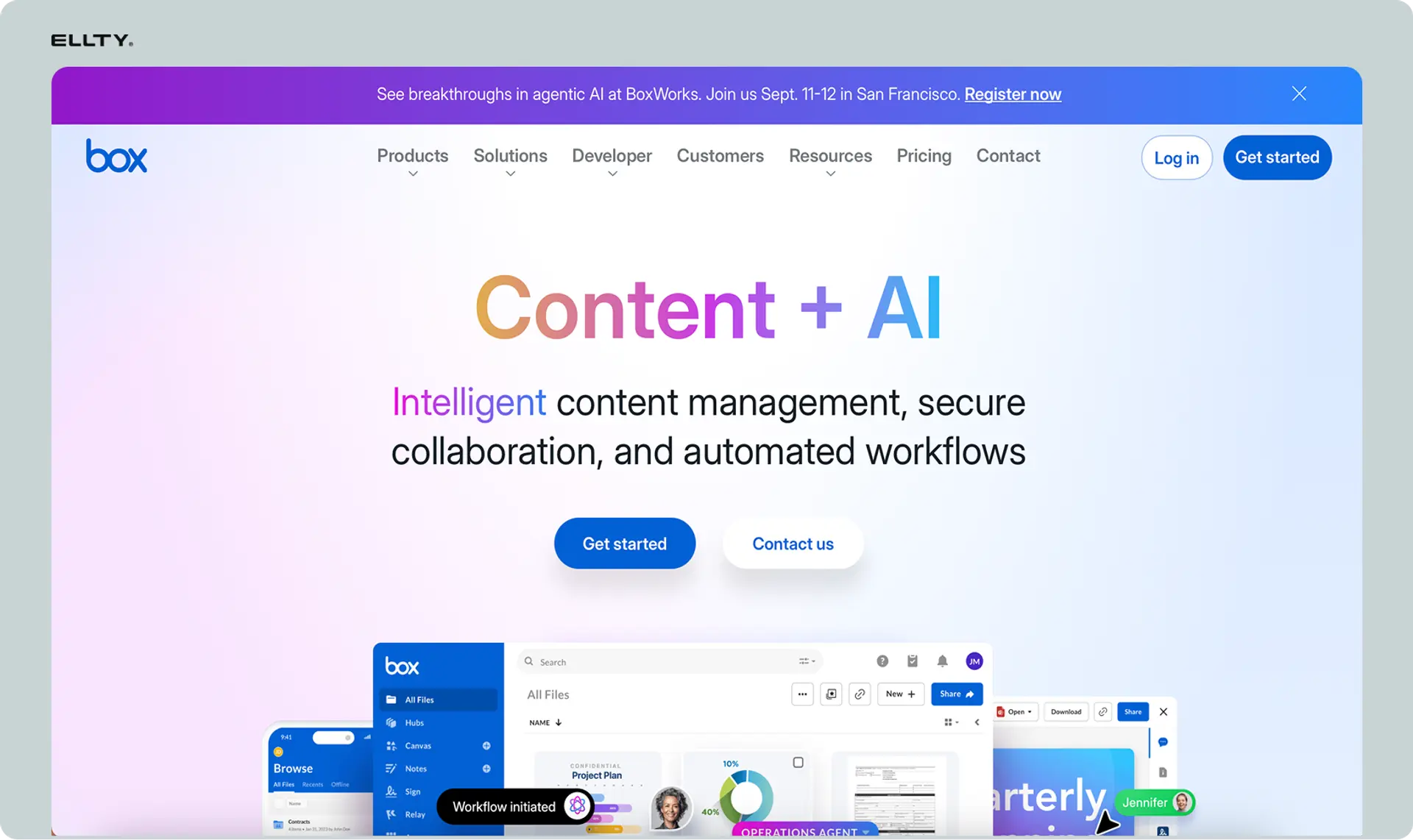
Box is a general-purpose secure file sharing and collaboration platform, not a dedicated VDR. We tested it because some teams use it for document sharing in deals when they already have Box for other purposes. It offers strong security, detailed permissions, and tracking - just applied to broader business collaboration, not deal-specific workflows.
Ansarada vs Box


Why established companies use it
When we tested Box for deal purposes, it worked well if you already use Box company-wide. You can create secure folders, set granular permissions, track file access, and share externally. We found this particularly useful when you're at a company that's already paying for Box and you need to share some due diligence documents. You don't need to buy a separate VDR for a small transaction.
The collaboration features go beyond deals. You can edit documents, comment, set workflows, and integrate with other business tools. For companies using Box for general operations, extending it to deal documents keeps everything in one system. Users we talked to in corporate development mentioned they use Box for smaller transactions or early-stage discussions, then move to dedicated VDRs for larger deals.
The limitation is clear: Box isn't designed for M&A. You don't get deal-specific features like Q&A management, diligence checklists, or transaction analytics. The audit trails are good but not as detailed as VDR platforms built for regulatory scrutiny. If you're running a complex transaction, you'll miss VDR-specific tools. But if you need secure document sharing with good controls and already have Box, it can handle basic needs.
Best For: Companies already using Box for enterprise content management that need to share documents securely for smaller deals or internal processes.
Pricing: Starts at $15/user/month for Business plans. Enterprise plans with enhanced security and compliance features cost more. Per-user model different from deal-based VDR pricing.
Support: 24/7 support for enterprise customers. Extensive documentation and training resources. Large support organization across different tiers.
"We already had Box enterprise-wide. For our smaller acquisitions, we just created secure folders instead of paying for a separate VDR. Works fine for straightforward deals."
— Director of M&A, Technology Company, G2
How to choose the right Ansarada alternative
After testing all these alternatives, here's what we'd consider if we were choosing for our own business.
Your use case matters most. Are you fundraising with a pitch deck? Running M&A due diligence? Managing ongoing compliance? We found that Ellty and DocSend work great when you need fast document sharing with analytics. DealRoom and Firmex make more sense for actual M&A transactions where you need project management or enterprise security. Venue fits regulated industries where compliance documentation matters as much as the deal.
Budget and team size affect the decision. Per-user pricing versus flat rates can swing your total cost significantly. For a three-person startup, DocSend or Ellty at $10-30/month makes sense. For a mid-market M&A deal, Caplinked's $600/month tier gives you VDR features without enterprise pricing. For large transactions, the custom pricing of Datasite or Intralinks reflects features you'll actually use. We found that many teams overpay for features they never touch.
Technical requirements vary widely. Do you need to integrate with existing CRM or deal management systems? Intralinks and Box handle that well. Do you need multilingual document search? Datasite's AI helps there. If you just need to upload files and share links, simpler tools work fine. Some tools took us hours to configure properly. Others had us running in minutes. Match the complexity to your actual needs.
Analytics depth depends on your goals. If you're fundraising, knowing which investor spent 10 minutes on your financial page versus 30 seconds helps you prioritize follow-ups. Ellty and DocSend give you page-level detail. If you're running M&A with multiple buyer groups, you need deal-level analytics across hundreds of documents. Datasite and Ansarada alternatives at the enterprise level provide that. We found that more analytics isn't always better - it needs to be actionable for your specific situation.
Support matters when you're on deadlines. We tested support across these platforms. Some responded in hours, others in minutes. For a deal closing Friday, that difference matters. If you have experienced deal professionals, you might not need much support. If you're running your first fundraise or transaction, onboarding help and responsive support become critical. DealRoom and Firmex both offered solid support in our testing.
Cheapest Ansarada alternatives
If you're watching costs carefully, several low-price alternatives offer solid document sharing and virtual data room basics:
1. Ellty
With a free plan that never expires and paid plans starting at $69/month, Ellty is the most affordable full-featured virtual data room option we tested. You get real-time document analytics, secure trackable links, eSignatures, and complete data room functionality - folder organization, granular permissions, NDA gating, dynamic watermarking, and restricted visitor access - all built with startup fundraising in mind.
The interface focuses on what founders actually need: upload documents, organize due diligence materials, share trackable links, and see exactly who viewed what and for how long. If you need enterprise M&A features or complex workflow automation, you'll need to look elsewhere but for early-stage to growth-stage fundraising due diligence, you won't find a better value.
2. Caplinked
Starting at $599/month, Caplinked offers real VDR features at mid-market pricing instead of enterprise costs. You get secure document management, granular permissions, activity tracking, and Q&A tools. Not as cheap as pure document sharing tools, but significantly less than Ansarada for deals that need actual data room capabilities. Good enough for business sales, real estate transactions, or mid-sized M&A. Not as feature-rich as enterprise platforms, but for straightforward deals where you need security and tracking without complexity, the pricing makes sense.
3. DocSend
At $10/user/month for basic plans, DocSend works if you only need document sharing with analytics. The catch: it's not a virtual data room. You get link-based sharing and page-level viewing analytics, but you don't get the folder structures, compliance features, or granular permission controls of a proper VDR. Good enough for pitch deck sharing or early investor conversations. Not good enough for serious due diligence where you need organized document repositories and detailed access controls.
Common questions about Ansarada alternatives
What is Ansarada best known for?
Ansarada is known for virtual data rooms focused on M&A, fundraising, and due diligence. It's been around since 2005 and serves mid-market to enterprise companies globally. The platform includes AI-powered insights, procurement tools, and comprehensive deal management features. It's particularly strong in Asia-Pacific markets and used by investment banks, private equity firms, and corporate development teams.
Why do businesses look for Ansarada alternatives?
We heard three main reasons in our research. First, pricing can be high for smaller deals or early-stage companies. Second, the feature set is often more than teams need - if you just want pitch deck sharing, full enterprise VDR features feel like overkill. Third, some teams want faster setup or simpler interfaces. A few teams also mentioned wanting more transparent pricing instead of custom quotes for every deal.
Are these alternatives cheaper than Ansarada?
It depends on your needs. DocSend and Ellty cost significantly less if you're just sharing documents and tracking views - think $10-30/month versus thousands. Caplinked comes in cheaper for mid-market deals at around $600/month. But Datasite, Intralinks, and similar enterprise platforms cost about the same as Ansarada for large transactions. You're trading features and scale more than just price. In our testing, the "cheaper" option only saves money if it actually does what you need.
Which alternative is best for early-stage startups?
For pitch deck sharing and early fundraising, we'd point to Ellty or DocSend. Both give you document analytics and secure sharing without complexity. Ellty adds virtual data room features if you need basic due diligence capabilities. DocSend integrates well with other startup tools. Neither requires enterprise budgets or long implementations. When we tested both with early-stage scenarios, setup took minutes and the analytics showed exactly what founders care about - investor engagement.
Do I need a virtual data room for fundraising?
Not always. For initial pitch deck sharing, simple document analytics tools work fine. We saw plenty of seed rounds happen with just DocSend or Ellty. But once you get to serious due diligence - investors requesting cap tables, financial models, legal documents, customer contracts - a proper data room helps you stay organized and track what everyone accesses. Series A and beyond typically need real VDR capabilities. Start simple, upgrade when investor requests get more complex.
Can I switch from Ansarada to another tool easily?
Document migration is straightforward - you're downloading files and re-uploading them. The harder part is recreating folder structures, permissions, and user access. We tested migration scenarios with a few platforms. Most took a few hours to move documents and set up permissions properly. If you're mid-deal, switching creates risk - stakeholders have to learn new systems and links change. Better to switch between deals rather than during one. Some platforms like DealRoom and Firmex offer migration assistance if you're moving significant data.
What's the difference between Ansarada and Intralinks?
Both are established enterprise VDR platforms, but they have different strengths. Intralinks has been around longer (since 1996 versus 2005) and has deeper integration ecosystems, particularly with banking systems. Ansarada has stronger AI features for deal insights and procurement. Intralinks focuses more on end-to-end deal lifecycle management across portfolios. Ansarada has a stronger presence in Asia-Pacific markets. For most users, the practical differences come down to which integrations you need and which interface your team prefers. We found both handle large transactions well - it's more about ecosystem fit than capability gaps.
Our final thoughts on Ansarada alternatives
After weeks of testing these tools, we're convinced there's no single "best" alternative. What works depends entirely on what you're actually doing. We found Ellty great for startup data rooms with clear analytics. DealRoom suited M&A teams that wanted project management integrated. Datasite handled massive deals with complex documents. DocSend worked perfectly for simple secure sharing.
The landscape of VDR and document sharing tools has gotten more specialized. Some tools focus on speed and simplicity. Others prioritize enterprise security and compliance. A few target specific industries or deal types. This specialization means you can find tools that fit your exact needs instead of paying for features you'll never use.
Choose based on your actual requirements. If you're a three-person startup sharing a pitch deck with ten investors, don't pay for enterprise M&A features. If you're running a $500M acquisition with regulatory scrutiny, don't cut corners on security and compliance. We tested these tools to understand what each does well - match that to what you actually need to accomplish.
Whether you go with Ellty for straightforward fundraising data rooms, Firmex for M&A security, or DealRoom for integrated project management, pick what actually solves your problems. The right tool is the one that handles your specific use case without forcing you to pay for or learn features you don't need.
Disclaimer
Parties other than Ellty may provide products, services, recommendations, or views on this site ("Third Party Materials"). Ellty is not responsible for examining or evaluating such Third Party Materials, and does not provide any warranties relating to the Third Party Materials. Links to such Third Party Materials are for your convenience and does not constitute an endorsement of such Third Party Materials.
Author

Anika Tabassum Nionta is a Content Manager at Ellty, where she writes about secure document sharing, virtual data rooms, M&A, due diligence, fundraising, and sales enablement. With over 6 years of writing experience, she helps professionals understand how to share confidential documents securely, track engagement, and manage deals more effectively. Anika holds both a BA and MA in English from Dhaka University. Outside of work, she enjoys reading, exploring new cafes in Dhaka, and connecting with entrepreneurs and dealmakers in her community.

