
Need document tracking that actually works?
You're raising money. You send your pitch deck to investors. Then nothing. Radio silence.
Did they open it? Which slides did they review? Did they share it with partners? You'll never know if you're using email attachments or Dropbox links.
Virtual data rooms solve this. They track who views your documents, which pages they read, and how long they spend on each one. Real-time notifications tell you when someone opens your deck. Secure sharing means you control access.
iDeals VDR is one of the older players in this space. It's enterprise-focused virtual data room software that's been around since 2008. But is it right for startup fundraising in 2026?
This guide breaks down everything: what iDeals actually does, how it works, what it costs, and whether you need it.
What is iDeals VDR?

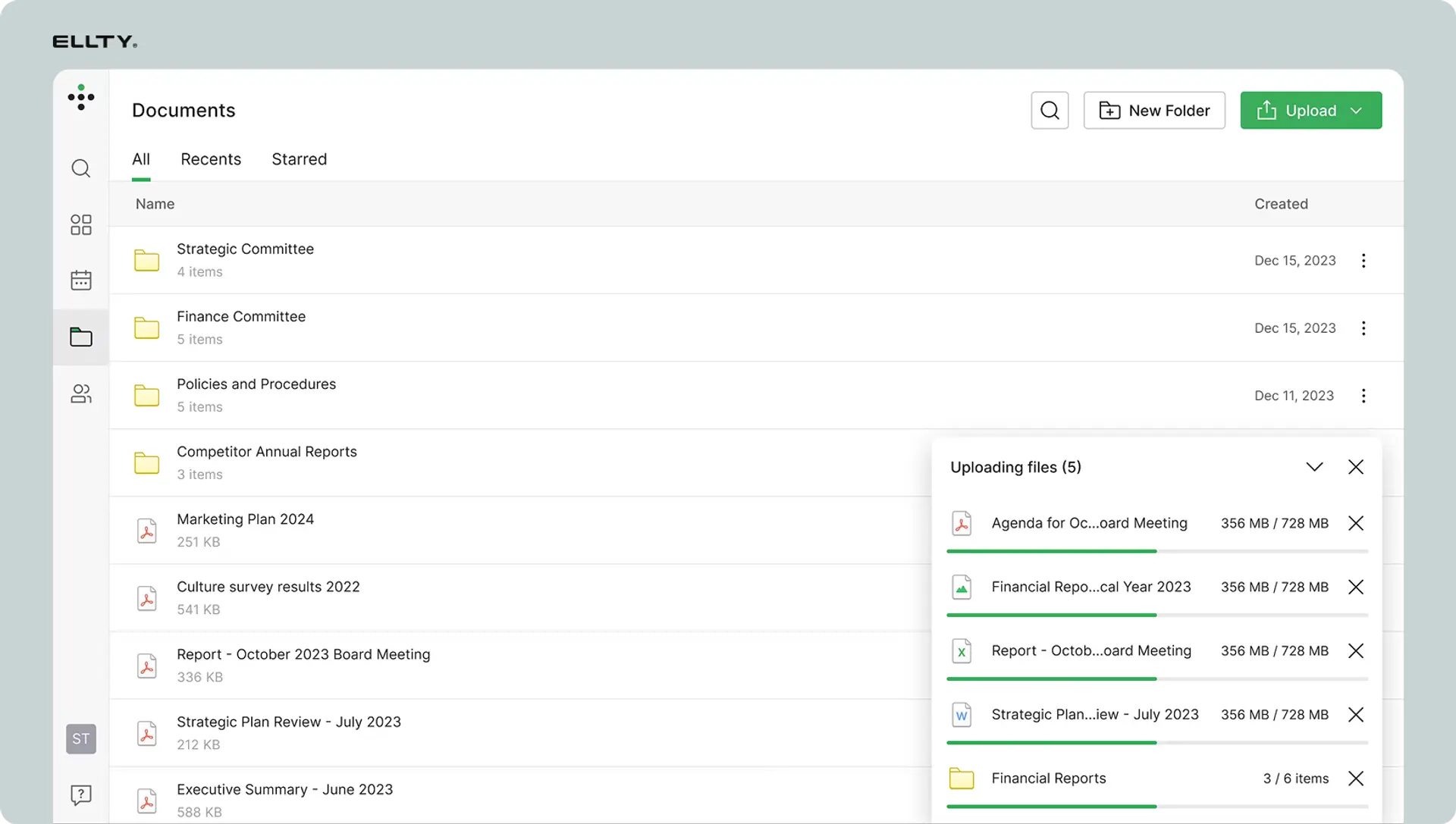
iDeals VDR is virtual data room software designed for secure document sharing and due diligence. It's primarily used during M&A transactions, fundraising, and legal proceedings where companies need to share confidential documents with external parties while maintaining strict control and audit trails.
Core functionality
What iDeals VDR does:
iDeals creates a secure online repository where you upload sensitive documents and grant controlled access to specific users. The platform tracks every interaction - who viewed what, when, and for how long. You get detailed analytics on document engagement and can revoke access instantly if a deal falls through.
Document sharing:
Upload files into organized folder structures. Create user groups with granular permissions. Set expiration dates on access. Apply watermarks to documents. Enable or disable printing, downloading, and screenshots per user or per document.
Tracking and analytics:
See exactly who opened which documents and when. Track time spent on each page. Get notifications when specific people view specific files. Export activity reports for compliance. Monitor user behavior patterns to gauge interest levels.
Access control:
Two-factor authentication for all users. IP restrictions to limit access by location. Fence view to prevent unauthorized screen capture. Dynamic watermarking with user email and timestamp. Q&A module for structured communication without exposing documents.
Use cases:
M&A due diligence, IPO preparation, board communications, legal discovery, regulatory audits, fundraising with institutional investors, real estate transactions, clinical trial data sharing.
What makes iDeals VDR different
Different from email attachments:
Email gives you zero control after you hit send. Anyone can forward your deck to competitors. You don't know if it was opened or deleted. iDeals maintains control - you can see activity and revoke access anytime.
Different from Google Drive/Dropbox:
Consumer file sharing tools offer basic access controls but minimal tracking. They're not built for sensitive transactions. iDeals provides forensic-level audit trails, prevents screenshots, and meets compliance requirements for regulated industries.
Different from enterprise DMS:
Document management systems like SharePoint organize internal files. iDeals is specifically for external sharing during finite transactions. It's designed for situations where you need ironclad security, detailed tracking, and the ability to quickly shut down access.
Market position
iDeals positions itself as an enterprise-grade virtual data room with bank-level security. It's one of the established players alongside Datasite (formerly Merrill), Firmex, and Intralinks. The company serves over 1 million users and has facilitated deals worth more than $1 trillion.
It's primarily used by investment banks, law firms, private equity firms, and corporations during high-stakes transactions. Less common for early-stage startup fundraising - the pricing and feature set target larger deals.
How iDeals VDR works


Setting up and using iDeals follows a structured process focused on security and control.
Step-by-step process
1. Account setup and data room creation
You contact iDeals sales, discuss your needs, and they provision a data room instance. Implementation takes 1-3 days for standard setups. You get admin access and start configuring security settings, branding, and user roles.
2. Upload and organize documents
Drag and drop files or bulk upload entire folder structures. Organize into logical sections - typically by category (financials, legal, product, team). Add index numbering. Enable full-text search across all documents.
3. Set permissions and security
Create user groups (investors, advisors, legal team). Assign granular permissions per group or individual. Set document-level restrictions - some users can only view certain folders. Enable dynamic watermarking. Configure two-factor authentication requirements.
4. Invite users
Send secure invitations via email. Users create accounts with verified email addresses. They access the data room through a web browser - no software installation needed. You can require NDA acceptance before first login.
5. Monitor activity
Check the analytics dashboard to see who's active. Get real-time email notifications when VIP users log in or view specific documents. Track time spent per document. See heat maps showing which sections get the most attention.
6. Manage throughout the process
Answer questions through the built-in Q&A module. Upload new versions of documents. Adjust permissions as the deal progresses. Generate activity reports for stakeholders. Close access for users who drop out.
Additional features
Data rooms (on higher plans):
Create multiple isolated data rooms for different deals simultaneously. Clone room structures for repeat processes. Archive completed deals with full audit trails. Maintain separate admin teams per room.
Integrations:
Limited compared to modern SaaS tools. Basic integrations with Microsoft Office for document viewing. API access on enterprise plans. Some support for single sign-on with corporate identity providers.
Team collaboration:
Internal team members can collaborate on managing the data room. Assign tasks for document uploads or Q&A responses. Leave internal notes on documents. Generate reports to share with deal teams.
Typical workflows
M&A sell-side: Seller uploads comprehensive due diligence materials. Multiple buyers get access with restrictions. Seller tracks which buyer is most engaged based on viewing patterns. Activity data informs negotiation strategy.
Fundraising: Startup uploads pitch deck, financials, and legal docs. Grant access to interested investors after initial meetings. Track which VCs are doing deep diligence. Revoke access for passed investors.
Legal discovery: Law firm uploads case documents. Opposing counsel gets controlled access. Every document view is logged for compliance. Prevents unauthorized copying of sensitive materials.
[Workflow diagram showing typical iDeals VDR process flow would go here]
What are the limitations of iDeals VDR?
iDeals works well for enterprise M&A transactions. It falls short for smaller deals and modern fundraising workflows.
Pricing is opaque and expensive
The issue: iDeals doesn't publish pricing. You must contact sales for a quote. Based on market reports and user reviews, deals start around $500-1000 per month for small rooms, but can easily reach $5000-10000+ per month for active M&A processes with multiple users.
Why it matters: You can't budget accurately without going through a sales process. Early-stage startups raising seed rounds don't have this kind of budget for document sharing. The cost structure assumes enterprise deal sizes where data room fees are negligible compared to transaction value.
Who this affects: Startups, small businesses, solo investors, anyone doing smaller transactions under $10M.
Sales-led onboarding slows you down
The issue: You can't sign up and start using iDeals immediately. You contact sales, wait for a response, schedule a demo, negotiate pricing, wait for provisioning. The whole process takes days to weeks.
Why it matters: When you need to share documents quickly with an interested investor, you can't wait a week for account setup. Modern fundraising moves fast - you need tools you can start using in minutes.
Who this affects: Anyone who needs immediate access, founders new to fundraising who want to test tools before committing, teams without dedicated IT staff to manage vendor relationships.
Designed for large transactions, not pitch decks
The issue: iDeals was built for comprehensive due diligence with thousands of documents. The interface, workflows, and feature set assume complex organizational structures and large teams.
Why it matters: If you just want to share a 15-slide pitch deck and see who viewed it, iDeals is massive overkill. The learning curve is steep. Basic tasks require more steps than necessary.
Who this affects: Early-stage founders, angels, seed investors, anyone doing simple document sharing rather than full due diligence.
Limited integrations with modern tools
The issue: iDeals doesn't connect well with the tools startups actually use - CRMs, email platforms, calendar apps, communication tools. It's a standalone system.
Why it matters: You can't automatically sync investor activity to your CRM. Can't trigger follow-up workflows based on engagement. Can't embed data room links in your pitch email sequences. Everything is manual.
Who this affects: Teams using modern sales and fundraising stacks, anyone wanting to automate parts of their investor outreach.
Per-user pricing gets expensive quickly
The issue: Most iDeals pricing models charge per user or per GB of storage. If you're sharing with 50 potential investors, costs multiply fast.
Why it matters: You can't predict exactly how many investors will want access during a fundraise. Per-user pricing means you either limit who can view (reducing your chances) or pay significantly more than expected.
Who this affects: Founders doing broad outreach, syndicate leads sharing with many angels, anyone with an unpredictable number of potential viewers.
Mobile experience is dated
The issue: While iDeals has mobile apps, the experience isn't optimized for quick document viewing on phones. Many investors review decks on mobile during downtime.
Why it matters: If an investor can't easily review your deck on their phone, they might not review it at all. Modern document sharing should work seamlessly across devices.
Who this affects: Anyone sharing with busy investors who primarily use mobile, teams targeting international investors across different time zones.
When limitations become dealbreakers
iDeals limitations become critical problems when you're an early-stage startup with limited budget doing a broad seed raise. You need to move fast, keep costs predictable, and share with many potential investors. The sales process, enterprise pricing, and per-user fees make iDeals impractical.
The limitations matter less if you're a growth-stage company raising $50M+ from a small number of institutional investors, or if you're running a formal M&A process where data room costs are standard and expected.
Who uses iDeals VDR?
iDeals serves specific user types involved in high-stakes, document-heavy transactions.
Investment banks running M&A deals
Who they are: M&A advisory teams at bulge bracket and boutique investment banks managing sell-side or buy-side processes.
How they use iDeals: Set up comprehensive data rooms with thousands of documents organized by category. Manage access for multiple bidders in parallel. Track which buyers are conducting serious diligence. Generate reports for clients showing buyer engagement levels.
Why it works for them: Banks need defensible audit trails for regulatory compliance. They're managing sensitive information worth millions or billions. Data room costs are passed through to clients and are negligible relative to advisory fees.
Example scenario: A mid-market investment bank is selling a manufacturing company for $300M. They create an iDeals room with 5000+ documents including financials, contracts, IP documentation, and environmental reports. Eight potential buyers get tiered access as they progress through diligence phases.
Law firms managing legal discovery
Who they are: Corporate law firms handling complex litigation, regulatory investigations, or major transactions requiring legal due diligence.
How they use iDeals: Share case documents with opposing counsel under court-mandated discovery. Control exactly which documents each party can access. Maintain complete audit trails proving proper handling of confidential information. Prevent unauthorized copying or distribution.
Why it works for them: Legal compliance requires ironclad security and detailed tracking. They need to demonstrate proper handling of privileged information. The cost is billed to clients as a litigation expense.
Example scenario: A law firm defending a patent infringement case uploads 10,000 technical documents. Opposing counsel gets access with print and download disabled. Every view is logged to prove compliance with protective orders.
Private equity firms conducting buy-side diligence
Who they are: PE firms evaluating acquisition targets, conducting operational or financial due diligence on potential portfolio companies.
How they use iDeals: Access seller-provided data rooms to review target company information. Download documents for internal analysis. Track which team members have reviewed which materials. Coordinate diligence across deal team, operating partners, and external advisors.
Why it works for them: They're evaluating companies worth tens or hundreds of millions. They need secure access to sensitive competitive information. They want to track their own team's diligence progress.
Example scenario: A PE firm considering acquiring a SaaS company gets access to the seller's iDeals room. The deal team, three operating partners, and two third-party consultants review customer contracts, code repositories, and financial models over a 45-day exclusivity period.
Late-stage startups raising Series C+ rounds
Who they are: Venture-backed companies raising $30M+ from institutional investors, preparing for IPO, or being acquired.
How they use iDeals: Create formal data rooms for institutional due diligence. Organize financial statements, legal documents, customer data, and product documentation. Grant access to lead investors and their diligence teams. Track engagement to prioritize follow-up.
Why it works for them: Large fundraises justify the cost. Institutional investors expect professional data room setups. The formality signals that the company operates at a mature level.
Example scenario: A Series C startup raising $50M from top-tier VCs creates an iDeals room with three years of audited financials, all major customer contracts, cap table details, and IP documentation. Five funds and their respective diligence teams get access.
Corporate development teams managing internal deals
Who they are: Corp dev teams at large companies handling acquisitions, partnerships, licensing deals, or strategic investments.
How they use iDeals: Share confidential information with potential acquisition targets. Manage diligence during inbound M&A inquiries. Coordinate internal stakeholders reviewing external opportunities. Maintain records of completed transactions.
Why it works for them: Enterprise budgets accommodate data room costs. They need systems that meet corporate IT security standards. They value support and account management for ongoing relationships.
Example scenario: A Fortune 500 company evaluating 20 potential acquisition targets creates separate iDeals rooms for each. The corporate development team manages access for internal executives, legal, IT, and HR teams reviewing different targets simultaneously.
Real estate firms handling large transactions
Who they are: Commercial real estate developers, REITs, and institutional investors managing complex property transactions.
How they use iDeals: Share property documentation including leases, environmental reports, appraisals, and title documents. Manage access for buyers, lenders, and their respective diligence teams. Track document review progress against diligence deadlines.
Why it works for them: Real estate deals involve extensive documentation that must be reviewed by multiple parties. Transaction values justify professional data room costs. Audit trails protect against post-closing disputes.
Example scenario: A REIT selling a $200M office portfolio creates an iDeals room with lease abstracts, rent rolls, environmental reports, and property condition assessments. Three potential buyers and their respective banks review materials simultaneously.
Company sizes
Best fit: Mid-market to enterprise companies ($50M+ revenue), large law firms, institutional investors, established startups raising late-stage rounds.
Possible but expensive: Small businesses conducting one-off transactions, early-stage startups raising Series A, boutique advisory firms.
Poor fit: Pre-seed/seed startups, solo angels, individual consultants, anyone doing simple document sharing without enterprise budgets.
Industries
Primary: Financial services, legal, private equity, venture capital, investment banking, real estate, pharmaceuticals, manufacturing.
Secondary: Technology (late-stage), healthcare, energy, government contractors.
Limited use: E-commerce, consumer products, early-stage SaaS, services businesses.
When iDeals is NOT the right fit
You're raising a seed round: You don't need enterprise virtual data room software to share a pitch deck with angels. The cost and complexity are unjustifiable for early fundraising.
You need immediate access: If you can't wait days for sales and provisioning, iDeals won't work. Modern fundraising requires tools you can start using immediately.
You're on a tight budget: If you're counting every dollar in your runway, paying thousands per month for document sharing doesn't make sense when simpler alternatives exist.
You mainly share pitch decks: iDeals was built for comprehensive due diligence with thousands of documents. If you're primarily sharing presentation decks, you're paying for features you'll never use.
You want simple, intuitive tools: If you don't have time to learn complex enterprise software, iDeals has too steep a learning curve for basic document sharing.
iDeals VDR pricing & plans
iDeals doesn't publish transparent pricing. You must contact sales for custom quotes.
Quick pricing overview
Based on third-party reviews, market research, and user reports:
- Small deals: $500-1000/month minimum
- Mid-size transactions: $2000-5000/month
- Large M&A processes: $5000-10000+/month
- Enterprise annual contracts: Custom pricing, often $50,000-100,000+/year
Pricing factors include: number of users, storage volume, deal duration, feature requirements, number of concurrent data rooms.
Detailed plan breakdown
iDeals typically offers tiered packages but doesn't publicly disclose plan details. Common structure based on user reports:
Starter/Small Deal Package
Estimated $500-1500/month. Limited users (5-10), restricted storage (few GB), basic features, single data room, limited support.
Best for: Very small transactions, limited user groups, companies testing virtual data rooms.
Professional/Standard Package
Estimated $2000-5000/month. More users (10-50), increased storage, full feature set including Q&A and reporting, multiple data rooms possible, priority support.
Best for: Mid-market M&A, Series A/B fundraising, typical corporate transactions.
Enterprise/Custom Package
$5000+/month, often structured as annual contracts. Unlimited or high user counts, extensive storage, white-label options, API access, dedicated account management, SLA guarantees.
Best for: Large corporations, investment banks, PE firms with ongoing deal flow.
Pricing comparison table


Hidden costs
Implementation fees: Some packages charge one-time setup fees of $500-2000.
User overages: If you exceed your user limit, per-user charges can add $50-200 per additional user per month.
Storage overages: Additional storage beyond your plan allocation costs extra, typically $100-300 per additional 10GB.
Training: Formal training sessions for your team may incur additional consulting fees.
Custom features: White-labeling, API access, or custom integrations require enterprise plans with significantly higher costs.
Support tiers: Premium support with faster response times and dedicated contacts costs more.
Discounts available
Annual prepayment: Paying annually instead of monthly typically saves 10-20%.
Nonprofit/education: Some discounts available for qualifying organizations, but you must negotiate.
Long-term contracts: Multi-year agreements can reduce monthly costs.
Volume: Running multiple concurrent data rooms may unlock better per-room pricing.
Cost comparison to alternatives
vs. Datasite/Intralinks: Comparable pricing - all enterprise VDRs cost thousands per month for active deals.
vs. Modern document tracking tools: iDeals costs 10-50x more than tools like Ellty ($0-149/month), DocSend ($10-300/month), or PandaDoc ($19-59/month).
vs. Box/Dropbox Business: Consumer file sharing is $15-30 per user monthly but lacks VDR-specific security and tracking.
For a typical seed fundraise sharing documents with 30 investors over 3 months:
- iDeals estimate: $3000-6000 total
- Modern alternative: $0-300 total
- Basic file sharing: $50-100 total (but minimal tracking)
The premium makes sense when transaction values justify it. For a $500M M&A deal, paying $15,000 for three months of secure data room access is nothing. For a $2M seed round, it's 0.75% of the raise.
iDeals VDR pros and cons
Here's an honest assessment of where iDeals excels and where it falls short.
Pros (Advantages)
1. Bank-grade security infrastructure
iDeals maintains ISO 27001 certification, SOC 2 compliance, and meets financial services security standards. Their data centers have multiple redundancies and 99.95%+ uptime. For transactions where security is non-negotiable, this matters.
2. Comprehensive audit trails
Every document view, download attempt, login, and action is logged with timestamps and user details. Audit reports satisfy regulatory requirements and provide evidence in legal disputes. You get forensic-level tracking.
3. Granular permission controls
Set permissions at the folder, document, or even page level. Create complex user hierarchies with different access rights. Enable fence view to prevent screenshots. Apply dynamic watermarks with user email and timestamp. Control is extremely detailed.
4. Proven at enterprise scale
iDeals has handled billion-dollar M&A transactions and worked with Fortune 500 companies. The platform won't crash during your critical deal. Infrastructure scales to support hundreds of concurrent users.
5. Professional support and account management
Phone support with real humans when iDeals is down. Dedicated account managers for larger contracts. Assistance setting up complex data room structures. Training for your team. This level of service costs money but exists when you need it.
6. Established market presence and credibility
Investment banks and law firms recognize iDeals. Using it signals you're running a professional process. No one gets fired for choosing iDeals for their M&A transaction.
7. Q&A module for structured communication
Built-in system for managing diligence questions and answers. Track which questions are pending, assign team members to respond, maintain searchable history. Keeps communication organized without exposing sensitive documents unnecessarily.
8. Multi-language support and global infrastructure
Interface available in 14+ languages. Data centers in multiple regions for compliance with data residency requirements. Supports international transactions with users across different countries.
9. Document version control
Upload new versions of documents while maintaining history. Users automatically see the latest version. Audit trail shows who accessed which version when. Prevents confusion during diligence.
10. Prevents document leakage
Fence view, disabled printing, screenshot blocking, watermarks - multiple layers prevent unauthorized distribution. While nothing is 100% secure, iDeals makes leakage significantly harder than email or consumer file sharing.
Cons (Disadvantages)
1. Prohibitively expensive for small transactions
Monthly costs of $1000-10000+ make no sense for seed fundraises, small deals, or companies with limited budgets. The pricing model assumes enterprise deal sizes where data room fees are negligible relative to transaction value.
2. Opaque pricing with mandatory sales process
No public pricing transparency. You can't budget without contacting sales, sitting through demos, and negotiating. This wastes time and creates uncertainty. Modern SaaS tools show pricing upfront.
3. Slow implementation timeline
Getting started takes days to weeks rather than minutes. You can't quickly respond to an investor asking to see your data room. The enterprise sales cycle doesn't match modern fundraising speed.
4. Steep learning curve and complex interface
Built for corporate users with IT support. Not intuitive for first-time users. Requires training to use effectively. Many features you'll never need for simple document sharing add interface complexity.
5. Limited integrations with modern tools
Doesn't connect to your CRM, email platform, or other sales/fundraising tools. No automatic syncing of engagement data. Everything is manual. Doesn't fit into modern tech stacks.
6. Overkill for pitch deck sharing
If you mainly need to share presentation decks and see who viewed them, iDeals is massive overkill. You're paying for comprehensive due diligence infrastructure when you need simple document tracking.
7. Per-user pricing creates unpredictability
Costs scale with number of users. If you're doing broad outreach to many potential investors, you either restrict access (limiting opportunity) or pay far more than budgeted. Unpredictable costs are problematic.
8. Poor mobile experience
Mobile apps exist but aren't optimized for quick document viewing. Many investors review decks on phones during commutes or downtime. iDeals mobile experience lags modern document tools.
9. Designed for large teams, not solo founders
Interface assumes you have deal teams, admins, coordinators. If you're a solo founder raising money, the workflows are more complex than necessary. Built for organizational hierarchies.
10. Long-term contracts lock you in
Better pricing requires annual commitments. If your fundraise or deal closes quickly, you're stuck paying for months you don't need. Flexibility suffers for cost savings.
iDeals VDR alternatives to consider
iDeals works for enterprise M&A, but several alternatives better serve different use cases and budgets.
Ellty - Document tracking, eSignatures, and virtual data rooms without per-user fees


What it is: Ellty is a document sharing, tracking, and virtual data room platform built specifically for startup fundraising. Upload your documents, create trackable links, share with investors, and get real-time notifications the moment someone views your materials. See which pages got attention, how long investors spent reviewing, and manage full due diligence in organized, secure data rooms.
Key features:
- Unlimited sharing: No per-user fees. Share with as many investors as you want without costs scaling.
- Real-time notifications: Get instant alerts when investors open your documents. Know exactly when to follow up.
- Page-level analytics: See which pages investors focus on and how long they spend on each. Understand what resonates.
- eSignatures: Create, send, and collect signatures natively - no separate tool needed.
- Virtual data rooms: Organize due diligence materials in structured folders with NDA gating, granular permissions, dynamic watermarking, and restricted visitor access.
- Access controls: Password protection, email verification, link expiration, and download controls. Revoke access anytime.
- Instant setup: Create an account and start sharing in under 60 seconds. No sales calls or implementation delays.
- Mobile optimized: Works seamlessly on any device. Investors can review materials anywhere.
- Transparent pricing: Public pricing starting free forever. No hidden costs or long-term commitments.
Pricing:
- Free plan: Document tracking, real-time analytics, secure sharing, free forever
- Standard ($69/month): Unlimited documents, advanced analytics, eSignatures, data rooms, custom branding
- Data Room ($149/month): Granular permissions, NDA gating, dynamic watermarking, restricted visitor access, 3 users included
- Data Room Plus ($349/month): Group visitor permissions, audit logs, 4,000 assets per data room
No per-user fees. No hidden costs. Monthly billing with no long-term commitments.
Best for: Seed to Series B startups, angels and seed funds, solo GPs, anyone sharing fundraising documents and managing due diligence, teams wanting predictable costs, founders who need to move fast without enterprise complexity.
vs. iDeals comparison:


When to choose Ellty:
Choose Ellty if you're raising early-stage funding, need to move fast, want predictable affordable pricing, mainly need data rooms for fundraising materials with analytics, don't need enterprise compliance certifications, prefer modern intuitive interfaces.
When to choose iDeals:
Choose iDeals if you're running formal M&A transactions worth $50M+, need bank-grade security certifications, have enterprise budgets where $5000/month is negligible, require comprehensive due diligence infrastructure with thousands of documents, need established credibility with institutional buyers.
DocSend - Simple document tracking for sales and fundraising
What it is: Document sharing and tracking platform owned by Dropbox. Popular with startups for pitch deck sharing. Good middle ground between consumer tools and enterprise VDRs.
Key differentiator: Easy to use with solid analytics. Widely adopted in startup/VC ecosystem. Integrates with Dropbox ecosystem.
Pricing: $10-150/month depending on features and user count. More expensive than Ellty but far cheaper than iDeals.
Best for: Early to mid-stage startups, sales teams, content creators needing engagement tracking.
vs. iDeals: Much simpler and cheaper but lacks enterprise security certifications and advanced permissioning that large M&A requires.
Datasite (formerly Merrill DataSite) - Enterprise M&A competitor
What it is: Direct competitor to iDeals in the enterprise VDR space. One of the oldest and most established players. Similar feature set and security standards.
Key differentiator: Stronger brand recognition in investment banking. Slightly better user interface according to some reviews. More extensive global presence.
Pricing: Similar to iDeals - thousands per month, quote-based, enterprise pricing.
Best for: Large M&A transactions, investment banks, PE firms, anyone who would consider iDeals but wants alternatives.
vs. iDeals: Comparable products serving the same market. Choice often comes down to existing relationships, slight feature preferences, or pricing negotiations.
Firmex - Mid-market VDR with simpler pricing
What it is: Virtual data room targeting mid-market transactions. Simpler than iDeals with more predictable pricing structure.
Key differentiator: Offers monthly flat-rate pricing options without per-page fees. Easier procurement process. Still enterprise-focused but more accessible.
Pricing: Starts around $500/month for small rooms. More transparent than iDeals but still enterprise-level costs.
Best for: Mid-market M&A, late-stage fundraising, companies wanting VDR infrastructure without iDeals complexity.
vs. iDeals: Less established brand but easier to buy and use. Works for deals where iDeals is overkill but consumer tools aren't sufficient.
Digify - Affordable document security for smaller deals
What it is: Document tracking and security platform aimed at smaller companies. Provides watermarking, access controls, and analytics at lower price points.
Key differentiator: Affordable monthly pricing ($39-229/month) with security features similar to enterprise VDRs. Good for companies who need more than basic file sharing but can't afford iDeals.
Pricing: $39-229/month with public pricing. No sales process required.
Best for: Small M&A deals, Series A fundraising, consultants, small law firms, anyone needing security features without enterprise costs.
vs. iDeals: Lacks enterprise certifications and scale but provides core security and tracking features at 10x lower cost.
Is iDeals VDR safe?
Yes, iDeals maintains bank-grade security with ISO 27001, SOC 2 Type II, and HIPAA compliance certifications. Data centers have physical security, 24/7 monitoring, and regular penetration testing. Encryption at rest and in transit protects documents. Two-factor authentication and detailed access controls prevent unauthorized access. For enterprise M&A where security is critical, iDeals meets the standard. That said, no system is completely impenetrable - proper user management and access controls are still essential.
Is iDeals VDR right for you?
Choose iDeals if you're running formal M&A transactions worth tens or hundreds of millions, need to meet strict compliance requirements, have enterprise budgets, and require comprehensive audit trails. Skip iDeals if you're an early-stage startup raising seed/Series A funding, need immediate access to start sharing documents, want predictable affordable pricing, or mainly share pitch decks rather than full due diligence materials. Most startups don't need enterprise VDR infrastructure - modern alternatives provide the core tracking and security features you actually use at a fraction of the cost.
Getting started with document tracking
Document tracking changes fundraising from guesswork to data-driven outreach. Instead of sending decks into a black hole, you see exactly who's engaged and can prioritize follow-up accordingly.
Start simple. Pick one tool and use it consistently for every document you share. Track basic metrics - who viewed, when, and for how long. Use this data to inform your follow-up timing. If an investor spent 10 minutes on your deck, they're more interested than someone who opened it for 30 seconds.
Build good habits early. Never send attachments when you could send tracked links. Organize your documents logically so investors can find what they need. Set up notifications so you know immediately when key people review your materials. Review your analytics weekly to spot patterns - which slides lose attention, which investors are doing serious diligence, whether your latest version improved engagement. The data tells you what's working and where to focus energy. You'll close deals faster when you know who to chase and who to let go.
Frequently asked questions
What does VDR stand for?
VDR stands for virtual data room. It's secure online software for sharing confidential documents during transactions like M&A, fundraising, or legal proceedings.
How much does iDeals cost?
iDeals doesn't publish pricing publicly. Based on market research, expect $500-1000/month minimum for small deals, $2000-5000/month for mid-size transactions, and $5000-10000+/month for large M&A processes. Contact their sales team for actual quotes.
Can I try iDeals for free?
iDeals occasionally offers demo accounts or trial periods, but you must go through their sales process. There's no self-service free trial. Most alternatives offer free trials or free plans you can start using immediately.
Is iDeals good for startup fundraising?
iDeals works for late-stage startups raising $30M+ from institutional investors where the cost is justified. For seed through Series B raises, the pricing and complexity make it impractical. Modern alternatives like Ellty or DocSend better serve early-stage fundraising.
What's the difference between iDeals and Dropbox?
Dropbox is consumer file storage and sharing with basic access controls. iDeals is purpose-built for secure transactions with forensic audit trails, granular permissions, screenshot prevention, and compliance certifications. Dropbox costs $15-30/user/month. iDeals costs thousands per month.
How long does it take to set up iDeals?
Implementation takes 1-3 days for standard setups after you complete the sales process. From initial contact to having a usable data room, expect 1-2 weeks minimum. Enterprise deployments can take longer.
Does iDeals work on mobile?
Yes, iDeals has iOS and Android apps. However, the mobile experience isn't as optimized as modern document tools. It works but isn't ideal for investors who primarily use phones.
What security certifications does iDeals have?
iDeals maintains ISO 27001, SOC 2 Type II, and HIPAA compliance. They're also compliant with GDPR for European users and have multiple data center certifications for physical security.
Can I use iDeals for free?
No, iDeals is enterprise software with no free plan. All usage requires paid subscriptions starting at hundreds to thousands of dollars per month.
What are the best iDeals alternatives?
For startup fundraising: Ellty (affordable), DocSend (widely adopted). For mid-market M&A: Firmex (simpler than iDeals), Digify (affordable security). For enterprise M&A: Datasite, Intralinks (direct competitors).
How many users can access an iDeals data room?
This depends on your pricing plan. Small plans might allow 5-10 users. Larger plans support 50-100+ users. Enterprise plans can accommodate hundreds of concurrent users. More users typically means higher costs.
Does iDeals integrate with CRM systems?
Integration options are limited compared to modern SaaS tools. Enterprise plans may offer API access for custom integrations, but standard plans have minimal out-of-the-box CRM connectivity. This is a weakness compared to modern alternatives.
Author

Anika Tabassum Nionta is a Content Manager at Ellty, where she writes about secure document sharing, virtual data rooms, M&A, due diligence, fundraising, and sales enablement. With over 6 years of writing experience, she helps professionals understand how to share confidential documents securely, track engagement, and manage deals more effectively. Anika holds both a BA and MA in English from Dhaka University. Outside of work, she enjoys reading, exploring new cafes in Dhaka, and connecting with entrepreneurs and dealmakers in her community.

