
iDeals not working? You're not alone.
When iDeals VDR goes down, due diligence stops. Investors can't access documents. Q&A sections freeze. Time-sensitive deals hit a wall.
This guide shows how to check iDeals' status, common issues, and what to do when you need to share sensitive documents immediately.
Plus reliable alternatives that maintain better uptime.
Don't let downtime kill your deals
iDeals down during crucial fundraising or M&A?
Your data room needs to be accessible to investors today. That due diligence request has a 24-hour deadline. The acquisition timeline doesn't pause for platform issues.
Ellty maintains 99.9% uptime. When others fail, we're still running.
Share pitch decks and sensitive documents instantly. Track engagement in real-time. Never miss a deadline because of platform issues.
Is iDeals VDR down right now?
Check these sources:
1. iDeals official status page
- Link: status.idealsvdr.com (if available) or check their support portal
- What it shows: Current issues, planned maintenance, incident history
- Note: iDeals doesn't always publish a public status page, so downtime verification can be difficult
2. DownDetector
- Link: downdetector.com/status/ideals
- What it shows: User-reported issues. See outage map and timeline.
- Most reliable source for real-time iDeals problems
3. Social media
- Twitter/X: @iDeals_VDR or #iDealsdown
- LinkedIn: iDeals company page comments
- Why: Real-time user complaints. Often faster than official updates.
4. Reddit
- Subreddit: r/startups or r/venturecapital
- Why: Users sharing workarounds and updates about VDR failures
5. Direct support check
- Email: [email protected]
- Phone: Check your admin panel for support number
- Why: If you can't reach support, it's likely a major outage
6. Your admin dashboard
- Login at app.idealsvdr.com
- If you can't access the admin panel at all, it's system-wide
Common error messages:
- "Service Temporarily Unavailable" - Server overload or maintenance
- "502 Bad Gateway" - Backend infrastructure failure
- "Cannot load data room" - Core service down
- Endless loading spinner on document upload - Connection or processing problems
- "Authentication failed" when credentials are correct - Login server issues
- "Permission denied" for admin access - Database sync failure
If multiple sources confirm issues, it's not just you.
Common iDeals VDR issues
Login failures
- Can't access your admin account. Password correct but won't authenticate. Two-factor authentication emails not arriving or timing out.
- Usually means authentication servers struggling or email service integration broken.
Document upload errors
- Files upload partially then fail. "Upload timeout" errors. Large files rejected that previously worked.
- Storage backend issues or file processing pipeline broken. Critical when preparing for investor meetings.
Data room access problems
- Investors report they can't open the data room. Links work but content won't load. Folders show empty when you know documents exist.
- Permission system malfunction or content delivery failure. Kills deal momentum immediately.
Q&A section not working
- Can't post new questions. Answers don't save. Notifications fail to send.
- Database sync issues. Investors get frustrated fast.
Analytics not updating
- Views happen but don't show in dashboard. Real-time tracking delays by hours or days. Download counts frozen.
- Tracking system failure. You lose visibility into investor engagement.
Slow loading times
- Documents take minutes to open. Recipients complain about terrible performance. Preview generation fails.
- Server overload or CDN problems. Makes your company look unprofessional.
Watermark failures
- Dynamic watermarks don't appear. Download protection breaks. Screen capture blocking doesn't work.
- Security feature malfunction. Documents leak without attribution.
Integration problems
- Salesforce sync stops updating. DocuSign integration errors out. Email notifications never arrive.
- API endpoints down or rate-limited. Breaks entire deal workflow.
What to do when iDeals VDR is down
Immediate steps
1. Verify it's not you
Check your internet connection. Try a different browser. Clear cache and cookies. Use incognito mode. Test from mobile device.
Still broken? It's iDeals.
2. Check downtime duration
Recent outage reported on DownDetector? Might resolve in 30 minutes.
Been down for hours? Stop waiting.
3. Contact support
Email [email protected] or use in-app chat if accessible.
But expect delays. Everyone's contacting them during outages.
If you need to share documents now
Stop refreshing iDeals. Stop waiting for their engineers to fix it.
Your investors won't wait. Your M&A timeline won't pause. Your due diligence requests expect responses today.
Switch to Ellty immediately:
- Upload sensitive documents in seconds
- Create secure, trackable links instantly
- Same document analytics you rely on
- Real-time view notifications
- Page-by-page engagement tracking
- 99.9% uptime guaranteed
- No learning curve. Upload, share, track. Same workflow. Better reliability.
While iDeals users wait for fixes, Ellty users close deals.

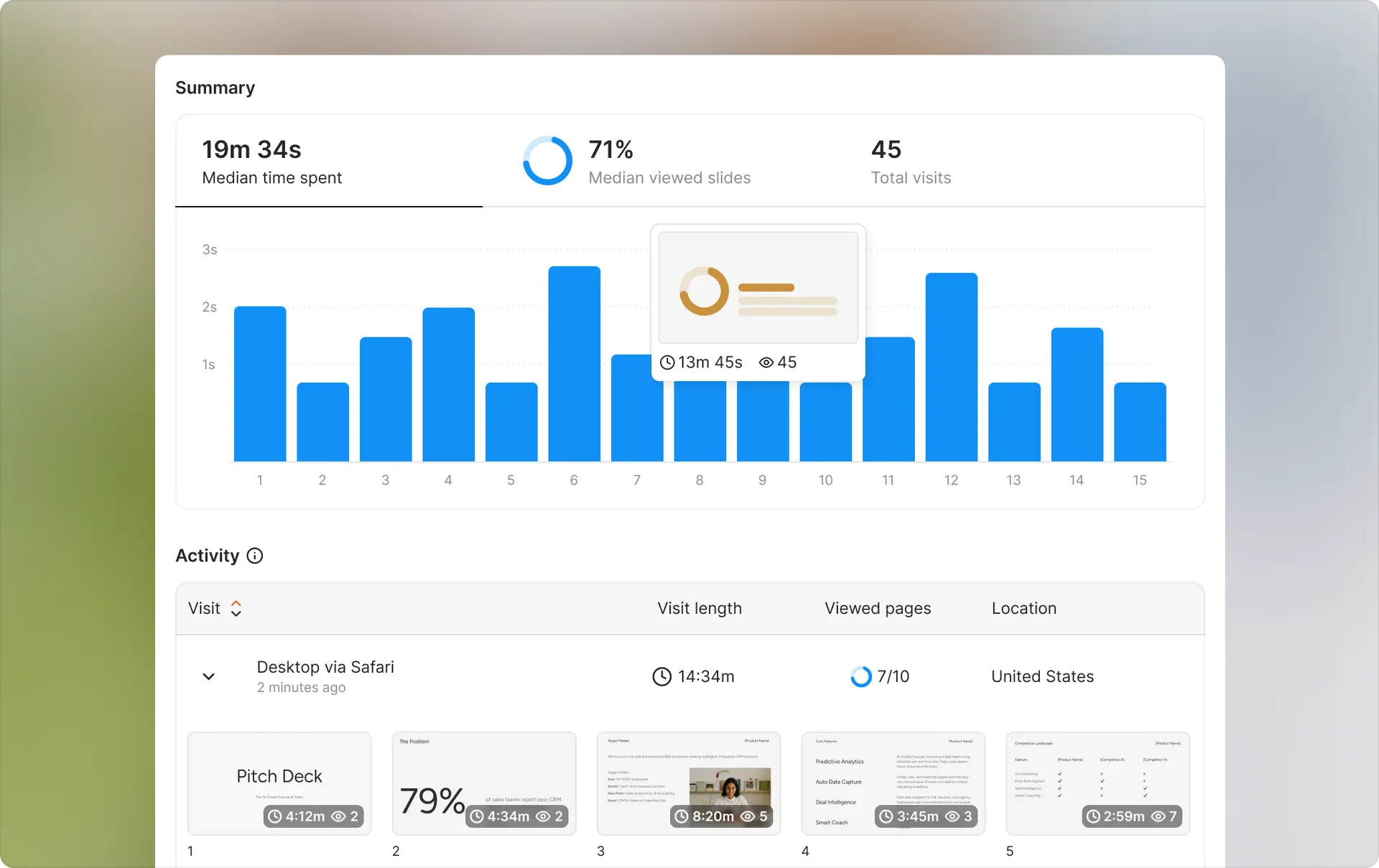
Migration takes 5 minutes:
- Sign up free at ellty.com
- Upload your pitch deck or documents
- Create trackable share link
- Send to investors immediately
- Watch real-time analytics as they view
Your iDeals VDR is down. Your deal doesn't have to be.
Don't lose another investor meeting to downtime.
Why iDeals VDR goes down
Server capacity limits
- Peak usage during quarter-end deal activity. Too many concurrent data rooms. System can't handle load.
Legacy infrastructure
- Older platform architecture. Scaling issues during growth periods. Technical debt catches up.
Database overload
- Analytics data accumulates. Document indexing bogs down. Query performance degrades until crash.
Third-party dependencies
- Email service providers fail. Authentication systems timeout. Payment processing issues lock accounts.
AWS outages
- iDeals runs on Amazon Web Services. When AWS has regional problems, iDeals goes down too.
Maintenance windows
- Scheduled updates during business hours. Poor timezone planning affects global deals.
DDoS attacks
- Virtual data rooms are targets. Security incidents cause temporary shutdowns. Recovery takes hours.
File processing failures
- Document conversion pipeline breaks. Watermark generation crashes. Preview system overloads.
Reliable alternatives when iDeals VDR fails
Ellty - 99.9% uptime


Never down when you need it most. Redundant infrastructure across multiple regions. Built for founders who can't afford downtime during fundraising.
Ellty handles everything startups actually need for fundraising: document sharing, investor engagement tracking, eSignatures, and full virtual data rooms without the enterprise complexity or cost you'll never justify.
Core features:
- Secure document sharing with trackable links
- Real-time engagement analytics dashboard
- Page-by-page engagement tracking
- Visitor identification (know exactly who viewed and when)
- Password protection, email verification, and NDA gating
- Dynamic watermarking to prevent leaks
- Time spent per page metrics
- Download controls and link expiration
- Virtual data rooms with folder organization and granular permissions
- eSignatures - create, send, and collect natively
- Custom branding and branded custom subdomain
- Real-time notifications when documents are viewed
- Mobile-responsive viewing experience
- Unlimited document versions
Why founders choose Ellty:
Setup takes 2 minutes, not 2 days. Upload your documents, organize your data room, generate trackable links, send to investors. Start tracking immediately.
Analytics actually matter. See which pages investors spend time on, which they skip, and when they share with partners. Real behavioral data that helps you follow up strategically.
No learning curve. If you can use Dropbox, you can use Ellty. Your investors don't need accounts or passwords. Just click and view.
One platform for everything. Document tracking, eSignatures, and full due diligence data rooms, no juggling multiple tools during your busiest fundraising period.
Reliability you can count on. Infrastructure designed for uptime with 99.9% SLA. When other VDR users are locked out, Ellty users are closing rounds.
Pricing:
- Free plan: Document tracking, real-time analytics, secure sharing, free forever
- Standard: $69/month — unlimited documents, full analytics, eSignatures, data rooms, custom branding
- Data Room: $149/month — granular permissions, NDA gating, dynamic watermarking, restricted visitor access
- Data Room Plus: $349/month — group visitor permissions, audit logs, 4,000 assets per data room
No hidden fees. No per-deal pricing. No surprise charges during your busiest fundraising period.
Best for: Seed to Series B startups, founders who need reliable document tracking and investor due diligence, teams tired of VDR complexity and cost.
Carta Data Rooms
Part of Carta's broader cap table and equity management platform. Makes sense if you're already deep in the Carta ecosystem.
Carta Data Rooms integrate with your existing cap table. Investor lists auto-populate. Permission management connects to your shareholder data. Convenient when everything lives in one system.
Known for solid uptime. Carta's infrastructure supports thousands of companies. They invest heavily in reliability because cap table access can't go down.
Core features:
- Virtual data room for due diligence
- Integration with Carta cap table
- Investor permission management
- Document organization and indexing
- Activity tracking and audit logs
- Secure file sharing
Considerations:
Requires Carta subscription. Can't buy data rooms standalone. If you're not using Carta for cap table management, the integration benefits disappear.
Pricing reflects enterprise positioning. Good value if you use multiple Carta products. Expensive if you only need document sharing.
Setup more complex than lightweight alternatives. Built for larger funding rounds and M&A processes. Overkill for seed-stage pitch deck sharing.
Pricing: Starts at $2,000/year as part of broader Carta subscription. Enterprise plans scale higher based on company stage and features.
Best for: Series A+ companies already using Carta, M&A transactions requiring deep cap table integration, teams needing comprehensive equity management.
Firmex
Enterprise-focused virtual data room with strong track record in M&A and due diligence. Been around since 2006. Handles complex transactions.
Better uptime than many legacy VDR competitors. Multiple data centers. Redundant systems. Built for deals that can't tolerate downtime.
Core features:
- Secure document repository
- Granular permission controls
- Q&A workflow management
- Advanced security features (fence view, watermarking)
- Audit trails and compliance reporting
- Bulk document management
- Integration with common business tools
Security focus:
ISO 27001 certified. SOC 2 compliant. Data encryption at rest and in transit. Works for financial services and healthcare deals with strict compliance requirements.
Dynamic watermarking on every page. Screen capture blocking. Document expiry settings. View-only permissions. Download restrictions.
Considerations:
Built for enterprise. Sales process involves demos and custom quotes. Not self-service signup. Expect conversations about your specific deal structure.
Feature-rich means complexity. More powerful than most startups need. Longer learning curve for administrators and users.
Pricing reflects enterprise market. Good value for $10M+ transactions. Expensive for seed-stage pitch deck sharing.
Pricing: Custom pricing, typically $500+/month for active deals. Volume discounts for firms running multiple transactions.
Best for: M&A transactions, private equity due diligence, enterprise deals requiring compliance certifications, firms managing multiple concurrent data rooms.
Caplinked
Mid-market VDR focused on private capital markets. Simpler than enterprise solutions. More features than basic sharing tools.
Designed for middle market M&A, fundraising, and asset sales. Interface balances power and usability better than legacy competitors.
Core features:
- Virtual data room with folder structure
- Workspaces for multiple deals
- User permission management
- Activity tracking and reporting
- Document viewing and downloading controls
- Secure file sharing with external parties
Pricing more accessible than enterprise VDRs. Self-service signup available. Can start immediately without sales calls.
Pricing: Starts around $500-800/month for active data rooms. Pay-per-use model available.
Best for: Mid-market M&A, private equity deals, companies outgrowing basic tools but not needing enterprise complexity.
DocSend (Dropbox)
Acquired by Dropbox in 2021. Popular with early-stage startups for pitch deck sharing. Focuses on document tracking and analytics.
Simple interface. Quick setup. Analytics dashboard shows engagement. Widely used in startup ecosystem.
Considerations:
Reliability concerns. Users report periodic outages. Part of Dropbox infrastructure but still experiences downtime during peak periods.
If you're reading this article because DocSend is also down, check out our DocSend alternatives guide.
Pricing: Starts at $45/month for individual plan. Business plans scale higher.
Best for: Early-stage startups familiar with the platform, teams already using Dropbox ecosystem.
Digify
Affordable VDR alternative focused on startups and small businesses. Simpler than enterprise solutions. More security features than basic file sharing.
Core features:
- Document tracking and analytics
- Screen shield and watermarking
- Self-destruct timers for links
- PDF security controls
- White-labeling options
Pricing competitive with startup budgets. Free tier available for testing.
Pricing: Free tier limited. Paid plans start around $99/month.
Best for: Startups wanting VDR features at accessible pricing, teams needing basic security without enterprise complexity.
Quick comparison


Choosing the right alternative:
For immediate emergency sharing: Ellty or DocSend. Both offer instant signup. Ellty has better uptime track record.
For active fundraising: Ellty. Purpose-built for pitch deck sharing. Analytics designed for investor engagement. Pricing won't kill your runway.
For Series A+ with Carta: Carta Data Rooms. Integration benefits worth the premium if you're already paying for Carta.
For M&A or complex due diligence: Firmex or Caplinked. Features justify the cost for large transactions.
For teams needing enterprise features on startup budgets: Digify. Middle ground between basic sharing and full VDR.
For emergency sharing:
Ellty free tier gets you running instantly. No credit card required. No approval wait time. No sales calls.
Upload. Share. Track. While iDeals users refresh error pages and wait for support tickets.
Your investors expect professionalism. Platform downtime isn't professional. Switch to infrastructure that works.
Frequently asked questions about iDeals VDR downtime
How often does iDeals go down?
No official statistics published. User reports on DownDetector show periodic outages, typically 2-4 times per year with 1-6 hour durations. Smaller performance issues happen more frequently.
Does iDeals offer refunds for downtime?
iDeals doesn't publish a standard SLA with uptime guarantees for most plans. Enterprise customers may negotiate specific terms. Contact support to request credit, but expect a case-by-case evaluation.
Can I access my documents when iDeals is down?
No. Documents stored in iDeals are only accessible through their platform. This is why having a backup or alternative is critical during active deals.
How long do iDeals outages typically last?
Most resolved within 2-6 hours. Major incidents can extend to 12+ hours. Maintenance windows are usually 1-2 hours but sometimes run longer.
Will I lose data if iDeals crashes?
Document data is typically safe. iDeals maintains backups. But you'll lose access during outages, and analytics data may have gaps.
Should I have a backup VDR during critical deals?
Yes. Any single platform can fail. Keep important documents uploaded to a secondary platform like Ellty. Costs nothing with free tiers and saves deals when primary systems fail.
What's the fastest way to switch from iDeals?
Export your documents from iDeals when it's working. Upload to alternative platform. Create new share links. Send updated links to stakeholders. With Ellty, this takes under 10 minutes.
Does Ellty have the same security features as iDeals?
Ellty provides encrypted file storage, access controls, download permissions, viewer authentication, and detailed audit trails. Different architecture but equivalent security for most use cases. Enterprise features available on request.
Author

Anika Tabassum Nionta is a Content Manager at Ellty, where she writes about secure document sharing, virtual data rooms, M&A, due diligence, fundraising, and sales enablement. With over 6 years of writing experience, she helps professionals understand how to share confidential documents securely, track engagement, and manage deals more effectively. Anika holds both a BA and MA in English from Dhaka University. Outside of work, she enjoys reading, exploring new cafes in Dhaka, and connecting with entrepreneurs and dealmakers in her community.

