
You've decided to sell a business asset. Maybe it's the whole company. Maybe it's a product line, a subsidiary, a portfolio of IP, or a specific division. Whatever the asset, you're about to enter a process where buyers will scrutinize every document you own and how you present those documents will directly affect how the deal goes.
A virtual data room is how you manage that process. It's not optional. It's not something you set up at the last minute. Done right, it accelerates your deal, protects your sensitive information, and signals to buyers that you know how to run a process.
This guide covers everything - what a data room for asset sale looks like, what goes in it, how to structure it, which tools to use, and how much it costs.


What is a virtual data room for asset sale
A virtual data room for asset sale is a secure, access-controlled online environment where a seller stores and shares confidential documents with prospective buyers, their lawyers, and their advisors during a transaction.
It's the digital equivalent of a locked physical room where buyers used to sit and review documents under supervision. The virtual version does the same thing with better controls, more visibility, and a full audit trail.
In an asset sale specifically, the data room serves a focused purpose: it gives buyers everything they need to evaluate the asset, conduct due diligence, negotiate terms, and close the deal. Unlike a company-wide M&A transaction, an asset sale often involves a narrower document set - but that doesn't mean a simpler process. The documents still need to be organized, secure, and carefully staged based on where each buyer is in the process.
The data room investment you make here - both in time to organize documents and money to access the right tool - pays back in deal speed and buyer confidence.
When do you need a data room for an asset sale
The short answer: earlier than you think.
Most sellers build the data room after a buyer is already interested. That's a mistake. Here's why.
When a buyer expresses serious interest and you say "we'll have the data room ready in a few days," you lose momentum. Deals that slow down often fall apart. Buyers move on, other priorities emerge, and the window closes.
You need a data room ready - or at least substantially ready - before you begin serious buyer conversations. That means:
- Before you engage an investment banker or broker, if you're using one. They'll use the data room as part of how they market the asset to buyers.
- Before you send a teaser or confidential information memorandum (CIM). Serious buyers who want to go deeper will expect to access a data room shortly after the CIM stage.
- Before any management presentations. If a buyer is meeting your team, they're likely to move to diligence immediately after. You want the room ready to open the day after the meeting.
- Before exclusivity, definitely. Once a buyer is in exclusivity, diligence moves fast. You need everything organized and accessible.
Is data room investment worth it
When people talk about data room investment in the context of an asset sale, they mean a few different things.
The first meaning is the cost of VDR software itself - what you pay for the platform that hosts and manages your documents. This ranges from free to thousands of dollars per month depending on the tool and the complexity of your transaction. More on this in the pricing section.
The second meaning is the time investment - the hours you and your team spend gathering, organizing, naming, and uploading documents. For a well-maintained company, this might take a few days. For a company that hasn't kept good document hygiene, it can take weeks. The data room investment here is almost always underestimated.
Is it worth it? Every time.
A well-prepared data room that speeds up diligence by two weeks on a deal that closes at a better price than expected returns the investment many times over. A disorganized one that raises questions and creates friction can cost you the deal entirely.
How to set up a data room for asset sale
Here's a practical, step-by-step approach to building a data room for an asset sale. This assumes you're starting from a reasonable baseline of document organization - if your files are in complete chaos, add time for the cleanup phase before you get to any of the steps below.
Step 1: Define the scope of the asset sale
Before you upload anything, get clear on exactly what's being sold. In an asset sale, buyers are acquiring specific assets - not necessarily the entire company. That means your data room should be scoped to what's actually being sold.
If you're selling a product line, the data room focuses on that product's revenues, customers, contracts, IP, and team. If you're selling a division, it includes that division's financials, operations, and legal structure. If you're selling a portfolio of IP or patents, the room is heavily weighted toward IP documentation and licensing history.
Getting this scope wrong - either including too much or too little - creates confusion early in the process.
Step 2: Build your folder structure before uploading anything
Create all your folders first. A clean, numbered structure is easier for buyers to navigate than a flat document dump or an alphabetized mess. Here's a practical top-level structure for an asset sale data room:
01 - Asset overview
02 - Financial information
03 - Legal and corporate
04 - Contracts and agreements
05 - Intellectual property
06 - Customers and revenue
07 - Operations
08 - Team and human resources
09 - Technology and product
10 - Regulatory and compliance
Don't go more than two levels deep. Buyers shouldn't have to click through four nested folders to find a balance sheet.
Step 3: Gather and upload documents in priority order
Start with the documents that buyers will ask for first - the asset overview, financials, and key legal docs. Get those in first, even if other sections are still incomplete.
Don't upload drafts. Don't upload multiple versions of the same document. Don't upload documents that contain information about parts of the business not included in the asset sale - that's a scope and confidentiality issue.
Step 4: Name everything consistently
Pick a naming convention and use it throughout.
A format like "CompanyName_DocumentType_Date.pdf" works well. The key is consistency. "Balance_Sheet_2026_Q4.pdf" is better than "BS final (1) REVISED use this one.pdf." Buyers and their advisors will download documents. How they're named matters.
Step 5: Configure access permissions
Not every buyer gets access to everything at the same time. Configure permissions based on process stage:
- Stage 1 access (initial interest): Asset overview, summary financials, basic operational overview
- Stage 2 access (after NDA): Full financials, customer data, key contracts
- Stage 3 access (exclusivity or final diligence): Sensitive legal documents, detailed employee data, full IP documentation
Step 6: Enable security features
Turn on NDA gating so that buyers must accept an NDA before they can access any documents. Enable dynamic watermarking - this embeds the viewer's name and email into every page, so documents can be traced if they leak. Set link expiry for buyers who don't advance in the process.
Step 7: Test before you share
Log in as a test user and navigate your own data room from a buyer's perspective. Check that every document opens correctly, the structure makes sense, and there are no broken links or missing files. Then share the link.
Virtual data room for asset sale: document template
Here's a comprehensive document template organized by section. Use this as a starting checklist and adapt it to your specific asset.
Asset overview section
- Executive summary of the asset being sold
- Confidential information memorandum (CIM) if prepared
- Management presentation slides
- Asset description and scope document
- Strategic rationale for the sale (optional, sometimes included)
- Key highlights one-pager
Financial information section
- Historical financial statements - 3 years minimum (P&L, balance sheet, cash flow)
- Financial statements specific to the asset being sold if carved out from a larger entity
- Most recent interim financials
- Financial model with revenue projections and assumptions
- Budget vs actuals analysis
- Working capital analysis
- Capex history and projections
- Any prior valuation reports or fairness opinions
Legal and corporate section
- Corporate structure chart
- Ownership and shareholding documentation
- Any prior sale or attempted sale documentation
- Regulatory approvals related to the asset
- Litigation history - current and resolved
- Consent requirements for asset transfer
Contracts and agreements section
- Key customer contracts (redacted where appropriate)
- Supplier and vendor agreements
- Distribution and channel partner agreements
- Lease agreements (real estate, equipment)
- Any change-of-control provisions in existing contracts
- Exclusivity or non-compete agreements that affect the asset
Intellectual property section
- Patent portfolio - issued and pending
- Trademark registrations
- Copyright registrations
- Trade secret documentation
- IP assignment agreements
- Licensing agreements (inbound and outbound)
- Any IP disputes or challenges
Customers and revenue section
- Customer list with revenue concentration analysis
- MRR or ARR breakdown (for recurring revenue assets)
- Customer retention and churn data
- Top customer profile summaries (anonymized at first, detailed later)
- Historical revenue by customer segment
- Pipeline or backlog data
Operations section
- Operational overview document
- Key operational processes and workflows
- Facilities and equipment inventory
- Supplier relationships and terms
- Quality certifications or operational audits
Team and human resources section
- Org chart for the asset being sold
- Key employee profiles and roles
- Employment contracts for key personnel
- Retention agreements or stay bonuses if applicable
- Benefits and compensation summary
- Any union agreements
Technology and product section
- Product or technology overview
- Architecture documentation
- Development roadmap
- Third-party software licenses and dependencies
- Security audits or penetration test results
- Technical documentation
Regulatory and compliance section
- Relevant licenses and permits
- Regulatory correspondence
- Environmental compliance (if applicable)
- Industry-specific certifications
- Insurance certificates


Data room best practices for asset sales
A few things that consistently separate well-run asset sale processes from messy ones:
Scope the room to the asset, not the company. If you're selling one product line, buyers don't need to see the full company's HR files or your other products' customer data. Over-sharing creates confusion and raises questions about what's actually included in the sale.
Stage your disclosures deliberately. Not every buyer who signs an NDA deserves access to your most sensitive documents immediately. Use permission levels to control what each party can see based on where they are in the process. Save your most sensitive documents - employee compensation details, litigation specifics, detailed customer contracts - for buyers who are in exclusivity or very close to it.
Keep a buyer access log. Know exactly who has seen what. This isn't just good practice - it has legal implications. If a deal falls through and a former prospective buyer later competes with you using information from your data room, your audit log is evidence of what they accessed.
Update the room during the process. Asset sale processes often take months. Financial data gets stale. Update your financials at least monthly if the process is running long. Buyers who notice outdated data lose confidence quickly.
Don't use a data room as a place to hide problems. Experienced buyers and their advisors have seen everything. If there's a known issue with the asset - a customer concentration problem, a pending lawsuit, a technology dependency - address it proactively in the data room rather than hoping it doesn't come up. Issues that surface late in diligence kill deals. Issues disclosed early get priced in and processed.
Have a clean room and a full room. Your initial data room might show financial summaries and high-level overviews. Your full data room - the one that goes to buyers in exclusivity - has everything. Don't conflate the two by dumping everything in from day one.
Assign one person to own the data room. Shared ownership of document management means no one is really responsible. Designate one person on your team who is accountable for keeping the room current, responding to document requests, and managing access. On the sell side, this is often your CFO or a senior advisor.


Top virtual data room providers for asset sales
1.Ellty
NDA gating, Watermarking, Audit trail, Flat pricing, eSignatures
Free - $0/moStandard - $69/moData Room - $149/moData Room Plus - $349/mo
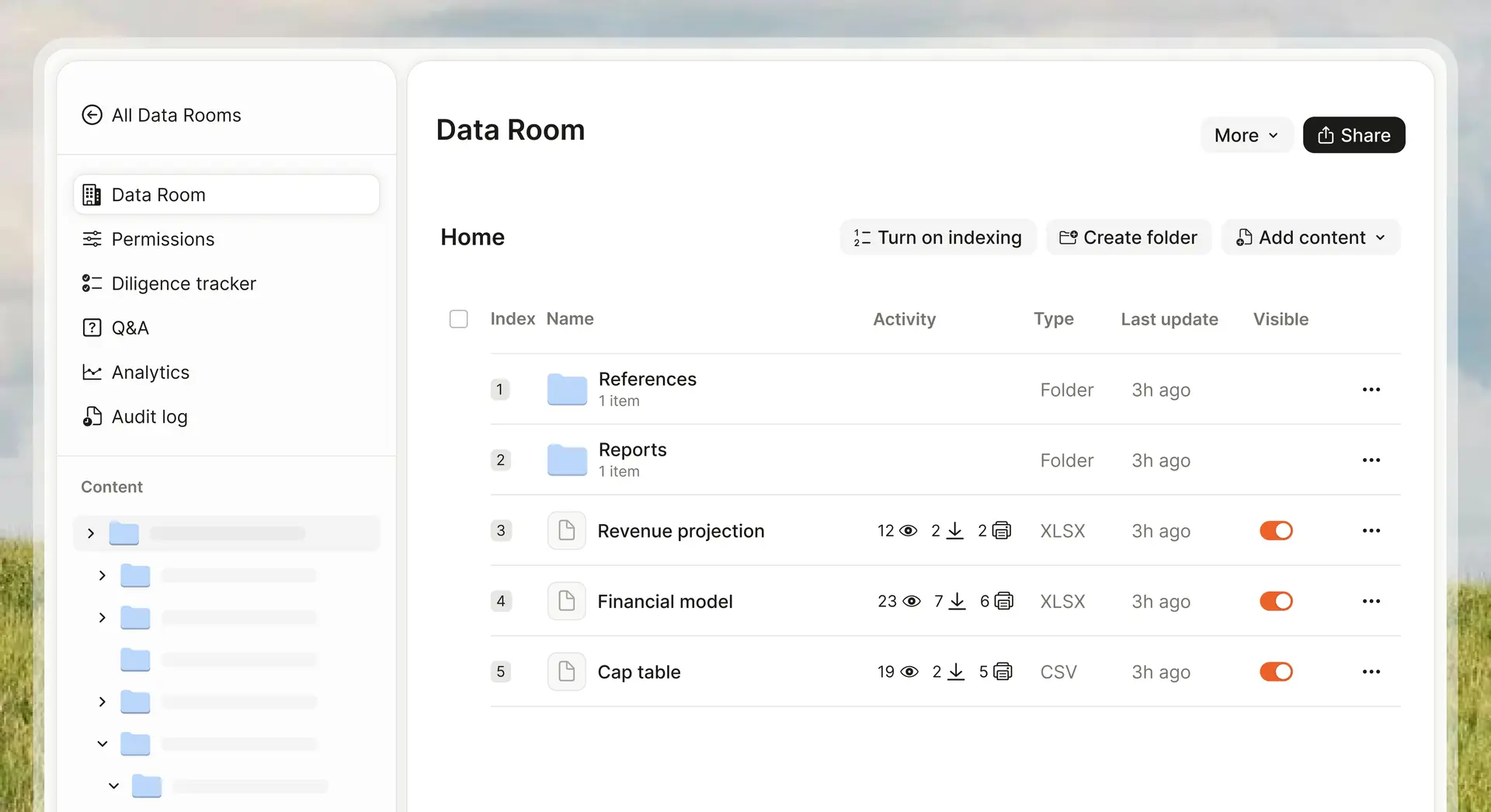
Ellty is a secure document sharing and analytics platform with full data room functionality - built for anyone sharing sensitive documents in a controlled, trackable way. For asset sales, that means access controls, real-time activity tracking, NDA gating before any buyer opens your files, and a clean audit trail throughout the deal. Ellty works well across deal sizes: a smaller asset sale can run cleanly on the Standard plan, while a larger multi-party transaction with multiple buyer groups fits the Data Room Plus tier. Dynamic watermarking protects your documents from being forwarded outside the process, and restricted visitor access means you control exactly who sees what, and when. What makes Ellty different from legacy platforms is the pricing. No per-user charges, no per-page fees, no enterprise quotes. You pick a plan, set up fast, and know exactly what you're paying - whether your deal team is 3 people or 30.

2.Intralinks
M&A focused, AI redaction, Q&A workflow, Large deals
Custom pricing - Enterprise contract

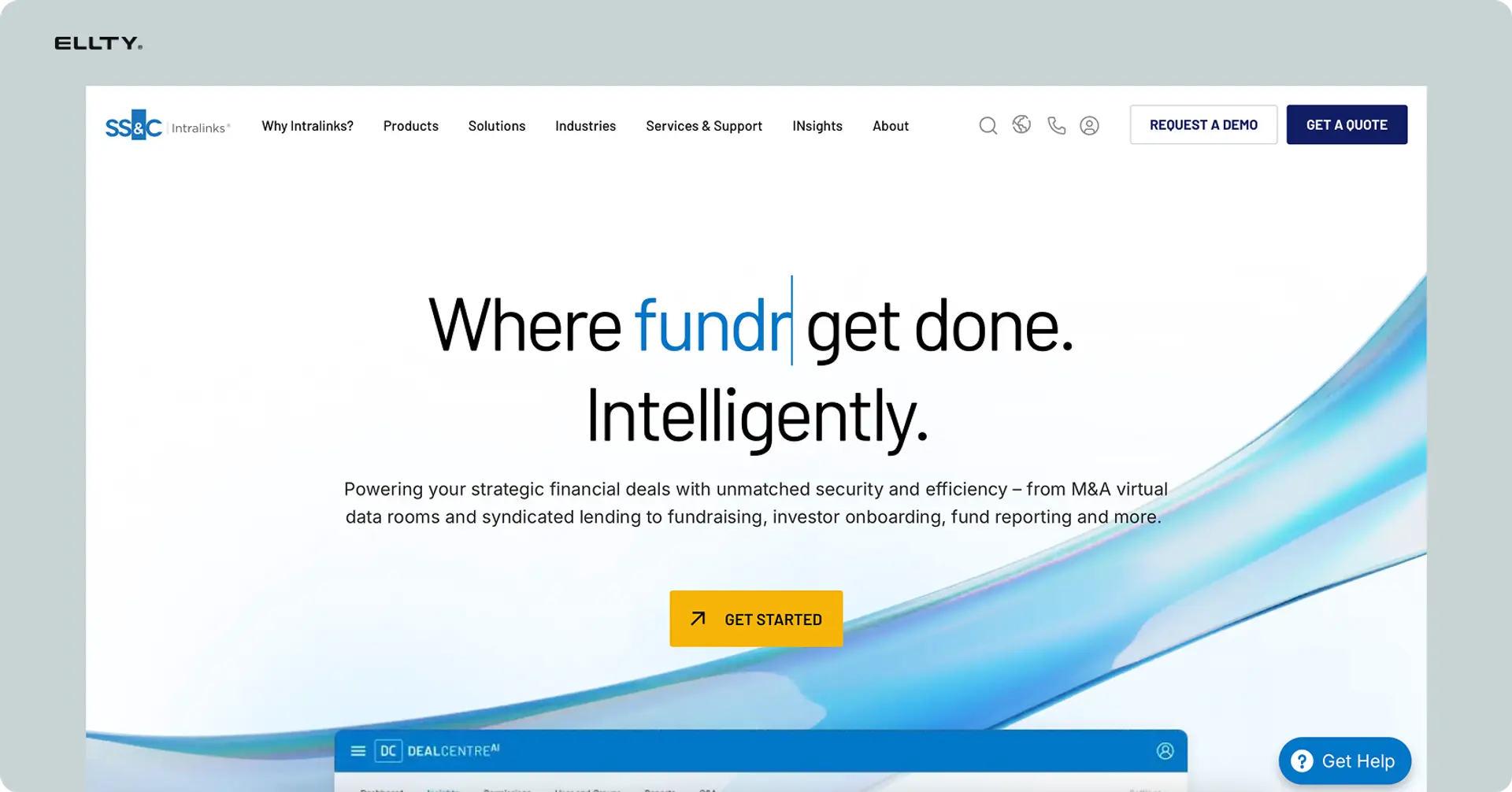
Intralinks has been a mainstay in M&A transactions for decades, making it a familiar name in asset sales that involve investment banks or large corporate buyers. The platform supports structured Q&A workflows, where buyer representatives submit questions and the sell-side team responds in a controlled environment - a common need in competitive asset auctions. It also offers AI-assisted redaction to help sellers remove sensitive information before uploading documents, which saves time during document preparation. Intralinks integrates with deal management tools and can support very large document volumes with complex permission structures. The main drawback for smaller or mid-market asset sales is cost and setup time. Pricing is custom and typically requires a sales conversation, which adds friction if you're trying to move quickly. It's best suited for larger, advisor-led processes where enterprise-grade infrastructure is a must.
3.Datasite
Due diligence, Buyer outreach, Deal analytics, Redaction AI
Custom pricing - Quote required

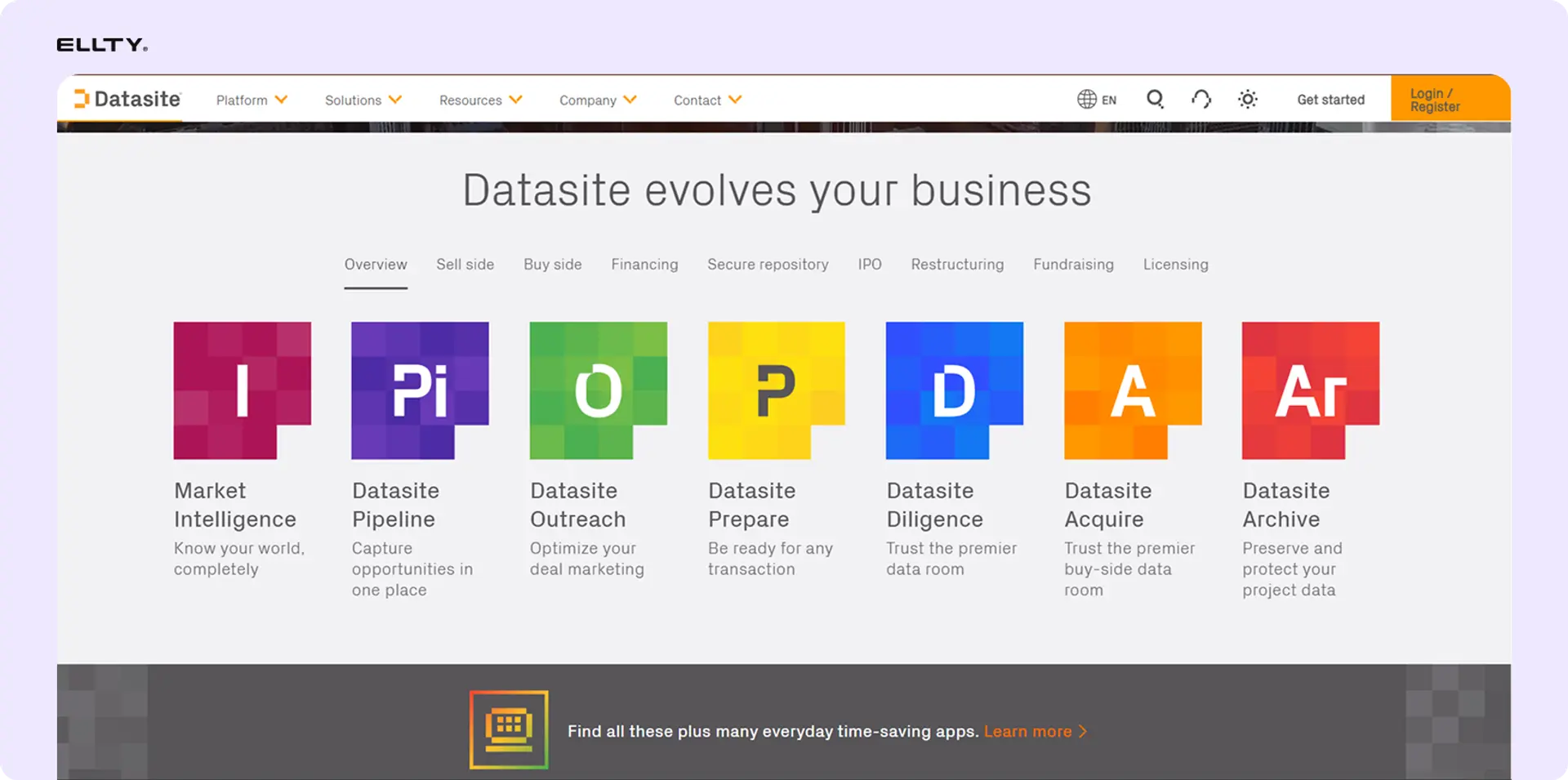
Datasite (formerly Merrill DataSite) is built specifically for M&A and asset divestiture processes, making it a natural fit for sell-side advisors managing formal asset sale mandates. The platform includes tools beyond document storage - it has buyer outreach features, NDA management, and deal pipeline tracking that help advisors manage the full sale process in one place. AI-powered redaction speeds up document preparation by automatically identifying and flagging sensitive content before it goes into the data room. Deal analytics show which buyers are actively reviewing materials and how far along each party is in their due diligence, which helps sellers prioritize follow-up. Datasite is priced for institutional use and is not the right fit for smaller or self-managed transactions. But for a formal asset sale with a financial advisor and multiple competing bidders, it provides a robust and well-supported environment that most deal professionals already know.
4.Firmex
Unlimited users, Drag-and-drop, Granular permissions, No per-user fee
Subscription-based - Free trial available
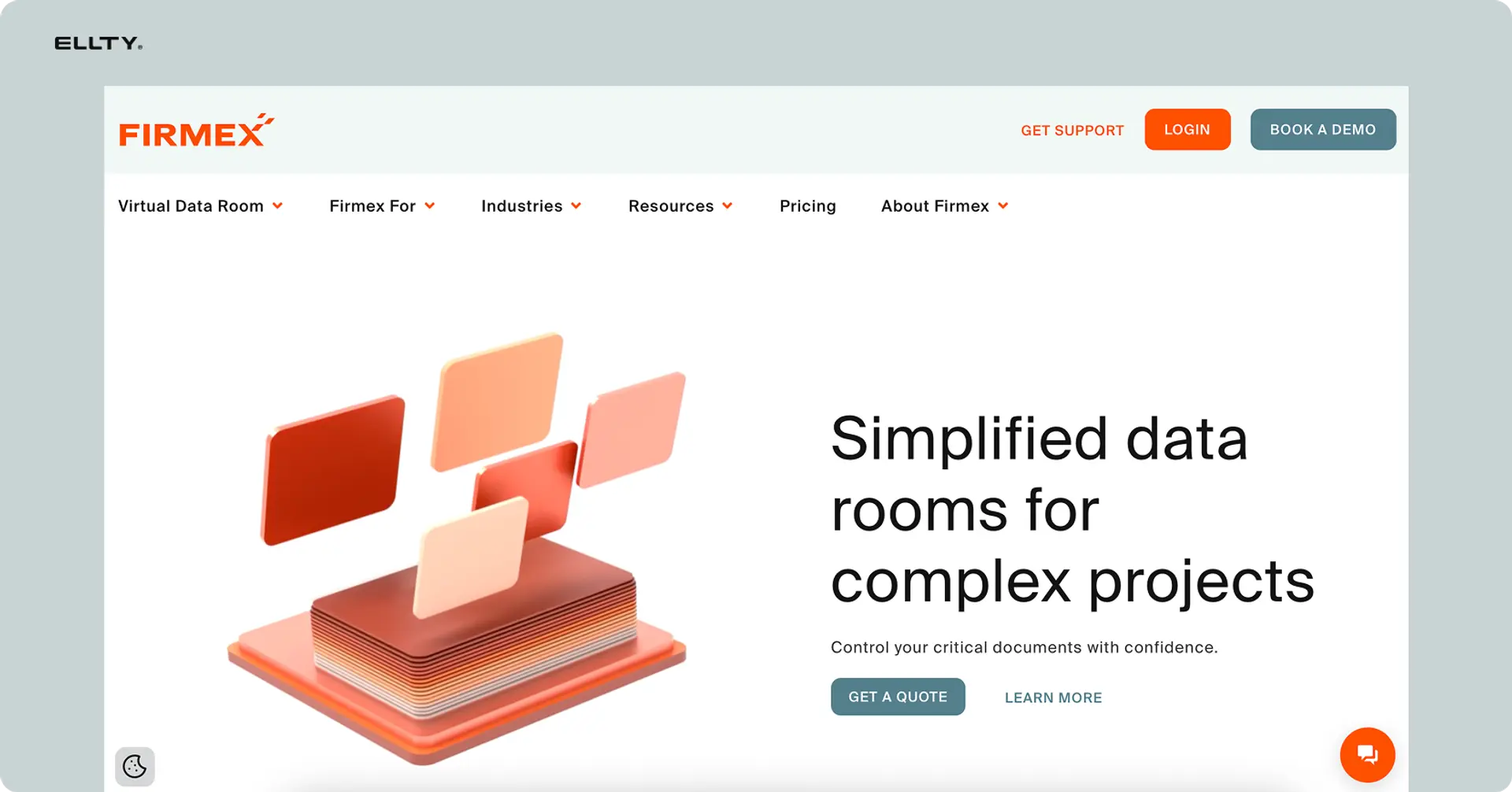
Firmex is a popular choice for mid-market asset sales because it offers straightforward pricing that includes unlimited users - a meaningful advantage when your deal involves lawyers, accountants, and multiple buyer groups all needing access at the same time. The platform is easy to set up, with drag-and-drop document uploads and a folder structure that mirrors how most deal teams already organize their files. Granular permission controls let you restrict individual documents or entire folders to specific buyer parties, which is standard in any competitive asset sale process. Activity reporting shows who accessed what and when, giving sellers a clear picture of buyer engagement during due diligence. Firmex also offers strong customer support, which matters when you're running a time-sensitive transaction and need help quickly. Pricing is subscription-based with a free trial available, and it sits at a more accessible price point than the large enterprise platforms without compromising on the core data room features most asset sales require.
5.iDeals
Fence view, Auto-indexing, Mobile app, Q&A module
Tiered plans - No quote needed for most tiers


iDeals is a well-regarded virtual data room that covers the full lifecycle of an asset sale, from initial document preparation through to buyer due diligence and closing. The platform includes a fence view feature that prevents buyers from screenshotting or printing documents - an important layer of protection when sharing confidential financial statements or operational data with parties who have not yet signed a binding agreement. Auto-indexing keeps the data room organized automatically as you upload documents, saving time during the often hectic preparation phase. A built-in Q&A module lets buyer teams submit questions directly inside the platform, and the sell-side team can respond with full control over which answers are shared with which parties - a structured approach that keeps the diligence process clean. iDeals works well for real estate asset sales, business divestitures, and IP transactions. Pricing is tiered and available without a custom quote for most plan levels, making it easier to get started quickly compared to the larger enterprise platforms.
6.Ansarada
Readiness scoring, AI deal tools, Pathways, Engagement scoring
Deal-based pricing - Subscription options available


Ansarada differentiates itself by going beyond document storage to actively help sellers prepare for a transaction. Its readiness scoring tool evaluates how complete and well-organized your data room is before buyers arrive - flagging gaps in documentation that could slow down due diligence or raise red flags. For asset sales, this is genuinely useful: sellers often underestimate how much preparation is involved, and having a tool that highlights missing items early can prevent delays. Ansarada also tracks buyer engagement with a scoring system that indicates how seriously each party is reviewing the materials, giving the sell-side team a data-driven view of which buyers are most active. The platform includes guided pathways for different deal types - M&A, real estate, infrastructure - so the structure of your data room is shaped around what buyers in that space typically expect to see. Pricing is deal-based rather than subscription-based for some tiers, which suits sellers who run occasional transactions rather than continuous deal flow.
7.ShareVault
DRM protection, Offline access, Expiring links, Compliance ready
Fixed monthly plans - Annual billing available


ShareVault is built around document security, making it a good fit for asset sales where the underlying materials are especially sensitive - think proprietary technology, pharmaceutical assets, or regulated infrastructure. The platform uses digital rights management (DRM) to control documents even after they've been downloaded, meaning buyers cannot open or forward files outside the permissions you set. Expiring access links add another layer of control, automatically cutting off access after a set period without requiring manual revocation. For deals that involve regulatory compliance requirements - HIPAA for healthcare assets, for example - ShareVault is built to support those environments. The platform also offers offline access for reviewers who need to work in locations with limited connectivity, which comes up in some site visits and facility reviews during asset diligence. Pricing is transparent with fixed monthly or annual plans, and ShareVault's customer support is frequently praised for being responsive and helpful during live transactions where technical issues need to be resolved quickly.
Here's a quick summary of how they stack up for asset sales:
Ellty is the strongest starting point for most sellers - flat pricing, no per-user fees, NDA gating, and watermarking all in one place. You can be up and running the same day.
Intralinks and Datasite are for large, advisor-led transactions with institutional buyers. Powerful but slow to set up and priced for enterprise budgets.
Firmex and iDeals sit in the sweet spot for mid-market asset sales - easy to use, solid permissions, and more predictable pricing than the big names.
Ansarada is worth considering if you want AI-powered readiness scoring to help you prepare the data room properly before buyers arrive.
ShareVault is the right call when the asset being sold is especially sensitive - tech, pharma, or regulated industries where DRM and compliance matter.
How much does a virtual data room cost for an asset sale
Pricing depends on three things: the platform you choose, the features you need, and how long the process runs.
Here's the practical breakdown for asset sale use cases:
Free tier - tools like Ellty offer a permanently free plan that includes document tracking, real-time analytics, and secure sharing. This is useful for early-stage conversations and initial document sharing before you're in formal diligence. It won't cover the security features (NDA gating, watermarking, granular permissions) that a formal asset sale process requires.
$69-$149/month - the practical range for most startup and SMB asset sales. Ellty Standard plan ($69/month) includes unlimited documents, advanced analytics, eSignatures, and basic data room features. The Data Room plan ($149/month) adds NDA gating, watermarking, and granular permissions - the full security stack for due diligence.
$349/month - Ellty Data Room Plus plan adds group visitor permissions, audit logs, and 4,000 assets per data room. This handles more complex processes with multiple buyer groups at different permission stages.
$1,000-$5,000+/month - mid-market tools with dedicated deal support, advanced workflow management, and more sophisticated permission structures. Appropriate for transactions with many parties and a formal process.
$5,000-$20,000+/year - enterprise platforms for large M&A. Most teams won't need this tier.
A note on per-user pricing: many VDR platforms charge per user per month. In an asset sale with three buyers, two lawyers per buyer, two financial advisors, and your own team - you can easily have 15-20 people accessing the room. At $30/user/month, that's $450-$600/month in user fees alone, before any platform features.
Ellty doesn't charge per user. The Data Room plan at $149/month covers your team and all the buyers you invite, which makes the total cost predictable regardless of how many parties are in the process.
Set up your Ellty data room today and share documents with unlimited buyers without watching your costs scale with every new person you invite to the room.
Asset sale vs company sale: does the data room differ
Yes, meaningfully. Here's how the data room for an asset sale differs from one for a full company acquisition:
Scope is narrower and that requires more discipline. In a full company sale, you include everything. In an asset sale, you need to be precise about what's included and what isn't. Buyers will scrutinize what's in and out of scope carefully because it directly affects value and transition complexity.
Carve-out financials are harder. If you're selling a division or product line that hasn't been run as a standalone entity, you'll need to prepare carve-out financial statements - financial statements that show what the asset's standalone economics would look like separated from the parent. These are often the most complex documents in an asset sale data room and the ones that take longest to prepare.
Transition service agreements (TSAs) matter more. In an asset sale, the buyer often needs the seller to continue providing services (IT, HR, finance, legal) for a period after closing while they build their own infrastructure. TSA documentation often appears in the data room as diligence progresses.
IP transfer is more prominent. Asset sales frequently involve IP as a core component of what's being sold. The IP section of your data room will get more scrutiny than in a standard acquisition.
Change-of-control contract analysis is critical. Many customer, vendor, and partnership contracts have change-of-control provisions that are triggered by an asset sale. Buyers will review these carefully because they affect what they're actually acquiring. Make sure these provisions are identified and documented clearly in the data room.
Employee treatment needs to be addressed. In an asset sale, employees don't automatically transfer. The data room should include clear documentation of which employees are intended to be part of the transaction and on what terms.


Common mistakes in asset sale data rooms
Mistakes show up consistently across asset sale processes:
Including too much. Buyers who can see documents about parts of the business not included in the sale get confused about scope and start asking questions you don't want to answer. Keep the room scoped to the asset.
No carve-out financials. Presenting full company financials for a partial asset sale and asking buyers to figure out the economics themselves is a red flag. Do the work to prepare standalone or carved-out numbers.
Stale documents. An asset sale process can run 6-12 months. Financial data from the beginning of the process needs to be updated. A buyer in exclusivity who sees financials that are 8 months old will ask why.
Missing change-of-control analysis. Buyers who discover mid-diligence that half your customer contracts require consent to transfer and you weren't aware of it - lose confidence immediately. Know what you have before they find it.
No version control. Multiple versions of the same financial model, legal document, or presentation in the same folder create confusion. One authoritative version per document. Archive old versions somewhere outside the room.
Access that's too broad, too early. Giving every prospective buyer full access from day one before they've demonstrated serious intent is both a security risk and a negotiating mistake. Stage access based on process milestones.
Forgetting about audit logs. If a deal falls apart and a buyer later uses information from your data room in a way that damages you, your audit log is your evidence. Make sure your platform captures a complete record of every action.
Frequently asked questions
What is a virtual data room for asset sale?
A virtual data room for asset sale is a secure, access-controlled online platform where sellers store and share confidential documents with prospective buyers during a transaction. It replaces the old model of physical document review rooms. In an asset sale specifically, the data room is scoped to the asset being sold - whether that's a product line, division, IP portfolio, or other discrete business asset - rather than the full company. It gives buyers everything they need to conduct due diligence, while giving sellers control over who sees what, when, and with a full audit trail of every action taken.
What documents should be in a data room for asset sale?
The core categories are: asset overview documents (CIM, executive summary, management presentation), financial information (3-year historical statements, carve-out financials if applicable, financial model), legal and corporate docs (corporate structure, litigation history, consent requirements), contracts (customer, vendor, lease, change-of-control provisions), IP documentation (patents, trademarks, licenses), customer and revenue data (customer list, retention metrics, revenue concentration), operations, team and HR documents, technology and product overview, and regulatory compliance. The exact contents depend on what's being sold - an IP portfolio sale looks very different from a division sale.
How much does a virtual data room cost for an asset sale?
VDR pricing range from free to $20,000+ per year depending on the platform and process complexity. For most startup and SMB asset sales, the practical range is $149-$349/month. Ellty Data Room plan ($149/month) covers NDA gating, granular permissions, dynamic watermarking, and restricted visitor access. The Data Room Plus plan ($349/month) adds audit logs, group visitor permissions, and up to 4,000 assets. Mid-market tools with dedicated deal support typically run $1,000-$5,000+ per month. Enterprise platforms for large M&A processes run $5,000-$20,000+ annually. Watch out for per-user pricing - it scales quickly when multiple buyer teams are in the room simultaneously.
When do you need a data room for an asset sale?
You need it ready before serious buyer conversations begin - not after. Specifically, you should have at least a core set of documents organized and uploaded before you send a confidential information memorandum (CIM) to buyers, before any management presentations, and definitely before exclusivity. Building the data room after a buyer requests it introduces unnecessary delay at a point in the process where momentum matters. Many teams underestimate the time it takes to gather, organize, and upload documents cleanly. Start early.
What's the difference between an asset sale data room and a company sale data room?
The main differences are scope, financial presentation, and certain document types. An asset sale data room is scoped to the asset being sold rather than the full company, which requires more discipline about what's included. If the asset hasn't been run as a standalone entity, you'll need carve-out financial statements showing the asset's economics on a standalone basis. Asset sales also place more emphasis on IP transfer documentation, change-of-control contract analysis, and transition service agreements. Employee documentation covers only the subset of employees transferring with the asset rather than the full HR picture.
Do I need NDA gating in my asset sale data room?
Yes. NDA gating - which requires a viewer to accept a non-disclosure agreement before they can access any documents - is standard practice in asset sale processes. You're sharing sensitive financial records, customer data, employee information, and proprietary IP with parties who may ultimately not complete the transaction. Without NDA gating, you're relying entirely on a separately executed NDA and hoping buyers honor it. NDA gating enforces the agreement at the point of document access and creates a clear record that the buyer acknowledged confidentiality obligations before reviewing materials.
What security features does a data room for asset sale need?
The essential security features are NDA gating, dynamic watermarking (embeds the viewer's name and email into every document page), granular permission controls (different access levels for different buyers and document categories), view-only modes to prevent downloading of sensitive documents, link expiry to revoke access for buyers who don't advance, and a full audit log of every action taken in the room. These aren't premium features for complex situations - they're the baseline for any process where you're sharing sensitive information with multiple external parties who have competing interests.
Can multiple buyers access the same data room simultaneously?
Yes, and this is standard in competitive asset sale processes. You'll typically have multiple prospective buyers in the room at the same time, potentially at different permission levels based on where they are in the process. A well-configured data room lets you manage this cleanly - each buyer sees only what you've decided they should see at their current process stage, and you get separate analytics for each party showing their engagement with your documents. On Ellty Data Room Plus plan, you can create group permissions to manage multiple buyers at the same access tier simultaneously, which simplifies administration when you're running a structured process with several parties.
How long does it take to set up a data room for asset sale?
The platform setup itself takes less than an hour - creating your account, building your folder structure, and configuring permissions is fast on modern tools. The variable is how long document gathering takes. If your documents are organized and current, uploading and naming them correctly might take another 1-2 days. If you're building carve-out financials from scratch, tracking down old contracts, or creating documents that don't yet exist, add significant time to that estimate. The practical advice: start the document gathering process at least 4-6 weeks before you plan to begin formal buyer conversations, and set up the platform in parallel so you're not waiting on either.
If you're preparing for an asset sale and want a data room that's ready before your first buyer conversation, create your free Ellty account now and have your documents organized, secured, and tracked from day one.
Author

Anika Tabassum Nionta is a Content Manager at Ellty, where she writes about secure document sharing, virtual data rooms, M&A, due diligence, fundraising, and sales enablement. With over 6 years of writing experience, she helps professionals understand how to share confidential documents securely, track engagement, and manage deals more effectively. Anika holds both a BA and MA in English from Dhaka University. Outside of work, she enjoys reading, exploring new cafes in Dhaka, and connecting with entrepreneurs and dealmakers in her community.

