
Let's be honest, raising money for your startup is one of the most demanding things a founder will ever do. You're managing relationships with dozens of investors, tracking who has seen what, sending follow-ups, answering the same questions over and over, and somehow still trying to run your actual business.
Most founders underestimate how much of this process is an operational challenge. Keeping sensitive documents organized, making sure the right investors see the right information at the right time, and presenting your company professionally. These are not small tasks. And doing them poorly sends a signal you don't want to send.
The good news is that there's a category of software purpose-built to help with exactly this. Some tools help you organize your investor pipeline. Some help you send and track documents. Some keep your cap table clean. Others make your pitch deck look like it came from a serious company. Used together, they make the fundraising process feel less like chaos and more like a system you actually control.
Why Founders Overlook Good Fundraising Tools
Many early-stage founders delay setting up the right software because they think it's "too early" or that they'll figure it out once they're in the thick of things. That's usually when things start falling apart.
By the time you're in active conversations with ten or fifteen investors, you're already behind if you haven't built the infrastructure. Investors are making judgments about you the moment they interact with anything you send them. A document that's hard to access, a data room that looks sloppy, or a pitch deck that arrives without any follow-up context. These things add friction to a process that already has plenty of it.
Setting up the right stack early is not about spending money unnecessarily. Most of the tools listed here have free tiers or affordable plans that are more than enough for a pre-seed or seed-stage raise. The return on that investment such as in time saved, mistakes avoided, and professionalism gained, is hard to argue with.
What Good Fundraising Infrastructure Actually Looks Like
Before getting into specific tools, it helps to understand what you're actually trying to build.
A functional fundraising setup for a startup typically covers a few different areas. You need a way to manage your investor pipeline: who you've contacted, where each conversation stands, what the next step is. You need a way to share documents securely - your pitch deck, financial model, executive summary without just sending unprotected attachments that can be forwarded anywhere. You need a basic understanding of your cap table so you're not making it up as you go when investors start asking. And you need your actual pitch materials to look polished and credible.
None of this requires enterprise software or a finance team. But it does require that you think about it intentionally and put the right tools in place before you need them.
Different Kinds of Software That Help Founders Raise
Not all fundraising software does the same thing. Here's a quick breakdown of the main categories:
Virtual Data Rooms (VDRs) - These are secure platforms for sharing sensitive documents during due diligence. When an investor is getting serious, they'll want to review your financials, legal documents, contracts, and other confidential materials. A VDR gives you control over who sees what, tracks every action they take, and creates a professional, organized environment for that review process.
CRM and Pipeline Tools - These help you track every investor relationship in one place. Who have you emailed? Who responded? Who is in the "warm" category versus "cold"? Without some form of CRM, this becomes a mess of notes and memory.
Pitch Deck and Presentation Tools - Your deck is often the first thing an investor sees. Design tools and presentation platforms help you build something that looks professional without needing a designer.
Cap Table Management - Knowing exactly who owns what in your company, and being able to show that clearly to investors, is non-negotiable. Cap table tools keep this clean and up to date.
Document Signing - Getting NDAs, term sheets, and other agreements signed quickly and cleanly is part of a professional fundraising process.
9 Fundraising Software Tools Worth Knowing
1. Ellty - Secure Document Sharing and Data Room for Fundraising

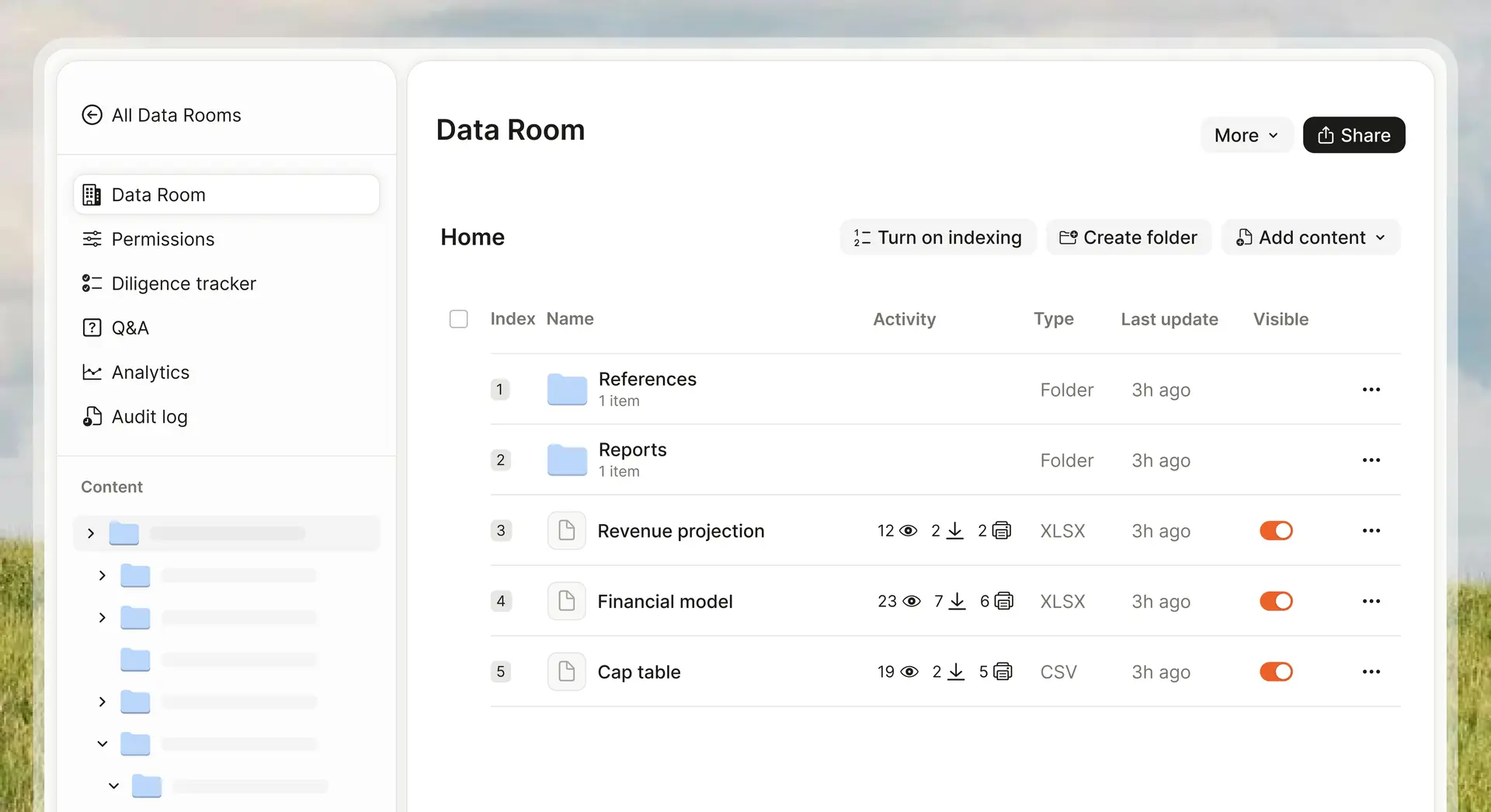
When you're in serious conversations with investors, document control stops being optional. Ellty is a secure document sharing and analytics platform with full virtual data room functionality, built for founders who need to share sensitive materials in a way that is controlled, trackable, and professional.
The platform covers everything that matters during due diligence: access controls so you decide exactly who can see what, real-time activity tracking so you know which investors are actually reading your financials and which ones are not, NDA gating so no one gets into the data room without signing first, and a clean audit trail that documents every interaction.
What makes Ellty particularly relevant for startups is the pricing model. There are no per-user fees, no per-page charges, and no enterprise contracts that take weeks to negotiate. You pick a plan, get set up in minutes, and know exactly what you're paying.
- Free - Document tracking, real-time analytics, and secure sharing. A solid starting point if you're in early conversations.
- Standard ($69/month) - Unlimited documents, advanced analytics, eSignatures, custom branding, and data room features. Good for smaller deals and ongoing investor communication.
- Data Room ($149/month) - Granular permissions, NDA gating, dynamic watermarking, and restricted visitor access. Everything you need for a serious due diligence process.
- Data Room Plus ($349/month) - Group visitor permissions, full audit logs, and support for up to 4,000 assets. Built for larger deals with multiple reviewer groups.
For any founder who needs a professional data room without an enterprise price tag, Ellty is the place to start.

2. Notion - Investor CRM and Fundraising Command Center


Notion is not a purpose-built CRM, but a huge number of founders use it as one and for good reason. It is flexible enough to build exactly the investor tracking system you need, and there are dozens of free fundraising templates available that get you set up in under an hour.
You can track every investor across your pipeline, log notes from every call, attach relevant documents, and keep a clear view of where each conversation stands. For early-stage founders who do not need the complexity of a proper CRM, Notion often hits the right balance of structure and flexibility.
The free plan is generous enough for most individual founders, and the paid tiers are affordable if you're working with a small team.
3. Attio - Modern CRM Built for Startups


For founders who want something more structured than Notion but less overwhelming than enterprise CRM tools, Attio is worth a close look. It is a modern, well-designed relationship management platform that works particularly well for managing investor relationships during a raise.
Attio lets you track contacts, companies, and deal stages in a way that actually makes sense. It syncs with your email and calendar so your activity is captured automatically, which means less manual data entry and fewer dropped balls. The interface is clean and fast, and the product has clearly been built with startup teams in mind.
There is a free tier for small teams, and paid plans scale reasonably as you grow.
4. Canva - Pitch Deck Design for Non-Designers


Your pitch deck needs to look like it was made by people who care about their product. Canva makes that accessible to founders who are not designers and do not have the budget to hire one.
The platform has a large library of presentation templates, many of which are specifically designed for pitch decks and investor presentations. You can customize everything - colors, fonts, layouts, and the results look genuinely professional without requiring design skills.
Canva also makes it easy to share decks via a link, which is convenient for early-stage conversations where you're sending the deck broadly. Just be aware that a shareable Canva link does not give you any insight into who's actually opening it. For that, you would want to share through a platform like Ellty that tracks document activity.
The free plan covers most of what early-stage founders need.
5. Carta - Cap Table Management

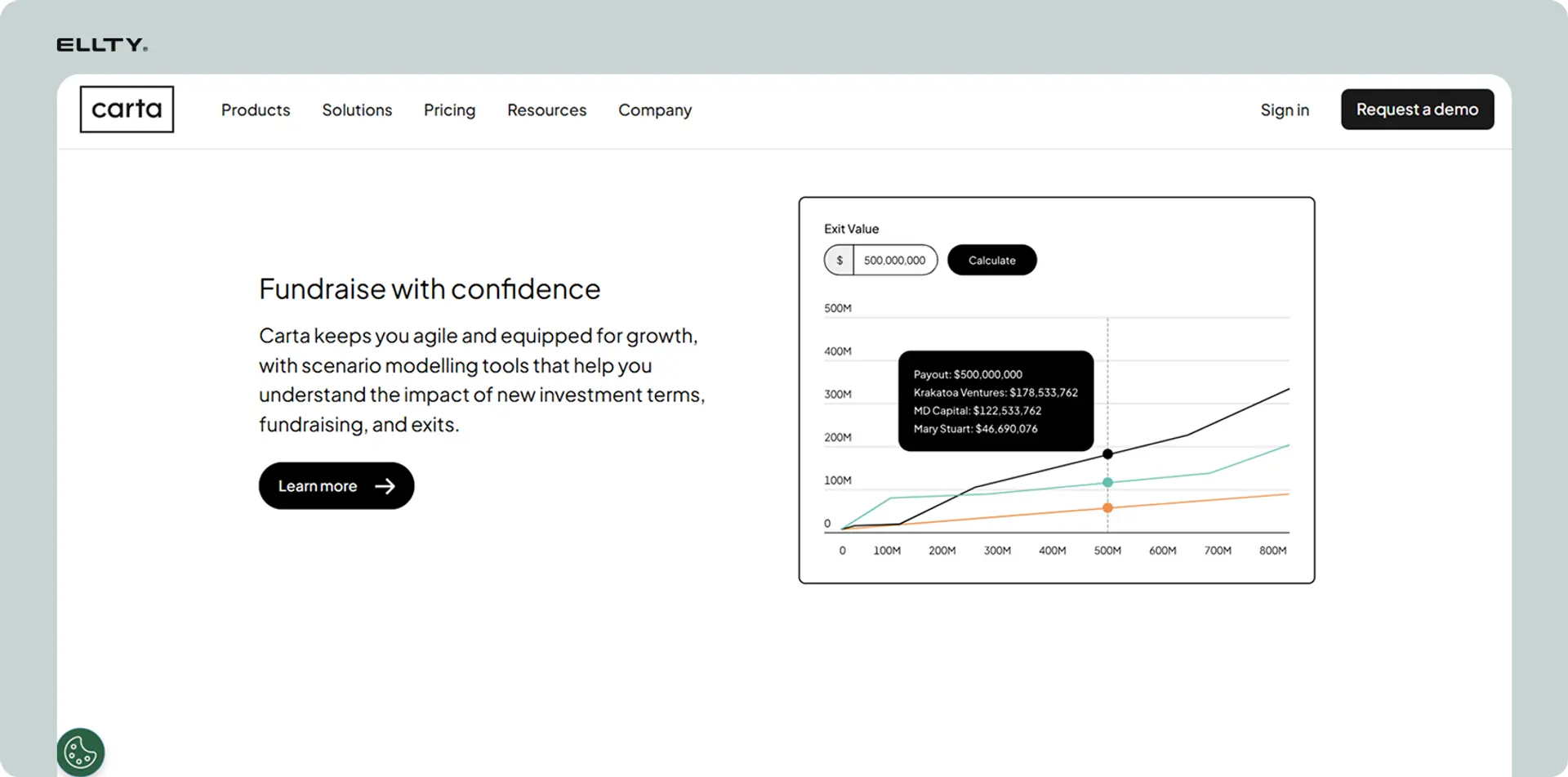
When investors start asking serious questions, one of the first things they will want to understand is your cap table. Carta is the industry standard for startup cap table management, and for good reason.
It keeps your ownership structure clean, accurate, and easy to share. It handles employee equity, convertible notes, SAFEs, and priced rounds. When you get to due diligence, having your cap table in Carta sends a strong signal that you are organized and have been thinking carefully about your equity from the beginning.
Carta is not the cheapest option on this list, but the credibility it adds during due diligence is worth it for most founders who are planning a serious institutional raise.
6. DocSend - Pitch Deck Tracking
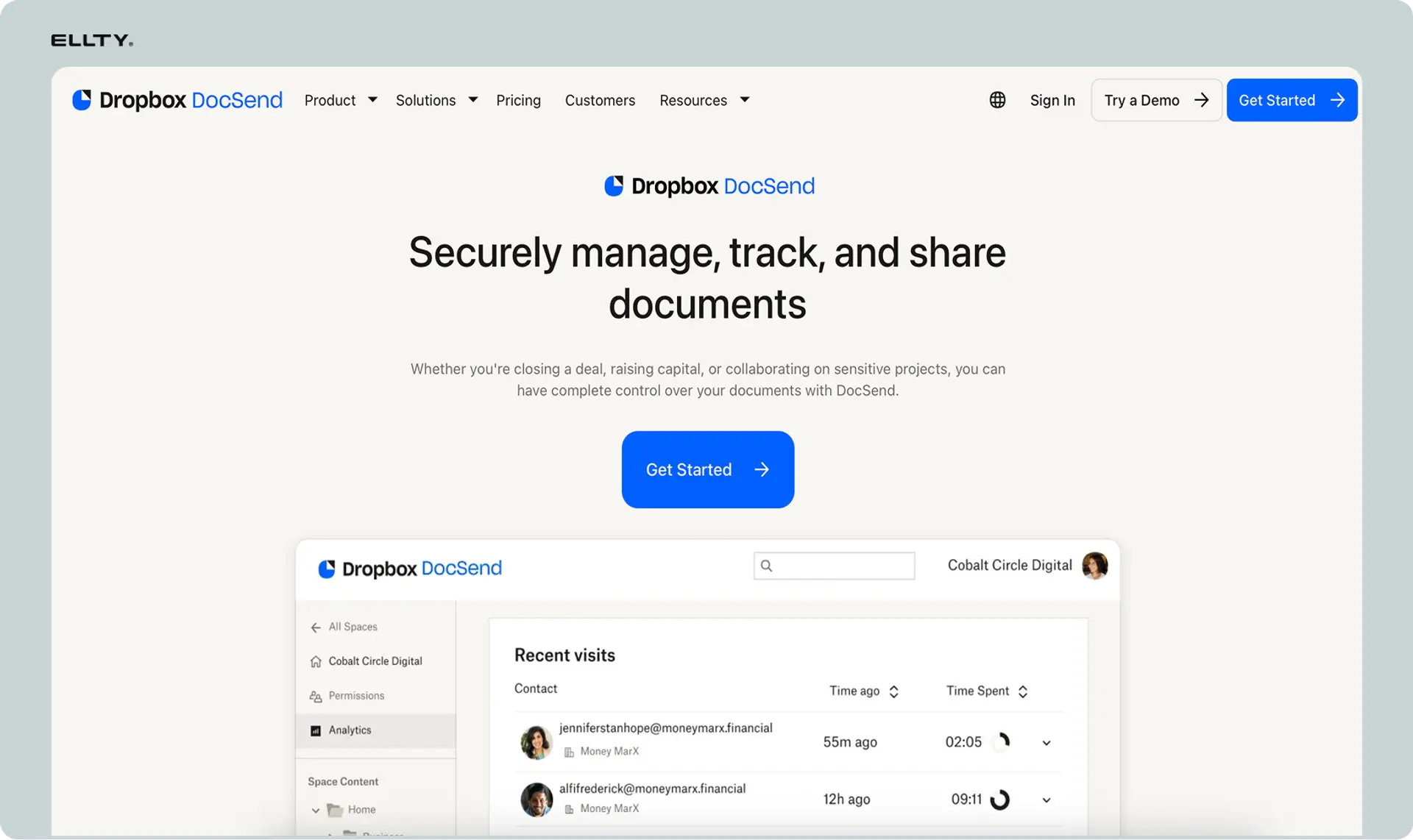
DocSend is a document tracking tool that is particularly popular for sharing pitch decks. You upload your deck, share it via a DocSend link, and get detailed analytics: who opened it, how long they spent on each slide, and whether they forwarded it to someone else.
This kind of insight is genuinely useful. If you know an investor spent two minutes on your team slide and skipped past your financial projections, that tells you something about what to address in your follow-up.
DocSend does one thing and does it well. For broader document control and due diligence needs, you would want to layer in a more full-featured platform like Ellty. But for early-stage deck sharing, it is a solid choice.
7. Typeform - Investor Intake and Lead Forms

This one is less obvious, but useful. When investors express interest through your website, LinkedIn, or referrals, you need a way to capture that information and qualify those conversations early. Typeform lets you build clean, professional intake forms that feel much less clunky than a standard Google Form.
You can ask investors about their typical check size, stage focus, and sector interest before you schedule a call. This saves time for everyone and helps you prioritize the conversations that are actually worth having. The forms integrate easily with Notion, Attio, and other tools in your stack.
8. AngelList - Fundraising Platform and Investor Network


AngelList is not just a job board, it is one of the most important fundraising platforms in the startup ecosystem. Founders use it to discover investors, run rolling funds, set up SPVs, and connect with a network of angels and early-stage VCs.
If you are raising an early-stage round, having a well-maintained AngelList profile is close to mandatory. Investors check it. Other founders recommend it. And the platform's own investor matching features can surface your startup to people who are actively looking to deploy capital in your space.
It does not replace direct relationship-building, but it is an important part of the broader infrastructure.
9. Forecastr - Financial Modeling for Fundraising


Investors will ask about your financials. If you are not a finance person, building a model that holds up to scrutiny can feel intimidating. Forecastr is a financial modeling tool designed specifically for startups, with templates and guided workflows that help non-finance founders build credible projections.
It connects to your accounting software, lets you run different scenarios, and produces outputs that look professional in investor conversations. Having a clean, well-organized financial model in Forecastr shows investors that you understand your numbers, which is one of the more important signals you can send.
How to Choose the Right Software for Your Stage
Not every tool on this list is right for every stage of fundraising. Here's a practical way to think about it.
If you are in early conversations and exploring interest
Start with a CRM like Notion or Attio to track your outreach, Canva for a clean pitch deck, and Ellty free plan to see who is actually engaging with your documents. You do not need much more than this at this stage.
If you have warm investor interest and are starting to send detailed materials
Add DocSend or move to Ellty Standard plan so you have full analytics on document engagement. Make sure your cap table is clean in Carta and your financial model is in order.
If you are in active due diligence
This is when a proper data room becomes essential. Ellty Data Room plan gives you everything you need: NDA gating, granular permissions, dynamic watermarking, and a full audit trail. Investors will take you more seriously, and you will have the control and visibility you need to manage the process well.
If you are running a larger, multi-party process
Ellty Data Room Plus plan handles heavier document loads and multiple reviewer groups without the per-user fees that make legacy VDR platforms expensive.
Best Practices for Fundraising
A few things that make the process meaningfully better, regardless of which tools you use:
Get organized before you start reaching out
Your data room, your deck, your financial model - have these ready before investor conversations begin, not during them. Scrambling to pull things together after someone says yes sends the wrong signal.
Track everything
Know who you've contacted, when, and what the status is. Without this, you will lose deals to simple follow-up failures.
Control your documents
Sending an unprotected PDF attachment is not how serious companies handle sensitive information. Use a platform that gives you visibility into who is accessing your materials and the ability to revoke access if needed.
Follow up consistently
Most investors who eventually say yes require multiple follow-ups. A CRM that reminds you of next steps is not optional, it is how you avoid letting warm conversations go cold.
Be selective
Not every investor is the right fit. Spending time qualifying conversations before they happen saves significant time and energy during the raise.
Keep your data room current
If your financials update or your team changes, make sure your data room reflects that. Inconsistencies between what you say on calls and what investors see in your documents create doubt.
FAQs
Do I need a data room for an early-stage raise?
Not necessarily at the very beginning, but yes, once you have serious investor interest. A data room becomes important when investors move into due diligence and want to review confidential documents. Setting one up early with a platform like Ellty free or Standard plan is low-cost and makes you look prepared.
What is the difference between a VDR and just sharing documents via Google Drive?
Google Drive does not give you the access controls, activity tracking, NDA gating, or audit trails that a proper VDR provides. Investors can forward files freely, you have no visibility into what they are looking at, and it does not project professionalism during a serious fundraising process. A VDR like Ellty gives you all of that in a structured, controlled environment.
How much should a startup spend on fundraising software?
Most early-stage founders can get very far with tools that cost $0–$150/month in total. Ellty free plan, a free Notion workspace, and Canva's free tier cover a lot of ground. Add Ellty Standard or Data Room plan as you move into more serious conversations, and you have a professional setup at a fraction of what legacy enterprise tools would cost.
When should I set up a cap table management tool?
Ideally before you close your first round. Having your equity structure in a tool like Carta from the beginning saves significant pain later. Investors will ask about your cap table during due diligence, and having it clean and accessible signals that you are organized.
Can I use Ellty if I'm not raising a funding round?
Yes. Ellty is built for anyone who needs to share sensitive documents in a controlled way. That includes consulting firms, real estate professionals, legal teams, and anyone running acquisition or partnership processes. The fundraising use case is common, but the platform is not limited to it.
How do I know which investors are actually interested based on document activity?
With a tool like Ellty, you can see exactly who has opened your documents, how long they spent on them, and which sections they focused on. This gives you a much clearer picture of actual interest versus polite acknowledgments. Following up with an investor who spent twenty minutes in your data room is a very different conversation than following up with one who never opened the link.
Is it safe to store confidential company documents in cloud-based fundraising tools?
Reputable platforms like Ellty use encryption, access controls, and security practices that are well-suited for confidential business documents. The risk of a properly secured cloud platform is generally much lower than the risk of sending unprotected email attachments, which have no access controls whatsoever.
Final Thoughts
Fundraising is ultimately about relationships and the quality of your business. But the infrastructure you build around those conversations has a real impact on outcomes: how you share information, how you track engagement, how you manage the process.
The tools in this list are not silver bullets. They will not raise a round for you. But they will make sure that the operational side of your raise does not get in the way of the relationship side. They will make sure your documents reach the right people in the right way, that nothing falls through the cracks, and that investors see a team that takes its own business seriously.
Start simple. Get your deck into a tool where you can track engagement. Build a basic pipeline. Set up a data room before you need it rather than scrambling when due diligence begins.
If there is one piece of software to get right from the start, it is your document sharing and data room setup. That is the infrastructure investors interact with most directly during the evaluation process, and it shapes how they perceive you.
Author

Anika Tabassum Nionta is a Content Manager at Ellty, where she writes about secure document sharing, virtual data rooms, M&A, due diligence, fundraising, and sales enablement. With over 6 years of writing experience, she helps professionals understand how to share confidential documents securely, track engagement, and manage deals more effectively. Anika holds both a BA and MA in English from Dhaka University. Outside of work, she enjoys reading, exploring new cafes in Dhaka, and connecting with entrepreneurs and dealmakers in her community.

