
A limited partner asked you for a data room. You said "sure." Now you're wondering what actually goes in it, how long it takes to set up, and whether you need to spend $1,000 a month to do it right. You don't.
If you're going through LP due diligence for the first time, the request for a "data room" feels more intimidating than it should be. The concept is simple: a secure, organized, access-controlled place where your LPs can review documents. The execution is what trips people up.
This guide covers everything you need to know - what goes in it, how to set it up, what it costs, and which virtual data room providers are worth using. No fluff.
In this guide
- What is a virtual data room?
- Why LPs and GPs both rely on data rooms
- What goes in an LP data room
- How to make a virtual data room
- Features that actually matter
- How much does a VDR cost?
- 7 virtual data rooms for LP use cases
- LP data room template
- Common mistakes
- FAQ
What is a virtual data room?
A virtual data room (VDR) is a secure online space where you store and share confidential documents with specific people. That's the whole idea.
The name sounds fancy because it comes from M&A deals, where "data rooms" were literally physical rooms — bankers and lawyers would sit in a room and review paper documents. The digital version removes all of that friction.
For LPs, a data room is where everything lives, whether you're evaluating a new fund commitment, reviewing ongoing portfolio reporting, doing a secondary transaction, or going through a co-investment opportunity. Think of it as a private, access-controlled folder, except you can see exactly who viewed what, how long they spent on it, and when they came back. And you can cut off access at any time.

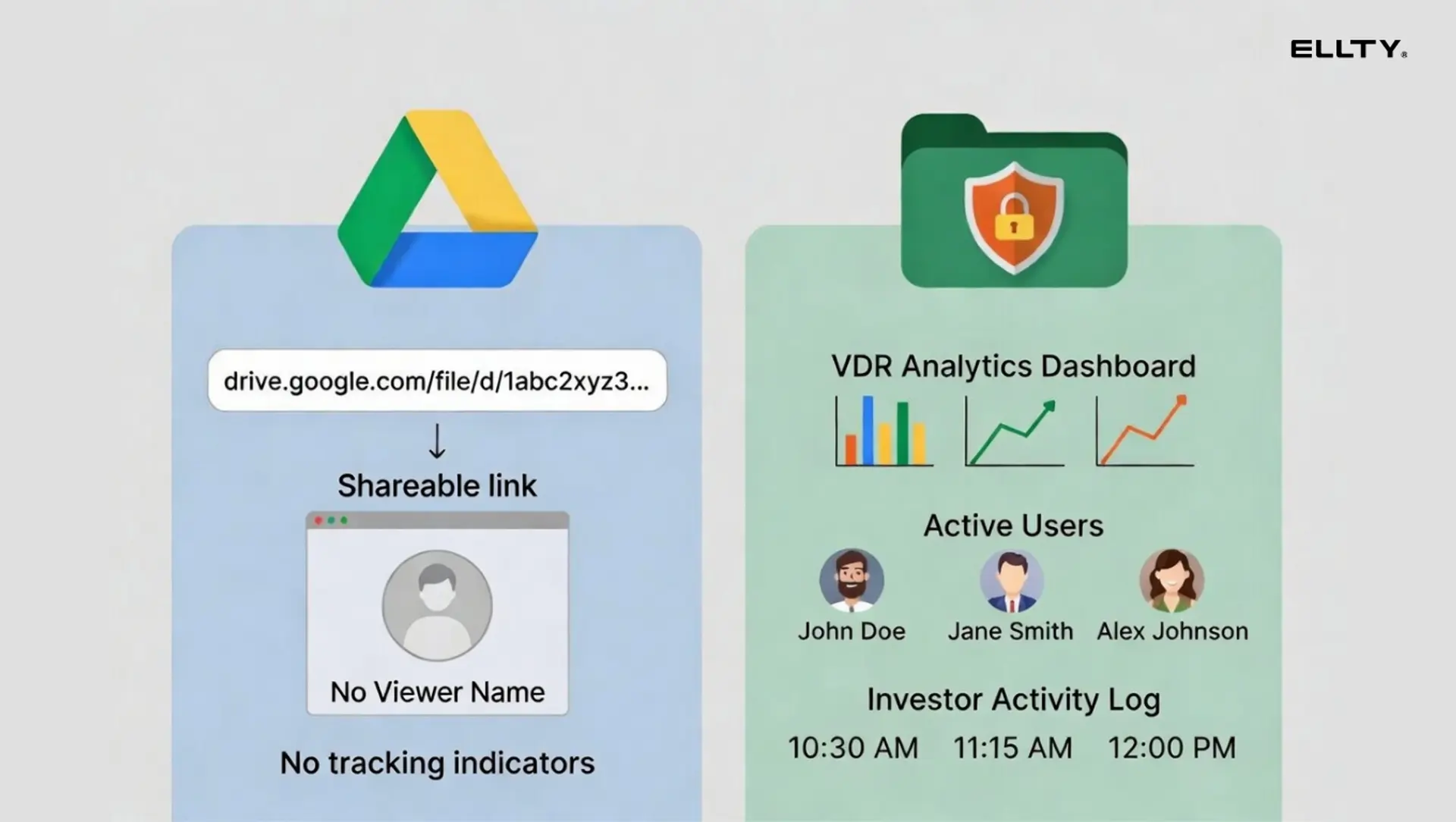
The real difference between a VDR and a regular shared folder is control and visibility. With a shared folder, once someone has the link, you've lost the thread. With a virtual data room, you can see who opened it, which documents they read, which sections they skipped, and how many times they returned.
For LPs, that level of visibility matters across the board, whether you're a GP sharing fund documents with allocators, or an LP reviewing materials from a manager you're considering. You always know where things stand.
Why LPs and GPs both rely on data rooms
LPs like pension funds, family offices, endowments, sovereign wealth funds, fund-of-funds, and high-net-worth individuals, are putting capital to work for 10 years or longer. They can't rely on conversations alone. A formal due diligence process is how they verify the fund structure, track record, team, and operational setup before committing.
But the data room isn't just a fundraising tool. It shows up across the entire LP-GP relationship:
- Fundraising & initial due diligence - GPs share fund documents; LPs review them before committing capital
- Ongoing LP reporting - quarterly updates, capital calls, distribution notices, financial statements
- Secondary transactions - when an LP wants to sell their position, a buyer needs full access to fund documents fast
- Co-investment diligence - LPs evaluating a direct deal alongside the fund need their own dedicated document set
- Regulatory and audit requests - auditors, compliance teams, and regulators often need structured, time-stamped access to documents
A data room signals that whoever is sharing is organized and takes confidentiality seriously. For GPs, it tells LPs you respect their process. For LPs sharing documents in secondaries or co-investments, it tells counterparties you run a tight ship.
There's also a legal angle. When capital is committed or when any party relies on documents to make a decision, having a structured, version-controlled, access-logged record protects everyone involved.
"An LP asking for a data room is a good sign. It means they're taking you seriously."
What goes in an LP data room
The exact contents vary, but there's a core set of documents most LPs will expect. Here's a practical breakdown:

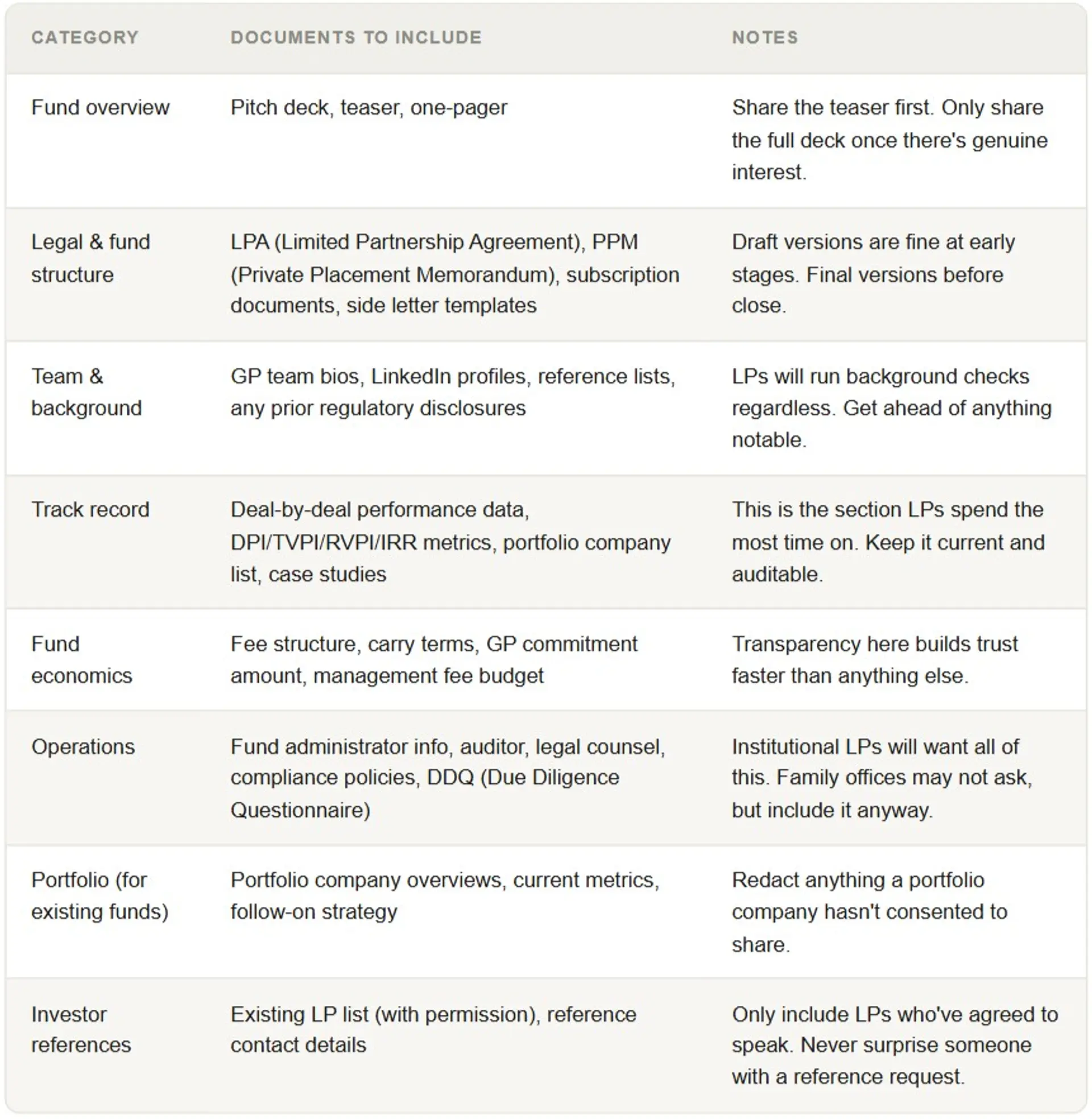
Don't dump everything in at once. A common mistake is treating the data room like a storage bucket rather than a curated presentation. Start with the fund overview and team sections. Unlock the legal and financial documents once an LP is past initial interest and actively in diligence.
How to make a virtual data room
Setting up a virtual data room is not technically complicated. The work is in getting your documents organized and current, not in the software setup. Here's the actual process:
- Get your documents in order first
Before you touch any tool, collect everything you want in the data room. Rename files with clean, descriptive names. "LPA_Draft_v3_FINAL.pdf" - not "Final FINAL version 2 USE THIS.pdf". LPs notice. Use a numbering convention: 01_Fund_Overview, 02_Legal, etc. - Choose your VDR tool
For most LP use cases, you don't need an enterprise platform. You need something with access control, analytics, NDA gating, and flat pricing. More on specific tools below. - Create the data room and folder structure
Mirror the categories from the table above. Create top-level folders for each section. Inside each folder, upload the relevant documents. Don't go more than two levels deep - it gets confusing for reviewers. - Set permissions before you share
Decide which LPs get access to which sections. For early-stage conversations, restrict access to the fund overview and team materials. For active diligence LPs, open up the legal and track record sections. Most VDRs let you set this at the folder or document level. - Enable NDA gating
Any LP accessing sensitive financials, track record data, or legal documents should first agree to a non-disclosure agreement. Your VDR should handle this automatically before granting access. - Test the LP experience before you share
Open the data room link as if you were an LP. Check that everything loads, that the file names make sense, and that the NDA flow works properly. Five minutes of testing saves a lot of embarrassment. - Share trackable links and monitor engagement
Send each LP a unique link (or group them). Watch the analytics. Who's viewing which documents? Which LPs haven't even opened it? Use this to guide your follow-up cadence.
With a modern VDR tool, you can go from "I need a data room" to "data room is live and shared" in under two hours - if your documents are already organized. The software setup takes 20-30 minutes. The document organization takes the rest of the time.

Features that actually matter for LP data rooms
VDR vendors love listing 40 features on their pricing page. Most of them won't matter for your LP process. Here's what actually does:
Document analytics
This is the one feature you cannot skip. You need to see who viewed which documents, which pages they spent time on, and how many times they came back. Basic "was it opened" tracking isn't enough, page-level data is what tells you whether an LP is genuinely in diligence or just downloaded the deck and disappeared. For ongoing reporting rooms, analytics also tell you whether LPs are actually reading the updates you send, which matters more than most GPs realize.
Granular access permissions
Not every LP should see everything, and not at the same time. You need the ability to control access at the folder or document level, show the overview materials broadly, restrict financials and legal documents to LPs who are further along, and give co-investment prospects access only to what's relevant to that specific deal. Good VDRs let you set this cleanly without a lot of manual overhead.
NDA gating
Before anyone accesses sensitive materials, track records, fund economics, legal documents, or portfolio data, they should have to digitally sign a non-disclosure agreement first. A proper VDR handles this automatically and timestamps the consent, creating a legal record without requiring you to chase signatures separately. This applies whether you're running a fundraise, a secondary process, or sharing co-investment materials.
Dynamic watermarking
Every document a viewer opens gets stamped with their name or email address. If something ends up somewhere it shouldn't, you know exactly who it came from. This matters most for track record data, fund economics, and anything involving portfolio company information. It's a quiet deterrent and a clear accountability mechanism.
Real-time notifications
When an LP, a potential co-investor, or a secondary buyer opens your data room, you want to know immediately, not two days later when the moment has passed. Timing your follow-up to match someone's active engagement is one of the clearest advantages a VDR gives you over a static shared folder.
Audit logs
A complete, timestamped record of every action in the data room, who accessed what, when, and from which device. For family office LPs, this is a nice-to-have. For institutional allocators, pension funds, endowments, or any regulatory-adjacent process, it's expected. It also protects you if there's ever a dispute about what was shared and when.
Features that sound useful but usually aren't
eSignatures and custom branding are genuinely useful additions if they're included in your plan, having LPs sign NDAs or subscription documents directly in the platform saves a step, and a branded room looks more professional. But neither one will make or break a process.
Q&A modules and AI document summaries are the features VDR vendors love to put on their comparison tables. Q&A modules are built for M&A auction processes where dozens of bidders are submitting questions simultaneously, that's not how LP diligence works. AI summaries are an emerging feature that most tools don't execute well yet. Don't pay extra for either.
How much does a VDR cost?
VDR pricing depends entirely on what you need and how VDR providers define "data room" features. The market ranges from free to several thousand dollars a month. Here's an honest breakdown:

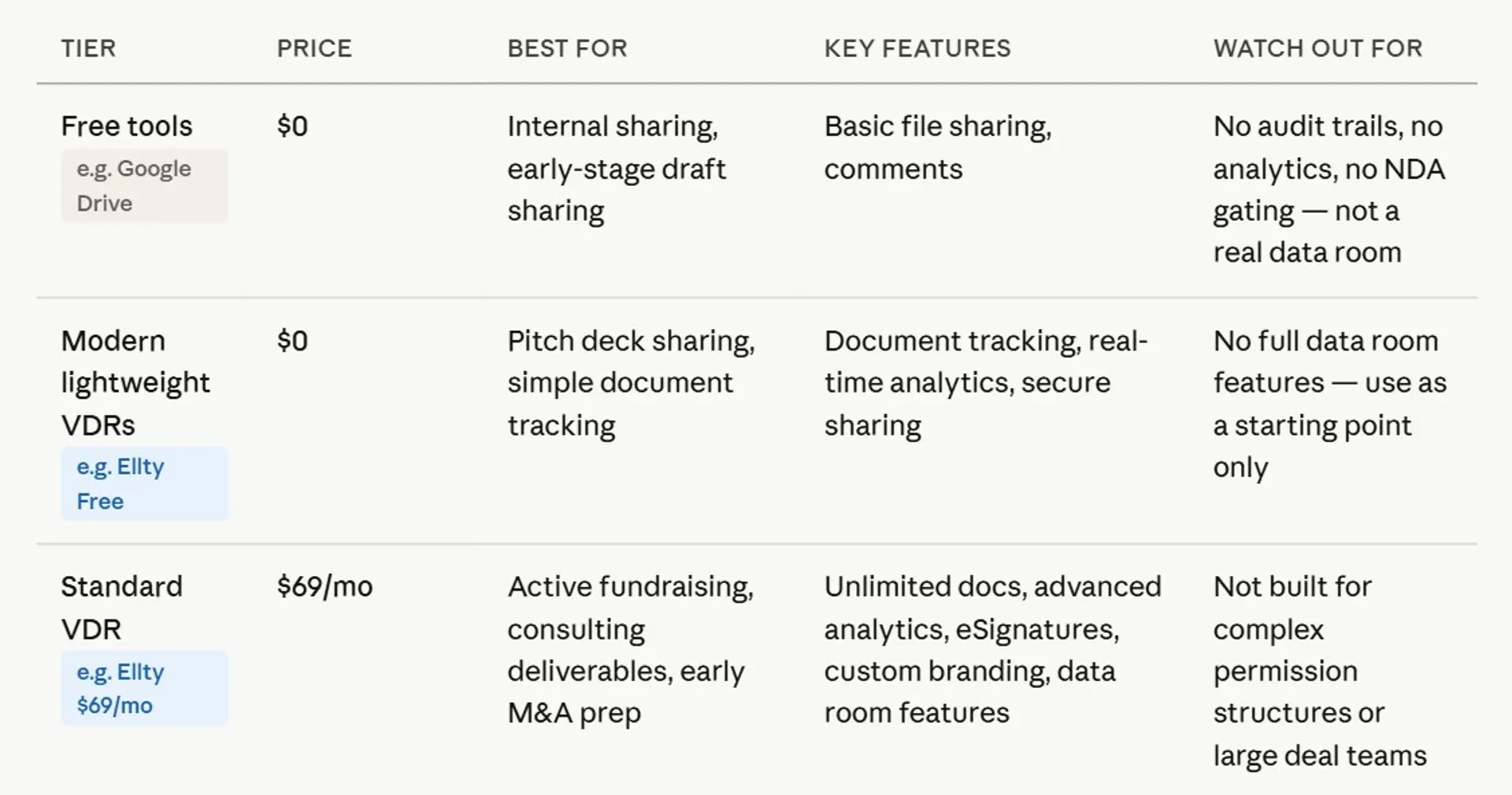

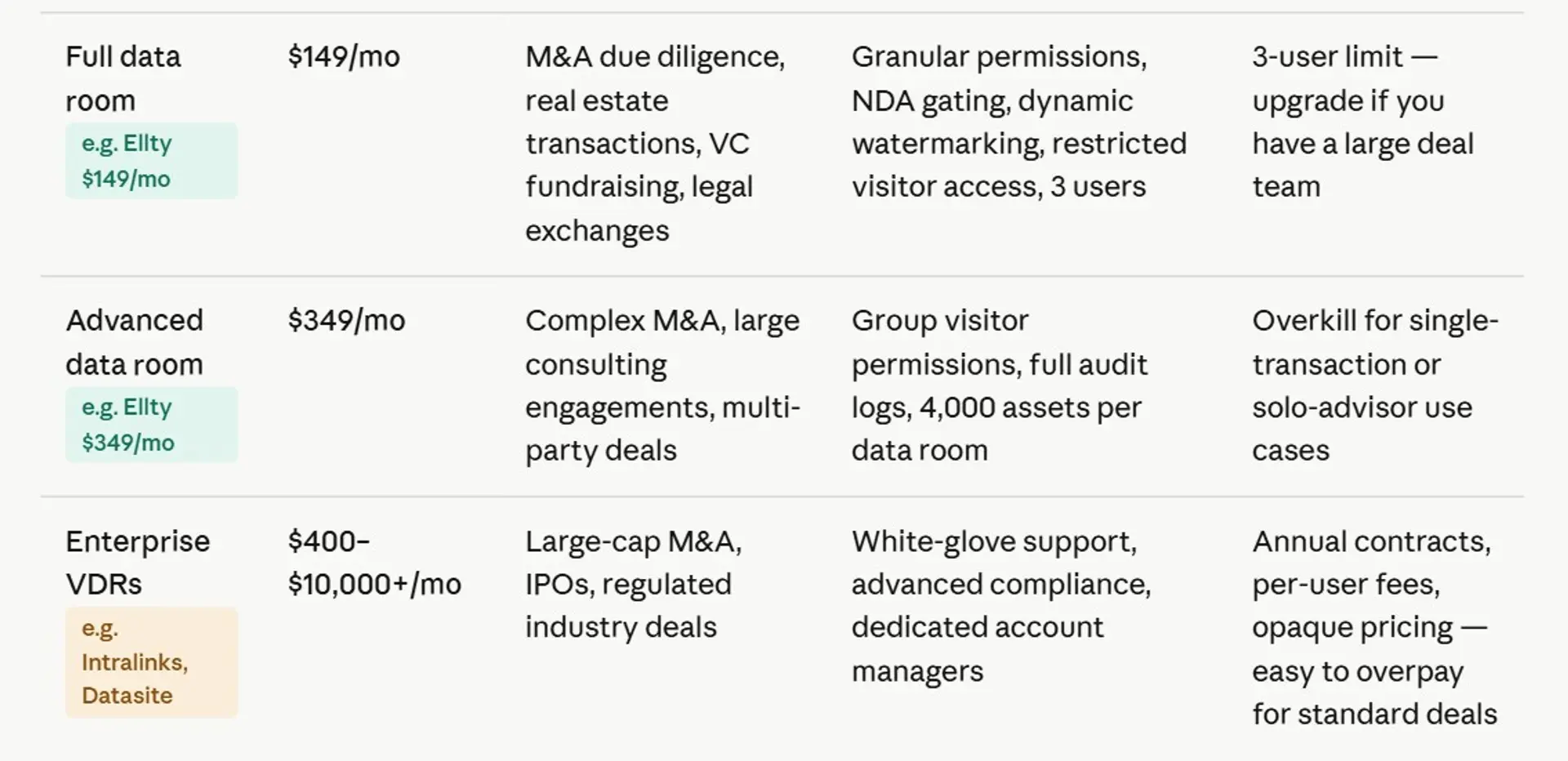
Watch out for per-user pricing. Some VDRs charge per seat, which sounds fine until you're sharing with 25 LPs and advisors. Flat monthly pricing is almost always better, where your reviewer count can grow fast.
7 virtual data rooms for LP use cases
1. Ellty Data Room

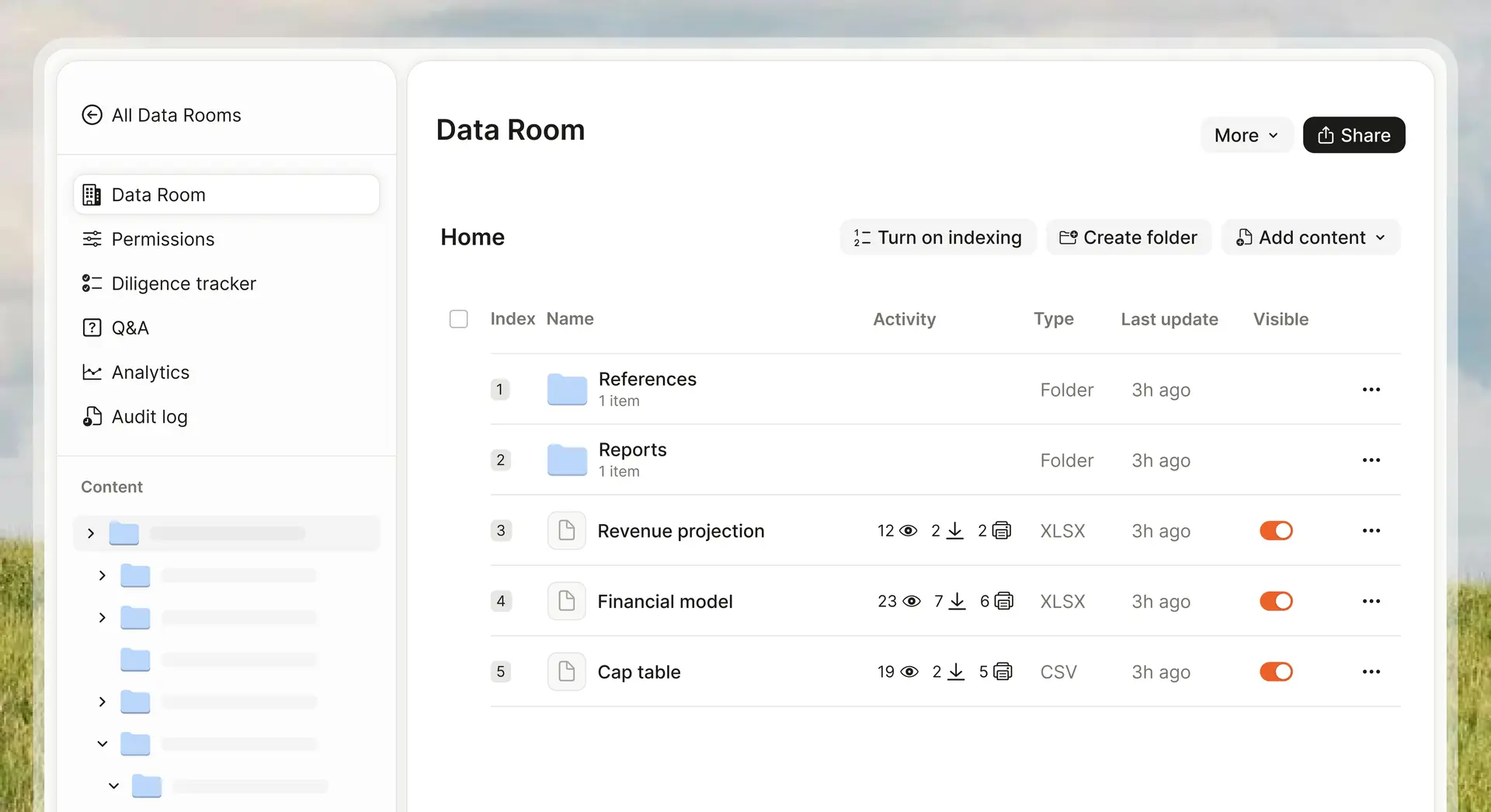
Ellty is built for fund managers and LPs who need a clean, professional data room without the enterprise price tag or the hassle of a sales call. Setup takes under 30 minute, you can organize your folders, set permissions, and share with LPs the same day. It covers everything a serious LP process needs: NDA gating, granular access controls, dynamic watermarking, document analytics, and audit logs. Pricing is flat monthly with no per-user fees, which matters when your LP count grows and you don't want surprise invoices. The analytics are straightforward, you can see who opened what, how long they spent, and which documents they came back to. That kind of visibility helps you prioritize follow-ups and understand where LPs are spending time during diligence. Ellty works well across the full LP relationship, not just fundraising, ongoing reporting rooms, co-investment diligence packages, and secondary transaction documents all fit naturally into the same setup. For emerging GPs and fund managers who want institutional-grade security without institutional-grade complexity, Ellty hits the right balance. Plans start at $149/month.

2. Datasite

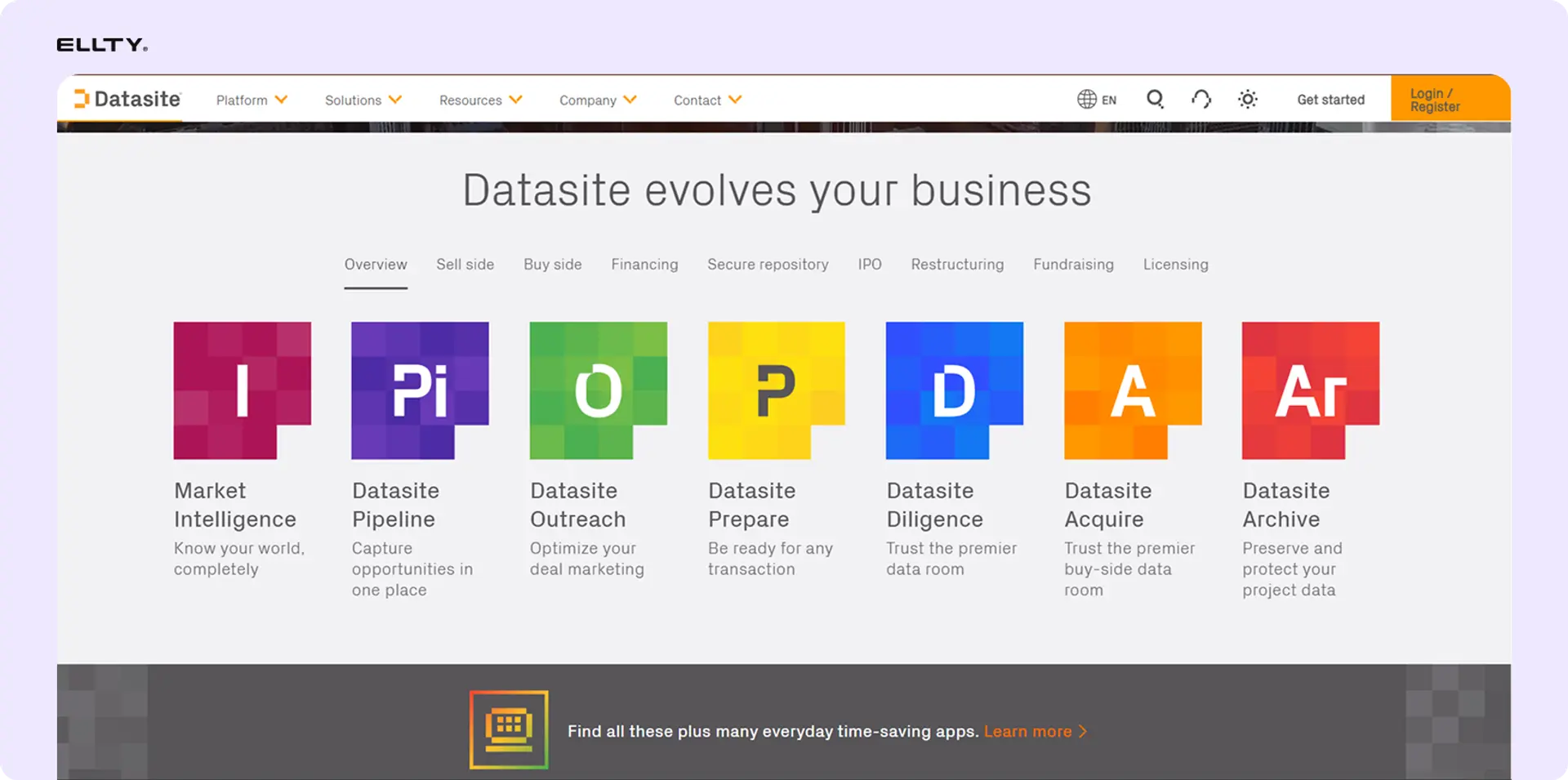
Datasite is a heavyweight VDR originally built for M&A, but it's used by larger fund managers and institutional LPs for complex diligence processes. If you're managing a multi-hundred-million dollar raise with dozens of institutional allocators running parallel processes, Datasite has the infrastructure for it, bulk document management, advanced redaction tools, AI-assisted document organization, and detailed audit reporting. It also has strong security certifications, which some institutional LPs and compliance teams require before they'll engage with a platform. The trade-off is cost and complexity. Datasite pricing is not publicly listed and typically involves a sales engagement before you get a quote, which tells you something about who it's built for. Setup and onboarding take longer than self-serve tools, and the interface reflects its enterprise roots. For a first or second-time fund manager doing a $50M–$100M raise, Datasite is almost certainly more than you need. But for large GPs managing multiple funds simultaneously, running complex LP processes across geographies, or handling regulatory-heavy documentation requirements, it's a capable platform with a long track record in institutional finance.
3. Intralinks

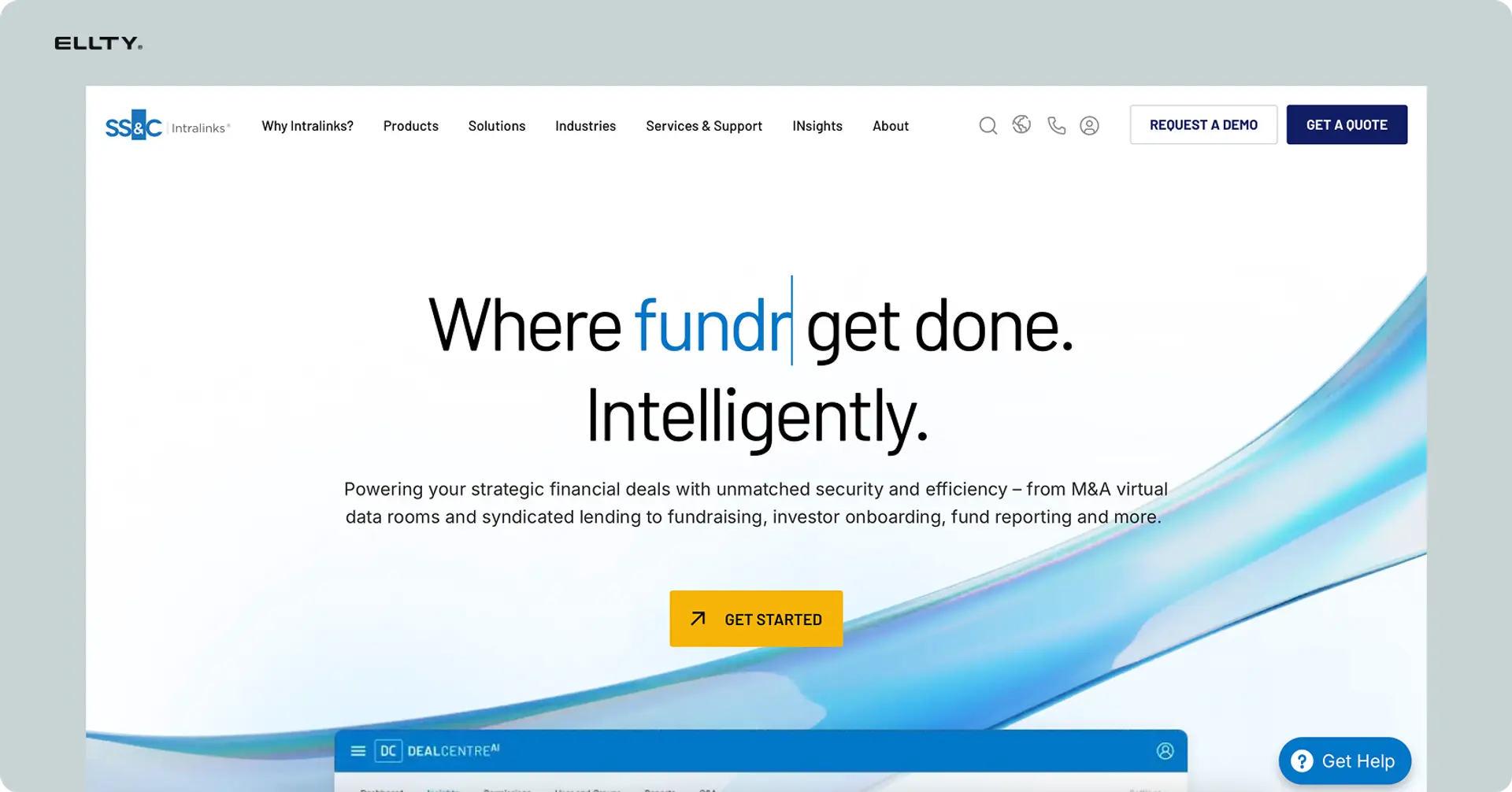
Intralinks is one of the oldest names in the VDR space and has deep roots in both M&A and capital markets. In the LP context, it's used primarily by large institutional fund managers, private equity firms, infrastructure funds, and real assets managers, who are raising significant capital from sovereign wealth funds, pension funds, and large endowments. The platform supports complex permission structures, multi-party access, and detailed compliance reporting. Security certifications are robust, and the audit trail is thorough enough to satisfy most institutional compliance requirements. Like Datasite, Intralinks is not a self-serve product. Pricing requires a sales conversation and tends to reflect enterprise deal sizes, expect costs that are hard to justify unless you're managing a genuinely large and complex LP process. The interface is functional but not particularly modern, and setup involves vendor support rather than a quick DIY configuration. Where Intralinks earns its place is in processes where the sheer volume of LPs, the complexity of fund structures, or the regulatory environment makes a purpose-built enterprise platform worth the cost. For most emerging managers, it's overkill, but in the right context, it's a well-proven tool.
4. Firmex
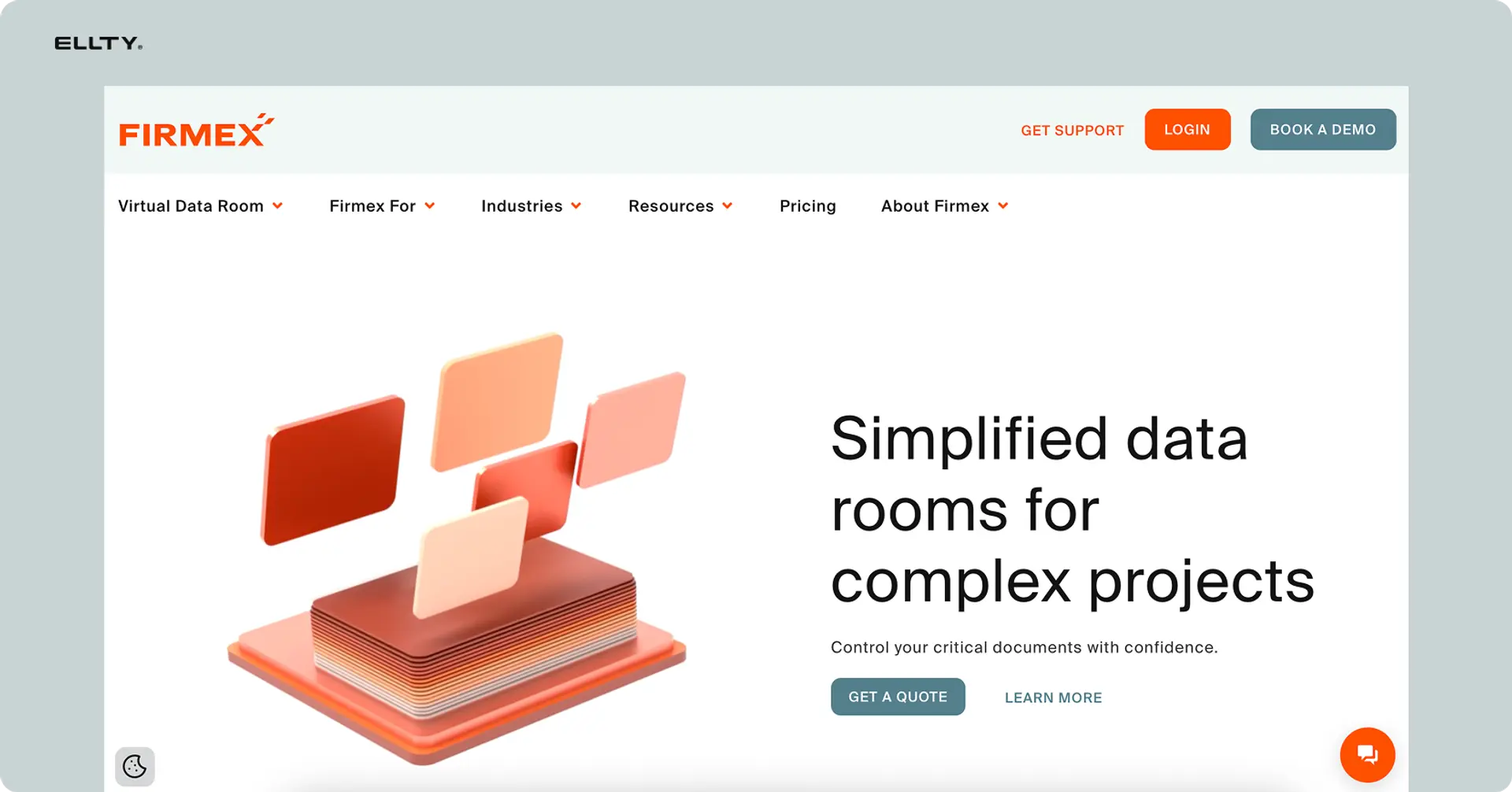
Firmex sits in the mid-market of the VDR space, more capable than entry-level tools, less expensive and complex than full enterprise platforms like Intralinks or Datasite. It's a solid choice for fund managers who have outgrown simple document sharing but don't need the full weight of an enterprise solution. The platform offers granular permission controls, NDA gating, document watermarking, and access analytics - the core features an LP due diligence process requires. It's also used for ongoing fund reporting and co-investment packages, not just initial fundraising. Firmex pricing is usage-based rather than flat monthly, which can work well if you run occasional large processes but don't need a data room open year-round. However, if you're running continuous reporting rooms for LPs across multiple funds, the cost model can become unpredictable. The interface is clean and professional, and setup is faster than the enterprise tier but still involves some onboarding. Customer support is generally well-regarded. For fund managers in the $100M–$500M AUM range running formal institutional processes, Firmex is a reasonable middle-ground option worth evaluating alongside flat-rate alternatives.
5. SecureDocs

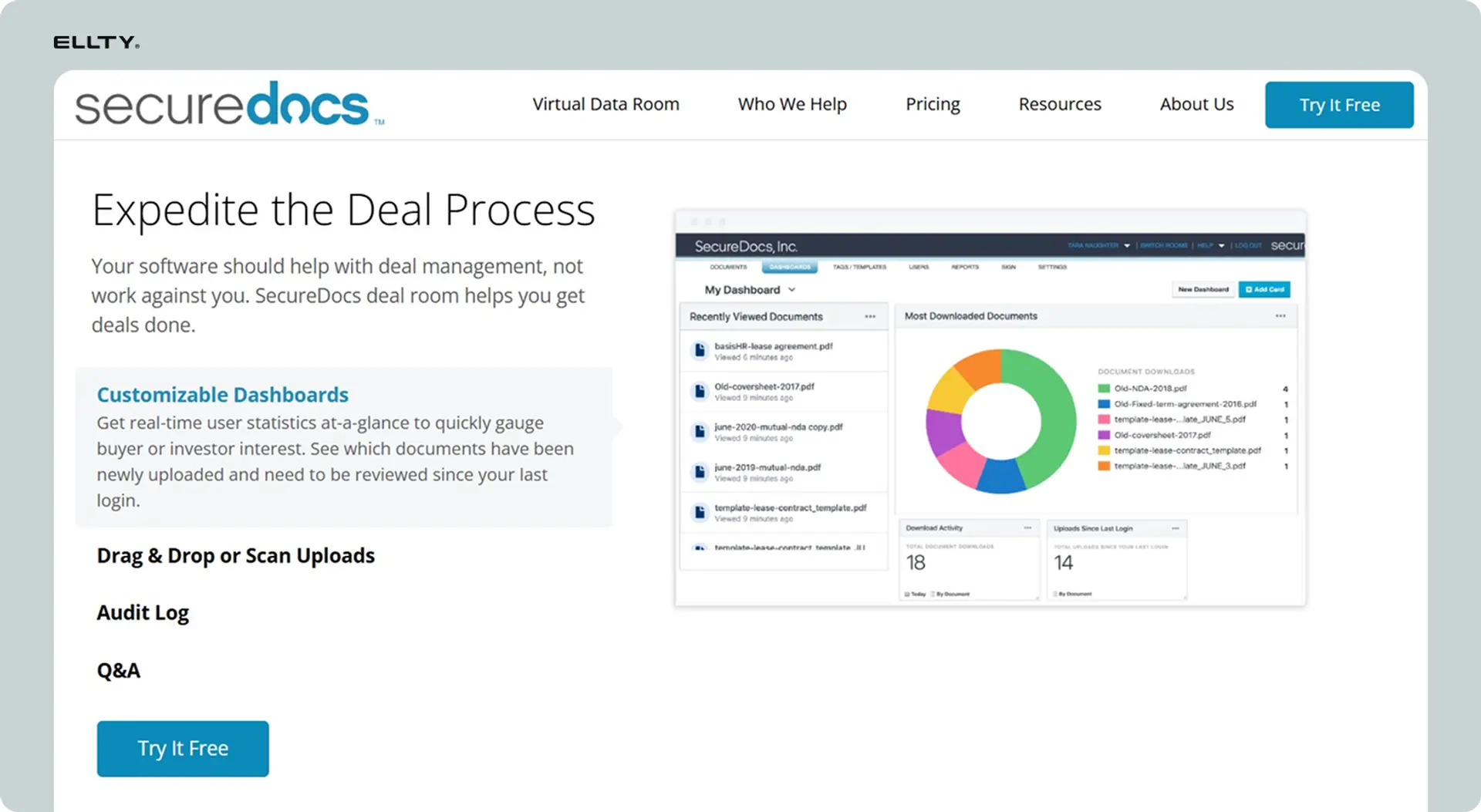
SecureDocs is a straightforward, no-frills VDR that competes primarily on price and simplicity. It offers flat-rate pricing with unlimited users and unlimited storage, which makes it appealing for fund managers who want predictable costs and don't want to think too hard about the billing model. The core features are solid - document access controls, NDA gating, watermarking, and an audit trail. It won't overwhelm you with features you'll never use, and setup is genuinely fast. Where SecureDocs is a reasonable fit for LP use cases is in situations where you need a clean, functional data room for a straightforward fundraise or a simple co-investment package, and you want to keep costs low. It's used more often in M&A than in fund management, so the interface and default folder templates lean that direction, you'll need to adapt it for LP-specific workflows. The analytics are more basic than some alternatives, which may matter if you rely heavily on engagement data to guide your LP follow-up strategy. For fund managers who want something simple, affordable, and functional without bells and whistles, SecureDocs gets the job done.
6. Ansarada


Ansarada is an Australian-founded VDR that has expanded globally and carved out a niche by adding AI-assisted features on top of standard data room functionality. In LP contexts, it's used for fundraising diligence, fund reporting, and secondary transactions. The platform includes deal workflow tools, not just document storage, which can be useful if you want to track where specific LPs are in the diligence process and manage tasks alongside document access. The AI features are designed to help with document organization and readiness scoring, telling you how complete your data room looks relative to what investors typically expect to see. That can be genuinely helpful if you're preparing a data room for the first time and aren't sure what you're missing. Ansarada pricing is tiered and publicly listed, which is a point in its favor over opaque enterprise pricing. It's more expensive than entry-level tools but positioned below the full enterprise tier. The platform works best for GPs who want more workflow structure around their LP process, not just a place to store documents. If you want a data room that also acts as a light project management tool for your raise, Ansarada is worth a look.
7. DealRoom


DealRoom started as an M&A workflow platform and has built VDR capabilities on top of that foundation. In LP use cases, it's most relevant for fund managers who are running active deal pipelines alongside LP relationships - for example, a PE or venture fund where co-investment opportunities and portfolio transactions happen frequently alongside ongoing LP communications. The platform combines document management with pipeline tracking, task management, and due diligence checklists, so it functions as more than just a secure file repository. If your LP process involves multiple simultaneous workstreams, a primary fundraise, a co-investment, and an LP secondary all running at once. DealRoom's workflow layer can help keep things organized. The VDR features themselves are solid: permissions, NDA gating, audit trails, and analytics are all present. Pricing is subscription-based with different tiers depending on feature needs. Where DealRoom may be less ideal is if you want a pure, simple data room without the added complexity of workflow tooling you don't need. For LPs and GPs managing straightforward single-fund raises or standard reporting, the extra features can feel like overhead. But for active, multi-process fund managers, the combination of document management and deal workflow in one platform has real value.
Virtual data room for LPs - folder structure template
Use this as a starting point. Adapt based on your fund stage and what LPs are asking for.

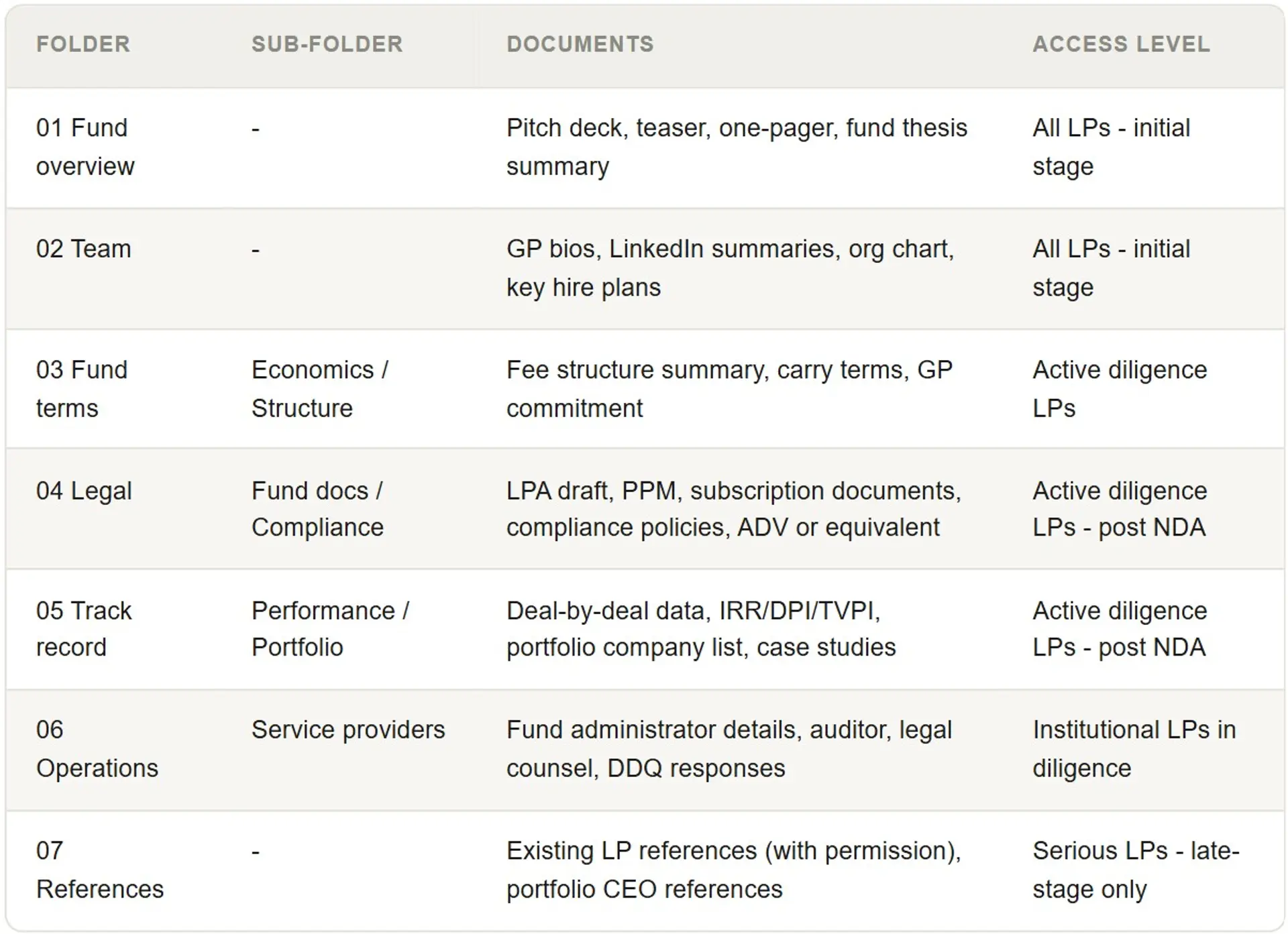
A note on naming: number your folders so they appear in the right order. Most VDRs sort alphabetically, so "01_Fund_Overview" comes before "02_Team" automatically. Without the numbers, your folders will be in random order and LPs will have to hunt for things.
Common mistakes people make with LP data rooms
Most of the VDR mistakes come from treating the data room as an afterthought rather than a part of the process.
Sharing everything at once. Stage your releases. Share the overview materials first. Add detailed financials, legal docs, or portfolio data only when there's genuine interest and the right agreements are in place.
Letting documents go stale. An LP or counterparty who finds a financial statement that's six months old will wonder what you're hiding. Keep materials current, especially for ongoing reporting rooms.
Disorganized folder structure. Dumping 40 files into a single folder is almost worse than not having a data room. Organize by category, name files clearly, and think about how someone unfamiliar with your setup would navigate it.
No access controls on sensitive materials. Track record data, fund economics, LP lists, portfolio company information - these shouldn't be open to everyone with the link. Set permissions properly, and use NDA gating where it's warranted.
Not testing the experience before sharing. Open the link yourself first. Check that the folder structure makes sense, files load correctly, and any NDA or access flow works as expected. Takes five minutes and saves embarrassment.
Ignoring the analytics. If someone has visited the data room four times and spent 30 minutes on your fund financials, that's a signal. Follow up. The analytics exist for a reason.
Including portfolio or company data without consent. Before adding detailed information about portfolio companies, financials, metrics, strategic plans, make sure those founders or management teams have agreed to it.
Using the wrong tool for the job. A $3,000/month enterprise VDR built for billion-dollar M&A is unnecessary for most LP processes. Match your tool to your actual use case and volume.
FAQ
What is a virtual data room for LPs?
A virtual data room for LPs is a secure, access-controlled online platform for sharing confidential documents between fund managers and limited partners. It's used across the LP lifecycle, from initial fundraising diligence to ongoing reporting, co-investment reviews, and secondary transactions. Unlike a shared folder, a VDR includes document analytics, granular access permissions, NDA gating, and audit logs.
Do I need a virtual data room for a first-time fund?
Yes, if you're approaching institutional LPs or family offices with a formal diligence process, they'll expect one. For informal capital from people who know you personally, a data room is less critical, but it still signals that you're organized. At minimum, have trackable pitch materials and structured diligence documents ready before any serious LP conversation.
How much does a virtual data room cost for LP use?
It ranges from free to several thousand dollars a month. For most fund managers and LPs, a tool in the $69–$200/month range covers what you need: secure sharing, access control, NDA gating, watermarking, and analytics. Enterprise tools (Intralinks, Datasite) run $1,000–$5,000+/month and are built for very large, complex processes. Ellty Data Room starts at $149/month with no per-user fees.
What's the best virtual data room for LP due diligence?
It depends on your use case. For emerging fund managers and most LP processes, tools like Ellty offer the core features such as analytics, granular permissions, NDA gating, watermarking at flat monthly pricing without enterprise sales friction. For larger institutional processes with many LPs or complex regulatory needs, mid-market tools like Firmex or SecureDocs may be a better fit. Enterprise tools like Intralinks are typically only necessary for very large capital commitments or highly complex deal structures.
How long does it take to set up a data room?
The software setup takes 20–30 minutes with a modern tool. The real time investment is getting your documents in order, renaming files, organizing folders, making sure everything is current. If your documents are already organized, you can have a live data room ready to share in under two hours. Enterprise tools often require vendor onboarding and can take days or weeks to get running.
Can I use Google Drive as an LP data room?
Technically yes, but it's not a good fit for serious LP processes. Google Drive doesn't give you document-level analytics, NDA gating, dynamic watermarking, or meaningful access control. Once you share a link, you've largely lost visibility into what happens with it. For casual early conversations it might work temporarily, but replace it before you enter formal diligence or share anything genuinely sensitive.
What is NDA gating in a virtual data room?
NDA gating means a visitor must agree to a non-disclosure agreement before they can access documents in the room. The agreement is digital, timestamped, and logged automatically. This creates a legal record that the other party agreed to keep your information confidential before viewing sensitive materials like track records, fund economics, or portfolio data. It's a standard feature in any serious VDR.
What documents should I NOT put in an LP data room?
Don't include portfolio company information without consent, especially financials, metrics, or strategic plans. Don't include personal employee information that isn't relevant to the fund. Avoid documents in active legal dispute. And don't include draft materials that contradict your fund marketing documents without clearly labeling them as drafts. When in doubt, check with legal counsel before adding anything that could create liability.
How do I know if someone is seriously engaged based on data room activity?
Watch the analytics. Someone who keeps returning and spends meaningful time on financial and legal documents is actively in diligence. Someone who opened the deck once for two minutes probably isn't. Return visits, time spent on track record and legal sections, and whether they've opened the full LPA or PPM are your strongest signals. When you see that engagement, follow up — don't wait for them to reach out.
How do I choose between virtual data room providers?
Start with your use case and budget. For most fund managers and LP processes, you need flat-rate pricing, fast self-serve setup, NDA gating, granular permissions, and solid analytics. Avoid per-user pricing models that get expensive as your LP count grows. Check whether pricing is publicly listed (opaque pricing usually means expensive), whether setup requires a vendor call, and whether the features match what your counterparties actually expect. Verify any security certifications directly with the provider before committing.
Author

Anika Tabassum Nionta is a Content Manager at Ellty, where she writes about secure document sharing, virtual data rooms, M&A, due diligence, fundraising, and sales enablement. With over 6 years of writing experience, she helps professionals understand how to share confidential documents securely, track engagement, and manage deals more effectively. Anika holds both a BA and MA in English from Dhaka University. Outside of work, she enjoys reading, exploring new cafes in Dhaka, and connecting with entrepreneurs and dealmakers in her community.

