
You've shaken hands on a deal. Maybe it's a company acquisition, a funding round, a property transaction, or a major partnership. Either way, the excitement is real. But before anything is finalized, there's a process that both sides have to go through, and it's called due diligence.
Due diligence is how buyers, investors, and other stakeholders actually verify what they've been told. It's the part where the documents come out, the numbers get checked, and the claims get tested. And like most things in business, it has a timeline. Getting that timeline right matters a lot.
Miss a step and you might delay the deal. Move too fast and you might miss something important. Share documents carelessly and you risk confidentiality. This is why understanding the due diligence timeline and managing it well is one of the most valuable things you can do when you're in the middle of a transaction.
This guide covers everything you need to know: what the timeline looks like, why it matters, what happens at each stage, and how the right tools like a well-built virtual data room can make the whole process a lot smoother.
Whether you're a founder preparing for an acquisition, an investor reviewing a target company, or a legal or finance professional managing the process, this is your starting point.
What is the due diligence timeline?
The due diligence timeline is the structured period during a deal when one party, usually the buyer or investor, reviews the other party's documents, finances, legal records, and operations to confirm that everything checks out before closing.
It usually kicks off after a Letter of Intent (LOI) or a term sheet is signed. At that point, both sides agree to a window of time, typically anywhere from a few weeks to a few months, during which the review takes place.
Think of it like this: before you buy a house, you get it inspected. Due diligence is that inspection, but for a business, investment, or major asset. The timeline is the schedule that keeps that inspection organized.
During this window, the party being reviewed, the seller or target company, needs to provide a significant amount of documentation. The reviewing party goes through that information carefully, asks questions, flags concerns, and decides whether the deal should proceed as agreed, be renegotiated, or, in some cases, be walked away from.


Types of due diligence

Due diligence isn't just one thing. Depending on the nature of the deal, multiple types of due diligence may run in parallel. Each one focuses on a different part of the business or transaction.
Financial due diligence is usually the first priority. It covers revenue, expenses, profit margins, cash flow, historical financial statements, forecasts, and any financial risks. Buyers want to know if the numbers they've seen actually hold up.
Legal due diligence looks at contracts, corporate structure, intellectual property, litigation history, employment agreements, and regulatory compliance. Any legal exposure the target company has will show up here.
Operational due diligence goes into how the business actually runs day to day. This includes processes, technology, supply chains, team structure, customer relationships, and key dependencies. If the business relies heavily on one client or one employee, that's a risk that will come up here.
Commercial due diligence examines the market the business operates in. What is the size of the market? Who are the competitors? What does the customer base look like? Is the business well-positioned for growth?
Tax due diligence checks for any outstanding liabilities, disputes with tax authorities, or structural issues that could create a problem post-acquisition.
IT and technology due diligence has become increasingly important. It looks at the company's systems, data security practices, software licenses, and technical infrastructure.
HR and people due diligence reviews the workforce, key employment contracts, compensation structures, culture, and any outstanding HR issues.
In many deals, all of these tracks run at the same time, which is why staying organized is so important. Different advisors or team members may handle each workstream, and they all need access to the right documents at the right time.
Ready to organize your due diligence process properly? Ellty virtual data room gives every reviewer access to exactly what they need, nothing more, nothing less. Explore Ellty plans.
Why the due diligence timeline is important
The timeline isn't just a formality. It does several important things that protect everyone involved in a deal.
It keeps the deal moving. Without a structured timeline, reviews can drag on indefinitely. Deadlines force both parties to stay focused and make decisions within a reasonable window. Most LOIs include an exclusivity clause, meaning the seller agrees not to talk to other buyers during the due diligence period. That period has an end date. If due diligence isn't done by then, the deal can fall apart or need to be renegotiated.
It protects the seller. A clear timeline limits the exposure window. The seller has to open up a lot of sensitive information during this process, which carries risk. The shorter and more organized that window is, the better.
It helps buyers make informed decisions. A proper timeline gives the buyer enough time to go through everything thoroughly. Rushing it creates the risk of missing something important. Too much time, and deal fatigue sets in, momentum is lost, and other things can start going wrong.
It builds trust between both parties. When both sides know what to expect and when, the process feels professional and organized. That matters for the relationship going into the post-deal phase.
It surfaces problems early. If something concerning shows up during due diligence, better to find it with time left to address it than to discover it two days before closing.
How long does the due diligence period last?
There's no single answer to this because deal size, complexity, and the quality of documentation all affect the timeline. But here are some general benchmarks.
For small to mid-size business acquisitions, due diligence typically runs between 30 and 60 days. Many straightforward deals can be completed within four to six weeks if the seller is well-prepared and documentation is organized.
For larger M&A transactions, the timeline can stretch to 90 days or more. Complex corporate structures, international operations, large document volumes, or complicated financial histories all add time.
For venture capital or private equity funding rounds, due diligence is usually faster, often two to four weeks, especially for early-stage investments where fewer assets and documents are involved.
For real estate transactions, the due diligence period is often defined in the purchase agreement. It can range from as short as 10 days to as long as 60 days, depending on the property type and deal size.
What most delays come down to is not complexity itself, but lack of preparation on the seller's side. When documents are scattered, incomplete, or take a long time to retrieve, the timeline extends. That's why having everything organized in a virtual data room before due diligence even starts is one of the best things a seller can do.
Steps in the due diligence process
While every deal is a little different, the due diligence process tends to follow a fairly predictable set of steps.
Step 1 - LOI or term sheet is signed. This is the formal trigger that starts the due diligence clock. Both sides agree to a timeline, and the seller begins preparing to share documentation.
Step 2 - Due diligence checklist is created. The buyer or their advisors send over a request list of everything they want to review. This can be dozens of categories and hundreds of individual documents. Common items include financial statements, tax returns, corporate filings, customer contracts, IP registrations, and employment agreements.
Step 3 - Data room is set up. The seller organizes all requested documents into a secure virtual data room. This is where the right platform makes a huge difference. Documents need to be categorized, access needs to be controlled, and the entire process needs to leave a clear audit trail.
Step 4 - Document review begins. The buyer's team, along with lawyers, accountants, and other advisors, begins reviewing the uploaded documents. Questions come up, and the seller needs to respond to them in an organized and timely way.
Step 5 - Q&A and follow-up requests. This is usually ongoing throughout the review. The buyer asks clarifying questions or requests additional documents. A good data room platform allows this to happen within the platform itself, so nothing gets lost in email threads.
Step 6 - Site visits or management presentations (if applicable). For larger deals, the buyer may want to meet the management team or visit facilities. This often happens mid-way through the review period.
Step 7 - Due diligence report is prepared. The buyer's advisors compile their findings into a report that summarizes what they found, any risks identified, and whether any items need to be addressed before closing.
Step 8 - Negotiation and adjustments. If issues were found, the parties may renegotiate price, request representations and warranties, or agree to escrow arrangements to account for discovered risks.
Step 9 - Deal closes or falls through. Based on the findings, both parties proceed to closing or, in some cases, one party decides to walk away.

Virtual data rooms: the backbone of due diligence (and why Ellty gets it right)
At the center of any modern due diligence process is a virtual data room (VDR). Not long ago, this process involved physical rooms full of printed documents where the buyer's team would have to show up in person to review files. Today, everything happens digitally through a secure platform.
A VDR is essentially a secure, online space where documents are uploaded, organized, and shared with specific reviewers under controlled conditions. The right VDR does much more than store files.
It controls who sees what. Not every reviewer needs access to every document. A legal advisor might need contracts, while the financial analyst needs the statements. Granular permission settings make this easy to manage.
It tracks every action. Who opened what, when, and for how long. This kind of activity tracking is critical during due diligence because it tells the seller which areas are getting the most attention, and it creates an audit trail that protects everyone.
It keeps sensitive documents secure. Features like dynamic watermarking, restricted downloading, and NDA gating mean that even if someone takes a screenshot or tries to share access, the documents remain controlled.
It keeps communication organized. Questions, responses, and follow-up requests all happen within the platform, not scattered across email chains.
This is where Ellty comes in.

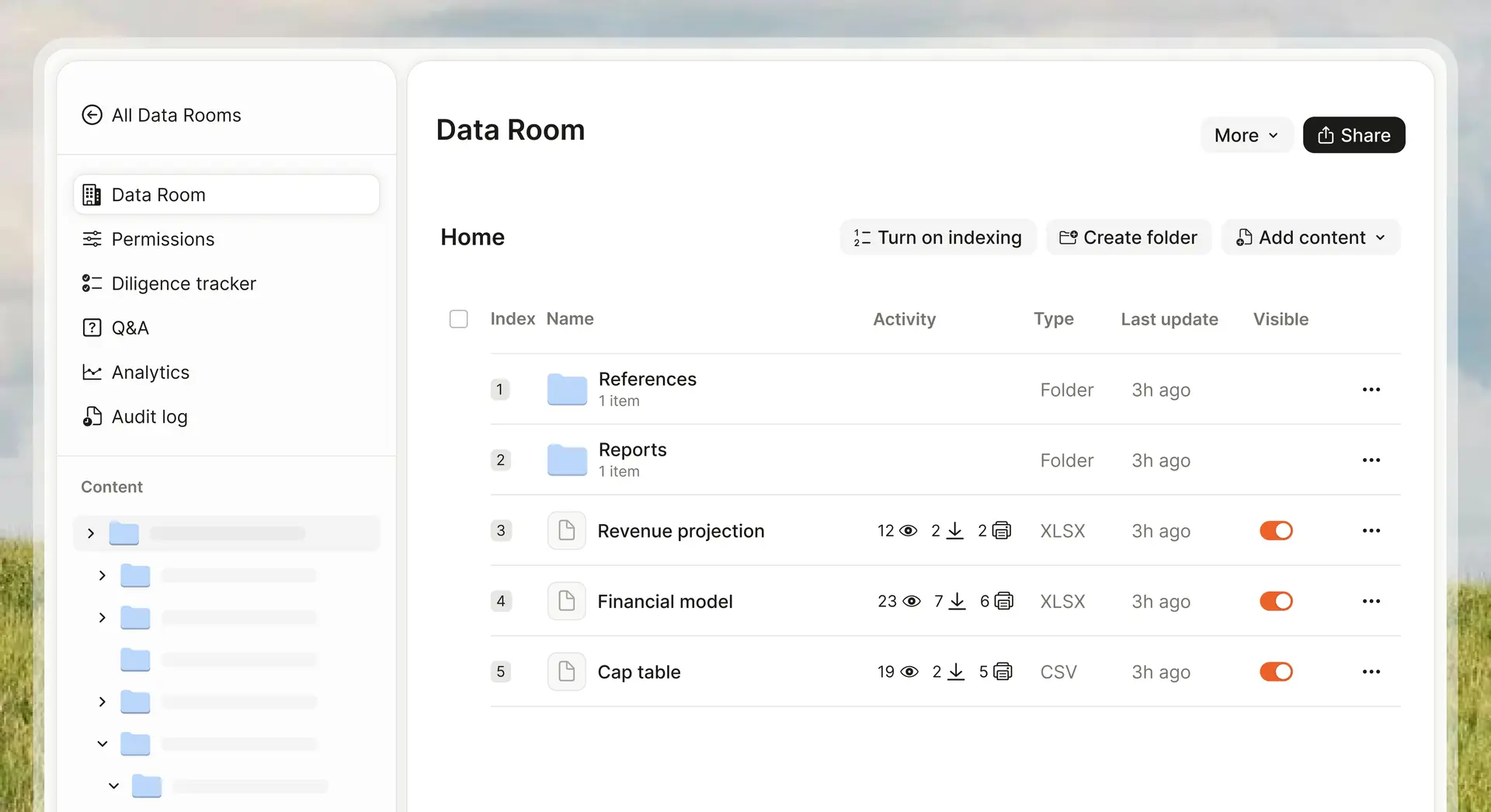
Ellty is a secure document sharing and analytics platform built for exactly this kind of work. Whether you're running a funding round, closing a property deal, managing an acquisition, or sharing sensitive client deliverables, Ellty has the tools that matter.
Here's what makes Ellty stand out for due diligence:
NDA gating means that reviewers have to sign an NDA before they can access any documents. This is a basic but essential protection that many platforms charge extra for or make complicated. On Ellty, it's built in.
Dynamic watermarking adds visible marks to documents that identify the viewer. If a document ends up somewhere it shouldn't, you know exactly where the leak came from.
Granular permissions let you control access at the folder or document level. Different reviewers can see different things, and you can change that at any time.

Real-time activity tracking shows you exactly who is looking at what. During due diligence, this is genuinely useful. If a buyer's team has been spending a lot of time in your financials, you know to be prepared for questions there.
Full audit logs give you a complete record of everything that happened in the data room. This matters both during the deal and after it.
Now here's the part that matters if you're comparing Ellty to the older, legacy VDR platforms.
Most enterprise VDR providers charge per user, per page, or force you into a negotiated contract. That means the cost can balloon unpredictably as your deal team grows or the document count increases. With Ellty, the pricing is flat and transparent.
The Free plan at $0/month gives you document tracking, real-time analytics, and secure sharing. It's a good way to start early conversations and see who's opening what before you even set up a formal data room.
The Standard plan at $69/month includes unlimited documents, advanced analytics, eSignatures, and custom branding. This works well for smaller deals and investor communication.
The Room plan at $149/month is where the core VDR features come in: granular permissions, NDA gating, dynamic watermarking, and restricted visitor access. Everything you need to run a proper controlled document review.
The Room Plus plan at $349/month adds group visitor permissions, full audit logs, and support for up to 4,000 assets per data room. This is built for heavier deals with multiple parties and large document loads.

No per-user fees. No per-page charges. No enterprise contracts that take weeks to negotiate. You pick a plan, set up quickly, and know exactly what you're paying.


Common challenges in the due diligence timeline
Even well-prepared deals run into problems during due diligence. Knowing what these are ahead of time helps you plan for them.
Disorganized document preparation. This is the most common reason due diligence takes longer than it should. When the seller hasn't organized their documents in advance, requests take longer to fulfill, reviewers get frustrated, and trust starts to erode. The fix is simple: prepare your data room before you get the request list, not after.
Incomplete or inconsistent information. If the financial statements don't match the tax returns, or contracts are missing signatures, or there are gaps in the records, these issues need to be explained and resolved. Each one adds time.
Too many communication channels. When questions and follow-ups happen over email, Slack, WhatsApp, and phone calls simultaneously, things get missed. A platform that centralizes all communication in one place avoids this entirely.
Scope creep on the buyer's side. Sometimes the buyer's review keeps expanding beyond the original request list. This isn't always avoidable, but having a clear agreement on scope at the start helps manage expectations.
Key person dependency. If only one person at the selling company knows where everything is, that person becomes a bottleneck during the review. Broader knowledge of where documents are stored helps.
Confidentiality concerns. Sellers sometimes hesitate to share sensitive documents because they're not confident the platform is secure enough. This slows things down. A well-designed VDR with proper access controls eliminates most of this concern.
Time zone and coordination issues. For cross-border deals, different time zones can slow down response cycles. Structuring the process well in advance helps account for this.
Best practices for a smooth due diligence timeline
If you want due diligence to go smoothly, a little preparation goes a long way.
Start preparing your documents early. Don't wait for the formal request list to start organizing your files. Gather your financials, legal documents, contracts, and operational records now. The earlier you start, the better positioned you'll be when the clock starts.
Use a dedicated virtual data room. Don't share due diligence documents over email or Dropbox. Use a platform that was built for this, one with access controls, activity tracking, and security features. This protects you and makes the review easier for everyone involved.
Organize your documents logically. Structure your data room the way the request list is organized: financial, legal, operations, HR, and so on. Reviewers should be able to find what they need without having to ask every time.
Assign a deal coordinator. Have one person on your side who owns the process, responds to requests, tracks what's been shared, and makes sure nothing falls through the cracks.
Set response time expectations. Agree with the other party on how long you have to respond to questions. 24-48 hours is a common standard. Sticking to it keeps the process moving.
Don't overshare early. Share what's requested. Dumping every document you have into a data room without organization creates confusion and can expose sensitive information unnecessarily. Use staged disclosure, start with general documents and share more sensitive information as the deal progresses.
Track reviewer activity. Pay attention to what reviewers are spending time on. If they're focused heavily on one area, that's a signal to be ready for detailed questions there.
Be honest about issues. If there's a problem in your business, better to disclose it proactively with context than to have it surface mid-review without explanation. Issues that come out naturally during review feel like surprises. Issues you disclose upfront feel like transparency.
Want to run a tighter due diligence process? Ellty gives you the tools to stay organized, share securely, and close faster. Start your free Ellty account today.
FAQs
What triggers the start of the due diligence timeline?
Due diligence typically starts after a Letter of Intent (LOI) or term sheet is signed. This document signals that both parties are serious about the deal and sets the stage for a deeper review. Some deals start an informal review even before this, but the formal timeline usually begins at LOI signing.
Can the due diligence timeline be extended?
Yes, it can. If both parties agree, the timeline can be extended to allow more time for review or to address specific issues that came up. Extensions are fairly common in larger or more complex deals. However, they need to be handled carefully because they can create uncertainty and delay closing.
What happens if the buyer finds problems during due diligence?
If issues are found, the buyer has a few options. They can ask the seller to fix the problem before closing, renegotiate the price to reflect the risk, ask for representations and warranties in the contract, set up an escrow arrangement, or, in serious cases, walk away from the deal entirely.
What documents are typically shared during due diligence?
The list varies by deal type, but commonly includes financial statements (last 3-5 years), tax returns, corporate documents, key contracts with customers and suppliers, IP registrations, employment agreements, any pending or past litigation records, and operational documentation. The buyer usually provides a formal request list at the start.
Is a virtual data room necessary for due diligence?
Technically no, but practically speaking, yes. Without a VDR, document sharing is disorganized, security is harder to maintain, and there's no audit trail. For any deal of meaningful size, a virtual data room is the standard. It protects the seller, makes life easier for the buyer's team, and keeps the whole process professional.
How is Ellty different from other virtual data room providers?
Most legacy VDR platforms charge per user, per page, or require you to negotiate a custom contract. Ellty charges a flat monthly fee with no per-user charges and no surprise costs. You get core VDR features like NDA gating, dynamic watermarking, granular permissions, and real-time audit logs starting at $149/month. It's built for people who need a serious, professional data room without an enterprise-level price tag.
Can I use a VDR for deals other than M&A?
Absolutely. Virtual data rooms are used for any situation where sensitive documents need to be shared in a controlled way. This includes fundraising rounds, real estate transactions, legal matters, client deliverables, consulting engagements, and more. Ellty is built for all of these use cases, not just M&A.
Final thoughts
The due diligence timeline might not be the most exciting part of a deal. But it's one of the most important. It's where trust is built or broken, where risks are uncovered or missed, and where deals are confirmed or lost.
The parties that navigate it best are the ones who prepare early, communicate clearly, stay organized, and use the right tools. That last part, the tools, matters more than most people realize until they're in the middle of a chaotic review process with documents flying around over email and no clear sense of who has seen what.
A well-run due diligence process, supported by a clean, secure virtual data room, doesn't just make the review period easier. It sends a message to the other party: this team knows what they're doing. That kind of confidence has real value in a deal.
If you're getting ready for a deal of any kind, whether it's a sale, a raise, a property transaction, or a major partnership, start thinking about your due diligence setup now. Get your documents in order, choose a platform that fits your needs, and go into the process with a clear plan.
Ellty is built for exactly this. Flat pricing, no hidden fees, and all the core VDR features you actually need. Whether you're in early conversations or deep into a formal review, there's a plan that fits where you are.
Don't wait until you're under pressure to get organized. Set up your Ellty data room today and be ready when the deal clock starts. Get started for free.
Due diligence timelines vary by deal type and complexity. This guide is for general informational purposes and does not constitute legal or financial advice. Always consult qualified advisors for your specific transaction.
Author

Anika Tabassum Nionta is a Content Manager at Ellty, where she writes about secure document sharing, virtual data rooms, M&A, due diligence, fundraising, and sales enablement. With over 6 years of writing experience, she helps professionals understand how to share confidential documents securely, track engagement, and manage deals more effectively. Anika holds both a BA and MA in English from Dhaka University. Outside of work, she enjoys reading, exploring new cafes in Dhaka, and connecting with entrepreneurs and dealmakers in her community.

