
You're raising a seed round. An investor asks for your data room. You open a new browser tab and start Googling.
This guide is what you'll find when you get there - without the vendor fluff.
We'll cover what a virtual data room actually is, what investors expect to see at the seed stage, how to set one up fast, which tools are worth using, and where Ellty fits in. By the end, you'll know exactly what to do and what to skip.
Want to skip the research?
Start your free data room on Ellty today - no credit card needed.
What is a data room for startups?

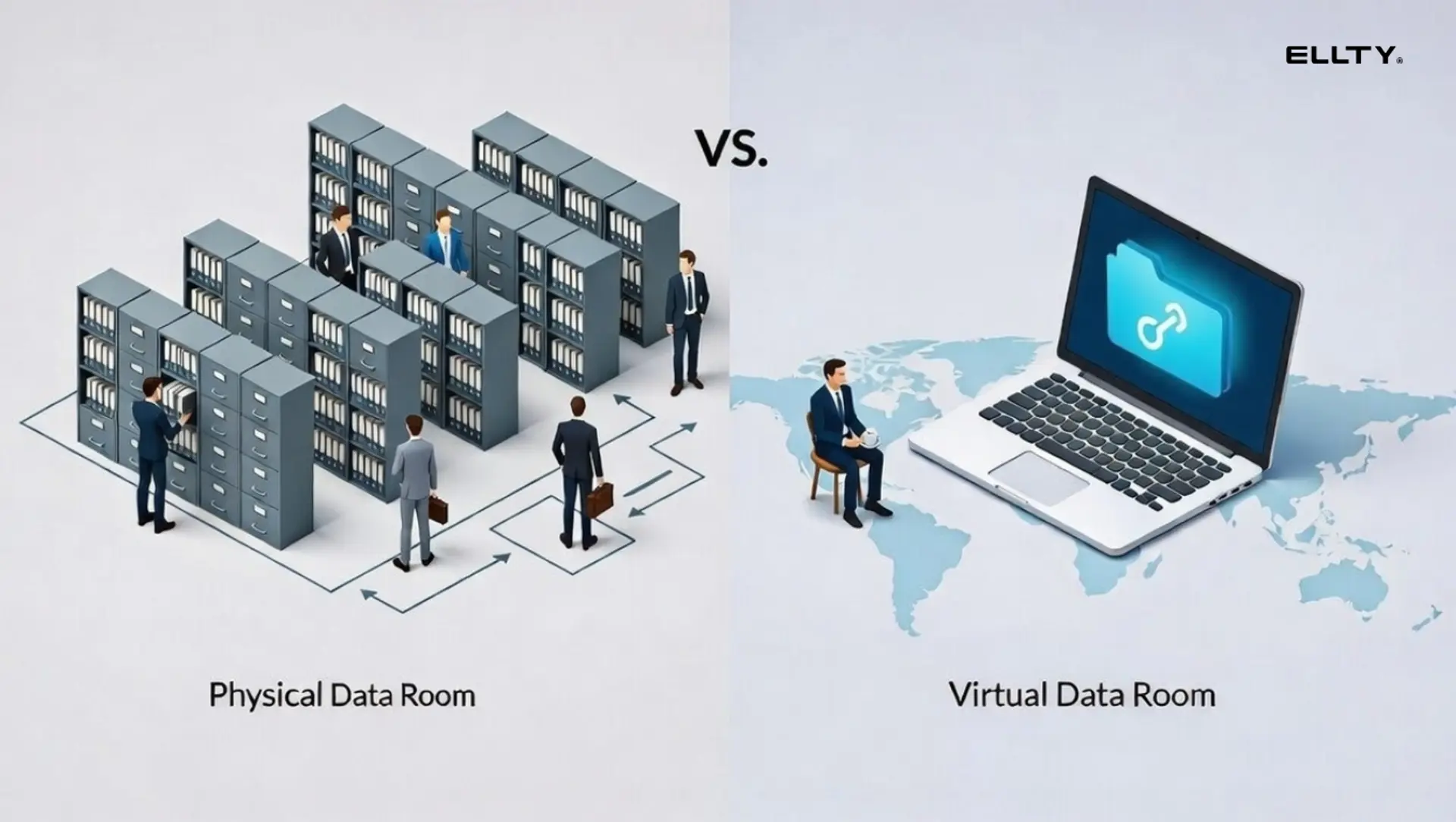
A data room or virtual data room (VDR) - is a secure, online space where you store and share confidential business documents with investors, acquirers, or legal teams.
Before they existed, founders would physically hand over folders of documents or email sensitive files around. That's still happening in 2025, which is a mistake.
A proper virtual data room gives you:
- One organized place for all your key documents
- Control over who can see what
- Visibility into who's actually reading your materials
- A paper trail if anything goes wrong
At the seed stage, your data room doesn't need to be elaborate. But it does need to exist and it needs to be ready when an investor asks for it.
Investor tip: If you don't have a data room ready when an investor asks, it signals disorganization. It costs you momentum during a process that moves fast.


When do you actually need a data room?
Not every startup conversation requires a full data room. Here's a rough guide:


For seed rounds, diligence is lighter than Series A or later stages - but it still happens. You'll typically need your data room ready by the time an investor says they're moving forward.
Don't wait until you get that message to start building it.
What documents go in a seed stage data room?
Keep it lean. Seed investors don't need 200 documents. Here's what actually matters:
Company overview
- Pitch deck (latest version)
- Executive summary or one-pager
- Cap table (current, fully diluted)
- Corporate structure / org chart
Financials
- 3-year financial model (projections)
- Historical financials if you have revenue
- Burn rate and runway summary
- Use of funds breakdown
Legal
- Certificate of incorporation
- Shareholder agreements
- IP assignments
- Any existing investor agreements (SAFEs, convertible notes)
- Employment contracts for founders
- Option pool documentation
Product and traction
- Product screenshots or demo video
- Key metrics dashboard (MRR, DAU, retention, etc.)
- Customer case studies or testimonials
- Roadmap (high level is fine)
Team
- Founder bios and LinkedIn profiles
- Key hire bios if relevant
- Advisory board list
Don't include your full customer list, pricing strategy details, or proprietary tech specs until you're further into diligence with a specific investor.
Seed stage data room checklist
Before you share - final checks
- All documents reflect current data (no outdated metrics)
- Cap table is up to date and matches legal docs
- Folder structure is numbered and clean
- NDA gating is on (if required)
- You've tested the link yourself before sending
- Permissions are set correctly per investor


6 virtual data rooms for seed rounds
Seed rounds move fast. You don't need an enterprise platform with a six-week onboarding process and a dedicated account manager. You need something you can set up in an afternoon, share with confidence, and use to track which investors are actually paying attention.
Here are six tools worth considering.
1. Ellty

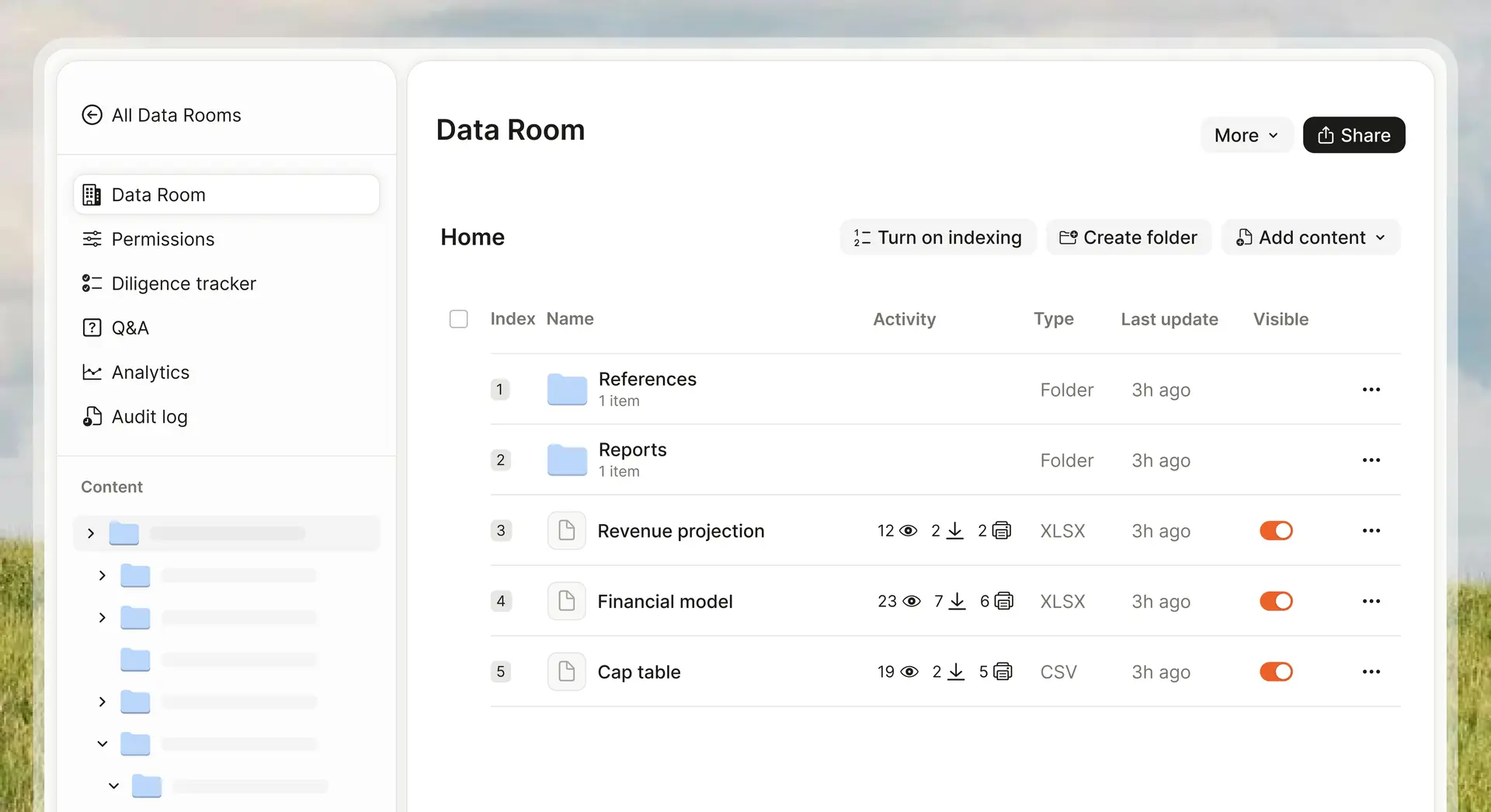
Ellty is the most straightforward option for founders raising a seed round who want a professional data room without the complexity or cost of enterprise software. You can get a branded room live in minutes - with your logo, custom access controls, and a clean interface that makes a strong first impression on investors. Every link is trackable, so you can see exactly which investors opened your room, which documents they spent time on, and when they came back for a second look. That kind of engagement data is genuinely useful during a fundraise - it tells you who's warm and who's gone quiet. Ellty includes NDA gating, watermarking, and document analytics without requiring you to upgrade to an expensive enterprise plan to access them. The pricing is transparent and the setup doesn't require IT help or a sales call. For a seed-stage founder sharing a pitch deck, financial model, and formation docs with a few dozen angels or early-stage VCs, Ellty covers everything you need and nothing you don't. It's built for people running real processes, not for dealmakers managing hundred-document M&A transactions.
2. DocSend

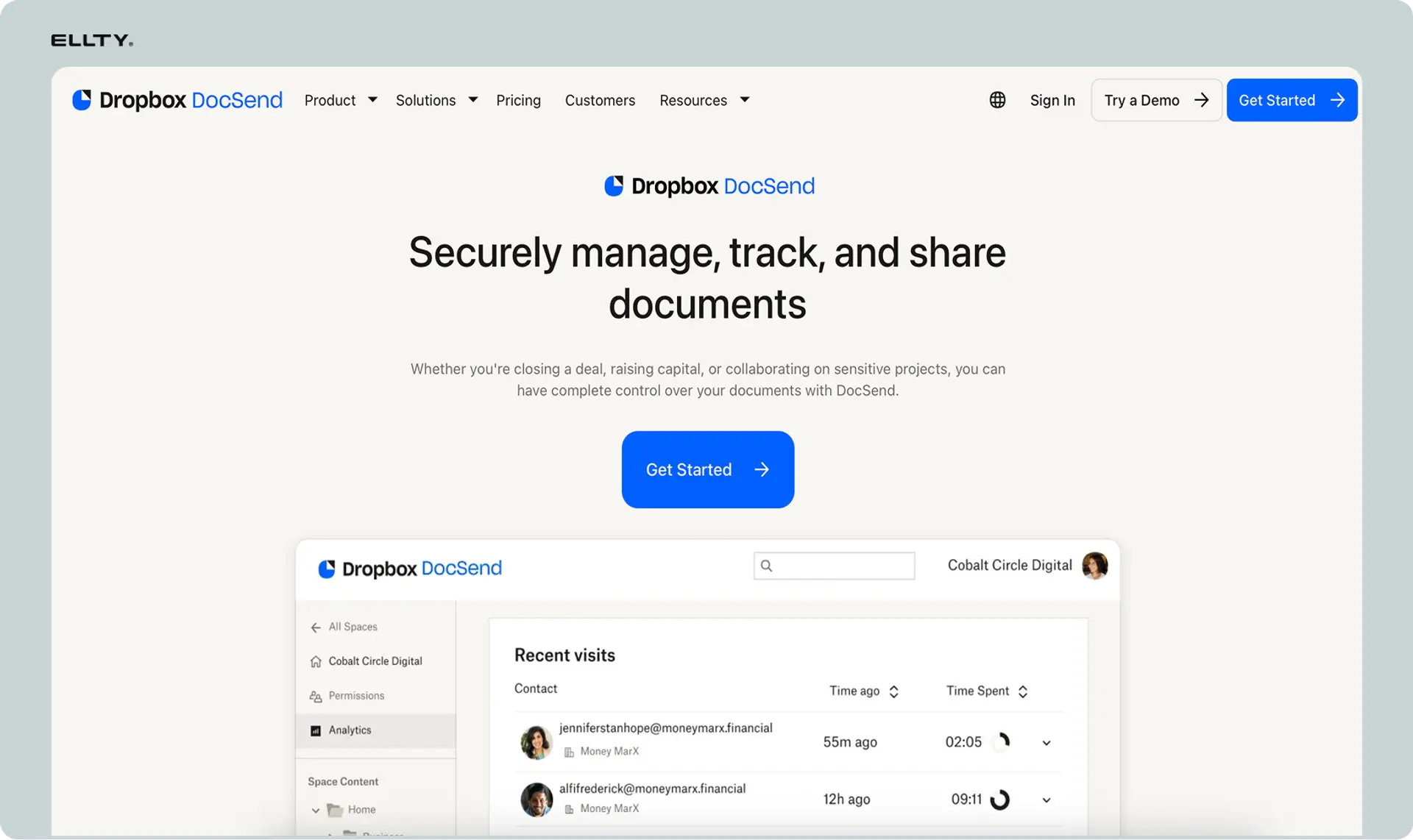
DocSend is one of the most widely used tools in the startup fundraising world, and for good reason. It started as a pitch deck tracking tool and has grown into a lightweight data room platform that's well suited to early-stage founders. The core feature is link-based document sharing with page-by-page analytics, you can see exactly how long an investor spent on each slide of your deck, which is more useful than it sounds when you're trying to figure out where interest drops off. DocSend also supports NDA gating, meaning investors have to sign before they can access your room. The interface is clean and easy to use, and most investors are already familiar with it, which reduces friction. The main limitation is that DocSend is owned by Dropbox and is primarily optimized for document sharing and tracking rather than full due diligence workflows. For a seed round with a relatively small document set - deck, financials, cap table, formation docs - it works well. For a larger Series A process with dozens of folders and complex permission needs, you may find it limiting. It's a good starting point for first-time founders who want something simple and proven.
3. Notion

Notion isn't a traditional data room, but plenty of seed-stage founders use it as one — and it works surprisingly well for early rounds. You can build a clean, organized investor page with sections for your pitch deck, team bios, financial model, and company overview, then share it via a private link with password protection. The visual layout is much nicer than a raw Google Drive folder, and it's easy to update without changing the link. Where Notion falls short is on the security and tracking side. You don't get granular per-user access controls, detailed view analytics, NDA gating, or watermarking. You also can't restrict downloading or revoke access to specific documents easily. For a pre-seed round where you're sharing with people you know and trust, Notion is a perfectly reasonable and cost-effective option. For an institutional seed round where you need to know exactly who's looking at what, it starts to show its limits. Many founders use Notion as their first data room and then move to a dedicated VDR once they start getting serious interest from institutional investors who expect a more formal setup.
4. Docsend by Dropbox
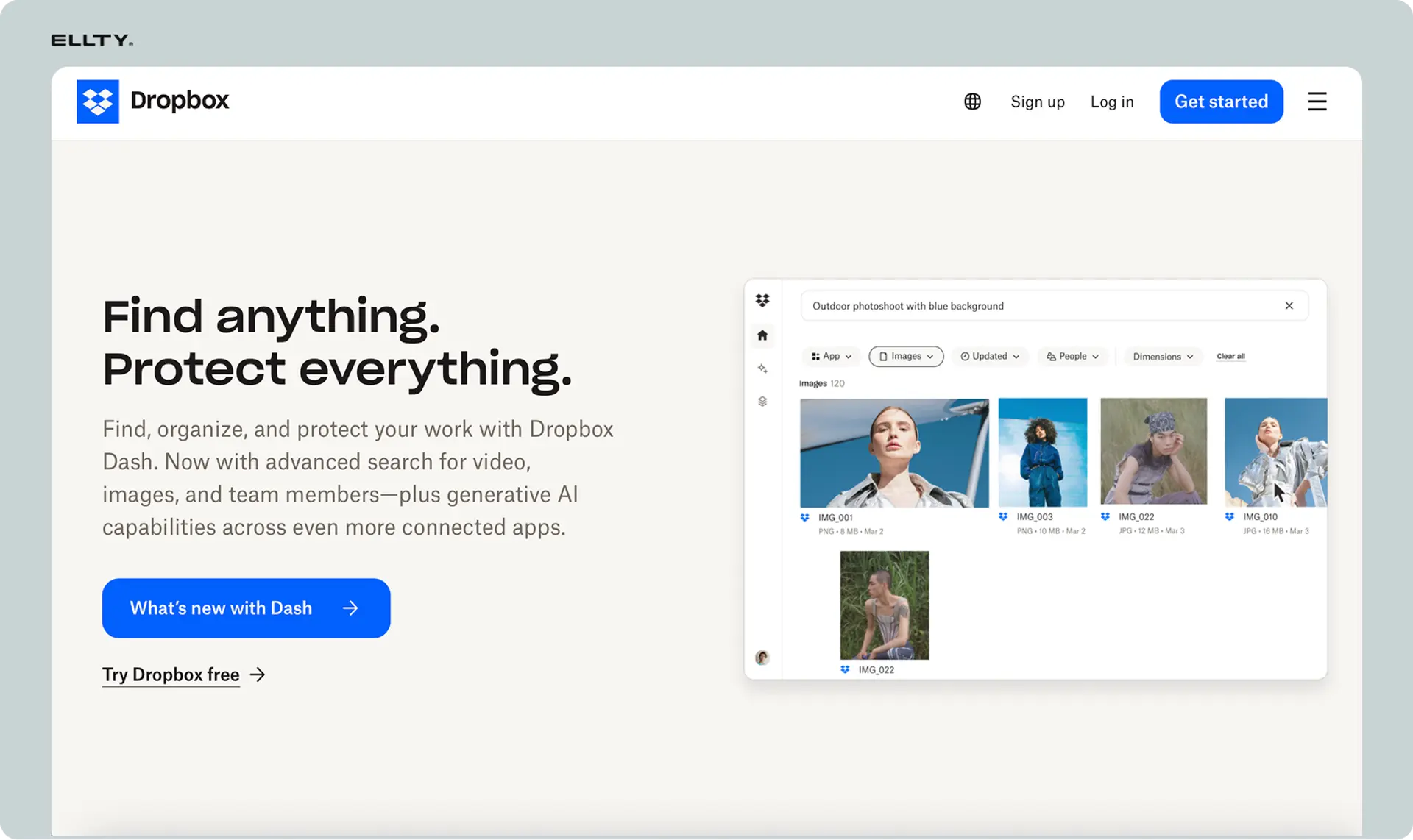
Worth separating from the basic DocSend tier - Dropbox's deeper integration turns DocSend into something closer to a full data room for founders who are already living in the Dropbox ecosystem. If your documents are already stored in Dropbox, you can connect them directly to a DocSend room without re-uploading everything. You get the same page-level analytics and NDA gating as standard DocSend, plus Dropbox's file management and version control on the backend. The combined platform handles bulk document sharing reasonably well and is familiar to most investors and advisors. The downside is that the pricing can get confusing quickly - DocSend and Dropbox are billed separately, and the features you actually need for a proper data room often sit on the higher-priced DocSend tiers. It's also worth noting that the platform is optimized for document sharing and engagement tracking more than for structured due diligence. For a seed round where you want simple, trackable document sharing with minimal setup and you're already using Dropbox for file storage, this combination makes sense. For anything more complex, you'll likely want a purpose-built VDR.
5. Capbase


Capbase is a startup operations platform that bundles equity management, legal document generation, and a built-in data room into one tool. For early-stage founders who are simultaneously setting up their company structure and preparing for their first raise, having everything in one place is genuinely convenient. Your formation documents, cap table, SAFEs, and board resolutions are all generated and stored within the platform, so your data room is essentially built as you go rather than assembled at the last minute before a fundraise. Investors can be invited directly with access controls and a clean document view. The trade-off is that Capbase is more of an all-in-one company admin tool than a dedicated VDR, so the data room features are functional rather than deep. You won't get the same level of analytics or branding customization that a dedicated platform like Ellty offers. But if you're a pre-seed founder who hasn't yet dealt with the headache of scattered legal documents and wants to start organized from day one, Capbase is worth looking at. It's particularly useful for US-incorporated startups doing their first institutional seed round.
6. Google Drive with structure
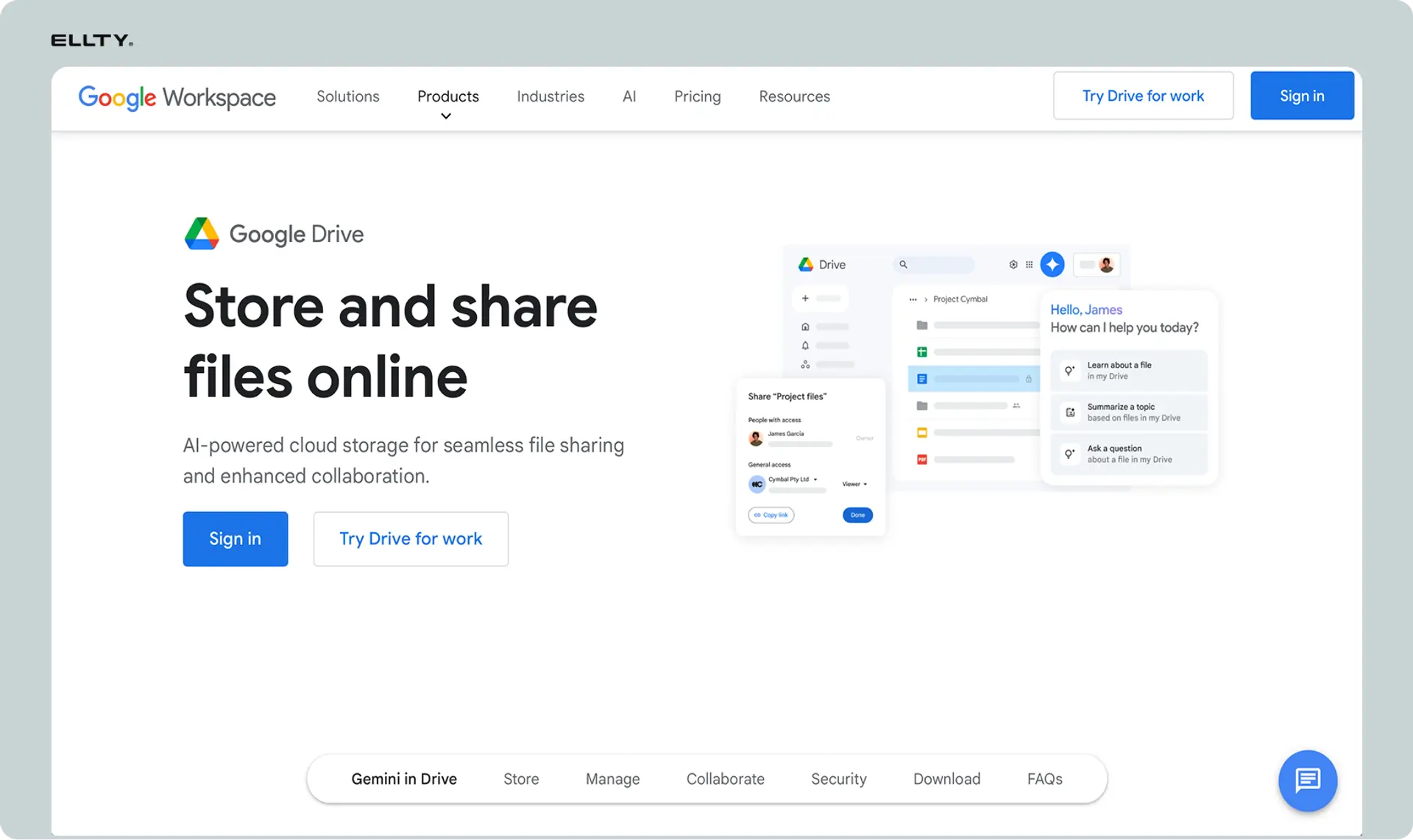
It's not a VDR and nobody's pretending it is but Google Drive remains the most common "data room" used at the pre-seed stage, and it's worth being honest about when it's fine and when it isn't. If you're raising from friends, family, or a small group of angels who you know personally, a well-organized Google Drive folder with the right sharing settings is completely adequate. It's free, everyone knows how to use it, and you can have it ready in an hour. The problems start when you need to track who's opened what, control whether someone can download or forward your documents, gate access behind an NDA, or present a professional first impression to an institutional investor. Google Drive does none of those things well. There's no audit trail, no analytics, no watermarking, and no access revocation after sharing. A shared link can be forwarded to anyone. For a casual pre-seed raise, that's an acceptable trade-off. The moment you're talking to a serious seed fund or preparing for a Series A, you need to move to a proper platform. Many founders use Google Drive as a placeholder and graduate to a dedicated tool once investor conversations start getting serious.
The right tool depends on where you are in the process. If you're just starting out and sharing with a handful of people you know, a simple solution is fine. Once you're running a real process with institutional investors, access controls, analytics, and a professional presentation start to matter a lot more.
Virtual data room features for seed round: what to look for
Before picking a platform, think about what you actually need. Here's what matters at the seed stage:


You don't need everything on day one. Start with secure sharing and analytics. Add permissions and NDA gating as you move through diligence.
Free data room for startups: does it actually exist?
Yes - with caveats.
Ellty offers a free plan that includes document tracking, real-time analytics, and secure sharing.
What you get on the free plan:
- Upload and share documents
- Trackable links with view analytics
- Real-time notifications when someone opens your file
- Basic access control
What you don't get on the free plan:
- NDA gating
- Dynamic watermarking
- Granular viewer permissions
- Audit logs
- Custom branding
- eSignatures
For early conversations with investors - sharing your deck, tracking who's opened it, following up based on engagement - the free plan is enough. Once you're in active diligence with a committed lead investor, you'll probably want to move up to a paid plan.

How to set up a data room for your seed round
You can setup a functional data room in a few hours. Here's how to approach it:
Step 1: Gather your documents
Don't start with the platform. Start by collecting what you have. A half-finished data room with placeholders is worse than a clean, smaller one.
Step 2: Choose your tool
For most seed-stage founders, Ellty Data Room plan ($149/month) gives you everything you need without enterprise complexity. If you're pre-revenue and budget-constrained, start with the free plan and pitch deck tracking.
Step 3: Organize your folders
Keep it logical. Use a clear folder structure:
- 01 - Company overview
- 02 - Financials
- 03 - Legal
- 04 - Product
- 05 - Team
Number your folders so they display in order. Investors shouldn't have to hunt for anything.
Step 4: Set access permissions
Don't give everyone the same access. You might want different investors seeing different things at different stages. Set up separate access levels before you start inviting people.
Step 5: Test before you send
Log out and click your own link. Check that files open correctly, the permissions work, and the experience looks professional. Takes five minutes and saves embarrassment.
Step 6: Monitor engagement
Once you've shared access, track it. With Ellty, you can see who viewed which documents, how long they spent on each page, and get real-time notifications. Use this data to prioritize follow-ups.

How Ellty works for seed round diligence
Ellty is a secure file sharing, analytics, and virtual data room platform built with speed and simplicity in mind. It's not trying to compete with enterprise VDR tools. It's built for teams who need to share documents, track engagement, and close rounds faster.
What Ellty offers
- Upload documents and create shareable, trackable links
- See exactly who viewed your deck, which slides they spent the most time on, and when they stopped reading
- Real-time notifications when someone opens your file - so you can follow up at the right moment
- Secure data room with granular permissions (who can view, download, or print)
- NDA gating - require visitors to sign an NDA before accessing your data room
- Dynamic watermarking on documents
- eSignatures on the Standard plan and above
- Custom branding so your data room looks like you, not a generic platform
- Audit logs on the Data Room Plus plan
Ellty pricing


Where Ellty works best
- You're a team sharing your pitch and managing diligence
- You want to know which investors are actually reading your materials
- You're fundraising and want to track exactly which investors are engaging with your documents in real time
- You need a professional data room fast, without a 3-day onboarding call
- You don't want per-user pricing that scales unpredictably
- You're a consultant, broker, or advisor who shares sensitive documents with clients regularly and wants something more professional than email attachments
- You need NDA gating and watermarking but don't want to pay enterprise prices to get them
- You're managing a real estate transaction and need to share property documents with multiple parties in a controlled, organized way
- You want one platform that handles both pitch deck sharing and full due diligence without switching tools
Where Ellty might not be enough
- You're running a complex M&A transaction with dozens of bidders
- You need enterprise-grade compliance certifications (SOC 2 Type II, ISO 27001)
- You need to manage thousands of documents across multiple concurrent deals
Ellty offers data room features without per-user pricing - which keeps costs predictable as your round progresses and more people need access.
Set up your Ellty data room today. Takes under an hour.
Start for free or go straight to the Data Room plan at $149/month.
Common mistakes founders make with data rooms
These mistakes show up constantly. Avoid them.
Sharing too early. Don't send your full data room at the first meeting. Share a deck first. Reserve the data room for when there's genuine interest.
Over-sharing sensitive info. Your full customer list, employee salaries, or detailed IP documentation can wait until you've signed a term sheet.
Using email or Google Drive. No audit trail, no analytics, no access controls. It looks amateur and you lose visibility into investor engagement.
Disorganized folders. If an investor has to dig for your financials, they'll give up. Organize your data room before you share it.
Outdated documents. Make sure everything in your data room reflects your current metrics and legal status. An outdated cap table can kill a deal.
Not tracking engagement. If you're not using a platform with analytics, you're flying blind. You should know which investor is looking closely and which hasn't opened anything.
Giving everyone the same access. Different people should see different things. A potential lead investor might get full access. An early exploratory contact might only see your deck and financials.
Data room vs. pitch deck: what's the difference?
These aren't the same thing - though they're related.


Ellty handles both. You can share trackable document links for early conversations, then invite the same investor into your secure data room once they're serious.
Frequently asked questions
What is a virtual data room for a seed round?
A virtual data room for a seed round is a secure online platform where startup founders store and share key company documents with potential investors during fundraising. It typically includes your pitch deck, financials, cap table, legal docs, and product information - all organized, access-controlled, and trackable.
Do I need a data room for a seed round?
Most serious seed investors will ask for one during diligence. You don't need it for the first conversation, but you should have it ready before you enter active diligence with any lead investor. Building it takes a few hours. Not having it when asked costs you momentum.
What's the best data room for startups?
It depends on your stage and needs. For seed rounds, you don't need an enterprise VDR. Tools like Ellty, Docsend, or even a well-organized Notion workspace can work. The key features to look for at the seed stage are: secure sharing, view analytics, access permissions, and NDA gating. Ellty offers all of these starting at $149/month with no per-user pricing.
Is there a free data room for startups?
Yes. Ellty offers a free plan with document tracking, real-time analytics, and secure sharing - no trial period, no credit card required. It's suitable for early investor conversations and pitch deck sharing. For full data room features like NDA gating and watermarking, you'll need a paid plan.
What's the difference between a data room and a pitch deck?
A pitch deck is a short visual presentation used to generate investor interest. A data room is a comprehensive collection of company documents shared during diligence. You'll typically share your pitch deck first, then provide data room access once an investor expresses serious interest.
What documents should I include in a seed stage data room?
At minimum: your pitch deck, financial model, cap table, certificate of incorporation, SAFE or convertible note agreements, IP assignments, key contracts, and founder information. Keep it clean and organized. You don't need 100 documents for a seed round.
How secure is a virtual data room?
A well-built VDR uses encrypted storage, access controls, NDA gating, watermarking, and audit logs. The security level varies significantly by provider. Enterprise platforms like Datasite have certifications like SOC 2 Type II and ISO 27001. Startup-focused tools vary - check the provider's security documentation before sharing sensitive information.
How do I know if an investor is looking at my data room?
Use a platform with analytics. Ellty, for example, shows you who viewed your documents, which pages they spent the most time on, how long they were in the data room, and sends real-time notifications when they access materials. This tells you who's engaged and when to follow up.
Can I use Google Drive as a data room?
Technically yes - but it's not a good idea. Google Drive has no view analytics, minimal access controls, no audit trail, no NDA gating, and no watermarking. It's fine for quick internal file sharing, but it's not a real data room for investor diligence. Use a dedicated tool.
How much does a virtual data room cost for a startup?
Costs range from $0 (Ellty free plan) to $400+ per month for enterprise VDRs. For seed-stage founders, Ellty Data Room plan at $149/month covers most diligence needs including NDA gating, watermarking, and granular permissions. Enterprise tools like Datasite or Intralinks typically start at $400-1,000+/month and are built for complex M&A transactions.
What virtual data room providers are most popular?
Common choices include Docsend (focused on pitch deck analytics), Ellty (trackable documents sharing plus full data room features), Notion (flexible but limited security), and more recently purpose-built platforms. Enterprise providers like Intralinks and Datasite exist but are usually overkill for seed rounds.
Ready to set up your seed round data room?
You now know what a data room is, what goes in it, when to use it, and which tools to consider.
The most important thing is to have it ready before an investor asks - not after.
Ellty lets you start for free: upload your files, create a trackable link, and see exactly who's reading it. When you're ready for full diligence, the Data Room plan gives you NDA gating, watermarking, granular permissions, and real-time analytics - all without per-user pricing.
Setup takes less than an hour. You'll have your first trackable link live in minutes.
Author

Anika Tabassum Nionta is a Content Manager at Ellty, where she writes about secure document sharing, virtual data rooms, M&A, due diligence, fundraising, and sales enablement. With over 6 years of writing experience, she helps professionals understand how to share confidential documents securely, track engagement, and manage deals more effectively. Anika holds both a BA and MA in English from Dhaka University. Outside of work, she enjoys reading, exploring new cafes in Dhaka, and connecting with entrepreneurs and dealmakers in her community.

