
For a long time, the virtual data room market didn't change much. The tools were expensive, clunky, and built for a very specific type of user, usually a corporate lawyer working on a big M&A deal. If you didn't fit that mold, you either overpaid or made do with something less secure.
That's starting to change. Better cloud infrastructure, AI capabilities, and a much wider range of industries now running structured document processes have pushed VDR development forward faster than we've seen in years. More types of organizations are using data rooms for deals, audits, fundraising, legal matters, real estate transactions, and more. The software is finally catching up to that reality.
This piece covers what's actually shifting in the VDR market, what the key trends look like in practice, and what they mean if you're evaluating which secure data room to use.
What are data trends in the VDR context?
When people talk about data trends in virtual data rooms, they usually mean one of two things: how the software itself is being built and improved, or how data is being used and analyzed within those platforms.
Both matter. Platform-level changes affect which tools are worth your time. Analytics changes affect how you use a data room, not just as a place to store files, but as a source of useful information about your process.
The biggest shifts right now are: AI-assisted document review, deeper activity analytics, mobile-friendly access, smarter permission and security controls, and pricing models that are more flexible than the old "pay per page" enterprise contracts. We'll cover each of these below.


What are the top 3 trends in data analytics for VDRs?

This is where the most meaningful change is happening. VDRs used to be glorified file storage. The better platforms today tell you what's happening inside them: who's looking at what, for how long, and in what order.
Three analytics shifts are worth paying attention to:
1. Granular document engagement tracking
Modern VDRs don't just log who downloaded a file. They track time spent per document, scroll depth, how many times something was opened, and which sections got the most attention. For anyone running a structured process, whether that's a deal, a fundraise, or a regulatory review, this kind of visibility changes how you manage the process in real time.
2. Cross-party behavior comparison
If multiple parties are reviewing the same data room you can now see behavioral differences across groups like several bidders in an M&A process. Who's doing deep diligence? Who hasn't opened the financials? That tells you where conversations need to happen before they're explicitly raised.
3. Audit-ready reporting in real time
Compliance and legal use cases have always needed airtight access logs. What's new is how easy these reports are to generate and export. Platforms are building this directly into the workflow rather than treating it as an afterthought.
These capabilities used to live exclusively in expensive enterprise platforms. They've now become standard features across mid-market tools as well.
Virtual data room trends: the 8 shifts shaping the market
Here's a clear picture of what's actually changing in the virtual data room market right now.
1. AI-assisted due diligence is becoming standard
VDR platforms are embedding AI features that can summarize documents, flag inconsistencies, extract key clauses from contracts, and let reviewers ask questions about the contents of a room directly, rather than manually browsing through files.
This is already standard at the enterprise end of the market, particularly in large M&A and legal processes. Mid-market platforms are following quickly, with AI-powered search and document summaries becoming common features across deal types, compliance reviews, real estate transactions, and more. If your process involves a large volume of documents, this shift is directly relevant to how much time your reviewers spend inside the room.
2. Document analytics are now table stakes
A few years ago, knowing who viewed your document was considered a premium feature. That's no longer the case. Any serious VDR platform today should show you who accessed what, which pages they looked at, and how long they spent on each one.
More advanced features like engagement heatmaps, session-level activity, and scoring are still differentiating factors for some platforms. But basic access tracking is now the baseline expectation, not a reason to choose one tool over another. If a platform doesn't offer it, that's a gap, not a tradeoff.
3. Pricing is shifting away from per-user and per-page models
The old VDR pricing structure charged by page count or number of users. That model made sense for large firms running massive transactions with dedicated budgets. It didn't make sense for the much wider range of organizations now using data rooms for smaller deals, regulatory filings, audits, or routine document sharing.
The market has adjusted. More platforms now offer flat monthly rates, unlimited document storage, and no per-user surcharges. For any organization that needs to share a room with multiple parties, whether investors, legal counsel, auditors, or counterparties, this is a meaningful improvement.


4. Security expectations are rising across the board
Standard encryption is now the floor, not the feature. Parties on both sides of a transaction, whether in M&A, real estate, legal, or financial services, have started asking for more specific controls: dynamic watermarking, NDA gating before access is granted, granular permission settings by user or document, and full audit logs.
These were once enterprise-only capabilities. They're now expected across most serious document-sharing processes, regardless of deal size or industry. Organizations evaluating a VDR should treat these not as optional extras but as minimum requirements.
5. Mobile access is no longer optional
Documents get reviewed on phones and tablets. That's not a niche behavior, it's how most professionals work today. Platforms that weren't properly mobile-optimized a few years ago could get away with it. That's no longer true.
The shift is toward fully responsive interfaces with clean, functional mobile document viewers, not just a desktop layout squeezed onto a smaller screen. Before sharing a data room with any external party, it's worth checking how it actually behaves on a mobile device.
6. The market is splitting into two clear tiers
At the top end, established enterprise platforms are doubling down on AI capabilities, compliance workflows, and deep transaction management features. These tools are getting more powerful and more expensive.
At the same time, a broader category of purpose-built platforms has grown to serve organizations that need professional-grade security and functionality without enterprise-level complexity or cost. These two tiers are moving in different directions. That's a good thing for buyers, it means there are now real options at multiple price points, and you don't need to pay for features that don't apply to your use case.
7. Integration with other business tools is increasing
Data rooms no longer operate in isolation. The trend is toward VDRs that connect with eSignature platforms, CRMs, project management tools, and communication systems. So teams can manage a process end to end without switching between disconnected platforms.
This matters for any workflow where document review is one step in a larger process: a deal closing, a compliance sign-off, a regulatory submission, or a board approval. The best platforms make it easy to move from document sharing to signature to record-keeping without losing continuity.
8. Audit trails are becoming a legal expectation
Audit logs such as records of who accessed which document, when, and from where - have moved from "useful to have" to expected in any serious process. Legal teams use them to establish timelines, confirm that disclosures were made, and protect all parties in the event of a dispute.
In M&A and legal contexts, audit logging is already considered standard. In regulated industries, it's often a compliance requirement. Across the board, the direction is clear: if your data room doesn't produce a reliable, exportable activity record, that's a gap worth closing before your next significant process.

The VDR market in 2026: where things stand


The global VDR market is growing, and the reasons are fairly straightforward. Cross-border deals are more common. Remote-first workflows are now the norm rather than the exception. And the range of industries relying on structured, secure document sharing has expanded well beyond investment banking and law firms.
Real estate transactions, private equity, licensing deals, regulatory filings, insolvency proceedings, clinical trial documentation - all of these run through VDRs now in a way they didn't a decade ago.
What's interesting competitively is that the market isn't just consolidating around a few large players. The enterprise end remains dominated by established names, but the mid-market is genuinely competitive. New entrants have pushed pricing down and product quality up, which benefits any organization that isn't a Fortune 500 company with a dedicated procurement team.
The clearest change over the last five years: organizations that previously couldn't justify enterprise VDR costs or relied on insecure workarounds like shared cloud folders, now have legitimate, purpose-built options available to them. That gap has largely closed, and the tools that have filled it are continuing to improve quickly.
What are the latest data trends for startup fundraising?
Not every VDR trend is equally relevant if you're a seed or Series A founder running a 60-document fundraising data room. Here's a filter for what actually matters at your stage:


The pattern is clear. At seed, you need analytics, clean security features, and pricing that doesn't assume you have a corporate legal budget. At Series A, you add audit logs and more granular permissions. By Series B, you're in territory where enterprise tooling starts making sense.
Challenges and Restraints
Growth in the VDR market is real, but it doesn't mean adoption is seamless.
- Cost goes beyond licensing. The sticker price is just the start. Setup time, staff training, and the disruption of changing existing workflows add to the real cost of switching or adopting a new platform.
- Basic cloud storage is a convincing substitute, until it isn't. Tools like Google Drive or Dropbox feel "good enough" for many teams, right up until the process involves sensitive information, strict access controls, or regulatory requirements.
- Compliance pressure is rising. Data privacy laws and industry-specific regulations are getting stricter. Picking the wrong platform, one that doesn't meet your jurisdiction's requirements, is a much bigger risk than it used to be.
- AI is moving faster than governance. Many organizations want the efficiency gains that AI-powered features offer, but haven't yet built the internal policies or oversight structures to use those features responsibly and safely.
What's next: where VDR trends are heading
Looking ahead, the trends that are early-stage right now will become standard over the next two to three years. Here's what to watch.
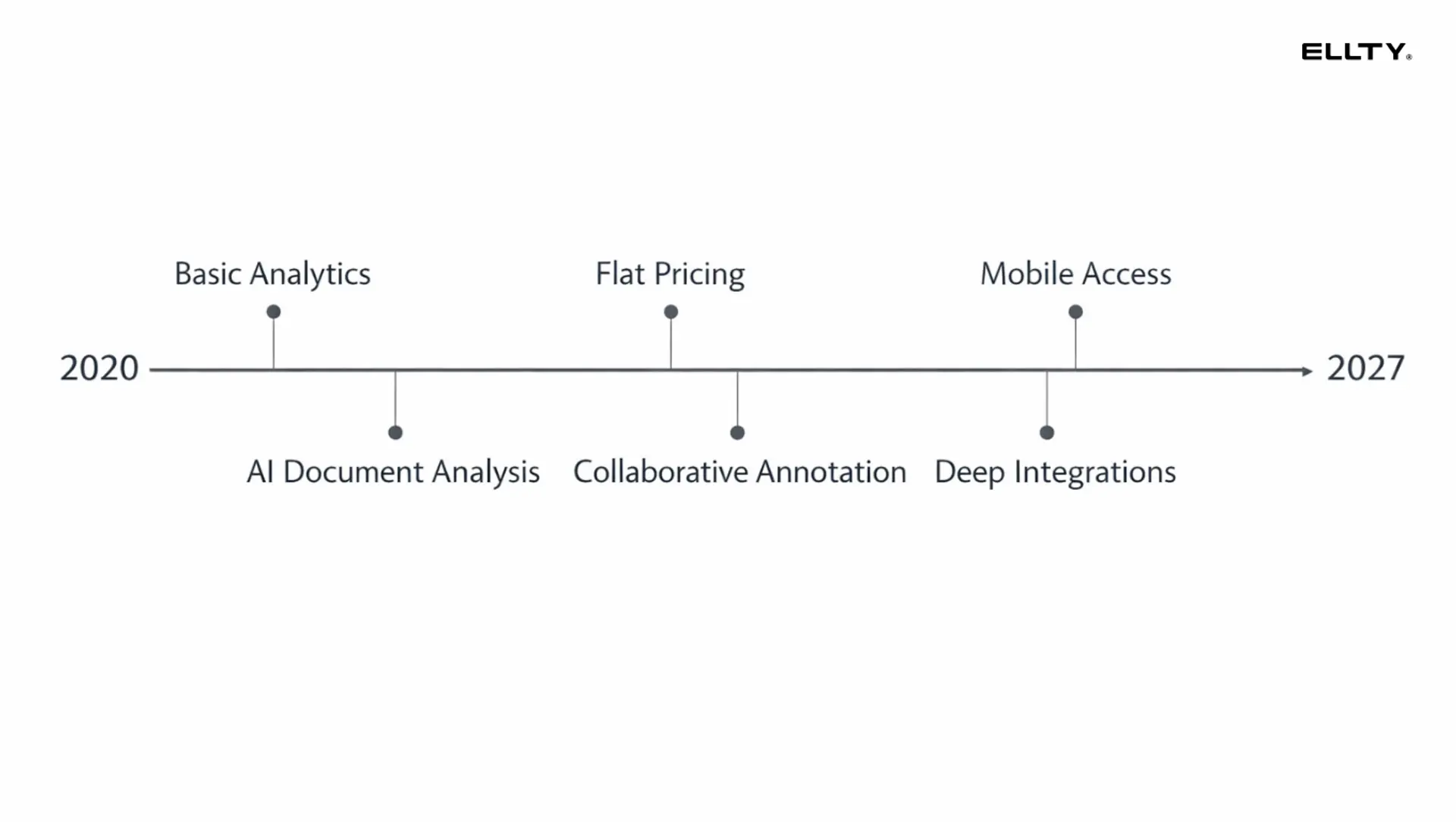
AI-powered document analysis will move downstream. Right now, AI features in VDRs are enterprise-only. Within 18-24 months, expect to see AI summaries, clause extraction, and Q&A interfaces in mid-market platforms. That will change how investors do diligence - and how founders prepare their rooms.
Collaborative annotation will become common. Currently most VDRs let reviewers view but not annotate or comment inside the room itself. Platforms are starting to add commenting layers, which changes the interaction model from one-way document sharing to a more collaborative review process.
Integration depth will increase. The deal stack - data room, cap table, eSign, CRM, legal workflow - will become more connected. Expect to see VDRs with native integrations into tools like AngelList, Carta, and DocuSign becoming a baseline expectation rather than a differentiator.
Pricing will continue to compress for the early-stage business segment. The entry point for a functional secure data room has dropped from thousands per month to under $150. That trend will continue as competition increases in the tier.
Key Players in the Virtual Data Room Market
The VDR space has a recognizable set of established names, but the field is broader than it once was. Here's a look at the platforms that come up most often.
- Ellty is a modern, flexible data room built for teams that want a clean, intuitive experience without sacrificing security or control. It's designed to work across a wide range of use cases. From fundraising and M&A to legal review and compliance processes, with straightforward setup and transparent pricing that doesn't punish smaller teams for needing professional-grade features.
- Ideals covers a broad mix of needs without feeling overly heavy or enterprise-complex. It includes AI-powered redaction and search, granular permission settings, detailed audit logs, and around-the-clock multilingual support, making it a reliable choice for deal-driven workflows that move fast and require tight access control.
- Intralinks is one of the most established names in the space and still carries strong credibility for large, complex global transactions. It leans toward high-volume, high-stakes deals, with AI-assisted tools and buyer-interest insights built in. Teams that have used it for years tend to stay, familiarity and institutional trust are part of its appeal.
- Datasite is built around due diligence and transaction execution. Its AI capabilities like redaction, translation, summarization, and deal intelligence, make it a strong fit for investment banks, private equity firms, and law firms managing large, document-heavy processes.
- Ansarada brings a structured, intelligence-led approach to high-stakes transactions like M&A, IPOs, and capital raises. Its AI features cover search, Q&A, and deal workflow support, which appeals to teams that want more than file storage. They want the platform to actively guide the process.
- Firmex focuses on secure document sharing and clean, controlled collaboration. It's straightforward to set up, well-regarded for its security, and covers a wide range of industries. A practical choice for organizations that want dependable functionality without a lot of added complexity.
Frequently asked questions
What are the latest data room trends?
The biggest trends right now are AI-assisted document review, deeper engagement analytics, flat pricing models replacing per-user fees, mobile-first design, and rising security expectations (dynamic watermarking, NDA gating, audit logs) even outside enterprise deals. The market is also splitting clearly into two tiers - enterprise tools for large M&A and startup-focused platforms for founders.
What are the top 3 trends in data analytics for virtual data rooms?
First: document engagement tracking - page-by-page views, time spent per section, and session-level data that shows how reviewers interact with specific documents. Second: visitor behavior patterns - who's accessing the room, in what order, and how often, which signals genuine interest vs. surface-level review. Third: real-time notification triggers - instant alerts when a document is opened or revisited, letting teams time their follow-ups precisely.
What are data trends in the VDR market?
In the VDR context, data trends refer to changes in how virtual data room platforms collect, display, and analyze information about document usage. This includes the shift from basic "viewed / not viewed" tracking to granular page-level analytics, the introduction of AI-powered document summaries, and the use of engagement data to guide deal strategy. It also encompasses market trends - pricing shifts, feature evolution, and which buyer segments are growing fastest.
What is the virtual data room market size?
The global virtual data room market was valued at approximately $3.5 billion in 2024 and is projected to grow at over 12% annually through 2030, driven by cross-border M&A, startup fundraising, and the normalization of remote due diligence. The startup and growth-stage segment is the fastest-growing sub-market, with new entrants competing on pricing and UX rather than just feature depth.
How secure is a virtual data room?
A well-configured VDR is very secure for document sharing. AES-256 encryption at rest and TLS in transit are standard across most reputable platforms. The security layer that matters more in practice is access control - permissions, NDA gating, watermarking, and audit logs. These prevent authorized users from misusing access, which is the more common real-world risk. The biggest security failures in data rooms are usually configuration errors, not technical vulnerabilities.
How is AI changing virtual data rooms?
At the enterprise level, AI is being used to summarize documents, extract key clauses from contracts, flag inconsistencies between filings, and answer natural language questions about room contents. This is reducing the time lawyers and analysts spend on manual document review. At the growth tier, AI features are still limited, but expect AI-powered search and document summaries to appear in mid-market VDRs within the next 12-24 months.
What is a VDR data room used for?
A virtual data room (VDR) is a secure online environment for storing and sharing confidential documents during transactions or ongoing business processes. Common uses include startup fundraising, M&A due diligence, board reporting, legal transactions, and real estate deals. The defining characteristic is control - a VDR lets you determine who sees what, track how they engage, and revoke access when needed.
Will AI replace virtual data rooms?
No - AI is being built into VDRs, not replacing them. The secure storage, access control, and audit trail functions of a VDR aren't going away. What AI adds is a processing layer on top: faster document review, automated summaries, and smarter search. The result is that VDRs become more powerful tools for due diligence, not obsolete ones. The platforms that survive will be the ones that integrate AI features without losing the core security and control functionality.
Wrapping Up
The VDR market is growing in 2026 for a simple reason: more organizations are running processes that require controlled, auditable, and secure document sharing, and the tools available to them are better than they've ever been.
Whether you're a business owner, legal adviser, investor, or operations lead, the takeaway is the same. A data room is no longer something reserved for large corporate deals. It's become a standard part of how transactions, reviews, and sensitive workflows get done.
If you're evaluating options, focus on what your specific process actually needs, rather than defaulting to the biggest name or the cheapest option such as the right mix of security, usability, features, and price. The gap between those two ends of the market has narrowed considerably, and the best fit for your situation is worth finding.
Author

Anika Tabassum Nionta is a Content Manager at Ellty, where she writes about secure document sharing, virtual data rooms, M&A, due diligence, fundraising, and sales enablement. With over 6 years of writing experience, she helps professionals understand how to share confidential documents securely, track engagement, and manage deals more effectively. Anika holds both a BA and MA in English from Dhaka University. Outside of work, she enjoys reading, exploring new cafes in Dhaka, and connecting with entrepreneurs and dealmakers in her community.

