Singapore deals move fast. Diligence on a mid-market target still takes 6-10 weeks once you factor in MAS licensing checks, ACRA registry pulls, and stamp duty on a share transfer.
Due diligence in Singapore is cleaner than most of Asia - English law, transparent registries, reliable courts. But "cleaner" doesn't mean easy. You still need to clear MAS licensing, check CCCS thresholds, confirm stamp duty exposure, and map any foreign ownership restrictions before the deal closes.
The ACRA BizFile+ registry gives you constitutional documents, shareholder lists, and director histories in hours. That's the easy part. The hard part is the stuff that doesn't show up in a registry search: undisclosed related-party loans, MAS licensing gaps, PDPA compliance failures, and employment contracts that don't survive a change of control.
Set up an Ellty data room before your advisors send the request list. Load corporate records, financials, MAS filings, and material contracts. When the list lands, you're ready instead of scrambling.
The Singapore due diligence checklist
Not every check carries the same weight. The table below sorts them by how badly each one can hurt the deal - dealbreakers first, then what moves the price, then basic hygiene - so your deal team knows what to clear first.
Use financial due diligence to pressure-test the numbers before you commit to heads of terms.
Understand the types of due diligence before scoping your workstreams with advisors.
| Area | Documents to pull | Singapore red flag | Tier | |
|---|---|---|---|---|
| Corporate & legal | Corporate & legal | ACRA BizFile+ extract, M&A, shareholder register, board minutes | Undisclosed nominee shareholders or director loans above S$50K | Dealbreaker |
| MAS licensing | MAS licensing | MAS register search, licence certificates, compliance reports | Expired or missing MAS licence for regulated financial activities | Dealbreaker |
| Financial | Financial | 3 years audited accounts, management accounts, bank statements | Qualified audit opinion or large related-party receivables | Dealbreaker |
| Tax | Tax | IRAS assessments, GST returns, transfer pricing documentation | Unresolved IRAS audit or thin-cap issues on intercompany loans | Price-adjuster |
| Employment & labor | Employment & labor | Employment contracts, MOM work pass records, CPF contribution history | CPF underpayments or work pass breaches - MOM penalties are stiff | Price-adjuster |
| FDI screening | FDI screening | Sector ownership analysis, SIC strategic asset assessment, SIRA mapping | Target in defence, media, or telco - SIC may block or impose conditions | Dealbreaker |
| IP | IP | IPOS register searches, licence agreements, assignment deeds | Key IP registered in founder's name, not the company entity | Price-adjuster |
| Material contracts | Material contracts | Top 10 customer/supplier contracts, change-of-control clauses | Change-of-control termination rights in key customer contracts | Price-adjuster |
| Real estate & environmental | Real estate & environmental | Property titles, JTC/HDB lease terms, NEA environmental checks | JTC industrial lease with clawback on assignment without consent | Standard check |
| Data protection & IT | Data protection & IT | PDPA compliance policy, data breach register, IT security audits | Unreported data breaches - PDPA requires notification within 3 days | Standard check |
Prep your Singapore data room
Share financials and MAS filings with your deal team securely.
Start free 14-day trialThe full Singapore due diligence checklist
Singapore's deal process is structured but has country-specific traps that trip up buyers who treat it like a generic common-law jurisdiction. Work through each area below in order - corporate and legal first, then financial, then the regulated-sector checks that can kill a deal late if you miss them early.
Link each document to your Ellty data room folder as you collect it. That way your advisors can review in parallel instead of waiting for batched uploads.
Corporate & legal
- Pull the ACRA BizFile+ extract for the target and all material subsidiaries - confirms directors, shareholders, charges, and annual filing history.
- Review the M&A, shareholder agreement, and any supplemental shareholder agreements for drag-along, tag-along, and pre-emption rights that survive a sale.
- Check the director register for any disqualified directors under the Companies Act - ACRA publishes this publicly.
- Confirm share certificates are issued and match the ACRA register; discrepancies in nominee arrangements are common in older Singapore companies.
- Review board and shareholder minutes for the last 3 years for undisclosed related-party transactions or disputes.
Financial
- Obtain 3 years of audited financial statements; check auditor identity and any qualifications or emphasis-of-matter paragraphs.
- Review management accounts for the most recent interim period and reconcile to the last audited figures.
- Pull bank statements for all accounts and reconcile cash positions to the balance sheet.
- Map related-party loans and balances - Singapore companies frequently carry intercompany balances not at arm's length.
- Confirm working capital peg methodology with the seller; Singapore deals often use a locked-box structure.
- See our due diligence for acquisition guide for how to structure the financial workstream.
Tax
- Pull IRAS assessments and any correspondence for the last 5 years; confirm no open audits or disputes.
- Review GST registration and returns - check for any voluntary disclosure history with IRAS.
- For groups: review transfer pricing documentation; Singapore requires contemporaneous TP docs for related-party transactions above S$15M.
- Confirm withholding tax compliance on payments to non-residents; missing WHT is a common IRAS audit trigger.
- Analyse stamp duty exposure - share deals attract 0.2% on consideration; embedded Singapore property triggers buyer's stamp duty separately.
Employment & labor
- Obtain a full headcount list with employment contract types, notice periods, and change-of-control provisions.
- Pull MOM work pass records for all foreign employees and confirm all passes are valid and correctly categorised.
- Verify CPF contribution history for the last 3 years; CPF Board enforcement is strict and shortfalls carry penalties.
- Review key-person retention risk - identify who walks if the deal closes.
- For HR due diligence, map any collective agreements or union relationships; rare in Singapore but present in manufacturing and logistics.
Regulatory & licences
- Confirm all MAS licences (capital markets, payment services, financial advisory) are current and in good standing.
- Pull the MAS public register and cross-check against the target's claimed regulatory status.
- For payment businesses: confirm PSA licence category (standard vs major payment institution) and check MAS compliance submissions.
- Review any sector-specific licences - healthcare (MOH), education (SSG/EduTrust), food (SFA) - material to the business.
- Confirm that licences are transferable on a share deal; most MAS licences require prior notification or approval of a change of control.
FDI screening
- Assess whether the target falls under Singapore's Significant Investments Review Act (SIRA) - applies to critical infrastructure, defence, media, and telco.
- If SIRA applies, the Singapore Investment Committee (SIC) can review acquisitions crossing 25% or 50% voting rights and impose conditions.
- Check for any existing government ownership or sovereign fund co-investment; Temasek or GIC stakes can complicate a clean exit.
- CCCS merger review is voluntary below the S$50M worldwide safe harbor, but consider filing if combined market share exceeds 25%.
- For sell-side due diligence, prepare an FDI memo early so you can respond quickly if a buyer's regulator asks.
IP
- Pull IP searches from IPOS (trademarks, patents, registered designs) and confirm registrations are in the company's name, not a founder's.
- Review IP assignment deeds for any IP developed by contractors or employees; Singapore's Copyright Act assigns software copyright to employers but confirm contracts are in order.
- Check for any IPOS oppositions or IP disputes in the last 5 years.
- Review key technology licences for change-of-control clauses and confirm they survive a share transfer.
Material contracts
- Pull the top 10 customer and supplier contracts by revenue or cost and review for change-of-control, assignment, and termination rights.
- Check government and statutory board contracts (GovTech, EDB, JTC) separately; these often have assignment restrictions that require agency consent.
- Review any MAS-regulated service agreements and confirm they are on arm's length terms and can continue post-acquisition.
- Confirm any exclusivity arrangements, distribution rights, or earn-out obligations that affect value.
Real estate & environmental
- For any JTC or HDB industrial premises: pull the lease and confirm assignment is permitted with JTC/HDB consent.
- Check for any NEA environmental notices or clean-up orders on the target's operating sites.
- Review title searches via the Singapore Land Authority for freehold or leasehold property; confirm no caveats or encumbrances.
- Confirm property tax payments are current - IRAS issues annual property tax notices that are a fixed charge on the business.
Data protection & IT
- Obtain the target's PDPA compliance policy and data protection officer appointment records.
- Review the data breach register; Singapore's PDPA requires mandatory notification to PDPC and affected individuals within 3 days.
- Check for any PDPC investigations or enforcement actions in the last 3 years.
- For IT due diligence, review system architecture, cloud hosting agreements, and cybersecurity audit reports.
- Confirm that customer data can be transferred post-acquisition without triggering additional PDPA consent requirements.
How due diligence in Singapore works
The mergers and acquisitions process in Singapore follows 5 stages, each with local specifics worth knowing before you scope.
Step 1: Scope
Agree the scope with your advisors before any documents move. Singapore deals typically split across legal, financial/tax, and sector-specific MAS licensing counsel. Build your data room in Ellty and set up scoped links before the request list lands - legal sees contracts, tax sees returns, financial sees the model.
Step 2: Request
Send the request list within 48 hours of signing the NDA. ACRA documents, MOM records, and IRAS assessments are standard asks. Give each workstream its own Ellty folder so advisors can track what's been uploaded without asking.
Step 3: Review
Reviews run in parallel. ACRA searches take hours; MAS licensing analysis and IRAS review typically take 2-3 weeks. Track reviewer activity through Ellty's analytics - if a buyer's tax advisor has opened the transfer pricing file six times, that's where the question is coming.
Step 4: Flag
Issues surface in a preliminary findings memo, typically at week 4-6. Singapore-specific flags cluster around MAS licensing gaps, CPF shortfalls, IP misregistration, and JTC lease consent requirements. Flag early so price-adjusters don't become dealbreakers.
Step 5: Resolve
Resolution mechanisms include price adjustments, escrow (typically 10-15% held for 12-18 months), representations and warranties insurance, and deferred payments. Stamp duty on the final consideration must be paid within 14 days of the transfer document.
A buyer who identifies undisclosed liabilities during due diligence is in a far stronger position to negotiate price adjustments or walk away than one who discovers them post-completion.
What makes due diligence in Singapore different
MAS licensing is a hard stop. If the target holds a capital markets services licence, payment institution licence, or financial advisory licence, confirm the licence is current and that a change of control requires prior MAS notification. MAS approvals take 3-6 months - missing this means the deal can't close on your timeline.
SIRA and strategic asset review. Singapore's Significant Investments Review Act gives the government power to block or impose conditions on acquisitions of entities in critical sectors. Buyers in defence-adjacent, port, energy, or media businesses need to assess applicability early - not at week 8 of a 10-week process.
Stamp duty on share deals. Singapore share transfers attract 0.2% stamp duty on consideration with no ceiling. If the target owns Singapore residential property, buyer's stamp duty and additional buyer's stamp duty can stack on top, making asset deals structurally different from share deals on property-heavy targets.
RORC and related-party loans. The Register of Registrable Controllers is mandatory for Singapore companies. Gaps in the RORC, or undisclosed beneficial owners sitting behind nominee shareholders, are a recurring issue in founder-owned businesses. Pull it early - ACRA can now access RORC data directly.
CPF compliance. The CPF Board runs enforcement audits on underpaid contributions. On a deal where the seller has been misclassifying contractors as employees, or vice versa, the CPF liability can be material. Pull 3 years of CPF contribution statements and cross-check against payroll records.
Who runs due diligence on Singapore deals
Most mid-market Singapore deals use a combination of local and regional advisors. Singapore has a deep legal market - Drew & Napier, Allen & Gledhill, WongPartnership, and Rajah & Tann cover M&A well.
Legal advisors handle corporate structure, contract review, IP, employment, and regulatory. Costs range from S$80K to S$300K+ for a full-scope review depending on complexity and firm tier.
Financial and tax advisors cover accounts analysis, tax exposure, and working capital. Big 4 fees for a mid-market Singapore target run S$60K to S$150K.
MAS licensing counsel is a separate engagement if the target is regulated. Expect S$30-80K for a licensing review and change-of-control notification.
Set up one shared Ellty data room and give each advisor a scoped link - no email attachments, no version confusion. Track who opens what, and follow up before questions become flags in the diligence report.
How to set up your Singapore data room in Ellty.
Load your Singapore deal documents before advisors start. Each team gets a scoped link with access only to what they need.
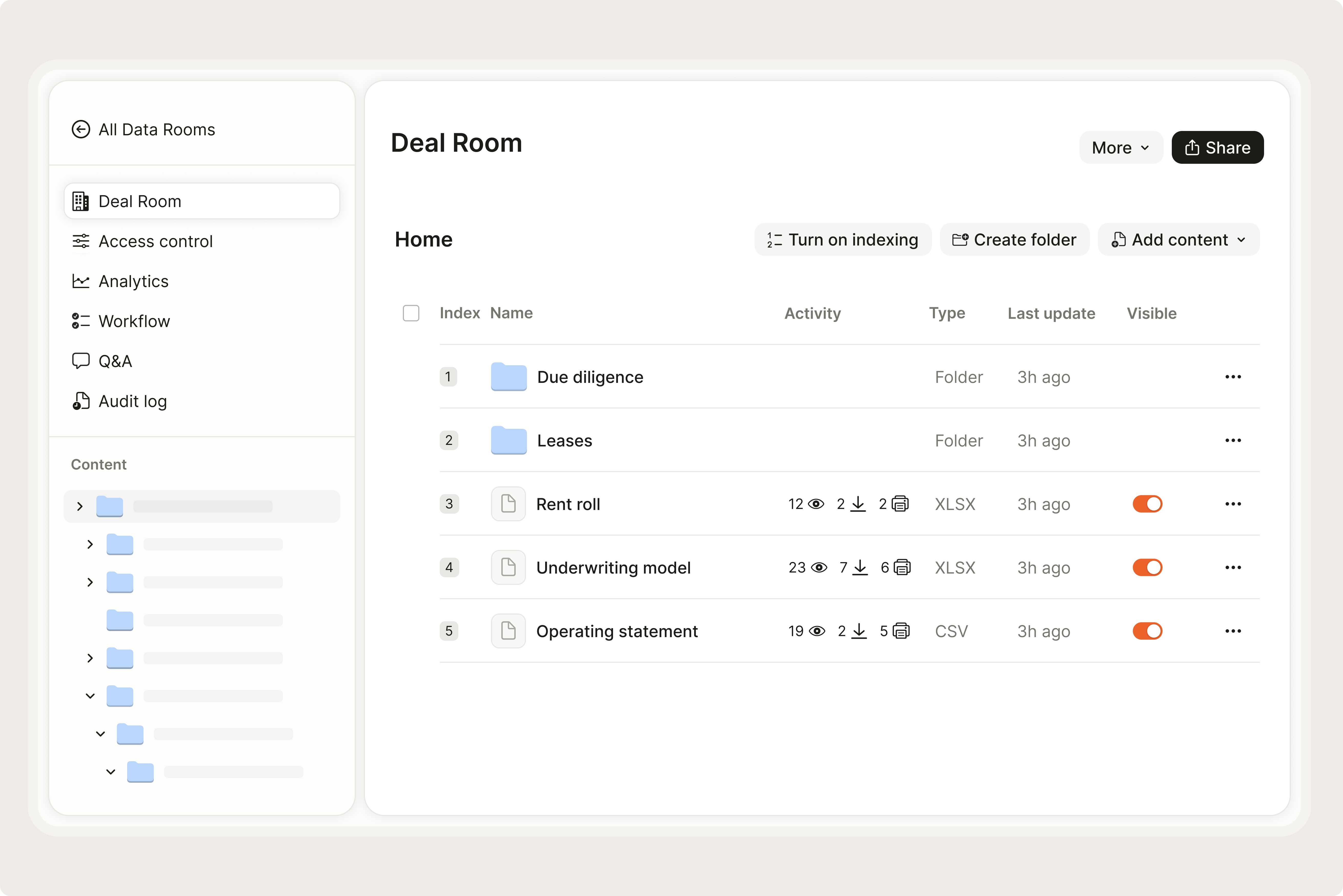
- 1.Create a data room and upload your deal docsUpload ACRA extracts, MAS filings, and financials. Organise by workstream so advisors find files fast.
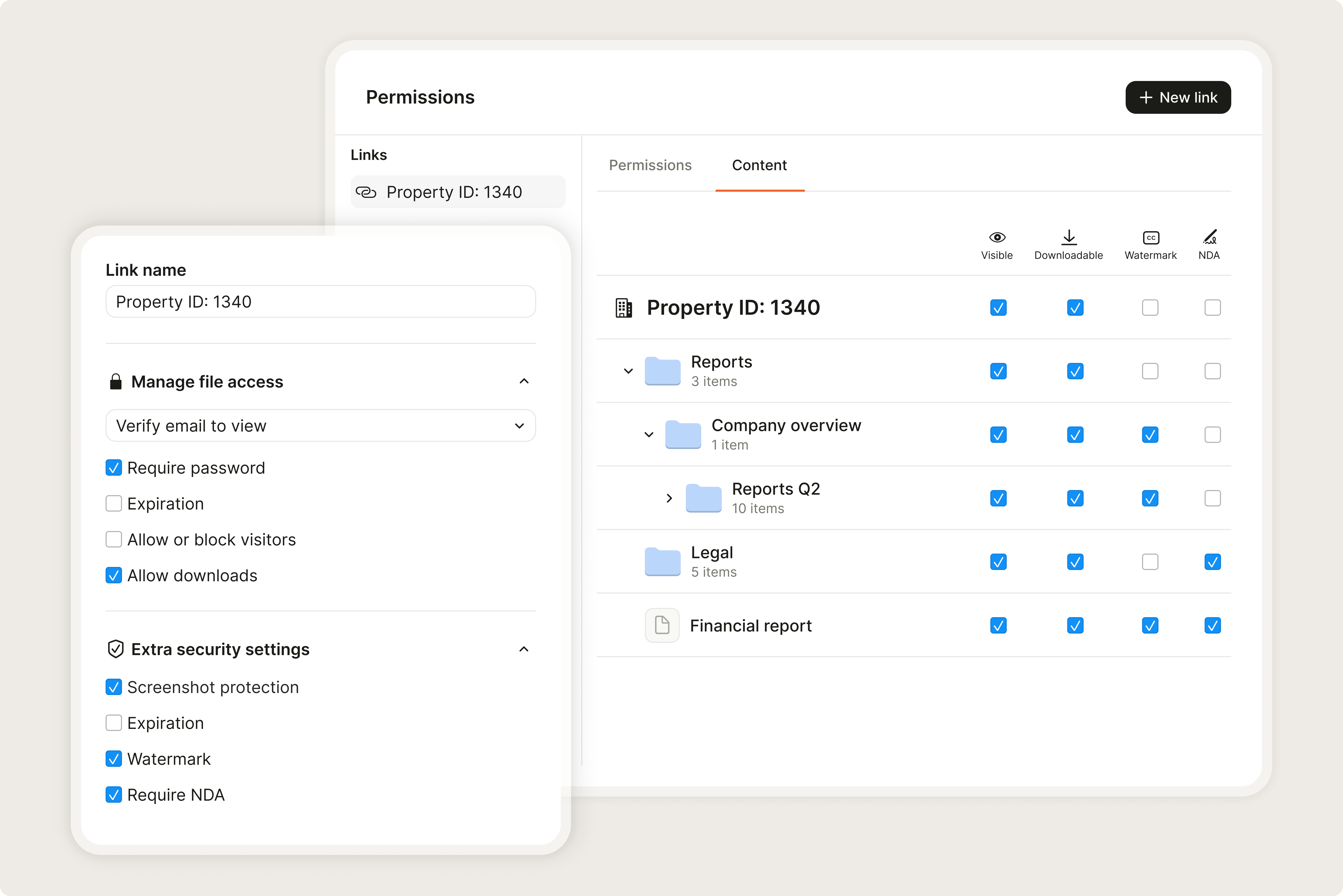
- 2.Give each workstream a scoped, secure linkLegal sees contracts, tax sees returns, MAS counsel sees licences. No overlap, no confusion.
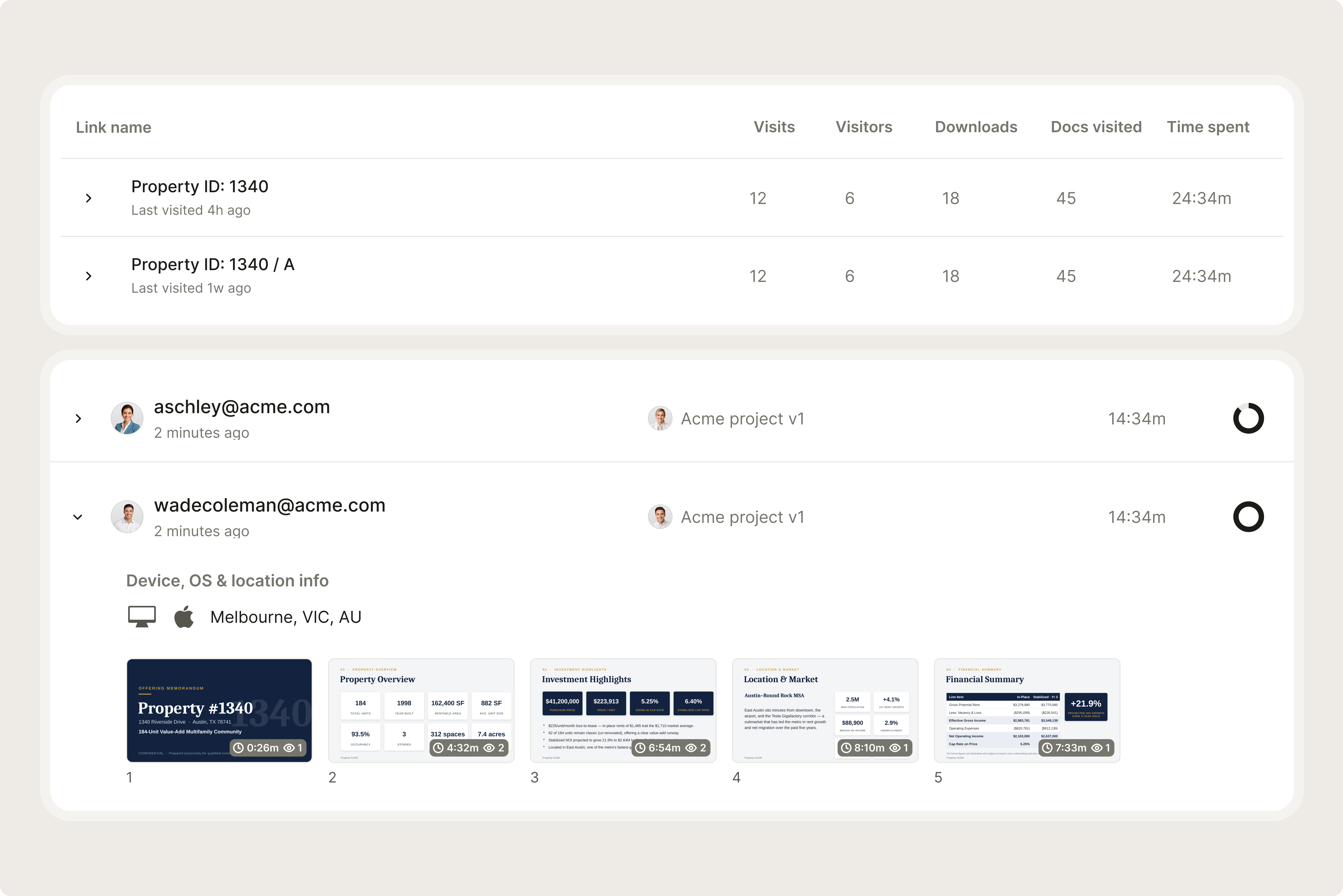
- 3.Track who reviews which documentsSee which advisor opened the transfer pricing file. Follow up before it becomes a flag in the report.
Due diligence timeline for Singapore deals
A standard Singapore buy-side process runs 6-10 weeks from NDA to final report.
Weeks 1-2: NDA signed, data room populated, request list sent. ACRA searches and MAS register checks completed. Ellty data room live with scoped advisor links assigned by workstream.
Weeks 2-4: Document review in parallel across legal, financial, and tax workstreams. MOM and CPF checks run. Initial flags identified and escalated to sellers for response.
Weeks 4-6: Supplemental requests for flagged items. MAS licensing review completed. SIRA assessment confirmed. Preliminary findings memos circulated to deal team.
Weeks 6-8: Management Q&A sessions. Price adjustment negotiations for identified liabilities. R&W insurance terms finalised if applicable to the deal structure.
Weeks 8-10: Final reports issued. SPA negotiation on representations and warranties. Stamp duty calculation confirmed. Signing and closing conditions agreed and documented.
Cross-border deals with non-Singapore buyers may run longer if foreign regulatory approvals are required. MAS change-of-control notifications alone take 3-6 months for regulated targets.
What due diligence typically costs in Singapore
Legal: S$80K-S$300K depending on complexity and firm tier.
Financial/tax: S$60K-S$150K for a mid-market target.
MAS licensing counsel: S$30K-S$80K if the target is regulated.
Environmental: S$15K-S$40K if industrial sites are involved.
Total advisor spend on a S$20M-S$100M Singapore deal typically lands between S$200K and S$500K. That's 0.5-2% of deal value - cheaper than discovering a S$2M CPF liability or a lapsed MAS licence post-completion.
Run your Singapore deal from one room
Hold financials, contracts and the SPA in one secure, tracked Ellty data room.
Start free 14-day trialCommon questions about due diligence in Singapore
- No - Singapore's CCCS merger control is voluntary. But if combined market share exceeds 25% or the deal significantly lessens competition, CCCS can investigate post-completion and order remedies.
- MAS change-of-control notifications for capital markets, payment, and financial advisory licences typically take 3-6 months. Start early - this is the most common cause of deal timeline slippage on regulated targets.
- Yes - 0.2% on the higher of consideration or net asset value. If the target holds Singapore residential property, additional buyer's stamp duty applies on top of the share transfer stamp duty.
- The Register of Registrable Controllers records beneficial owners above 25% and is mandatory for Singapore companies. Gaps or nominee arrangements that obscure the real RORC are a red flag that buyers need to resolve before closing.
- Yes. Ellty is a virtual data room built for M&A diligence. Upload documents, create scoped links per advisor workstream, and track who reviews which files in real time.