Canada M&A diligence starts the moment an LOI is signed. Investment Canada Act filing and Competition Act notification can each stall closing if you miss them before the request list goes out.
The DD load in Canada is heavier than most buyers expect. Federal and provincial rules stack across every workstream.
Quebec adds a civil law layer that common law buyers miss. Notarial deeds, PPSA equivalents under the Civil Code, and employment successorship rules each need separate review.
A mid-market Canadian deal generates 2,000-15,000 documents before review closes. Load them into Ellty before advisors arrive and review starts on day one.
The Investment Canada Act was significantly amended in 2024-2025. National security review now covers minority stakes, joint ventures, and asset purchases - not just full acquisitions.
The Canada due diligence checklist
Not every workstream carries equal weight. ICA national security review and Competition Act notification are binary - miss them and closing stops.
Quebec civil law exposure sits just below that tier. A target incorporated under Quebec law or holding Quebec real estate requires separate civil law analysis.
Load all workstreams into Ellty before the request list is issued. Legal, tax, and employment advisors each get a scoped link and start reviewing on day one of access.
| Area | Documents to pull | Canada red flag | Tier | |
|---|---|---|---|---|
| Corporate & legal | Corporate & legal | CBCA or provincial articles, bylaws, ISC register, shareholders' agreement, cap table | ISC register not filed with Corporations Canada since Jan 2024 is a disclosure breach | Dealbreaker |
| Financial | Financial | 3y ASPE or IFRS financials, management accounts, QoE, bank statements | ASPE vs IFRS policy differences frequently distort EBITDA in private company targets | Dealbreaker |
| Tax | Tax | Federal T2 returns, provincial returns, CRA correspondence, HST/GST filings | Multi-province nexus creates unremitted HST/PST exposure that transfers in a share deal | Dealbreaker |
| Employment & labor | Employment & labor | Employment contracts, collective agreements, change-of-control provisions, severance policies | Common law reasonable notice in Canada can exceed 24 months for senior employees | Dealbreaker |
| Regulatory & licences | Regulatory & licences | Federal and provincial licences, OSFI approvals, securities registrations, sector permits | Provincial licences rarely transfer automatically - re-application is the default in most sectors | Dealbreaker |
| ICA & FDI screening | ICA & FDI screening | Acquirer ownership chain, target sector mapping, government contracts, sensitive data flows | Critical minerals, AI, quantum, and CNI: pre-closing filing required regardless of deal size | Dealbreaker |
| Competition Act | Competition Act | Canadian revenue and asset figures, combined market position, share-of-supply analysis | Bureau can challenge mergers below C$93M threshold - no safe harbour below filing line | Dealbreaker |
| IP | IP | CIPO patent and trade-mark filings, assignments, software licences, domain names | IP assigned to founders personally rather than the company is common in Canadian tech targets | Price-adjuster |
| Material contracts | Material contracts | Customer and supplier contracts, federal procurement agreements, change-of-control clauses | Federal Public Works contracts require PSPC novation consent - plan at least 60 days | Price-adjuster |
| Real estate & environmental | Real estate & environmental | Phase 1 ESA, provincial environmental records, title search, Quebec notarial deed | Quebec asset deals require a notarized deed - closing without one voids the transfer | Standard check |
| Data protection & IT | Data protection & IT | PIPEDA/Law 25 compliance docs, breach register, DPIAs, processor agreements | Quebec Law 25 fines reach 4% of global turnover - undisclosed breaches are common | Standard check |
Running due diligence on a Canadian target?
Set up your Ellty data room before the request list lands.
Start free 14-day trialThe full Canada due diligence checklist
Ten workstreams, ordered by risk weight. Upload each document category into Ellty before the buyer's request list arrives.
Corporate & legal
- Pull articles of incorporation under CBCA or the applicable provincial statute and all amendments.
- Confirm the ISC register has been filed with Corporations Canada since January 2024.
- Review the shareholders' agreement and all amendments for drag-along, pre-emption, and consent triggers at closing.
- Check board and shareholder minutes for all material transactions approved in the last three years.
- Run a PPSA search (or Quebec hypothec search) in every province where the target holds assets.
- Confirm no outstanding security registrations or undisclosed charges against the target's assets.
Financial
- Pull three years of financial statements prepared under ASPE or IFRS, depending on target size.
- Commission a quality of earnings report for any deal above C$15M - accounting policy differences make it essential.
- Check revenue recognition policies and flag any deferred income or early recognition patterns.
- Review 12 months of bank statements and reconcile against reported revenue figures.
- Confirm no off-balance-sheet obligations: operating leases, director loan accounts, or inter-company guarantees.
- See our due diligence documents guide for the full financial document list.
Tax
- Pull three years of federal T2 returns and all provincial corporate tax returns for each operating province.
- Map multi-province nexus: confirm HST, GST, and PST returns have been filed wherever nexus exists.
- Review all CRA correspondence for open audits, reassessments, or transfer pricing queries.
- Confirm SR&ED credit claims are properly documented - CRA scrutiny on these has increased significantly.
- Model share deal vs asset deal before LOI: asset deals create a tax cost for sellers but give buyers a stepped-up basis.
- Confirm Pillar Two applicability if the target group has global revenue above EUR 750M.
Employment & labor
- Pull all employment contracts, offer letters, and change-of-control provisions for key personnel.
- Review common law reasonable notice exposure - Canadian courts frequently award 18-24 months for senior staff.
- Check all collective agreements and successorship obligations: union recognition transfers automatically on an asset deal.
- Review contractor arrangements and assess misclassification risk under CRA and provincial employment standards tests.
- Confirm compliance with provincial employment standards in each province where the target employs staff.
- Check for any pending labour board complaints, human rights tribunal filings, or class action employment claims.
Regulatory & licences
- Map all federal and provincial licences the target holds and check each for change-of-control triggers.
- Confirm OSFI approvals, securities dealer registrations, or insurance licences and their transfer requirements.
- Check whether the target holds federal procurement standing offers - these require PSPC consent to novate.
- Review professional body memberships that require re-registration after a change of control.
- Confirm export permit compliance under the Export and Import Permits Act for any dual-use technology sales.
- See our commercial due diligence guide for market position and regulatory risk analysis.
ICA & FDI screening
- Map the target's activities against ICA national security sensitive sectors: critical minerals, AI, quantum, CNI, sensitive personal data.
- Confirm whether the acquirer has any foreign government ownership at any level of the ownership chain.
- Pre-closing filing is required in sensitive sectors regardless of deal size - the C$2.179B threshold does not apply to national security.
- Build 45 days of initial ICA review time into the schedule; complex cases can extend to 200 or more additional days.
- Prepare full beneficial ownership disclosure - ISED requires the complete ownership chain from filing entity up.
- Closing without ICA clearance where required exposes the acquirer to fines of C$500,000 per day.
IP
- Search CIPO for all patents, trade-marks, and industrial designs registered or pending in the target's name.
- Confirm all IP is owned by the company entity - founder-owned IP is a common gap in Canadian tech targets.
- Review inventor assignment agreements and work-for-hire clauses in all employment and contractor agreements.
- Check software licences for open source components and GPL contamination that restricts commercial use.
- Pull all IP licences granted to or by the target and check each for change-of-control or assignment restrictions.
- Confirm domain names and social media accounts are registered to the corporate entity, not individuals.
Material contracts
- Pull all customer and supplier contracts above C$75K annual value and review each for change-of-control clauses.
- Flag any federal Public Works or PSPC standing offer agreements - novation requires PSPC consent.
- Review all SaaS and software licences for transferability - enterprise vendors routinely restrict assignment.
- Confirm no exclusivity obligations that would restrict the buyer's commercial freedom after closing.
- Check for automatic termination clauses that trigger on a change of majority shareholder.
- Load all contracts into your Ellty data room before advisors start review.
Real estate & environmental
- Pull all leases and confirm whether landlord consent is required under change-of-control provisions.
- Commission a Phase 1 Environmental Site Assessment for any owned or formerly industrial real estate.
- Check provincial environmental agency records for open contamination orders or remediation requirements.
- In Quebec, confirm that any asset transfer of real property will be completed by notarized deed before closing.
- Review title searches in each province where the target holds owned real estate.
- Confirm all building permits, zoning approvals, and environmental certificates are in place and assignable.
Data protection & IT
- Pull PIPEDA compliance documentation and, for Quebec targets, Law 25 compliance records and breach register.
- Confirm a privacy officer is designated and that ROPA, privacy notices, and DPIAs are current.
- Review any Privacy Commissioner of Canada correspondence or Quebec enforcement actions.
- Check whether the target transfers personal data outside Canada and confirm adequate transfer mechanisms are in place.
- Review IT infrastructure for legacy systems that pose breach risk and confirm cyber insurance is current.
- See our hard vs soft due diligence guide for how IT risk fits into the broader risk register.
How due diligence in Canada works
The due diligence timeline guide covers sequencing in detail. Here is how the buy-side process runs from scope to close on a Canadian deal.
Step 1: Scope
Define workstream scope before the request list is issued. Confirm whether ICA national security filing is required and whether the C$93M Competition Act threshold is met.
Map Quebec exposure early - if the target is incorporated in Quebec or holds Quebec real estate, civil law analysis runs as a separate track.
Step 2: Request
Issue the request list once the NDA is signed and scope is agreed. Load documents into Ellty by workstream folder before access opens.
Sellers who pre-load their data room cut advisor response time significantly and keep the deal on schedule.
Step 3: Review
Legal, financial, and tax workstreams run in parallel. ICA and Competition Act review run as separate regulatory tracks.
Use Ellty analytics to track which advisors have reviewed which files and where review is lagging behind schedule.
Step 4: Flag
All findings go into a risk register: dealbreaker, price-adjuster, or standard check. In Canadian deals, common law severance exposure, ICA filing gaps, and HST/PST nexus issues surface most often.
See our operational due diligence guide for how to structure non-financial risk findings.
Step 5: Resolve
Clear all dealbreakers before moving to SPA drafting. ICA clearance must be in hand before closing. Competition Act waiting periods run 30 calendar days from a complete filing.
Price-adjusters go into the SPA as warranty claims, indemnities, or price retention mechanics.
How to set up your Canada data room in Ellty.
Upload deal documents before advisors arrive. Each workstream gets a scoped link and review starts on day one.
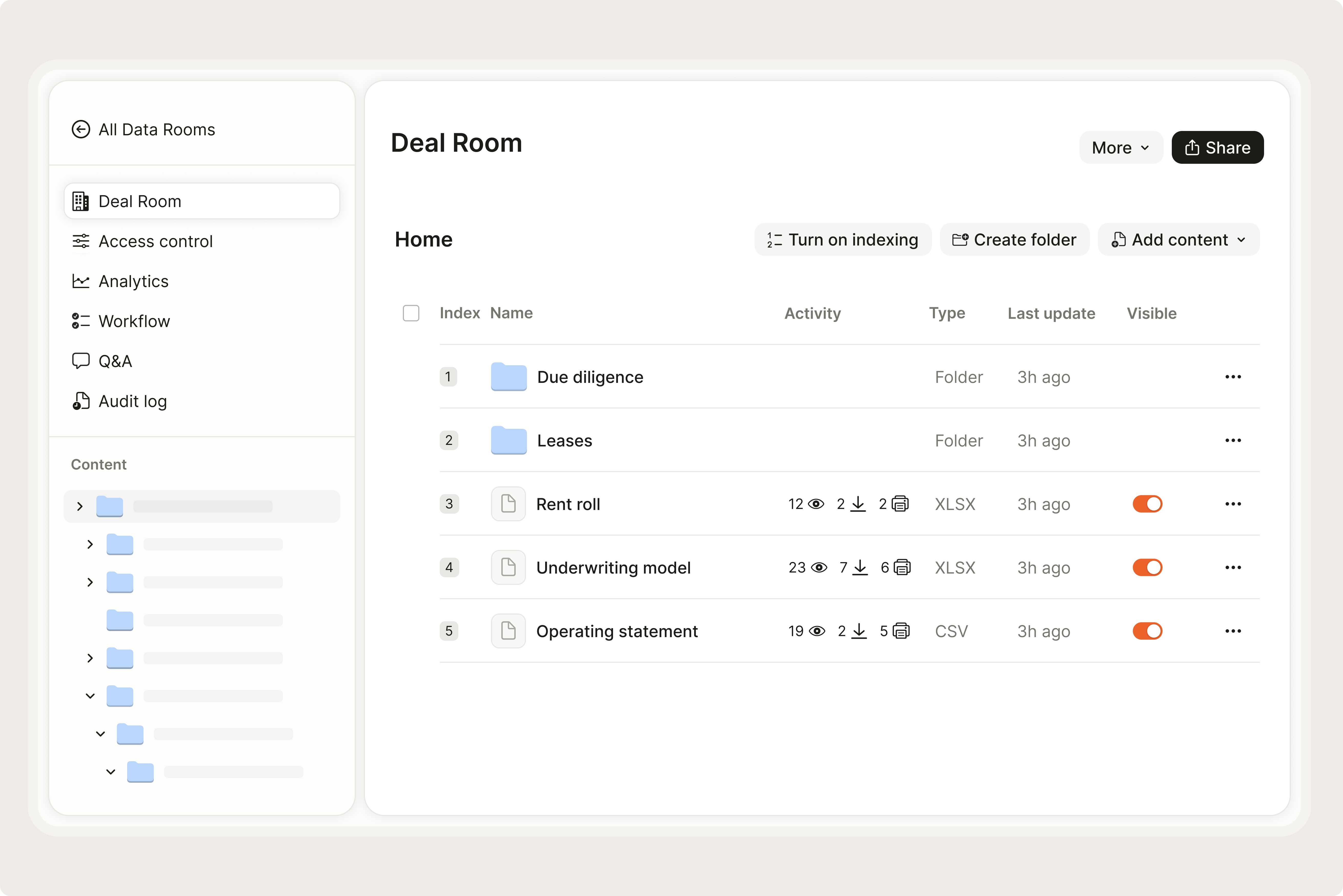
- 1.Create a data room and upload your deal documentsAdd folders for each workstream: legal, financial, tax, employment, ICA, IP. Advisors find files without asking.
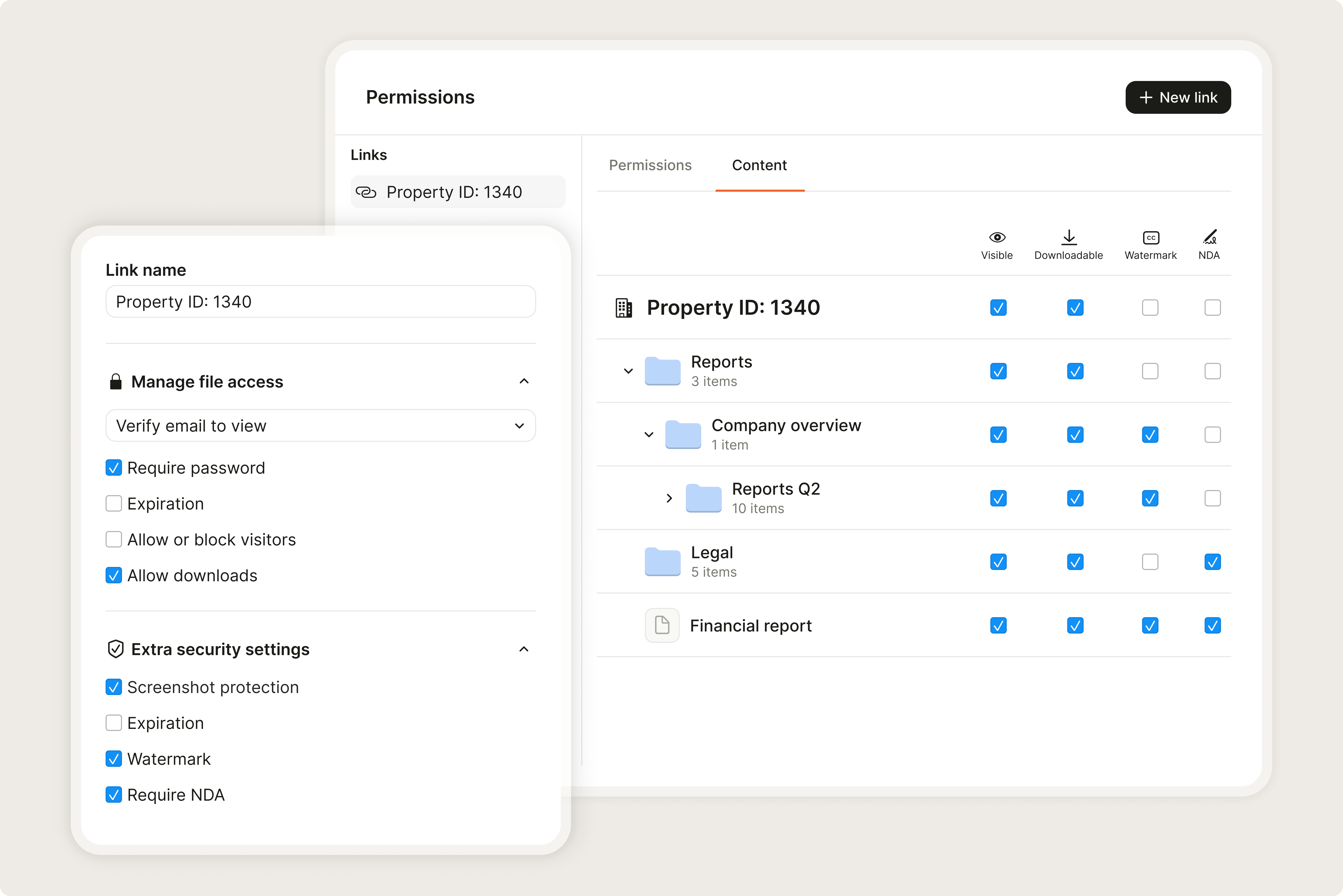
- 2.Give each workstream a scoped, secure linkLegal sees contracts. Tax sees returns. ICA counsel sees sector mapping only. Ellty enforces permissions at link level.
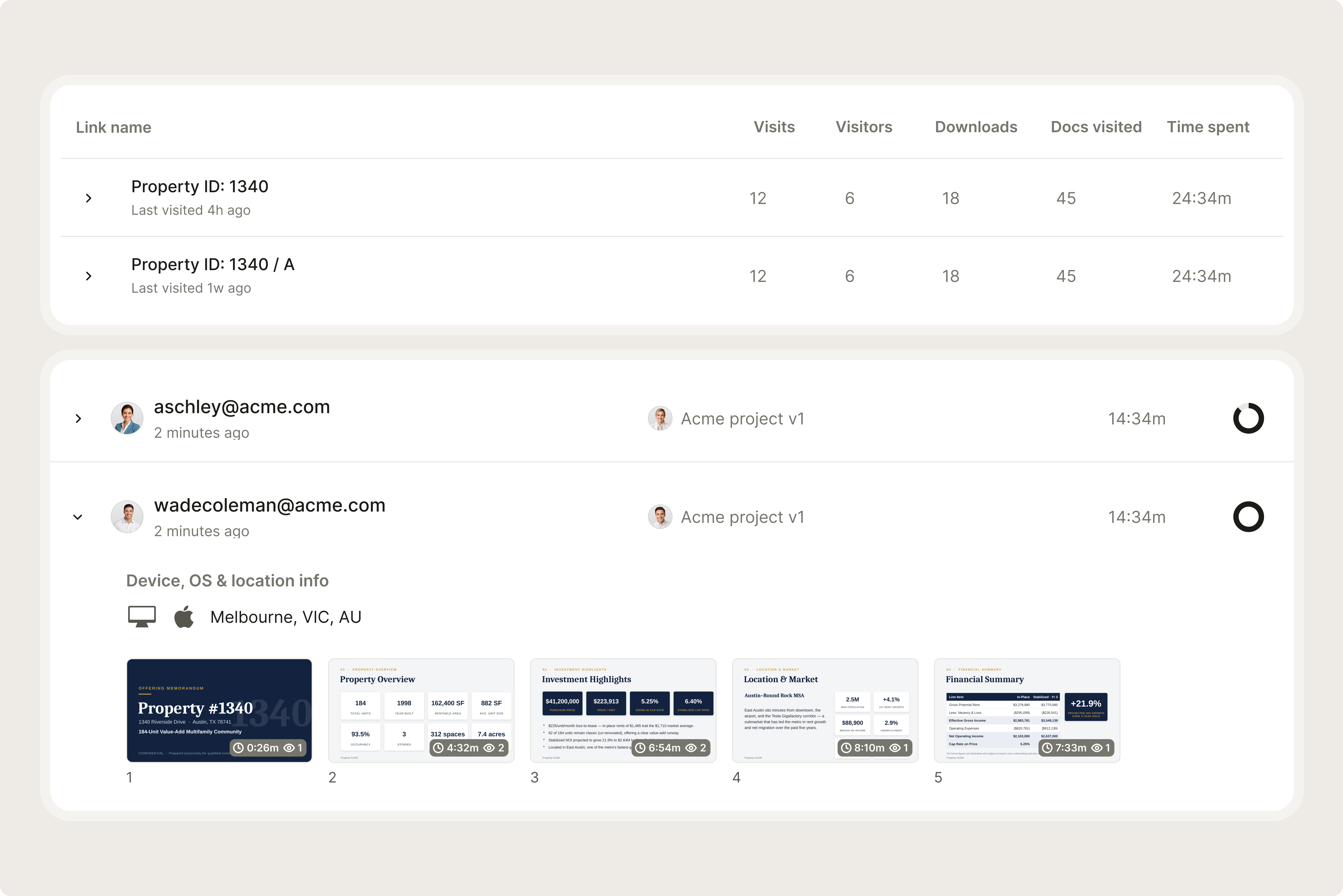
- 3.Track who reviews which documentsSee which advisors opened which files and how long they spent. Spot where questions form before they delay the deal.
What makes Canada DD different
The Investment Canada Act is the biggest structural difference for any buyer who hasn't closed a Canadian deal since 2024. The 2024-2025 amendments extended national security review to minority stakes, asset purchases, and joint ventures. Pre-closing filing in sensitive sectors is mandatory regardless of deal size - the C$2.179B review threshold simply does not apply to national security referrals.
Quebec civil law is the second Canada-specific complexity that common law buyers consistently underestimate. Asset purchases involving Quebec real property require a notarized deed before a Quebec notary. Without it, the transfer is void. Quebec's Civil Code hypothec register replaces the PPSA, and searches run through a different system from the rest of Canada.
Canada's common law reasonable notice doctrine creates employment exposure that rarely appears in financial statements. Courts in Ontario and British Columbia have awarded 24 months' pay for senior employees dismissed on a change of control. A target with 10 executives earning C$250K can carry C$5M+ of hidden severance exposure that shows up only when an employment lawyer reviews the contracts.
The Competition Bureau's ability to challenge mergers below the C$93M notification threshold is the fourth layer. Unlike the US or EU, there is no safe harbour. The Bureau has 3 years after closing to challenge a transaction that substantially lessens competition. Technology and B2B deals are increasingly targeted. See our due diligence for small business guide for how sub-threshold deals still carry Competition Act risk.
Canadian M&A in 2026 demands certainty over speed. ICA national security review, Quebec civil law, and the Competition Bureau's expanded challenge powers each require analysis before the LOI is signed - not after.
Timeline & cost in Canada
A Canadian mid-market deal runs in three phases. Weeks 1-2 cover initial scope: corporate registry searches, PPSA searches in each province, ICA sector mapping, Competition Act threshold analysis, and Ellty data room setup. Legal cost for initial screening: C$10,000-C$25,000.
Weeks 2-8 cover parallel workstream review. QoE, legal review, tax audit, employment severance mapping, and CIPO IP searches run concurrently. ICA pre-closing filing is submitted at week 2-3 and runs its 45-day clock in parallel. QoE and tax advisory fees: C$30,000-C$100,000 for a mid-market deal.
Weeks 8-12 handle resolution. ICA clearance arrives assuming no national security referral. Competition Act waiting period runs 30 days from a complete filing. There is no stamp duty in Canada - share deals carry no transfer tax. Asset deals that include Quebec real property attract land transfer tax at progressive rates up to 2.5% in Montreal.
Legal fees for buy-side Canadian counsel: C$75,000-C$350,000. Financial advisory and QoE: C$50,000-C$150,000. ICA counsel for a national security filing adds C$50,000-C$150,000. Total soft costs: C$175,000-C$600,000 before success fees. Load documents into Ellty from day one to reduce advisor time and total cost. See our guide on what is due diligence for how to scope a Canadian deal from scratch.
Run your Canada deal from one room
Hold financials, contracts and the SPA in one secure, tracked Ellty data room.
Start free 14-day trialQuestions buyers ask about due diligence in Canada
- Pre-closing filing is required in sensitive sectors including critical minerals, AI, quantum, and critical infrastructure, regardless of deal size. Missing the filing exposes the acquirer to fines of up to C$500,000 per day.
- The size-of-transaction threshold remains C$93M for 2026. But the Bureau can still challenge transactions below that threshold for up to three years after closing if they substantially lessen competition.
- Asset purchases involving Quebec real property must be completed by notarized deed before a Quebec notary. A deed executed outside Quebec without notarization is void and does not transfer title.
- Canadian common law courts can award up to 24 months' pay for senior employees dismissed without cause. This exposure transfers to the buyer in a share deal and rarely appears in financial statements.
- No. Canada has no stamp duty on share transfers. Quebec asset deals that include real property attract land transfer tax at progressive rates up to 2.5% in Montreal.
- Set up your Ellty data room before sending the NDA and load documents by workstream. Sellers who pre-load cut advisor turnaround and keep the deal schedule intact.