Australian M&A diligence starts the day the NDA is signed. ACCC mandatory notification from January 2026 and FIRB screening each add separate tracks that stop closing if you miss them early.
Australia runs two parallel regulatory clocks on most deals. ACCC merger control became mandatory on 1 January 2026. FIRB approval for foreign buyers sits on top of that.
A mid-market Australian deal generates 2,000-15,000 documents before review closes. Load them into Ellty before the request list arrives and advisors start on day one.
The ACCC expects to clear 80% of deals in 15-20 business days. Complex cases run to 90 business days in Phase 2. Missing notification voids the transaction automatically.
FIRB adopted a two-tier risk framework in May 2024. High-risk deals in sensitive sectors face longer timelines. Low-risk passive investments move faster under the new system.
The Australia due diligence checklist
Not all workstreams carry the same risk. ACCC notification and FIRB approval are binary gates. Miss either and completion stops.
Employment and Fair Work Act exposure sit just below that. Undisclosed underpayment liability transfers in a share deal. It won't appear in management accounts.
Load all workstreams into Ellty before you issue the request list. Legal, tax, and employment teams each get a scoped link and can start reviewing the moment access opens.
| Area | Documents to pull | Australia red flag | Tier | |
|---|---|---|---|---|
| Corporate & legal | Corporate & legal | ASIC extracts, constitution, shareholder agreements, board minutes, cap table | Side letters or drag-along rights not reflected in ASIC-filed constitution | Dealbreaker |
| Financial | Financial | 3y statutory accounts, management accounts, QoE, bank statements | Revenue recognition gaps between AASB 15 treatment and actual cash receipts | Dealbreaker |
| Tax | Tax | ATO income tax returns, BAS, transfer pricing docs, franking account balance | ATO audit activity or amended assessments in last 4 years signal active exposure | Dealbreaker |
| Employment & labor | Employment & labor | Employment contracts, enterprise agreements, FWC records, payroll audits | Fair Work Act underpayment: back-pay liability transfers to buyer in a share deal | Dealbreaker |
| Regulatory & licences | Regulatory & licences | ASIC licences, APRA authorisations, sector permits, state-based licences | ASIC AFS licence change-of-control approval required before closing in FS deals | Dealbreaker |
| FDI screening | FDI screening | FIRB application, beneficial ownership chain, sector sensitivity mapping | AUD 347M threshold for non-FTA investors; sensitive sectors have zero threshold | Dealbreaker |
| ACCC merger control | ACCC merger control | Australian turnover data, market share analysis, ACCC notification form | Mandatory from Jan 2026; closing without clearance voids the deal automatically | Dealbreaker |
| IP | IP | IP Australia filings, patent assignments, trade mark registrations, licence agreements | IP vested in founders personally rather than the company is common in AU tech deals | Price-adjuster |
| Material contracts | Material contracts | Customer contracts, supplier agreements, government tenders, change-of-control clauses | Commonwealth procurement contracts require agency consent to assign or novate | Price-adjuster |
| Real estate & environmental | Real estate & environmental | Leases, Phase 1 ESA, EPA state records, native title searches, planning permits | Native title claims or unresolved land rights can freeze asset transfers in some states | Standard check |
| Data protection & IT | Data protection & IT | Privacy Act compliance docs, OAIC correspondence, data breach register, IT audit | Privacy Act penalties up to AUD 50M after 2023 reforms - undisclosed breaches are common | Standard check |
Running due diligence on an Australian target?
Set up your data room before the request list lands.
Start free 14-day trialThe full Australia due diligence checklist
Ten workstreams ordered by risk weight. Upload each document category into your Ellty data room before the buyer's request list arrives.
Corporate & legal
- Pull the current ASIC company extract and confirm registered office, directors, and shareholders.
- Obtain the shareholders' agreement and all amendments - it rarely matches the filed constitution.
- Review board and shareholder minutes for all material transactions in the last 3 years.
- Check ASIC for any charges registered against the company and confirm discharge status.
- Confirm no undisclosed pre-emption rights, drag-along triggers, or consent requirements.
- Review the share capital structure for options, convertible notes, or employee share schemes.
Financial
- Pull 3 years of audited financial statements and compare to current management accounts.
- Commission a quality of earnings report for any deal above AUD 10M - it pays for itself.
- Check revenue recognition under AASB 15 for any early recognition or deferral distortions.
- Review 12 months of bank statements and reconcile against reported turnover figures.
- Confirm no off-balance-sheet obligations: leases, guarantees, or related-party loans.
- See our financial due diligence guide for how to structure the QoE scope.
Tax
- Pull 3 years of income tax returns filed with the ATO and check for open reviews or audits.
- Confirm GST registration and review 12 months of BAS lodgements for accuracy.
- Review the franking account balance - it transfers in a share deal and affects distribution planning.
- Check transfer pricing documentation for intragroup transactions above ATO de minimis thresholds.
- Confirm no unpaid PAYG withholding or superannuation guarantee obligations outstanding.
- Map stamp duty exposure: land-rich tests vary state by state, with rates up to 6.5%.
Employment & labor
- Pull all employment contracts, offer letters, and any individual flexibility arrangements.
- Review enterprise agreements registered with the Fair Work Commission for coverage and expiry.
- Conduct a payroll audit for underpayment exposure - Fair Work Act liability transfers in a share deal.
- Confirm superannuation guarantee contributions are current for all employees and contractors.
- Check for any open Fair Work Commission claims or unfair dismissal applications.
- See our HR due diligence guide for how to scope payroll audit depth.
Regulatory & licences
- Map all ASIC Australian Financial Services licences and check each for change-of-control triggers.
- Confirm APRA authorisations for ADIs, insurers, and super funds and their re-approval process.
- Check for any ASIC enforcement correspondence, licence conditions, or open investigations.
- Review all state-based licences: builders licences, liquor licences, gaming permits, health approvals.
- Confirm export controls compliance under the Defence Export Controls framework if relevant.
- Check ACMA authorisations for any telecommunications or broadcasting assets.
FDI screening
- Determine whether the acquirer is a foreign person under the Foreign Acquisitions and Takeovers Act 1975.
- The 2026 FIRB threshold for non-FTA country investors is AUD 347M, indexed annually by CPI.
- Sensitive sectors including defence, telecommunications, and critical infrastructure have a zero threshold.
- File the FIRB application before signing - FIRB usually requires ACCC clearance before granting approval.
- The standard FIRB review period is 30 days, extendable to 90 days by the Treasurer.
- Prepare full beneficial ownership disclosure - FIRB requires the complete acquirer ownership chain.
IP
- Search IP Australia for all patents, trade marks, and designs registered in the target's name.
- Confirm all IP is owned by the company entity, not founders or employees personally.
- Review IP assignment clauses in all founder and employment contracts - gaps are common in AU tech.
- Check software licences for open source components and GPL licence compliance.
- Pull all IP licence agreements and review for change-of-control or assignment restrictions.
- Confirm domain names and social media handles are registered in the company entity's name.
Material contracts
- Pull all customer and supplier contracts above AUD 500K annual value for change-of-control review.
- Flag all Commonwealth or state government contracts - assignment requires agency consent to novate.
- Review all material contracts for termination-on-change-of-control clauses before signing the SPA.
- Confirm no exclusivity obligations that would limit the buyer's commercial freedom post-close.
- Check software and SaaS licences for transferability - enterprise vendors routinely restrict assignment.
- Load all contracts into your Ellty data room before advisors start review.
Real estate & environmental
- Pull all leases and confirm change-of-control provisions - landlord consent may be required.
- Commission a Phase 1 Environmental Site Assessment for owned or formerly industrial properties.
- Check state EPA contaminated land registers and any open remediation orders.
- Run a native title search for any freehold land in states with unresolved claims.
- Confirm planning permits and development approvals are current and transferable.
- Review asbestos management registers for any commercial property built before 1987.
Data protection & IT
- Pull Privacy Act 1988 compliance documentation: privacy policy, data maps, and breach register.
- Review any OAIC correspondence, determinations, or undisclosed personal data incidents.
- Confirm data processing agreements with all third-party processors are current and adequate.
- Check whether the target transfers personal data offshore - adequacy and consent rules apply.
- Review IT infrastructure for legacy systems out of vendor support that create breach exposure.
- See our due diligence documents guide for the full upload checklist.
How due diligence in Australia works
The acquisition due diligence guide covers the full process from NDA to SPA. Here is how the buy-side process runs in Australia from scope to close.
Step 1: Scope
Define workstream scope before the request list is issued. Check immediately whether ACCC mandatory notification applies and whether FIRB approval is required.
Build both regulatory timelines into the deal schedule before heads of terms are signed. ACCC Phase 1 runs 15-30 business days from a complete notification.
Step 2: Request
Issue the request list once the NDA is signed and scope is agreed with the seller. Sellers who load documents into Ellty before the request list arrives cut advisor turnaround time significantly.
Use folder structure by workstream: legal, financial, tax, employment, regulatory, FIRB, IP, contracts, real estate, privacy.
Step 3: Review
Legal, financial, and tax workstreams run in parallel to compress the overall timeline. ACCC and FIRB run as separate regulatory tracks that don't wait for commercial review to close.
Use Ellty analytics to track which advisors have reviewed which files and where the review is lagging.
Step 4: Flag
All findings go into a risk register: dealbreaker, price-adjuster, or standard check. In Australian deals, Fair Work underpayment, ATO audit risk, and undisclosed ASIC licence conditions surface most often.
See our due diligence mistakes guide for how to keep the risk register clean.
Step 5: Resolve
Clear all dealbreakers before moving to SPA drafting. ACCC clearance and FIRB approval must both be in hand before closing. Price-adjusters go into the SPA as warranty and indemnity claims or retention mechanics.
How to set up your Australia data room in Ellty.
Upload deal documents before the request list arrives. Advisors get scoped access and start reviewing on day one.
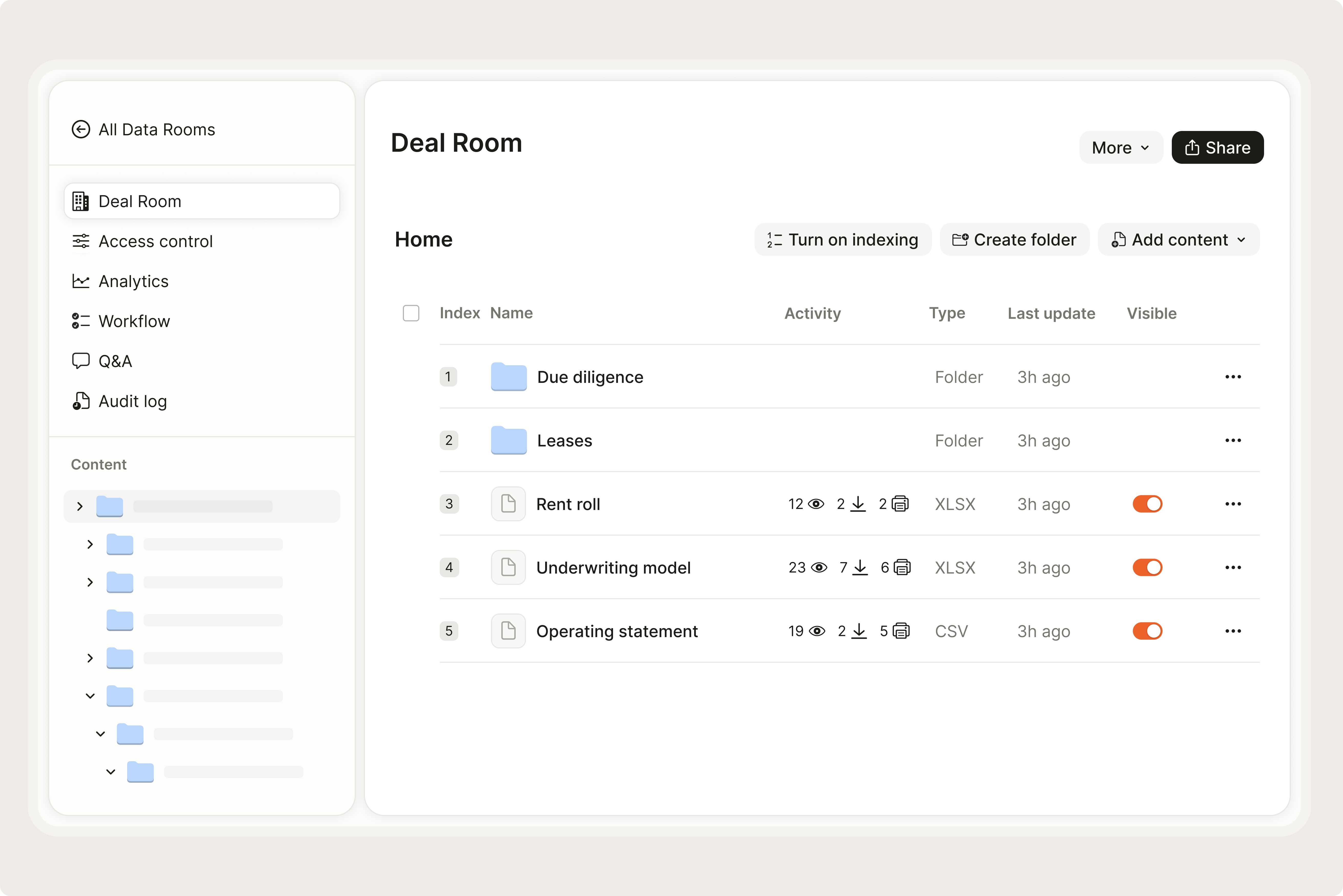
- 1.Upload all deal documents by workstreamAdd folders for legal, financial, tax, employment and FIRB. Each advisor finds their files without asking you.
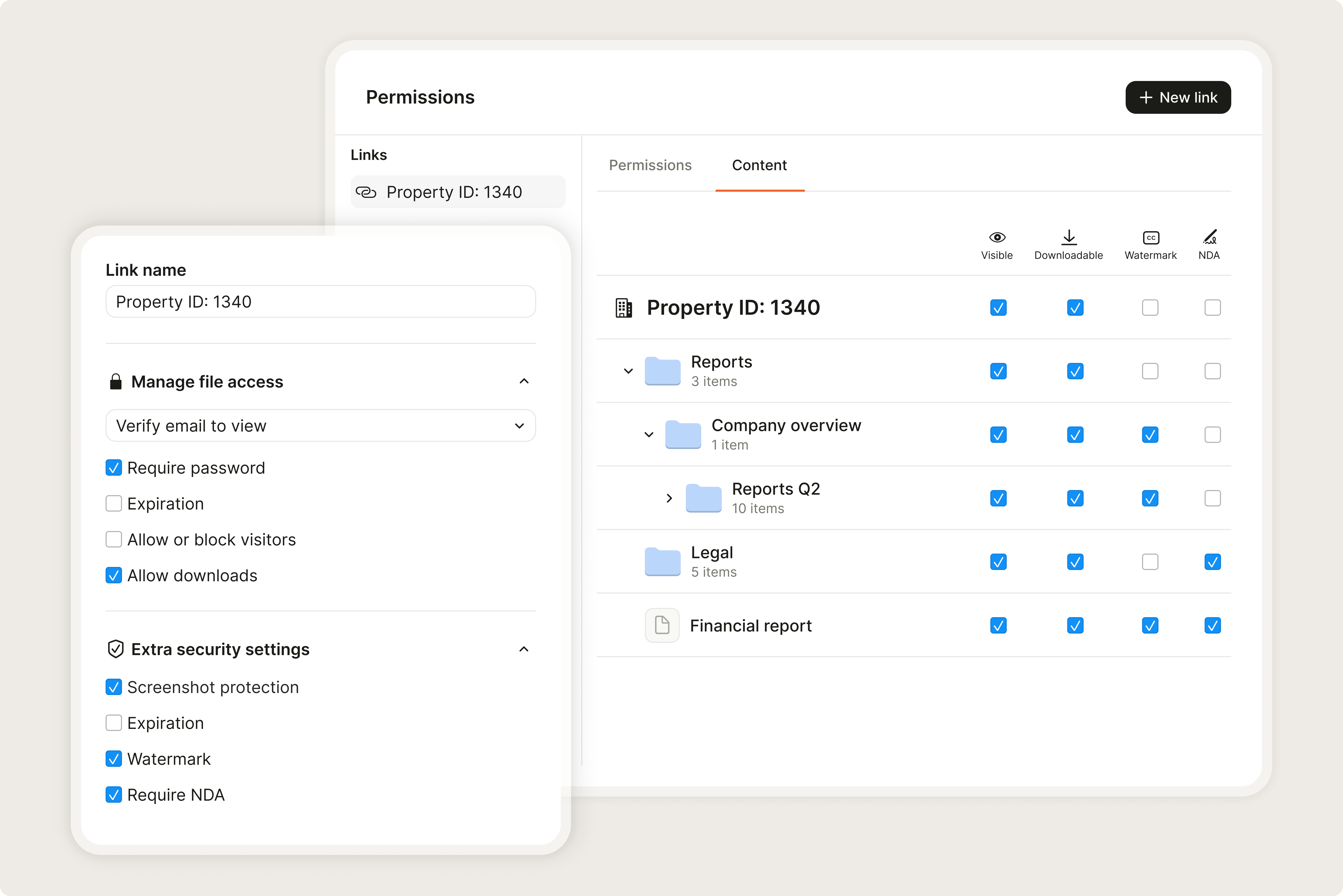
- 2.Set permissions for each workstream teamLegal sees contracts. Tax sees ATO returns. FIRB counsel sees ownership docs only. Ellty enforces access.
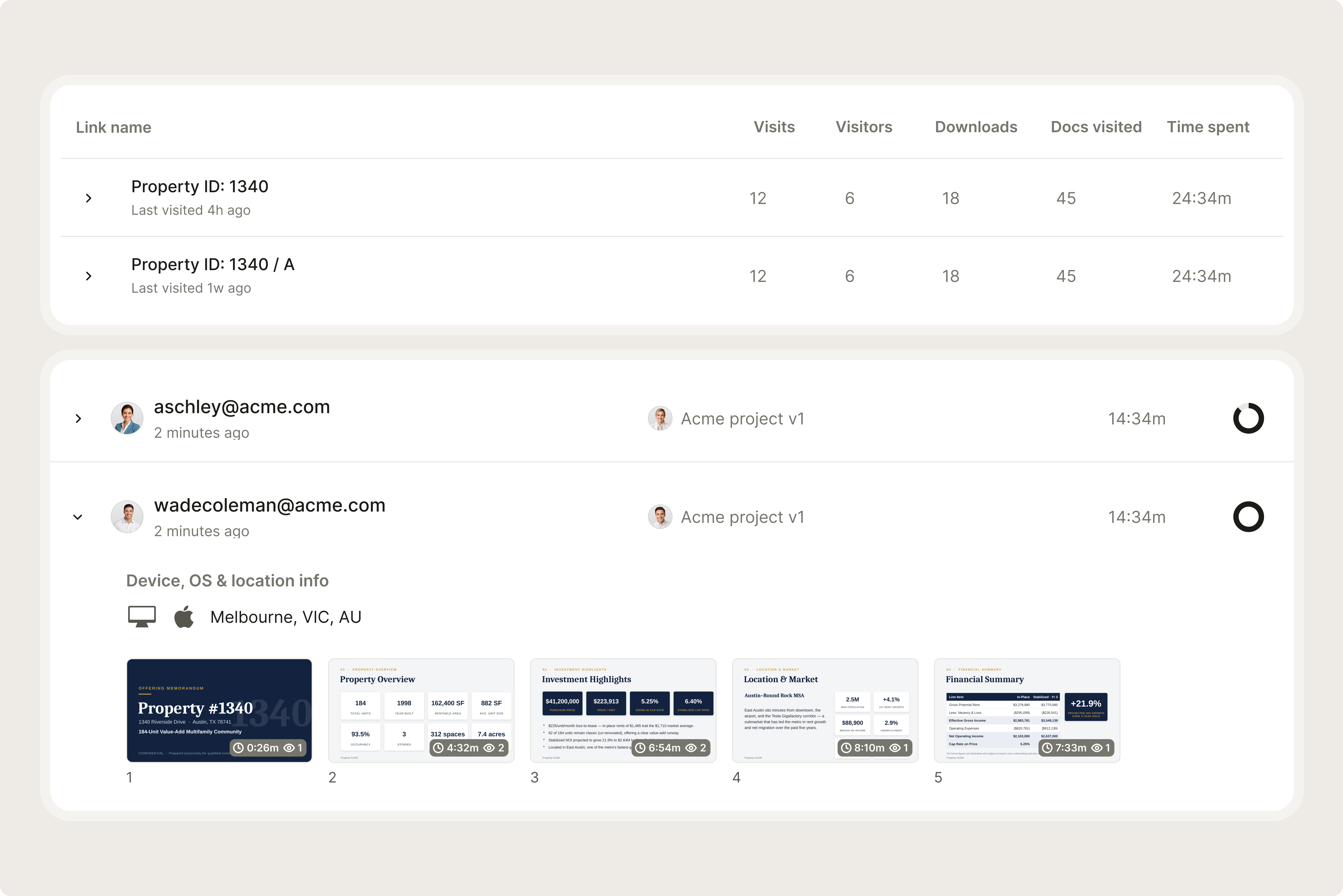
- 3.Track who reviews which documentsSee which advisors opened which files and how long they spent. Spot delays before they push back closing.
What makes due diligence in Australia different
The new ACCC mandatory merger control regime is the biggest structural change for any buyer who hasn't closed an Australian deal since January 2026. Notification is compulsory for qualifying deals. Completing without ACCC clearance voids the transaction and creates penalties up to AUD 50 million.
FIRB adds a second binary gate for foreign acquirers. The AUD 347M threshold applies for non-FTA investors in general business. Sensitive sectors - defence, telecommunications, critical infrastructure, media - carry a zero dollar threshold. FIRB filing fees start at AUD 56,800 and Phase 2 reviews cost up to AUD 1.595 million.
Fair Work Act underpayment is the third Australian-specific trap. Wage theft has been a high-profile issue since 2019. Any target with 50 or more employees needs a payroll compliance audit before price is agreed. The liability transfers to the buyer in a share deal and won't surface in audited accounts.
Stamp duty on share deals catches buyers who assume shares are clean. If the target holds significant land interests, the deal is treated as a land-rich acquisition. Rates run from 4.5% to 6.5% depending on the state. Map the land-rich test before you sign the SPA.
Australia's new mandatory merger regime, combined with FIRB screening and Fair Work compliance exposure, means buyers need regulatory analysis before heads of terms - not during review.
Timeline & cost in Australia
Weeks 1-2 cover initial scope: ASIC searches, FIRB threshold analysis, ACCC notification assessment, and data room setup. Estimated legal cost for initial screening: AUD 15,000-30,000.
Weeks 2-8 cover parallel workstream review. QoE, legal review, tax audit, Fair Work payroll review, IP searches, and environmental checks all run concurrently. ACCC notification is filed at week 2 and Phase 1 runs its 15-30 business day clock. QoE and tax advisory fees for a mid-market deal: AUD 40,000-120,000.
Weeks 8-16 handle resolution. ACCC Phase 2 runs up to 90 business days if triggered. FIRB approval is obtained post-ACCC clearance. W&I insurance premiums in Australia run 1.0-1.8% of insured limit. Total buy-side legal fees for an Australian mid-market deal: AUD 150,000-500,000. FIRB filing fees start at AUD 56,800 for Phase 1 and reach AUD 1.595 million for a complex Phase 2 review.
Stamp duty on land-rich share deals: up to 6.5% of deal value, paid to the relevant state revenue office. Upload documents to Ellty from day one to reduce advisor time and total cost. See our sell-side due diligence guide for how sellers prepare before the buyer's request list arrives.
Run your Australian deal from one room
Hold financials, contracts and the SPA in one secure, tracked Ellty data room.
Start free 14-day trialQuestions about due diligence in Australia
- From 1 January 2026, qualifying acquisitions must notify the ACCC before closing. Completing without clearance voids the transaction and triggers penalties up to AUD 50 million.
- The 2026 monetary threshold for non-FTA country investors is AUD 347M. Sensitive sectors including defence, telecommunications, and critical infrastructure carry a zero dollar threshold.
- Shares are generally exempt from stamp duty unless the target is a land-rich company. Land-rich share deals attract duty at rates up to 6.5% depending on the state.
- Wage underpayment liability transfers to the buyer in a share deal. Any target with significant headcount needs a payroll compliance audit before price is agreed.
- Standard full-scope diligence runs 6-12 weeks. ACCC Phase 2 adds up to 90 business days. FIRB review adds 30-90 days on top of that for foreign acquirers.
- Set up your Ellty data room before the NDA is signed and load documents by workstream. Sellers who load early cut advisor response time and keep the deal on schedule.