Kentucky CRE deals run into coal and mineral rights severance, EEC environmental sites, and a deed transfer tax that surprises out-of-state buyers. This checklist covers every check before you close in 2026.
Kentucky is a steady commercial market anchored by Louisville, Lexington, and Bowling Green. The state's low cost base draws industrial and logistics buyers. But the risk profile is different from most Midwest markets.
Coal and mineral rights severance is the issue most out-of-state buyers don't see coming. Eastern Kentucky has a long coal extraction history. The mineral estate is often owned separately from the surface - and active mining leases can run with the land after closing.
Kentucky charges a deed transfer tax of $0.50 per $500 of consideration. It's paid to the County Clerk before the deed is accepted for recording. On a $2M deal, that's $2,000 - not huge, but it surprises buyers from states without this requirement.
Load all property files into your Ellty data room before diligence opens. Each advisor gets a scoped link from day one - no file chains, no version confusion when documents update mid-process.
Where Kentucky property deals actually go wrong
Not every check carries the same weight. The table below sorts risks by impact on deal execution.
| Area | Documents to pull | Kentucky red flag | Matters most for | Tier | |
|---|---|---|---|---|---|
| Title and ownership | Title and ownership | Warranty deed, title commitment, 40-year chain-of-title, County Clerk search | Coal and mineral estate frequently severed in eastern KY; confirm surface and mineral ownership | All buyers | Dealbreaker |
| Encumbrances and easements | Encumbrances and easements | Recorded easements, coal haul road easements, judgment liens, IRS tax liens | Coal haul road and surface mining easements cross KY commercial parcels without obvious markings | All buyers | Dealbreaker |
| Zoning and land use | Zoning and land use | County or city zoning certificate, variance history, conditional use permit records | Agricultural A-1 zoning on Bluegrass fringe parcels blocks commercial use without full rezoning | Development, repositioning | Dealbreaker |
| Environmental | Environmental | Phase I ESA, Kentucky EEC database search, UST records, coal mine subsidence history | Kentucky coal and underground mining history creates subsidence and acid drainage risk on many parcels | Industrial, former mining land, vacant land | Dealbreaker |
| Leases and tenancies | Leases and tenancies | All leases, amendments, rent roll, estoppels, tobacco and farm lease records if applicable | Kentucky tobacco lease holdovers on converted parcels can be year-to-year and hard to terminate | Mixed-use, development parcels | Price-adjuster |
| Building and physical condition | Building and physical condition | Property Condition Assessment, building permit history, certificate of occupancy | Kentucky karst geology in central KY creates sinkhole risk under older commercial foundations | All asset types | Price-adjuster |
| Service charge and costs | Service charge and costs | 3y operating statements, Kentucky property tax bills, CAM reconciliations, PVA assessments | Kentucky PVA assessments vary widely by county; Jefferson and Fayette levy higher commercial rates | Income-producing assets | Price-adjuster |
| Deed transfer tax | Deed transfer tax | Kentucky deed transfer tax certificate, County Clerk recording fee per KRS 142.050 | County Clerk won't record the deed without transfer tax payment; out-of-state buyers miss this step | All deals | Price-adjuster |
| Insurance and valuation | Insurance and valuation | Current policies, loss run history, FEMA flood zone certificate, property appraisal | Kentucky River and Ohio River floodplains affect commercial parcels in Louisville and Frankfort | Riverside and all asset types | Standard check |
| Utilities and access | Utilities and access | Utility connection records, KYTC access permits, right-of-way records | KYTC controls state highway access; rural commercial parcels in eastern KY need separate permits | Retail, logistics, industrial | Standard check |
| Seller KYC and AML | Seller KYC and AML | Entity docs, deed match, Kentucky Secretary of State search, bankruptcy search | Kentucky LLC must be in good standing before the County Clerk accepts the deed for recording | All deals | Standard check |
Running due diligence on a Kentucky property?
Set up your data room before diligence starts.
Start free 14-day trialThe full Kentucky property due diligence checklist
Title and ownership
- Pull the warranty deed and confirm the legal description matches the survey
- Order a 40-year chain-of-title search from a Kentucky-licensed title agent
- Search the County Clerk for all recorded liens, judgments, and encumbrances
- Confirm whether the mineral or coal estate is severed; run a separate coal abstract if so
- Check for any open mechanic's lien claims filed against recent construction at the parcel
- Verify the parcel ID matches all closing, survey, and tax documents before proceeding
Encumbrances and easements
- Pull all recorded easements, rights of way, and deed restrictions from the County Clerk
- Search for coal haul road and surface mining easements; common on eastern KY parcels
- Confirm no IRS tax liens or federal judgment liens against the seller entity or principals
- Check for any pending municipal or county special assessments on the parcel
- Run a UCC fixture filing search against the seller for equipment attached to the property
Zoning and land use
- Confirm current zoning from the county or city planning department in writing
- For fringe parcels near Lexington and Bowling Green: verify no agricultural A-1 designation applies
- Pull the full variance and conditional use permit history from the local zoning board
- Verify all certificates of occupancy for buildings and improvements are current
- Confirm no open code violations or stop-work orders at the local building department
- For Jefferson County parcels: check Louisville Metro zoning at both city and county levels
Environmental
- Commission a Phase I ESA per ASTM E1527-21; former coal and mining parcels need extra scrutiny
- Search the Kentucky EEC public database for releases, cleanups, UST records, and enforcement actions
- Check for coal mine subsidence and acid mine drainage risk on eastern KY commercial corridors
- Run a UST search for all former gas station, grain elevator, and dry-cleaning parcels
- Confirm FEMA flood zone status on Kentucky River and Ohio River corridor parcels
- Budget Phase II at $8,000-$25,000 if recognized environmental conditions appear in Phase I
Leases and tenancies
- Collect all leases, amendments, and sublease consents into Ellty before diligence opens
- Identify any tobacco or farm lease holdovers; Kentucky tenancy law allows year-to-year rollovers
- Cross-reference the rent roll against 3 months of actual bank receipts from the seller
- Confirm estoppel certificates are deliverable before the scheduled closing date
- Identify any month-to-month occupancies or undocumented tenants on the property
- Check for tenant purchase options or rights of first refusal embedded in lease terms
Building and physical condition
- Commission a Property Condition Assessment; check for karst sinkhole risk in central Kentucky
- Pull the full building permit history from the local building department
- Check for unpermitted additions common in older Louisville and Lexington commercial stock
- Confirm ADA compliance documentation for all commercial spaces on the property
- Inspect foundation closely on parcels in the Bluegrass region; limestone karst underlies many sites
- Verify sprinkler systems meet current fire code for the intended commercial use class
Service charge and operating costs
- Pull 3 years of operating statements and reconcile against actual property tax bills
- Check PVA assessed value and whether any open protest or appeal is pending at the county level
- Audit CAM pass-throughs against lease terms for all multi-tenant assets
- Check for pending county or city infrastructure special assessments on the parcel
Deed transfer tax and recording
- Calculate Kentucky deed transfer tax at $0.50 per $500 of consideration per KRS 142.050
- Pay the transfer tax to the County Clerk before presenting the deed for recording
- Recording fees vary by county; confirm the current schedule with the local County Clerk
- Note: the transfer tax is due on every deed regardless of buyer-seller allocation in the contract
Insurance and valuation
- Pull current insurance policies and a 3-year loss run history from the seller
- Check FEMA flood zone status on all Ohio River and Kentucky River adjacent parcels
- Verify the parcel is not in a FIRM remapping zone that could affect future premiums
- Order an independent appraisal scoped to the intended use and lender requirements
Utilities and access
- Verify all utility connections are active and legally transferable at closing
- Check KYTC records for any state highway access permit requirements on the parcel
- Confirm legal road access via recorded easement or dedicated public right of way
- Verify stormwater drainage compliance with county or city permits
Seller KYC and AML
- Confirm seller identity matches the County Clerk deed record exactly
- For LLC or corporate sellers: confirm good standing with the Kentucky Secretary of State
- Run bankruptcy, federal tax lien, and judgment lien searches before committing to close
- Confirm entity authority to sell; Kentucky LLCs require manager or member authorization
Load all documents into Ellty at the start of diligence. Each advisor gets a scoped link - no open folders, no version confusion when files update mid-process.
How property due diligence in Kentucky works
Step 1 - Title search
Start the title search immediately after contract execution. Kentucky uses a race-notice recording system; the first to record wins priority.
Commission a 40-year chain-of-title at the County Clerk. Order a separate coal and mineral abstract if there's any sign the mineral estate may be severed from the surface.
Step 2 - Survey and inspection
Order an ALTA/NSPS survey alongside the title search. Confirm the parcel number, legal description, and all easement locations - including coal haul road easements - match the deed exactly.
Commission the Property Condition Assessment in parallel. Karst limestone geology in central Kentucky means foundation and sinkhole risk need close review on any Bluegrass region site.
Step 3 - Leases and income review
Pull all leases and flag any tobacco or farm lease holdovers on the parcel first. Kentucky year-to-year tenancies can roll automatically if not properly terminated in writing.
Check the financial due diligence guide for how to structure a parallel-track income review. Adapt the standard request list for Kentucky PVA tax assessment and deed transfer tax items.
Step 4 - Environmental review
Run the Phase I ESA and Kentucky EEC database search in parallel. Former coal operations, chemical storage, and mining sites are common on Kentucky commercial corridors in eastern counties.
See types of due diligence for how to scope environmental review alongside legal and financial tracks. Load EEC search results into Ellty so lenders and advisors can access files without open-folder access.
Step 5 - Closing and registration
Kentucky requires the deed transfer tax paid to the County Clerk before the deed is accepted for recording. The tax is $0.50 per $500 of consideration under KRS 142.050.
Confirm the Kentucky Secretary of State good-standing certificate for any LLC or corporate seller is current before closing day. Out-of-state buyers regularly miss this and delay the close.
How to set up your Kentucky data room in Ellty.
Load Kentucky property files before advisors arrive. Give each one a scoped link on day one.
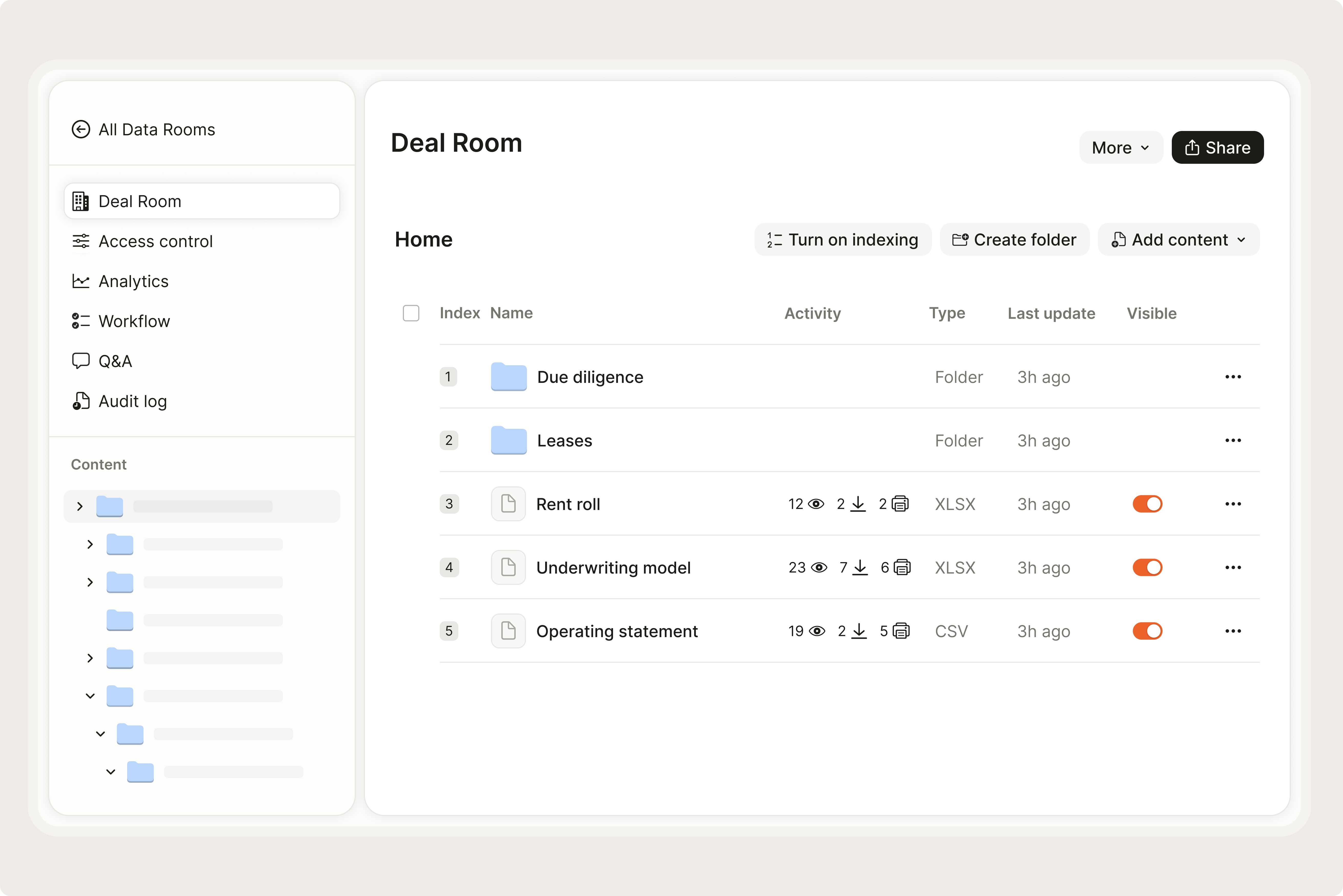
- 1.Create a data room and upload the property filesDrop title docs, leases, EEC search results, and coal abstracts into Ellty. Each folder maps to a diligence area.
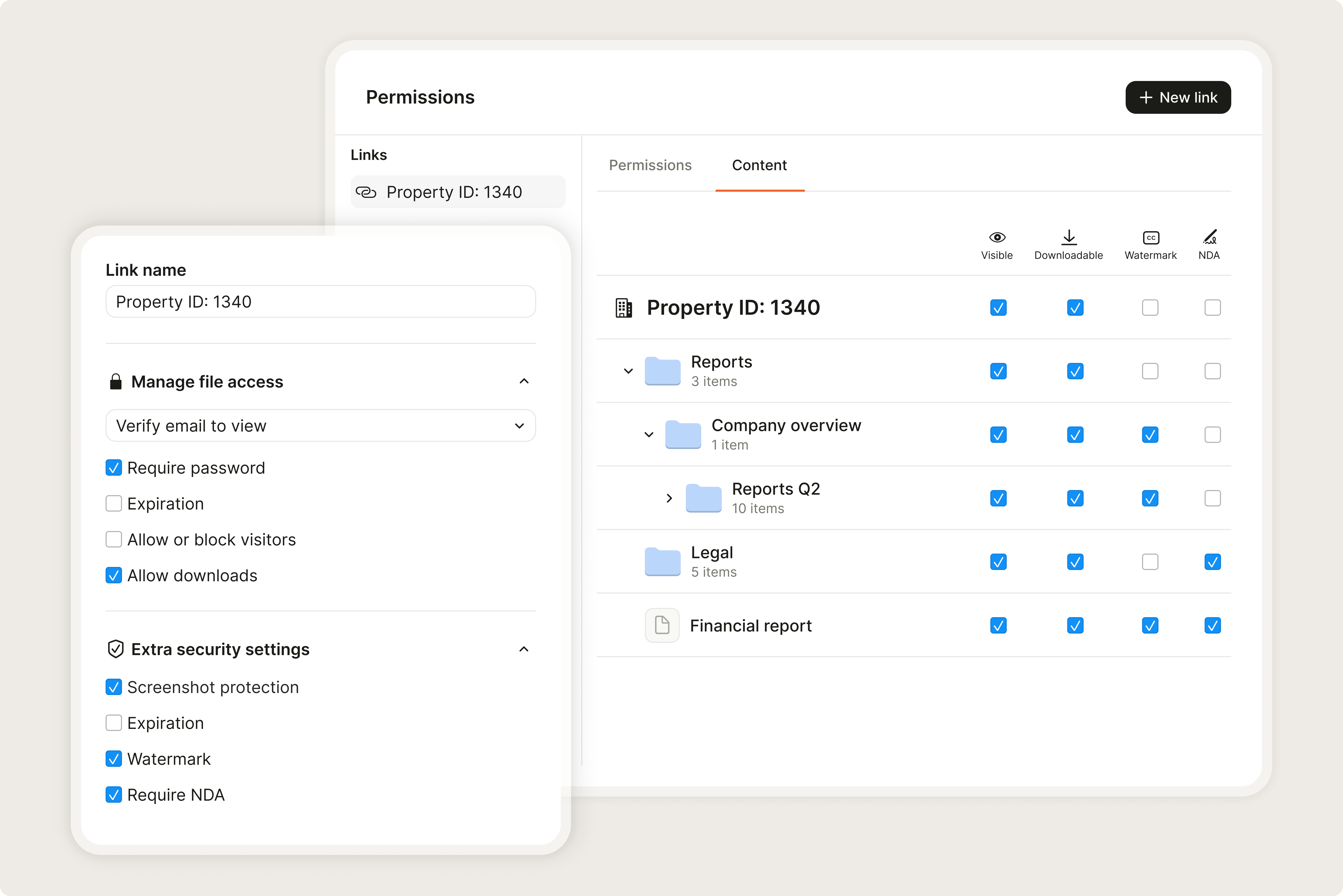
- 2.Give each advisor a scoped, secure linkYour title attorney sees title files only. The ESA consultant sees environmental files only. Ellty enforces the scope.
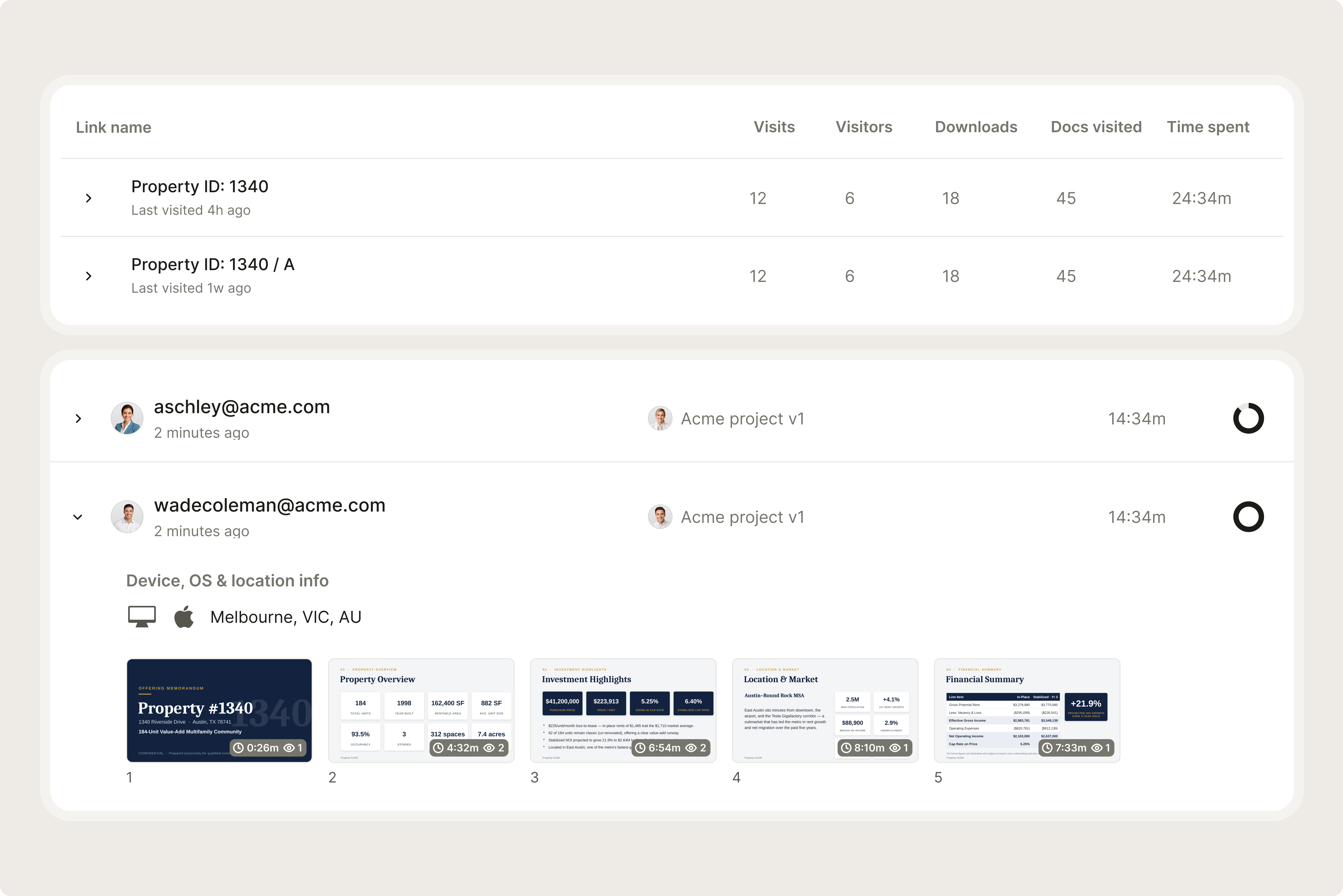
- 3.Track who reviews which documentsSee which files each advisor opened and when. Spot delays before they slow the Kentucky close.
What makes due diligence in Kentucky different
Coal and mineral rights severance is the trap that catches every out-of-state buyer in eastern Kentucky. The surface owner and the mineral estate owner are often different parties. A buyer who skips a coal abstract can close on land with active mining rights they never accounted for.
Karst sinkhole risk in central Kentucky is the second issue most buyers from flat-terrain markets miss. Limestone dissolution under Bluegrass region parcels creates subsidence risk that standard PCA inspectors may not flag. A geotechnical review is worth budgeting on any central Kentucky site.
Property tax rates vary more in Kentucky than buyers expect. PVA assessments differ significantly by county. Jefferson County (Louisville) and Fayette County (Lexington) both run higher commercial rates than rural counties.
In Kentucky, the deed transfer tax under KRS 142.050 must be paid to the County Clerk at the time of recording. The Clerk will not accept the deed for filing until the tax is satisfied, regardless of the sale price or entity type involved.
Timeline and cost in Kentucky
Week 1-2 covers kickoff: County Clerk title search, coal and mineral abstract order if needed, ALTA survey engagement, Phase I ESA, and Kentucky EEC database search. Budget $3,000-$7,000 for this phase.
Load all files into Ellty on day one and give each advisor a trackable scoped link. That removes weeks of email follow-up from a standard Kentucky diligence process.
Weeks 2-4 cover deep review: Phase I ESA delivery, Property Condition Assessment, lease abstraction, coal rights review, PVA tax assessment check, and FEMA flood zone confirmation.
Cost for weeks 2-4 runs $4,000-$14,000 depending on Phase I scope and asset complexity. Phase II ESA adds $8,000-$25,000 if recognized environmental conditions surface; budget it early.
Weeks 4-6 handle resolution: Phase II if needed, title exception negotiations, deed transfer tax preparation, and closing at the County Clerk.
Kentucky deed transfer tax runs $0.50 per $500; on a $3M deal that's $3,000. Buy-side legal fees typically run $2,000-$6,000 for a standard Kentucky commercial close. Coal abstract costs add $500-$2,000 depending on parcel history. See what goes in a data room to model how Kentucky-specific costs fit into your full deal budget.
Kentucky deal documents in one secure place
Track who reviews title, leases, EEC files, and coal abstracts in Ellty.
Start free 14-day trialCommon questions about property due diligence in Kentucky
- Yes. Kentucky charges $0.50 per $500 of consideration under KRS 142.050, paid to the County Clerk. The deed won't be recorded without it.
- In eastern Kentucky the mineral estate is often severed from the surface. Active coal leases run with the land and can restrict development after closing.
- Former coal operations, UST sites, and mining drainage carry contamination risk. Search the Kentucky EEC database and commission a Phase I ESA on every deal.
- Limestone dissolution under Bluegrass region parcels can create sinkholes and subsidence. Budget a geotechnical review on any central Kentucky site with older foundations.
- Standard Kentucky deals close in 30-50 days. Coal rights issues, EEC environmental findings, or complex title problems push deals past 60 days regularly.
- Each county's Property Valuation Administrator sets assessed values. Jefferson and Fayette counties run higher commercial rates; confirm the correct PVA rate before modeling NOI.