Hawaii's leasehold land structure, dual title recording systems, and conveyance tax tiers catch mainland buyers off guard. This checklist covers every check before you close a Hawaii CRE deal in 2026.
Hawaii runs two separate recording systems. The Regular System and the Land Court System both sit at the Bureau of Conveyances in Honolulu.
Leasehold interests are common across all islands. Large trusts and estates own much of the fee land; commercial buyers often acquire the leasehold, not the fee.
The state's conveyance tax scales from $0.10 per $100 up to $1.00 per $100 on deals over $10M. Model it before you agree price - it moves the net proceeds line.
Ancient Hawaiian burial sites and archaeology reviews add time on vacant and development parcels. Check SHPD status early or you'll lose weeks late in the process. See the real estate page for how Ellty supports CRE deal teams from day one.
Where Hawaii property deals go wrong
Not every check carries the same weight. The table below sorts them by impact.
| Area | Documents to pull | Hawaii red flag | Matters most for | Tier | |
|---|---|---|---|---|---|
| Title and ownership | Title and ownership | Bureau of Conveyances deed, Certificate of Title (Land Court), chain-of-title | Land Court title only passes when noted on Certificate; Regular System has no state guarantee | All buyers | Dealbreaker |
| Leasehold structure | Leasehold structure | Full ground lease, all amendments, estoppel from lessor, ground rent schedule | Bishop Estate and Kamehameha Schools hold large fee positions; consent takes time | All leasehold acquisitions | Dealbreaker |
| Zoning and land use | Zoning and land use | State Land Use Commission district, county zoning permit, SMA permit if coastal | Hawaii has state-level land use districts; county zoning alone is not enough | Development, repositioning | Dealbreaker |
| Environmental | Environmental | Phase I ESA, DOH Hazard Evaluation records, UST search, Chapter 343 EIS status | Plantation-era agricultural land carries pesticide and soil contamination risk statewide | Industrial, agricultural, mixed-use | Dealbreaker |
| Archaeology and burials | Archaeology and burials | SHPD status letter, archaeological inventory survey, burial site council records | Discovery of Hawaiian burials can halt construction indefinitely under HRS Chapter 6E | Vacant land, development | Dealbreaker |
| Leases and tenancies | Leases and tenancies | All leases, GET pass-through clauses, rent roll, estoppels, sublease consents | GET at 4.5% on Oahu rent receipts is often passed through; lease must specify clearly | Retail, office, mixed-use | Price-adjuster |
| Building and physical condition | Building and physical condition | Property Condition Assessment, HVAC, roof, hurricane-rated envelope check | Coastal salt exposure degrades envelopes faster; hurricane-rated windows are code | All asset types | Price-adjuster |
| Service charge and costs | Service charge and costs | 3y operating statements, ground rent history, property tax bills, CAM reconciliations | Ground rent resets on long leases can materially change operating cost structure | Income-producing assets | Price-adjuster |
| Conveyance tax | Conveyance tax | Hawaii conveyance tax calculation, tiered rate schedule, exemption check | Rate reaches $1 per $100 on deals over $10M; non-owner-occupant rate is higher | All deals | Price-adjuster |
| Insurance and valuation | Insurance and valuation | Current policies, loss run history, hurricane and flood zone status, FEMA map | Hurricane coverage gaps and flood zone status affect lender underwriting island-wide | Coastal and all asset types | Standard check |
| Utilities and access | Utilities and access | Utility connection records, water system permits, access easements, TMK parcel map | Neighbor island parcels often depend on private water systems with no public backup | Rural, land, industrial | Standard check |
| Seller KYC and AML | Seller KYC and AML | Entity docs, Bureau of Conveyances deed match, bankruptcy and lien search | Trust sellers common; verify trustee authority and trust terms before contract | All deals | Standard check |
Running due diligence on a Hawaii property?
Load Bureau of Conveyances records, leases, and ESA reports into one tracked data room.
Start free 14-day trialThe full Hawaii property due diligence checklist
Before diligence opens, load all files into your Ellty data room. Each advisor gets a scoped link on day one - no chasing files mid-process.
Title and ownership
- Confirm whether the property is in the Regular System or the Land Court System at the Bureau of Conveyances
- For Land Court parcels, pull the Certificate of Title; title only passes when noted on it
- Search the Bureau of Conveyances for all recorded deeds, encumbrances, and liens
- Regular System parcels carry no state guarantee; title insurance is essential on all Hawaii deals
- Verify the Tax Map Key (TMK) parcel number matches all deed and survey documents exactly
- Trace the chain-of-title back at least 60 years on older Oahu and Maui commercial parcels
Encumbrances and easements
- Pull all recorded easements, rights of way, and deed restrictions from the Bureau of Conveyances
- Search for UCC fixture filings and judgment liens against the property and the entity seller
- Confirm no mechanics' liens or materialman's liens are outstanding at the bureau
- Check for access easements on neighbor island parcels with no direct road frontage
Zoning and land use
- Confirm the State Land Use Commission district classification (Urban, Rural, Agricultural, Conservation)
- Obtain the county zoning permit from the relevant county planning department
- For coastal parcels: check Special Management Area permit requirements under HRS Chapter 205A
- Confirm the current use is permitted outright - not relying on a variance or prior nonconforming status
- Pull the full building permit history from the county Department of Planning
- Verify all certificates of occupancy align with the current use and recent improvements
Environmental
- Commission a Phase I ESA per ASTM E1527-21; plantation-era soils need extra scrutiny
- Search Hawaii DOH Hazard Evaluation and Emergency Response records for releases
- Run a UST search through Hawaii DOH for all gas station and industrial parcels
- Check Chapter 343 Environmental Review Program status for development-stage assets
- Flag any pesticide contamination history on former agricultural land across all islands
- Budget Phase II at $6,000-$20,000 if RECs surface; add 4-6 weeks to your timeline
Archaeology and burials
- Contact SHPD to check for any existing archaeological inventory survey on the parcel
- Commission one before contract execution on vacant or development land if none exists
- Check burial site council records; discovered burials trigger HRS Chapter 6E stop-work protocols
- Factor 6-12 weeks for SHPD review if an archaeological inventory survey is required
- Confirm no open SHPD consultation or burial treatment plan is pending on the site
Leases and tenancies
- Collect all leases, amendments, and sublease consents into Ellty before diligence opens
- Abstract every GET pass-through clause; Oahu leases typically pass through 4.5% GET on rent
- Cross-reference the rent roll against 3 months of actual bank receipts from the seller
- Confirm estoppel certificates are deliverable before the scheduled closing date
- Identify any month-to-month occupancies or undocumented tenants on the property
Building and physical condition
- Commission a Property Condition Assessment on all systems; coastal salt exposure accelerates wear
- Inspect the building envelope for hurricane-rated window and door compliance per county code
- Check roof condition; wind and salt environment require more frequent replacement cycles
- Confirm ADA compliance documentation for all commercial spaces
- Verify HVAC capacity; island humidity and heat loads differ from mainland norms
Service charge and operating costs
- Pull 3 years of operating statements and reconcile against actual property tax bills
- For leasehold assets: obtain the full ground rent history and any scheduled reset provisions
- Audit CAM pass-throughs against lease terms for multi-tenant assets
- Model ground rent at reset; some Bishop Estate leases reset to market every 10 years
Conveyance tax
- Calculate the Hawaii conveyance tax using the tiered rate schedule from Hawaii Dept of Taxation
- Rate starts at $0.10 per $100 for values under $600K; reaches $1.00 per $100 over $10M
- Confirm whether an owner-occupant exemption applies; non-owner rates are higher
- The seller is responsible for payment within 90 days of closing; negotiate at contract stage
- Model the full conveyance tax impact before finalizing the purchase price
Insurance and valuation
- Pull current insurance policies and a 3-year loss run history from the seller
- Check FEMA flood zone status on all coastal and low-elevation parcels on every island
- Confirm hurricane coverage; standard policies often exclude wind damage in Hawaii
- Order an independent appraisal scoped to the intended use and lender requirements
Utilities and access
- Verify all utility connections are active and legally transferable at closing
- Confirm water system status; neighbor island parcels often rely on private or community systems
- Check TMK parcel maps for legal road access; informal easements are not transferable
- Verify cesspool vs. septic vs. municipal sewer connection; Hawaii is phasing out cesspools
Seller KYC and AML
- Confirm seller identity matches the Bureau of Conveyances deed record exactly
- If seller is a trust, verify trustee authority and obtain a certified copy of the trust certificate
- Run bankruptcy, federal tax lien, and judgment searches before committing to close
- For LLC or corporate sellers: confirm proper authorization and good standing in Hawaii
How property due diligence in Hawaii works
Step 1 - Title search
Start at the Bureau of Conveyances immediately after contract. Determine if the parcel is in the Regular System or Land Court System before ordering title insurance.
Land Court Certificates of Title are state-guaranteed. Regular System parcels require full title insurance from a Hawaii-licensed underwriter.
Step 2 - Survey and inspection
Order an ALTA/NSPS survey alongside the title search. Confirm the TMK matches all deed documents.
Commission the Property Condition Assessment in parallel. Coastal exposure means envelope and roof work surface more often than on mainland deals.
Step 3 - Leases and income review
Pull all leases and abstract GET pass-through clauses first. Oahu's 4.5% GET on rent changes your NOI model if leases don't clearly address it.
Check the due diligence documents guide for a standard request list. Adapt it for Hawaii's leasehold and GET-specific items.
Step 4 - Environmental review
Run the Phase I ESA and DOH search in parallel. Former plantation land across Maui, Oahu, and Kauai carries pesticide contamination risk.
If RECs surface, commission Phase II immediately. See the environmental due diligence guide for how to scope Phase II on agricultural-to-commercial conversions.
Step 5 - Closing and registration
Hawaii conveyance tax is due within 90 days of closing. Deed recording happens at the Bureau of Conveyances in Honolulu for both systems.
For leasehold transfers, lessor consent must be obtained before recording. Allow 2-4 weeks for consent from institutional landowners like Bishop Estate.
How to set up your Hawaii data room in Ellty
Load Hawaii property files before advisors arrive. Give each one a scoped link on day one.
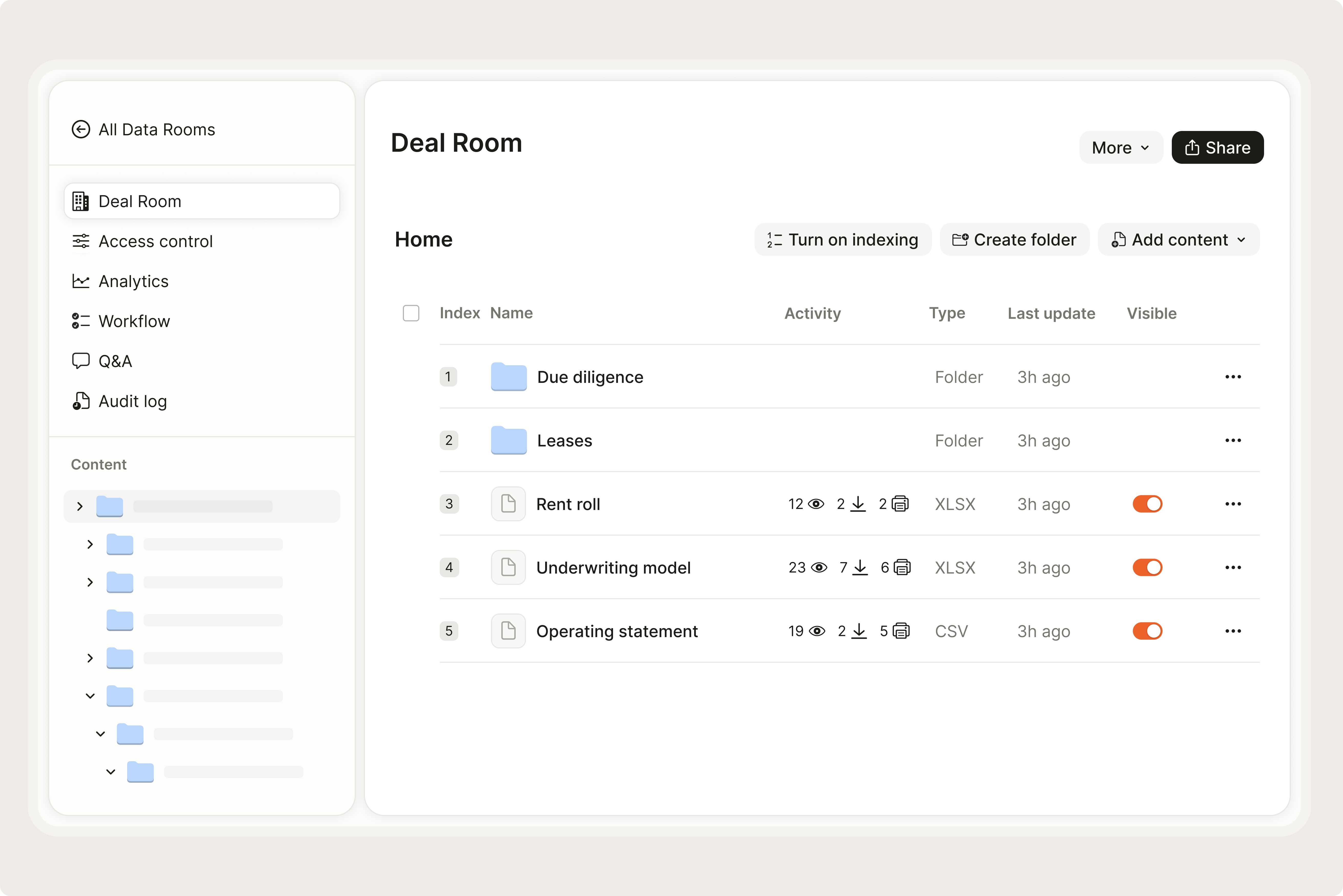
- 1.Create a data room and upload Hawaii property filesDrop title docs, Bureau of Conveyances records, and leases into Ellty. Each folder maps to a diligence area.
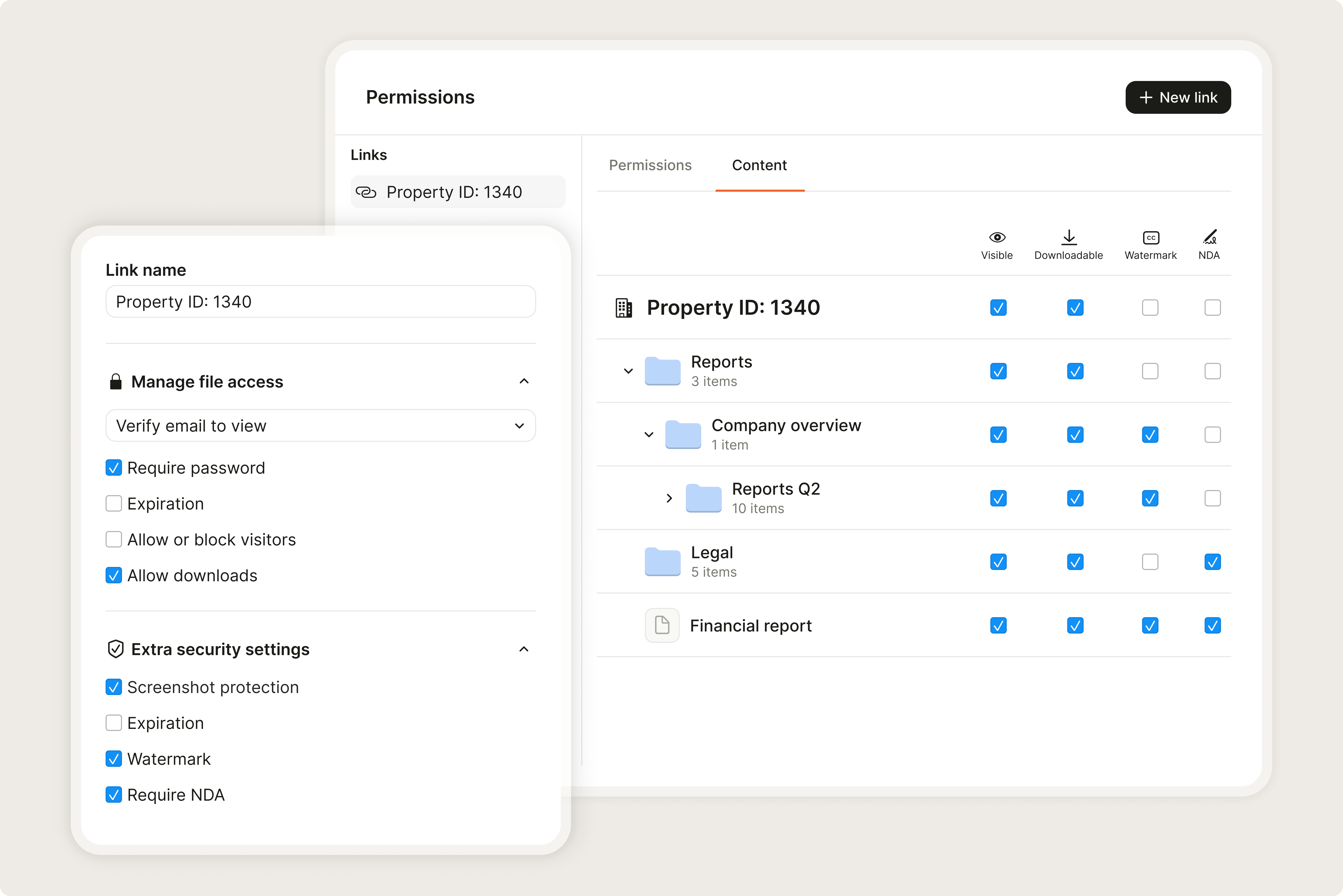
- 2.Give each advisor a scoped linkYour title attorney sees title only. The ESA consultant sees environmental files only.
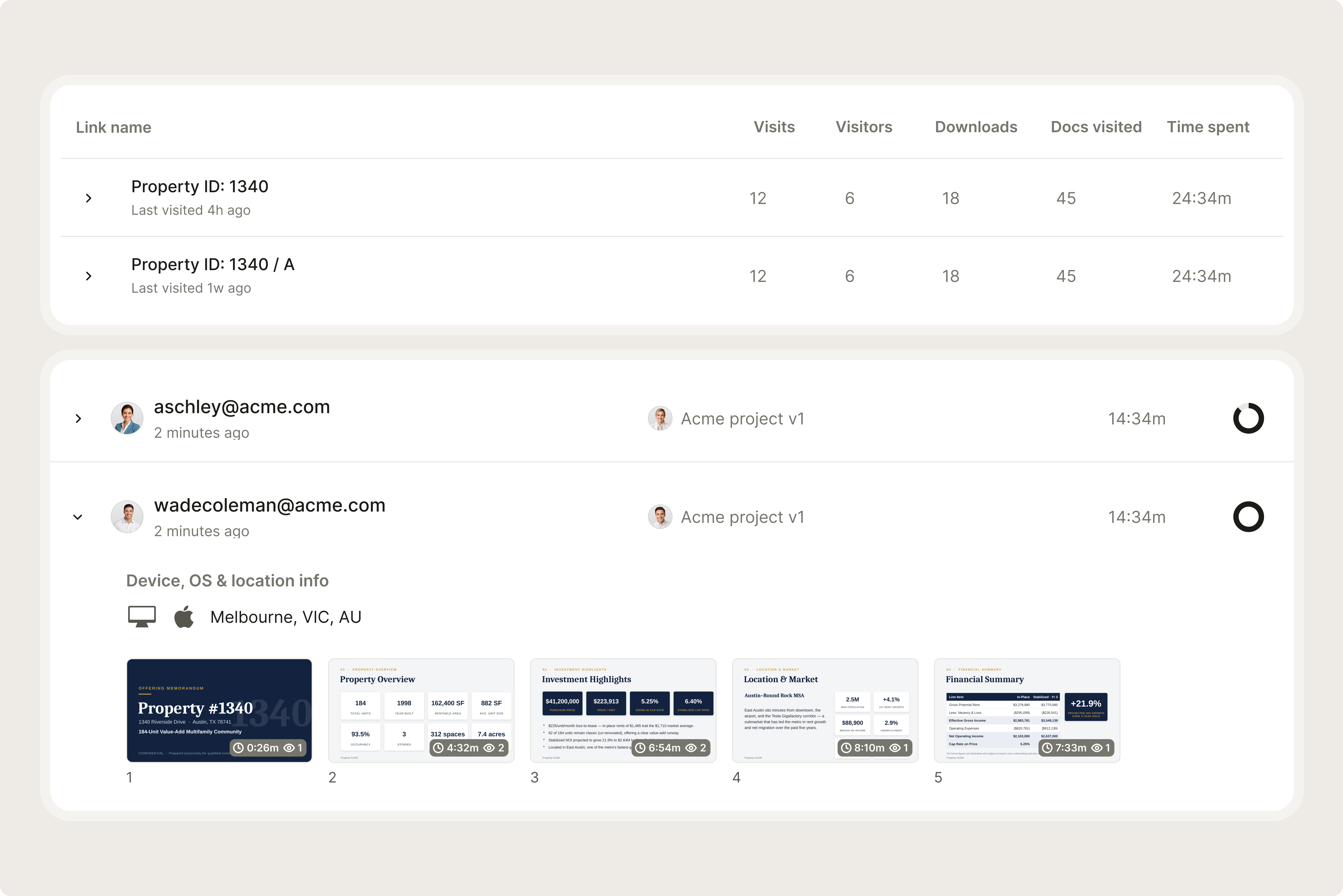
- 3.Track who reviews which documentsSee which files each advisor opened and when. Spot delays before they slow the close.
What makes Hawaii deals different
Hawaii's dual recording system is the first trap for mainland advisors. Regular System parcels and Land Court parcels look the same in a data room - but title risk is completely different.
Leasehold land tenure adds a layer most out-of-state buyers underestimate. Fee owners like Bishop Estate and Kamehameha Schools control consent rights; closing timelines depend on their process. Check the due diligence timeline guide before committing a closing date on any leasehold deal.
Hawaii's archaeology rules are binding and non-negotiable. A burial discovery on a development parcel triggers stop-work under HRS Chapter 6E. Some deals never recover from this; price the risk before signing.
GET pass-throughs on Oahu leases catch foreign buyers off guard. The 4.5% GET on rent receipts is a cost of doing business in Hawaii - but it must be clearly allocated in every lease you acquire.
Hawaii's Land Court system offers a state-guaranteed Certificate of Title. But the Regular System carries no such guarantee - title insurance is non-negotiable on every Regular System parcel.
Timeline and cost in Hawaii
Week 1-2 covers kickoff: Bureau of Conveyances title search, Phase I ESA order, ALTA survey, and State Land Use Commission classification check.
Estimated cost for weeks 1-2: $5,000-$10,000 covering title, survey, and initial legal fees. Load all documents into Ellty and give each advisor a trackable scoped link from day one.
Weeks 2-6 cover deep review: Phase I ESA delivery, Property Condition Assessment, lease and GET abstraction, SHPD archaeology status, and operating cost reconciliation.
Cost for weeks 2-6: $5,000-$15,000 depending on Phase I scope and asset complexity. SHPD review can add 6-12 weeks on development parcels if an inventory survey is required.
Weeks 6-10 handle resolution: Phase II ESA if RECs surfaced, lessor consent for leasehold transfers, title exception negotiations, and closing prep at the Bureau of Conveyances.
Conveyance tax is tiered and price-linked; rates run from $0.10 to $1.00 per $100 of sale price. Buy-side legal fees typically run $3,000-$8,000 for a standard Hawaii commercial close.
Hawaii deal documents in one secure room
Set up your Ellty data room and track every advisor review before closing day arrives.
Start free 14-day trialCommon questions about Hawaii property due diligence
- Rates run from $0.10 per $100 for values under $600K up to $1.00 per $100 over $10M. The seller pays within 90 days of closing.
- Land Court titles carry a state guarantee via Certificate of Title. Regular System parcels carry no state guarantee; title insurance is essential.
- Leasehold transfers require lessor consent, which can take 2-4 weeks. Ground rent resets and assignability terms need full legal review before signing.
- HRS Chapter 6E requires SHPD review if burials are discovered. A mandatory stop-work can halt a project indefinitely on affected parcels.
- The General Excise Tax runs 4.5% on Oahu rent receipts. Most leases pass it to tenants, but each lease must explicitly state who bears it.
- Clean fee simple deals close in 45-60 days. Leasehold consent and SHPD archaeology review push complex deals past 75 days.