Swiss deals move faster than most European transactions. No mandatory works council vote, no notary for AG share transfers. The complexity is in the Pensionskasse, the cantonal tax picture, and stamp duty on the share transfer.
Switzerland's Handelsregister is detailed and searchable via Zefix in minutes. WEKO merger control thresholds are high enough that most mid-market deals don't trigger a filing. And Swiss courts are fast and predictable.
Set up an Ellty data room before the request list arrives. Load Handelsregister extracts, cantonal tax assessments, and Pensionskasse documentation early. Advisors start reviewing on day one.
The traps in Swiss deals are narrow but expensive. A Pensionskasse deficit, a Lex Koller restriction on real property, or a missing FINMA change-of-control notification can each delay or reprice a deal that looked clean at the start.
The Switzerland due diligence checklist
Not every check carries the same weight. FINMA licensing and Lex Koller restrictions are binary - miss them and the deal structure or timeline breaks.
See our guide on types of due diligence to structure your workstreams before issuing the request list.
Load all workstreams into Ellty before you issue the request list. Each advisor gets a scoped link and starts reviewing on day one.
| Area | Documents to pull | Switzerland red flag | Tier | |
|---|---|---|---|---|
| Corporate & legal | Corporate & legal | Handelsregister extract, articles of association, SHA, board minutes | Shareholder agreements or side letters inconsistent with the filed articles | Dealbreaker |
| Financial | Financial | 3y Swiss statutory accounts, management accounts, Pensionskasse valuation | Pensionskasse deficit that transfers as an employer obligation to the buyer | Dealbreaker |
| Tax | Tax | Federal and cantonal tax assessments, Verrechnungssteuer records, TP docs | Open cantonal Steuerprüfung or thin-cap challenges on intercompany loans | Dealbreaker |
| FINMA licensing | FINMA licensing | FINMA authorisation records, compliance reports, change-of-control analysis | FINMA change-of-control notification not obtained before closing | Dealbreaker |
| Employment & labor | Employment & labor | Employment contracts, collective agreements, AHV/IV contribution records | AHV underpayments or permit breaches for foreign staff on B or L permits | Price-adjuster |
| Lex Koller / real estate | Lex Koller / real estate | Property titles, Lex Koller analysis, land registry extracts, lease agreements | Foreign buyer acquiring target with Swiss residential property - Lex Koller applies | Dealbreaker |
| IP | IP | IPI filings, patent and trade mark certificates, licence agreements | IP registered at IPI in founder's name rather than the company entity | Price-adjuster |
| Material contracts | Material contracts | Customer and supplier contracts, federal procurement contracts, change-of-control clauses | Federal procurement contracts requiring SECO or agency consent before assignment | Price-adjuster |
| Environmental | Environmental | BAFU/cantonal environmental records, contaminated site register, USAM permits | Target site on Altlasten register - Swiss remediation liability follows the operator | Standard check |
| Data protection & IT | Data protection & IT | revDSG/nFADP compliance docs, DPO records, breach register, FDPIC correspondence | FDPIC investigation or data incident not reported under nFADP (in force Sep 2023) | Standard check |
Running due diligence on a Swiss target?
Set up your data room before the request list lands.
Start free 14-day trialThe full Switzerland due diligence checklist
Ten workstreams, ordered by risk weight. Swiss-specific checks - Pensionskasse deficits, FINMA licensing, Lex Koller, and cantonal tax - must be scoped from day one.
Upload documents to your Ellty data room folder by folder as they arrive. Parallel review across advisors compresses the timeline significantly.
Corporate & legal
- Pull the Handelsregister extract for the target and all subsidiaries via Zefix; confirms directors, registered capital, purpose clause, and registered pledges (Pfandrechte).
- Obtain the articles of association (Statuten) and all amendments; confirm that share transfer restrictions (Vinkulierung) or pre-emption rights don't block the deal structure.
- Review the shareholder agreement and any side letters; Swiss SHA provisions often include tag-along, drag-along, and board composition rights not reflected in the Statuten.
- For AG share transfers: a written share purchase agreement is sufficient; no notary required. For GmbH: a written agreement plus notification to the commercial registry is needed.
- Confirm no open insolvency (Nachlassstundung) or liquidation (Liquidation) proceedings registered at the cantonal Handelsregister.
Financial
- Pull 3 years of Swiss statutory accounts (OR-Abschluss); Swiss GAAP differs from IFRS on pension provisions, intangible asset treatment, and revaluation reserves.
- Commission a quality of earnings (QoE) report for any deal above CHF 5M - Swiss statutory accounts often show different results than IFRS or a cash-based analysis.
- Obtain an independent actuarial valuation of the target's Pensionskasse obligations; Swiss 2nd-pillar pension deficits are a recurring material issue and transfer fully to the buyer.
- Review intercompany loans and related-party positions at arm's length terms; owner-managed Swiss companies frequently carry undocumented related-party balances.
- Check for any off-balance-sheet obligations: guarantees, letters of comfort, or contingent liabilities under Swiss CO Article 959.
- See our due diligence for acquisition guide for how to structure the financial workstream.
Tax
- Pull 3 years of federal (DBSt) and cantonal tax assessments; Swiss tax is administered at cantonal level, so the effective rate varies significantly by location.
- Review withholding tax (Verrechnungssteuer, VST) compliance on dividends and intercompany interest; 35% VST applies and must be correctly declared to the ESTV to avoid forfeiture.
- Check for any open Steuerprüfung (tax field audit) correspondence at the cantonal or federal level; open assessments transfer in a share deal.
- Review transfer pricing documentation for any intercompany transactions; Swiss tax law requires arm's length terms with contemporaneous documentation for related-party dealings.
- Confirm stamp duty (Umsatzabgabe) exposure: 0.15% applies on Swiss securities transfers when a licensed securities dealer is party to the transaction.
- Use our tax due diligence guide to build the Swiss cantonal tax risk register.
FINMA licensing
- Map all FINMA authorisations for the target - banks, insurance companies, fund managers, and securities firms all require prior notification of a change of control.
- Pull the FINMA register and confirm the target's licence is current and in good standing.
- FINMA change-of-control approvals typically take 3-4 months from a complete filing; build this into the deal schedule before signing heads of terms.
- Review any FINMA supervisory correspondence, enforcement actions (Enforcementsverfahren), or open compliance investigations in the last 3 years.
- For FinTech licence holders under the Banking Act Article 1b: confirm licence conditions and that the change-of-control process does not require re-application.
Employment & labor
- Obtain a full headcount list with employment contract types, notice periods, and any change-of-control provisions in key executive agreements.
- Map AHV/IV (social security) and pension contribution compliance for the last 3 years; confirm no underpayments to the relevant cantonal Ausgleichskasse.
- Review residence and work permit status for all foreign employees (B, C, L permits); permit categories determine portability and re-application requirements post-acquisition.
- Confirm any applicable collective labour agreements (Gesamtarbeitsverträge, GAV) and map obligations that bind the buyer post-close.
- For asset deals: employees transfer to the buyer with their existing terms under Article 333 of the Swiss Code of Obligations; individual notification is required.
Lex Koller / real estate
- Assess whether the target or any subsidiary owns Swiss residential or vacation property; Lex Koller (BewG) restricts acquisition of such property by foreign buyers.
- If Lex Koller applies: non-EU/EEA foreign buyers must obtain a cantonal authorisation before acquiring; violation carries criminal sanctions and voids the acquisition.
- Pull land registry (Grundbuch) extracts for all owned properties and review for easements, mortgages, and pre-emption rights registered against the title.
- Review all commercial leases (Mietverträge) for change-of-control and landlord consent provisions.
- Check for any contaminated site (Altlasten) entries in the cantonal register for industrial or manufacturing properties; Swiss remediation liability follows the current operator.
IP
- Pull IP searches at the IPI (Institut Fédéral de la Propriété Intellectuelle) for all Swiss patents, trade marks, and designs in the company name.
- Also search the EPO for European patents with Swiss designation and the BOIP for Benelux trade marks if the target sells into those markets.
- Confirm all IP is owned by the company entity, not by founders, shareholders, or employees; IP assignment under Swiss copyright law requires written agreement.
- Review software licence agreements for open source compliance and GPL obligations; common in Swiss technology and medtech companies.
- See our IP due diligence guide for how to structure cross-border IP searches on Swiss targets.
Material contracts
- Pull the top 10 customer and supplier contracts and review for change-of-control clauses, assignment restrictions, and termination rights triggered by the deal.
- Check any federal or cantonal government procurement contracts; Swiss public contracts often include assignment restrictions requiring the relevant agency's consent.
- Review all bank financing agreements (Kreditverträge) for change-of-control triggers and lender consent requirements at or before closing.
- Confirm exclusivity arrangements, distribution agreements, and licence deals that are material to the business model survive a change of ownership.
Environmental
- Pull the cantonal contaminated site (Altlasten) register for all operational sites; Swiss environmental law imposes strict remediation obligations on site operators.
- Review all BAFU (Bundesamt für Umwelt) and cantonal environmental permits for industrial and manufacturing operations.
- Commission a Phase I environmental site assessment (Voruntersuchung) for any industrial property before finalising deal economics.
- Confirm compliance with Swiss Chemicals Ordinance (ChemV) and waste management regulations if the target handles hazardous materials.
Data protection & IT
- Obtain the target's revDSG/nFADP compliance documentation: records of processing activities, data protection officer appointment if required, and breach register (mandatory since September 2023).
- Review any FDPIC (Federal Data Protection and Information Commissioner) correspondence or investigations; the nFADP introduced administrative sanctions and criminal liability for data protection violations.
- Confirm that cross-border data transfers outside Switzerland are covered by adequacy decisions or the standard contractual clauses approved by the FDPIC.
- Review IT infrastructure for legacy systems, software licence compliance, and cybersecurity audit reports for the last 2 years.
How due diligence in Switzerland works
The due diligence process in Switzerland follows 5 stages - with fewer procedural hurdles than in France or Germany, but Swiss-specific mechanics still add time if not planned upfront.
Step 1: Scope
Define the workstream scope before any documents move. Confirm FINMA notification requirements, WEKO filing analysis, and Lex Koller applicability before issuing the request list. Set up the Ellty data room and populate it with what you have before the list goes out.
Step 2: Request
Issue the request list within 48 hours of NDA signing. Swiss sellers are well-organised and expect structured requests. Load Handelsregister extracts, cantonal tax assessments, and Pensionskasse documents into Ellty before the list arrives. Give each workstream a scoped folder so advisors can start reviewing without batched uploads.
Step 3: Review
Legal, financial, and tax workstreams run in parallel. Pension actuaries run concurrently if a Pensionskasse deficit is suspected. Use Ellty analytics to track which advisors have reviewed which documents - if the pension actuary has opened the Pensionskasse valuation multiple times, that's where the price conversation is heading.
Step 4: Flag
All findings go into a risk register: dealbreaker, price-adjuster, or standard check. In Swiss deals, Pensionskasse shortfalls, cantonal tax adjustments, and IP ownership gaps cluster as price-adjusters. FINMA licensing gaps and Lex Koller restrictions are binary dealbreakers or deal restructuring triggers.
Step 5: Resolve
Swiss SPA negotiations use specific indemnities for identified liabilities, pension escrows for Pensionskasse shortfalls, and representations and warranties insurance (available from Swiss and international brokers). FINMA approval takes 3-4 months; build it into the closing conditions.
Swiss M&A is clean by European standards. The complexity concentrates in three areas: the Pensionskasse, the cantonal tax picture, and FINMA change-of-control notification for regulated targets.
What makes Switzerland DD different
Pensionskasse deficits transfer fully to the buyer. Swiss 2nd-pillar pension obligations sit with the employer. Targets with their own Pensionskasse or underfunded collective foundation carry pension deficits that transfer completely in a share deal. The deficit is calculated by an independent actuary and must be remedied - either by the seller before closing or by the buyer post-close. Always commission an actuarial report before pricing a Swiss deal.
Cantonal tax fragmentation. Switzerland has 26 cantons, each with its own corporate tax rate. Effective combined (federal plus cantonal) rates run from about 12% in Zug and Nidwalden to over 20% in Geneva and Berne. A target that recently relocated for tax reasons may face clawback claims. Withholding tax (Verrechnungssteuer) at 35% on dividends affects post-acquisition cash extraction and must be planned from the start.
Lex Koller for real estate. Non-EU/EEA foreign buyers cannot acquire Swiss residential or vacation properties without cantonal authorisation. Most commercial real estate is exempt. But a target that owns residential units, holiday apartments, or agricultural land can create a hard block on foreign acquisition. Identify Lex Koller exposure early - it affects deal structure, not just pricing.
FINMA licensing is slow. Swiss financial regulation is rigorous and the change-of-control process is thorough. Banks, insurance companies, asset managers, and securities firms all require prior FINMA notification. A 3-4 month approval window is standard; complex structures or acquirers from non-cooperative jurisdictions take longer. A deal that closes without FINMA clearance is void.
Who runs due diligence on Swiss deals
Swiss deals use Swiss and international law firms, Big 4 advisory, and independent Swiss pension actuaries.
Legal counsel: Homburger, Lenz & Staehelin, and Niederer Kraft Frey lead on large Swiss deals. Mid-market firms Walder Wyss, Kellerhals Carrard, and Vischer cover CHF 5M-CHF 100M transactions well. Budget CHF 80K-CHF 350K for buy-side legal diligence depending on complexity.
Financial and tax advisory: Big 4 (EY, PwC, KPMG, Deloitte) all have strong Swiss practices. Swiss mid-market advisory firms are often faster for regional targets. Budget CHF 50K-CHF 180K combined for financial and tax diligence.
Pension actuaries: Any target with a Pensionskasse arrangement needs an independent actuarial report before pricing the deal. Budget CHF 15K-CHF 50K for a pension liability assessment.
Set up one shared Ellty data room and give each advisor a scoped link. No emails, no version confusion - and you can track exactly who has opened the Pensionskasse valuation, the FINMA correspondence, and the cantonal tax assessment. Read our operational due diligence guide for how to scope the non-financial workstreams.
How to set up your Switzerland data room in Ellty.
Load your Swiss deal documents before advisors start. Each team gets a scoped link with access only to what they need.
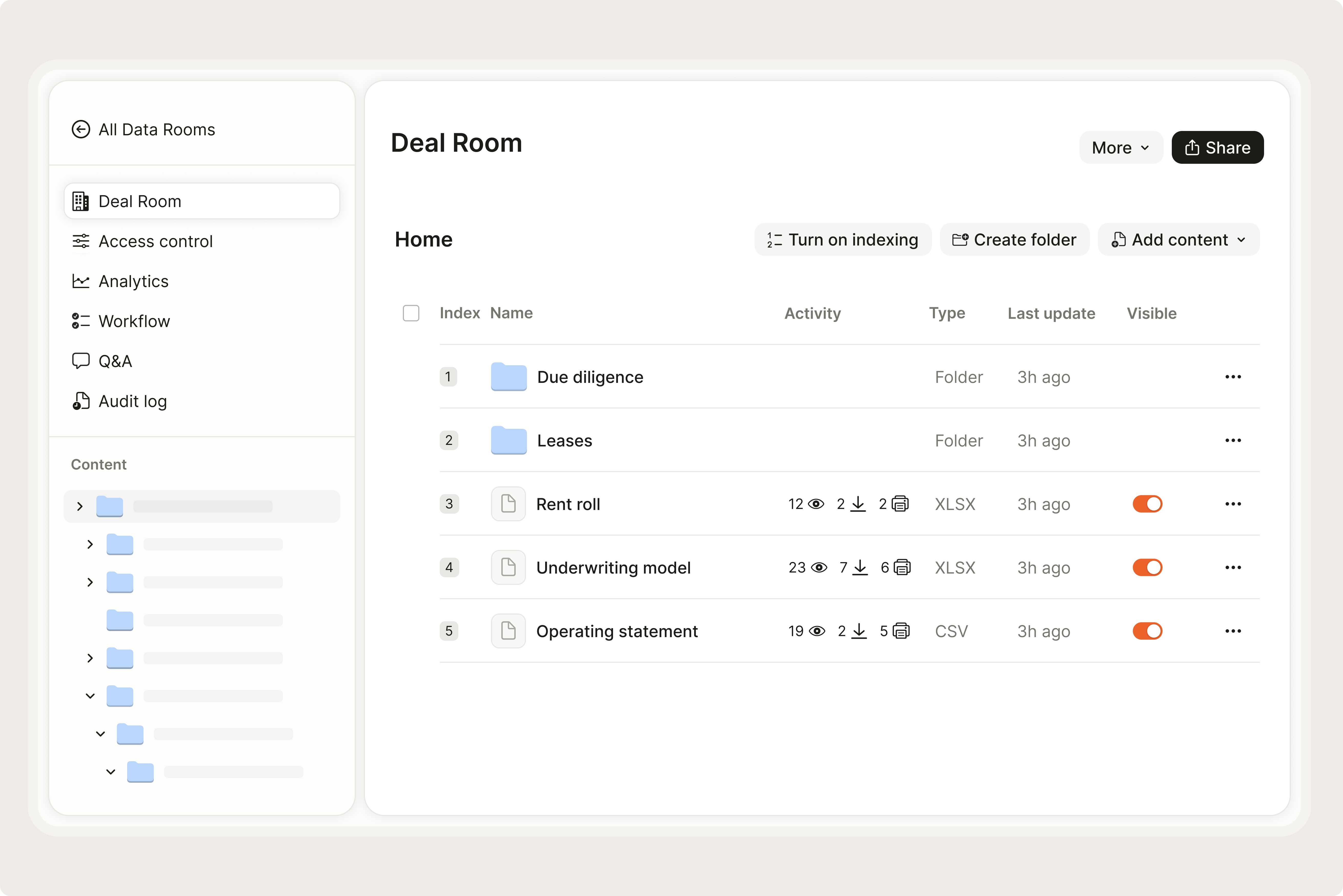
- 1.Create a data room and upload your deal docsUpload Handelsregister extracts, cantonal tax files, and Pensionskasse docs. Organise by workstream so advisors find files fast.
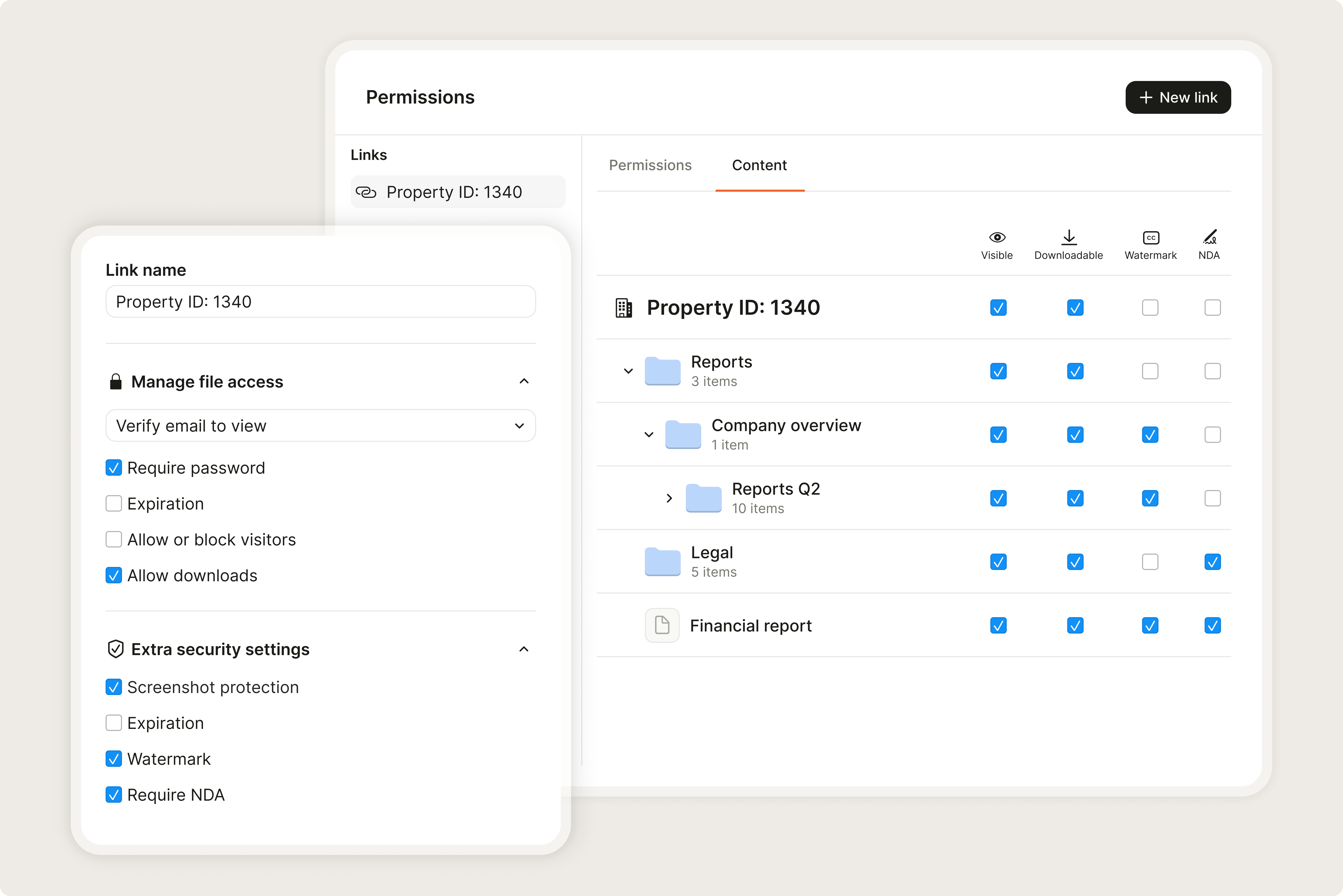
- 2.Give each workstream a scoped, secure linkLegal sees contracts, tax sees cantonal assessments, FINMA counsel sees regulatory files only.
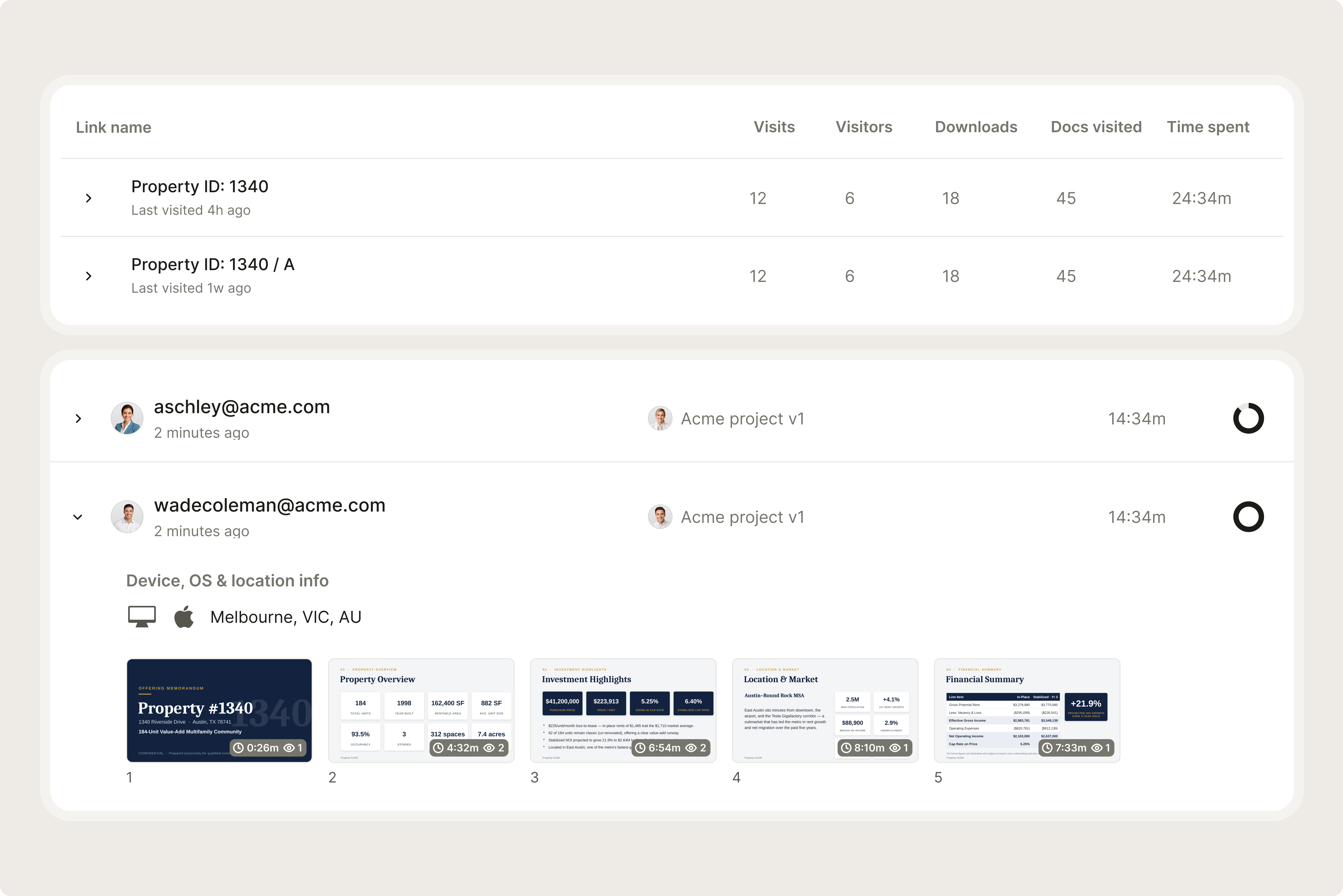
- 3.Track who reviews which documentsSee which advisor opened the Pensionskasse valuation multiple times. Follow up before it moves the price.
Due diligence timeline for Switzerland deals
A standard Swiss buy-side process runs 4-8 weeks from NDA to final report - faster than most European peers.
Weeks 1-2: NDA signed, Handelsregister extracts pulled, request list issued. FINMA change-of-control assessment completed. WEKO filing analysis confirmed. Lex Koller applicability mapped. Ellty data room live with scoped advisor links.
Weeks 2-4: Financial, legal, and tax reviews run in parallel. Pension actuaries engaged for any Pensionskasse arrangement. Cantonal tax risk register started. Initial flags identified and raised with the seller.
Weeks 4-6: Preliminary findings memos circulated. FINMA notification filed if required (3-4 month clock starts). Pension valuation received and deficit quantified. Price-adjuster negotiations begin.
Weeks 6-8: Management Q&A sessions. SPA negotiation on representations and warranties. FINMA review runs in background. R&W insurance terms finalised if applicable. Closing conditions drafted.
What due diligence costs in Switzerland
Legal: CHF 80K-CHF 350K depending on deal size and firm tier.
Financial and tax: CHF 50K-CHF 180K for a mid-market target.
Pension actuaries: CHF 15K-CHF 50K for Pensionskasse valuation and deficit assessment.
Environmental: CHF 15K-CHF 40K if industrial or manufacturing sites are involved.
Stamp duty: 0.15% on Swiss share transfers when a securities dealer is involved in the transaction.
Total advisor spend on a CHF 20M-CHF 100M Swiss deal lands between CHF 180K and CHF 500K before success fees.
Run your Swiss deal from one room
Hold financials, Pensionskasse docs and the SPA in one secure, tracked Ellty data room.
Start free 14-day trialCommon questions about due diligence in Switzerland
- No - Switzerland does not have a general FDI screening law as of 2026. Sector-specific restrictions apply: Lex Koller for real estate, FINMA licensing for financial services, and media ownership rules. A general screening regime is under political discussion but not yet in force.
- The Pensionskasse is the Swiss 2nd-pillar occupational pension fund. Deficits transfer fully to the buyer in a share deal. Always commission an independent actuarial report before pricing a Swiss deal - underfunding is a recurring and material issue.
- WEKO review is mandatory when combined worldwide turnover exceeds CHF 2 billion and at least two parties each exceed CHF 100 million in Switzerland. Most mid-market Swiss deals do not reach these thresholds.
- Lex Koller (BewG) restricts foreign acquisition of Swiss residential and vacation property. Most commercial real estate is exempt. Non-EU/EEA buyers acquiring a target with Swiss residential property must obtain cantonal authorisation - without it, the acquisition is void.
- FINMA change-of-control approvals for banks, insurers, and asset managers typically take 3-4 months from a complete filing. Build this into the deal schedule before signing - closing without FINMA clearance voids the transaction.