Consumer investors in Toronto are writing checks into DTC brands, CPG companies, consumer marketplaces, and consumer tech platforms in 2025 and 2026. BrandProject backed Good Bacteria in a January 2026 seed round. Inovia Capital celebrated 2 years of Discovery Fund I with 37 unicorns and 52 exits across 1,100 underlying portfolio companies. If you're raising for a consumer brand or consumer tech company in Toronto, these 16 investors are reviewing pitches right now.
Consumer fundraising in Toronto is harder than founders expect, mostly because consumer businesses get evaluated differently by different types of investors. A generalist tech VC will freeze up when you show them your COGS breakdown and seasonal inventory curves. The 16 consumer investors on this list actually know how to read a CPG or DTC unit economics model without needing a tutorial from you.
Toronto has a stronger consumer investment base than most founders realize. You've got BrandProject building consumer brands from scratch right here, Clearco funding hundreds of DTC brands with non-dilutive capital, and a layer of seed funds like Golden Ventures and Panache Ventures that have consistently backed consumer and marketplace founders. That depth makes Toronto a genuinely useful place to raise a consumer round, compared to trying to convince a pure SaaS-focused fund to stretch outside their thesis. Before you start outreach, review what investors look for in a data room - consumer VCs have specific document requests that differ from B2B investors.
Consumer VC globally went through a correction between 2021 and 2023 that wiped out a lot of weaker funds and soft-commitment backers. What's left in 2026 is more selective but also more honest. The investors who are still writing checks have cleared portfolios of the DTC brands that burned through cash on paid social, and they know what a real unit economics model looks like. That actually works in your favor as a founder if your numbers are clean. If they're not, these investors will pass faster than generalists.
Most consumer founders in Toronto make the mistake of pitching investors before their data room is ready. Consumer VCs move quickly from first meeting to due diligence once they're interested. You'll want your last 12 months of revenue by channel, your CAC by acquisition source, and your COGS model organized in a virtual data room before you send the first outreach email. Use Ellty's data room for a seed round to get everything structured before any fund sees your deck.
The 16 consumer investors below cover every stage from pre-seed angel checks to growth equity for brands approaching $50M in revenue. Some are Toronto-based, others are US investors who actively back Canadian consumer founders. Check stage fit carefully before you reach out - most will tell you upfront if you're not the right fit, but only if you ask the right questions.
| Stage | Check Size | Sector Focus | Contact | |
|---|---|---|---|---|
| BrandProject | Pre-seed, Seed, Series A | $500K-$5M | Consumer brands, DTC, consumer health | brandproject.com |
| Golden Ventures | Seed | $500K-$3M | Consumer tech, DTC platforms, marketplaces | golden.ventures |
| OMERS Ventures | Series A to Series C | $5M-$30M | Consumer platforms, retail tech, DTC | omersventures.com |
| Inovia Capital | Pre-seed to late | $1M-$50M | Consumer tech, DTC, marketplaces, AI apps | inovia.vc |
| Clearco | Pre-seed to late | $10K-$10M (non-dilutive) | DTC, consumer e-commerce, CPG brands | clear.co |
| Panache Ventures | Pre-seed, Seed | $200K-$1M | Consumer, DTC, marketplaces, lifestyle | panache.ca |
| BDC Capital | Seed to Series C | $1M-$20M | Consumer brands, CPG, consumer tech | bdc.ca |
| Round13 Capital | Seed, Series A | $1M-$5M | Consumer platforms, software, marketplaces | round13capital.com |
| Forerunner Ventures | Series A, Series B | $5M-$50M | Consumer brands, DTC, retail tech, wellness | forerunnerventures.com |
| Lerer Hippeau | Seed, Series A | $500K-$5M | DTC brands, consumer tech, lifestyle, CPG | lererhippeau.com |
| Maveron | Seed, Series A, Series B | $500K-$15M | Consumer brands, CPG, consumer tech | maveron.com |
| Maple Leaf Angels | Pre-seed, Seed | $100K-$500K | Consumer, DTC brands, consumer tech | mapleleafangels.com |
| Relay Ventures | Seed, Series A | $1M-$10M | Consumer tech, fintech, media, platforms | relay.vc |
| Graphite Ventures | Seed, Series A | $500K-$3M | Consumer software, health, digital platforms | graphiteventures.com |
| Georgian Partners | Series B, Series C | $10M-$50M | Consumer AI, B2B software, data platforms | georgian.io |
| Boreal Ventures | Pre-seed, Seed | $250K-$1M | Consumer tech, digital health, platforms | boreal.vc |
See who reads your pitch deck
Upload your consumer deck to Ellty and send each investor a trackable link.
Start free 14-day trialWhat is a Toronto consumer investor?
A Toronto consumer investor backs companies that sell directly to end consumers - DTC brands, CPG products, consumer marketplaces, lifestyle apps, and consumer tech platforms. They're different from generalist VCs because they understand retention curves, repeat purchase rates, and why a 40% gross margin for a physical product is actually acceptable at seed stage. Most have seen enough consumer brands both succeed and fail to know the difference between a brand with genuine pull and one that's buying its metrics with paid social.
Consumer investors in Toronto split into two types. The first are dedicated consumer funds like BrandProject, which go all the way from incubation to Series A and provide hands-on operator support beyond the check. The second are generalist Toronto funds with a consumer thesis, like Golden Ventures and Panache Ventures, that back consumer founders alongside their B2B and SaaS portfolios. Both types are useful, but the dedicated consumer funds offer more relevant operational support when you hit the specific problems - inventory financing, retail expansion, DTC retention - that generalist operators don't know how to solve. You can explore the venture capital features Ellty offers to manage your investor relationships during a raise.
Check sizes at seed stage for consumer companies in Toronto typically run $500K to $2M from Canadian funds. At Series A, you're looking at $3M to $10M from local VCs, though US-based investors like Forerunner Ventures and Lerer Hippeau can lead larger rounds for compelling Canadian brands. Consumer companies that have demonstrated strong DTC unit economics and a credible wholesale expansion story tend to attract US cross-border capital faster than categories where Canadian regulatory differences make the market harder to read.
What consumer investors want in 2026 is different from what they wanted three years ago. The DTC implosion of 2022-2023 made them permanently skeptical of any business where growth depends primarily on Meta and Google spend. The brands raising now either have exceptional organic channels, strong retail velocity, or a genuine technology layer that reduces CAC over time. If your customer acquisition is more than 70% paid social with no diversification plan, most of the investors on this list will pass immediately. Having clean analytics is essential - use trackable links in Ellty to show investors you understand your own engagement data.
Each year we see hundreds of startups, but partner with just a few. We place fewer bets than others but go all in on the founders we back.
16 top consumer investors in Toronto
1. BrandProject
Toronto's most active dedicated consumer fund - they operate as a studio and fund hybrid, acting as co-founders and interim operators for the brands they back.
- Recent Deals: Backed Good Bacteria (seed round, January 2026); backed Jesse & Ben's $10M Series A (Greycroft Consumer Brands, 2025); Daily Harvest acquired by Chobani (May 2025)
- LinkedIn: BrandProject LinkedIn
- Sector Focus: Consumer brands, DTC, consumer health, food and beverage, personal care
- Stage Focus: Pre-seed, Seed, Series A
- Location: Toronto, ON / New York, NY
- Website: brandproject.com
2. Golden Ventures
Toronto's leading seed fund with 180+ companies backed - they'll look at consumer and marketplace founders if the unit economics story is compelling from day one.
- Recent Deals: Fund V closed at $100M+; backed swXtch.io (April 2026); active across consumer, AI, and marketplace platforms with a strong founder-first approach
- LinkedIn: Golden Ventures LinkedIn
- Sector Focus: Consumer tech, DTC platforms, marketplaces, AI applications
- Stage Focus: Seed
- Location: Toronto, ON
- Website: golden.ventures
3. OMERS Ventures
VC arm of one of Canada's largest pension funds - refocused on Canada in 2025 with $5M-$25M tickets from Fund IV and a longer patience horizon than most VCs.
- Recent Deals: Led TouchBistro Series E ($158M, February 2025); backed Wealthsimple's $750M raise at $10B valuation (2025); active at Series A to Series C across consumer platforms
- LinkedIn: OMERS Ventures LinkedIn
- Sector Focus: Consumer platforms, retail tech, DTC software, marketplace companies
- Stage Focus: Series A to Series C
- Location: Toronto, ON
- Website: omersventures.com
4. Inovia Capital
Canada's full-stack VC with $2.2B+ AUM - they've backed consumer and marketplace companies from pre-seed through growth stage, with Discovery Fund I showing 37 unicorns across 1,100 portfolio companies.
- Recent Deals: Discovery Fund I celebrated 2 years with 37 unicorns and 52 exits (2026); backed Great Question ($20M, November 2025); Spellbook raised $50M Series B with Inovia co-investment (October 2025)
- LinkedIn: Inovia Capital LinkedIn
- Sector Focus: Consumer tech, DTC, marketplaces, AI-enabled consumer apps
- Stage Focus: Pre-seed to pre-IPO
- Location: Toronto, ON / Montreal, QC / Calgary, AB / Abu Dhabi
- Website: inovia.vc
5. Clearco
Toronto's revenue-based financing platform that has funded hundreds of DTC and e-commerce brands - useful when you want non-dilutive capital to fund inventory or growth marketing.
- Recent Deals: Partnered with Highbeam to streamline strategic funding and banking for e-commerce brands (2025); active with DTC e-commerce, consumer CPG, and subscription brands across Canada and the US
- LinkedIn: Clearco LinkedIn
- Sector Focus: DTC brands, consumer e-commerce, CPG, subscription commerce
- Stage Focus: Pre-seed to late stage (revenue-based, non-dilutive)
- Location: Toronto, ON
- Website: clear.co
6. Panache Ventures
Canada's leading pre-seed fund with 130+ founders backed - they write first checks into consumer founders before most other institutional investors will.
- Recent Deals: Active with 8+ investments in past 12 months; pre-seed focus across consumer, marketplaces, and DTC; national presence from Montreal with strong Toronto deal flow
- LinkedIn: Panache Ventures LinkedIn
- Sector Focus: Consumer brands, DTC platforms, marketplaces, lifestyle tech
- Stage Focus: Pre-seed, Seed
- Location: Montreal, QC (active across Canada including Toronto)
- Website: panache.ca
Organize your materials before outreach
Set up an Ellty data room with your financials and brand data before emailing investors.
Start free 14-day trial7. BDC Capital
Canada's national development bank VC arm and the most active Canadian investor by deal count - they co-invest on most major Canadian consumer rounds and carry patient capital from seed to Series C.
- Recent Deals: Launched $150M life sciences fund (April 2026); one of the most active pre-seed and seed investors in Canada by deal volume; BDC Seed Venture Fund remains a primary vehicle for early-stage Canadian founders
- LinkedIn: BDC Capital LinkedIn
- Sector Focus: Consumer brands, CPG, consumer tech, DTC platforms
- Stage Focus: Seed to Series C
- Location: Toronto, ON (national presence)
- Website: bdc.ca
8. Round13 Capital
Toronto-based Seed and Series A fund with a strong Canadian software and consumer portfolio - they back founders building scalable products with $1M+ ARR and have a reputation for quick decisions.
- Recent Deals: Active at seed and Series A with a portfolio spanning consumer software, operations platforms, and marketplace businesses; regular co-investor alongside BDC Capital on Toronto-based rounds
- LinkedIn: Round13 Capital LinkedIn
- Sector Focus: Consumer platforms, software, marketplaces, lifestyle tech
- Stage Focus: Seed, Series A
- Location: Toronto, ON
- Website: round13capital.com
9. Forerunner Ventures
San Francisco-based consumer VC with $2.3B+ AUM - the most globally relevant consumer fund for Canadian brands building toward US expansion, with exits including Ritual, Bonobos, and Warby Parker.
- Recent Deals: Led Daydream $50M seed round for AI-powered fashion search (2024); backed Ritual (acquired by Shopify, January 2025); active at Series A and Series B for consumer brands with clear international thesis
- LinkedIn: Forerunner Ventures LinkedIn
- Sector Focus: Consumer brands, DTC, retail tech, wellness, CPG
- Stage Focus: Series A, Series B
- Location: San Francisco, CA (active in Toronto and Canadian deals)
- Website: forerunnerventures.com
10. Lerer Hippeau
New York-based VC that has backed Allbirds, Warby Parker, Casper, Glossier, and Reformation - they understand DTC unit economics as well as any fund alive and do invest in Canadian consumer brands.
- Recent Deals: Backed Allbirds (IPO); invested in Glossier Series E; active at seed and Series A with $500K-$5M checks; strong network with US retail partners for Canadian brand expansion
- LinkedIn: Lerer Hippeau LinkedIn
- Sector Focus: DTC brands, consumer tech, lifestyle, CPG, wellness
- Stage Focus: Seed, Series A
- Location: New York, NY (active in Canadian deals)
- Website: lererhippeau.com
11. Maveron
Consumer-only VC founded in 1998 and B Corp certified - they only back companies selling directly to consumers, which makes them more rigorous than generalists on CAC/LTV and less prone to wandering into B2B.
- Recent Deals: Active at seed through Series B with flexible check sizes; portfolio includes Trupanion (insurance), eBay (first investment), and modern consumer brands across health and wellness; consumer-only mandate means every partner understands the category
- LinkedIn: Maveron LinkedIn
- Sector Focus: Consumer brands, CPG, consumer health, lifestyle, digital consumer
- Stage Focus: Seed, Series A, Series B
- Location: Seattle, WA / San Francisco, CA (active in Canadian consumer deals)
- Website: maveron.com
12. Maple Leaf Angels
Toronto's largest angel network with 150+ members - useful for very early pre-seed capital and warm intros to institutional VCs when you're not yet ready for a formal VC process.
- Recent Deals: Regular pitch competitions with structured investment process; active in consumer tech, DTC brands, and early-stage platforms across Ontario; co-investment model alongside local seed VCs
- LinkedIn: Maple Leaf Angels LinkedIn
- Sector Focus: Consumer brands, DTC, consumer tech, early-stage platforms
- Stage Focus: Pre-seed, Seed
- Location: Toronto, ON
- Website: mapleleafangels.com
13. Relay Ventures
Toronto's thematic VC with deep sector expertise across consumer tech, fintech, and media - they've made several consumer-adjacent investments and bring a strong Toronto network for brand distribution.
- Recent Deals: Active deployment across thematic funds with new fintech and consumer tech investments in 2025; backed TouchBistro across multiple rounds; portfolio spans consumer and enterprise software
- LinkedIn: Relay Ventures LinkedIn
- Sector Focus: Consumer tech, fintech, media, proptech, digital platforms
- Stage Focus: Seed, Series A
- Location: Toronto, ON
- Website: relay.vc
14. Graphite Ventures
Toronto-based seed fund formerly operating as MaRS Investment Accelerator Fund - they've backed ApplyBoard, Vidyard, and dozens of Ontario-based digital and consumer health companies.
- Recent Deals: Active at seed stage across Ontario; "Seeding for Scale" approach with ApplyBoard and Vidyard as notable exits; backed 30+ Ontario-based technology and consumer digital health companies across multiple funds
- LinkedIn: Graphite Ventures LinkedIn
- Sector Focus: Consumer software, digital health, consumer platforms, marketplace businesses
- Stage Focus: Seed, Series A
- Location: Toronto, ON
- Website: graphiteventures.com
15. Georgian Partners
Growth-stage B2B and consumer software VC with $5.9B AUM - relevant for consumer tech companies at Series B that have moved beyond brand into platform or marketplace territory with meaningful ARR.
- Recent Deals: Managing $5.9B AUM with active deployment from Growth Fund VI; led Replit's $400M Series D (2025); backed Shopify (IPO); focus on AI-enabled software at growth stage with proprietary R&D support
- LinkedIn: Georgian Partners LinkedIn
- Sector Focus: Consumer AI, B2B software, data platforms, marketplace technology
- Stage Focus: Series B, Series C
- Location: Toronto, ON
- Website: georgian.io
16. Boreal Ventures
Toronto-based seed fund that secured a $43M CAD first close for its second seed fund in 2026 - they back founders at the pre-seed and seed stage across consumer tech and digital health platforms.
- Recent Deals: Closed $43M CAD first close for Boreal Ventures Fund II (2026); active in consumer tech, digital health, and software platforms; focused on Ontario-based founders at the earliest stages
- LinkedIn: Boreal Ventures LinkedIn
- Sector Focus: Consumer tech, digital health, software platforms, DTC
- Stage Focus: Pre-seed, Seed
- Location: Toronto, ON
- Website: boreal.vc
How to read a consumer VC's portfolio
Before you pitch any of the 16 consumer investors on this list, spend an hour reading their portfolio companies. Not their website summary - go to Crunchbase or PitchBook and look at actual companies, stages, and dates. A fund that backed three DTC brands in 2019 and nothing consumer since 2022 has probably quietly exited the category. The website will still say they invest in consumer. The portfolio won't lie. If you're raising for a Series B round, portfolio analysis is even more critical because growth-stage investors have much tighter category convictions than seed funds.
Look for pattern matches in the portfolio, not just sector labels. If BrandProject has backed multiple food and personal care brands at seed stage, they have a clear thesis about what those businesses look like at scale. Your pitch will be evaluated against every brand they've already backed. That's useful to know going in. If your margins, channels, and growth trajectory are similar to a portfolio company that performed well, you're starting from a more credible position. If your model looks like a company that struggled, you'll need to address that directly rather than hoping they don't notice.
Check the dates of recent investments carefully. The consumer VC cycle runs roughly 3-year fund deployment windows, and a fund that last invested 18 months ago may already be in harvest mode for that vehicle. Most VCs won't tell you directly that they're between funds - but their portfolio timeline will show it. Two or more investments per year over the past 24 months means they're actively deploying. Nothing in 18 months means you should ask directly about fund status before investing time in the relationship. Knowing this upfront saves you weeks of dead-end meetings that feel promising but go nowhere.
When you organize your data room for VC fundraising, include a competitive positioning slide that shows how you're different from the fund's existing portfolio companies. Consumer investors who've already backed a DTC pet food brand won't back a second one unless you have a genuinely differentiated model. Addressing this proactively saves everyone time, and it shows the investor you've done real homework rather than blasting your deck to every fund on a list.
Cold email vs. warm intro for consumer VCs
Cold email works for some Toronto VCs and doesn't work for others - knowing which camp a fund falls into before you send saves your best outreach attempts. Funds like Golden Ventures and Panache Ventures are known to respond to cold outreach if the email is concise and demonstrates clear product-market fit signals. They both mention this on their websites. Consumer-specialist funds like BrandProject and Maveron work almost entirely through warm referrals from operators, angels, and portfolio founders. Sending a cold email to gets read, but the intro path is faster.
The best warm intro source for consumer VCs is other founders who've raised from that fund - not advisors, lawyers, or LinkedIn contacts. Find two founders who've closed rounds with your target investor. Ask them directly: is the fund actively deploying, what does the partner you worked with care about most, and would they introduce you? That conversation takes 20 minutes and typically converts to an investor intro within the week. For Toronto funds, you can usually find these founders through CDL alumni events, TechTO, or the DMZ community. Use trackable links in Ellty when you follow up after an intro is made - you'll know if the investor actually opens your materials within 24 hours of sending.
US consumer investors like Forerunner, Lerer Hippeau, and Maveron are harder to reach cold from Toronto. They get hundreds of inbound pitches per week from US founders they already know. Your best path is through a Canadian lead who has a relationship with them and can make a credible introduction. OMERS Ventures, Inovia Capital, and BrandProject all have existing co-investment relationships with US consumer funds and can bridge that gap if they're already backing your round. That syndication path is how most Toronto consumer founders end up getting US checks - not cold outreach from Toronto.
What consumer VCs check in unit economics
Consumer investors in 2026 have a short list of metrics they check before they'll take a second meeting. Gross margin is first - they want to see 50%+ for DTC-only models and will accept lower margins if wholesale revenue adds meaningful scale. CAC by channel comes second, specifically whether your cost to acquire a customer is stable or deteriorating as you scale spend. If your CAC doubles when you go from $10K to $50K in monthly ad spend, that's a fundamental model problem that no amount of storytelling will fix. Make sure your fundraising data room documents include a clean channel-level CAC breakdown going back at least 6 months.
Customer lifetime value and repeat purchase rate are the metrics consumer VCs obsess over most in 2026, because they're the hardest to fake. A consumer brand with 40% of customers making a second purchase within 90 days has proven product-market fit in a way that no first-purchase metric can demonstrate. If your LTV is below 2x CAC, most investors will ask why before they commit. If your repeat rate is below 30%, they'll want to understand whether it's a category constraint or a product and experience problem. Have cohort data for at least 6-12 months ready before any pitch.
Return rates matter more than most founders think. Consumer investors who've backed DTC brands have been burned by businesses where return rates normalized post-COVID to 30-40% and destroyed the unit economics. If your product has low return rates - typically sub-10% for consumables, sub-20% for apparel - that's a genuine competitive advantage worth leading with. If your returns are high, understand why before you're asked. Investors who've backed multiple consumer brands will always ask, and "I don't know" is not a credible answer at seed stage or later.
How to pitch a consumer investor in Toronto
Specific steps for DTC brand and consumer tech founders raising from Toronto and Canada-active VCs in 2026.
- 1.Lead with unit economics, not brand visionShow your gross margin by channel and 6-month CAC trend before any brand story. Consumer investors will ask for it anyway - leading with it signals financial maturity upfront.
- 2.Show channel diversification beyond paid socialInvestors know single-channel DTC models are fragile. Show your organic, retail, and word-of-mouth channels as a percentage of revenue so paid dependence is clear and contextualized.
- 3.Bring at least 6 months of cohort dataRepeat purchase rate and LTV cohorts for 6-12 months prove product-market fit better than any revenue number. Investors who've backed failing brands know cohort analysis doesn't lie.
- 4.Address portfolio conflicts proactivelyIf the investor has a similar brand in their portfolio, explain your differentiation before they ask. Ignoring an obvious conflict wastes everyone's time and signals you didn't do homework.
- 5.Know your path to profitability at current scaleConsumer investors in 2026 want brands that can reach profitable unit economics without 10x revenue growth. Show your contribution margin and fixed cost structure honestly and early.
How Ellty helps you land a consumer investor
You know the investors. Now make sure your materials prove the unit economics before the first meeting. Upload your brand financials, cohort data, and CAC breakdown to Ellty - then send each investor a separate trackable link.
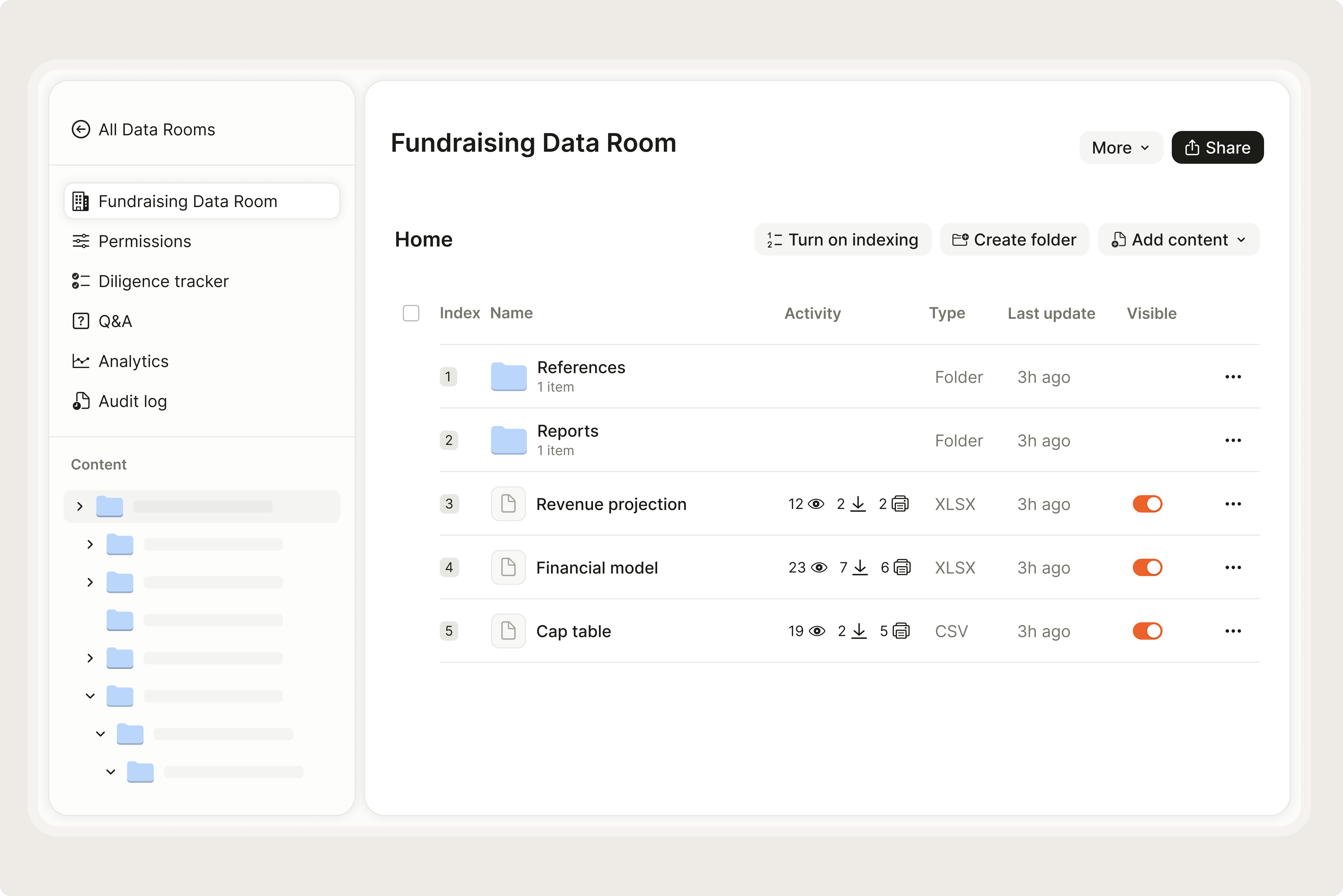
- 1.Build your consumer data room before any outreachCreate an Ellty data room and add your pitch deck, LTV cohort charts, and channel revenue split. Consumer VCs ask for these within 48 hours of a first call - have them organized already.
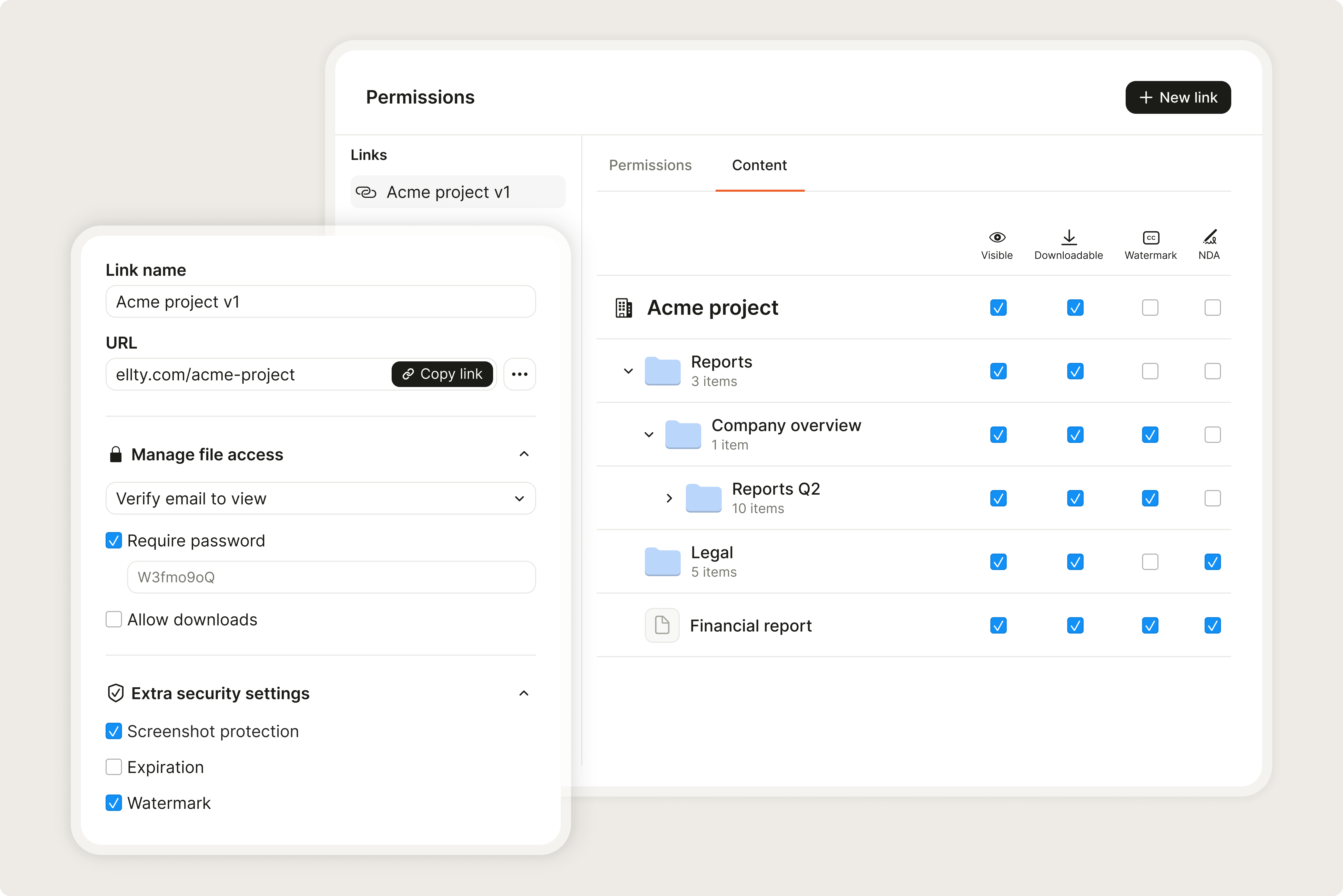
- 2.Set link permissions and control access to financialsGenerate a unique trackable link per investor and require email verification before access. This prevents your margin data from circulating to competitors or getting forwarded uncontrolled.
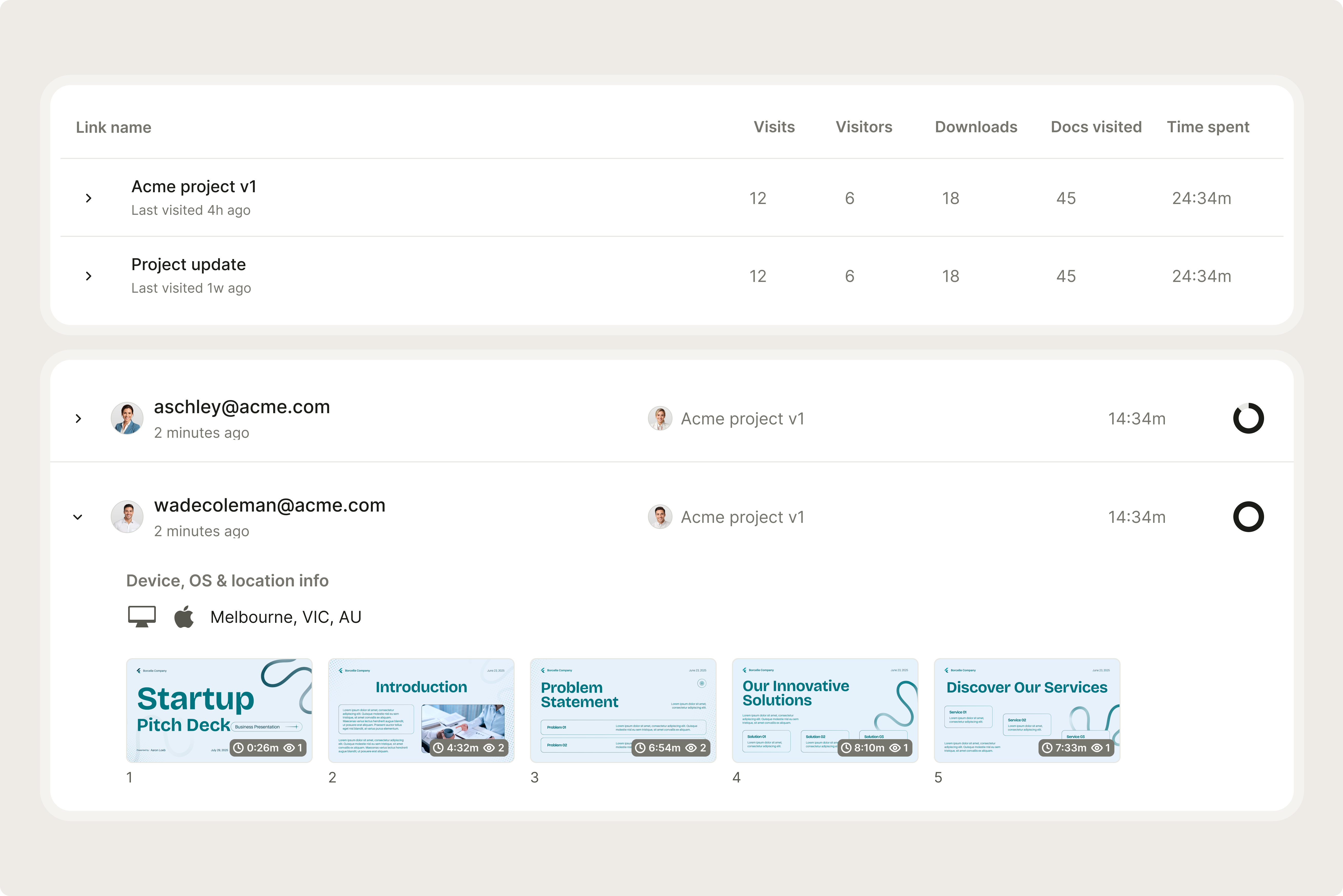
- 3.Get real-time alerts when investors review your materialsSee exactly which slides investors spend the most time on - if they linger on your unit economics page, follow up with your cohort data the same day while you're still front of mind.
Common questions about consumer investors
- Both, but in that order. Numbers come first - they'll screen you out on gross margin before they even read your brand story. If the unit economics hold up, story and brand differentiation matter a lot.
- Most seed investors want $100K-$500K ARR with strong repeat purchase data. A clean CAC/LTV story matters more than a high revenue number if your retention is weak.
- Start with Canadian seed funding from BrandProject or Golden Ventures, then use that traction to approach US funds like Forerunner or Lerer Hippeau for Series A. US funds want a clear path to the US market.
- Before you send a single email. Consumer VCs move from first meeting to due diligence fast, and they'll ask for your financials and channel breakdown within days. Ellty keeps everything organized and trackable.
- Start with founders who've raised from your target fund. CDL alumni, TechTO events, and the DMZ community are reliable intro networks - advisors and lawyers rarely have the right relationships.
- BrandProject acts as an operator inside your company, providing design, product, and growth resources alongside capital. A typical VC writes a check and joins your board. Both are useful but serve different needs.