Diligence on a Brazilian asset starts before you sign or wire a deposit. The trap: Brazil has no unified national land registry - title lives at the local Cartório, and ITBI varies by municipality.
A Brazilian CRE deal runs eight to twelve weeks from offer to close. Multiple Cartório requests and certidões are the main cause of the stretch.
A mid-market deal pulls hundreds of documents into the data room. Certidões, environmental licenses, lease files and the matrícula all land at once.
ITBI transfer tax is set by each municipality, not the federal government. São Paulo charges 3%; Rio de Janeiro charges 2% ITBI.
Notary and registration fees add another 1.5-2% to the total acquisition cost. The deal closes only once the Cartório records the new owner on the matrícula.
Where Brazil property deals go wrong
Not every check carries the same weight in a Brazilian deal. The table below ranks them by how badly each one can hurt the deal.
Clear the dealbreakers before negotiating the final price. Cartório title gaps and Forest Code violations are the most common deal-killers.
Price-adjusters move the offer once diligence is running. Standard checks are hygiene - miss them and you inherit the problem after closing.
| Area | Documents to pull | Brazil red flag | Matters most for | Tier | |
|---|---|---|---|---|---|
| Title & ownership | Title & ownership | Certidão de matrícula, RGI search | Broken chain in Cartório matrícula; no national registry to backstop | All | Dealbreaker |
| Encumbrances & easements | Encumbrances & easements | Certidão de ônus reais, penhoras, alienação fiduciária | Undisclosed fiduciary alienation (alienação fiduciária) on the title | All | Dealbreaker |
| Zoning & planning | Zoning & planning | Alvará de construção, Plano Diretor, habite-se | Structure not in conformity with Plano Diretor or without alvará | Retail, industrial | Dealbreaker |
| Environmental | Environmental | CAR, IBAMA records, Forest Code maps (APP/Reserva Legal) | Permanent Preservation Area or missing Legal Reserve restricts use | Industrial, land | Dealbreaker |
| Leases & tenancies | Leases & tenancies | Lease contracts, rent roll, prenotação | Tenant pre-emption rights under Lei do Inquilinato (Law 8.245/91) | Retail, multifamily | Price-adjuster |
| Building condition | Building condition | Engineering survey, habite-se, permits | Building without habite-se or unauthorized additions present | Office, industrial | Price-adjuster |
| Service charge & opex | Service charge & opex | Condominium accounts, IPTU history | IPTU arrears and condominium debt pass to the new owner at closing | Multifamily, office | Price-adjuster |
| Transfer tax & costs | Transfer tax & costs | ITBI invoice, notary estimate, certidões negativas | ITBI rate or calculation base disputed by the municipality | All | Price-adjuster |
| Insurance & valuation | Insurance & valuation | Insurance policies, independent appraisal | No property insurance; valuation below ITBI calculation base | All | Standard |
| Utilities & access | Utilities & access | Utility contracts, access servitude agreements | No registered access road or water/sewer connection confirmed | Industrial, retail | Standard |
| Seller & KYC/AML | Seller & KYC/AML | CNPJ extract, certidões negativas de débitos, UBO | Tax debt at federal or state level; CNPJ with negative status | All | Standard |
Running due diligence on a Brazilian property?
Set up your data room before diligence starts.
Start free 14-day trialThe full Brazil property DD checklist
The table ranked the risks - this is the complete list to work through, grouped by area.
Title and ownership
- Pull the certidão de matrícula: Get the current registration certificate from the local Cartório.
- Trace the chain: Confirm an unbroken ownership chain in the Cartório RGI for the property.
- Confirm no pending transfers: Check for any prenotação or pending transfer not yet finalized.
- Check corporate ownership: Match the matrícula to the CNPJ ownership records for a company asset.
- Verify the cadastral reference: Confirm the IPTU registration number matches the matrícula.
Encumbrances and easements
- Pull the certidão de ônus reais: Get the encumbrance certificate from the Cartório.
- Check for alienação fiduciária: Confirm no fiduciary alienation (bank security) is on the matrícula.
- List penhoras and liens: Confirm no court-ordered attachments (penhoras) are registered.
- Find easements: Review any registered servitudes or rights of way over the parcel.
Zoning and planning
- Pull the alvará de construção: Confirm all structures have a valid building permit.
- Check the Plano Diretor: Confirm the current use matches the municipal zoning plan.
- Review the habite-se: Confirm the occupancy certificate was issued for the completed building.
- Check special zones: Confirm no ZEIS (special social interest zone) or restriction applies.
Environmental and contamination
- Run a Phase I: Screen the site history for past industrial or contaminated use.
- Check the CAR registry: Confirm the CAR (Cadastro Ambiental Rural) is filed for any land asset.
- Map APP and Reserva Legal: Check for Permanent Preservation Areas and Legal Reserve under Law 12.651/2012.
- Pull IBAMA records: Confirm no environmental enforcement notices or fines are outstanding.
- Budget a Phase II: If Phase I flags anything, commission soil testing before you proceed.
For a full picture of environmental exposure on a Brazilian asset, see the environmental due diligence guide.
Leases and tenancies
- Pull all leases: Collect all lease contracts and the current rent roll.
- Check prenotação: Confirm if any lease is registered at the Cartório (prenotação).
- Note tenant pre-emption: Under Lei do Inquilinato, commercial tenants have pre-emption rights on a sale.
- Confirm deposits: Review security deposits and confirm who holds them.
- Review break clauses: Note renewal rights, break options, and indexation terms.
Building and structural condition
- Commission a survey: Get a structural report from a licensed Brazilian engineer.
- Pull the habite-se: Confirm the occupancy certificate is issued and matches current use.
- Check unauthorized additions: Extensions not covered by the habite-se are a price risk.
- Review compliance: Check if fire safety or accessibility upgrades are due under current rules.
Service charge and operating costs
- Pull condominium accounts: Get two to three years of condominium management accounts.
- Confirm IPTU is clear: IPTU arrears and condominium debt transfer to the new owner at closing.
- Check reserve funds: Review the condominium reserve fund and any planned capital expenditure.
- Review management contracts: Check terms and termination clauses in any management agreement.
Transfer tax and acquisition costs
- Confirm the ITBI rate: Check the exact rate in the municipality where the asset is located.
- Verify the calculation base: Some municipalities use the declared price; others use the valor venal.
- Budget notary fees: Tabelionato and Cartório registration add approximately 1.5-2% of price.
- Get certidões negativas: Obtain federal, state and municipal tax clearance from the seller before signing.
Load each area's docs into its own folder in an Ellty real estate data room. Reviewers find what they need fast, and you see exactly who opened which file.
Insurance and valuation
- Pull current policies: Review building, liability and contents insurance.
- Commission an appraisal: Get an independent valuation from a licensed Brazilian appraiser.
- Check IPTU fiscal value: Compare the prefeitura's fiscal value against the agreed price.
- Confirm rebuild cover: The policy should cover the full replacement cost of the structure.
Utilities and access
- Confirm utility contracts: Check electricity, water and gas connections and contract status.
- Verify road access: Confirm a registered access road or servitude to the parcel.
- Check meters: Review metering and any shared supply arrangements on the site.
- Test industrial capacity: For industrial use, confirm utility capacity for the planned operation.
Seller and KYC / AML
- Pull the CNPJ extract: Get the Receita Federal company record for a corporate seller.
- Get certidões negativas: Obtain federal, state and municipal tax clearance certificates.
- Check for SISBAJUD liens: Confirm no judicial attachment orders are active via SISBAJUD.
- Run sanctions checks: Screen the seller against Brazilian and international sanctions lists.
How property DD in Brazil works
Step 1: Search the title
Pull the certidão de matrícula from the local Cartório de Registro de Imóveis and trace the ownership chain. There is no national land registry; every Cartório holds its own records, and jurisdiction lines in large cities can overlap.
Brazil's Law 13.097/2015 established the "concentração" principle: only encumbrances registered at the Cartório are enforceable against a good-faith buyer. A clean matrícula gives strong protection, but verify it was clean at the time of transfer.
Step 2: Survey and inspect
Commission a licensed civil engineer survey and check all structures against the alvará and habite-se. Any addition built without the occupancy certificate requires regularization before the deal can close cleanly.
Confirm energy, fire and accessibility compliance certificates are current for commercial assets. For older office or retail stock, mandatory upgrades can appear post-close and move the yield.
Step 3: Review leases and income
Pull all lease contracts and the rent roll, and review tenant pre-emption rights under Lei do Inquilinato. Commercial tenants in Brazil have a statutory right to match any third-party offer - check before you price the deal.
Request tenant estoppels for income-producing assets before you agree the purchase price. Undisclosed side agreements, rent-free periods or informal arrears arrangements are more common than sellers admit.
Step 4: Check the environment
Run a Phase I for any property with past industrial or agricultural use. For land assets, check the CAR registry and map Permanent Preservation Areas (APP) and Legal Reserve under the Forest Code.
Any APP violation or missing Legal Reserve can restrict use or require costly restoration at the buyer's expense. See the due diligence documents guide for how to organize the environmental file before buyers come in.
Step 5: Close and register
Sign the public deed before a tabelião de notas and pay ITBI to the municipality before submission. The tabelião then files the transfer at the Cartório - title only passes once the Cartório records the new matrícula.
Get all certidões negativas de débitos from the seller before the signing session. ITBI must be paid and cleared before the Cartório will register the transfer.
How to set up your Brazil data room in Ellty
Documents on a Brazilian deal come from multiple Cartórios and agencies. Here's where to hold them organized and ready to share.
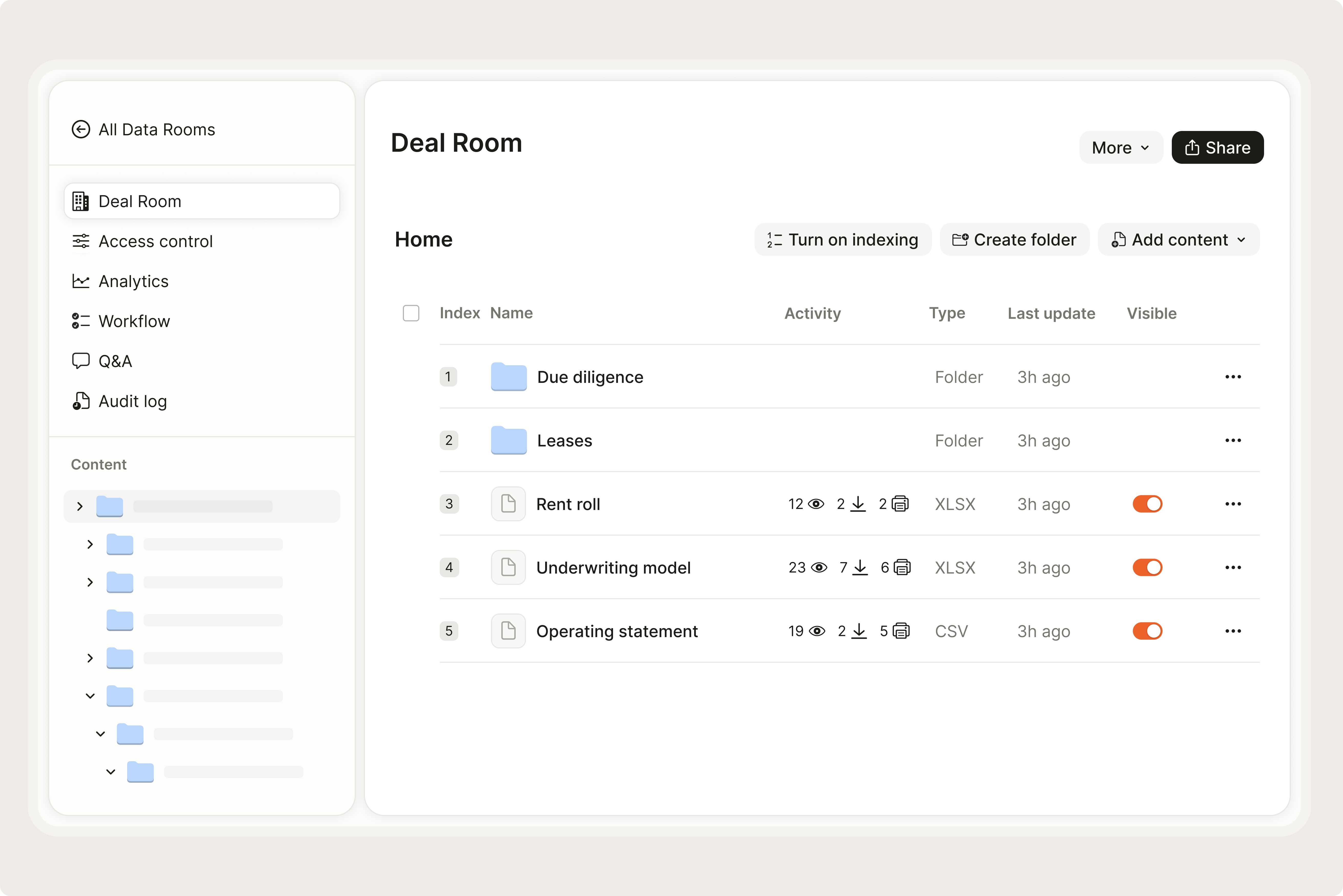
- 1.Create a data room and upload the property filesStart a room and upload your Brazilian property files. Group by area - matrícula, leases, permits, certidões.
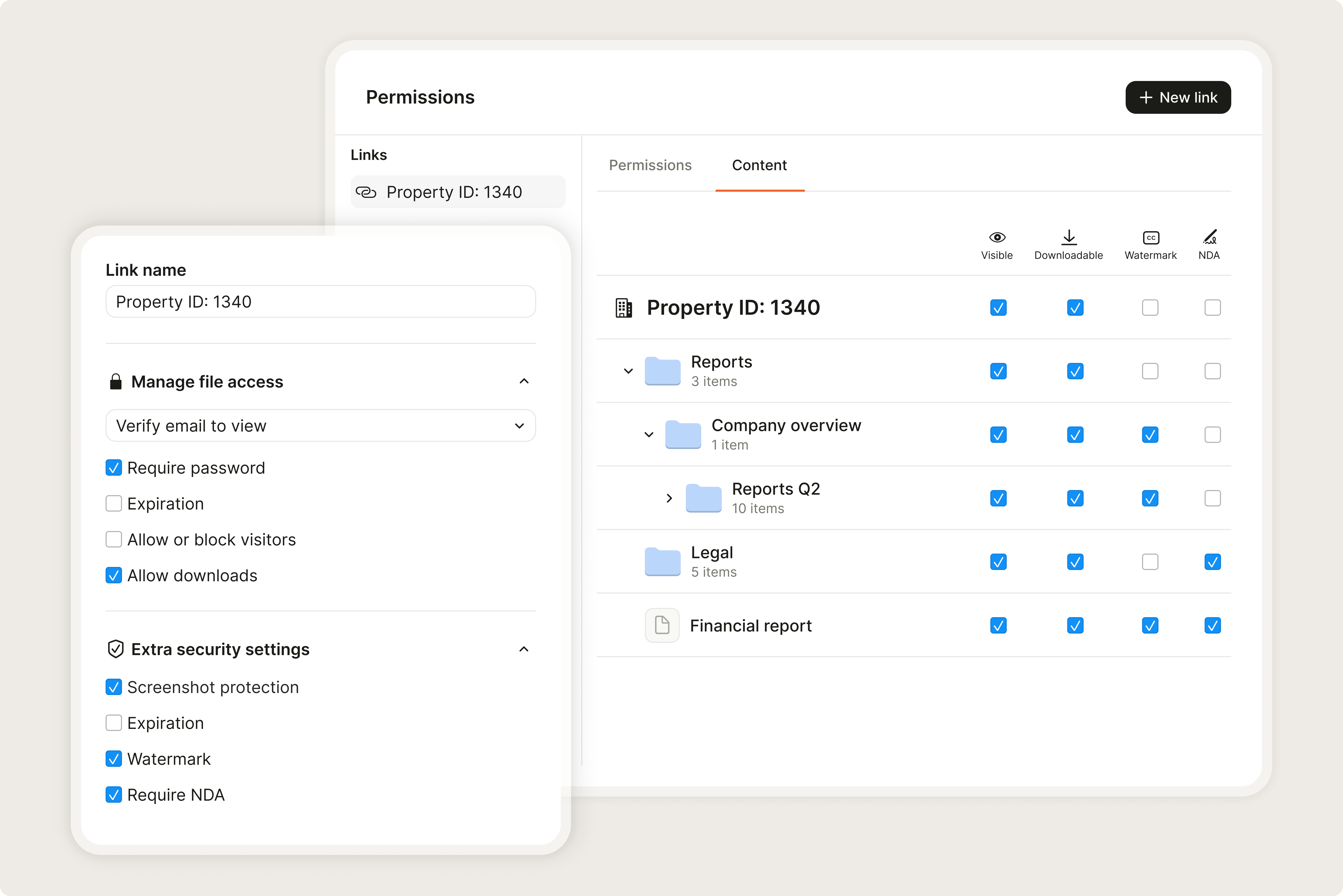
- 2.Give each advisor a scoped, secure linkSend each advisor a scoped link to only their files. Your lawyer sees title; the surveyor sees building docs.
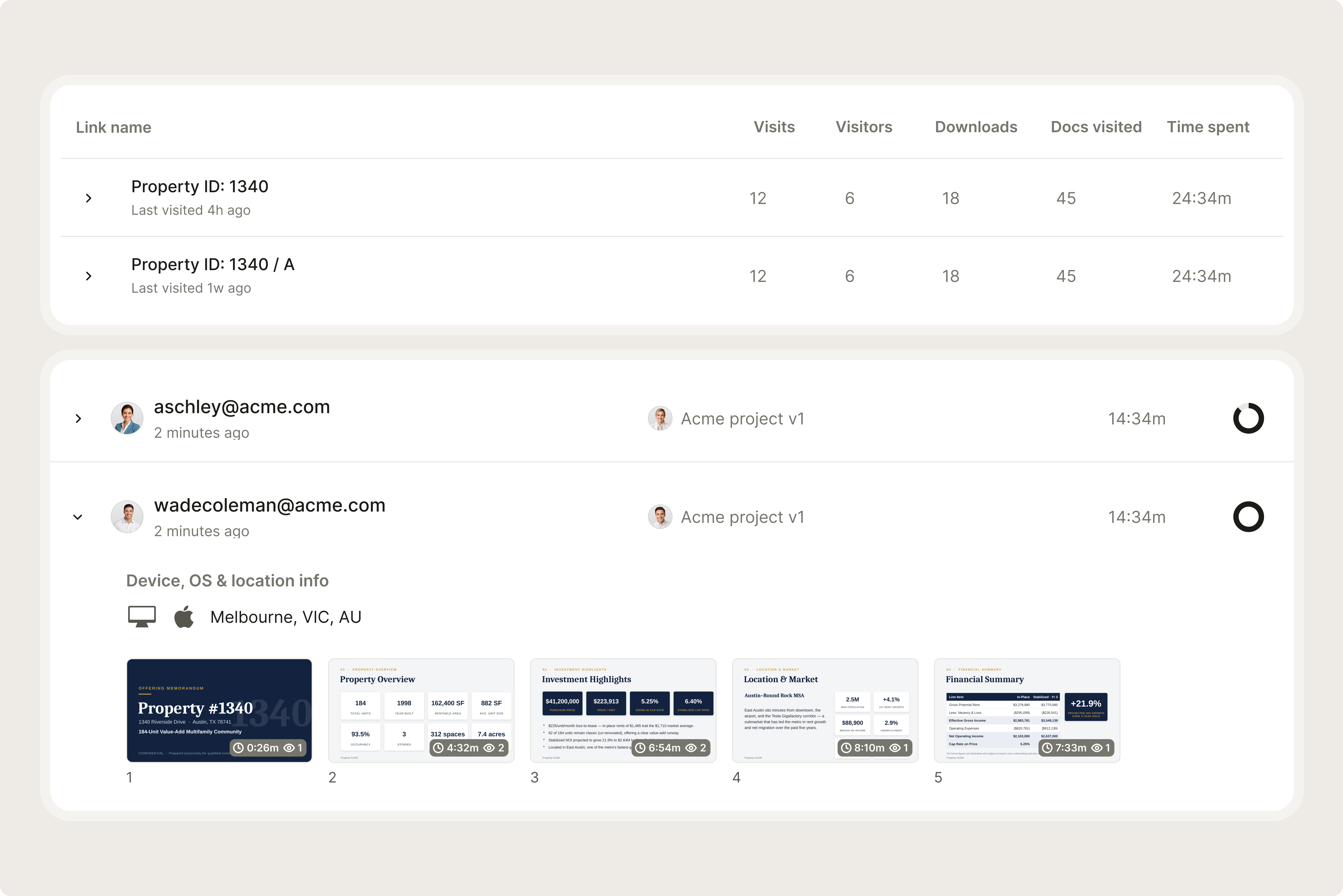
- 3.Track who reviews which documentsWatch who opens the matrícula and how long they stay. Spot where questions are forming before they stall.
What makes Brazil DD different
Brazil has no unified national land registry - each Cartório de Registro de Imóveis holds its own records. In large cities, multiple Cartório offices can have overlapping jurisdiction. You find the right one by searching the address, not a single national database.
The Forest Code (Law 12.651/2012) is the trap most out-of-market buyers miss on Brazilian land. Permanent Preservation Areas (APP) and Legal Reserve requirements restrict use on many parcels. A property in violation can't sell cleanly without CAR registration and, often, environmental restoration first.
ITBI is a municipal tax, so rates differ across Brazil's 5,570 municipalities. The calculation base also varies: some use the declared price, others the valor venal (fiscal value). Getting it wrong moves the deal math - budget the local rate before going exclusive.
Foreign buyers can generally purchase urban commercial property in Brazil. Rural land is restricted for non-Brazilian entities under the Constitution. Private equity funds typically hold Brazilian assets via a local SPE - confirm the structure before signing the purchase contract.
"The matrícula is the sole legal record of ownership; encumbrances not registered at the Cartório are unenforceable against a third-party buyer acting in good faith." - Brazilian Civil Code (Law 10.406/2002), Art. 1.245
Before diligence kicks off, set up an Ellty data room and load the certidões and leases upfront. Track who opens each document via Ellty's features so you know where questions are forming before they slow the deal.
Timeline and cost in Brazil
Title and Cartório search comes first, running one to two weeks at minimum. Survey, environmental and lease review run in parallel from weeks two through six.
Full diligence to close runs eight to twelve weeks in Brazil. Forest Code environmental work or IBAMA clearance can push the timeline further.
Legal fees run approximately 1.5-2% of the purchase price. Tabelionato notary fees and Cartório registration add roughly 1-1.5% on top.
ITBI dwarfs every other closing cost for most Brazilian deals. In São Paulo, 3% ITBI on a large asset exceeds all other fees combined. Confirm the municipal rate and calculation base before you price the deal.
Run your Brazil property deal from one room
Hold title, leases and certidões in one secure, tracked data room.
Start free 14-day trialCommon questions about property due diligence in Brazil
- It's a certidão search, survey, lease and tax check. You run it before signing the public deed or wiring the deposit.
- A quick red-flag pass takes one to two weeks total. Full diligence through to close runs eight to twelve weeks.
- It depends on the municipality - São Paulo is 3%, Rio de Janeiro is 2%. Always confirm the local rate before you price the deal.
- Yes; a tabelião must execute the public deed of sale. They also file the transfer at the local Cartório.
- A matrícula with gaps or unreleased encumbrances is a dealbreaker. Forest Code violations on land assets are hard to fix after closing.
- Before diligence starts - load the certidões and leases upfront. When the request list lands, you're ready to share.