Alabama runs under caveat emptor - sellers aren't required to disclose known defects, so buyers carry the full due diligence load before closing.
Property diligence on an Alabama asset typically runs 30-60 days for a stabilized deal. A mid-market commercial transaction pulls 80-120 documents into the data room before you're done. Alabama's caveat emptor doctrine - one of only three states still using it - means no mandatory seller disclosure form. That shifts all discovery work onto the buyer's team. Miss a title defect or zoning gap and you own the problem after closing.
Where Alabama deals actually go wrong
Alabama's caveat emptor rule is the biggest structural difference from most states. Sellers have no statutory obligation to hand over a disclosure form. Buyers who treat it like a normal disclosure state will miss defects and have little legal recourse after closing.
Title chains in Alabama run through county probate court records, which are sometimes poorly indexed for rural or older parcels. Gaps in the chain, unreleased mortgages, and old easements recorded decades ago don't always surface in a quick search. You need a full chain-of-title search, not just a current owner search.
Environmental risk is concentrated in industrial corridors around Birmingham, Mobile, and Huntsville. Phase I ESAs are standard for commercial acquisitions, but RECs often push deals into Phase II testing - adding 4-8 weeks and meaningful cost. Budget for it early.
| Area | Documents to pull | Alabama red flag | Matters most for | Tier | |
|---|---|---|---|---|---|
| Title and ownership | Title and ownership | Chain-of-title search, deed history, probate records | Gaps in older rural parcels; unreleased liens in probate records | All buyers | Dealbreaker |
| Environmental | Environmental | Phase I ESA, Phase II if RECs found, ADEM records | Industrial RECs near Birmingham, Mobile, Huntsville corridors | Industrial, retail, mixed-use | Dealbreaker |
| Zoning and permits | Zoning and permits | Zoning verification letter, C of O, variance records | Patchwork municipal zoning outside major Alabama cities | Development, repositioning | Dealbreaker |
| Easements and encumbrances | Easements and encumbrances | Survey, easement docs, title commitment Schedule B | Utility and access easements on rural and older parcels | Retail, industrial, land | Dealbreaker |
| Leases and rent roll | Leases and rent roll | All leases, amendments, guarantees, rent roll | Oral lease arrangements; undocumented tenants with no written lease | Multifamily, retail | Price-adjuster |
| Income and expenses | Income and expenses | 3 years P&L, tax bills, utility statements | Low property tax rate masking actual operating cost issues | All income-producing | Price-adjuster |
| Survey and boundaries | Survey and boundaries | ALTA/NSPS survey, prior surveys, legal description | Encroachments on adjacent land in older subdivisions | All | Price-adjuster |
| Physical condition | Physical condition | PCA or inspection reports, roof and MEP records | Deferred maintenance in older rural markets and secondary cities | Office, industrial | Price-adjuster |
| Transfer tax | Transfer tax | Deed tax calculation, lender mortgage tax | $0.50/$500 deed tax plus $0.15/$100 mortgage recording tax | All financed deals | Standard check |
| Seller disclosure | Seller disclosure | No statutory form required in Alabama | Caveat emptor - no form means no disclosure baseline for buyers | All buyers | Standard check |
| Property taxes | Property taxes | County tax bills, assessment history, special assessments | Low rates but assessments vary significantly by county | All | Standard check |
| Insurance | Insurance | Current policies, loss run history | Coastal exposure in Mobile County; wind and flood zone risks | Gulf Coast assets | Standard check |
Running due diligence on an Alabama property?
Set up your data room before the request list lands - load title docs, leases, and permits so you're ready.
Start free 14-day trialThe full Alabama property due diligence checklist
Before diligence kicks off, set up an Ellty data room and load every document category below. When the buyer's request list arrives, you're already organized instead of chasing the property manager for paperwork.
Title and ownership
- Order a full chain-of-title search through county probate court records
- Pull the current deed, all prior deeds, and any recorded easements
- Review the title commitment Schedule B exceptions carefully
- Confirm no unreleased mortgages, mechanic's liens, or judgment liens
- Verify legal description matches the ALTA/NSPS survey
Environmental
- Commission a Phase I ESA per ASTM E1527-21 standards
- Review ADEM records for the site and surrounding parcels
- If RECs identified, budget for Phase II before finalizing price
- Check for underground storage tanks, especially on former industrial sites
- Confirm no wetlands or floodplain designations requiring Army Corps permits
Zoning and permits
- Request a zoning verification letter from the relevant municipality or county
- Confirm existing use is permitted and matches current zoning classification
- Check for variances, special use permits, or non-conforming use status
- Pull all building permits, certificates of occupancy, and open permit searches
- Verify signage permits if the asset includes retail frontage
Leases and tenancy
- Collect all leases, amendments, side letters, and guarantees
- Verify no oral lease arrangements exist with any tenant
- Review rent roll and confirm against actual receipts (3 months of bank statements)
- Check for below-market leases, unusual renewal options, or co-tenancy clauses
- Confirm tenant estoppel certificates are obtainable before close
Survey and physical condition
- Order an ALTA/NSPS survey before closing
- Review for encroachments, setback violations, and easement locations
- Commission a Property Condition Assessment (PCA) for systems over 15 years old
- Check roof, HVAC, electrical, plumbing, and ADA compliance
- For retail/industrial: confirm loading dock access, parking ratios, truck court
Financial and tax
- Pull 3 years of operating statements and reconcile against actual receipts
- Review the last 3 years of county property tax bills and assessment history
- Check for special assessments or improvement districts on the property
- Calculate deed transfer tax ($0.50 per $500) and mortgage recording tax ($0.15/$100)
- Confirm no outstanding utility liens or municipal code violations
How property due diligence in Alabama works
Step 1 - Title search
Start with a full chain-of-title search through Alabama's county probate court system. Unlike states with centralized land registries, Alabama records are county-by-county and indexing quality varies for rural or older properties.
Your title attorney should go back at least 40 years and flag any gaps, unreleased instruments, or recorded easements. Order the title commitment and review Schedule B exceptions before the inspection period ends - exceptions become your problem at closing.
Step 2 - Survey and inspection
An ALTA/NSPS survey is standard for commercial acquisitions and should be ordered early. Surveyors in Alabama sometimes flag encroachments on older properties that title searches miss.
Pair the survey with a full Property Condition Assessment. Alabama's older commercial building stock, especially in secondary markets like Tuscaloosa, Dothan, and Gadsden, often carries deferred maintenance that moves price.
Step 3 - Leases and income review
Alabama has no standard commercial lease template and oral agreements can create unrecorded tenancy rights. Get every tenant arrangement in writing before proceeding.
Review leases for renewal options, early termination clauses, and landlord work obligations. Cross-reference the rent roll against 3 months of bank statements to confirm actual collections. A rent roll that doesn't match receipts is a red flag. See the due diligence timeline guide for how to sequence this work.
Step 4 - Environmental
Commission a Phase I ESA early - it's the most common source of timeline delays in Alabama commercial deals. RECs trigger Phase II, which takes 4-8 additional weeks and costs $5,000-$20,000 depending on scope.
Check ADEM records directly for any enforcement actions or regulated facility records on the site. Coastal assets in Mobile County may also need wetlands delineation and Army Corps coordination before you can accurately underwrite development scenarios.
Step 5 - Closing and registration
Alabama deeds are taxed at $0.50 per $500 of value at the county probate judge's office. If you're financing, the mortgage recording tax adds $0.15 per $100 of indebtedness.
Attorney involvement in closings is standard in Alabama - expect $750-$1,250 for a straightforward transaction, more for complex commercial deals. Recording happens at the county level; allow 5-10 business days for instruments to be indexed after recording.
How to set up your Alabama data room in Ellty.
Load your Alabama deal documents before the request list lands. Give each advisor a scoped link so review starts the day diligence opens.
- 1.Create a data roomUpload title docs, survey, leases, and permits into Ellty in bulk. Organize by diligence category so advisors find files fast.
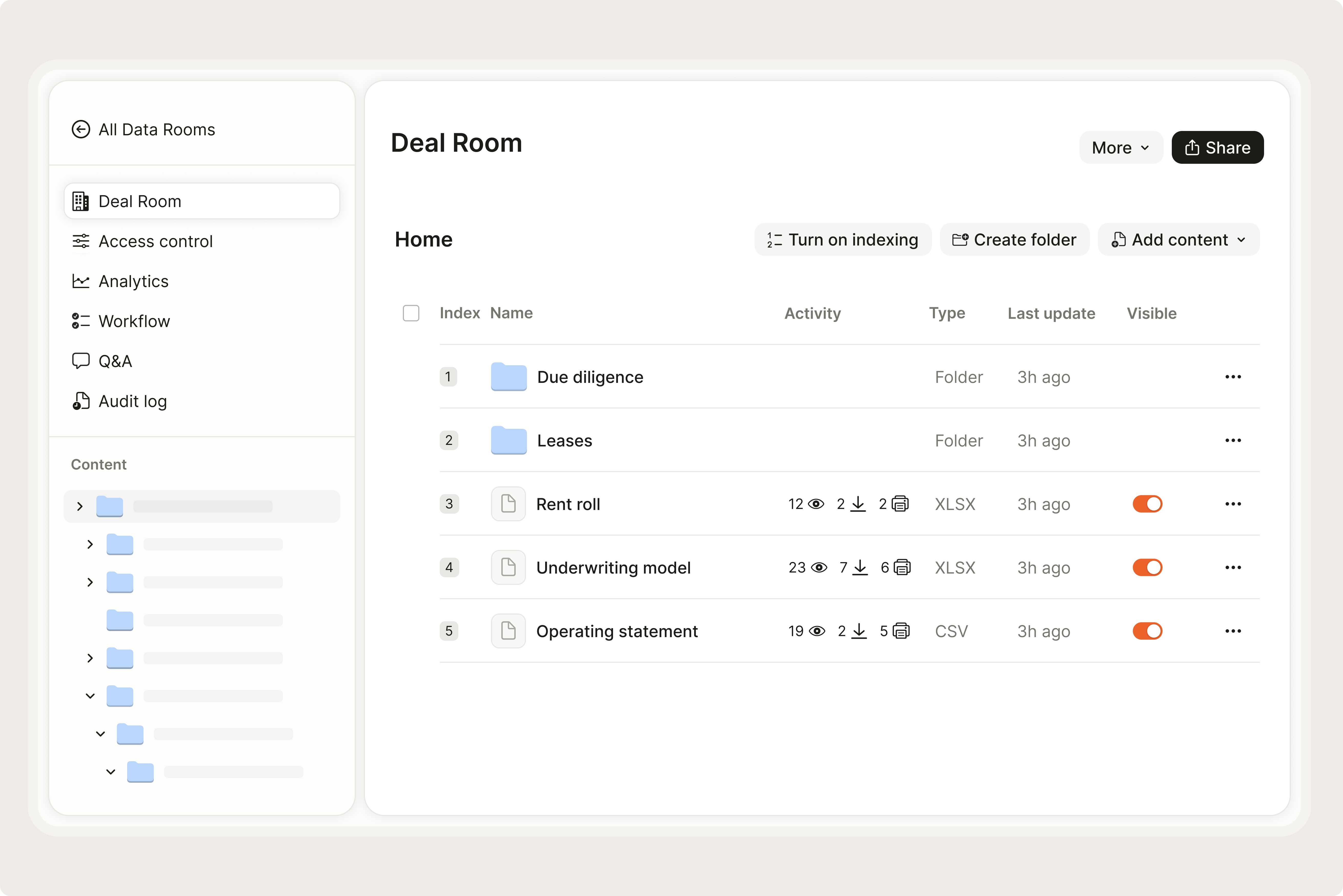
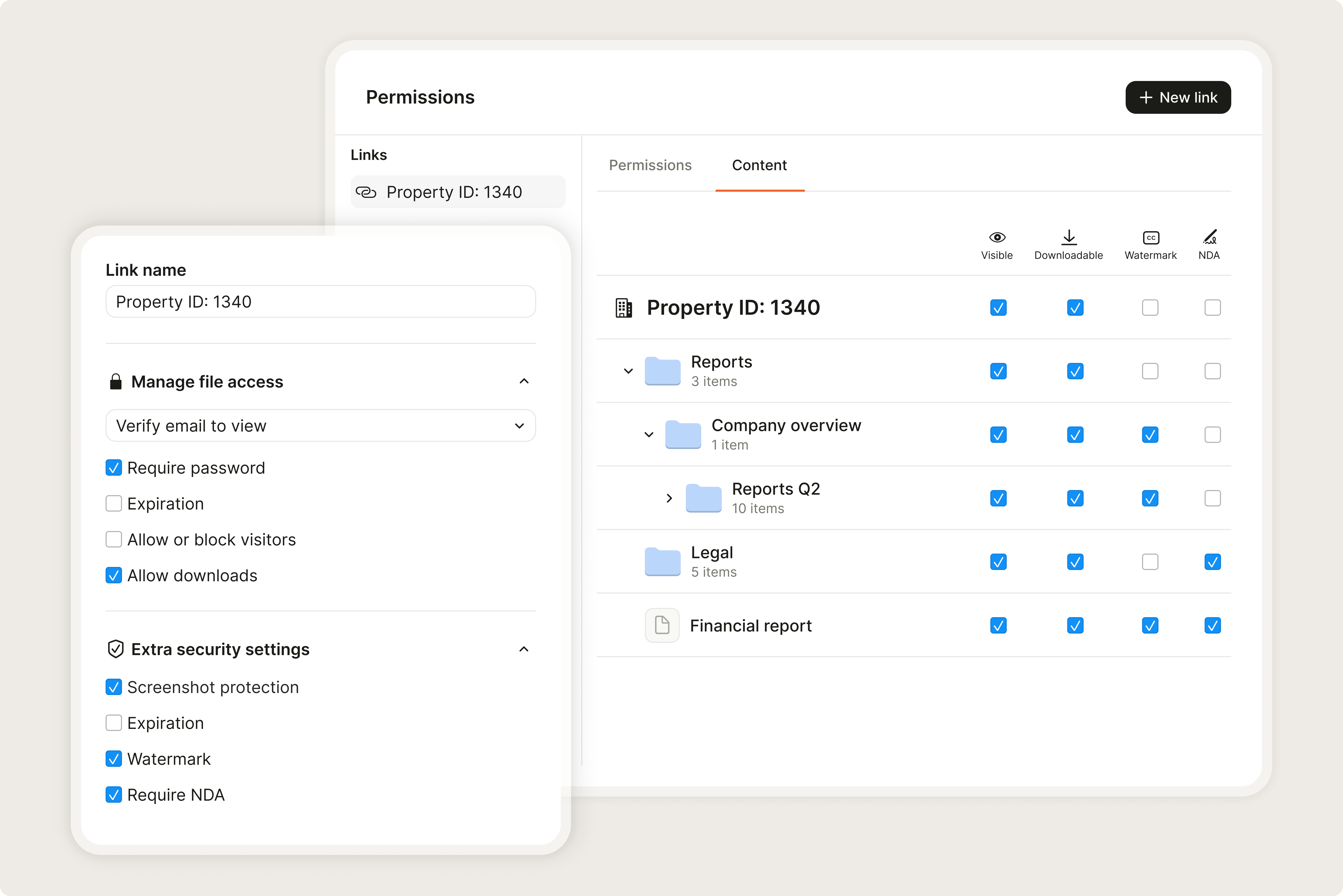
- 2.Give each advisor a scoped linkSend the title attorney a link to title docs only. The environmental consultant sees ESA files only. No one digs through folders they don't need.
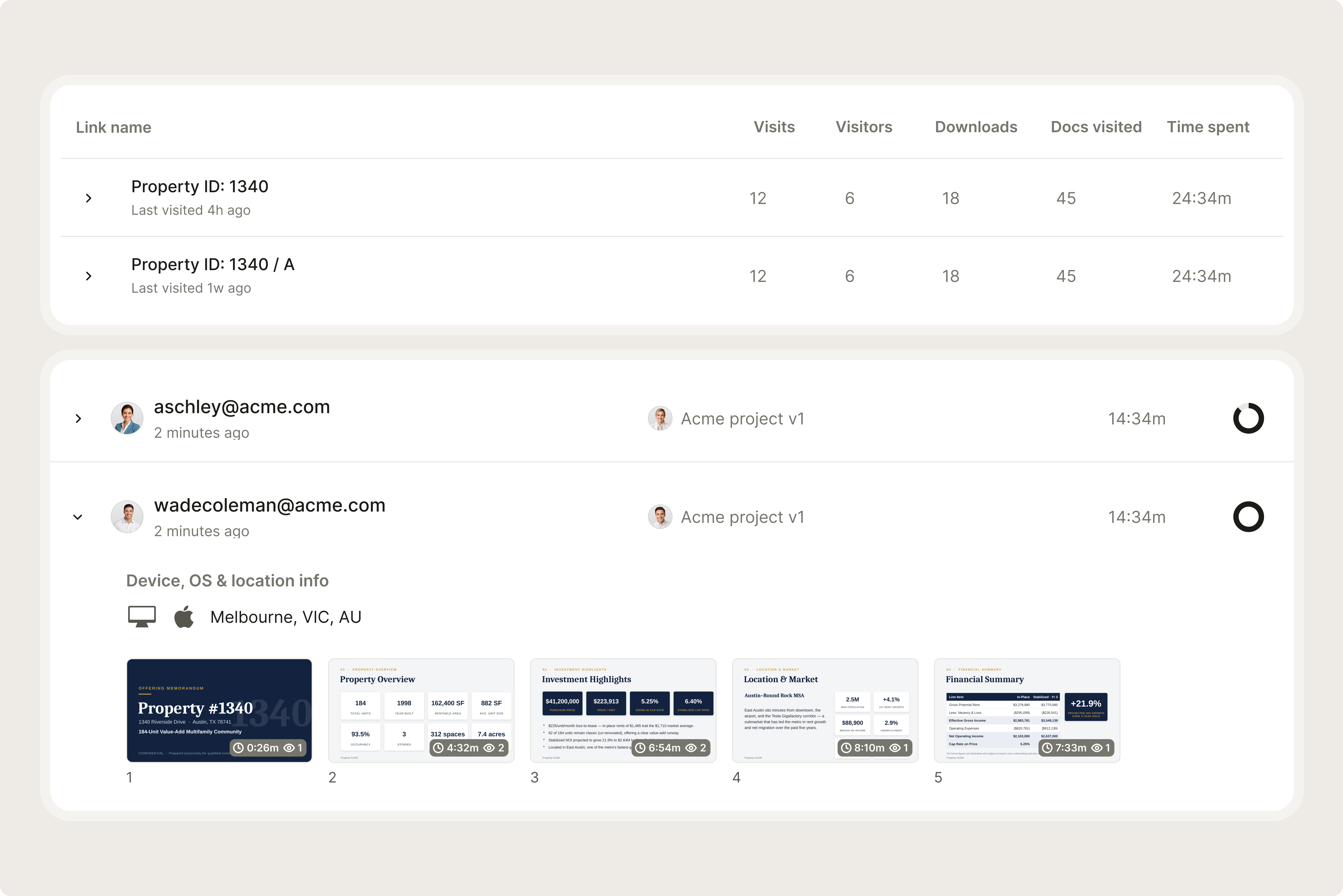
- 3.Track who reviews which documentsSee exactly which documents each reviewer opened and when. Spot where questions are forming before they stall the closing.
What makes due diligence in Alabama different
Alabama is one of only three states still operating under caveat emptor. There's no statutory seller disclosure form, so buyers can't rely on a checklist of seller-disclosed defects. You run full discovery yourself or inherit the problem after closing. The due diligence overview covers the general framework, but Alabama adds its own layer on top.
The county probate court system creates another layer of complexity. Title records are decentralized and indexing quality varies by county. Rural parcels and older industrial assets in smaller counties are the highest-risk category for title gaps. Budget extra time for the title search and don't rush the title commitment review.
Alabama's low property tax rate (average 0.36% of assessed value) is often cited as an advantage. It can also mask operating cost issues - buyers sometimes underweight expense line items when the tax bill looks favorable. Understanding hard vs soft due diligence helps you allocate time across both financial and physical review areas.
"In Alabama, the buyer's obligation to inspect and discover defects is particularly high given the state's adherence to caveat emptor. Thorough due diligence is not optional - it's the buyer's only protection." - Alabama Real Estate Commission, Consumer Information Guidance
Timeline and cost in Alabama
A typical Alabama commercial due diligence runs in three phases. Weeks 1-2 cover initial review: title search order, Phase I ESA kickoff, ALTA survey order, and lease collection. Estimated cost: $5,000-$10,000 for title, survey, and initial legal review.
Weeks 2-4 cover deep review. Phase I ESA delivery, physical inspection and PCA, lease review, tenant estoppel requests, and zoning verification. Estimated cost: $3,500-$8,000 for Phase I and PCA depending on asset size. Share the data room through Ellty and track who's reviewing what - if the buyer's counsel reads the lease assignment three times, that's where the questions are forming.
Weeks 4-6 handle resolution. Phase II ESA if needed (add $5,000-$20,000 and 4-8 weeks), title exception negotiations, and repair credits from PCA findings. Total soft cost for a mid-market Alabama commercial deal: $15,000-$40,000 depending on environmental complexity. Factor the deed transfer tax ($0.50/$500) and mortgage recording tax ($0.15/$100) into your closing cost model. For broader context on commercial real estate due diligence, the Ellty use case page covers how teams organize their review workflow.
Close your Alabama deal with fewer surprises
Ellty keeps your diligence documents organized, your advisors scoped, and your timeline on track.
Start free 14-day trialCommon questions about property due diligence in Alabama
- No. Alabama follows caveat emptor - sellers have no statutory obligation to disclose defects. Buyers must discover all issues through their own diligence.
- Most deals run 30-60 days. Environmental issues that trigger Phase II testing can push the timeline to 90 days or more.
- Alabama taxes deeds at $0.50 per $500 of value. Mortgages carry a separate recording tax of $0.15 per $100 of indebtedness.
- Lenders typically require it. Even in cash deals, it's standard - especially near industrial corridors in Birmingham, Mobile, and Huntsville.
- An ALTA/NSPS survey maps the property boundary, easements, and encroachments. It's standard for commercial acquisitions and catches issues title searches miss.
- Ellty lets you load all diligence docs into one secure data room, give each advisor a scoped link, and track exactly who reviewed what.