Canada's edtech market reached $5.6B in 2025 and is growing at 11% annually. These 13 investors - from dedicated edtech VCs to BC-based generalists - are actively backing Vancouver and BC education technology companies in 2026.
Vancouver's edtech scene has two genuine proof points. Thinkific went public on the TSX and generated billions in revenue for course creators before Rhino Ventures started selling its stake. ApplyBoard raised over $500M and became one of Canada's highest-funded edtech companies. Both were backed early by BC-based investors who understood the market.
The challenge in 2026 is that global edtech VC funding dropped from $12.5B at the 2021 peak to $2.8B in 2025. The funds still writing checks are more selective. Generic LMS platforms and coding bootcamps don't close rounds anymore. AI-powered tools with measurable learning outcomes, workforce upskilling platforms, and B2B institutional software are where capital flows.
Most Vancouver edtech founders make one of two mistakes. They pitch generalist BC funds without explaining why education is their vertical - and get passed. Or they pitch global edtech specialists without a clear US market entry plan - and get passed for the same reason. You need both conversations to run in parallel.
Read how to organize your fundraising data room before you reach out so your materials don't create friction. Then use Ellty to send each investor a trackable link.
| Stage | Check size | Sector focus | Contact | |
|---|---|---|---|---|
| Owl Ventures | Seed through pre-IPO | $3M-$50M+ | K-12, higher ed, workforce, AI in education | owlvc.com |
| Reach Capital | Pre-seed, Seed, Series A | $500K-$5M | K-12, higher ed, workforce development | reachcapital.com |
| Rhino Ventures | Series A | $2M-$10M | EdTech SaaS, e-learning platforms | rhinoventures.ca |
| Version One Ventures | Pre-seed, Seed | $250K-$2M | EdTech, marketplace, AI, Web3 | versionone.vc |
| GSV Ventures | Seed, Series A, Growth | $3M-$20M | K-12 through workforce, AI-first edtech | gsvventures.com |
| HIGHLINE VC | Pre-seed | $250K-$750K | Digital startups, edtech, SaaS | highline.vc |
| BDC Capital | Seed, Series A | $500K-$5M | Cross-sector, edtech, digital learning | bdc.ca |
| InBC Investment Corp. | Seed, Series A | $2M-$15M | BC edtech, digital platforms, AI | inbcinvestment.com |
| Garage Capital | Pre-seed, Seed | $250K-$1M | B2B SaaS, edtech, vertical software | garage.vc |
| Pender Ventures | Series A, Series B | $2M-$15M | B2B edtech software, enterprise platforms | penderventures.com |
| VANTEC Angel Network | Pre-seed, Seed | $50K-$500K | BC edtech, digital education, SaaS | vantec.ca |
| Emerge Education | Pre-seed, Seed | $500K-$3M | EdTech, future of learning and work | emerge.education |
| Creative Destruction Lab - Vancouver | Pre-seed | Up to $250K | AI, edtech, deep tech science startups | creativedestructionlab.com |
Track who opens your edtech pitch
Upload your pitch deck to Ellty and send trackable links. See which edtech VCs open your materials and which slides they spend the most time on.
Start free 14-day trialWhat is a Vancouver edtech investor?
A Vancouver edtech investor backs founders building technology that improves how people learn, teach, or acquire skills. They differ from generalist VCs because they evaluate adoption cycles in school systems, institutional procurement timelines, and measurable learning outcomes - not just user growth and ARR.
BC generalist funds like Rhino Ventures, Pender Ventures, and Version One don't require you to have an education thesis they already believe in. They'll fund an edtech SaaS company the same way they'd fund any B2B vertical software - based on NRR, retention, and expansion revenue. Global edtech specialists like Owl Ventures and Reach Capital have deep institutional networks that can accelerate pilot-to-contract conversions that would otherwise take 18 months.
For Vancouver startups in edtech specifically, the combination that closes rounds fastest in 2026 is a BC-based lead (Rhino or Pender) alongside a global edtech specialist (Owl or Reach) who signals sector credibility. Neither of those conversations is cold - both require a warm intro from a portfolio founder.
See also the Vancouver AI investors list for overlap with AI-in-education companies building on top of foundation models in BC.
2026 will be the year of global EdTech. The tools being built now will reach learners at scale across every market.
13 top Vancouver edtech investors in 2026
1. Owl Ventures
The largest dedicated edtech VC globally at $2.2B+ AUM across seven funds. Fund VII is actively deploying into AI-driven learning, workforce platforms, and regulated education tech. For BC edtech companies with US market traction or global scale potential, Owl is the most credible institutional backer you can land.
- Recent Deals: Cloudforce $10M Series A lead (January 2026, AI for education/healthcare); AnswersNow $40M Series B (January 2026); Tetr College $18M co-lead with Bertelsmann India (November 2025); Brisk Teaching $15M Series A (2025); 10 investments in 2025
- LinkedIn: Owl Ventures LinkedIn
- Sector Focus: K-12, higher ed, future of work, AI in education, EdTech+healthcare
- Stage Focus: Seed through pre-IPO (all stages)
- Location: Menlo Park, CA (global coverage including Canada)
- Website: owlvc.com
2. Reach Capital
San Francisco-based fund with $570M+ AUM across four funds. Their most recent investment was Pathfinder (educational software) in March 2026. For BC edtech founders building at seed to Series A, Reach is among the most active and accessible edtech-specific VCs globally - they have 5 new investments in the past 12 months.
- Recent Deals: Pathfinder educational software (March 2026); Coral Care Series A (early 2026); 6 new investments in 2025 including Scout EDU and Edexia; 132 companies backed total; 5 unicorns including Replit, ClassDojo, and Handshake
- LinkedIn: Reach Capital LinkedIn
- Sector Focus: Early childhood, K-12, higher ed, workforce development
- Stage Focus: Pre-seed, Seed, Series A
- Location: San Francisco, CA (4 investments in Canada)
- Website: reachcapital.com
3. Rhino Ventures
Vancouver's Series A specialist and the definitive edtech backer in BC. They invested in Thinkific three times - from seed through $22M Series A - and held through its public listing. For edtech founders at $1M+ ARR with clear NRR, Rhino is the most accessible Series A conversation in Vancouver.
- Recent Deals: ShopVision seed (September 2025); Thinkific secondary sale of C$14.5M (June 2025), retains ~15% stake; $120M Fund III actively deploying; 27 portfolio companies with 2 IPOs and 8 acquisitions
- LinkedIn: Rhino Ventures LinkedIn
- Sector Focus: EdTech SaaS, B2B software, digital learning platforms
- Stage Focus: Series A
- Location: Vancouver, BC
- Website: rhinoventures.ca
4. Version One Ventures
Boris Wertz's Vancouver seed fund backed Dapper Labs and Ada across multiple rounds. In 2025-2026 Version One shifted explicitly toward AI, deep tech, and Web3 - which overlaps with AI-powered edtech. For BC founders building education tech with an AI moat, Version One is the fastest path to a first institutional check and a warm follow-on from US Series A funds.
- Recent Deals: Swoop investment (2026); 3 new investments in early 2026; 6 investments in 2025; Fund VI actively deploying; $250M+ AUM; 6 unicorns in portfolio
- LinkedIn: Version One Ventures LinkedIn
- Sector Focus: EdTech, AI, marketplace, Web3, deep tech
- Stage Focus: Pre-seed, Seed
- Location: Vancouver, BC
- Website: versionone.vc
5. GSV Ventures
Female-led global edtech VC requiring an "AI-first" approach to all new investments. They run the ASU+GSV Summit, the world's largest edtech conference, which gives portfolio companies unmatched access to institutional buyers, school districts, and senior education executives. $675M+ invested globally across 65+ companies.
- Recent Deals: Backed MagicSchool AI (AI teacher tools); PhysicsWallah at $2.8B valuation; planning 2 new deals in 2026 including one in India; Coursera, ClassDojo, Degreed, and Guild Education in portfolio; $675M+ deployed globally
- LinkedIn: GSV Ventures LinkedIn
- Sector Focus: K-12 through workforce, AI-native education, career development
- Stage Focus: Seed, Series A, Growth
- Location: San Francisco, CA (global coverage)
- Website: gsvventures.com
Send your edtech deck with trackable links
Set up an Ellty data room before your first edtech investor meeting. Know exactly who opens your pitch and which slides they spend the most time on.
Start free 14-day trial6. HIGHLINE VC
Vancouver and Toronto-based pre-seed accelerator and investor. HIGHLINE backs digital startups before institutional rounds are realistic and is consistently ranked among Canada's top edtech investors. For BC edtech founders at idea or MVP stage, HIGHLINE is the structured pre-seed entry point with the fastest path to follow-on capital.
- Recent Deals: Active deployment into Canadian digital startups 2025-2026; pre-seed mandate for edtech, SaaS, and consumer digital; no rigid cohort start/end dates; ongoing investment year-round with access to VC network
- LinkedIn: HIGHLINE VC LinkedIn
- Sector Focus: Digital startups, edtech, B2B SaaS, consumer apps
- Stage Focus: Pre-seed
- Location: Vancouver, BC / Toronto, ON
- Website: highline.vc
7. BDC Capital
Canada's most active co-investor. BDC writes $500K to $5M checks alongside lead investors and has co-invested with almost every VC on this list. For edtech founders closing a round, BDC is often the co-investor that bridges the gap between a lead's check and your target raise size.
- Recent Deals: $150M life sciences fund launched (April 2026); continuous deployment across BC edtech and digital platforms; 384+ total investments; co-invested alongside Owl Ventures and Reach Capital on Canadian rounds
- LinkedIn: BDC Capital LinkedIn
- Sector Focus: Cross-sector Canadian tech, digital learning, edtech SaaS
- Stage Focus: Seed, Series A (also pre-seed and growth)
- Location: Vancouver, BC (national mandate)
- Website: bdc.ca
8. InBC Investment Corp.
BC's $500M provincial strategic fund writes equity checks into BC-based edtech companies as part of its digital technology and AI mandate. For BC founders building original IP in education tech, InBC is a realistic first check alongside a specialist lead from Rhino, Pender, or an international edtech fund.
- Recent Deals: UBC Catalyst Ventures Fund $10M co-anchor (March 2026); SFU Innovates Venture Fund $7.5M co-anchor (May 2026); 38 BC companies in portfolio; $81M invested in FY 2024/25
- LinkedIn: InBC Investment Corp. LinkedIn
- Sector Focus: BC edtech, digital platforms, AI, deep tech
- Stage Focus: Seed, Series A (also LP in VC funds)
- Location: Vancouver, BC
- Website: inbcinvestment.com
9. Garage Capital
Active in Vancouver with 200+ portfolio companies and 10 unicorns including Substack. Garage writes fast $250K-$1M checks at pre-seed and seed. For edtech founders who need capital quickly with a minimal-friction process, Garage is worth a cold email - their decision process runs 2-3 weeks.
- Recent Deals: Veritree $6.5M Series A co-invest with Pender Ventures (May 2025); Substack unicorn (7 years post initial investment); 200+ portfolio companies; 10 unicorns; fast 2-3 week decisions
- LinkedIn: Garage Capital LinkedIn
- Sector Focus: B2B SaaS, edtech, vertical software, marketplace
- Stage Focus: Pre-seed, Seed
- Location: Kitchener, ON (active Vancouver deal flow)
- Website: garage.vc
10. Pender Ventures
Vancouver's Series A specialist with $150M AUM. They backed DrugBank, Jane Software, and Engineered Intelligence. For edtech founders with $1M+ ARR and clear expansion metrics, Pender is the most accessible Series A in BC for B2B edtech software with strong gross margins.
- Recent Deals: Science&Humans $10M Series A (January 2026); Engineered Intelligence Series A (April 2026); Veritree $6.5M Series A co-lead with Garage (May 2025); InBC and Alberta Enterprise as LPs
- LinkedIn: Pender Ventures LinkedIn
- Sector Focus: B2B edtech software, enterprise SaaS, digital platforms
- Stage Focus: Series A, Series B
- Location: Vancouver, BC
- Website: penderventures.com
11. VANTEC Angel Network
BC's primary gateway for pre-seed edtech capital. VANTEC's 300+ accredited investors include educators, school administrators, and edtech founders who've exited. For founders too early for institutional capital, VANTEC is the most structured first check entry point in Vancouver with direct intros to Rhino and Pender after validation.
- Recent Deals: Ongoing cohort-based investment rounds; 300+ accredited BC angel investors; regular edtech and software company presentations; intro pathway to institutional VCs after angel validation
- LinkedIn: VANTEC Angel Network LinkedIn
- Sector Focus: BC edtech, digital education, SaaS
- Stage Focus: Pre-seed, Seed
- Location: Vancouver, BC
- Website: vantec.ca
12. Emerge Education
$73M pre-seed fund backed by edtech operators who've worked inside schools, universities, and ed companies. They back founders before product-market fit and are explicitly focused on the future of learning and work. For BC edtech founders at pre-revenue stage who've worked inside education, Emerge is one of the few funds that moves at pre-product stage.
- Recent Deals: 5 deals in 2025 including Scout EDU and Edexia co-investments alongside Rethink Education; $73M Fund II; partners include former educators, founders, and school district operators; global mandate including Canada
- LinkedIn: Emerge Education LinkedIn
- Sector Focus: Future of learning and work, pre-seed edtech globally
- Stage Focus: Pre-seed, Seed
- Location: London, UK (global coverage including Canada)
- Website: emerge.education
13. Creative Destruction Lab - Vancouver
CDL's Vancouver stream at UBC runs pre-seed cohorts for AI-native founders. Their education tech applications fit directly within CDL's AI and deep tech mandate. For early-stage edtech founders with a technical AI angle, CDL provides structured access to serial entrepreneur mentors and a global investor network that rarely shows up in BC otherwise.
- Recent Deals: Active 2026 cohort running through UBC; AI, quantum, and life sciences streams; supports pre-product founders with structured mentor network; connects BC founders to CDL's global investor network
- LinkedIn: Creative Destruction Lab LinkedIn
- Sector Focus: AI, edtech, deep tech, life sciences
- Stage Focus: Pre-seed (up to $250K)
- Location: Vancouver, BC (UBC campus)
- Website: creativedestructionlab.com
How to approach institutional buyers in BC edtech
The hardest part of raising for edtech in Vancouver isn't finding investors - it's proving you can close paid contracts with institutional buyers. School districts, universities, and corporate training departments all run 12-18 month procurement cycles. A pilot is not a contract.
Rhino Ventures learned this with Thinkific: the company didn't sell to institutions, it sold to individual knowledge entrepreneurs who could decide in hours. That's why it worked. If your edtech sells to school districts or universities, be specific about how you shorten the procurement cycle and where your first signed contracts are.
When pitching BC investors, have your institutional contracts in a secure data room before any partner meeting. Upload to Ellty and send a trackable link - you'll see which investors open your customer evidence before your follow-up call. Investors who review your institutional contracts before the second meeting are the ones worth prioritizing.
Where Vancouver edtech founders raise before institutional rounds
The two most reliable pre-institutional entry points in BC are VANTEC and HIGHLINE. VANTEC's angel network gives you domain-expert investors who can accelerate your first institutional conversation. HIGHLINE gets you capital with no cohort constraints and connects you to the broader Vancouver VC network.
Beyond those two, CDL Vancouver is worth applying to if you're building AI-native edtech before product-market fit. CDL's structured program pairs you with serial entrepreneurs who've scaled companies to hundreds of millions in revenue - the pattern-matching they bring to your pitch is worth more than most seed checks.
Once you have traction, the fastest path to a term sheet from Rhino or Pender is a direct warm intro from a portfolio founder. Send them an Ellty data room link with your pitch deck and NRR cohorts before asking for the intro - portfolio founders respond faster when the materials are already organized. Read how investors actually review a data room to structure yours correctly before sharing.
What edtech investors check after pilot traction
Global edtech VC has a specific sequence every investor runs after you say you have early traction. First: are the pilots paid? Not LOIs, not free access. Paying customers. Second: what's the renewal rate? One cohort with 90%+ renewal is more fundable than five pilots with no contract yet.
The third filter is AI integration. In 2026, over 60% of edtech deals explicitly mention AI as a core feature. If you're not AI-native, explain why the product moat doesn't require it. If you are AI-native, show the specific learning outcome improvement - not just an engagement metric. Investors like Owl Ventures and Reach Capital have seen enough AI wrappers to ask directly: what happens when the underlying model gets cheaper?
Upload your learning outcomes data, paid contract evidence, and renewal cohorts to Ellty before any investor meeting. Use Ellty to set up a data room with email verification and screenshot protection for proprietary outcome data. For context on what a Series B-ready data room looks like, see how to set up a data room for Series B. Send a per-investor trackable link so you know who reviews your outcome data - follow up on that specific data point in your next email.
How to pitch a Vancouver edtech investor
Five steps for founders raising from edtech investors in Vancouver in 2026.
- 1.Show paid contracts before pilot listsOpen with your signed customer contracts and ARR. Vancouver edtech investors filter on paying customers first - pilot pipelines with no contracts rarely survive the first meeting.
- 2.Prove your AI angle specificallyEvery investor asks about AI in 2026. Name the exact learning outcome that improves with your AI. 'AI-powered' without an outcome metric is not a differentiated answer.
- 3.Get a warm intro through VANTEC or a CDL alumCold email response rates at Owl, Reach, and Rhino are under 5%. VANTEC's angel network and CDL alumni give you the fastest path to an institutional intro in BC.
- 4.Build your data room before your first conversationUpload your pitch deck, paid contracts, NRR data, and financial model to Ellty. Edtech investors request materials within 24 hours of any strong first meeting - be ready.
- 5.Send each investor a unique trackable linkUse Ellty's per-investor links so you see which investors review your customer evidence. If an Owl partner reads your learning outcomes section twice, follow up on that data.
How Ellty helps you land a Vancouver edtech investor
You've found the right 13 investors. Here's how to get your materials in front of them before your pitch goes cold. Upload your edtech pitch documents to Ellty and share a unique trackable link with each investor you contact.
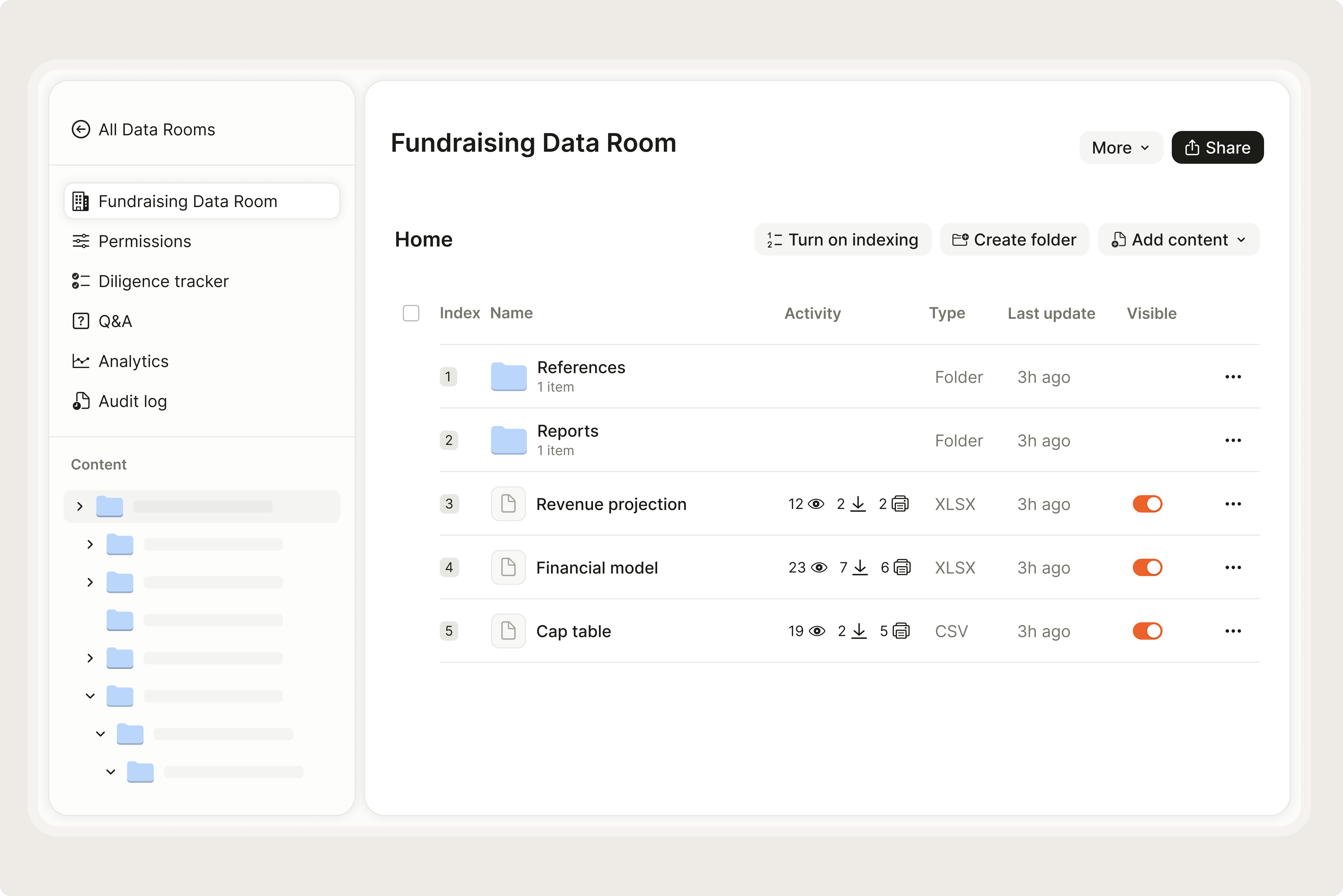
- 1.Build your edtech data room with all pitch filesCreate an Ellty data room and upload your pitch deck, paid contracts, and learning outcome data. Edtech investors request materials within hours of any promising first conversation - be organized before your first meeting.
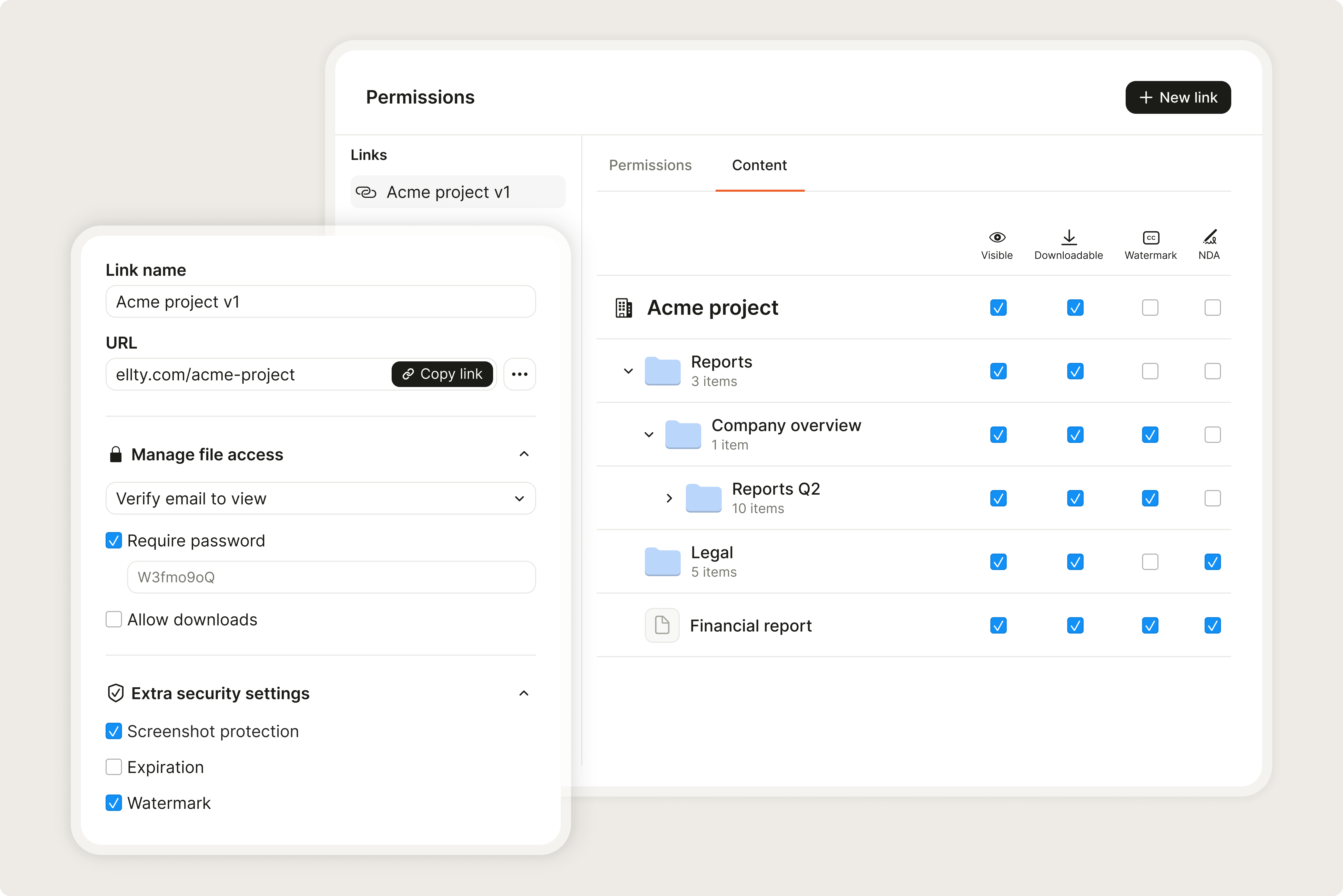
- 2.Set permissions to protect outcome and customer dataRequire email verification before any investor accesses your contracts or financial projections. Use screenshot protection for proprietary outcome data and customer details.
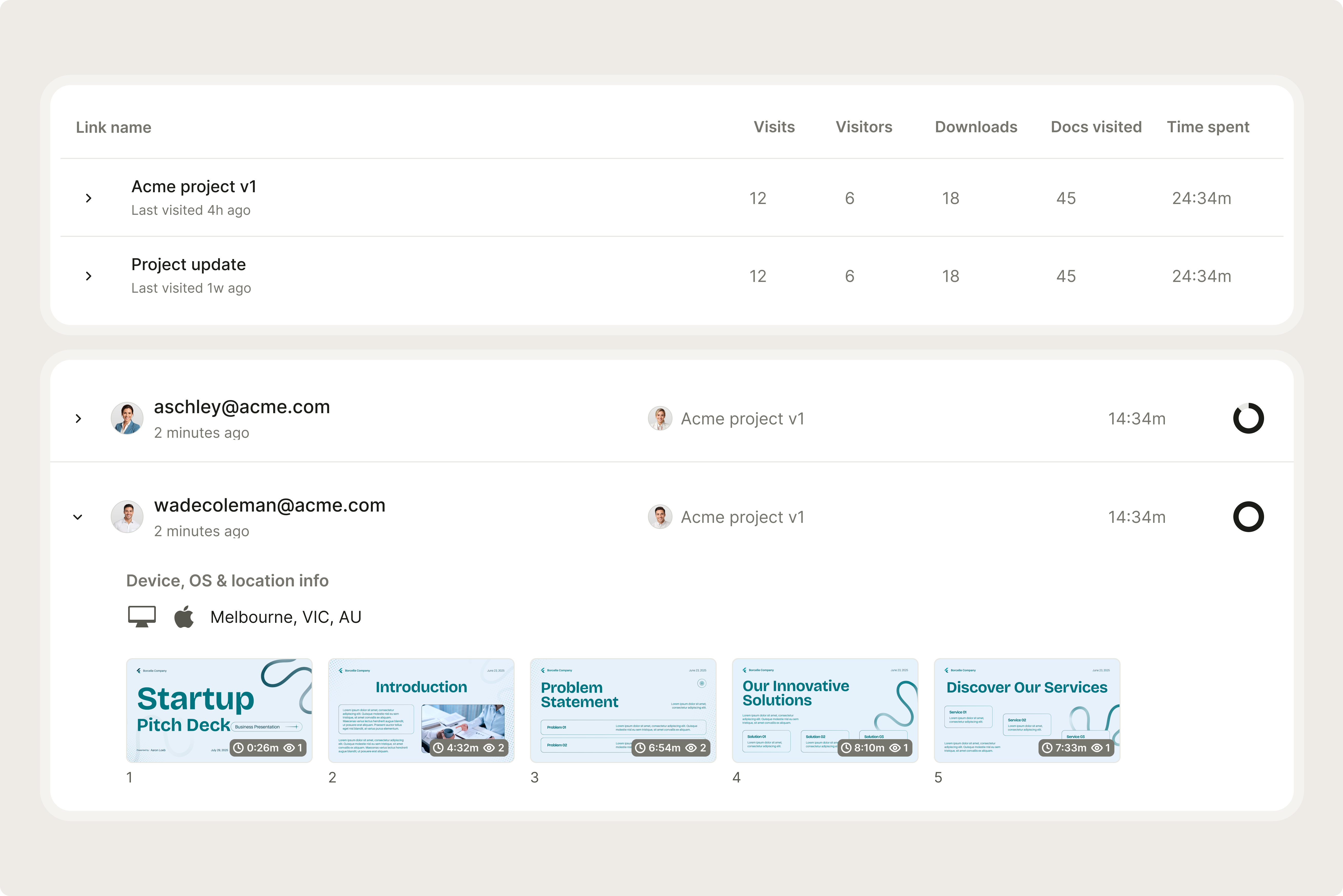
- 3.Get real-time alerts when investors review your pitchKnow which investors open your data room and how long they spend on each section. If an Owl or Reach partner reads your learning outcomes slide twice, follow up on that data the same day.
Common questions about Vancouver edtech investors
- InBC and VANTEC require BC presence. Owl Ventures, Reach Capital, and Emerge invest globally. Having a BC address helps with InBC applications and provincial programs.
- Usually 10-14 weeks from first intro to wire. Having your paid contracts and outcome data in an Ellty data room before your first meeting removes weeks of back-and-forth.
- Not required, but 40% of funded edtech founders come from outside education. You need at least one team member who understands institutional procurement cycles from the inside.
- A pilot is a test with no financial commitment. Investors in 2026 want signed, paying contracts. One school district paying you beats ten free pilots every time.
- Before your first investor conversation. Upload to Ellty and send trackable links so you see which investors are genuinely engaged before spending time on follow-up calls.
- Most do, especially Pender, Rhino, and the global funds. BC market size alone rarely justifies a Series A - show your US go-to-market plan and first US customer evidence.