Sports tech investors are actively writing checks into analytics platforms, fan engagement tools, athlete performance software, and sports betting infrastructure in Toronto in 2025 and 2026. Relay Ventures backed The Curling Group in a sportstech seed round. Courtside Ventures closed its $100M Fund III with Michael Jordan as an LP and is actively deploying into North American deals. If you're raising for a sports tech company in Toronto, these 14 investors are reviewing pitches right now.
Raising money for a sports tech company is harder than raising for generic SaaS. Most investors don't understand why a team management platform is structurally different from a project management tool, or why fan engagement economics look nothing like typical consumer app metrics. You'll waste a lot of time pitching generalist VCs who nod along and then pass because they can't model the TAM. The 14 investors on this list actually know the space or have enough sports-adjacent deals in their portfolio to evaluate yours without needing a primer.
Toronto's sports industry is bigger than most founders realize when they start fundraising. You've got MLSE (Maple Leafs, Raptors, Toronto FC, Argonauts), the Blue Jays, and BMO Field expansions driving real enterprise demand for sports technology. That's before you factor in the startup ecosystem of Canadian sports media companies, sports betting operators post-legalization, and the growing youth sports market. Proximity to league offices and team operations gives Toronto founders a real distribution advantage when pitching enterprise sports tech products.
Sports tech in Canada raised over $109 million in early 2025 deals alone. The categories attracting the most capital right now are AI-powered video analysis, fan engagement platforms, sports betting infrastructure, and athlete wearables. Investors who backed winning companies in those categories - like Relay Ventures with their sportstech investments - bring network value beyond just the check. That network access matters when your go-to-market requires league partnerships or team integrations that you can't cold-email your way into.
Before you reach out to any of these investors, set up your fundraising data room first. Sports tech investors ask for your ARR, your team partnership pipeline, your data licensing agreements if applicable, and your unit economics broken out by customer segment. Having these ready before your first call signals maturity. Most founders who get funded had their materials organized before the term sheet conversation started - not scrambling to compile them afterward.
| Stage | Check Size | Sector Focus | Contact | |
|---|---|---|---|---|
| Relay Ventures | Seed, Series A | $1M-$10M | Sports tech, media, fintech, proptech | relay.vc |
| Courtside Ventures | Seed, Series A | $1M-$5M | Sports, gaming, lifestyle, fan engagement | courtsidevc.com |
| Golden Ventures | Seed | $500K-$3M | Sports tech, consumer, AI platforms | golden.ventures |
| OMERS Ventures | Series A to C | $5M-$30M | Sports platforms, digital media, software | omersventures.com |
| MaRS IAF | Seed, Series A | $500K-$2M | Sports tech, consumer software, analytics | marsdd.com |
| SeventySix Capital | Seed, Series A | $500K-$5M | Sports betting, esports, performance tech | seventysixcapital.com |
| Panache Ventures | Pre-seed, Seed | $200K-$1M | Consumer, sports tech, media platforms | panache.ca |
| BDC Capital | Seed to Series C | $1M-$20M | Sports tech, software, consumer platforms | bdc.ca |
| Will Ventures | Seed, Series A | $1M-$10M | Sports, media, health tech, performance | willventures.com |
| Inovia Capital | Pre-seed to Late | $1M-$50M | Consumer, sports platforms, enterprise tech | inovia.vc |
| Georgian Partners | Series B, Series C | $10M-$50M | B2B software, sports analytics, AI | georgian.io |
| ADvantage Sports Tech | Pre-seed, Seed | $250K-$2M | Fan engagement, athlete wearables, analytics | advantagesportstechfund.com |
| Maple Leaf Angels | Pre-seed, Seed | $100K-$500K | Sports tech, consumer, software | mapleleafangels.com |
| Round13 Capital | Seed, Series A | $1M-$5M | Sports software, consumer platforms, media | round13capital.com |
See who reads your pitch deck
Upload your sports tech deck to Ellty and send each investor a trackable link.
Start free 14-day trialWhat is a sports tech investor?
A sports tech investor backs companies building software, hardware, or data platforms at the intersection of sports, media, and technology. That covers a wide range - performance analytics software for professional teams, fan engagement apps, sports betting infrastructure, athlete wearables, esports platforms, and league management tools. The category is broad enough that you'll find generalist VCs dipping in, but the most useful investors for your raise are the ones who've already backed a sports tech company and understand the unique distribution channels.
The difference between a sports tech investor and a regular consumer VC comes down to one thing: network access. Sports tech is a relationship business. Getting a pilot agreement with the Toronto Raptors or Toronto FC doesn't happen through a product demo - it happens through an introduction from someone who already has a relationship with the team's technology staff. The right investor can cut 12 months off your enterprise sales cycle. That's worth something beyond the check.
Check sizes in Toronto for sports tech seed rounds typically run $500K to $3M. At Series A, Canadian funds write $3M to $10M checks, and US-based funds active in the Canadian market can lead larger rounds. The more specialized the investor's sports focus, the more useful their specific network will be for your business. Relay Ventures' John Albright is specifically focused on sports tech and media from Toronto. Courtside Ventures has backed 97+ companies in sports, gaming, and lifestyle globally. Those are two very different types of value-add, even if they write similar-sized checks.
Sports tech VCs also differ in their stage tolerance. Some will invest before you have a single team or league as a customer, betting on the founding team and market insight. Others won't move until you have at least one paid enterprise contract with a professional team, a league, or a large sports media property. Knowing which camp your target investor falls into before your first meeting is how you avoid pitching the wrong fund with the wrong traction profile.
Sports, lifestyle, and gaming represent the next generation of consumer spending and time allocation. We partner with founders who challenge traditional definitions and build sustainable, scaled consumer businesses.
14 top sports tech investors in Toronto
1. Relay Ventures
Toronto's most relevant sports tech VC - John Albright is specifically focused on sports tech, media, and proptech, and has made multiple sportstech investments from the Toronto base.
- Recent Deals: Backed The Curling Group in a sportstech seed round (2025); previously invested in Playmaker Capital (sports media, sold to Better Collective); backed TouchBistro across multiple rounds
- LinkedIn: Relay Ventures LinkedIn
- Sector Focus: Sports tech, fintech, proptech, media
- Stage Focus: Seed, Series A
- Location: Toronto, ON
- Website: relay.vc
2. Courtside Ventures
The leading early-stage VC exclusively focused on sports, gaming, and lifestyle - they've raised $300M+ across four funds and backed 97+ companies including The Athletic (sold to NYT for $550M) and StockX.
- Recent Deals: Led Jump $23M Series A for fan experience platform (August 2025); backed Packz $10.7M with Raine Group and others (April 2026); Michael Jordan joined as LP in $100M Fund III (November 2024)
- LinkedIn: Courtside Ventures LinkedIn
- Sector Focus: Sports tech, gaming, lifestyle, fan engagement, sports betting
- Stage Focus: Seed, Series A
- Location: New York, NY (active in Canadian deals)
- Website: courtsidevc.com
3. Golden Ventures
Toronto's leading seed fund with 180+ portfolio companies - they'll look at sports tech if you have a compelling founder story and early technical traction.
- Recent Deals: Fund V closed at $100M+; backed swXtch.io (April 2026); active across consumer, AI, and sports-adjacent software plays with strong founder focus
- LinkedIn: Golden Ventures LinkedIn
- Sector Focus: Consumer tech, sports tech, AI, software platforms
- Stage Focus: Seed
- Location: Toronto, ON
- Website: golden.ventures
4. OMERS Ventures
VC arm of one of Canada's largest pension funds with $5B+ deployed - they've backed sports-adjacent platforms and are well-positioned for later-stage sports tech deals.
- Recent Deals: Led TouchBistro Series E ($158M, February 2025); backed Ritual before Shopify acquisition; active at Series A to C across consumer and enterprise software in Canada
- LinkedIn: OMERS Ventures LinkedIn
- Sector Focus: Sports platforms, digital media, enterprise software, consumer tech
- Stage Focus: Series A to Series C
- Location: Toronto, ON
- Website: omersventures.com
5. MaRS Investment Accelerator Fund
Toronto's government-backed tech investor that has made 9+ investments in the past 12 months across Ontario startups including sports and consumer tech.
- Recent Deals: 9 investments in past 12 months across Ontario-based technology companies; active in sports tech, consumer software, and analytics platforms at seed and early Series A
- LinkedIn: MaRS Discovery District LinkedIn
- Sector Focus: Sports tech, consumer software, analytics, health tech
- Stage Focus: Seed, Series A
- Location: Toronto, ON
- Website: marsdd.com
6. SeventySix Capital
Philadelphia's dedicated sports tech VC with 25+ years of sports investing - they've backed DraftKings, FuboTV, and Cosm, and are among the most relevant US funds for sports betting and media plays.
- Recent Deals: Backed Lucra Sports in Series A (2025); Quintar AR expanded to Apple Vision Pro at PGA TOUR (2025); previously exited VSiN to DraftKings and C360 to Cosm
- LinkedIn: SeventySix Capital LinkedIn
- Sector Focus: Sports betting, esports, performance tech, sports media
- Stage Focus: Seed, Series A
- Location: Philadelphia, PA (active in Canadian sports tech deals)
- Website: seventysixcapital.com
Organize your pitch materials now
Build an Ellty data room with your deck, financials, and team partnerships before outreach.
Start free 14-day trial7. Panache Ventures
Canada's leading pre-seed fund with 130+ founders backed - they write first checks and have a national presence across Toronto, Montreal, and Calgary for sports and consumer tech plays.
- Recent Deals: 8+ investments in past 12 months; active pre-seed across consumer, sports tech, and media platforms; hands-on support model helps founders with early product and fundraise
- LinkedIn: Panache Ventures LinkedIn
- Sector Focus: Consumer tech, sports tech, media platforms, DTC
- Stage Focus: Pre-seed, Seed
- Location: Montreal, QC (active across Canada including Toronto)
- Website: panache.ca
8. BDC Capital
Canada's national development bank VC arm - the most active Canadian investor by deal count, and a co-investor on most major Canadian sports tech rounds.
- Recent Deals: Launched $150M life sciences fund (April 2026); co-investor across consumer, software, and sports tech; one of the most active investors by deal volume in Canada with national presence
- LinkedIn: BDC Capital LinkedIn
- Sector Focus: Sports tech, software, consumer platforms, analytics
- Stage Focus: Seed to Series C
- Location: Toronto, ON (national presence)
- Website: bdc.ca
9. Will Ventures
New York-based VC investing at the intersection of sports, media, and health - they backed Jump's $25M round and are among the most active sports-specific investors for Canadian deals.
- Recent Deals: Co-invested in Jump $25M Series A alongside Seven Seven Six and Drive by DraftKings (October 2025); portfolio includes Tonal and PlayVS; focused on founders bridging health, performance, and sports media
- LinkedIn: Will Ventures LinkedIn
- Sector Focus: Sports, media, health tech, performance analytics, fan engagement
- Stage Focus: Seed, Series A
- Location: New York, NY (active in Canadian sports tech deals)
- Website: willventures.com
10. Inovia Capital
Canada's full-stack VC with $2.2B+ AUM that backs founders from pre-seed to pre-IPO - they're relevant for sports tech companies with enterprise ambitions and Canadian roots.
- Recent Deals: Active across consumer and software; backed Mejuri, Lightspeed, and Hopper; offices in Toronto, Montreal, Calgary, San Francisco; co-investor on major Canadian rounds across verticals
- LinkedIn: Inovia Capital LinkedIn
- Sector Focus: Sports platforms, enterprise tech, consumer, AI applications
- Stage Focus: Pre-seed to pre-IPO
- Location: Toronto, ON / Montreal, QC / Calgary, AB
- Website: inovia.vc
11. Georgian Partners
Growth-stage B2B software VC with $5.6B AUM - relevant for sports tech companies at Series B with proven ARR and enterprise sales motion, particularly analytics and data platforms.
- Recent Deals: Managing $5.6B across funds; backed Ritual (exited to Shopify, January 2025); focus on AI-enabled B2B software at growth stage with meaningful Canadian portfolio
- LinkedIn: Georgian Partners LinkedIn
- Sector Focus: B2B software, sports analytics, data platforms, AI
- Stage Focus: Series B, Series C
- Location: Toronto, ON
- Website: georgian.io
12. ADvantage Sports Tech Fund
Global sports tech specialist backed by athletes and sports executives - focused specifically on fan engagement, connected athletes, and performance technology.
- Recent Deals: Active at pre-seed and seed across North America; investing in fan engagement platforms, athlete wearable technology, and connected sports infrastructure; athlete LP base includes professional players
- LinkedIn: ADvantage Sports Tech LinkedIn
- Sector Focus: Fan engagement, athlete wearables, performance analytics, connected sports
- Stage Focus: Pre-seed, Seed
- Location: Global (active in North American deals)
- Website: advantagesportstechfund.com
13. Maple Leaf Angels
Toronto's largest angel network with 150+ members, many of whom have direct sports industry experience through connections to MLSE and Toronto's professional sports organizations.
- Recent Deals: Regular pitch competitions with structured investment process; active in sports tech, consumer software, and early-stage platforms across Ontario; co-investment with local seed VCs
- LinkedIn: Maple Leaf Angels LinkedIn
- Sector Focus: Sports tech, consumer software, analytics, early-stage platforms
- Stage Focus: Pre-seed, Seed
- Location: Toronto, ON
- Website: mapleleafangels.com
14. Round13 Capital
Toronto-based Seed and Series A fund with a strong Canadian software portfolio - they back founders building scalable products and have co-invested on sports-adjacent software rounds.
- Recent Deals: Active in seed and Series A; portfolio spans software, operations platforms, and consumer tech; regular co-investor alongside BDC Capital and other Toronto-based funds
- LinkedIn: Round13 Capital LinkedIn
- Sector Focus: Sports software, consumer platforms, media, software
- Stage Focus: Seed, Series A
- Location: Toronto, ON
- Website: round13capital.com
How to verify a fund is still active
The biggest mistake sports tech founders make is pitching funds that aren't deploying. Funds have lifecycles - a five-year-old $50M fund that's been 90% deployed isn't going to write you a $2M check regardless of how strong your pitch is. Before you reach out to any of the 14 investors on this list, spend 30 minutes verifying they're in active deployment. Check if they've made an investment in the past 12 months. Look for press releases, portfolio updates on their website, or recent LinkedIn announcements about new investments.
The easiest way to check is through Crunchbase or PitchBook - search the fund name and filter investments by date. If the last investment was over 18 months ago, the fund is probably between vehicles and not actively writing checks. Some funds will still take meetings even if they're not deploying, because they're building relationships for the next fund. That's fine for networking, but don't count it as active fundraising pipeline. Setting up your pitch deck sharing software with trackable links also lets you see whether investors actually open your materials - a fund that doesn't open your deck after two weeks is probably not deploying.
Fund websites almost never say "we're not deploying." You'll get the same language about thesis and portfolio companies whether the fund is actively writing checks or waiting to close Fund IV. Portfolio founders are your best source here. Find two or three founders who've raised from the fund you're targeting and ask them directly: when was your last investment, how active is the partner you worked with, and would you go back to them? That conversation takes 20 minutes and can save you six weeks of dead-end outreach. Use the startup data room template to make sure your materials are clean before you reach out, so you're not scrambling once a fund expresses interest.
Sports tech enterprise deals
Enterprise sales in sports tech works differently than in most software categories. You don't close a deal with the Toronto Raptors by sending a cold email to a general inquiries address. The decision-maker for technology adoption at a professional sports team is usually the Chief Technology Officer or VP of Innovation, and they have inbound interest from dozens of vendors every month. Getting through requires either a warm introduction from someone they trust or a very specific use case that's already demonstrated value at another team in the same league. Build your reference customer list before you start enterprise outreach.
The fastest path to a team or league partnership is through a mutual contact. Your investors should be your primary source of these introductions. If Relay Ventures or Courtside Ventures has backed your company, their portfolio relationships with team executives and league technology staff can get you a meeting that would otherwise take six months of cold outreach to schedule. That's the deal value of a sports-specific investor beyond the capital - they've already done the work of building relationships with the exact people you need to reach. When you set up your Ellty data room and share a trackable link with a team's technology team, you can see exactly which documents they spent time on - which is a much better signal than waiting for a reply email.
Once you have one reference customer at a professional team, the league network effect accelerates your sales significantly. Teams talk to each other. If the Toronto Raptors' analytics team is using your platform and seeing value, you'll get warm introductions to other NBA teams through the league's technology committee structure. Building your first enterprise case study at a Canadian team and then expanding into the US league market is a proven playbook for Toronto sports tech founders. Make sure you've organized your Series A data room materials before this expansion phase begins, because investor conversations accelerate when your enterprise pipeline starts moving.
Sports tech due diligence
Sports tech investors run a specific due diligence process that's different from what most founders expect from a software deal. They want to know who controls the data in your product - whether you own it, license it, or depend on third-party data providers who could change their terms. Data dependencies are the biggest risk area in sports tech, and investors will dig into your data agreements before they agree to term sheets. If you're using official league tracking data, player biometric data, or media rights data, make sure your agreements are clean and transferable.
Your revenue concentration by customer is the other area that gets scrutinized hard. A sports tech company with 80% of ARR from one team or one league is a very different risk profile than a company with 20 enterprise customers across three leagues. Investors want to see that your product works across different team sizes, sports, and geographies - not just a single pilot with one customer who happens to be a friend of the founder. One way to demonstrate this early is through detailed analytics on how customers use your product. If you can show page-by-page engagement data in your fundraising data room presentation, you'll answer the "is this sticky?" question before they ask it.
IP ownership in sports tech is more complex than in most software categories. If your product involves computer vision analysis of game footage, you need to understand your rights relative to the league's media rights holders. If your product generates performance insights on athletes, you may have obligations under collective bargaining agreements. Investors who've backed multiple sports tech companies have seen founders get tripped up on these issues during due diligence. Have your legal structure reviewed before you start a serious raise - particularly if your product touches player data, game footage, or proprietary league statistics.
How to pitch a sports tech investor in Toronto
Step-by-step for founders raising from Toronto-based VCs and global sports tech funds in 2026.
- 1.Lead with distribution, not technologySports tech investors care less about your algorithm and more about how you get into teams. Show your league partnership pipeline and enterprise sales motion before your tech stack.
- 2.Explain your data rights and licensing clearlyInvestors will ask who owns the data your product depends on. Have clean agreements ready before your first meeting - data dependency risk is the fastest way to kill a sports tech deal.
- 3.Show ARR with customer concentration breakdownOne big team customer looks good but raises concentration risk flags. Show how you're diversifying across leagues, geographies, and team sizes before your Series A pitch.
- 4.Bring a reference from an existing team or leagueA letter of support or testimonial from a team CTO cuts your credibility gap in half. Sports investors trust proof of enterprise validation more than any pitch deck slide.
- 5.Know the league technology approval processMost professional leagues require technology vendors to go through an approval process before teams can use their products. Show you understand this and have started navigating it.
How Ellty helps you land a sports tech investor
Now that you know the investors, prepare your materials before you reach out to any of them. Upload your pitch deck, team contracts, and financial model to Ellty - then send each investor a separate trackable link so you know who's actually reviewing your deal.
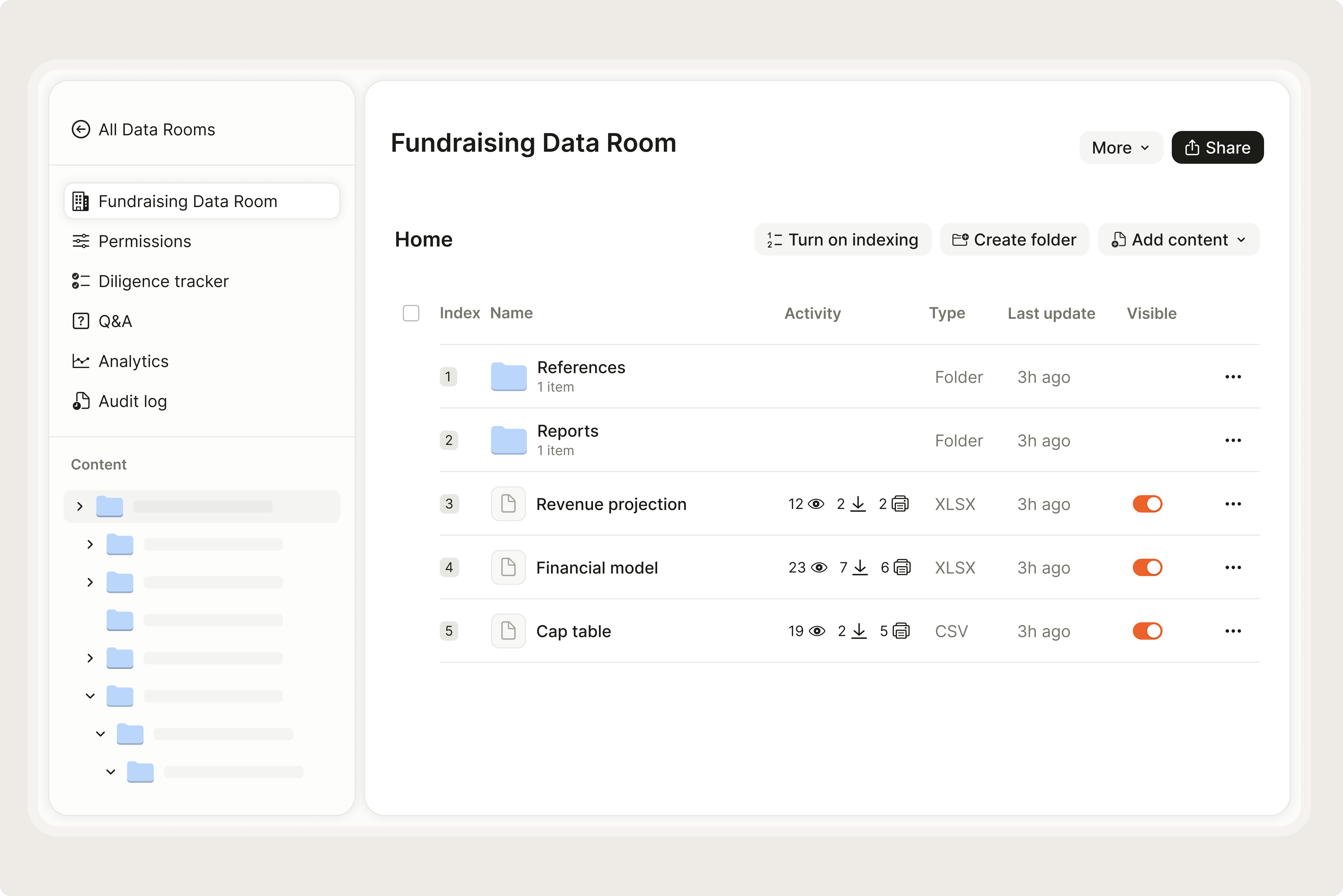
- 1.Upload your sports tech deck and supporting filesCreate an Ellty data room and add your pitch deck, ARR breakdown, and any league partnership agreements. Investors move faster when materials are already organized and accessible.
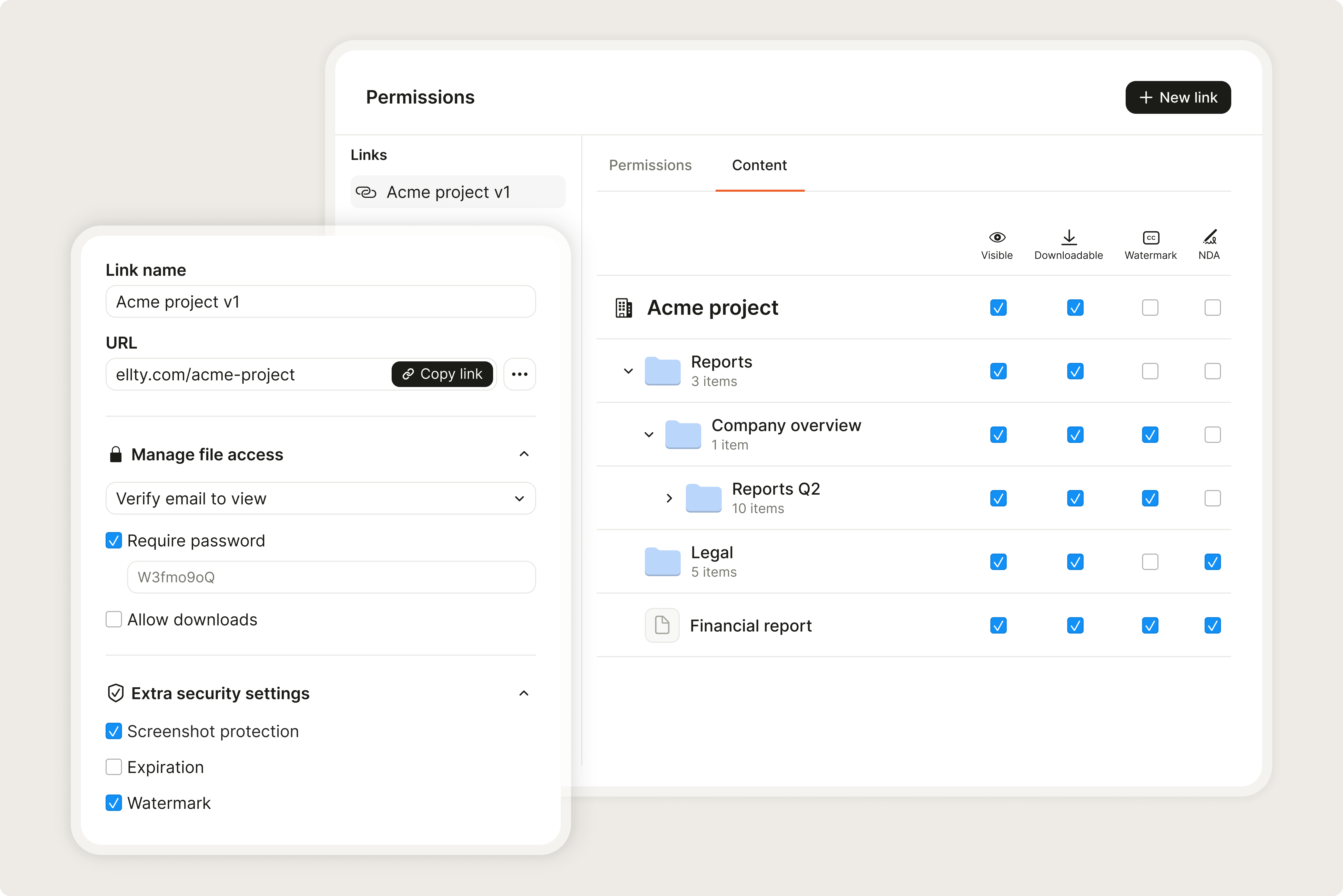
- 2.Set link permissions for each investor you contactGenerate a unique trackable link per investor and require email verification before access. Control who sees your data agreements and cap table without sending sensitive files over email.
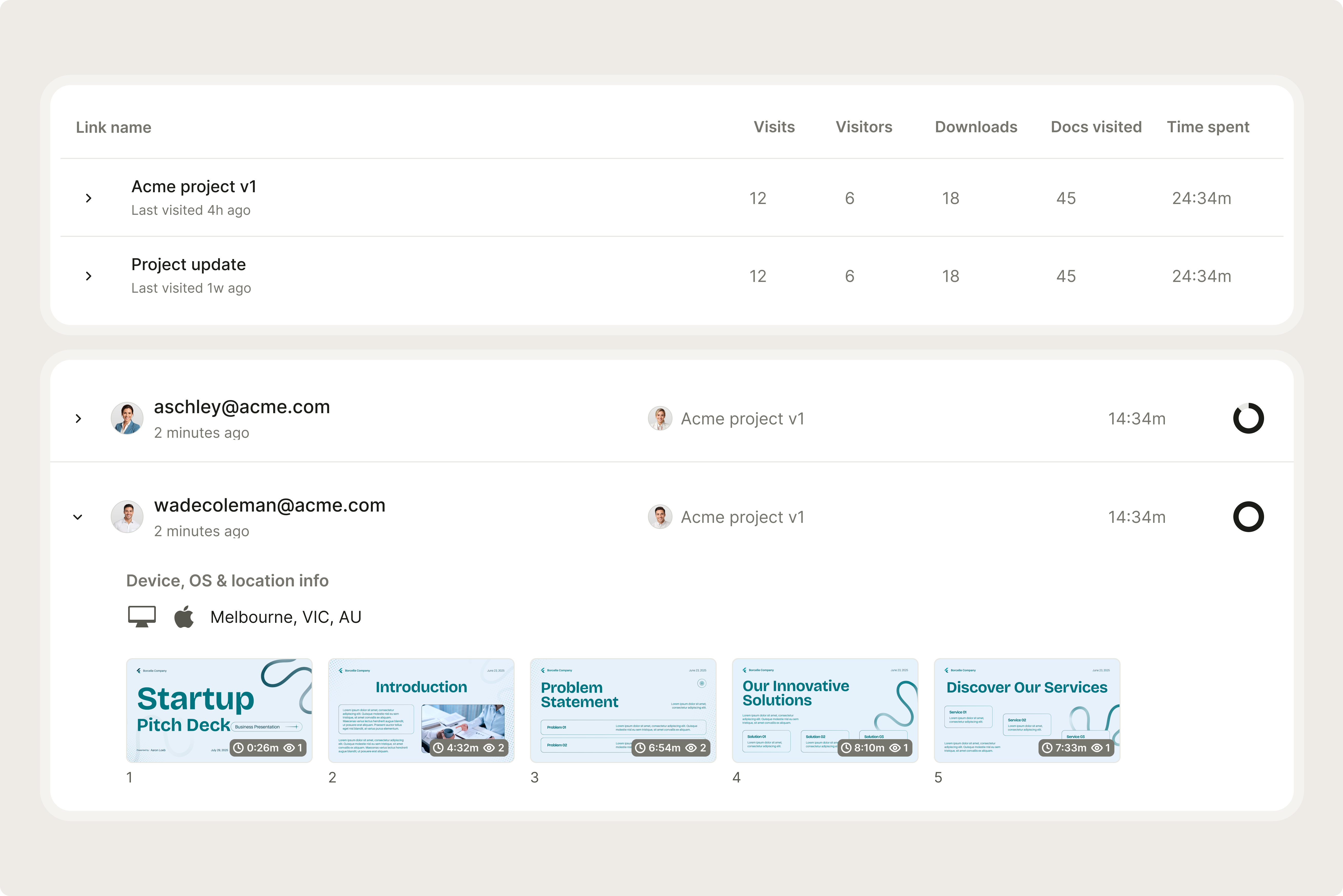
- 3.Get notified when investors review your deckSee exactly which slides investors spend the most time on - if they linger on your enterprise pipeline, they're evaluating your traction seriously and you can follow up with context.
Common questions about sports tech investors
- Not always, but it helps significantly. A signed pilot agreement with one professional team changes your credibility with sports-specific investors overnight. Without it, your pitch relies entirely on the investor believing your go-to-market hypothesis.
- Sports tech investors have existing relationships with league executives and team operators that can accelerate your enterprise sales by months. A generalist VC can write a check but can't get you a meeting with the Raptors' CTO the same week you close.
- Both if you can. Canadian funds like Relay Ventures and OMERS understand the local market and have Toronto team relationships. US sports specialists like Courtside and SeventySix bring global league networks that matter when you're expanding beyond Canada.
- Before your first investor meeting. Sports tech VCs move quickly from pitch to due diligence, and they'll ask for your data licensing agreements, ARR breakdown, and team contracts within days. Having them in an Ellty data room signals operational discipline.
- Most expect at least one paid pilot with a team, league, or sports media company - not just a letter of intent. If you're pre-revenue, a signed LOI with a credible partner is the next best signal. Pure concept pitches rarely close seed rounds in sports tech.
- Start with other founders who've raised from the fund. The [Toronto gaming investors](/investors/toronto-gaming-investors) and [Toronto SaaS investors](/investors/toronto-saas-investors) pages have overlapping networks. Portfolio founder intros convert 4x better than cold outreach.