A verified list of 18 active ecommerce investors funding Canadian DTC, marketplace, and retail tech startups in 2026. Covers dedicated ecommerce VCs, Toronto-based generalist funds with a commerce thesis, revenue-based financing platforms, and corporate venture arms — with recent deals, check sizes, stage focus, and LinkedIn profiles for each.
Canada's ecommerce market is projected to grow from $81B USD in 2024 to $119B by 2029 at 7.5% CAGR.
Toronto ranked #4 globally in startup ecosystems — home to Shopify, Clearco, and Canada's largest VC funds.
229 companies have received funding in B2C ecommerce in Toronto alone. New deals close every month in 2026.
The bar has moved. Investors in 2026 want profitable unit economics from day one — not growth-at-all-costs.
DTC funding is harder to get but still flows to founders who show CAC payback, retention, and real margins.
Toronto ecommerce investors: overview
| Stage | Check | Focus | Contact | |
|---|---|---|---|---|
| Shopify Ventures | Seed to Series B | Strategic, undisclosed | Ecommerce ecosystem, merchant tools | shopify.vc |
| Forerunner Ventures | Seed, Series A | $250K-$20M | DTC, consumer, retail tech | forerunnerventures.com |
| Lerer Hippeau | Pre-seed, Seed, Series A | $250K-$20M | DTC, consumer, ecommerce brands | lererhippeau.com |
| Clearco | Seed to Growth | $10K-$10M (non-dilutive) | DTC, Shopify brands, ecommerce | clear.co |
| Golden Ventures | Seed | $500K-$3M | Ecommerce, marketplace, B2B SaaS | golden.ventures |
| Relay Ventures | Seed, Series A, B | $1M-$10M | Mobile commerce, payments, retail | relayventures.com |
| Georgian | Series B, Growth | $10M-$100M | Commerce tech, AI, B2B SaaS | georgian.io |
| BDC Venture Capital | Seed to Growth | $500K-$15M | All sectors including ecommerce | bdc.ca |
| Inovia Capital | Seed to Growth | $500K-$20M+ | Ecommerce, SaaS, fintech, AI | inovia.vc |
| OMERS Ventures | Series A, B | $5M-$25M | Commerce platforms, vertical SaaS | omersventures.com |
| Panache Ventures | Pre-seed, Seed | $250K-$2M | Ecommerce, marketplace, B2B SaaS | panache.vc |
| MaRS IAF | Pre-seed, Seed | Up to $1.5M | Retail tech, ecommerce, Ontario | marsiaf.com |
| Accel | Seed, Series A, B | $1M-$30M | Marketplace, DTC tech, retail SaaS | accel.com |
| General Catalyst | Seed to Growth | $1M-$50M+ | Consumer, retail, commerce platforms | generalcatalyst.com |
| Commerce Ventures | Seed, Series A | $500K-$10M | Retail tech, payments, commerce infra | commerce.vc |
| Plug and Play Tech Center | Pre-seed, Seed | $50K-$500K | Ecommerce, retail tech, supply chain | plugandplaytechcenter.com |
| Export Development Canada | Seed to Growth | $500K-$15M | Canadian ecommerce exporters | edc.ca |
| Mistral Venture Partners | Seed, Series A | $500K-$5M | Enterprise SaaS, ecommerce tech | mistral.vc |
Share your ecommerce deck with trackable links
Upload your pitch to Ellty and see which investors open your unit economics and retention slides.
Start free 14-day trialWhat is an ecommerce investor?
An ecommerce investor backs companies building DTC brands, retail tech, marketplaces, and commerce infrastructure.
They're not all the same. Shopify Ventures and Clearco write checks because you're in the commerce ecosystem. Generalist VCs like Inovia and Golden evaluate ecommerce the same way they'd evaluate any software company.
Revenue-based financing from Clearco is different from equity — you repay from revenue until a flat fee is returned. There's no dilution and no board seat involved.
Dedicated consumer VCs like Forerunner and Lerer Hippeau have deep brand-building expertise across 20+ DTC exits. They know how to help a founder go from $1M ARR to $20M in revenue.
Most ecommerce investors in 2026 want CAC payback under 12 months and gross margins above 40%. A strong month-12 retention cohort shows whether customers actually come back.
2026 is the year of the builder. Ecommerce founders who control their unit economics will find capital - those chasing growth metrics won't.
18 ecommerce investors in 2026
1. Shopify Ventures
Toronto's most strategically important ecommerce investor. They back companies making Shopify merchants more successful — their latest investment in Gumloop closed March 2026.
- Recent deals: Gumloop Series B (March 2026); Augment Technologies $85M Series A (September 2025); Graphite $52M Series B (December 2025); Crstl B2B commerce (2025); 43 total portfolio investments
- LinkedIn: Shopify Ventures LinkedIn
- Sector focus: Ecommerce enablement, merchant tools, logistics, fintech, marketing tech
- Stage focus: Seed to Series B
- Location: Ottawa, Ontario (invests globally, Canada-first)
- Website: shopify.vc
2. Forerunner Ventures
San Francisco's leading consumer and DTC VC with $3B AUM. They backed Glossier, Warby Parker, Hims, and Dollar Shave Club. Fund VII ($500M) closed November 2024 and is actively deploying.
- Recent deals: 24 investments in 2025; 6 investments by March 2026; Fund VII $500M closed (Nov 2024); "Human Insight in the Age of AI" thesis driving 2026 deployment
- LinkedIn: Forerunner Ventures LinkedIn
- Sector focus: DTC brands, consumer tech, retail, health and wellness commerce
- Stage focus: Seed, Series A
- Location: San Francisco, CA (invests in Canadian DTC founders)
- Website: forerunnerventures.com
3. Lerer Hippeau
New York's most active seed fund with $1.2B AUM and deep DTC expertise. They led Warby Parker's early rounds and launched LH Fund IX ($200M) in April 2025.
- Recent deals: LH Fund IX $200M launch (April 2025); 19 investments in 2025; 2 investments by January 2026; active DTC and consumer brand deployment through 2025-2026
- LinkedIn: Lerer Hippeau LinkedIn
- Sector focus: DTC, consumer brands, ecommerce, media, lifestyle
- Stage focus: Pre-seed, Seed, Series A
- Location: New York, NY (invests in Canadian DTC founders)
- Website: lererhippeau.com
4. Clearco
Toronto-founded revenue-based financing platform — $5B+ deployed to 10,000+ ecommerce brands globally. They extended 46% more capital in mid-2025 than in 2024. A new flexible funding suite launched in September 2025.
- Recent deals: Flexible Growth Funding Suite launch (September 2025); 46% more funding deployed July-August 2025 vs 2024; Rolling Funding Capacity product launch (auto-refreshing capital); $200M+ deployed annually to Shopify and DTC brands
- LinkedIn: Clearco LinkedIn
- Sector focus: DTC brands, Shopify merchants, ecommerce SaaS, subscription businesses
- Stage focus: Seed to Growth (non-dilutive, revenue-based)
- Location: Toronto, Ontario
- Website: clear.co
Before you reach out to Clearco or any equity investor, set up an Ellty data room. Upload your financials, retention cohorts, and unit economics so Clearco can underwrite fast. Organized data gets you a faster and larger offer.
5. Golden Ventures
Toronto's most active seed fund with 220+ investments to date. Their $100M Fund V includes ecommerce and marketplace as explicit thesis areas alongside AI and climate.
- Recent deals: swXtch.io seed (April 2026); Fund V $100M closed (2024) with ecommerce and marketplace thesis; portfolio includes Skipthedishes (acquired by Just Eat) and Inkbox (acquired by BIC); active consumer and ecommerce deployment through 2025-2026
- LinkedIn: Golden Ventures LinkedIn
- Sector focus: Ecommerce, marketplace, B2B SaaS, fintech, AI
- Stage focus: Seed
- Location: Toronto, Ontario
- Website: golden.ventures
Know who's reading your pitch deck
Create trackable Ellty links for each investor. See page-by-page engagement before your follow-up call.
Start free 14-day trial6. Relay Ventures
Toronto's specialist in mobile commerce, payments, and retail applications with 10+ years in the sector. They made 3 investments in 2025 and co-led the $1M seed for Trusty in July 2025.
- Recent deals: Trusty $1M pre-seed co-lead with Graphite Ventures (July 2025); Mave AI follow-on (January 2026); 3 investments in 2025; portfolio includes companies in consumer, enterprise, fintech, and mobile commerce
- LinkedIn: Relay Ventures LinkedIn
- Sector focus: Mobile commerce, payments, advertising, retail, consumer banking
- Stage focus: Seed, Series A, Series B
- Location: Toronto, Ontario
- Website: relayventures.com
7. Georgian
Toronto growth equity firm with $5.9B AUM and an early Shopify investment on their track record. They know commerce tech better than almost any Canadian fund. Georgian received a $100M strategic investment from Navigator Global in March 2026.
- Recent deals: Replit $400M Series D lead at $9B valuation (March 2026); Navigator Global $100M strategic investment in Georgian (March 2026); 9 investments in 2025; concentrated 6-per-year model with deep portfolio support
- LinkedIn: Georgian LinkedIn
- Sector focus: Commerce tech, AI, B2B SaaS, analytics, applied AI
- Stage focus: Series B, Growth (typically $10M-$100M checks)
- Location: Toronto, Ontario
- Website: georgian.io
Know which Toronto SaaS investors overlap with ecommerce. Many commerce tech companies fit both mandates and can run a parallel process with Georgian and sector-specific SaaS funds.
8. BDC Venture Capital
Canada's most active VC by deal count with $6B+ AUM. They co-invest in ecommerce and retail tech at every stage. In August 2025 BDC committed $200M to tech-for-legacy-industries including commerce infrastructure.
- Recent deals: $200M tech-for-legacy-industries program (August 2025); Cohere $500M Series D co-investment (August 2025); active retail tech and commerce platform deployment through 2025-2026; early-stage investing 66% of all VC deals in Canada in 2025
- LinkedIn: BDC Venture Capital LinkedIn
- Sector focus: All sectors including ecommerce, retail tech, marketplace, consumer — national mandate
- Stage focus: Seed to Growth
- Location: Toronto, Ontario (national offices)
- Website: bdc.ca
Set up an Ellty data room with your financial model, cap table, and retention cohorts before any BDC meeting. Organized due diligence documents as a trackable link signals you're ready to move when they co-invest alongside a lead.
9. Inovia Capital
Canada's largest multi-stage fund with $2.5B USD AUM. They backed Clearco, Skipthedishes, and League — all with ecommerce or commerce-adjacent DNA.
- Recent deals: Mila Venture Scientist Fund $100M launch (January 2026); Cohere $500M Series D co-lead (August 2025); Spellbook $50M Series B (October 2025); Clearco funding participation (ongoing portfolio support)
- LinkedIn: Inovia Capital LinkedIn
- Sector focus: Ecommerce, fintech, SaaS, AI, consumer platforms
- Stage focus: Seed to Growth
- Location: Toronto, Ontario (also Montreal, Calgary, San Francisco, London)
- Website: inovia.vc
10. OMERS Ventures
Pension-backed Toronto VC with $750M Fund IV focused on North America. They back commerce platforms and vertical SaaS with $5M-$25M tickets at Series A and B.
- Recent deals: Turnstile $29M co-investor (February 2026); Octaura Series A (June 2025); Arize AI $70M Series C co-investor (February 2025); 98 portfolio companies; withdrew from Europe to focus on North America in 2025
- LinkedIn: OMERS Ventures LinkedIn
- Sector focus: Commerce platforms, vertical SaaS, fintech, enterprise apps
- Stage focus: Series A, Series B
- Location: Toronto, Ontario (also New York, Palo Alto)
- Website: omersventures.com
Use Ellty trackable links before any OMERS follow-up. Upload your due diligence process materials — cap table, financials, and customer cohort data. You control what each partner reviews and exactly when they see it.
11. Panache Ventures
Canada's leading pre-seed fund with 5 new investments in the first five months of 2026. They write $250K-$2M first checks into ecommerce and marketplace startups before most VCs take a call.
- Recent deals: Parable $16.5M seed co-investment (November 2025); Cybrid $10M Series A (October 2025); 5 new investments in first five months of 2026; active ecommerce and marketplace pre-seed deployment
- LinkedIn: Panache Ventures LinkedIn
- Sector focus: Ecommerce, marketplace, AI, fintech, B2B SaaS
- Stage focus: Pre-seed, Seed
- Location: Montreal/Toronto (national fund)
- Website: panache.vc
12. MaRS Investment Accelerator Fund
Ontario's most active seed-stage fund — reached 200 total investments in January 2026. They're the realistic first institutional check for Ontario-based ecommerce and retail tech founders pre-revenue.
- Recent deals: TimeSmartAI (April 2026); MedReddie (November 2025); 200th investment milestone (January 2026); $100M+ deployed since 2008 across 200+ Ontario companies
- LinkedIn: MaRS IAF LinkedIn
- Sector focus: Retail tech, ecommerce, enterprise SaaS — Ontario-based mandate
- Stage focus: Pre-seed, Seed
- Location: MaRS Discovery District, 101 College St, Toronto, ON
- Website: marsiaf.com
13. Accel
Global VC firm that led ZyG's $60M Series A in May 2026 — a full DTC commerce OS for ecommerce founders. They also backed Etsy, Flipkart, and numerous retail tech companies over multiple cycles.
- Recent deals: ZyG $60M Series A lead (May 2026, DTC commerce platform); active marketplace and retail tech deployment globally through 2025-2026; Accel Euroscape and global fund actively deploying in commerce tech
- LinkedIn: Accel LinkedIn
- Sector focus: Marketplace, DTC tech platforms, retail SaaS, commerce infrastructure
- Stage focus: Seed, Series A, Series B
- Location: Palo Alto, CA (invests in Canadian ecommerce founders)
- Website: accel.com
14. General Catalyst
Global multi-stage VC with a long track record in consumer and retail tech. They backed Airbnb, Stripe, and Warby Parker — and stay active across commerce-adjacent categories.
- Recent deals: Active consumer and retail tech deployment globally through 2025-2026; strong track record in marketplace and commerce platform investments across multiple fund cycles
- LinkedIn: General Catalyst LinkedIn
- Sector focus: Consumer, retail, commerce platforms, health tech, fintech
- Stage focus: Seed to Growth
- Location: Cambridge, MA (invests in Canadian commerce founders)
- Website: generalcatalyst.com
Know which Toronto AI investors co-invest in commerce AI. AI-powered ecommerce personalization and pricing tools often attract both ecommerce VCs and dedicated AI fund mandates at the same time.
15. Commerce Ventures
San Francisco-based specialist fund investing exclusively at the fintech-commerce intersection. They back retail technology, payments, and the infrastructure that makes modern commerce run.
- Recent deals: Active retail tech and payments infrastructure deployment through 2025-2026; dedicated commerce focus across 10+ years and multiple fund cycles; portfolio spans pricing, loyalty, POS, and digital payments
- LinkedIn: Commerce Ventures LinkedIn
- Sector focus: Retail tech, payments, commerce infrastructure, loyalty, supply chain
- Stage focus: Seed, Series A
- Location: San Francisco, CA (invests in Canadian commerce tech)
- Website: commerce.vc
16. Plug and Play Tech Center
Silicon Valley accelerator and VC — ranked #1 investor in B2C ecommerce in Toronto by deal count. They invest in pre-seed and seed ecommerce startups through their retail and brand accelerator programs.
- Recent deals: Top investor in B2C ecommerce in Toronto by number of investments (2026 data); active retail and commerce accelerator programs in North America; 50+ corporate partners from Shopify to Target
- LinkedIn: Plug and Play Tech Center LinkedIn
- Sector focus: Ecommerce, retail tech, supply chain, marketplace, consumer apps
- Stage focus: Pre-seed, Seed
- Location: Sunnyvale, CA (Toronto presence via accelerator programs)
- Website: plugandplaytechcenter.com
17. Export Development Canada (EDC)
Canada's crown corporation for export-facing businesses — backing ecommerce companies selling cross-border into the US, EU, and emerging markets.
- Recent deals: 15 investments in the 12 months to January 2026; active Canadian ecommerce and digital export financing through 2025-2026; supports cross-border ecommerce with both equity and debt instruments
- LinkedIn: Export Development Canada LinkedIn
- Sector focus: All Canadian export-facing businesses — ecommerce, retail tech, digital media
- Stage focus: Seed to Growth (equity and non-dilutive financing)
- Location: Ottawa, ON (operates nationally)
- Website: edc.ca
Use an Ellty data room with your export documentation and cross-border financial model before any EDC conversation. EDC underwrites export viability alongside equity risk — organized startup fundraising materials show you've done the cross-border homework.
18. Mistral Venture Partners
Toronto-based seed-stage fund with 54 portfolio companies and a $7.5M commitment from Alberta Enterprise Corporation into Fund V in April 2026. They're the first institutional check for Ontario ecommerce tech founders.
- Recent deals: Fund V launch with Alberta Enterprise $7.5M commitment (April 2026); 4 investments in last 12 months; active enterprise software and ecommerce tech deployment through 2025-2026
- LinkedIn: Mistral Venture Partners LinkedIn
- Sector focus: Enterprise SaaS, AI in enterprise, ecommerce tech, B2B software
- Stage focus: Seed, Series A
- Location: Toronto and Ottawa, Ontario
- Website: mistral.vc
How ecommerce VCs read your numbers
Most ecommerce investors open your deck and go straight to gross margin. If you're under 40%, you don't have room for customer acquisition costs at scale.
CAC payback period is the next check. Under 12 months means you can grow without burning through investor capital on every new customer.
Month 3 and month 12 retention cohorts tell the story most founders try to hide. Investors pull this data first — it shows whether customers actually come back or just bought once.
Inventory and working capital cycles matter more in ecommerce than in SaaS. Clearco and EDC underwrite inventory risk directly — equity VCs want to see you've solved it before you scale.
Most ecommerce investors in 2026 are tired of GMV-first decks that bury margin. If your pitch leads with gross merchandise value, expect that question in the first five minutes.
How to verify an ecommerce fund is still deploying
Check Crunchbase or Tracxn for investments closed in the last six months. A fund with no new deals in 12 months is likely in portfolio triage — not looking for new companies.
For Toronto-based funds like Golden Ventures and Panache, ask a portfolio founder directly. The Canadian ecommerce community is small enough that you can get honest intel fast.
Look for fund announcements. Forerunner closed Fund VII in November 2024. Lerer Hippeau launched Fund IX in April 2025. Both are actively deploying into DTC and consumer.
Watch for LP events and accelerator cohorts. Plug and Play and MaRS IAF have defined deployment cycles — knowing when a new cohort starts tells you exactly when they're writing checks.
How to approach a Toronto ecommerce investor
Cold emails to generalist Toronto VCs convert under 5% of the time. The best path to Golden Ventures or Relay Ventures is through a warm intro from an existing portfolio founder.
Toronto Tech Week runs May 25-29. The Ecom Network Mixer on May 28, 2026 at The Parlour brought ecommerce founders and investors together — these events are where warm connections form.
For dedicated ecommerce VCs like Forerunner and Lerer Hippeau, the main entry points are accelerator applications and direct referrals from founders already in their portfolio.
Before any intro meeting, upload your deck to Ellty and send a trackable link. You'll know which investors opened it and which slides they spent time on before the call.
How to pitch an ecommerce investor
Specific steps for DTC and retail tech founders raising from ecommerce VCs and Toronto-based generalist funds in 2026.
- 1.Lead with margin, then GMV - not the other way aroundOpen with gross margin percentage, CAC payback period, and month 12 retention before revenue. Ecommerce investors pull your unit economics first - if they don't work, GMV won't save you.
- 2.Show your working capital cycle before investors askExplain how you fund inventory between purchase order and sale. Clearco and EDC underwrite this directly - equity VCs want to see you've solved cash flow before you scale with their money.
- 3.Target the right investor type for your modelRevenue-based Clearco financing works for profitable Shopify brands. Equity VCs like Forerunner need a category-defining angle. Don't pitch an equity story to a financing platform.
- 4.Send trackable deck links to each investor separatelyUpload your pitch to Ellty and generate a unique link per fund. You'll know who opened your deck, which slides they reviewed, and whether to follow up before the meeting.
- 5.Get to Toronto Tech Week and the Ecom North SummitThe Ecom North Toronto Summit runs October 29-30, 2026. It brings 2,000 brands and investors to one venue. Show up with a working product and a clean data room link ready to share.
How Ellty helps you land an ecommerce investor
Now that you know the investors, here's how to run your process. Ecommerce investors request retention data, unit economics, and financial models fast. An Ellty data room keeps everything organized and trackable from the moment you send your first link.
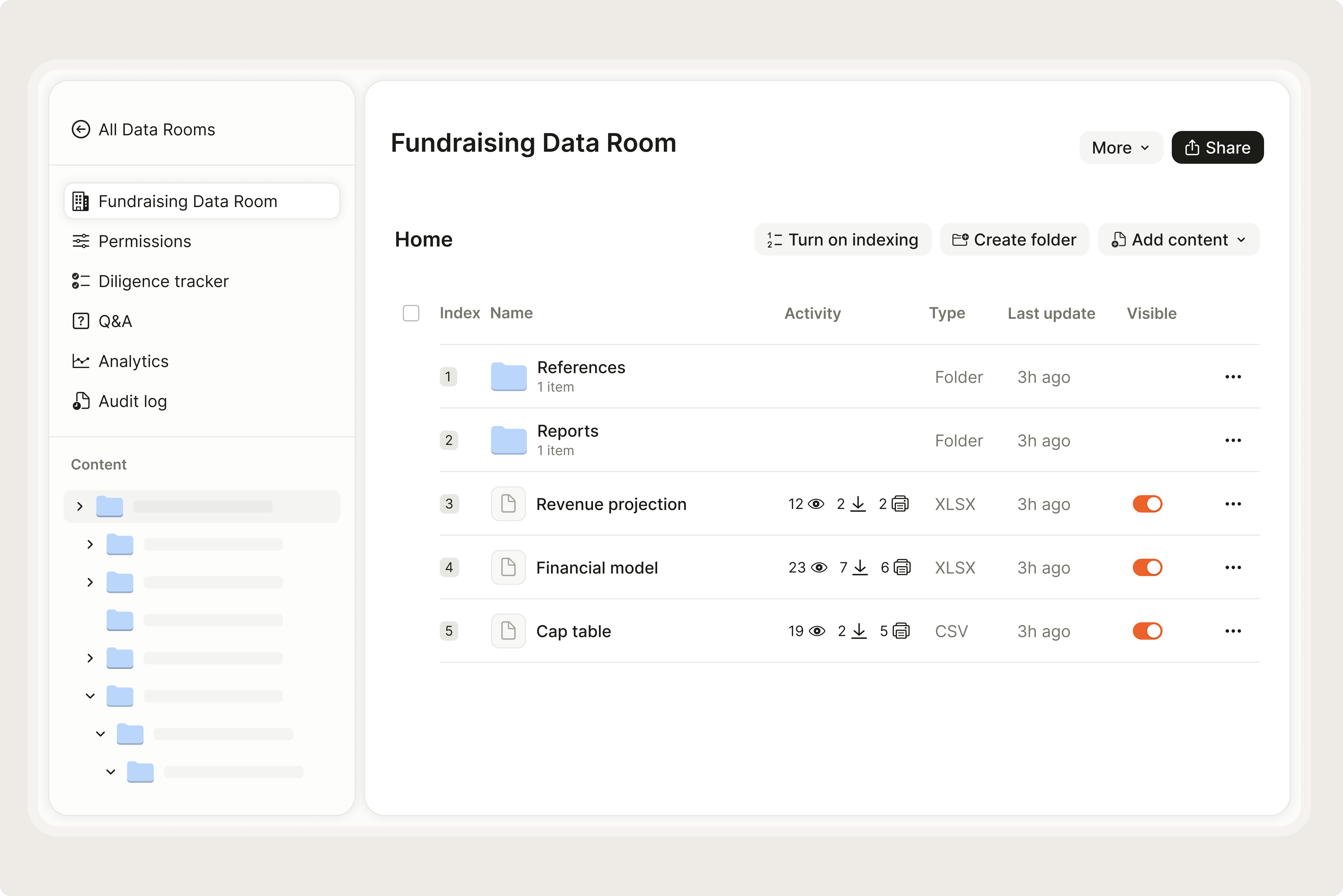
- 1.Upload your ecommerce data room in one sessionCreate an Ellty data room and upload your pitch deck, financial model, CAC and LTV analysis, and retention cohort data. Send one clean link instead of scattered files over email.
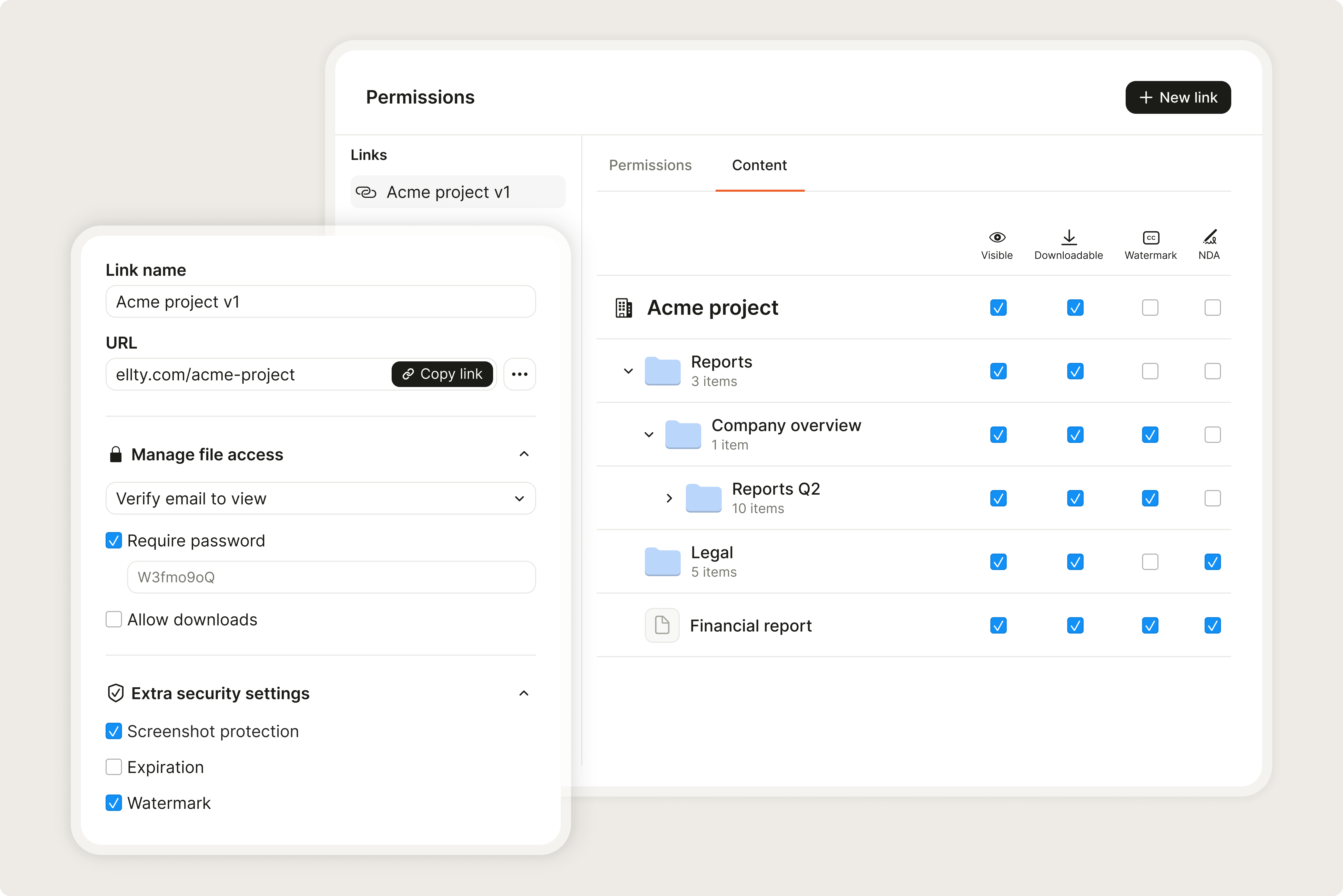
- 2.Set separate permissions for each investorGenerate a unique trackable link for Clearco, Forerunner, and Golden Ventures separately. Enable screenshot protection on your cap table and financial model before any link goes out.
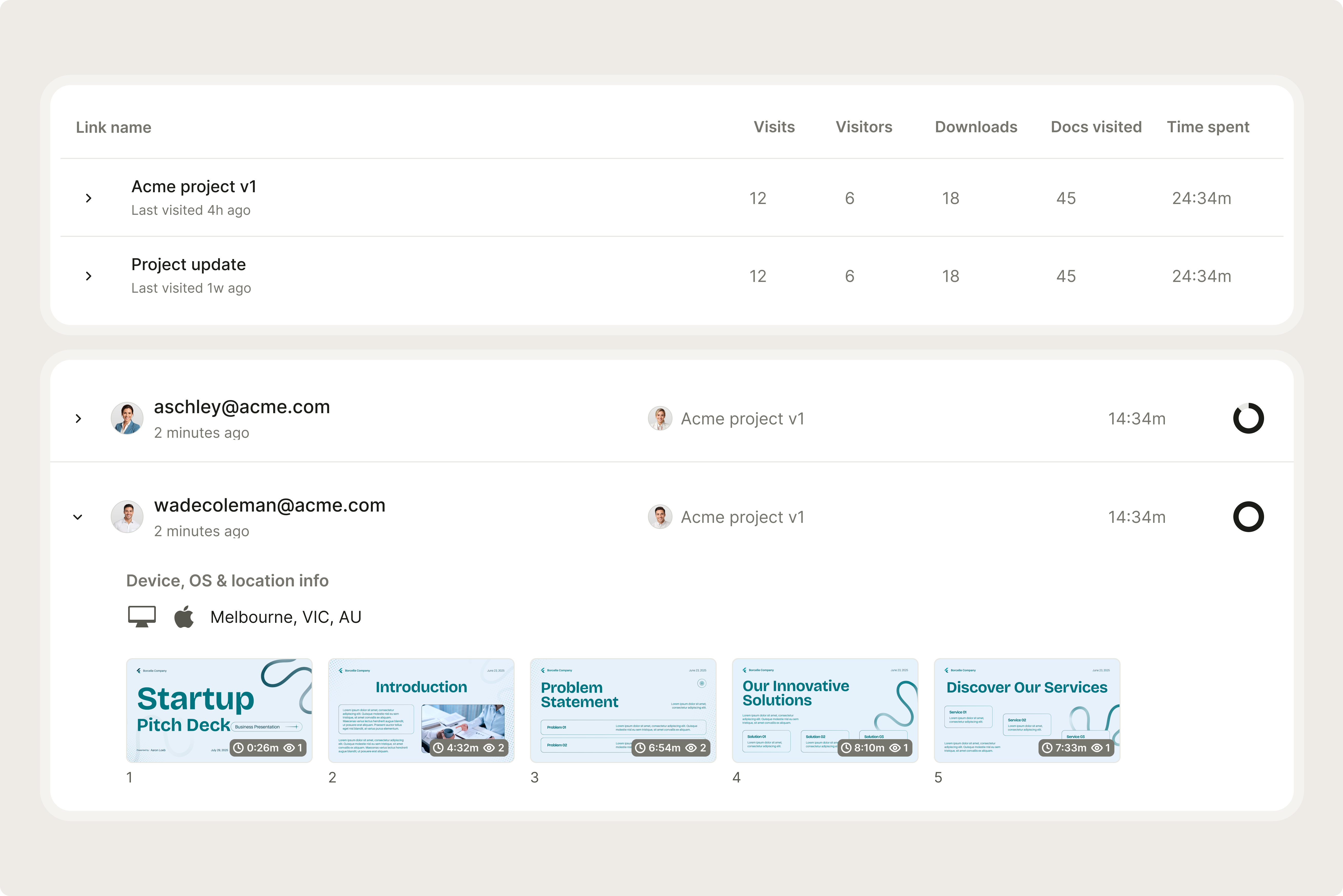
- 3.Get real-time alerts when investors review your deckReceive a notification the moment an investor opens your data room. If a Forerunner partner spends time on your retention cohorts, lead with customer economics on the follow-up call.
What ecommerce founders ask before raising in 2026
- Not necessarily, but you need to be building something that helps Shopify merchants. Shopify Ventures invests in companies that make the merchant ecosystem better — logistics, marketing, analytics, and AI tools. If your product doesn't touch the Shopify ecosystem, approach Forerunner or Lerer Hippeau instead. They back standalone DTC brands regardless of platform.
- Clearco takes a flat fee from revenue until you repay — no dilution, no board seat, no equity. You repay faster when sales are strong and slower when sales dip. Equity VCs like Golden or Inovia take ownership and want a 10x return. Clearco works best when you have predictable Shopify revenue and need inventory or marketing capital. Equity makes sense when you're building a category-defining platform, not just a profitable DTC brand.
- Check Crunchbase for investments in the last six months. Funds that haven't invested in 12 months are in portfolio triage. For Toronto funds like Golden and Panache, ask a founder in their portfolio directly. For dedicated ecommerce VCs like Forerunner and Lerer Hippeau, check whether their latest fund closed in the last 24 months — Fund VII and Fund IX both closed in 2024-2025, so both are actively deploying now.
- If your gross margins are above 40% and CAC payback is under 12 months, Clearco or EDC financing can fund growth without dilution. If you're building a marketplace or commerce platform with network effects, equity from Golden, Forerunner, or Inovia makes more sense. Most founders use both — non-dilutive financing for inventory and marketing, equity for product and team. Organize both sets of documents in an Ellty data room before any conversation.
- Before your first investor meeting — not after. Clearco underwrites in 24 hours and will pull your financial data immediately. Equity VCs like OMERS and Georgian request retention cohorts and unit economics within 48 hours of a good first call. Have your financial model, cohort analysis, and cap table organized in an Ellty data room before any warm intro call. Being ready shortens your close timeline by 2-4 weeks minimum.
- Target 20-30 at once for the first outreach wave, organized into three tiers. Tier one is your top five ideal lead investors. Tier two is 10-15 strong fits. Tier three is 10 backup options in case your model fits multiple mandates. Use Ellty to send each a unique trackable link — you'll know which tier is actually engaging with your materials and can prioritize your follow-up effort accordingly.