Sydney biotech investors backed life sciences companies raising $829M in Australia in 2025. Brandon Capital closed a $439M Fund VI. OneVentures led a $25M raise for ImmVirX. The capital is active.
Biotech founders in Sydney face a specific problem. Most generalist VCs can't evaluate a clinical-stage asset. They don't know what a Phase 1b readout means or why a clean IND filing matters more than a pitch deck. You need investors who have seen enough biology to know what good looks like.
The 14 investors below back different parts of the biotech stack: life sciences spinouts, clinical-stage therapeutics, medtech devices, digital health platforms, and deep science infrastructure. Don't pitch them the same way. Brandon Capital won't lead your seed-stage SaaS. Side Stage Ventures won't fund your Phase 3 oncology program.
Before approaching any of them, set up an Ellty data room with your IP portfolio, clinical data package, and regulatory filings. Biotech VCs ask for IND applications, preclinical data summaries, and patent landscapes before agreeing to a second meeting.
Sydney's biotech sector has grown on the back of world-class university research from UNSW, University of Sydney, and CSIRO. Brandon Capital, OneVentures, and Main Sequence channel most of the institutional life sciences capital in NSW.
| Type | Check size | Sector focus | Website | |
|---|---|---|---|---|
| Brandon Capital | Life sciences VC | $2M-$50M+ | Pharmaceuticals, biotech, medtech, digital health | brandoncapital.vc |
| OneVentures | Healthcare VC | $2M-$30M | Biotech, medtech, healthtech, life sciences | one-ventures.com.au |
| Main Sequence | Deep tech VC | $1M-$20M | Agrifood, biotech, deep science, CSIRO spinouts | mseq.vc |
| IP Group Australia | University spinout VC | $500K-$10M | University spinouts, therapeutics, life sciences | ipgroupanz.com |
| Blackbird Ventures | Multi-stage VC | $500K-$50M+ | Biotech platforms, deep tech, consumer health | blackbird.vc |
| AirTree Ventures | Multi-stage VC | $500K-$20M+ | Health platforms, biotech-adjacent, consumer health | airtree.vc |
| Artesian | Early-stage VC | $1M-$10M | Medtech, healthtech, biotech, deep tech | artesianinvest.com |
| Tidal Ventures | Seed-stage VC | $1M-$5M | Health platforms, biotech-adjacent SaaS | tidalvc.com |
| Investible | Early-stage VC | $250K-$3M | Biotech, medtech, deep tech, consumer health | investible.com |
| Radium Capital | R&D financier | Up to 80% RDTI advance | Biotech, medtech, agtech, all R&D-active companies | radiumcapital.com.au |
| Side Stage Ventures | Seed VC | $500K-$3M | Life sciences, genomics, biotech platforms | sidestage.com.au |
| Grok Ventures | Family office VC | $1M-$20M | Biotech, climate, deep tech, science-driven | grokventures.com |
| Cicada Innovations | Deep tech incubator | Non-dilutive + co-investment | Biotech, medtech, deep tech, life sciences | cicadainnovations.com |
| Sydney Angels | Angel network | $25K-$250K+ | All sectors including biotech, NSW focus | sydneyangels.net.au |
Track who opens your biotech pitch
Build an Ellty data room. See which VCs review your clinical data.
Start free 14-day trialWhat is a biotech investor?
Biotech investors back founders commercialising science-based assets: therapeutics, diagnostics, medical devices, agricultural biotech, and health tech platforms. They split into two types - specialist life sciences VCs and deep tech generalists who evaluate biology as a platform.
Specialist life sciences VCs like Brandon Capital and OneVentures understand clinical milestones, regulatory pathways, and IP strategy. They evaluate preclinical data, IND-enabling studies, and Phase 1 readouts rather than ARR and churn. Generalist deep tech VCs like Main Sequence and Blackbird evaluate biotech as a science platform - IP moat, founding team credentials, and translation pathway.
Check sizes run from $25K angel rounds at Sydney Angels to $50M+ institutional checks from Brandon Capital. Most specialist biotech VCs in Sydney ask for an IP landscape, preclinical data package, and a clinical development plan before agreeing to a first meeting. Use Ellty to share these documents via a trackable link before any first call.
Compare how Sydney healthtech investors approach digital health companies in NSW - several back biotech platforms where software and biology intersect at scale.
The pipeline of promising science far outstrips the local capital available to commercialise it.
14 Sydney biotech investors backing life sciences founders
1. Brandon Capital
Brandon Capital manages Australia and New Zealand's largest life sciences fund, with over $1B raised across six funds. Fund VI closed at $439M backed by NRFC, HESTA, Hostplus, CSL, and QIC. Recent investments include AdvanCell's US$112M Series C co-lead, Vaxxas needle-free vaccine patches, and PolyActiva ocular implants. For biotech founders raising $2M-$50M+ in clinical-stage therapeutics or medtech, Brandon Capital is the most institutional life sciences capital in Australia.
Set up an Ellty data room before approaching Brandon Capital. They run structured diligence on regulatory status and patent landscape before any term sheet.
- Recent Deals: AdvanCell US$112M Series C co-lead; Vaxxas portfolio; Ankere Therapeutics seed; Fund VI $439M close
- LinkedIn: Brandon Capital LinkedIn
- Sector Focus: Pharmaceuticals, biotech, medtech, oncology, digital health
- Stage Focus: Seed to growth ($2M-$50M+)
- Location: Melbourne/Sydney, AU
- Website: brandoncapital.vc
2. OneVentures
OneVentures manages $900M+ across eight technology and healthcare funds. They backed BiVACOR's Total Artificial Heart as the first institutional investor. They led ImmVirX's $25M Series B for oncolytic viral immunotherapy. OneVentures writes $2M-$30M checks from seed through growth. For biotech and medtech founders who need a partner with deep clinical expertise in NSW, OneVentures is the best starting point in Sydney.
Use Ellty to share your clinical development plan and IP portfolio before approaching OneVentures. Their diligence process moves fast once they've reviewed your science package.
- Recent Deals: ImmVirX $25M Series B lead; BiVACOR $50M MRFF grant backed; $900M+ AUM
- LinkedIn: OneVentures LinkedIn
- Sector Focus: Biotech, medtech, healthtech, life sciences, oncology
- Stage Focus: Seed to growth ($2M-$30M)
- Location: Sydney, NSW, AU
- Website: one-ventures.com.au
3. Main Sequence
Main Sequence is CSIRO's $1B+ deep tech VC. Fund 3 closed at $450M and has made 16 investments since 2023. They back founders commercialising research from CSIRO, UNSW, and University of Sydney. Main Sequence expects Fund 4 to launch late 2026. For biotech founders with genuine science differentiation in agrifood, novel therapeutics, or bioprocessing, Main Sequence is the right institutional conversation in Sydney.
Read about IP due diligence before your Main Sequence meeting. They evaluate patent strategy and freedom-to-operate before backing any life sciences company.
- Recent Deals: 16 investments Fund 3; deep science portfolio; Fund 4 raise expected late 2026
- LinkedIn: Main Sequence LinkedIn
- Sector Focus: Agrifood tech, biotech, deep science, CSIRO-linked spinouts
- Stage Focus: Seed to Series B ($1M-$20M)
- Location: Sydney, NSW, AU
- Website: mseq.vc
4. IP Group Australia
IP Group Australia backs Australian university spinouts from Monash, Murdoch, and the Baker Research Institute. They co-founded Rage Bio with the Baker Institute - it raised $29M Series A. They seeded Resseptor Therapeutics with AUD$2.25M from Monash. For biotech founders spinning out university IP, IP Group is the earliest institutional capital available in Australia.
Build an Ellty data room with IP licensing documents and clinical development plans separate. IP Group evaluates licensing agreements and freedom-to-operate alongside the science.
- Recent Deals: Rage Bio $29M Series A co-founder; Resseptor Therapeutics AUD$2.25M seed; Monash spinouts
- LinkedIn: IP Group LinkedIn
- Sector Focus: University spinouts, therapeutics, life sciences IP commercialisation
- Stage Focus: Pre-seed to Series A ($500K-$10M)
- Location: Sydney/Melbourne, AU
- Website: ipgroupanz.com
5. Blackbird Ventures
Blackbird manages $10B+ in portfolio value and backs science-driven companies alongside consumer tech. They write $500K-$50M+ checks and evaluate biotech as a platform business - durable IP, global market, and a founding team with real scientific credentials. For biotech founders whose company has software or platform characteristics beyond pure drug development, Blackbird is a relevant partner.
Review what hard vs soft due diligence covers before approaching Blackbird. They run both layers for any company with significant IP or clinical data.
- Recent Deals: 24 investments past 12 months; Kimia seed April 2026; $10B+ portfolio value
- LinkedIn: Blackbird LinkedIn
- Sector Focus: Biotech platforms, deep tech, consumer health, science-backed companies
- Stage Focus: Seed to growth ($500K-$50M+)
- Location: Sydney, NSW, AU
- Website: blackbird.vc
Share your clinical data with trackable links
Use Ellty to see which biotech VCs open your IP and trial data.
Start free 14-day trial6. AirTree Ventures
AirTree closed a $650M Fund V in August 2025 - the largest ANZ VC fund ever raised. They back health platforms and biotech-adjacent software alongside consumer and SaaS. AirTree writes $500K-$20M+ checks. For biotech founders building diagnostic software, health data platforms, or digital health infrastructure, AirTree is the highest-profile growth partner in Sydney.
Compare how New South Wales investors approach health and tech companies - AirTree is among the most active NSW-based generalists backing health tech broadly.
- Recent Deals: $650M Fund V August 2025; 8 investments past 12 months; Linktree portfolio
- LinkedIn: AirTree LinkedIn
- Sector Focus: Health platforms, biotech-adjacent, consumer health, SaaS
- Stage Focus: Seed to growth ($500K-$20M+)
- Location: Sydney, NSW, AU
- Website: airtree.vc
7. Artesian
Artesian manages $1.22B+ with 600+ investments and backs medtech, healthtech, and biotech alongside deep tech. They invested in CLIQ in February 2026 and PlasmaLeap in March 2026. For medtech and digital health founders raising seed to Series A, Artesian's high deal volume makes them one of the most accessible institutional biotech investors in NSW.
Use Ellty to keep Artesian updated between intro and term sheet. High-volume investors filter on responsiveness and preparation quality.
- Recent Deals: CLIQ February 2026; PlasmaLeap March 2026; 600+ total investments
- LinkedIn: Artesian LinkedIn
- Sector Focus: Medtech, healthtech, biotech, deep tech, enterprise SaaS
- Stage Focus: Seed to Series A ($1M-$10M)
- Location: Sydney, NSW, AU
- Website: artesianinvest.com
8. Tidal Ventures
Tidal Ventures is a Sydney seed fund co-founded by operators from Macquarie, Yahoo, and Atlassian. They back health platforms and biotech-adjacent SaaS. Backed by QIC with 52 total investments, 31 as lead. For biotech founders building clinical trial software or patient data infrastructure, Tidal's operator background means they evaluate distribution logic as closely as the science.
- Recent Deals: Operata Series A lead 2026; QIC backed; 52 investments, 31 as lead
- LinkedIn: Tidal Ventures LinkedIn
- Sector Focus: Health platforms, biotech-adjacent SaaS, B2B software
- Stage Focus: Seed ($1M-$5M)
- Location: Sydney, NSW, AU
- Website: tidalvc.com
9. Investible
Investible is a Sydney early-stage VC with 197 investments and 12 investments in the past 12 months. They back biotech and medtech alongside climate tech and consumer platforms. Their Club Investible global co-investment community adds international follow-on capital. For biotech founders raising sub-$3M, Investible is one of the most accessible early institutional options in Sydney.
- Recent Deals: 12 investments past 12 months; 197 total; 15 exits including 2 IPOs
- LinkedIn: Investible LinkedIn
- Sector Focus: Biotech, medtech, deep tech, consumer health, climate tech
- Stage Focus: Seed to Series A ($250K-$3M)
- Location: Sydney, NSW, AU
- Website: investible.com
10. Radium Capital
Radium Capital has delivered over $1B in R&D financing to 1,000+ companies since 2017. They advance up to 80% of a company's expected RDTI refund within days. For biotech founders burning cash on preclinical work between VC rounds, Radium Capital bridges the gap without diluting equity. It's non-dilutive R&D capital every biotech company in NSW should use.
Check the due diligence checklist investors use before your next institutional raise. Radium Capital works alongside VC - not instead of it.
- Recent Deals: $1B+ total delivered; 1,000+ companies supported; Cicada Innovations partner
- LinkedIn: Radium Capital LinkedIn
- Sector Focus: Biotech, medtech, agtech, all R&D-active companies
- Stage Focus: Any stage with an active RDTI claim
- Location: Perth/Sydney, AU
- Website: radiumcapital.com.au
11. Side Stage Ventures
Side Stage Ventures is a Sydney seed VC that hosted a genomics event at Garvan Institute in February 2026 with Principal Emily Casey. They back life sciences and genomics platforms from seed stage. For biotech founders building genomics tools, diagnostics, or life sciences software platforms, Side Stage is a specialist early-stage backer with real sector knowledge in NSW.
- Recent Deals: Genomics event at Garvan Institute February 2026; Sydney seed life sciences focus
- LinkedIn: Side Stage Ventures LinkedIn
- Sector Focus: Life sciences, genomics, biotech platforms, diagnostics
- Stage Focus: Seed ($500K-$3M)
- Location: Sydney, NSW, AU
- Website: sidestage.com.au
12. Grok Ventures
Grok Ventures is the family office of Atlassian co-founders Mike Cannon-Brookes and Scott Farquhar. They back biotech and deep tech alongside climate. For biotech founders with a global thesis and a compelling founding team, Grok Ventures is one of the highest-quality early backers in Sydney. Warm intros through the Blackbird or Startmate networks are the most reliable path.
- Recent Deals: Active biotech and climate portfolio; Atlassian founders backing; ANZ focus
- LinkedIn: Grok Ventures LinkedIn
- Sector Focus: Biotech, climate, deep tech, science-driven companies
- Stage Focus: Seed to growth ($1M-$20M)
- Location: Sydney, NSW, AU
- Website: grokventures.com
13. Cicada Innovations
Cicada Innovations is Sydney's deep tech incubator at South Eveleigh, founded in 2000 with 5,000+ members. They partner with Radium Capital and provide lab infrastructure, mentorship, and co-investment connections for early biotech companies. For pre-seed biotech founders who need lab access, regulatory guidance, and investor introductions together, Cicada is the best first step in Sydney.
Read about how to prepare for due diligence before using Cicada's network. Preparation quality is what separates founders who get warm intros from those who don't.
- Recent Deals: Radium Capital pioneer partnership; active 2025-2026 program; South Eveleigh site
- LinkedIn: Cicada Innovations LinkedIn
- Sector Focus: Biotech, medtech, deep tech, life sciences infrastructure
- Stage Focus: Pre-seed to seed (non-dilutive + co-investment connections)
- Location: Sydney, NSW, AU
- Website: cicadainnovations.com
14. Sydney Angels
Sydney Angels is NSW's primary angel network with 250+ members, established in 2008. Individual angels invest from $25K with syndicate rounds reaching $250K+. Several members have biotech, pharmaceutical, and medtech backgrounds. For biotech founders raising their first sub-$2M round, Sydney Angels' structured pitch process is the most accessible entry point in NSW.
- Recent Deals: Active 2025-2026; regular pitch nights; Sydney-based mandate
- LinkedIn: Sydney Angels LinkedIn
- Sector Focus: All sectors including biotech, NSW-based companies
- Stage Focus: Pre-seed to seed ($25K-$250K+ syndicate)
- Location: Sydney, NSW, AU
- Website: sydneyangels.net.au
How biotech due diligence differs from SaaS
Biotech VCs don't run the same diligence process as software investors. They send their own scientists to review your data before a term sheet arrives. Expect 3-6 months from first meeting to close for clinical-stage deals.
The biggest diligence gap for first-time biotech founders is IP organisation. Your patent landscape, licensing agreements, and freedom-to-operate opinions need to be in a secure Ellty data room before you start outreach. Brandon Capital and OneVentures both request these on first call - not after a term sheet.
Clinical data integrity matters as much as the science itself. Investors want reproducible preclinical data with documented methodology. Sloppy data organisation kills term sheets faster than negative results.
Compare how Queensland investors approach life sciences in Brisbane - several co-invest with Sydney-based biotech VCs on cross-state clinical-stage deals.
The university spinout path in Sydney
Sydney has one of the strongest university spinout ecosystems in the Asia-Pacific. IP Group, Main Sequence, and Brandon Capital all have formal relationships with UNSW, University of Sydney, Monash, and CSIRO.
Getting a spinout deal right requires negotiating IP licensing terms before you incorporate. Most founders underestimate how much time this takes. Set up your data room in Ellty with the licensing term sheet, university agreements, and IP assignment documents from day one.
Cicada Innovations at South Eveleigh provides lab infrastructure and investor introductions that bridge university research and institutional capital. Going through Cicada before your institutional raise cuts 3-6 months off the typical spinout timeline.
Compare how Victoria investors approach Melbourne university spinouts - several co-invest with Sydney-based life sciences VCs on cross-state biotech deals.
Building a biotech data room for NSW investors
Sydney biotech investors want different documents than SaaS investors. The IP and clinical data package matters more than a financial model for pre-revenue life sciences companies.
Core documents biotech VCs ask for: patent landscape, freedom-to-operate opinion, preclinical data summary, IND filing or pre-IND meeting minutes, clinical development plan, and CMC overview. Have these in your Ellty data room before any first outreach.
For medtech companies approaching Artesian or OneVentures, add regulatory pathway documentation: TGA pathway in Australia, 510(k) or De Novo in the US, and CE mark plans for Europe if in scope. These replace the go-to-market conversation that SaaS investors have about distribution channels.
How to pitch a biotech investor
Steps matched to how Sydney biotech VCs evaluate founders in 2026.
- 1.Lead with IP and clinical milestone planIP moat and next milestone beat revenue slides.
- 2.Separate specialist from generalist VCsBrandon Capital backs therapeutics. Blackbird backs platforms.
- 3.Show preclinical data, not just a pipeline slideReproducible data earns a second meeting.
- 4.Send your data room via Ellty trackable linksSee which VCs open your IP files first.
- 5.Apply for R&D financing before your raise closesRadium Capital bridges cash gaps without dilution.
How Ellty helps you land a biotech investor in Sydney
Organise your life sciences data room the way NSW VCs expect. Show the IP and data that matters.
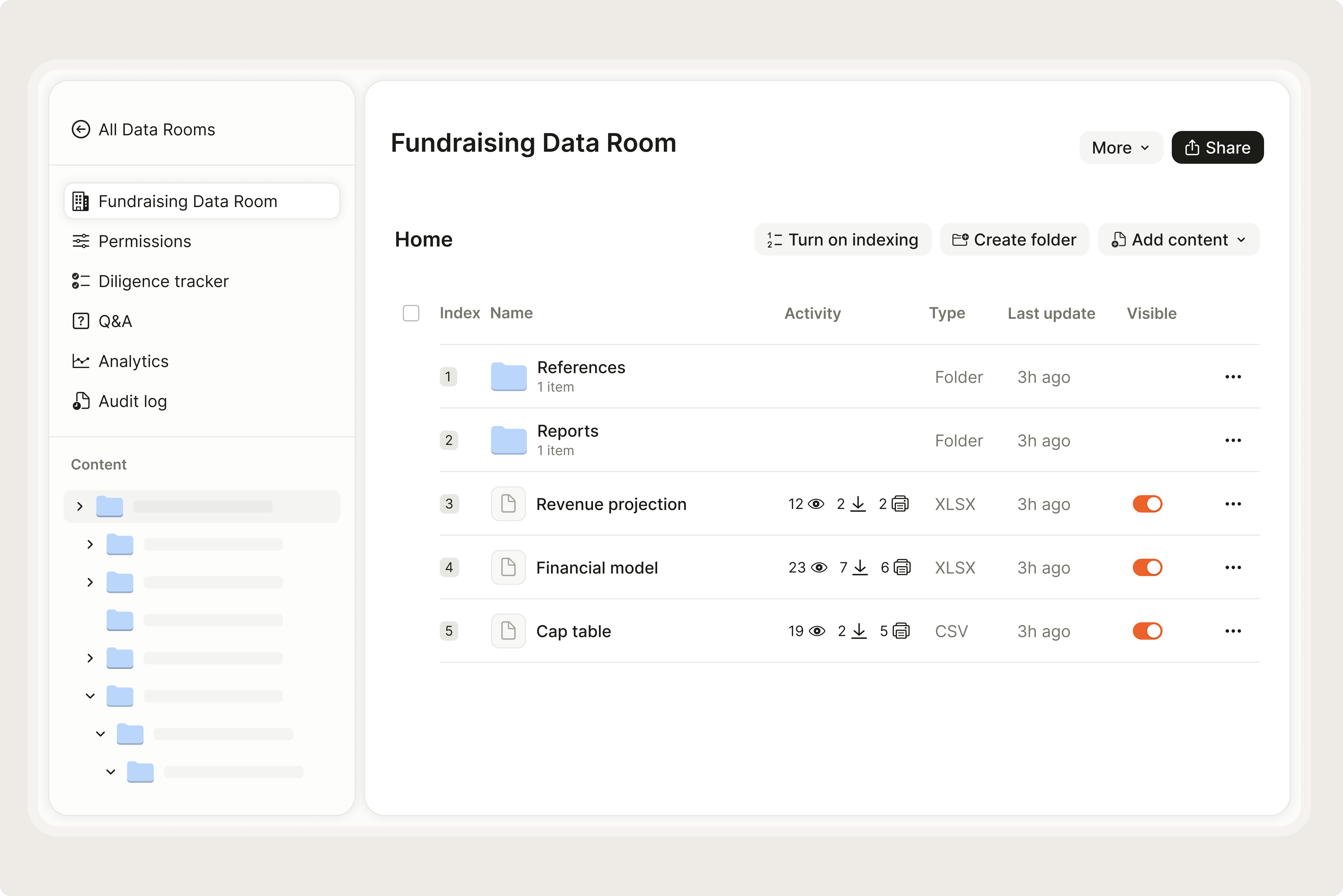
- 1.Upload IP filings and preclinical dataBiotech VCs ask for IP and data before revenue projections.
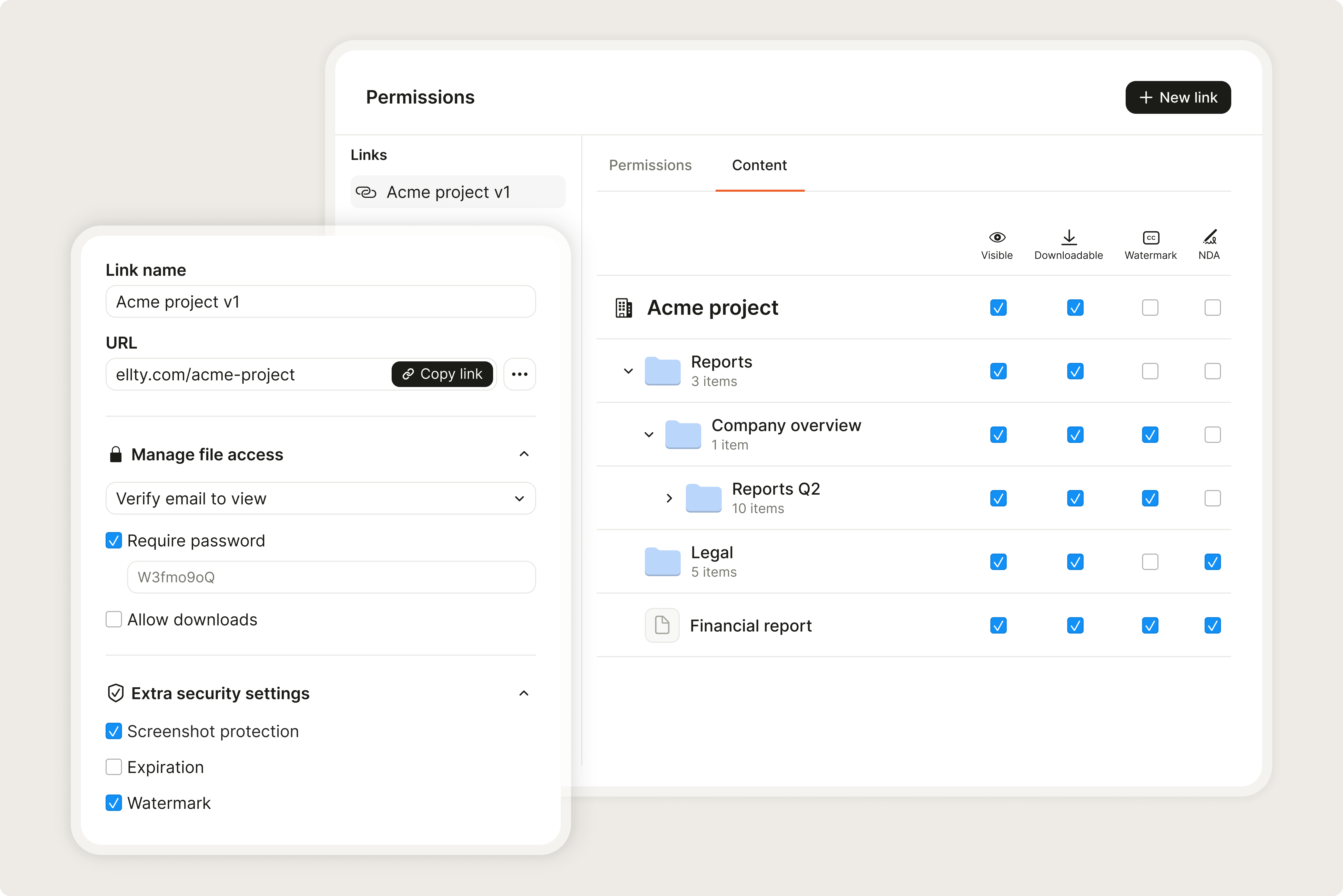
- 2.Set access per investor typeSpecialist VCs need clinical data. Generalists need platform IP.
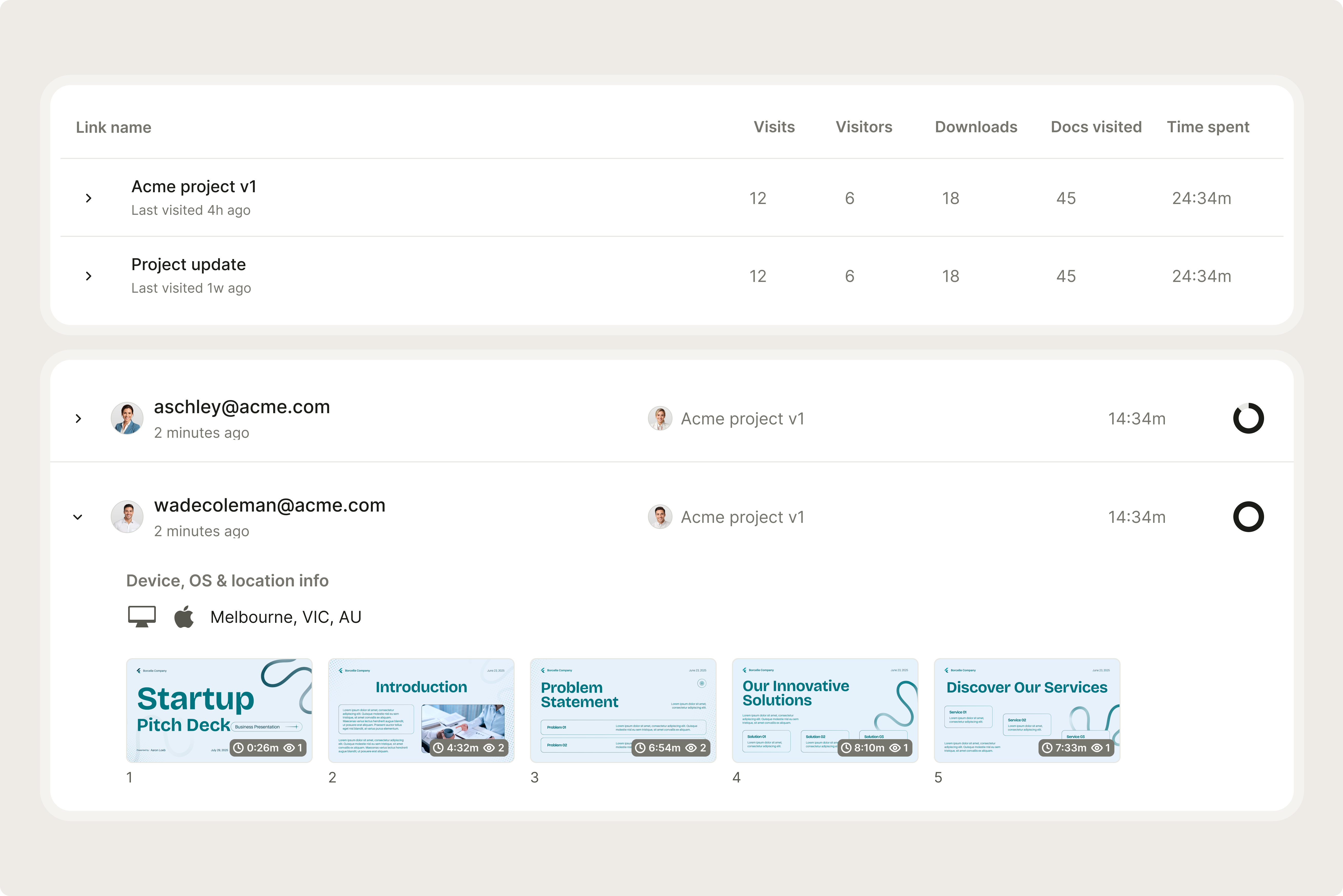
- 3.Get notified when a VC opens your data roomFollow up the day a biotech investor reviews your files.
What Sydney biotech founders ask most
- Yes. Brandon Capital and OneVentures both specialise in life sciences. Brandon Capital is ANZ's largest life sciences fund.
- IP landscape, preclinical data package, and regulatory plan. Have all three before first outreach.
- No. Main Sequence backs any deep science company. CSIRO origin helps but isn't required.
- Before first outreach. Biotech VCs ask for IP and clinical data immediately after intro calls.
- Yes. Brandon Capital, OneVentures, and Main Sequence all back Australian founders across states.
- They advance up to 80% of your RDTI refund in days. It's non-dilutive R&D capital, not equity.