West Virginia commercial property due diligence has one defining title issue with no close equivalent in most US states: severed mineral rights. Mineral estates (coal, oil, natural gas) were historically separated from the surface estate across most of West Virginia through broad form deeds and similar conveyances; a commercial buyer may own the surface but not the coal beneath it, and mineral owners have legally enforceable rights to use the surface to develop those minerals.
West Virginia's real estate transfer tax (called the Excise Tax on Privilege of Transferring Real Property under WV Code §11-22) runs $2.20 per $1,000 of consideration ($1.65 state + $0.55 county) = 0.22% of purchase price. Both buyer and seller typically share transfer tax obligations in West Virginia commercial custom, though this is negotiable. Transfer tax is paid to the circuit court clerk at recording.
West Virginia has significant environmental legacy from over 150 years of coal mining and chemical manufacturing. The Kanawha Valley (Charleston) was one of the major US chemical manufacturing centers through the 20th century; WVDEP regulates contamination cleanup through its Voluntary Remediation Program (VRP) for brownfield commercial sites. The WV Surface Mining program administers abandoned mine land (AML) reclamation across coal counties.
June 2016 West Virginia floods devastated southern and central WV (Greenbrier, Nicholas, Kanawha, Fayette, Raleigh, and surrounding counties) in a historic rainfall event; the White Sulphur Springs and Rainelle areas experienced catastrophic damage. Flood risk analysis for WV commercial must account for WV's documented history of extreme rainfall events, not just FEMA base flood maps.
Set up a WV data room before advisors are engaged. Load ALTA title, mineral rights abstract, WVDEP records, SMCRA and AML records, flood documentation, and lease files before diligence opens.
Where West Virginia property deals go wrong
Not every check carries the same weight. The table below sorts risks by deal impact - dealbreakers first, then what moves the price, then basic hygiene - so your West Virginia attorney and environmental consultant know what to clear first.
| Area | Documents to pull | WV red flag | Matters most for | Tier | |
|---|---|---|---|---|---|
| Title - circuit court clerk | Title - circuit court clerk | ALTA owner's title commitment, circuit court clerk deed records, full mineral rights abstract, ALTA/NSPS survey, UCC fixture search | WV property records are at the circuit court clerk's office in each county; WV title examinations must include a mineral rights abstract to identify any severed mineral estates; standard ALTA owner's title insurance policies typically contain exceptions for mineral rights unless specifically insured; in southern WV coal counties (Mingo, McDowell, Wyoming, Boone, Logan, Raleigh, Fayette, Kanawha), assume mineral rights are severed unless the abstract confirms otherwise | All buyers | Dealbreaker |
| Mineral rights - coal, oil, and gas severance | Full mineral rights abstract (separate from surface title), coal lease records, oil and gas lease records, WVDEP Office of Oil and Gas well records, WV Geological and Economic Survey mineral maps | Mineral rights - coal, oil, and gas severance | In most of southern and central WV, coal rights (and often oil and gas rights) were severed from the surface estate through 19th and early 20th century deed instruments; the owner of the mineral estate has the right to use the surface to the extent reasonably necessary to mine the minerals, subject to the WV Surface Owner Protection Act (WV Code §22-6B); an active coal mine, longwall operation, or gas well pad can render commercial surface development impossible or destroy its value; confirm mineral rights status in the abstract before any other diligence spend | All commercial in WV coal and gas counties | Dealbreaker |
| Coal mine subsidence - underground mining | Coal mine subsidence - underground mining | WVDEP abandoned mine land (AML) maps, SMCRA permit records, WV Office of Miners' Health Safety and Training mine maps, WVDEP surface mining bond records | West Virginia has extensive underground coal mine workings; commercial properties overlying abandoned underground mines face subsidence (surface collapse or settlement) risk as mine pillars and roofs deteriorate; WV's AML program funds reclamation of pre-SMCRA abandoned mines; surface rights owners in coal counties should check WVDEP AML maps and WV mine maps before commercial construction; surface mine permit records indicate active or recently closed surface operations that may affect commercial access and topography | Southern WV coal county commercial | Dealbreaker |
| Environmental - WVDEP VRP and Kanawha Valley | Environmental - WVDEP VRP and Kanawha Valley | Phase I ESA (ASTM E1527-21), WVDEP contaminated sites database, WVDEP VRP database, UST records, EPA Superfund NPL, RCRA database | WVDEP operates a Voluntary Remediation Program (VRP) for brownfield buyers; a Certificate of Completion provides regulatory closure for WVDEP-addressed contamination; the Kanawha Valley (Charleston to Institute) has significant chemical manufacturing contamination from former Union Carbide, Bayer CropScience, DuPont, and other facilities; search WVDEP contaminated sites database before bidding on any Kanawha Valley industrial commercial; Huntington industrial corridor along the Ohio River also has documented contamination | Kanawha Valley commercial, Huntington industrial | Dealbreaker |
| Flood risk - 2016 WV flood and river systems | Flood risk - 2016 WV flood and river systems | FEMA FIRM, WV 2016 flood damage records, Army Corps Kanawha River and Ohio River studies, WVDEP stream records, WVDHSEM post-event maps | June 2016 WV flooding: historic rainfall caused catastrophic flooding across Greenbrier, Nicholas, Kanawha, Fayette, Raleigh, and surrounding counties; White Sulphur Springs, Rainelle, and other communities experienced devastating damage; 23 deaths; the Greenbrier Resort itself flooded; FEMA updated flood zone maps in affected areas post-2016; commercial lenders in southern and central WV now require post-2016 flood risk analysis beyond standard FEMA FIRM review | Southern and central WV commercial, river corridors | Price-adjuster |
| Acid mine drainage - stream and water quality | Acid mine drainage - stream and water quality | WVDEP AMD (acid mine drainage) stream database, WVDEP Water Resources records, stream water quality monitoring data | Acid mine drainage (AMD) from abandoned coal mines is WV's most pervasive water quality problem; AMD from pre-SMCRA abandoned mines has impaired hundreds of miles of WV streams; commercial properties near AMD-impacted streams that depend on stream water for operations face quality issues; WVDEP maps AMD-impacted streams; any commercial use depending on stream water in coal county WV requires water quality testing | Southern WV coal county commercial near streams | Price-adjuster |
| Leases and tenancies | Leases and tenancies | All commercial leases, rent roll, estoppel certificates, SNDA agreements, coal and gas lease records from mineral abstract | Coal leases and gas leases are the non-surface leases that most out-of-state buyers miss; a coal lease or gas lease on the mineral estate creates operating rights and surface use rights that are NOT surface commercial leases but can significantly constrain commercial use of the surface; check the mineral abstract for any active coal or gas leases before assuming the surface is unencumbered | WV coal county commercial surface estate | Price-adjuster |
| Transfer tax and recording | Transfer tax and recording | WV excise tax on property transfer calculation, county recording fee, circuit court clerk confirmation | WV Excise Tax on Privilege of Transferring Real Property (WV Code §11-22): $2.20 per $1,000 of consideration (0.22% total); state portion is $1.65 per $1,000 (0.165%) and county portion is $0.55 per $1,000 (0.055%); paid to the circuit court clerk at deed recording; WV is a non-disclosure state (sale prices not publicly reported); transfer tax is generally split between buyer and seller in WV commercial custom, but negotiable | All buyers | Standard check |
| Zoning - WV municipalities | Zoning - WV municipalities | Municipal zoning ordinance, county planning commission records, conditional use permit, deed restrictions, building permit history | WV municipalities administer local zoning; counties have limited land use planning authority in unincorporated areas; many rural WV counties have no formal zoning ordinance; Morgantown, Charleston, Huntington, and Parkersburg have municipal zoning; unincorporated commercial in rural WV counties may have no zoning at all - which sounds like freedom but means no protection from incompatible neighbors either | All commercial | Standard check |
| Insurance and building condition | Insurance and building condition | Property condition assessment (ASTM E2018), flood insurance (NFIP or private), mine subsidence insurance availability | WV flood insurance premiums have increased under FEMA Risk Rating 2.0 in 2016-revised flood zones; mine subsidence insurance for commercial properties overlying underground mine workings may be unavailable from standard carriers; commercial property insurance in WV coal counties may require specialty underwriting given mine subsidence and slope instability risk | Southern WV coal county commercial, flood zone | Standard check |
| Seller KYC and AML | Seller KYC and AML | WV Secretary of State entity records, UBO identification, OFAC screen | WV commercial transactions involve significant mineral estate ownership by legacy coal companies, trusts, and out-of-state entities; confirm entity standing at WV Secretary of State; run OFAC and sanctions screens on all principals; for coal and mineral estate transactions, confirm mineral owner entity chain carefully - severed mineral interests are often held by LLCs formed for a single seam or tract | All deals, especially coal county mineral transactions | Standard check |
Due diligence on a West Virginia property?
Set up your Ellty data room before diligence starts.
Start free 14-day trialWest Virginia commercial property due diligence checklist
The table ranked risks by severity. This is the full checklist to work through, grouped by area.
Title - circuit court clerk and mineral abstract
- Order the ALTA owner's title commitment on day one from a West Virginia-licensed title insurer; simultaneously order a full mineral rights abstract - these are separate from the standard surface title examination
- WV title examination: property records are at the circuit court clerk's office in each of WV's 55 counties; WV circuit court clerks record deeds, deeds of trust, lis pendens, and other title documents; the title search must run back to the original grant, not just 40 years
- Mineral rights abstract: a separate mineral rights abstract examines the chain of title for coal, oil, gas, and other mineral rights severed from the surface estate; the abstract identifies the mineral owner(s), any existing coal leases or gas leases, any royalty interests, and any mineral right encumbrances; in southern WV coal counties, the mineral abstract often reveals multiple layers of severed interests from different historical transactions
- WV deed of trust: WV uses deeds of trust (not mortgages) for commercial financing; existing deeds of trust must be released at or before closing with a deed of release
- Standard ALTA policy mineral exceptions: most standard ALTA owner's title insurance policies contain a blanket exception for mineral rights; if the buyer needs mineral rights insured or needs specific coal right exceptions mapped against the development footprint, this must be specifically negotiated with the title insurer as an endorsement
- ALTA/NSPS survey: commission for all significant WV commercial acquisitions; the survey must address coal rights access roads, gas well pads, and other mineral development infrastructure that may be present on or adjacent to the surface parcel
Give each advisor a scoped link in Ellty. WV title attorney handles surface title and mineral abstract. Environmental consultant handles WVDEP contamination records and Phase I/II. Mining engineer handles AML maps and mine subsidence screening. Lender sees WVDEP VRP certificate and valuation.
Mineral rights - full coal, oil, and gas analysis
- Confirm from the mineral abstract who owns the coal rights, oil and gas rights, and any other minerals under the commercial surface parcel; list the mineral owner by name and contact status
- WV Surface Owner Protection Act (WV Code §22-6B): enacted to provide some balance between surface and mineral owner rights; requires oil and gas operators to provide advance notice to surface owners, conduct pre-drilling surveys, use the least disruptive access routes, and restore the surface after operations; does NOT eliminate mineral owners' rights to use the surface; does NOT prevent coal mining operations from affecting the surface
- Active coal leases: a coal company holding a coal lease (leasing from the mineral owner) has the right to mine; confirm from the mineral abstract whether any active coal lease exists; an active coal lease covering the area beneath your commercial parcel means a coal company could potentially conduct longwall mining, auger mining, or surface mining on or near the parcel
- Gas well pads and pipelines: West Virginia's Marcellus and Utica Shale production affects many WV counties; existing or proposed gas well pads and gathering pipelines are recorded at WVDEP's Office of Oil and Gas; check WVDEP oil and gas well records for any wells on or adjacent to the commercial parcel
- Buyout or consent: some WV commercial developers purchase the mineral rights from the severed mineral owner (where identifiable) or obtain a surface use agreement from the mineral owner and any lessee; confirm with WV counsel whether a mineral purchase, surface use agreement, or other protective measure is appropriate for the specific commercial use planned
Coal mine subsidence and AML
- Pull WVDEP's AML (Abandoned Mine Lands) program maps for the commercial parcel; WVDEP AML maps show known surface mine disturbances and reclamation areas; OSMRE (Office of Surface Mining Reclamation and Enforcement) maps show AML inventory
- Underground mine subsidence: commercial properties overlying abandoned underground mine workings face subsidence risk; the WV Office of Miners' Health Safety and Training maintains historical mine maps that may show underground workings beneath or near the surface parcel; commission a geotechnical subsidence risk assessment for any southern WV commercial construction project
- Surface mining: WV surface mine permits are public records in WVDEP's SMCRA permit system; confirm no active surface mine permit covers or abuts the commercial parcel; active surface mining operations near commercial sites create noise, dust, and access disruption
- Highwalls and pit hazards: pre-SMCRA surface mining left highwalls (exposed rock faces from strip mines) and pit hazards across southern WV; commercial development on or near old surface mine disturbances requires geotechnical assessment
Load WVDEP contamination records, AML maps, mineral abstract, mine maps, and flood documentation into Ellty. Title attorney and mining specialist each see their files without accessing the other's documents. Track who reviews the mineral abstract most closely.
Environmental - WVDEP VRP and Kanawha Valley
- Commission Phase I ESA meeting ASTM E1527-21 from a WVDEP-familiar environmental professional
- WVDEP contaminated sites database: search WVDEP's online database for any contamination records, VRP sites, RCRA sites, or enforcement actions at the property address before bidding
- WVDEP Voluntary Remediation Program (VRP): WV DEP's brownfield liability protection mechanism; a buyer who completes cleanup under the VRP and receives a Certificate of Completion gets regulatory closure from WVDEP for the addressed contamination; the Certificate of Completion is the standard WV brownfield lender clearance
- Kanawha Valley chemical corridor: the Kanawha Valley from Charleston to Institute (South Charleston, Institute, Nitro, Dunbar, Belle areas) was a major US chemical manufacturing center; former Union Carbide (now Bayer CropScience), DuPont Belle, FMC, and other chemical manufacturers operated extensive facilities with documented soil and groundwater contamination; Phase II ESA is standard for any Kanawha Valley industrial-legacy commercial
- Huntington Ohio River industrial: Cabell County and Wayne County industrial areas along the Ohio River have petroleum and industrial contamination from decades of manufacturing and shipping operations
- PFAS: several WV National Guard and military facilities have PFAS documentation; search EPA's PFAS database for WV sites near the commercial parcel
Flood risk - 2016 WV flood and river systems
- Pull FEMA FIRMs for all WV commercial property; confirm the effective FIRM date and whether maps were updated post-2016
- June 2016 WV Flood: June 23-24, 2016 historic rainfall event caused catastrophic flooding in Greenbrier, Nicholas, Kanawha, Fayette, Raleigh, Webster, and Pocahontas counties; White Sulphur Springs (Greenbrier County) and Rainelle (Greenbrier County) were devastated; the Greenbrier Resort flooded; 23 lives lost; $1 billion in damage; the event was classified as a 1-in-1,000-year rainfall
- Post-2016 FEMA map updates: FEMA updated FIRMs in affected WV counties following the 2016 event; confirm current FIRM effective date and whether the property is in a revised Special Flood Hazard Area
- WV river flood history: the Kanawha, New, Elk, Gauley, Cheat, Monongalia, and Ohio Rivers all have significant flood histories; commercial properties in WV river valleys and hollows face recurring flood risk that FEMA FIRMs may still understate given WV's terrain and rainfall intensity patterns
- Commercial lender flood requirements: WV commercial lenders in flood-affected counties now routinely require elevation certificates and post-2016 flood event history for any river-adjacent or hollow-located commercial, not just properties in FEMA SFHAs
Acid mine drainage and water quality
- For any WV commercial property in or near coal mining counties that depends on surface water: commission water quality testing and review WVDEP AMD stream impairment records
- AMD scope in WV: WV has more AMD-impaired stream miles than any state outside Pennsylvania; the WV Department of Environmental Protection maps AMD-impacted streams; some WV commercial areas (near Blackwater River in Tucker County, streams in Kanawha, Fayette, and Raleigh counties) have severely AMD-impacted water bodies that affect riparian commercial use
- AMD and commercial water use: a commercial property drawing process water from an AMD-impacted stream will get highly acidic, iron-laden water that is corrosive to infrastructure and unusable without treatment; confirm water source quality before any commercial use dependent on stream or well water in coal counties
Compare Virginia's commercial property due diligence process when running Appalachian corridor acquisitions. WV and VA share similar terrain and Appalachian commercial development challenges, but differ significantly on the mineral rights severance issue (much more pervasive in WV than VA), brownfield programs (WVDEP VRP vs. VDEQ VRP), and transfer taxes (WV 0.22% vs. VA's low recording tax).
How due diligence works in West Virginia
Step 1 - Title, mineral abstract, and AML
Day one: order ALTA surface title commitment and simultaneously order full mineral rights abstract - these are parallel, not sequential. Also search WVDEP AML maps and pull FEMA FIRM the same day.
The mineral abstract will take 2-4 weeks in most WV coal counties; the surface title will be ready in 1-2 weeks. Don't wait for the mineral abstract to complete before commissioning Phase I ESA.
Step 2 - Environmental, mine subsidence, and flood
Commission Phase I ESA with WVDEP contaminated sites database review. For Kanawha Valley or Huntington industrial: Phase II ESA is standard lender expectation.
For southern WV coal county commercial construction: commission geotechnical subsidence risk assessment and check WV Office of Miners' Health mine maps for underground workings.
Pull post-2016 flood records and elevation certificate for any southern or central WV river-valley commercial.
Step 3 - Coal lease review, gas wells, and leases
Upon mineral abstract delivery: identify any active coal leases or gas leases; check WVDEP Office of Oil and Gas for any active or permitted wells on or near the parcel. Evaluate with WV mineral rights counsel whether a surface use agreement or mineral acquisition is needed before proceeding.
Abstract all surface commercial leases. Confirm zoning from the applicable municipality or county planning commission.
Load all documents into Ellty. Title attorney sees surface deed chain and mineral abstract. Environmental consultant sees WVDEP records and Phase I/II. Mining engineer sees AML maps, mine maps, and subsidence screening. Lender sees WVDEP VRP certificate and valuation.
Step 4 - Transfer tax and closing
Calculate WV excise tax on transfer at 0.22% of purchase price; model buyer/seller allocation. WV commercial closings are handled by attorneys or title companies; WV attorneys are commonly involved.
Standard WV commercial diligence: 45-60 days for surface-only deals. Coal county deals with complex mineral abstract, mine subsidence assessment, and AML review: 60-90 days. WVDEP VRP brownfield clearance: 12-24 months.
How to set up your West Virginia data room in Ellty.
WV commercial deals involve ALTA surface title, mineral rights abstract, WVDEP contamination records, AML maps, mine maps, 2016 flood records, and lease files. Load everything before advisors arrive.
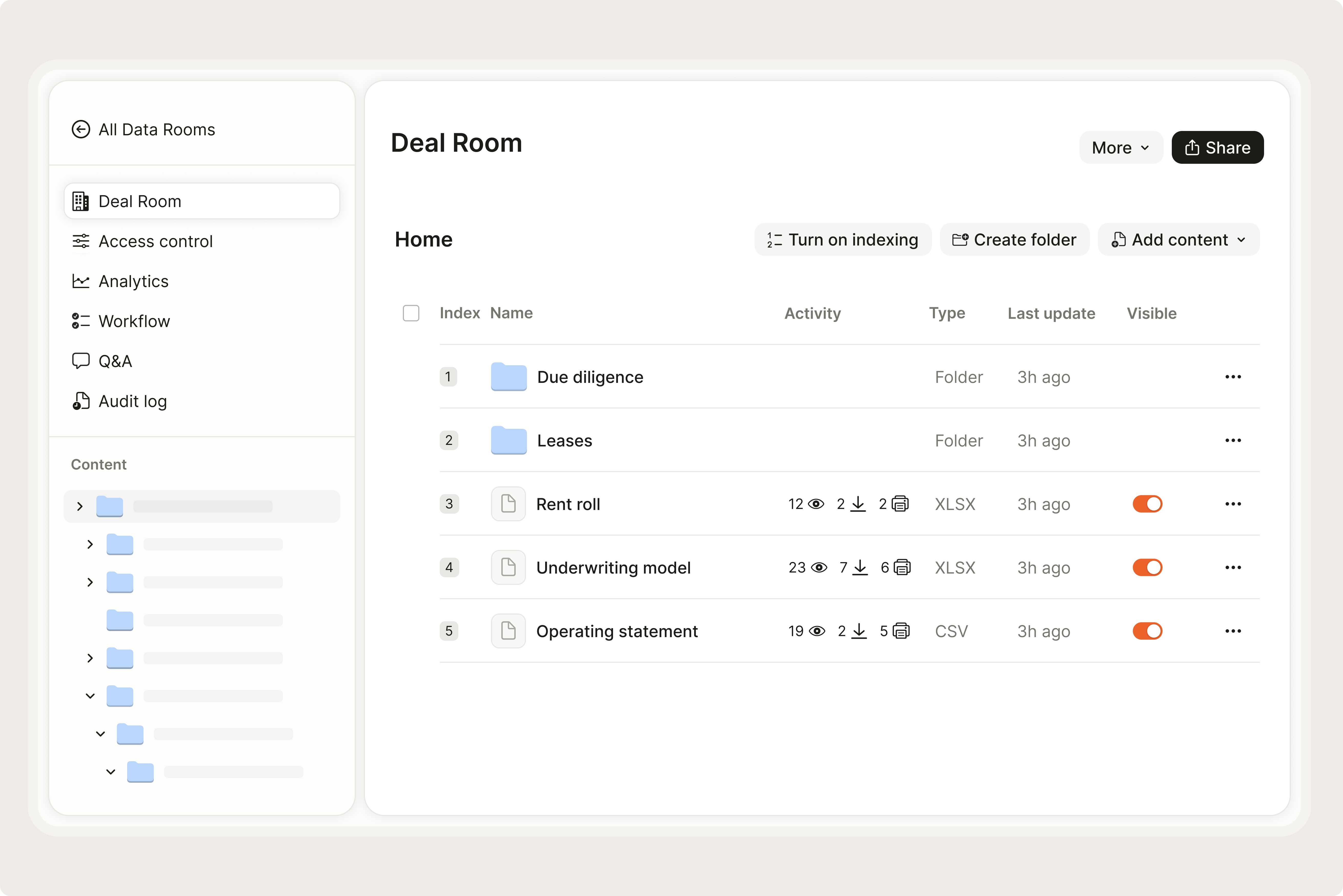
- 1.Upload West Virginia property files to a secure roomDrop ALTA title, mineral rights abstract, WVDEP contamination records, Phase I ESA, AML maps, WV mine maps, FEMA FIRMs, post-2016 flood records, and lease pack into Ellty.
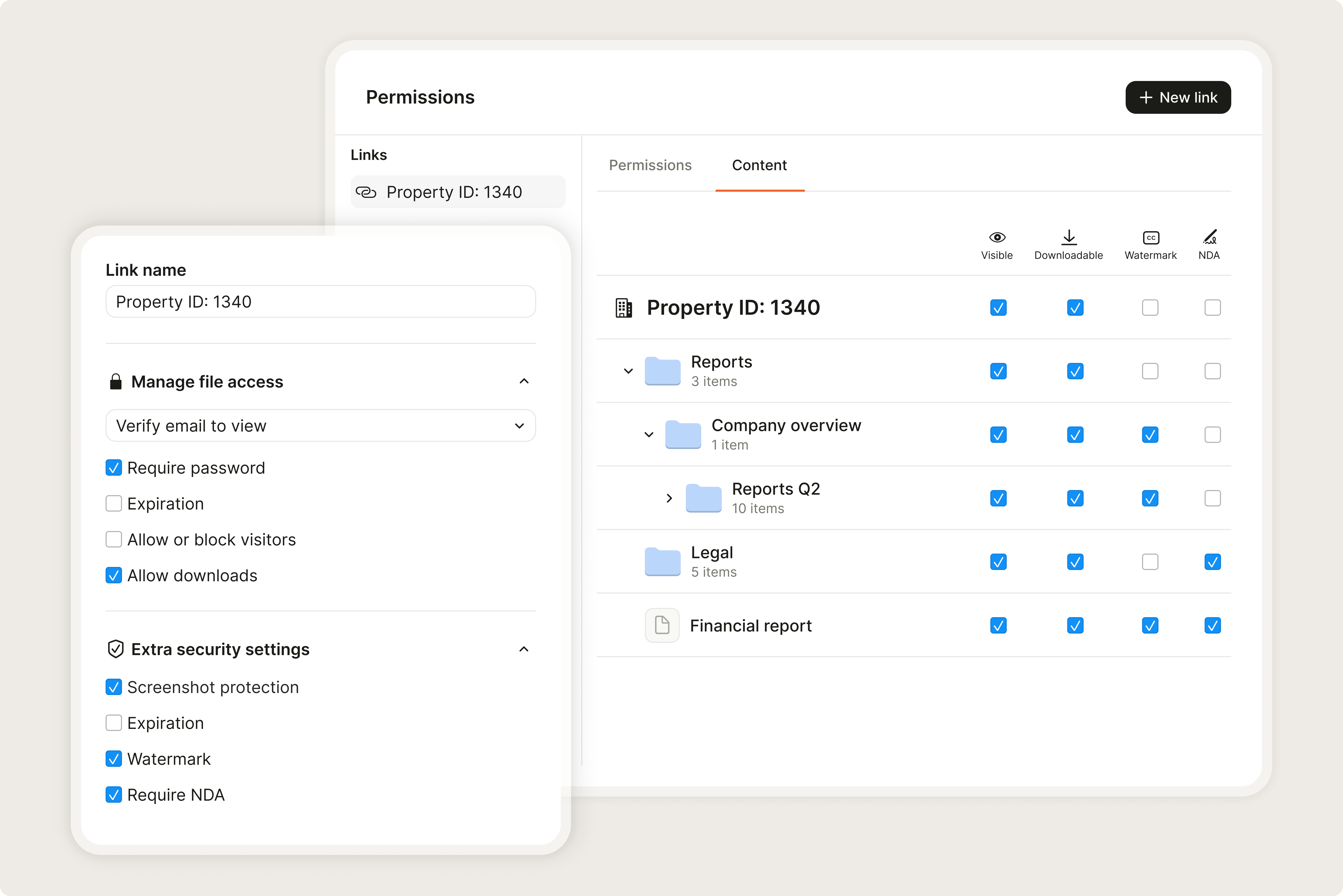
- 2.Give each advisor a scoped, tracked linkWV title attorney sees surface deed chain and mineral abstract. Environmental consultant sees WVDEP records and Phase I/II. Mining engineer sees AML maps and mine maps. Flood engineer sees FEMA data and post-2016 records. Lender sees WVDEP VRP certificate and valuation.
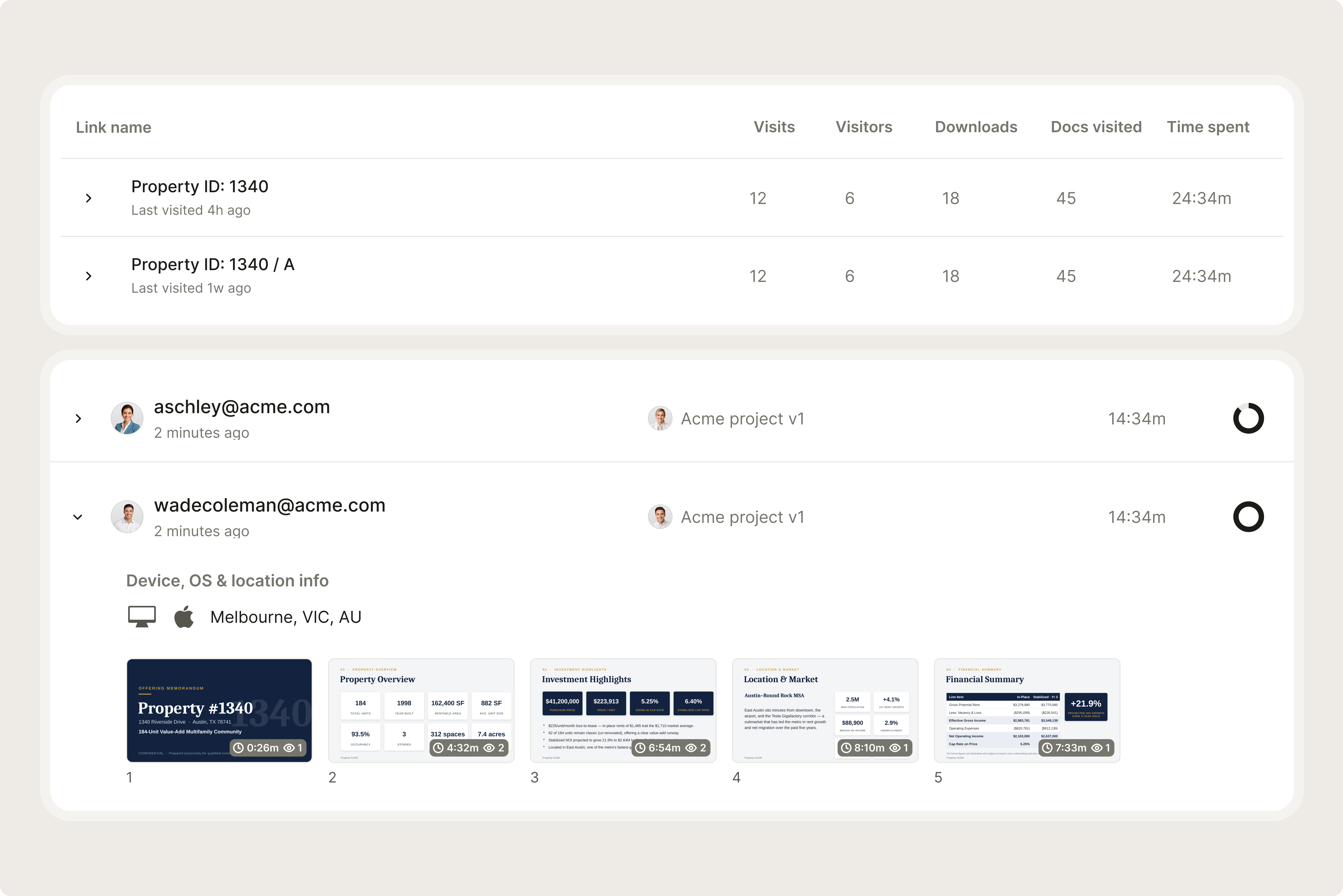
- 3.Monitor who reviews which documentsSee exactly which files each advisor opened and when. Catch coal lease conflicts or mine subsidence concerns before they affect deal pricing or closing.
What makes West Virginia different
Severed mineral rights are not a niche WV title issue - they are the defining structural reality of commercial real estate ownership across most of southern and central West Virginia. When coal companies acquired mineral rights across WV in the late 19th and early 20th centuries, they systematically separated the mineral estate from the surface estate. The surface estate (which is what a commercial buyer typically purchases as "the property") carries the right to use the surface for commercial purposes. But the mineral estate owner (or their coal or gas lessee) retains the right to use the surface to the extent reasonably necessary to develop the minerals - and in coal country, that can mean longwall mining that causes controlled surface subsidence, surface mining that remakes the topography, or gas well pads and pipeline corridors that bisect commercial parcels. The WV Surface Owner Protection Act provides procedural protections and some surface damage remedies, but it does not prohibit mineral development that is physically incompatible with commercial surface use. Commission the mineral abstract before spending any other diligence dollars in WV coal counties.
The June 2016 WV flooding is the benchmark event for understanding flood risk in southern and central WV. Unlike most major flood events that follow a river corridor, the 2016 event was driven by extreme localized rainfall that overwhelmed hollow-based communities across multiple counties simultaneously. White Sulphur Springs received over 9 inches of rain in 12 hours; Rainelle was devastated; streams that had not flooded in living memory crested far above any mapped flood level. FEMA updated its FIRMs for affected WV counties after the event, but WV's mountainous terrain and intense summer convective rainfall pattern mean flood risk in hollows and river narrows can exceed what any FEMA map captures. For WV commercial in river valleys or in the narrow hollows that characterize southern WV topography, commission a hydrologist's flood risk assessment, not just a FEMA zone confirmation.
WVDEP's contaminated sites database is less publicly accessible than EPA's ECHO or comparable tools in states like Oregon or Virginia, which means WV Phase I ESAs require a WVDEP-experienced environmental professional who knows how to navigate WV's specific database systems. The Kanawha Valley chemical legacy (former Union Carbide, DuPont Belle, and other chemical manufacturers from the 1920s-2000s) created a groundwater contamination situation that is still being assessed and remediated in parts of the valley. For any Kanawha Valley industrial commercial: commission Phase II ESA and check WVDEP's contaminated sites database directly, not just through third-party data providers, before finalizing the Phase I scope.
West Virginia Code §22-6B (the Surface Owner Protection Act) provides procedural protections for surface owners when oil and gas operators propose to conduct operations on their land, including advance notice requirements (at least 30 days before commencement), pre-operations surveys to document pre-existing conditions, requirements to use the least intrusive access routes and methods, and post-operations restoration obligations. However, the Act does not give surface owners the right to prohibit oil and gas development on their land where the mineral estate is severed from the surface estate. The right of the mineral estate owner or their lessee to use the surface to the extent reasonably necessary to mine or develop the minerals is established under the dominant estate doctrine of WV common law and is not eliminated by the Surface Owner Protection Act. Coal mining operations are addressed separately under SMCRA and WV's surface mining rules. Surface owners seeking to prevent or limit mineral development incompatible with commercial surface use should consult WV mineral rights counsel before purchasing the surface estate.
Timeline and cost in West Virginia
Weeks 1-2 cover kickoff: ALTA title commitment order, mineral rights abstract order (parallel to title), WVDEP contaminated sites database search, WVDEP AML map review, FEMA FIRM flood zone confirmation (post-2016 maps), WVDEP Office of Oil and Gas well records check, WV mine map review (coal county commercial), Phase I ESA commission (WVDEP-specific databases), zoning confirmation, and lease abstraction initiation. Legal fees in this phase: USD 5,000-20,000.
Load all files into Ellty before advisors engage. Standard WV commercial: 45-60 days surface-only. Coal county with mineral abstract, mine subsidence assessment, and AML review: 60-90 days. WVDEP VRP brownfield: 12-24 months.
Weeks 2-6 cover deep review: surface title examination completion, mineral rights abstract delivery and analysis (2-4 weeks in coal counties), Phase I ESA delivery, WVDEP contamination records review, mine subsidence geotechnical assessment (coal county commercial), post-2016 flood history review, active coal lease and gas lease analysis, zoning compliance, lease abstraction, and insurance availability and quotes. Costs in this phase: USD 10,000-35,000.
Weeks 6-12 handle resolution: Phase II ESA (if triggered), WVDEP VRP enrollment (brownfield), surface use agreement or mineral purchase negotiations (if active coal or gas lease identified), mine subsidence foundation mitigation design (if workings found), title exception clearance, and closing preparation.
WV total buyer acquisition costs for commercial: excise tax on transfer (0.22% of purchase price) + ALTA title insurance + mineral abstract fee + legal/advisory + environmental (Phase I/II) + mining/geotechnical (if coal county). Total transfer-related cost runs approximately 0.25-0.35% of purchase price - one of the lower transfer tax rates in the Appalachian region.
Running a West Virginia property deal from one room
Hold ALTA title, mineral rights abstract, WVDEP records, AML maps, and lease files in one secure, tracked Ellty data room.
Start free 14-day trialCommon questions about due diligence on West Virginia commercial property
- Surface-only WV commercial deals take 45-60 days. Southern WV coal county commercial requiring full mineral rights abstract, mine subsidence geotechnical assessment, and AML review: 60-90 days. WVDEP Voluntary Remediation Program (VRP) brownfield clearance: 12-24 months for Certificate of Completion. Active coal or gas lease surface use agreement negotiations: add 4-12 weeks depending on complexity.
- In West Virginia, coal, oil, gas, and other mineral rights were historically separated from surface ownership through 'broad form' deeds and similar instruments during the 19th and early 20th century coal land acquisition boom. A commercial buyer of the surface estate may not own the underlying coal or gas rights. The mineral estate owner (or their lessee) retains the right to use the surface to the extent reasonably necessary to develop the minerals under WV common law's dominant estate doctrine. This can be incompatible with commercial surface development. Commission a full mineral rights abstract (separate from the surface title examination) before bidding on any WV commercial property in southern or central WV coal counties.
- The June 2016 WV flooding was a catastrophic rainfall event (23 deaths, over $1 billion in damage) that devastated Greenbrier, Nicholas, Kanawha, Fayette, Raleigh, and surrounding counties. White Sulphur Springs received over 9 inches of rain in 12 hours; Rainelle was devastated; the Greenbrier Resort flooded. The event was classified as a 1-in-1,000-year rainfall. FEMA updated FIRMs in affected WV counties after the event. Commercial lenders in southern and central WV now require post-2016 flood records and elevation certificates for any river-valley or hollow-located commercial, beyond standard FEMA zone confirmation.
- WVDEP's Voluntary Remediation Program (VRP) is West Virginia's brownfield liability protection mechanism for contaminated commercial site buyers. A buyer who completes cleanup under the VRP to WVDEP-approved standards receives a Certificate of Completion that provides regulatory closure from WVDEP for the addressed contamination. The Certificate of Completion is the standard WV brownfield lender clearance document. Search WVDEP's contaminated sites database for any VRP or cleanup records before bidding on any WV industrial or former-petroleum commercial site.
- Acid mine drainage (AMD) is the highly acidic, iron-laden water that drains from abandoned coal mines when sulfide minerals in exposed coal and rock react with water and air. WV has hundreds of miles of AMD-impaired streams from pre-SMCRA abandoned mines. Commercial properties near AMD-impacted streams that depend on surface water for operations will get corrosive, unusable water without treatment. WVDEP maps AMD-impacted WV streams. Commission water quality testing and AMD impairment review for any WV commercial property in coal counties that depends on surface water.
- WV Excise Tax on Privilege of Transferring Real Property (WV Code §11-22): $2.20 per $1,000 of consideration (0.22%) total; split between state ($1.65 per $1,000) and county ($0.55 per $1,000); paid to the circuit court clerk at deed recording. Transfer tax is typically shared between buyer and seller in WV commercial custom, though negotiable. WV is a non-disclosure state - sale prices are not publicly reported. Total transfer-related closing cost runs approximately 0.22% for cash deals plus nominal recording fees.