Washington state commercial property has three checks that surprise buyers from other markets: the Tacoma Smelter Plume arsenic contamination that covers 1,000 square miles of Pierce and King counties, Cascadia Subduction Zone seismic risk requiring structural assessment for any pre-1975 commercial building, and REET transfer tax that escalates to 3% on the portion of the price above $3,025,000.
Washington's Real Estate Excise Tax (REET) uses a graduated rate structure. The state REET on a $10M commercial deal runs approximately $204,000 (1.1% on the first $525k, 1.28% up to $1.525M, 2.75% up to $3.025M, and 3% above $3.025M), plus a local REET of 0.25-0.5% in many counties. Model the actual REET before the bid; it's not a flat percentage.
Washington's Model Toxics Control Act (MTCA) is the state analog to CERCLA; it creates cleanup liability for owners of contaminated sites regardless of who caused the contamination. The Washington State Department of Ecology maintains the Hazardous Sites database and the Tacoma Smelter Plume program. For any commercial property in Pierce, Thurston, or parts of King County: Tacoma Smelter Plume arsenic and lead soil screening is not optional.
Closing in Washington is escrow-agent driven, not attorney-driven. A title company or escrow company handles the closing; real estate attorneys are optional but strongly advisable for commercial transactions with significant title complexity or environmental issues.
Set up an Ellty data room before diligence opens. Load ALTA title commitment, Ecology database records, wetland delineation reports, and lease files before advisors arrive.
Where Washington property deals go wrong
Not every check carries the same weight. The table below sorts risks by deal impact - dealbreakers first, then what moves the price, then basic hygiene - so your attorney and technical advisor know what to clear first.
| Area | Documents to pull | WA red flag | Matters most for | Tier | |
|---|---|---|---|---|---|
| Title - ALTA and recording | Title - ALTA and recording | ALTA owner's title commitment, full title search, ALTA/NSPS survey, UCC search | WA county recorders maintain deed and lien records; confirm clear title against all senior liens, judgment liens, and mechanic's liens; WA is a non-judicial foreclosure state - confirm no pending trustee's sale | All buyers | Dealbreaker |
| Tacoma Smelter Plume contamination | WA Ecology Smelter Plume database search, arsenic/lead soil screening, Phase I ESA | Tacoma Smelter Plume contamination | Former ASARCO Tacoma smelter deposited arsenic and lead across 1,000+ sq miles of Pierce, Thurston, and King counties; WA Ecology's Smelter Plume program tracks affected properties; soil screening is required for any site in the plume area | Pierce, Thurston, S. King County | Dealbreaker |
| Cascadia seismic risk | Cascadia seismic risk | Structural engineering report, seismic risk assessment, FEMA flood zone map, liquefaction mapping | Cascadia Subduction Zone can generate M9.0+ earthquakes; Seattle is also crossed by the Seattle Fault; pre-1975 commercial buildings predate modern seismic codes; structural seismic assessment is essential | Pre-1975 commercial buildings | Dealbreaker |
| Wetlands and critical areas | Wetlands and critical areas | Wetland delineation report, critical areas ordinance (CAO) check, Shoreline Management Act review | WA critical areas ordinances (adopted by every county and city) regulate wetlands, streams, flood hazards, and geological hazards; wetlands adjacent to commercial sites have buffers that reduce developable area | Development or redevelopment plans | Dealbreaker |
| Environmental - Ecology MTCA and LUST | Environmental - Ecology MTCA and LUST | Phase I ESA (ASTM E1527-21), WA Ecology Hazardous Sites database, LUST database, EDR map | WA MTCA places cleanup liability on current owners; Ecology's Hazardous Sites database covers MTCA cleanups; Boeing facility contamination affects Renton, Everett, Kent, Auburn commercial areas | Industrial, brownfield | Price-adjuster |
| REET and transfer costs | REET and transfer costs | REET calculation, local REET confirmation by county, REET affidavit (Form 84-0001B) | WA REET uses graduated rates (1.1%-3%); local REET of 0.25%-0.5% adds to state REET; for deals over $3M the top rate applies to the excess; model the blended effective rate before bidding | All buyers | Price-adjuster |
| Shoreline Management Act | Shoreline Management Act | Shoreline master program (SMP) designation, shoreline substantial development permit history, buffer setbacks | WA Shoreline Management Act applies to all properties within 200 ft of water bodies meeting the SMA definition; SMP designations restrict permitted uses and require Shoreline Substantial Development Permits for many improvements | Waterfront, lakefront, riverfront assets | Price-adjuster |
| Building permits and SEPA | Building permits and SEPA | Local building permit history, SEPA threshold determination, certificate of occupancy, zoning compliance | WA State Environmental Policy Act (SEPA) review is required for most commercial development; SEPA threshold determinations and environmental checklists must be confirmed for any planned improvements | Development or redevelopment | Price-adjuster |
| Insurance and valuation | Insurance and valuation | MAI appraisal, earthquake insurance confirmation, flood zone check, property insurance review | Earthquake insurance is materially more expensive in the Puget Sound than most US markets; confirm coverage is in place and adequate; flood risk from Mount Rainier lahar pathways affects South King County | All | Standard check |
| Leases - commercial terms | Leases - commercial terms | All lease contracts, rent roll, cannabis tenant license verification, technology tenant provisions | WA commercial leases are freely negotiable; for cannabis dispensary tenants confirm active Washington State Liquor and Cannabis Board (LCB) license; cannabis licenses are non-transferable and affect tenant continuity | All income-producing assets | Standard check |
| Seller KYC and AML | Seller KYC and AML | WA Secretary of State entity filing, UBO identification, FinCEN GTO compliance, OFAC screen | FinCEN GTOs cover all-cash commercial property purchases in King County (Seattle) above threshold amounts; confirm the title agent's GTO compliance; perform UBO identification on all purchasing entities | All deals | Standard check |
Due diligence on a Washington property?
Set up your Ellty data room before diligence starts.
Start free 14-day trialWashington state CRE checklist
The table ranked risks by severity. This is the full list to work through, grouped by area.
Title - ALTA and county recording
- Order the ALTA owner's title commitment from a Washington title insurance underwriter on day one
- Washington county recorders maintain deed records, liens, and encumbrances; the title search covers the grantor-grantee index at the county recorder
- Review Schedule B exceptions in the ALTA commitment; identify all liens, encumbrances, easements, and conditions that must be addressed before closing
- Washington is a non-judicial foreclosure state; confirm there is no pending Trustee's Sale or Notice of Trustee's Sale recorded against the property
- Order a UCC lien search in the WA Secretary of State's UCC database for any fixture filings or security interests against the property
- Order an ALTA/NSPS Land Title Survey for all significant commercial acquisitions; it identifies survey exceptions and boundary issues
Tacoma Smelter Plume contamination
- Use WA Ecology's online Smelter Plume mapping tool to confirm whether the property is within the plume area
- The plume covers most of Pierce County, parts of Thurston County, and southern King County including Auburn, Kent, Renton, and Federal Way
- Properties within the plume area: Ecology recommends soil arsenic and lead sampling; confirm whether prior sampling has been performed and review results
- Ecology's Smelter Plume program has data on prior cleanup actions and soil test results; search by address
- Phase I ESA under ASTM E1527-21: Smelter Plume proximity is a Recognized Environmental Condition (REC) that must appear in the Phase I; confirm the Phase I addresses it
- Remediation obligation: if soil concentrations exceed cleanup standards, Ecology can require remediation under MTCA; confirm whether any MTCA order exists against the property
Cascadia seismic risk
- Commission a structural engineering inspection for any pre-1975 commercial building; pre-1975 construction predates Washington's modern seismic codes
- Cascadia Subduction Zone: the CSZ offshore of the Pacific Northwest can generate a M8.0-9.2 megathrust earthquake; the recurrence interval is approximately 200-500 years; the last major event was in 1700
- Seattle Fault: active fault running east-west through the Seattle area; proximity to the Seattle Fault increases local ground motion and liquefaction risk
- Obtain a liquefaction hazard map from the WA Department of Natural Resources (DNR); fill soils and reclaimed tidelands in Seattle, Tacoma, and Bellingham are high liquefaction risk areas
- Mount Rainier lahar hazard: South King County (Puyallup River valley, Orting, Auburn) faces potential lahar inundation if Mount Rainier erupts; WA DNR lahar inundation maps show affected areas
- Earthquake insurance: confirm coverage is in place; WA commercial earthquake insurance premiums are among the highest in the continental US due to subduction zone risk
Wetlands and critical areas
- Order a wetland delineation from a certified wetland scientist for any site with potential wetland presence (adjacent streams, low-lying areas, evidence of hydric soils)
- Washington Critical Areas Ordinances (CAOs) are adopted by every county and city; they regulate wetlands, streams, fish and wildlife habitat, geologic hazards, and flood hazard areas
- Wetland buffers under CAOs typically run 50-200 feet from wetland edges depending on wetland category and jurisdiction; buffers cannot be built on and significantly reduce developable area
- For waterfront and lakefront properties: confirm the Shoreline Master Program (SMP) designation and buffer requirements; King County, Pierce County, and Thurston County SMPs are separate documents
- Puget Sound coastal resources: properties adjacent to tidal areas may be subject to additional state and federal wetland jurisdiction (Army Corps of Engineers Section 404 permit requirements)
Set up each advisor with a separate link in Ellty. Your environmental consultant sees Phase I ESA, Smelter Plume, and Ecology records. The structural engineer sees the building drawings and permit history. Wetland scientists see site surveys and delineation data. Each advisor accesses only what they need.
Environmental - MTCA and LUST
- Search WA Ecology's Hazardous Sites database (CLARC - Cleanup, Liability, and Remediation) by address or parcel number
- WA MTCA (Model Toxics Control Act, RCW 70A.305) places cleanup liability on current property owners; an owner who didn't cause the contamination can still be required to fund remediation
- Boeing contamination: Boeing facilities in Renton (former Boeing 737 plant), Everett (777 and 787 assembly), Kent, and Auburn have created groundwater and soil contamination affecting nearby commercial properties
- Leaking Underground Storage Tanks (LUSTs): search Ecology's LUST database for registered petroleum releases on or adjacent to the site; LUST cleanup can take 10-20 years in Washington's groundwater-rich environment
- For sites with confirmed contamination: assess eligibility for WA Ecology's Voluntary Cleanup Program (VCP); VCP participation provides a liability determination and is accepted by most lenders
REET and transfer costs
- Calculate the REET using Washington's graduated scale: 1.1% on the first $525,000; 1.28% from $525,001 to $1,525,000; 2.75% from $1,525,001 to $3,025,000; 3% on the amount above $3,025,000
- Local REET: most WA counties and cities impose an additional 0.25% to 0.5% local REET; confirm the local rate for the specific county
- REET is payable at closing and is typically a seller's obligation under WA law, but this is negotiable; confirm the contract allocation
- The REET affidavit (WA DOR Form 84-0001B) must be completed and submitted to the county treasurer at closing
Compare New York's commercial property diligence process when running multi-state portfolio acquisitions. NYC uses RPTT (approximately 1.425-2.625% commercial) plus NYS transfer tax (0.4%); New York also has Local Law 97 carbon compliance penalties that Washington state commercial assets don't face at state level. Washington's Tacoma Smelter Plume and Cascadia seismic risk are Pacific Northwest-specific; New York's asbestos DEP licensing and DOB violation backlogs are NYC-specific.
Shoreline Management Act
- Use WA Ecology's SEPA/Shoreline Permit Application database to check for prior SMA permits on the property
- For any property within 200 feet of a shoreline (Puget Sound, lakes, rivers, streams) that meets SMA definitions: confirm the local Shoreline Master Program designation
- SMP designations (Urban, Rural, Conservancy, Natural) determine permitted uses and development intensity; Natural and Conservancy designations heavily restrict commercial development
- Shoreline Substantial Development Permits (SSDPs) are required for most improvements to shoreline commercial properties; confirm all prior SSDPs were obtained
- For waterfront commercial properties: the SMA review is a significant development constraint; budget 6-18 months for SMA permit review for any major improvement or change of use
Building permits and SEPA
- Pull the building permit history from the local city or county building department; most WA jurisdictions have online permit search tools
- Confirm the Certificate of Occupancy and all final inspections are completed; open permits or missing final inspections transfer to the buyer
- SEPA: Washington's State Environmental Policy Act requires environmental review for most commercial development above the categorical exemption thresholds; confirm whether SEPA review has been completed for the building
- SEPA threshold determination (Determination of Non-significance or Mitigated DNS): request these documents for any development activity after 1975
- For redevelopment plans: SEPA review, critical areas analysis, and shoreline (if applicable) must all be completed before building permits are issued; allow 60-180 days for a complex permit
Insurance and valuation
- Commission an MAI (Member, Appraisal Institute) appraisal using current Seattle or Puget Sound market comparable sales and capitalization rates
- Earthquake insurance: confirm specific earthquake coverage is included in the commercial property policy; standard commercial property policies in Washington typically exclude earthquake damage
- Mount Rainier lahar hazard: check the WA DNR lahar inundation mapping for any South King County or Pierce County commercial property in the Puyallup or White River valleys
- Flood zone FEMA designation: check for any FEMA Special Flood Hazard Area (SFHA) designation; King County and Snohomish County have river flood risk in lower valley areas
Track all document reviews in Ellty. If the environmental consultant returns to the Ecology MTCA records and the Smelter Plume database repeatedly, Phase II is likely coming. Know before the report.
Leases - commercial terms
- Abstract every lease for base rent, escalation terms, renewal options, termination rights, and permitted use
- For cannabis dispensary tenants: verify the Washington State Liquor and Cannabis Board (LCB) active retail cannabis license; cannabis licenses are non-transferable; a cannabis tenant whose license is not renewed creates an immediate vacancy
- For tech company tenants (common in Seattle, Bellevue, Redmond): review the lease for above-market TI allowance obligations, HVAC supplemental cooling requirements, and early termination provisions
- Confirm no month-to-month holdover tenants whose lease terms have expired
Seller KYC and AML
- Pull the WA Secretary of State entity filing for all seller entities; confirm active registration
- For King County commercial deals (Seattle, Bellevue, Kirkland, Renton): confirm the title agent's FinCEN GTO compliance procedures; GTOs cover all-cash commercial purchases above $300,000 in Seattle
- Run OFAC, UN, and EU sanctions checks on all principals before funds transfer
How due diligence works in Washington state
Step 1 - Title and Smelter Plume
Order the ALTA title commitment and run the Ecology Smelter Plume mapping check on day one. Both are fast; the Smelter Plume mapping tool is online and immediate. If the property is in the plume area, commission Phase I ESA immediately - don't wait.
The title commitment identifies any open liens or prior recorded encumbrances. In Washington, mechanic's liens can be filed up to 90 days after work is completed; confirm no potential mechanic's liens exist for any recent construction work on the property.
Step 2 - Seismic and environmental
For any pre-1975 commercial building: engage a licensed structural engineer for a seismic assessment in the first two weeks. Seismic retrofits are expensive; a structural engineering report is essential before finalizing the bid price.
Commission Phase I ESA meeting ASTM E1527-21 simultaneously. The Phase I must cover MTCA database, LUST database, Smelter Plume, and Boeing contamination zone if in the affected area. The Ecology database is publicly accessible but requires interpretation by a WA-licensed environmental professional.
Step 3 - Wetlands and permits
Commission a wetland delineation if there is any potential wetland on or adjacent to the site. Run the building permit history through the local jurisdiction. For Shoreline Management Act-affected properties, engage a land use attorney before any commitment.
Load all Phase I ESA, structural reports, wetland delineations, and permit history into Ellty. Advisors get tracked, scoped access. The structural engineer can't access the Phase I files; the environmental consultant can't see the lease abstracts. Clean separation from the start.
Step 4 - Leases and operating expenses
Abstract every commercial lease. For Seattle-market multi-tenant office: pay attention to operating expense pass-through caps and tenant improvement allowance reimbursements; these are frequent negotiating points in Seattle commercial leases.
For cannabis tenants: pull the LCB license status directly from the Washington LCB public database before closing. Cannabis license expiration or revocation is not a theoretical risk; it happens.
Step 5 - REET and escrow closing
Washington commercial closings are handled by title companies and escrow agents; attorneys are optional. For complex commercial transactions, engaging a Washington real estate attorney for contract review and title exception clearance is strongly advisable even though not legally required.
REET is calculated by the escrow agent and paid to the county treasurer at recording. The REET affidavit must be executed and submitted; failure to file creates personal liability for both buyer and seller.
How to set up your Washington state data room in Ellty.
WA commercial deals involve ALTA title, Ecology MTCA, Smelter Plume screening, seismic assessment, wetland delineation, SEPA, and lease review across 45-75 days. Load files into Ellty before advisors arrive.
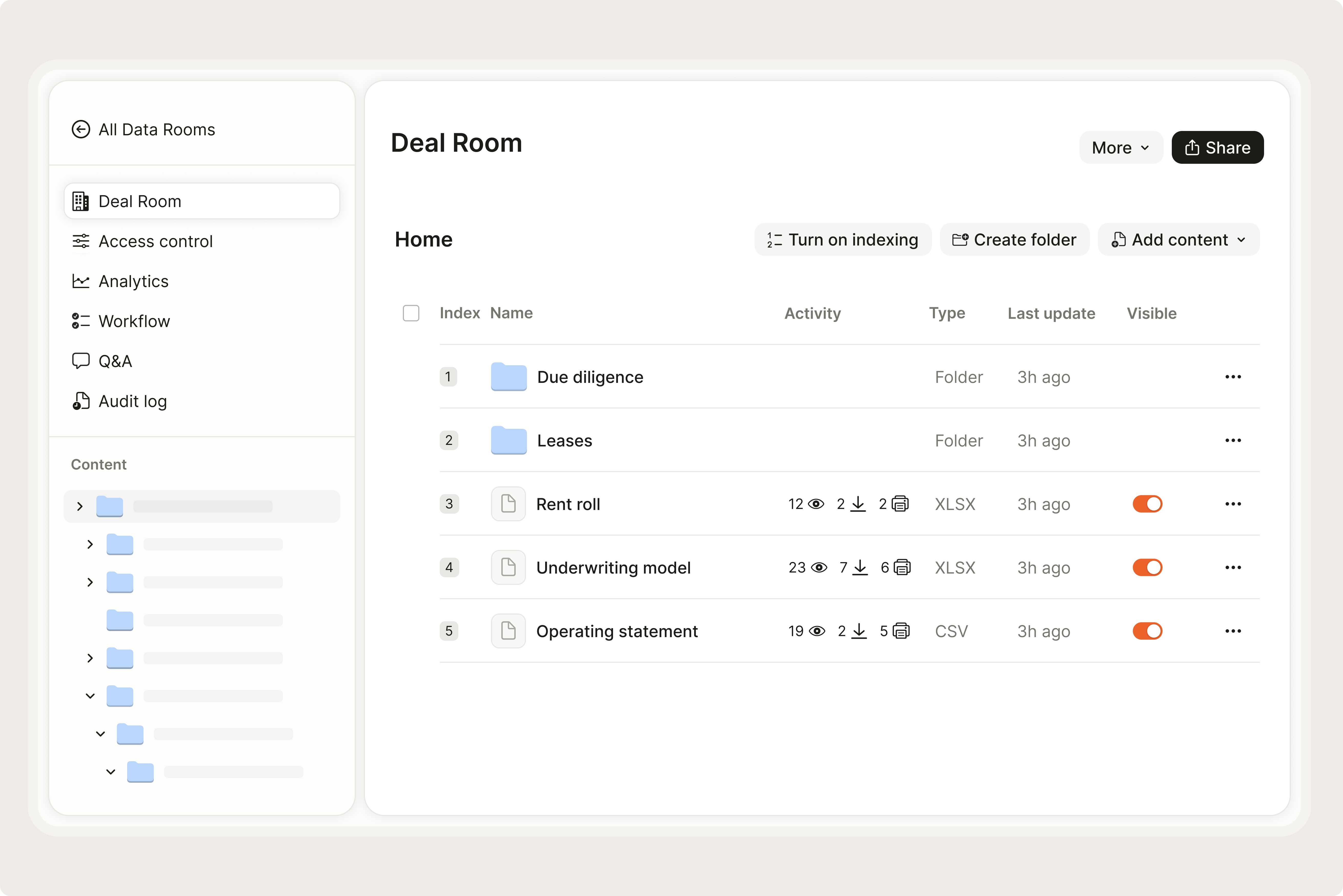
- 1.Upload Washington property files to a secure roomDrop ALTA title commitment, Ecology MTCA records, Smelter Plume data, structural report, wetland delineation, building permits, and lease files into Ellty.
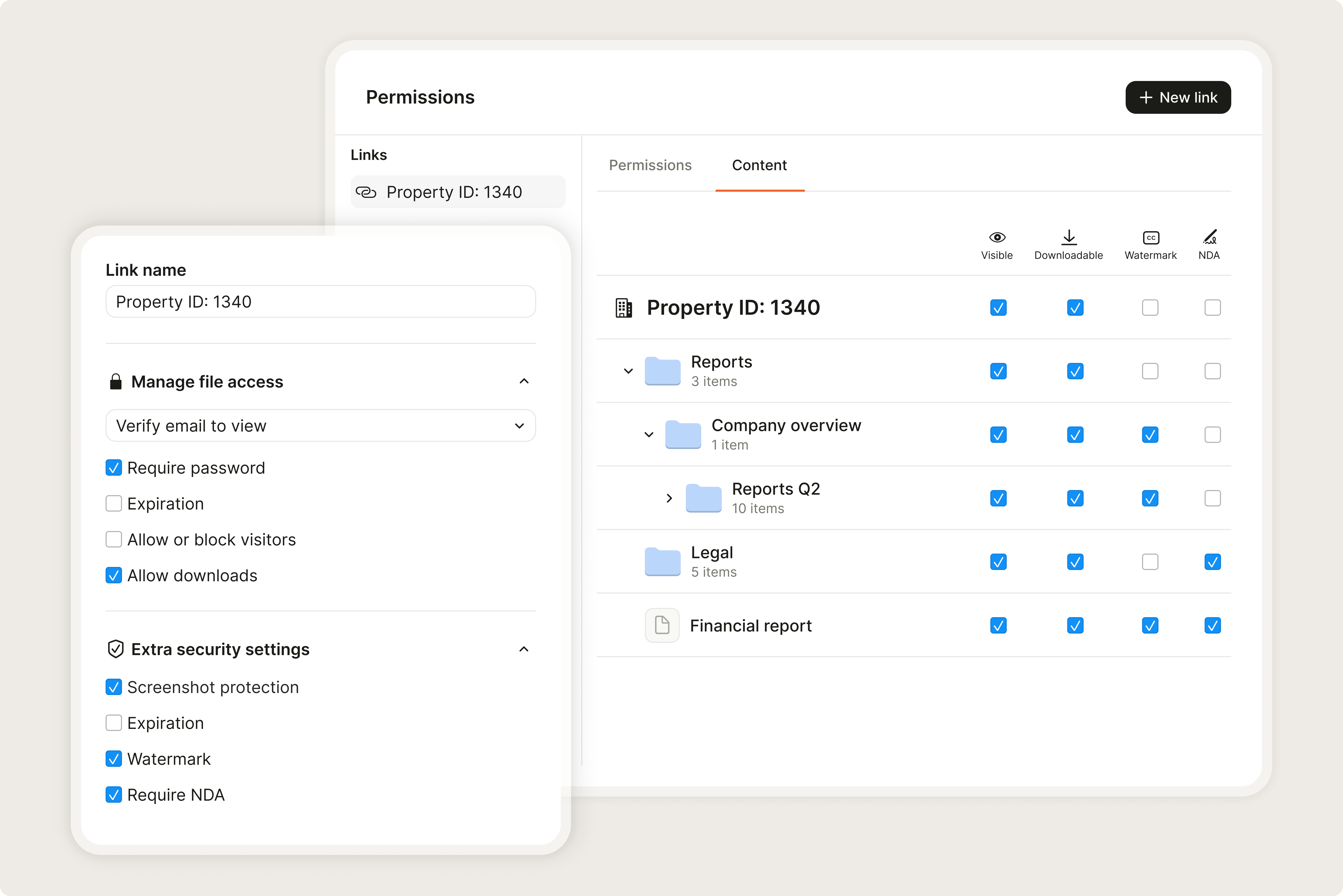
- 2.Give each advisor a scoped, tracked linkEnvironmental consultant sees Phase I and Ecology records. Structural engineer sees building drawings. Wetland scientist sees delineation data. Lender sees valuation and rent roll. Ellty enforces the scope.
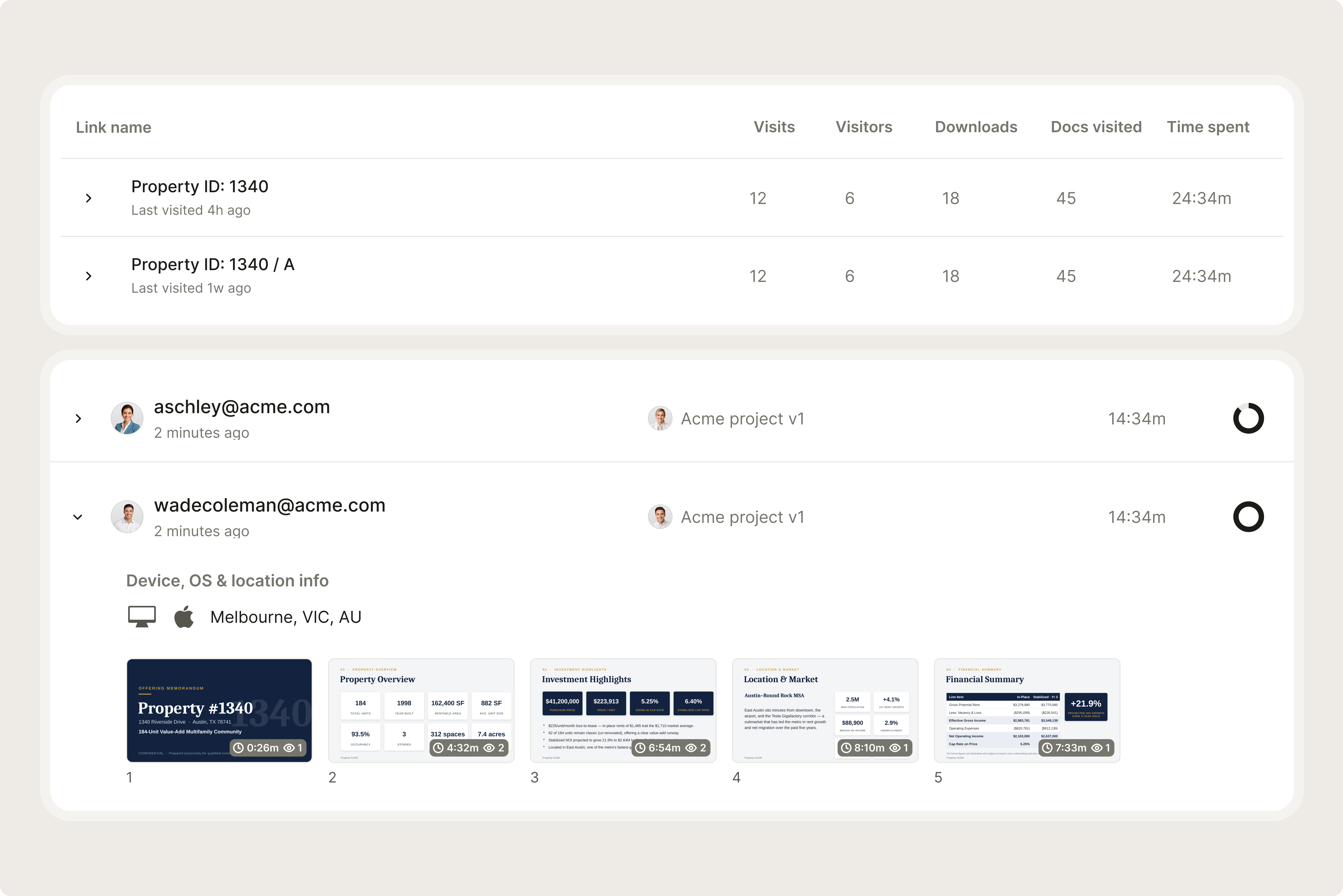
- 3.Monitor who reviews which documentsSee exactly which files each advisor opened and when. Catch environmental or seismic questions before they stall lender approval.
What makes Washington different
The Tacoma Smelter Plume is a Washington-specific issue with no equivalent in most other US states. The former ASARCO copper smelter in Tacoma operated for nearly a century and deposited arsenic and lead particulate across a 1,000+ square mile area via its smokestack. The contamination is in the soil at varying levels across Pierce, Thurston, and parts of King County. WA Ecology's Smelter Plume program actively monitors and remediates affected sites. Any commercial property buyer in the affected area who doesn't check the Smelter Plume mapping tool before closing is making a material omission.
The Cascadia Subduction Zone is a real risk, not a theoretical one. The Pacific Northwest has the highest concentration of seismic risk of any densely populated region in the continental United States outside California. Seattle's building stock includes a significant number of unreinforced masonry (URM) buildings and pre-1975 concrete structures that have not been retrofitted. Seattle passed a mandatory seismic assessment ordinance for URMs in 2016; owners of affected buildings were required to assess and are being phased into retrofit requirements. For any pre-1980 commercial building: seismic assessment is as important as title review.
REET is graduated in Washington in a way that many buyers from other states don't expect. The 3% rate on the portion above $3,025,000 means that large commercial deals carry a meaningfully higher effective transfer tax rate than small deals. On a $25M commercial deal, the blended effective REET rate (state only) runs approximately 2.6%. Add local REET and the total is 2.85-3.1%. Unlike many states with a flat transfer tax, the WA graduated structure rewards deal structuring attention.
Wetlands regulation in Washington is among the most complex in the US. Every county and city has its own Critical Areas Ordinance with different wetland category systems, buffer widths, and mitigation ratios. A wetland delineation that was valid under one city's CAO may need to be updated if the property is annexed or if the CAO is updated. For development or redevelopment plans, confirm the wetland status under the current jurisdiction's CAO before any underwriting assumptions are set.
Washington's Model Toxics Control Act (MTCA, RCW 70A.305) establishes strict, joint, and several liability for persons liable for a release of hazardous substances, including current owners and operators of a facility where a release has occurred, regardless of fault or knowledge. The Washington State Department of Ecology administers MTCA cleanup programs, including the Voluntary Cleanup Program (VCP), which provides a liability determination for eligible sites. The Tacoma Smelter Plume program addresses legacy arsenic and lead contamination from the former ASARCO smelter and maintains a public database of affected properties and cleanup actions in Pierce, Thurston, and King counties.
Timeline and cost in Washington
Weeks 1-2 cover kickoff: ALTA title commitment order, Smelter Plume mapping check, MTCA database search, Phase I ESA commission, seismic assessment engagement (for pre-1975 buildings), wetland delineation (if needed), building permit history pull, and lease abstraction initiation. Legal and advisory fees in this phase run USD 10,000-30,000.
Load all files into Ellty before advisors engage. Multiple workstreams - title, environmental, seismic, wetlands, leases - run simultaneously; centralized document management cuts weeks off the diligence timeline.
Weeks 2-5 cover deep review: Phase I ESA delivery and review, seismic report, wetland delineation results, building permit and certificate of occupancy confirmation, SEPA review, Shoreline Management Act assessment if applicable, lease abstraction completion, REET calculation, and operating expense review. Costs in this phase: USD 20,000-60,000.
Weeks 5-10 handle resolution: any Phase II ESA, seismic retrofit cost modeling, wetland buffer impact on development plans, title exception clearance, escrow closing preparation. Resolution timeline is most affected by Phase II environmental or seismic retrofit scope.
Washington total acquisition costs: REET (blended approximately 2-3% on larger deals) + local REET (0.25-0.5%) + ALTA title insurance + legal and advisor fees. Total acquisition cost on a Washington commercial deal runs approximately 3-4% of purchase price. No state income tax in Washington; B&O (Business and Occupation) tax applies to gross receipts from commercial leasing activity at the applicable service rate.
Running a Washington state property deal from one room
Hold ALTA title, Ecology records, seismic reports, and lease files in one secure, tracked Ellty data room.
Start free 14-day trialCommon questions about due diligence on Washington state commercial property
- Most Washington state commercial deals take 45-75 days from LOI to closing. Phase I ESA, Tacoma Smelter Plume screening, structural seismic assessment for pre-1975 buildings, wetland delineation, and building permit review are the main lead-time items. Shoreline Management Act review adds 30-60 days for waterfront or shoreline-adjacent assets.
- The Tacoma Smelter Plume refers to arsenic and lead contamination deposited by the former ASARCO copper smelter across a 1,000+ square mile area of Pierce, Thurston, and King counties. WA Ecology's Smelter Plume program tracks contamination levels and required cleanup. For any commercial property buyer in the plume area, soil screening for arsenic and lead is required. Contamination above cleanup standards can trigger MTCA remediation requirements that transfer to the new owner.
- Washington's Real Estate Excise Tax (REET) uses a graduated rate: 1.1% on the first $525,000; 1.28% from $525,001 to $1,525,000; 2.75% from $1,525,001 to $3,025,000; 3% above $3,025,000. Most counties and cities add a local REET of 0.25%-0.5%. On a $10M commercial deal, total REET (state plus local) runs approximately $270,000-$300,000. REET is typically a seller's obligation under WA law but is negotiable in the contract.
- The Cascadia Subduction Zone (CSZ) offshore of the Pacific Northwest can generate M8.0-9.2 earthquakes. The Seattle Fault also runs east-west through the city. Pre-1975 Washington commercial buildings predate modern seismic codes and may not perform adequately in a major seismic event. For any pre-1975 commercial acquisition, commission a licensed structural engineer's seismic assessment. Seattle has begun mandatory seismic assessment programs for unreinforced masonry buildings.
- Washington Critical Areas Ordinances (CAOs) adopted by each county and city regulate wetlands, streams, and other critical areas. Wetland buffers (typically 50-200 feet depending on wetland category and jurisdiction) cannot be built on. Wetlands discovered during a delineation reduce developable area and can affect the permitted uses of a commercial site. For any site with potential wetland presence (low-lying areas, adjacent streams), commission a wetland delineation before finalizing the bid.
- No. Washington commercial closings are escrow-agent driven; a title company or escrow company handles the closing process, not an attorney. Real estate attorneys are not legally required. However, for commercial transactions with significant title complexity, environmental issues, or contract negotiation needs, engaging a Washington real estate attorney is strongly advisable. Without attorney review, complex title exceptions or MTCA liability provisions in the purchase agreement may go unaddressed.