Switzerland CRE deals have two traps that catch non-Swiss buyers: the Lex Koller foreign ownership law that restricts residential-component acquisitions, and cantonal transfer tax that ranges from zero in Zurich to 3% in Geneva. This checklist covers every check before you close in 2026.
Switzerland's commercial market centers on Zurich and Geneva. Zug, Basel, Bern, and Lausanne operate as secondary markets with distinct cantonal rules.
Each of Switzerland's 26 cantons has its own property transfer tax, notary system, and zoning framework. A deal in Zurich and a deal in Geneva follow materially different processes.
Lex Koller restricts non-EEA buyers from purchasing residential property in Switzerland. Commercial property is largely exempt, but mixed-use buildings with residential components trigger the restriction.
Set up an Ellty data room before diligence opens and load all Grundbuch extracts, zoning certificates, and lease files. Each advisor gets a scoped link from day one.
Where Swiss deals actually go wrong
Not every check carries the same weight. The table below sorts risks by deal impact - dealbreakers first, then what moves the price, then basic hygiene - so your lawyer and notary know what to clear first.
| Area | Documents to pull | Switzerland red flag | Matters most for | Tier | |
|---|---|---|---|---|---|
| Title and ownership | Title and ownership | Grundbuch extract (all three sections), cadastral map, easement register | Swiss Grundbuch is managed cantonal; extract currency varies - confirm the date matches your DD window | All buyers | Dealbreaker |
| Lex Koller - foreign ownership | Lex Koller - foreign ownership | Lex Koller analysis, building use breakdown, residential % calculation, SECO clearance | Mixed-use buildings with residential components trigger Lex Koller even if buyer's intent is commercial | Non-EEA buyers, mixed-use assets | Dealbreaker |
| Cantonal zoning - Zonenplan | Cantonal zoning - Zonenplan | Zonenplan extract, building permit, cantonal planning authority confirmation, Nutzungsplanung | Swiss cantonal zoning is complex; each canton has distinct planning law and variance history | Development, repositioning, office | Dealbreaker |
| Environmental - Altlastenverzeichnis | Environmental - Altlastenverzeichnis | Phase I ESA, Altlastenverzeichnis search (BAFU), cantonal contaminated site register | Basel and Ticino industrial corridors carry significant legacy chemical industry contamination | Industrial, legacy commercial | Dealbreaker |
| Leases and tenancies | Leases and tenancies | All leases, OR compliance check, rent roll, indexation clauses, sublease consents | Swiss commercial leases under the Obligationenrecht (OR) have mandatory 30-day notice requirements | Income-producing assets | Price-adjuster |
| Building and GEAK certificate | Building and GEAK certificate | PCA, GEAK energy certificate, building permit, Baubewilligung, asbestos survey | GEAK (building energy certificate) is mandatory for sale in some cantons; missing one delays closing | All asset types | Price-adjuster |
| Operating costs and property tax | Operating costs and property tax | 3y operating statements, Liegenschaftssteuer bills, VAT option review, CAM reconciliations | Swiss Liegenschaftssteuer varies by canton and commune; Zug is lowest, Geneva is highest | Income-producing assets | Price-adjuster |
| Transfer tax - Handänderungssteuer | Transfer tax - Handänderungssteuer | Cantonal transfer tax calculation, share deal analysis, notary fee schedule, closing statement | Handänderungssteuer ranges 0-3% by canton; share deals avoid it but expand entity-level DD scope | All deals | Price-adjuster |
| Insurance and valuation | Insurance and valuation | Current policies, loss run, flood zone check for Rhine and Rhône areas, appraisal | Rhine and Rhône flood zones carry cantonal insurance requirements; mandatory cantonal buildings insurance in some cantons | All | Standard check |
| Utilities and access | Utilities and access | Utility connection records, EKZ/SIG/BKW supply letter, road access easement | Swiss utility operators vary by canton; confirm active supply contract and grid connection at the parcel | All | Standard check |
| Seller KYC and AML | Seller KYC and AML | Entity docs, Handelsregister extract, UBO identification, FINMA compliance, bankruptcy search | Swiss GwG (anti-money laundering law) requires notary to perform AML checks at closing | All deals | Standard check |
Due diligence on a Swiss property?
Set up your Ellty data room before diligence starts.
Start free 14-day trialSwitzerland CRE checklist
The table ranked risks by severity. This is the full list to work through, grouped by area.
Title and ownership
- Pull all three sections of the cantonal Grundbuch extract for the parcel
- Confirm the registered owner matches the seller entity and name exactly
- Check the encumbrance section for mortgages (Grundpfandrechte), easements (Dienstbarkeiten), and annotations
- Look for Stockwerkeigentum (strata/condominium) structures in multi-unit commercial buildings
- Confirm the cadastral parcel number matches all sale, zoning, and lease documents exactly
- Run a bankruptcy (Betreibungs- and Konkursregister) search on the selling entity
Lex Koller - foreign ownership
- Confirm whether the buyer requires a Lex Koller permit (non-EEA buyers on residential or mixed-use)
- Calculate residential floor area as a % of total; any residential component triggers Lex Koller analysis
- Apply for SECO clearance early if required; the process takes 2-4 months
- For EEA buyers: confirm EEA status; EEA nationals have same rights as Swiss residents on commercial property
- Pure commercial property (offices, retail, logistics) is generally exempt from Lex Koller restrictions
- Confirm with Swiss legal counsel before signing heads of terms; Lex Koller analysis is fact-specific
Cantonal zoning - Zonenplan
- Pull the Zonenplan (zoning map) extract from the relevant cantonal planning authority
- Confirm the designated use zone matches the current and intended commercial use
- Check for any pending Nutzungsplanung (land use plan) revisions with the municipality
- Pull the full building permit (Baubewilligung) history from the cantonal building authority
- Verify the Betriebsbewilligung (operating permit) is current for all commercial uses on the parcel
- For Geneva parcels: confirm PLQ (plan localisé de quartier) status for the relevant district
Environmental - Altlastenverzeichnis
- Search the national Altlastenverzeichnis (BAFU) for the parcel and surrounding area
- Also search the cantonal contaminated sites register; BAFU and cantonal lists don't always overlap
- Commission a Phase I ESA; prioritize Basel chemical industry sites and Ticino industrial parcels
- Check for underground storage tanks (USTs); petroleum and solvent releases appear near older sites
- Budget Phase II soil sampling (CHF 15,000-50,000) if Phase I identifies recognized conditions
Leases and tenancies
- Collect all leases and confirm compliance with the Swiss Obligationenrecht (OR Art. 253 ff.)
- Note mandatory 30-day written notice requirements for commercial lease terminations
- Check Swiss National Price Index (LIK) indexation clauses in all leases
- Confirm sublease consents and any assignment restrictions documented in writing
Give each advisor a scoped link in Ellty. Lease files go to the legal team; building reports go to the PCA team; financial statements go to the lender. Track every open in real time.
Building and GEAK certificate
- Confirm whether the canton requires a GEAK (Gebäudeenergieausweis der Kantone) for the sale
- Commission a Property Condition Assessment; include facade inspection for older Zurich and Geneva buildings
- Pull the full building permit history; unauthorized works must be legalized before closing
- For pre-1990 buildings: confirm asbestos survey is current; Swiss law requires one before any major renovation
- Check MINERGIE or MINERGIE-P certification if energy performance affects the tenant mix
Operating costs and property tax
- Pull 3 years of operating statements and reconcile against cantonal Liegenschaftssteuer bills
- Confirm the cantonal and communal property tax rate; rates vary widely from Zug to Geneva
- Audit CAM reconciliations against lease terms for all multi-tenant assets
- Check for outstanding infrastructure levies or improvement district charges from the commune
- Review the VAT opt-in status for commercial leases; Swiss VAT at 8.1% is recoverable by VAT-registered buyers
Transfer tax and deal structure
- Identify the canton; Handänderungssteuer is 0% in Zurich, ~3% in Geneva, and varies elsewhere
- Model the share deal alternative: Swiss CRE above CHF 10M often uses share deals to avoid transfer tax
- For share deals: expand DD scope to include full entity-level financial and tax history
- Confirm the notary fee schedule for the canton; fees are regulated and capped by cantonal tariff
- For Geneva: confirm the droits d'enregistrement rate applies; Geneva imposes both transfer tax and registration fee
Insurance and valuation
- Pull current insurance policies and 3-year loss run history from the seller
- Check cantonal mandatory buildings insurance requirements; some cantons (Zurich, Bern) require it
- Check flood zone risk near the Rhine, Rhône, and Aare rivers; standard policies exclude some zones
- Order an independent appraisal by a Swiss-registered Schätzungsexperte (valuer) for lender requirements
Utilities and access
- Verify all utility connections are active and include valid supply contracts
- For Zurich: confirm EKZ or local grid operator connection; for Geneva, confirm SIG contract
- Check for any energy easements or grid crossing rights that restrict development on the parcel
- Confirm legal road access via public road or a recorded Wegrecht (road easement) in the Grundbuch
Seller KYC and AML
- Pull a full Handelsregister (commercial register) extract for the selling entity
- Identify all beneficial owners; Swiss GwG requires notary AML verification at closing
- Run a Betreibungsregisterauszug (debt enforcement register) and bankruptcy search on the seller
- For non-Swiss entities: confirm the seller's Swiss legal representative for the notarial deed
How due diligence in Switzerland works
Step 1 - Title search and Lex Koller analysis
Pull the Grundbuch extract and run the Lex Koller analysis simultaneously on day one. Lex Koller clearance from SECO can take 2-4 months - if required, it sets the earliest possible closing date.
For mixed-use buildings, the Lex Koller residential % calculation must be done before signing heads of terms. Getting this wrong at advanced stages kills deals in Switzerland.
Step 2 - Zoning and cantonal planning
Pull the Zonenplan from the cantonal planning authority immediately after contract. Cantonal planning rules vary significantly - what's allowed in Zurich may not be in Geneva or Zug.
For development parcels, confirm pending Nutzungsplanung revisions in writing from the planning authority. Switzerland's slow planning process can freeze development rights for 2-3 years on contested sites.
Step 3 - Leases and income review
Collect all leases and flag OR compliance issues first. Swiss commercial lease termination requires 30 days' written notice; shorter notice periods in the contract don't override the statutory minimum.
Compare Austria's diligence process if you run DACH portfolio acquisitions. Both countries use Grundbuch title systems and require notaries, but Austria adds Grunderwerbsteuer and MRG complexities that don't exist in Switzerland.
Step 4 - Environmental review
Search both the national Altlastenverzeichnis and the cantonal register. Basel-Stadt and Basel-Landschaft carry the highest legacy chemical industry contamination in Switzerland.
Load all Phase I findings, cantonal environmental search results, and GEAK reports into Ellty. Watermarked links ensure sensitive environmental liability documents are traceable to every advisor who opens them.
Step 5 - Closing via cantonal notary
Swiss property transfers require a cantonal notary. The notary verifies the Grundbuch, prepares the deed, collects the Handänderungssteuer (where applicable), and registers the transfer.
Closing timelines depend on the notary's schedule and the Grundbuch processing time at the cantonal registry. Budget 4-6 weeks from notary instruction to deed execution on a standard Swiss CRE deal.
How to set up your Switzerland data room in Ellty.
Swiss deals require precise document control across multiple cantonal authorities. Load files into Ellty before advisors arrive. Each party gets a scoped, tracked link from day one.
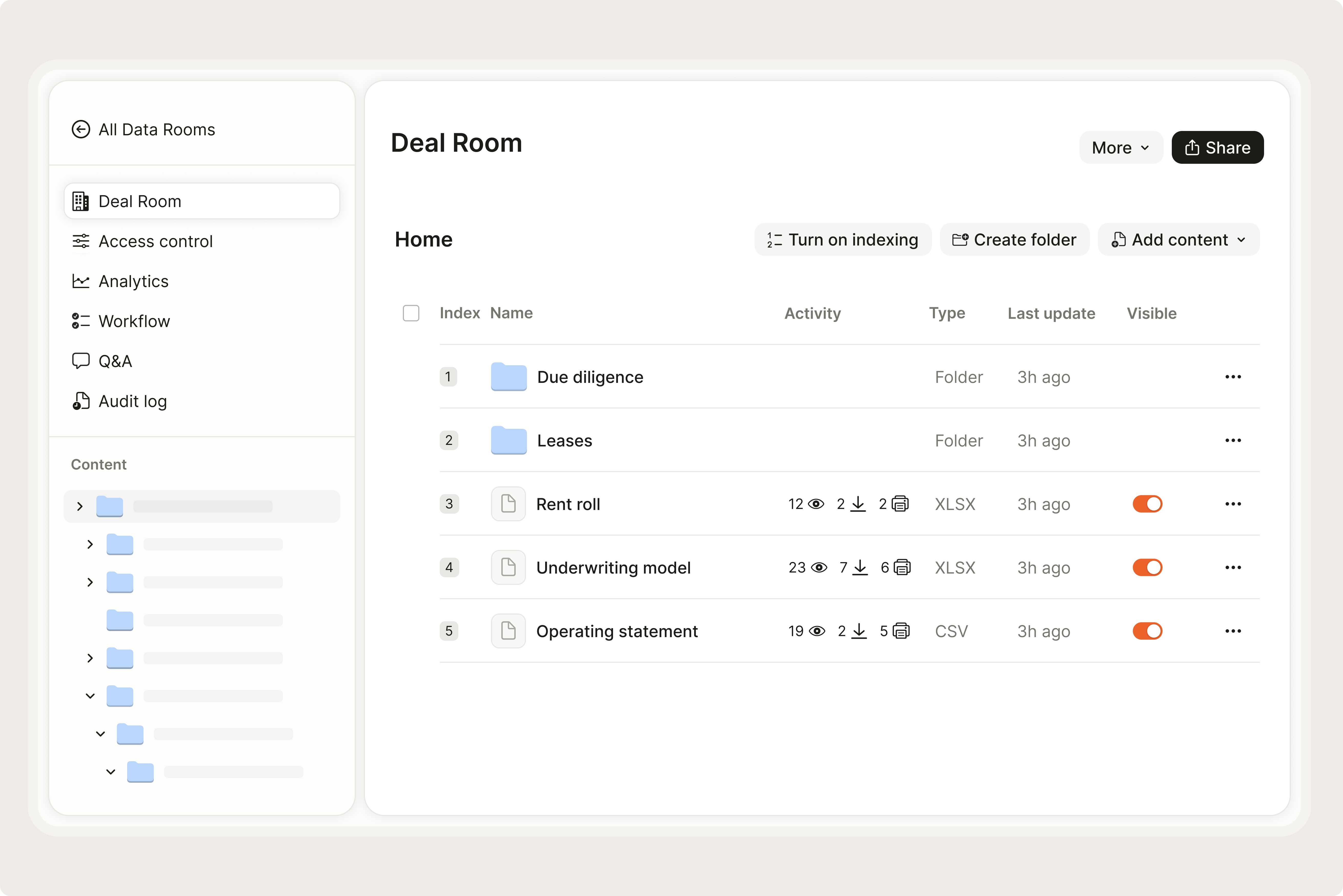
- 1.Upload Swiss property files to a secure roomDrop Grundbuch extracts, cantonal zoning docs, Altlastenverzeichnis records, GEAK, and leases into Ellty.
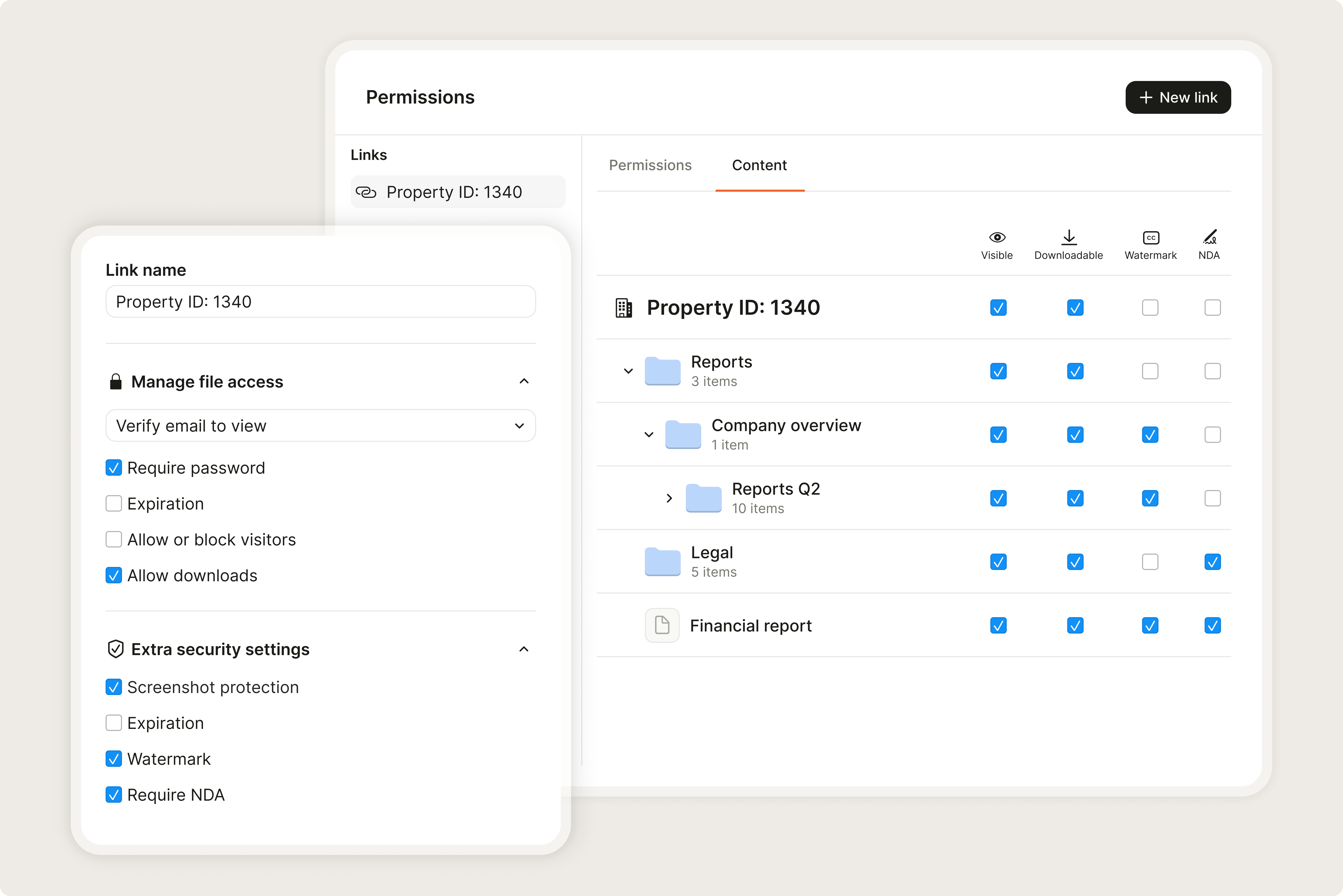
- 2.Give each advisor a scoped, tracked linkYour Swiss lawyer sees title files. The cantonal environmental consultant sees ESA reports. Ellty enforces the scope.
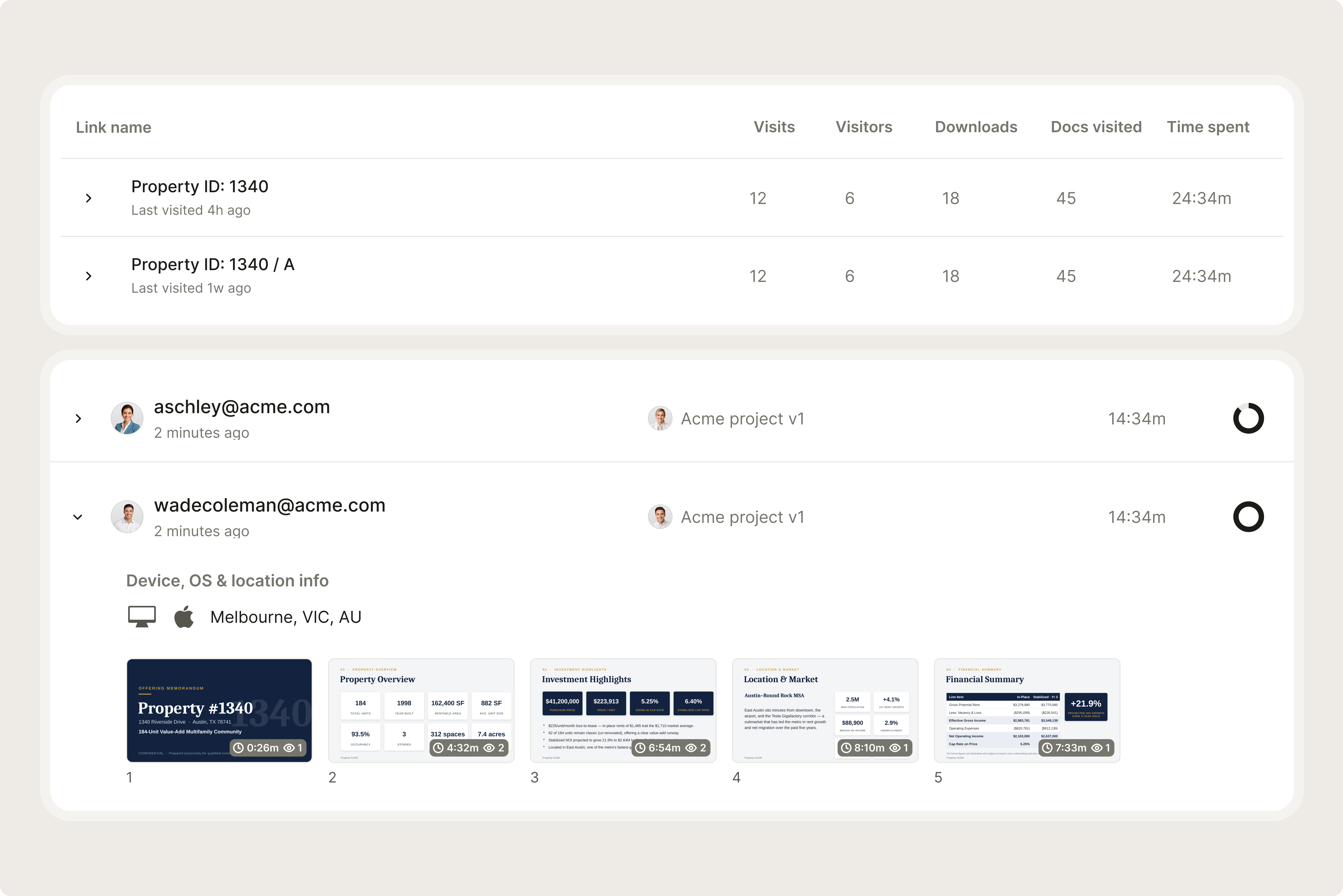
- 3.Monitor who reviews which documentsSee exactly which files each advisor opened and when. Catch delays before they affect the notary appointment.
What makes Switzerland different
Lex Koller is the deal-structure question every non-Swiss buyer must answer before signing anything. Commercial property is largely exempt, but the moment a building has residential floor area - even a caretaker flat - Lex Koller triggers. You need legal sign-off before heads of terms.
Cantonal transfer tax variation creates a location-specific cost model. A Zurich deal has zero Handänderungssteuer; the same deal in Geneva costs 3% more before notary fees. Run the cantonal tax analysis before you bid.
Switzerland's cantonal complexity means there's no single national process. Each of the 26 cantons runs its own Grundbuch, planning authority, and notary system. A deal team that closed in Zurich needs to re-learn the process for Geneva.
The GEAK energy certificate requirement is canton-dependent. Some cantons require it for sale; others don't. Check before you start - an expired or missing GEAK delays closing by 3-4 weeks in cantons that mandate it.
In Switzerland, the transfer of ownership of real estate requires a public deed executed before a notary and entry in the Land Register (Grundbuch). The cantonal notary is responsible for verifying the identity of the parties, ensuring compliance with Lex Koller where applicable, and notifying the Land Register of the transfer.
Timeline and cost in Switzerland
Weeks 1-2 cover kickoff: Grundbuch title search, Lex Koller analysis, cantonal Altlastenverzeichnis search, Zonenplan confirmation, GEAK status check, and notary engagement. Budget CHF 8,000-20,000 for this phase.
Load all files into Ellty before advisors arrive. Give each party a tracked, scoped link. That removes 1-2 weeks of email document exchange from a standard Swiss diligence process.
Weeks 2-6 cover deep review: Phase I ESA delivery, PCA, lease abstraction, Lex Koller clearance (if required), Handänderungssteuer modeling, and entity-level DD for share deals. Cost runs CHF 15,000-40,000 depending on asset complexity and deal structure.
Lex Koller clearance from SECO takes 2-4 months if required. Budget the full SECO timeline into the closing schedule before contract execution - not after.
Weeks 6-10 handle resolution: Phase II if needed, title exceptions, zoning confirmation, notary deed preparation, and Grundbuch registration. Cantonal Grundbuch registration takes 1-3 weeks after notary filing.
Cantonal transfer tax is the largest line item where it applies. Notary fees are canton-regulated and typically low (CHF 1,000-5,000). Buy-side legal fees run CHF 20,000-80,000 for a standard Swiss CRE transaction.
Share deal structuring avoids Handänderungssteuer but adds entity-level DD scope. Model both scenarios before choosing structure.
Running a Swiss property deal from one room
Hold Grundbuch extracts, cantonal zoning docs, and lease files in one secure, tracked Ellty room.
Start free 14-day trialCommon questions about due diligence on Swiss property
- Most Switzerland CRE deals take 6-12 weeks. Lex Koller clearance from SECO can extend the timeline to 4-6 months on deals with residential components.
- Lex Koller restricts non-EEA buyers from purchasing residential property in Switzerland. Pure commercial property is largely exempt, but mixed-use buildings with any residential floor area trigger the restriction.
- The Handänderungssteuer is Switzerland's real estate transfer tax, set at the cantonal level. It ranges from 0% in Zurich to ~3% in Geneva. Share deals typically avoid it.
- Switzerland's national contaminated sites register, managed by BAFU (Federal Office for the Environment). Both the national list and the cantonal register must be searched before any commercial property acquisition.
- GEAK requirement varies by canton. Some cantons mandate it for commercial property sales; others do not. Confirm cantonal requirements before diligence opens - a missing GEAK delays closing.
- Yes. All Swiss property transfers require a cantonal notary. The notary prepares the deed, performs AML checks under the GwG, and files the transfer with the cantonal Grundbuch.