Austria CRE deals carry two traps non-EU buyers miss consistently: foreign land ownership restrictions in provincial markets that require government approval, and a 4.6% acquisition cost stack that doesn't appear in the purchase price. This checklist covers every check before you close in 2026.
Austria's commercial market is dominated by Vienna. Graz, Linz, and Salzburg operate as smaller regional markets with their own municipal planning rules.
Every Austrian property transfer requires a notary. The notary prepares the deed and files the Grundbuch (land register) entry at the local district court.
Foreign buyers in Tirol, Salzburg, Burgenland, and Vorarlberg may need provincial government approval before a transfer can register. That approval adds weeks and can kill a deal.
Load all Grundbuch extracts, zoning certificates, and leases into an Ellty data room before diligence opens. Each advisor gets a scoped, tracked link from day one.
Where Austria deals actually go wrong
Not every check carries the same weight. The table below sorts risks by deal impact - dealbreakers first, then what moves the price, then basic hygiene - so your lawyer and notary know what to clear first.
| Area | Documents to pull | Austria red flag | Matters most for | Tier | |
|---|---|---|---|---|---|
| Title and ownership | Title and ownership | Grundbuch extract, district court (Bezirksgericht) title search, cadastral extract | Austrian Grundbuch entries lag real transactions by days; confirm the extract date matches your DD window | All buyers | Dealbreaker |
| Foreign ownership restrictions | Foreign ownership restrictions | Province-level foreign ownership law, Grundverkehrsgesetz, approval application | Tirol, Salzburg, Burgenland, and Vorarlberg require provincial approval for non-EEA buyers; adds weeks | Non-EU buyers, provincial markets | Dealbreaker |
| Zoning - FWP and BP | Zoning - FWP and BP | Flächenwidmungsplan, Bebauungsplan, municipality confirmation, building permit history | Austrian municipalities can change the FWP; pending changes can restrict development rights after closing | Development, repositioning deals | Dealbreaker |
| Environmental - Altlasteatlas | Environmental - Altlasteatlas | Phase I ESA, Altlastenatlas search, ALSAG register, hazardous waste deposit records | Austria's Altlastenatlas covers former military and industrial sites; ALSAG contribution tax adds ongoing liability | Industrial, legacy commercial | Dealbreaker |
| Leases - MRG applicability | Leases - MRG applicability | All leases, MRG applicability analysis, rent roll, Betriebskostenabrechnung | Vienna pre-1953 buildings may fall under the Mietrechtsgesetz; rent control applies to some commercial leases | Older Vienna office and retail | Price-adjuster |
| Building and Energieausweis | Building and Energieausweis | PCA, Energieausweis (energy certificate), building permit, use permit, asbestos survey | Energieausweis is legally required for all Austria commercial sales and leases; missing one delays closing | All asset types | Price-adjuster |
| Service charge and operating costs | Service charge and operating costs | 3y Betriebskostenabrechnung, municipal tax statements, CAM reconciliations | Austrian Betriebskostenabrechnung (operating cost statements) must be reviewed against lease terms annually | Income-producing assets | Price-adjuster |
| Transfer tax and acquisition costs | Transfer tax and acquisition costs | Grunderwerbsteuer calculation, Grundbuch fee, notary fee schedule, closing statement | Austria's 3.5% Grunderwerbsteuer plus 1.1% Grundbuch fee totals 4.6%; share deal may avoid it | All deals | Price-adjuster |
| Insurance and valuation | Insurance and valuation | Current policies, loss run, flood zone check for Danube and Inn river areas, appraisal | Danube and Inn river flood zones carry insurance exclusions in some Austrian markets | All | Standard check |
| Utilities and access | Utilities and access | Utility connection records, Wien Energie or local utility letter, road access easement | Austrian utility supply contracts vary by Bundesland; confirm active connection and transferability | All | Standard check |
| Seller KYC and AML | Seller KYC and AML | Entity docs, Firmenbuch extract, UBO register, bankruptcy search, judgment lien search | Austria's Wirtschaftseigentümer-Transparenzgesetz (WiEReG) mandates UBO registration; non-compliance voids transfers | All deals | Standard check |
Due diligence on an Austria property?
Set up your Ellty data room before diligence starts.
Start free 14-day trialAustria CRE checklist
The table ranked risks by severity. This is the full list to work through, grouped by area.
Title and ownership
- Pull the Grundbuch extract from the relevant Bezirksgericht (district court) on day one
- Confirm the registered owner matches the seller name and entity type exactly
- Search all three sections of the Grundbuch: ownership, encumbrances, and public charges
- Check for Baurecht (building right) entries; properties on Baurecht don't include land ownership
- Confirm the Einlagezahl (parcel ID) matches all sale, lease, and planning documents
- Run a bankruptcy and judgment lien search through the Austrian court records (Insolvenzdatei)
Foreign ownership restrictions
- Confirm whether the property sits in Tirol, Salzburg, Burgenland, or Vorarlberg
- Non-EEA buyers in those provinces need Grundverkehrsbehörde (land transfer authority) approval
- Apply early; approval can take 4-8 weeks and close dates cannot be set until approval is issued
- EEA buyers have fewer restrictions but must confirm status before engaging a notary
- Confirm that the acquiring entity's domicile satisfies the relevant provincial rules
Zoning - FWP and BP
- Pull the Flächenwidmungsplan (FWP) certificate confirming the designated use for the parcel
- Request the Bebauungsplan (BP) from the municipality if a detailed development plan exists
- Confirm any pending FWP revisions with the planning authority in writing
- Check the building permit history; all significant alterations must have valid permits
- Verify the Benützungsbewilligung (use permit) covers all current commercial uses
Environmental - Altlastenatlas
- Search the Austrian Altlastenatlas for any contaminated site designation on or near the parcel
- Commission a Phase I ESA; prioritize former industrial and military sites outside Vienna
- Check for ALSAG (contaminated sites contribution tax) obligations that survive ownership transfer
- Run a hazardous waste deposit search through the Austrian Environment Agency
- Budget Phase II soil sampling (EUR 15,000-40,000) if Phase I identifies recognized conditions
Leases and MRG applicability
- Collect all leases and amendments with full rental history
- Check whether the Mietrechtsgesetz (MRG) applies; older Vienna buildings may fall under rent control
- Confirm the lease type: Hauptmiete (head lease) vs. Untermiete (sublease) affects MRG coverage
- Review Betriebskostenabrechnung (operating cost statements) for the last 3 years against lease terms
- Check CPI indexation clauses; Austrian commercial leases typically index to the VPI (Verbraucherpreisindex)
Give each advisor a scoped link in Ellty. Your leasing lawyer sees the leases; the tax adviser sees the acquisition cost model; the valuer sees the building reports. Track who reviewed what in real time.
Building and physical condition
- Confirm the Energieausweis (energy performance certificate) is current and legally valid
- Commission a Property Condition Assessment; cover roofing, mechanical systems, and fire safety
- Pull the full building permit history from the municipality
- Verify the Baubewilligung (building permit) and Benützungsbewilligung are both in order
- For pre-1980 buildings: conduct an asbestos survey; Austrian law requires one before transfer
Service charge and operating costs
- Pull 3 years of Betriebskostenabrechnung and reconcile against lease terms
- Confirm the annual operating cost allocation method complies with Austrian tenancy law
- Check for outstanding municipal charges or improvement district levies on the parcel
- Audit CAM reconciliations for all multi-tenant assets against individual lease provisions
Transfer tax and acquisition costs
- Confirm the Grunderwerbsteuer: 3.5% of purchase price for commercial asset deals
- Add the Grundbuch registration fee: 1.1% of purchase price
- Add notary fees: typically 1-2% depending on deal complexity and notary's fee schedule
- Total acquisition cost: typically 5-7% of purchase price before legal fees
- Model the share deal alternative: share transfers avoid Grunderwerbsteuer on the property itself
- For share deals: engage a tax adviser early to confirm the entity-level diligence scope
Insurance and valuation
- Pull current insurance policies and a 3-year loss run from the seller
- Check flood zone risk near the Danube, Inn, and Salzach rivers; insurance exclusions are common
- Order an independent appraisal by an Austrian-registered Sachverständiger (valuer)
- Confirm earthquake and subsidence coverage; parts of eastern Austria carry low but present seismic risk
Utilities and access
- Confirm all utility connections are active and include valid supply contracts
- For Vienna: confirm Wien Energie service area assignment and active meter connections
- For provincial markets: check with the local Energieversorger for supply status
- Confirm legal road access via public road or recorded Servitut (easement)
Seller KYC and AML
- Pull a full Firmenbuch extract on the selling entity from the Austrian commercial register
- Check the WiEReG register for all beneficial owners; non-compliant entities cannot transfer property
- Run a bankruptcy and Insolvenzdatei (insolvency register) search before committing to the deal
- For non-EU sellers: confirm Austrian tax representative requirements for the transaction
- Confirm the seller's entity authorization to sell is documented and board-approved
How due diligence in Austria works
Step 1 - Title search and notary engagement
Pull the Grundbuch extract and engage the notary simultaneously. The notary must confirm title is clear before preparing the deed - don't wait for the full DD period to start this.
For non-EEA buyers in provincial markets, apply for Grundverkehrs approval immediately. That approval is the longest lead-time item in any Austria provincial deal.
Step 2 - Zoning and planning confirmation
Pull the FWP certificate from the municipality as soon as contract is signed. Pending FWP changes are not always disclosed by sellers and can materially affect development rights.
For Vienna parcels in Bezirke 1-9: check for monument protection (Denkmalschutz) designations. Denkmalschutz buildings carry renovation restrictions that significantly affect refurbishment cost.
Step 3 - Leases and income review
Confirm MRG applicability in the first week. Vienna pre-1953 residential and mixed-use buildings fall under the Mietrechtsgesetz; some commercial leases in those buildings are also affected.
Compare Norway's diligence process if you run European portfolio acquisitions. Both countries have specific local lease law traps - Norway for VAT opt-in and tomtefeste, Austria for MRG applicability and Betriebskosten.
Step 4 - Environmental review
Search the Altlastenatlas and commission the Phase I ESA in parallel. Former military and industrial sites on the outskirts of Graz and Linz carry the highest risk.
Load all Altlastenatlas search results, Phase I findings, and ALSAG records into Ellty so lenders and advisors access them with full tracking. Watermarked links prevent unauthorized sharing of environmental liability documents.
Step 5 - Closing via notary
All Austrian property transfers execute before a notary. The notary files the deed with the Grundbuch and collects the Grunderwerbsteuer on behalf of the tax authority.
Closing timelines depend on the Bezirksgericht processing speed. Vienna district courts typically register within 5-10 business days; rural courts can take 2-3 weeks.
How to set up your Austria data room in Ellty.
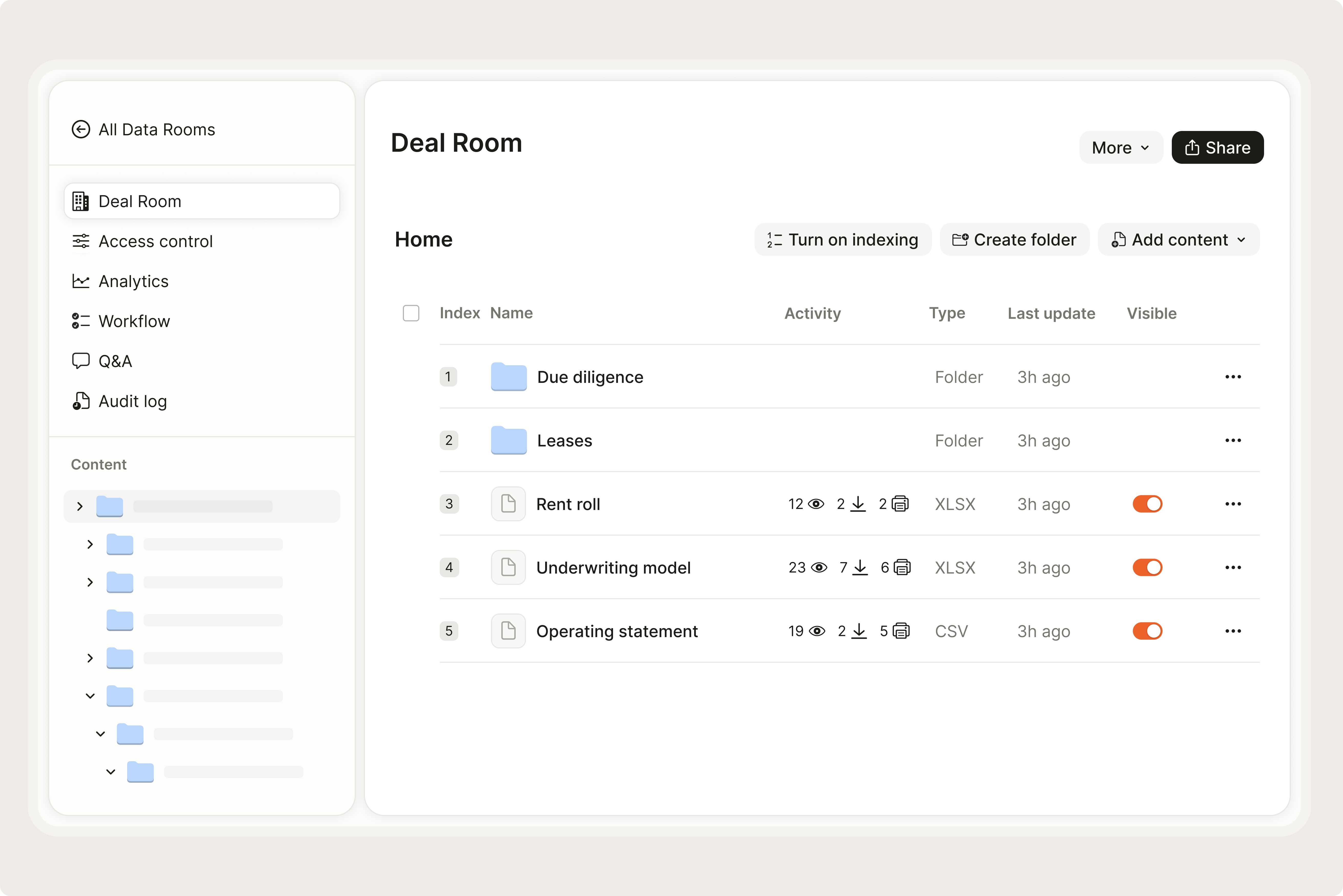
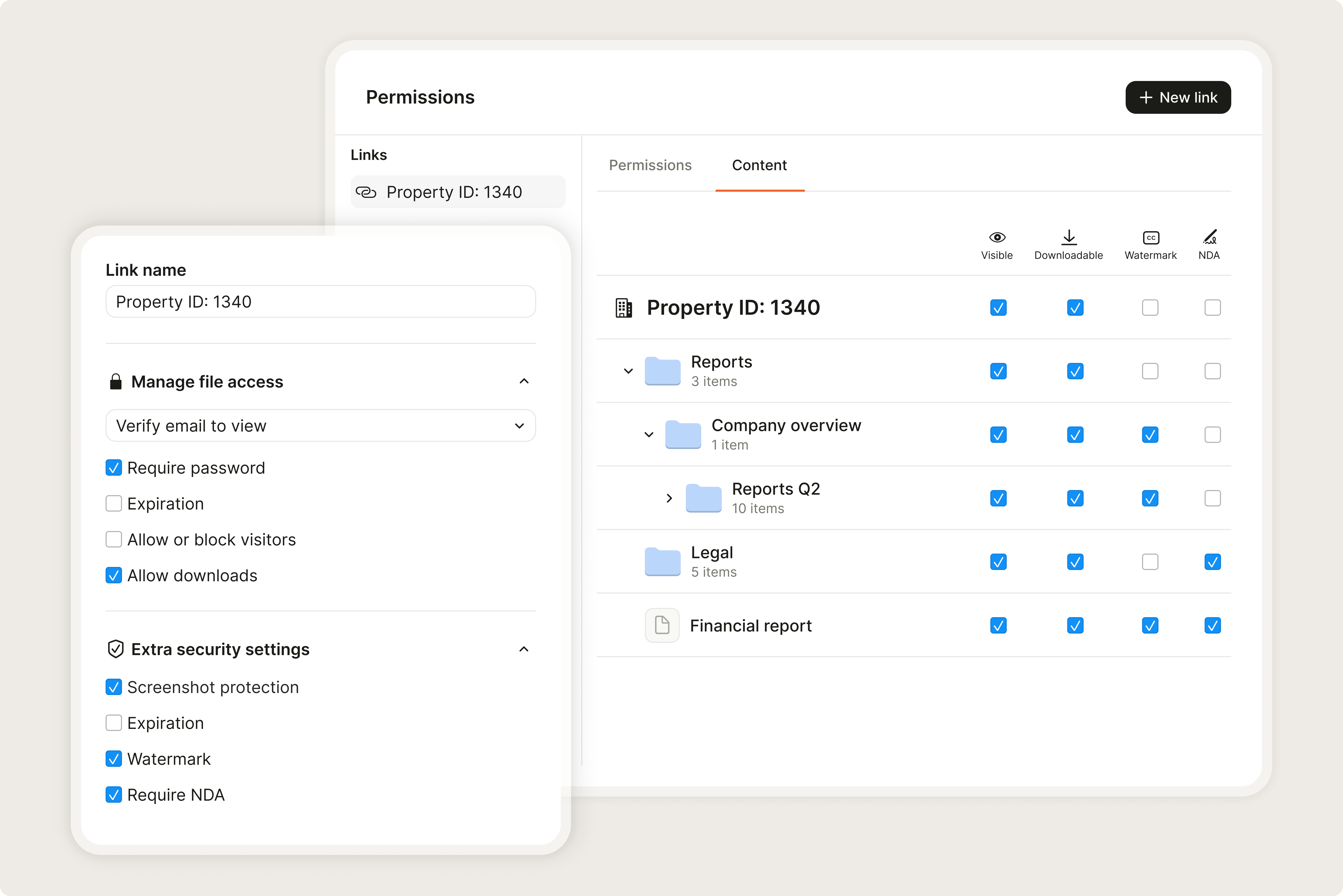
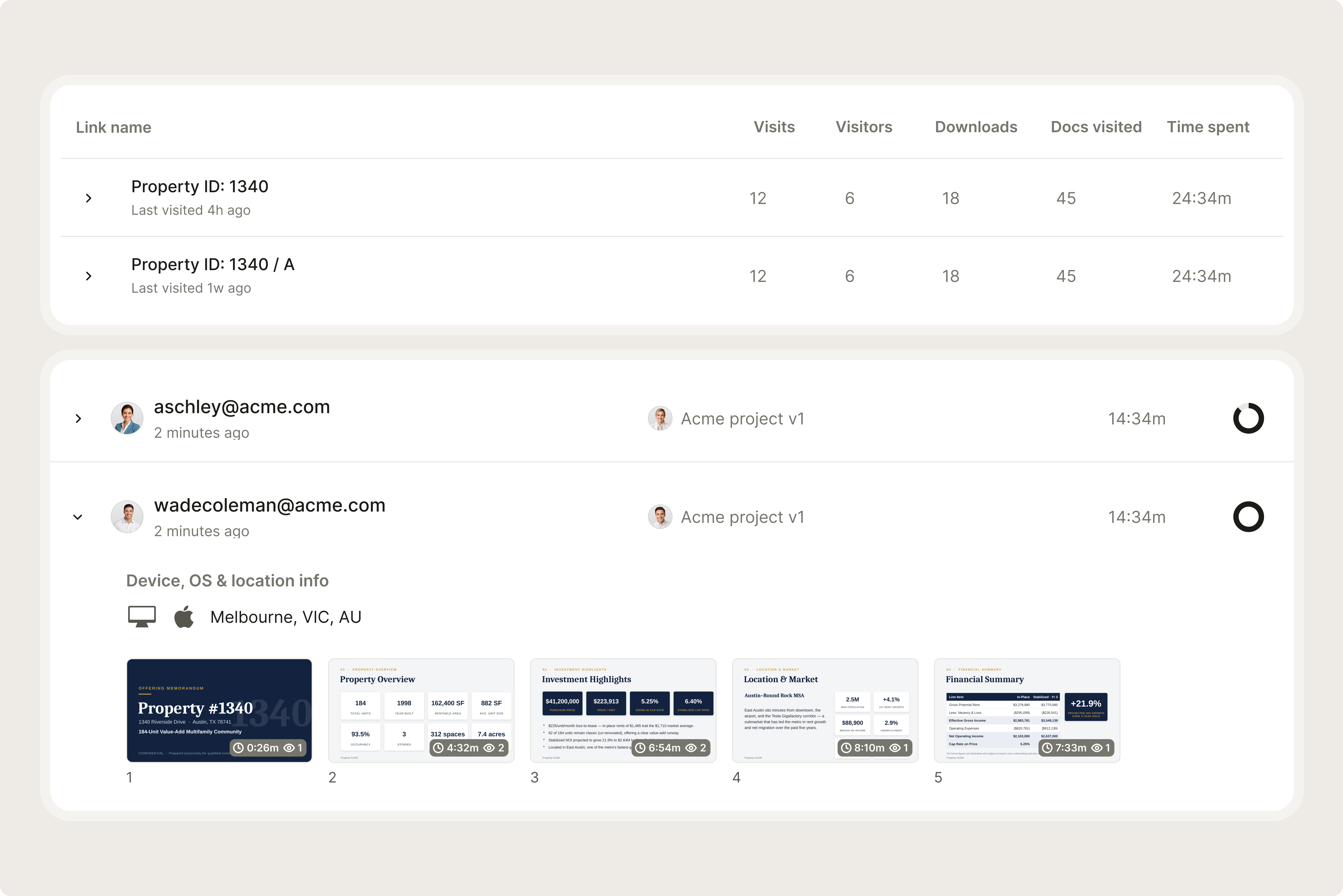
Austrian deals move quickly to notary stage. Load files into Ellty before advisors arrive. Each party gets a scoped, tracked link from day one.
- 1.Upload Austria property files to a secure roomDrop Grundbuch extracts, FWP/BP docs, Altlastenatlas records, leases, and Energieausweis into Ellty.
- 2.Give each advisor a scoped, tracked linkYour notary sees title docs. Your tax adviser sees the acquisition cost model. Ellty enforces the scope.
- 3.Monitor who reviews which documentsSee exactly which files each party opened and when. Catch delays before they affect the Grundbuch filing.
What makes Austria different
The 4.6% acquisition cost stack before notary fees is the number that moves the model for buyers from lower-tax markets. Grunderwerbsteuer at 3.5% plus the Grundbuch entry fee at 1.1% is payable on every asset deal - share deals avoid it, but expand diligence scope.
Foreign ownership restrictions in provincial markets are the most common deal-killer for non-EEA buyers. Tirol and Salzburg in particular require government approval that takes weeks and can be refused - engage local counsel before signing heads of terms.
The Mietrechtsgesetz is the Vienna-specific trap that costs income. Pre-1953 buildings may have commercial leases partially under MRG rent control. The impact on passing rent vs. market rent needs to be modeled before you bid.
The Energieausweis is non-negotiable. Austria requires it for every commercial sale and lease - no exceptions. A missing certificate blocks closing and delays registration at the Grundbuch.
Every transfer of ownership of real property in Austria must be registered in the Land Register (Grundbuch). The registration has constitutive effect - that is, the acquirer does not become the legal owner until the entry has been made in the Land Register by the competent district court.
Timeline and cost in Austria
Weeks 1-2 cover kickoff: Grundbuch title search, Altlastenatlas environmental search, FWP/BP zoning confirmation, notary engagement, Phase I ESA, and foreign ownership pre-check. Budget EUR 4,000-10,000 for this phase.
Load all files into Ellty before advisors arrive. Give each party a tracked, scoped link. That removes 1-2 weeks of email file exchange from a standard Austria diligence process.
Weeks 2-4 cover deep review: Phase I ESA delivery, PCA, Energieausweis review, MRG applicability analysis, Betriebskosten audit, and acquisition cost modeling. Cost runs EUR 6,000-18,000 depending on asset complexity.
Phase II soil sampling adds EUR 15,000-40,000 if Phase I flags recognized conditions. Budget early for industrial and military-adjacent parcels in Graz, Linz, and eastern Austria.
Weeks 4-6 handle resolution: Phase II if needed, title exceptions, foreign ownership approval (if required), notary deed preparation, and Grundbuch registration. Austrian notaries typically prepare the deed within 2-3 weeks of instruction.
Austria's total acquisition cost runs 5-7% of purchase price across Grunderwerbsteuer, Grundbuch fee, notary, and legal fees. Buy-side legal counsel runs EUR 5,000-20,000 depending on deal size.
Transfer tax at 3.5% is the largest single line item. It's price-linked and non-recoverable on asset deals. Model it first before agreeing deal structure.
Running an Austria property deal from one room
Hold Grundbuch extracts, Altlastenatlas records, and lease files in one tracked data room.
Start free 14-day trialCommon questions about due diligence on Austria property
- Most Austria CRE deals complete in 4-8 weeks. Foreign ownership approval in provincial markets and Grundbuch registration can push past 8 weeks.
- Austria's Grunderwerbsteuer is 3.5% of purchase price for commercial property. The Grundbuch registration fee adds 1.1%, totalling ~4.6% before notary fees.
- EEA buyers can purchase freely in most of Austria. Non-EEA buyers in Tirol, Salzburg, Burgenland, and Vorarlberg require provincial Grundverkehrsbehörde approval before the transfer can register.
- Austria's Altlastenatlas is the national contaminated sites register. It must be searched before any commercial property acquisition. ALSAG contribution tax liabilities can survive ownership transfer.
- The Mietrechtsgesetz (MRG) is Austria's tenancy law. It applies to many Vienna buildings built before 1953 and can impose rent control on commercial leases - check applicability before bidding.
- Yes. An Energieausweis (energy performance certificate) is legally required for every commercial sale and lease in Austria. A missing certificate blocks closing and Grundbuch registration.