Oregon commercial property due diligence has two structural constraints that buyers from other states routinely underestimate: Oregon's statewide land use planning system - including legally mandated urban growth boundaries around every Oregon city - severely restricts commercial development outside those boundaries, and the Cascadia Subduction Zone (CSZ) creates seismic and tsunami risk for coastal and Willamette Valley commercial that standard ASTM Phase I scopes don't address.
Oregon has no state-level real estate transfer tax, and ORS 306.815 preempts local governments from imposing real estate transfer taxes. This makes Oregon one of the few US states with zero transfer tax on commercial property transactions - a meaningful cost advantage over neighboring California, Washington (1.1-3% depending on price), and most other West Coast markets.
Oregon's statewide land use planning system under ORS Chapter 197 is administered by the Department of Land Conservation and Development (DLCD) and applies to all Oregon jurisdictions. Every Oregon city and metropolitan area is required to maintain an Urban Growth Boundary (UGB) separating urban from rural land. Commercial development outside a UGB is functionally prohibited in Exclusive Farm Use (EFU) or forest zones - and getting land into a UGB or rezoned from EFU takes years, not months.
Oregon DEQ operates the Voluntary Cleanup Program (VCP) for contaminated site brownfield buyers, similar in concept to Pennsylvania Act 2 or New Jersey ISRA but with different mechanics and timeline. A VCP No Further Action (NFA) letter provides regulatory closure for lenders and buyers on contaminated Oregon commercial sites.
Set up an Oregon data room before advisors are engaged. Load ALTA title, DLCD UGB confirmation, Phase I ESA, DEQ VCP records, seismic screening, and lease files before diligence opens.
Where Oregon property deals go wrong
Not every check carries the same weight. The table below sorts risks by deal impact - dealbreakers first, then what moves the price, then basic hygiene - so your Oregon attorney and land use consultant know what to clear first.
| Area | Documents to pull | OR red flag | Matters most for | Tier | |
|---|---|---|---|---|---|
| Title - county clerk recording | Title - county clerk recording | ALTA owner's title commitment, county clerk deed records, ALTA/NSPS survey, UCC fixture search at OR Secretary of State | Oregon property records are at the county clerk/recording office; Oregon uses trust deeds (not mortgages) for commercial financing; confirm clear chain of title and release of all trust deeds; Measure 37/49 claims recorded against some rural Oregon parcels can affect development rights - check for recorded Measure 37/49 waivers or orders in the title chain | All buyers | Dealbreaker |
| Urban growth boundary and land use | Urban growth boundary and land use | DLCD UGB map, local comprehensive plan, zoning ordinance, ORS Chapter 197 compliance, Metro UGB (Portland area), conditional use permit records | Oregon's statewide land use system mandates UGBs around every city; commercial development outside the UGB in Exclusive Farm Use (EFU) or forest zones is functionally prohibited; confirm the parcel is inside the applicable UGB before bidding; in the Portland Metro area the regional UGB is administered by Metro (separate from city zoning); UGB expansion takes years and is not a diligence shortcut | All commercial outside dense urban core | Dealbreaker |
| Zoning and conditional use | Zoning and conditional use | Local zoning certificate, conditional use permit, variance records, DLCD compliance order history, Metro Title 4 (Portland) records | Oregon cities administer zoning under local codes but must comply with statewide DLCD goals and the applicable comprehensive plan; Metro (Portland regional government) adds a third layer of land use regulation for Multnomah, Washington, and Clackamas County commercial; Metro Title 4 regulates industrial land in the Metro UGB; confirm zoning is consistent with comprehensive plan and Metro requirements for any Portland area commercial | Portland metro commercial, industrial | Dealbreaker |
| Environmental - DEQ VCP and brownfields | Environmental - DEQ VCP and brownfields | Phase I ESA (ASTM E1527-21), OR DEQ Voluntary Cleanup Program database, OR DEQ UST database, LUST database, Superfund NPL | Oregon DEQ's Voluntary Cleanup Program (VCP) provides a No Further Action (NFA) letter for brownfield buyers who complete cleanup to DEQ-approved standards; the NFA letter is the standard OR brownfield lender clearance; search OR DEQ's Environmental Cleanup Site Information (ECSI) database before bidding on any OR industrial or former-petroleum site; Portland's Central Eastside industrial district and Swan Island have documented industrial contamination | Former industrial, Portland Eastside commercial | Dealbreaker |
| Seismic risk - Cascadia Subduction Zone | Seismic risk - Cascadia Subduction Zone | DOGAMI seismic hazard maps, liquefaction susceptibility maps, OBC seismic zone confirmation, structural engineering report for older buildings | The Cascadia Subduction Zone (CSZ) runs offshore from northern CA to BC; a full CSZ rupture could produce a magnitude 8.0-9.0 earthquake with catastrophic damage across western Oregon; OR commercial buildings built before 1970s-era seismic code updates may have unreinforced masonry (URM) or inadequate seismic resistance; Portland has a URM inventory program; for any older OR commercial building: confirm current seismic code compliance and commission structural assessment for pre-1980 buildings | All OR commercial, especially pre-1980 buildings | Price-adjuster |
| Tsunami inundation - Oregon Coast | Tsunami inundation - Oregon Coast | DOGAMI tsunami inundation maps, OR DLCD coastal management compliance, FEMA FIRM, local tsunami evacuation zone records | DOGAMI (Oregon Dept of Geology and Mineral Industries) publishes tsunami inundation maps for all Oregon coastal communities; coastal commercial property in tsunami inundation zones faces CSZ scenario damage that FEMA FIRMs don't capture (FIRMs address riverine and coastal flood, not CSZ tsunami); commercial lenders on Oregon coastal property increasingly require DOGAMI tsunami zone confirmation | Oregon coastal commercial, Lincoln City, Seaside | Price-adjuster |
| Leases and tenancies | Leases and tenancies | All commercial leases, rent roll, estoppel certificates, SNDA agreements, lease assignment and subletting consent provisions | Portland office market has elevated vacancy post-COVID; confirm tenant credit quality and lease term remaining for any multi-tenant Portland office commercial; retail in Portland's downtown core has seen significant tenant turnover; for any OR retail or mixed-use with food and beverage tenants, confirm Oregon Liquor Control Commission (OLCC) licensed premises transfer implications | Portland office, downtown retail | Price-adjuster |
| Oregon Forest Practices Act - forest zone | Oregon Forest Practices Act - forest zone | OR Dept of Forestry records, forest zone designation, riparian buffer requirements, Forest Practices Act notification records | Oregon's Forest Practices Act (ORS Chapter 527) imposes significant restrictions on commercial timber operations and development in forest zones; commercial development in OR forest zoning (F zone) is limited to forest operations and very restricted non-forest uses; confirm whether the property is in a forest zone before any development plan; riparian buffers under Oregon Forest Practices Act restrict activity near streams on forest land | Rural OR commercial, timber-adjacent land | Price-adjuster |
| Transfer tax - none (ORS 306.815) | Transfer tax - none (ORS 306.815) | Deed recordation fee calculation, county recording confirmation | Oregon has NO state real estate transfer tax; ORS 306.815 expressly preempts local real estate transfer taxes, so no Oregon county or city can impose one; commercial buyers pay only nominal county recording fees at closing; this is a significant cost advantage over neighboring California (0.11%), Washington (1.1-3%), and most other US states | All buyers | Standard check |
| Insurance and building condition | Insurance and building condition | Property condition assessment (ASTM E2018), seismic structural report for pre-1980 buildings, earthquake insurance quotes, roof and HVAC reports | Earthquake insurance is standard for OR commercial lenders given CSZ risk; premiums have increased significantly in Oregon and Washington; confirm earthquake insurance availability and premium before finalizing Portland and coastal deal economics; URM (unreinforced masonry) buildings face the highest earthquake insurance premiums and may be excluded from coverage entirely by some carriers | All OR commercial, especially older buildings | Standard check |
| Seller KYC and AML | Seller KYC and AML | OR SOS entity records, UBO identification, FinCEN GTO compliance, OFAC screen | Portland commercial attracts significant Pacific Rim capital; FinCEN GTOs apply to all-cash purchases in Portland metro above threshold; run OFAC and sanctions screens on all principals; confirm OR Secretary of State entity records for all selling entities | All deals | Standard check |
Due diligence on an Oregon property?
Set up your Ellty data room before diligence starts.
Start free 14-day trialOregon commercial property due diligence checklist
The table ranked risks by severity. This is the full checklist to work through, grouped by area.
Title - county recording and trust deeds
- Order the ALTA owner's title commitment on day one from an Oregon-licensed title insurer
- Oregon uses trust deeds (deeds of trust) rather than mortgages for commercial financing; existing trust deeds must be released at or before closing with a full reconveyance; confirm payoff and reconveyance obligations with the title insurer
- Oregon county recording: property records are maintained at the county clerk's office or county recording office; title searches run against the county grantor-grantee index
- Measure 37/49 claims: Oregon Ballot Measure 37 (2004) created a program where landowners could file claims for compensation when land use regulations reduced property value, or the government could waive the regulation; Measure 49 (2007) largely replaced Measure 37 but allowed existing Measure 37 claims to convert to Measure 49 rights for limited residential development; some Oregon rural and suburban parcels have recorded Measure 37/49 orders or waivers in the title chain that can affect development rights; confirm no Measure 37/49 issues in the title chain for any OR property with rural or agricultural zoning history
- UCC fixture search: search Oregon Secretary of State UCC database for fixture filings against the commercial parcel
- Commission ALTA/NSPS survey for all significant Oregon commercial acquisitions
Give each advisor a scoped link in Ellty. Oregon attorney sees title chain and UGB records. Environmental consultant sees DEQ ECSI and Phase I/II. Land use consultant sees DLCD, Metro, and zoning records. Lender sees DEQ VCP clearance and valuation.
Urban growth boundary and statewide land use
- Confirm the property is inside the applicable Urban Growth Boundary (UGB) before any commercial development planning; for Portland area properties, confirm inside Metro UGB (Metro is the regional government for Multnomah, Washington, and Clackamas counties)
- Oregon statewide land use planning: Oregon's system under ORS Chapter 197 is administered by the Department of Land Conservation and Development (DLCD); all Oregon jurisdictions must comply with 19 statewide planning goals, and local comprehensive plans and zoning must be consistent with those goals; DLCD's approval of local plans means state-level land use law constrains local zoning in ways most other states don't have
- Exclusive Farm Use (EFU) zoning: vast areas of Oregon outside UGBs are in EFU zones where commercial development is essentially prohibited; what can be approved in EFU is narrowly defined by ORS 215 and DLCD rules; assume EFU means no commercial development unless your land use attorney confirms a specific exception applies
- Forest zones: Oregon forest zones (under ORS 215 and Oregon Forest Practices Act) similarly prohibit most commercial development; commercial timber operations are permitted but new non-forest commercial uses face near-total restrictions
- Portland Metro Title 4: Metro's Title 4 (Industrial and Other Employment Areas) protects industrial land in the Metro UGB from conversion to non-industrial uses; industrial land in Portland Metro is protected, and conversion to office or retail is difficult; confirm Metro Title 4 status for any Portland industrial property before planning mixed-use redevelopment
Load UGB maps, DLCD compliance records, Metro Title 4 documentation, and comprehensive plan extracts into Ellty. The land use attorney and planning consultant see exactly what they need without digging through a shared folder.
Environmental - DEQ VCP and brownfields
- Commission Phase I ESA meeting ASTM E1527-21 from an Oregon DEQ-familiar environmental professional
- Oregon DEQ Environmental Cleanup Site Information (ECSI): publicly searchable database of confirmed and suspected contaminated sites in Oregon; search ECSI by address before bidding on any Oregon commercial property with industrial history
- Oregon Voluntary Cleanup Program (VCP): Oregon DEQ's VCP provides regulatory closure for brownfield buyers; a buyer who completes cleanup under VCP and receives a No Further Action (NFA) letter gets DEQ confirmation that no further cleanup action is required for the site; the NFA letter is the standard Oregon brownfield lender clearance document
- Portland industrial legacy: Portland's Central Eastside Industrial District, Swan Island, the Guild's Lake industrial area, and the Willamette riverfront have documented industrial contamination from decades of manufacturing, petroleum, and port operations; Phase II ESA is effectively the standard commercial lender expectation for any Portland industrial or former industrial property
- Leaking Underground Storage Tanks (LUST): Oregon DEQ maintains a LUST database; search for any LUST sites in or adjacent to the property; Oregon has many unresolved LUST sites from former gas stations converted to retail or commercial use
- Oregon UST database: search DEQ's underground storage tank database for any active or closed USTs on the property
Cascadia Subduction Zone - seismic hazard
- Confirm the Oregon Building Code seismic zone for the property location using DOGAMI seismic hazard maps
- Cascadia Subduction Zone (CSZ): the CSZ is an approximately 700-mile subduction fault zone running offshore from northern California to British Columbia; a full CSZ rupture (estimated recurrence every 200-500 years) would produce a magnitude 8.0-9.0 earthquake; ground shaking, liquefaction, landslides, and tsunami inundation would cause catastrophic damage across western Oregon
- Unreinforced masonry (URM) buildings: Oregon commercial buildings constructed of unreinforced brick or concrete masonry before the 1970s-1980s are among the most vulnerable to seismic events; Portland has conducted a URM inventory and has a mandatory URM seismic upgrade program; confirm URM status for any older Portland commercial building and the timeline for mandatory upgrades
- DOGAMI liquefaction maps: DOGAMI publishes liquefaction susceptibility maps for Oregon; commercial properties on liquefiable soils (loose sand, fill) near rivers face amplified shaking and ground failure risk; Willamette River corridor commercial in Portland has documented liquefaction risk
- Structural seismic assessment: for any Oregon commercial building constructed before 1980: commission a structural engineering seismic assessment as part of the Property Condition Assessment; confirm seismic retrofit status and cost estimate before finalizing deal pricing
Oregon Coast - tsunami, coastal management
- For any Oregon coastal commercial property: pull DOGAMI tsunami inundation maps and confirm the property's location relative to the modeled CSZ tsunami inundation zone
- Oregon Coastal Management Program: Oregon's coastal zone is managed under the Coastal Zone Management Act through DLCD; coastal development requires consistency with the Oregon Coastal Management Program; shoreland and estuarine areas are subject to additional development restrictions
- Oregon Beach Bill: Oregon's landmark 1967 Beach Bill (ORS 390.605 et seq.) established public ownership of the wet sand beach to the vegetation line; confirm boundary relative to any coastal commercial parcel
- Coastal commercial markets: Seaside, Cannon Beach, Lincoln City, Newport, and Coos Bay are the primary coastal commercial markets; all face CSZ tsunami inundation risk and Oregon Coastal Management Program restrictions
- FEMA FIRMs for coastal Oregon: standard coastal flood risk coverage under FEMA; supplement with DOGAMI tsunami maps for CSZ scenario risk not captured by FEMA
Share all coastal zone, DOGAMI, and DEQ environmental documents with advisors through Ellty. Track who reviews the seismic structural report and tsunami maps - repeated access signals where the pricing adjustment or deal condition will come from.
Statewide land use - Measure 37/49 and forest
- For any rural or suburban Oregon property with a history of Exclusive Farm Use or forest zoning: check the county clerk records and county planning department for recorded Measure 37/49 orders or waivers
- Measure 37 rights: a recorded Measure 37 order or waiver may grant development rights beyond current zoning but with significant complexity; Measure 49 rights are generally limited to residential development; confirm with Oregon land use attorney whether any recorded Measure 37/49 right is transferable to a commercial buyer
- Oregon Forest Practices Act (ORS 527): commercial development in Oregon forest zones must comply with Oregon Forest Practices Act requirements for operations, riparian buffers, and replanting; confirm no Oregon Dept of Forestry violation or non-compliance order against the property
- Oregon Department of Agriculture (ODA) specialty crop protection: in some Willamette Valley locations, new commercial development faces Right to Farm protections that limit nuisance complaints against adjacent agricultural operations; this affects commercial site selection in rural Willamette Valley
Leases, OLCC, and tenant review
- Abstract all commercial leases; for Portland and Oregon commercial, confirm current rent against market (Portland office vacancy has remained elevated post-2020; Portland downtown retail has seen significant churn)
- OLCC-licensed premises: if any tenant holds an Oregon Liquor Control Commission license, confirm the license is transferable to a new landlord and that any change in ownership or control of the licensed premises does not trigger OLCC approval requirements; Oregon liquor licenses are tied to the specific licensed premises
- Portland downtown: confirm current lease-up, tenant operating status, and lease term remaining for any Portland downtown retail or office commercial given ongoing market conditions
- Tenant estoppel certificates: obtain estoppel certificates from all significant tenants before closing; estoppels confirm lease terms, no defaults, and no side agreements not in the written lease
No transfer tax - Oregon recordation fees only
- Oregon has no state or local real estate transfer tax; ORS 306.815 preempts all local transfer taxes
- County recording fees: Oregon commercial buyers pay nominal county recording fees for the deed and any trust deeds; recording fees run a few hundred dollars for typical commercial transactions - not a material cost
- Oregon Corporate Activity Tax (CAT): Oregon's CAT (effective 2020) is a business activity tax on commercial activity above $1M; it is not a property transfer tax; confirm with Oregon tax counsel whether any transfer structure triggers CAT reporting obligations
- No transfer tax exemption needed: because Oregon has no transfer tax, related-party transfers and corporate restructurings have no tax-driven urgency from a transfer tax standpoint
Compare Washington state's commercial property due diligence process when running Pacific Northwest portfolio deals. OR and WA share CSZ seismic risk and general West Coast environmental framework, but differ significantly on transfer taxes (OR: $0 vs. WA: 1.1-3% graduated REET), land use planning systems (OR's DLCD statewide UGB system is unique; WA has GMA but less restrictive in practice), and coastal regulations (OR Beach Bill public beach ownership vs. WA shorelines management).
How due diligence works in Oregon
Step 1 - Title and land use confirmation
Day one: order ALTA title commitment and simultaneously confirm UGB status with the applicable local planning department or Metro (for Portland metro). UGB status is the first go/no-go for any Oregon commercial development.
Check county records for any Measure 37/49 orders. Search DEQ's ECSI database for any contamination records. Confirm zoning classification and Metro Title 4 status (Portland metro industrial).
Step 2 - Environmental, seismic, and coastal
Commission Phase I ESA with Oregon-specific databases (DEQ ECSI, LUST, UST). For Portland industrial: Phase II ESA is standard lender expectation.
For any Oregon building constructed before 1980: commission structural seismic assessment in parallel with Phase I - URM status and retrofit cost materially affect pricing. For coastal Oregon: commission DOGAMI tsunami inundation review as part of or alongside Phase I.
Step 3 - Forest, OLCC, and leases
If rural Oregon or forest-adjacent: check Oregon Dept of Forestry records and Measure 37/49 history. Abstract all leases. For any OLCC-licensed tenant: confirm license transferability and any OLCC approval required.
Load all files into Ellty. Environmental consultant gets DEQ ECSI, Phase I/II. Structural engineer gets seismic building records. Coastal/DOGAMI specialist gets tsunami maps. Land use attorney gets UGB confirmation, DLCD records, Metro Title 4, and Measure 37/49 history.
Step 4 - No transfer tax, closing costs
Calculate Oregon recording fees (nominal). Model earthquake insurance premium as a major annual operating cost variable - Oregon earthquake insurance has increased significantly in recent years as CSZ awareness has grown.
Standard Oregon commercial diligence: 45-60 days. Portland brownfield with DEQ VCP: 6-18 months for NFA. Coastal with tsunami assessment and DOGAMI review: add 3-4 weeks. URM seismic retrofit valuation: add 2-4 weeks.
How to set up your Oregon data room in Ellty.
OR commercial deals involve ALTA title, DLCD UGB records, DEQ ECSI and VCP records, seismic structural reports, DOGAMI tsunami maps, forest zone records, and lease files. Load everything into Ellty before advisors engage.
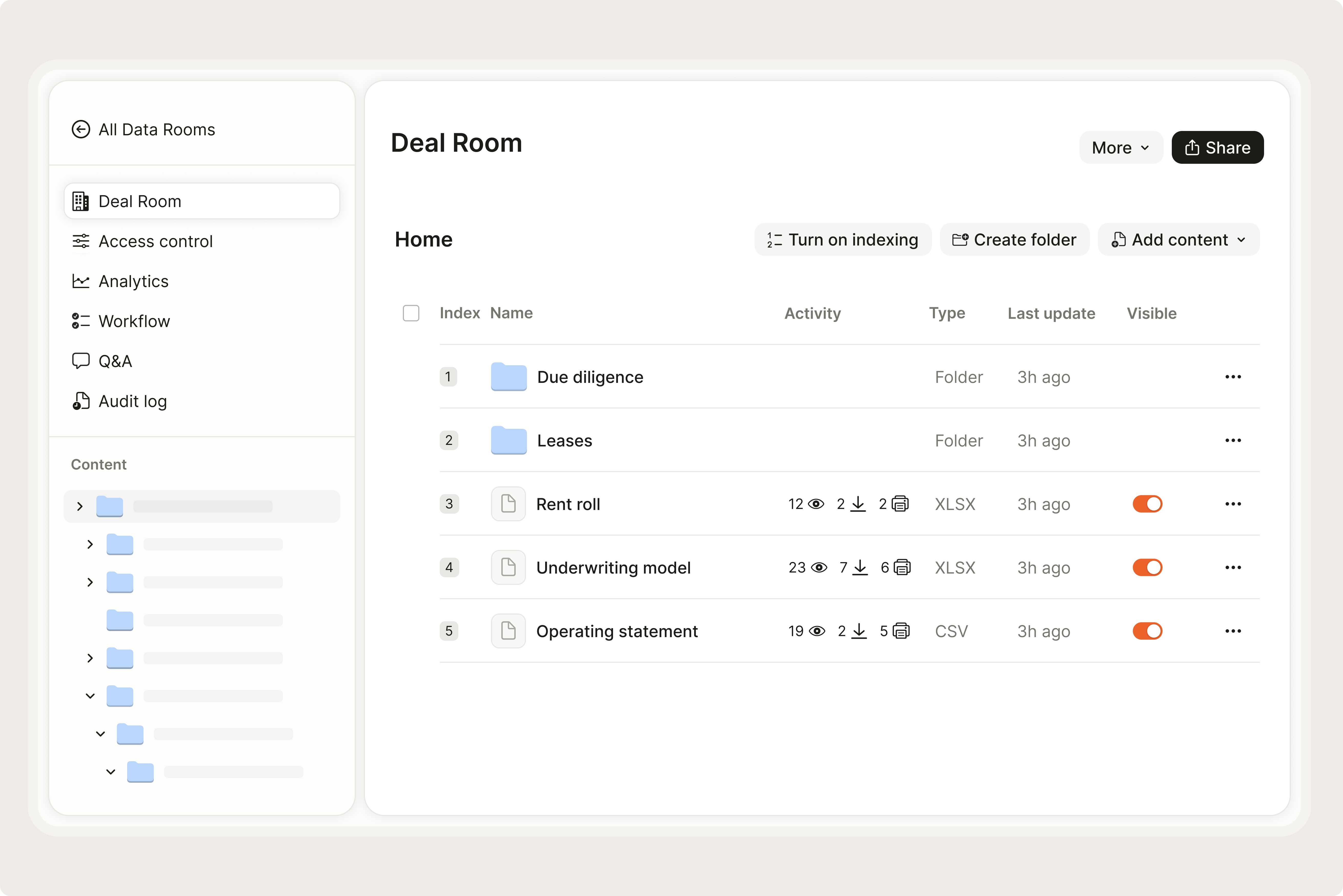
- 1.Upload Oregon property files to a secure roomDrop ALTA title, DLCD UGB confirmation, DEQ ECSI records, Phase I ESA, seismic structural report, DOGAMI tsunami maps, Metro Title 4 docs, and lease pack into Ellty.
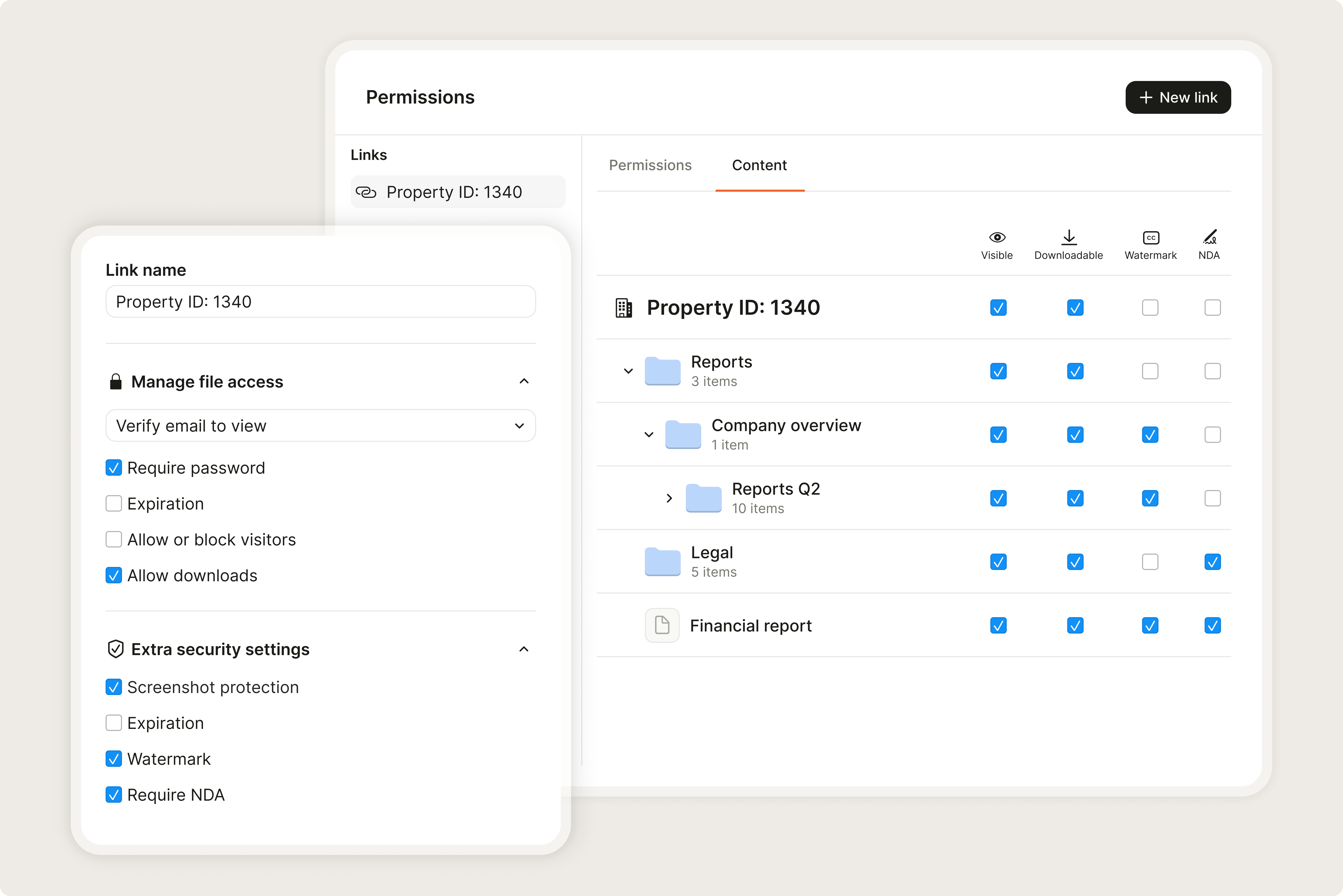
- 2.Give each advisor a scoped, tracked linkOregon attorney sees title and Measure 37/49 records. Environmental consultant sees DEQ ECSI, VCP, and Phase I/II. Structural engineer sees seismic data. Land use consultant sees DLCD, UGB, and Metro records. Lender sees DEQ NFA and valuation.
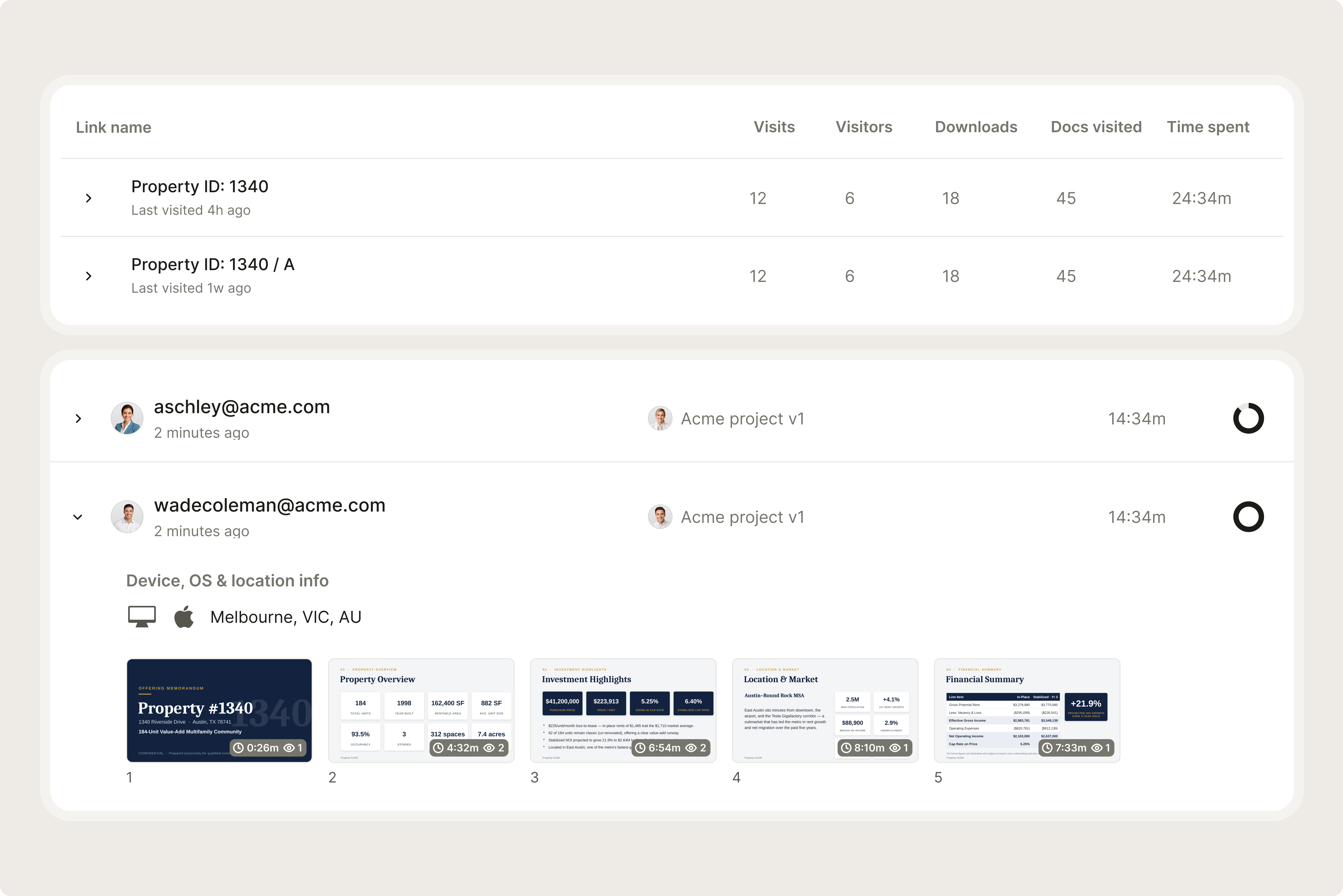
- 3.Monitor who reviews which documentsSee exactly which files each advisor opened and when. Catch UGB conflicts or seismic retrofit cost surprises before they affect closing.
What makes Oregon different
Oregon's Urban Growth Boundary system is one of the most restrictive land use frameworks in the US, and it's legally binding in ways that California's CEQA or Washington's GMA are not. Every Oregon city and metro area must maintain a UGB, and the state (through DLCD) must approve UGB expansions. What's outside the UGB is overwhelmingly Exclusive Farm Use or forest-zoned land where commercial development is essentially impossible - not just difficult. Oregon buyers who assume they can acquire rural land adjacent to a growing city and eventually convert it to commercial use are routinely wrong; UGB expansions are multi-year administrative processes and not guaranteed. Confirm UGB status before bidding on any Oregon commercial property that isn't already inside an established urban core.
The Cascadia Subduction Zone seismic risk is not adequately captured by standard Phase I ESAs or conventional property condition assessments. A standard ASTM E2018 PCA doesn't include seismic structural assessment, and standard Phase I ESAs don't include liquefaction risk review. In Oregon, these are add-on scopes that buyers need to commission separately for any older commercial building. Portland's unreinforced masonry inventory is well-documented, and the City of Portland has a mandatory URM upgrade program with phased compliance deadlines - buying a Portland URM commercial building means buying into a future mandatory seismic upgrade obligation. Commission the structural seismic assessment before pricing is finalized; retrofit costs on a large URM building can run in the millions of dollars.
Oregon's zero transfer tax on commercial real estate is a genuine cost advantage over nearly every other significant US commercial real estate market - and unlike some states where transfer tax is negotiated between buyer and seller, Oregon doesn't have one to negotiate. The cost savings are real and immediate: on a $10M Oregon commercial deal, a buyer saves $110,000-$300,000 compared to Washington state (REET of 1.1-3% depending on price), and even more compared to Maryland, Pennsylvania, or New York. This is worth modeling explicitly in deal comparisons across Pacific Northwest markets - Oregon's no-transfer-tax position is a structural advantage for commercial transactions.
Oregon's statewide land use planning system (ORS Chapter 197) requires every city and metropolitan area in Oregon to maintain an Urban Growth Boundary (UGB) separating urban land from rural farm and forest land. Urban Growth Boundaries must be established to accommodate 20-year urban growth projections for residential, commercial, and industrial uses. Expansion of a UGB requires a formal amendment process with DLCD review and approval; the process requires demonstrating insufficient land supply inside the existing UGB and compliance with statewide planning goals. Commercial development outside an established UGB is generally limited to uses specifically authorized under ORS 215 (Exclusive Farm Use statutes) or ORS 215 (forest zone statutes), which exclude conventional commercial activity. The Portland Metro regional government administers a regional UGB covering Multnomah, Washington, and Clackamas County jurisdictions, adding a layer of regional land use regulation beyond individual city and county zoning.
Timeline and cost in Oregon
Weeks 1-2 cover kickoff: ALTA title commitment order, UGB status confirmation (DLCD/Metro), Measure 37/49 records check, DEQ ECSI search, Phase I ESA commission (with OR-specific databases), seismic structural assessment commission (pre-1980 buildings), DOGAMI tsunami inundation review (coastal), Metro Title 4 confirmation (Portland industrial), Oregon Forest Practices Act records check (rural/forest-adjacent), zoning confirmation, and lease abstraction initiation. Legal and land use fees in this phase: USD 5,000-20,000.
Load all files into Ellty before advisors engage. Standard Oregon commercial: 45-60 days. DEQ VCP brownfield: 6-18 months for NFA letter.
Weeks 2-5 cover deep review: Phase I ESA delivery, DEQ VCP status confirmation, seismic structural assessment delivery and retrofit cost estimate, DOGAMI tsunami zone confirmation (coastal), UGB confirmation final, Metro Title 4 compliance (Portland industrial), Measure 37/49 records review, lease abstraction, OLCC license review (if applicable), and earthquake insurance quotes. Costs in this phase: USD 10,000-35,000.
Weeks 5-10 handle resolution: Phase II ESA (if triggered), DEQ VCP enrollment (brownfield), URM retrofit scope and cost finalization, coastal management compliance review, title exception clearance, and closing preparation.
Oregon total buyer acquisition costs for commercial: ALTA title insurance + legal/advisory + environmental (Phase I/II + seismic) + no transfer tax + nominal recording fees. Total acquisition cost overhead is among the lowest of any major US commercial real estate market. Earthquake insurance is the ongoing cost to model - OR commercial earthquake insurance premiums have increased as CSZ awareness and actuarial pricing have tightened.
Running an Oregon property deal from one room
Hold ALTA title, DEQ records, UGB docs, seismic reports, and lease files in one secure, tracked Ellty data room.
Start free 14-day trialCommon questions about due diligence on Oregon commercial property
- Standard Oregon commercial deals take 45-60 days. Portland brownfield requiring DEQ Voluntary Cleanup Program enrollment and a No Further Action letter: 6-18 months for full VCP clearance. Oregon coastal commercial requiring DOGAMI tsunami review and coastal management compliance: add 3-4 weeks. Pre-1980 buildings requiring structural seismic assessment and URM retrofit costing: add 2-4 weeks. Complex land use involving UGB expansion, Metro Title 4, or Measure 37/49 review: add 4-8 weeks.
- Oregon's statewide land use planning system (ORS Chapter 197) requires every Oregon city to maintain an Urban Growth Boundary (UGB) separating urban from rural land. Commercial development outside the UGB is essentially prohibited - land outside UGBs is overwhelmingly zoned Exclusive Farm Use (EFU) or forest, where conventional commercial activity isn't permitted. UGB expansion is a multi-year administrative process requiring DLCD approval. Confirm UGB status before bidding on any Oregon commercial property: if it's outside the UGB, assume commercial development is not feasible without a UGB amendment.
- No. Oregon has no state real estate transfer tax, and ORS 306.815 expressly preempts local governments from imposing real estate transfer taxes. Oregon commercial buyers pay only nominal county recording fees at closing. This makes Oregon one of the lowest acquisition cost states for commercial real estate transfers in the US - a significant advantage over neighboring Washington state (1.1-3% REET) and California (0.11% + local taxes).
- The Cascadia Subduction Zone (CSZ) is a major offshore fault zone running from northern California to British Columbia; a full CSZ rupture could produce a magnitude 8.0-9.0 earthquake. Oregon commercial buildings constructed before 1970s-1980s seismic code updates - especially unreinforced masonry (URM) buildings - are highly vulnerable. Portland has a mandatory URM seismic upgrade program. Commission a structural seismic assessment for any Oregon commercial building constructed before 1980; retrofit costs are material and must be modeled in deal pricing. Earthquake insurance is standard for Oregon commercial lenders.
- Oregon DEQ's Voluntary Cleanup Program (VCP) is the brownfield liability protection mechanism for contaminated commercial site buyers. A buyer who completes cleanup under VCP to DEQ-approved standards receives a No Further Action (NFA) letter that confirms DEQ considers the site cleanup complete and does not require further remediation. The NFA letter is the standard clearance document required by Oregon institutional lenders for brownfield commercial acquisitions. Search DEQ's ECSI database for any VCP or cleanup records before bidding on any Oregon industrial or former-petroleum commercial site.
- Oregon Ballot Measure 37 (2004) allowed landowners to file claims for compensation when land use regulations reduced property value, or the government could waive the regulation as an alternative. Measure 49 (2007) replaced most Measure 37 rights with limited residential development rights. Some Oregon rural and suburban parcels have recorded Measure 37/49 orders or waivers in the title chain. These records can affect what development is permitted on the parcel. Measure 49 rights are generally limited to residential, not commercial development. Check county records for any Measure 37/49 history on any Oregon property with rural or agricultural zoning background.