Ohio commercial property has one environmental check that defines most of its brownfield market: the Ohio Voluntary Action Program (VAP), which provides a legally binding No Further Action (NFA) letter from Ohio EPA confirming cleanup is complete - and which is the standard lender-required protection for any Ohio acquisition of formerly contaminated commercial real estate.
Ohio's industrial legacy runs deep: steel mills in Youngstown and Cleveland, rubber and tire manufacturing in Akron, auto parts in Toledo and Lima, chemicals along the Ohio River corridor. Tens of thousands of acres of former industrial land are in various stages of brownfield remediation across northeast and central Ohio. The VAP program is how most Ohio commercial brownfield redevelopment gets done; a covenant not to sue from Ohio EPA through the VAP is the standard liability backstop accepted by lenders and title insurers for formerly contaminated Ohio commercial sites.
Ohio conveyance fees (the state's transfer tax equivalent) are low by national standards. The state conveyance fee is $1 per $1,000 of consideration (0.1%), plus a local county conveyance fee of up to $3 per $1,000; total conveyance fees on Ohio commercial deals run 0.1-0.4% depending on county. Cuyahoga County (Cleveland) charges the full local rate; confirm the county-specific rate before closing.
Ohio's commercial real estate market in 2026 is bifurcated: Columbus is one of the fastest-growing large metros in the US (data center, logistics, semiconductor expansion from Intel's New Albany campus); Cleveland, Youngstown, and Toledo continue post-industrial restructuring with significant brownfield conversion opportunity. Environmental due diligence requirements differ substantially between the two profiles.
Set up an Ellty data room before diligence opens. Load ALTA title commitment, Ohio EPA VAP and database records, Phase I ESA, and lease files before advisors arrive.
Where Ohio property deals go wrong
Not every check carries the same weight. The table below sorts risks by deal impact - dealbreakers first, then what moves the price, then basic hygiene - so your Ohio attorney and technical advisor know what to clear first.
| Area | Documents to pull | OH red flag | Matters most for | Tier | |
|---|---|---|---|---|---|
| Title - ALTA and county recorder | Title - ALTA and county recorder | ALTA owner's title commitment, full title search from county recorder records, ALTA/NSPS survey, UCC search | Ohio county recorders maintain deed records; title search runs against the county grantor-grantee index; confirm clear title against all mortgages, liens, and judgment liens; mechanic's liens in Ohio can attach for 6 years | All buyers | Dealbreaker |
| Ohio EPA VAP and brownfield status | Ohio EPA VAP and brownfield status | Ohio EPA VAP covenant not to sue and NFA letter, OEPA ACRES database search, Phase I ESA, BUSTR UST records | For any Ohio commercial property with industrial history: confirm whether a VAP NFA letter exists; if not, assess whether VAP enrollment is required for lender approval; an uncompleted VAP creates title insurance and lender hurdles | Brownfield, industrial, Rust Belt redevelopment | Dealbreaker |
| Environmental - northeast Ohio industrial | Environmental - northeast Ohio industrial | Phase I ESA (ASTM E1527-21), OEPA ACRES database, BUSTR UST database, CERCLIS federal Superfund search | Mahoning Valley (Youngstown steel), Cuyahoga River corridor (Cleveland industrial), Akron (rubber/tire manufacturing), and Toledo (Maumee River industrial) have documented soil and groundwater contamination from decades of heavy industry | Industrial, brownfield, NE Ohio | Dealbreaker |
| PFAS - Wright-Patterson and military | PFAS - Wright-Patterson and military | Ohio EPA PFAS database, EPA PFAS site locator, Phase I ESA PFAS addendum, well water testing | Wright-Patterson AFB (Dayton area) has documented PFAS groundwater contamination from AFFF; Rickenbacker ANG Base (Columbus) and Youngstown ARS are additional Ohio PFAS sites; commercial properties near these bases require PFAS screening | Properties near military bases; well-water sites | Price-adjuster |
| Flood risk - Ohio and Maumee Rivers | Flood risk - Ohio and Maumee Rivers | FEMA FIRM, Army Corps of Engineers flood study, county floodplain map, river stage history | Commercial properties along the Ohio River (Cincinnati, Portsmouth, Gallipolis), Maumee River (Toledo area, 2019 flooding), Cuyahoga River, and Scioto River (Columbus) face documented flood risk that exceeds FEMA 100-year floodplain boundaries in some locations | River corridor commercial assets | Price-adjuster |
| Zoning and conditional use | Zoning and conditional use | Zoning certificate from city or county planning, conditional use permit review, non-conforming use analysis | Ohio municipalities have independent zoning codes; confirm the current use is permitted and any conditional use permits are current; non-conforming commercial uses that predate zoning changes may lose protected status if use is abandoned | All buyers; critical for redevelopment | Price-adjuster |
| Conveyance fee and transfer costs | Conveyance fee and transfer costs | Ohio state and county conveyance fee calculation, county auditor DTE-100 form, title insurance premium | Ohio conveyance fee is $1 per $1,000 (state) plus county rate; Cuyahoga County charges $4 per $1,000 total; most other Ohio counties charge $1-3 per $1,000 total; the DTE-100 conveyance fee form is filed at the county auditor at closing | All buyers | Standard check |
| Leases - Ohio commercial terms | Leases - Ohio commercial terms | All lease contracts, rent roll, operating expense reconciliations, Columbus data center or warehouse tenant provisions | Ohio commercial leases are freely negotiable; for Columbus-area data center and logistics assets: review power supply provisions, fiber connectivity specifications, and tenant termination rights tied to specific infrastructure performance | All income-producing assets | Standard check |
| Insurance and valuation | Insurance and valuation | MAI appraisal, commercial property insurance, Ohio River flood insurance (Cincinnati), loss run | Ohio commercial properties are generally insurable at standard rates except for flood-zone assets along major rivers; Ohio River commercial assets in Cincinnati need flood insurance; Maumee River Toledo assets face flood risk following 2019 record flooding | River corridor commercial assets | Standard check |
| Building permits and C of O | Building permits and C of O | City or township building permit history, Certificate of Occupancy, Ohio Building Code compliance | Ohio building permits are issued by city, village, or township; some Ohio townships have limited building code enforcement; confirm C of O status and final inspections in whichever jurisdiction the property falls | All commercial buildings | Standard check |
| Seller KYC and AML | Seller KYC and AML | Ohio SOS entity filing, UBO identification, FinCEN compliance, OFAC screen | Ohio is attracting significant data center and semiconductor-related foreign investment (Intel New Albany, Google and Amazon data centers); CFIUS review may be warranted for foreign acquisitions near Intel's New Albany campus or other sensitive sites | All deals | Standard check |
Due diligence on an Ohio property?
Set up your Ellty data room before diligence starts.
Start free 14-day trialOhio CRE checklist
The table ranked risks by severity. This is the full list to work through, grouped by area.
Title - ALTA and county recorder
- Order the ALTA owner's title commitment from an Ohio-licensed title insurer on day one
- Ohio property records are maintained at the county recorder's office; the title search runs against the county grantor-grantee index; most Ohio county recorder offices have online search access
- Confirm clear title against all mortgages, liens, lis pendens, and judgment liens
- Ohio mechanic's lien law: a contractor can file a mechanic's lien within 75 days of providing labor or materials; however a mechanics lien action must be filed within 6 years; check for any recent construction activity that might trigger a mechanic's lien filing
- Order a UCC lien search in the Ohio Secretary of State UCC database for any fixture filings
- Order an ALTA/NSPS survey for all significant commercial acquisitions
Ohio EPA VAP and brownfield status
- Search the Ohio EPA ACRES (Brownfield Site Inventory) database for the property address and parcel; ACRES tracks enrolled VAP sites, Remediation Required sites, and No Further Action sites
- Ohio Voluntary Action Program (VAP): for any site with a history of industrial, manufacturing, or commercial contamination, confirm whether a VAP covenant not to sue and NFA letter have been issued
- The VAP NFA letter provides a covenant not to sue from Ohio EPA; it is transferable to successor owners with proper notice; confirm the VAP NFA is current and has not been suspended
- If no VAP NFA exists but industrial contamination is suspected: assess whether VAP enrollment is required by the lender; most Ohio institutional lenders require VAP completion or active enrollment before closing on brownfield assets
- Ohio EPA Voluntary Action Program requires a certified VAP specialist (Professional Engineer or environmental professional meeting VAP qualifications) to run the program; engage one early if VAP enrollment is needed
Environmental - northeast Ohio industrial
- Commission Phase I ESA meeting ASTM E1527-21 from an Ohio EPA-familiar environmental professional
- Search Ohio EPA OEPA databases: ACRES brownfield inventory, BUSTR (Bureau of Underground Storage Tank Regulations) UST and LUST database, hazardous waste generator database, and Spills database
- Mahoning Valley (Youngstown/Warren): former integrated steel mills (Republic Steel, Sharon Steel, McDonald Steel, U.S. Steel McDonald Works) left significant soil and groundwater contamination; Phase I and Phase II are standard for any former mill site or adjacent commercial property
- Cuyahoga River corridor (Cleveland): the river's industrial legacy (steel, chemicals, painting, solvents) left contamination in commercial properties along the riverbanks from Cleveland's Flats entertainment district upstream
- Akron: rubber/tire manufacturing legacy (Goodyear, Firestone, General Tire historical sites) left carbon black, petroleum hydrocarbons, and solvent contamination in Summit County commercial areas
- Toledo and Maumee River: glass manufacturing, auto parts, and refining history create legacy contamination in Lucas County commercial properties; search Toledo Lucas County Port Authority brownfield records
Set up each advisor's access via Ellty. Ohio attorney sees title commitment and county recorder search. Environmental consultant sees OEPA ACRES, Phase I, and BUSTR records. VAP specialist sees remediation records and covenant not to sue. Each advisor accesses their scope only.
PFAS - Wright-Patterson and military
- Search Ohio EPA's PFAS contamination database and EPA's PFAS contamination site locator for sites near the property
- Wright-Patterson Air Force Base (Montgomery County, Dayton area): documented PFAS groundwater contamination from AFFF; the plume extends beyond the base boundary and has affected municipal water supplies in some areas
- Rickenbacker ANG Base (Franklin County, Columbus): confirmed PFAS contamination from AFFF use; commercial development near Rickenbacker's former perimeter should include PFAS screening
- Youngstown Air Reserve Station (Trumbull County): confirmed PFAS contamination from AFFF; relevant for commercial development in the Youngstown area
- For any commercial property within 3-5 miles of these bases: commission Phase I ESA with PFAS addendum; for private well-dependent commercial properties, commission PFAS well water testing
Flood risk - Ohio and Maumee Rivers
- Pull FEMA FIRMs for the property's flood zone designation
- Ohio River (Cincinnati area): the Ohio River rises dramatically with upstream precipitation; Cincinnati's commercial riverfront has been flooded multiple times above FEMA 100-year designations; confirm historical Ohio River stage records for the property location
- Maumee River (Toledo area): Toledo and Northwest Ohio experienced record-level Maumee River flooding in February 2019; Lucas County commercial properties near the Maumee corridor should be assessed against the 2019 event record in addition to FEMA maps
- Cuyahoga River (Cleveland): Cuyahoga County commercial properties near the river in the Flats and upstream should check FEMA SFHAs; the river has been remediated but still floods
- Scioto River (Columbus/Chillicothe): FEMA maps the Scioto floodplain; development near the Scioto or its tributaries in Franklin County should confirm flood risk
Zoning and conditional use permits
- Confirm the zoning designation from the city, village, or township zoning department
- Ohio municipalities each maintain their own zoning code; commercial zoning terms vary across Columbus, Cleveland, Cincinnati, Akron, and Toledo
- For non-conforming commercial uses (uses that predate current zoning and are operating under grandfathered status): confirm the use has been continuous; Ohio courts generally hold that an extended period of abandonment terminates non-conforming use protection
- Confirm any conditional use permits or variance approvals are current and properly assigned; conditional use permits in Ohio typically run with the land but may require notice to the planning authority on transfer
Compare Michigan's commercial property diligence process when running Great Lakes or Rust Belt portfolio acquisitions. Michigan has a State Transfer Tax (0.75% + county 0.11%) that Ohio doesn't; both states have heavy industrial legacy contamination, brownfield programs (Michigan's BEP vs. Ohio's VAP), and significant auto-sector commercial real estate. Michigan's PFAS is primarily from manufacturing (3M, automotive) while Ohio's is primarily military-base driven.
Conveyance fee and transfer costs
- Calculate the Ohio conveyance fee at the applicable state plus county rate for the county where the property is located
- State rate: $1 per $1,000 of consideration (0.1%)
- County rates vary: Cuyahoga County (Cleveland) charges the maximum local rate; total conveyance fee in Cuyahoga County is $4 per $1,000 (0.4%)
- The DTE-100 Conveyance Fee form must be filed at the county auditor and stamped before the deed can be recorded at the county recorder
- Ohio has no mortgage recording tax; nominal recording fees for deed and mortgage instruments are charged by the county recorder
Leases - Ohio commercial terms
- Abstract every commercial lease for base rent, operating expense structure, renewal terms, and termination rights
- For Columbus data center or logistics assets: review power supply provisions (megawatt capacity, redundancy, UPS specifications), fiber connectivity, and tenant performance termination rights; Columbus has become a major data center market (QTS, CyrusOne, NTT, Columbus data center hub)
- For industrial or manufacturing leases in Mahoning Valley, Cuyahoga County, or Akron: review environmental indemnification provisions carefully; industrial tenants sometimes seek to limit seller representation on pre-existing contamination
Track all document access in Ellty. If the environmental consultant reviews the OEPA ACRES records, the VAP covenant documents, and the BUSTR LUST records repeatedly, they're building the Phase II justification. Know before the formal report.
Insurance and valuation
- Commission an MAI appraisal using current Ohio market comparable sales; Ohio has sufficient comp data in Columbus, Cleveland, and Cincinnati; tertiary Ohio markets (Youngstown, Canton, Chillicothe) have thin comp sets and require market-specific appraisers
- Flood insurance: for Ohio River commercial assets in Cincinnati or southern Ohio: NFIP coverage may be required for federally-backed mortgages in SFHA zones; confirm availability and premium
- Maumee River (Toledo): post-2019 flood event, commercial properties in the Maumee 100-year floodplain face higher insurance scrutiny; confirm flood insurance availability before bidding
Building permits and code compliance
- Pull the building permit history from the city, village, or township building department
- Ohio Building Code governs construction of commercial buildings throughout the state; local jurisdictions enforce; some Ohio townships have limited enforcement capacity - confirm the jurisdiction for the specific property
- For Columbus rapidly-developing suburban commercial: confirm the C of O and all final inspections are complete; Columbus-area construction volume has created permit processing backlogs in some municipalities
Seller KYC and AML
- Pull the Ohio Secretary of State entity filing for the selling entity; confirm active registration
- For technology sector commercial assets near Intel's New Albany campus or in the Columbus tech corridor: foreign acquisitions may be subject to CFIUS national security review under FIRRMA due to proximity to semiconductor manufacturing infrastructure
- Run OFAC, UN, and EU sanctions checks on all principals before funds transfer
How due diligence works in Ohio
Step 1 - Title and VAP status
Day one: order ALTA title commitment and simultaneously check Ohio EPA ACRES database for the property's brownfield and VAP status. Both are fast checks; ACRES is publicly available online. If the ACRES check shows the site is on a remediation list without a completed VAP NFA: engage an Ohio VAP specialist immediately.
For greenfield or office/retail commercial sites in Columbus or suburban Ohio with no industrial history: VAP is not relevant. The ACRES check takes 10 minutes and rules it out.
Step 2 - Environmental
Commission Phase I ESA from an Ohio EPA-familiar environmental professional. The Phase I must cover OEPA ACRES, BUSTR UST and LUST database, hazardous waste generator database, and Spills database. These are Ohio-specific resources that a national generic Phase I sometimes misses.
For northeast Ohio (Cuyahoga, Summit, Mahoning, Lake, Lorain, Trumbull counties): any commercial property with industrial history requires Phase II before a binding commitment. The contamination density in this corridor is too high for Phase I alone to provide adequate confidence.
Step 3 - Flood and PFAS
Pull FEMA FIRMs alongside the relevant river-specific flood history for the asset location. For Wright-Patterson, Rickenbacker, or Youngstown ARS proximity: commission PFAS Phase I addendum.
Load all Phase I, OEPA records, VAP documents, and flood maps into Ellty. Environmental consultants, VAP specialists, and lenders each get a separate scoped link. Track who reviews what and when; if the environmental team accesses the VAP documents repeatedly, escalate the conversation before the report.
Step 4 - Leases and zoning
Confirm the zoning designation and conditional use permit status. For Columbus-area redevelopment: the Columbus City Development and Zoning office is the starting point; for suburban Franklin County, township zoning codes apply and vary significantly.
Abstract every lease. For Columbus data center or logistics deals: power supply provisions and fiber connectivity specifications are as important as the rent terms.
Step 5 - Conveyance fee and closing
Ohio commercial closings are conducted by title companies or attorneys; neither is legally required, but attorneys are common for complex commercial transactions. The DTE-100 conveyance fee form must be stamped by the county auditor before the deed can be recorded. Ohio conveyance fees are among the lowest in the US; budget accordingly.
How to set up your Ohio data room in Ellty.
Ohio commercial deals involve ALTA title, Ohio EPA ACRES and BUSTR records, Phase I ESA, VAP covenant documents, PFAS screening, flood mapping, and lease abstraction. Load everything into Ellty before advisors arrive.
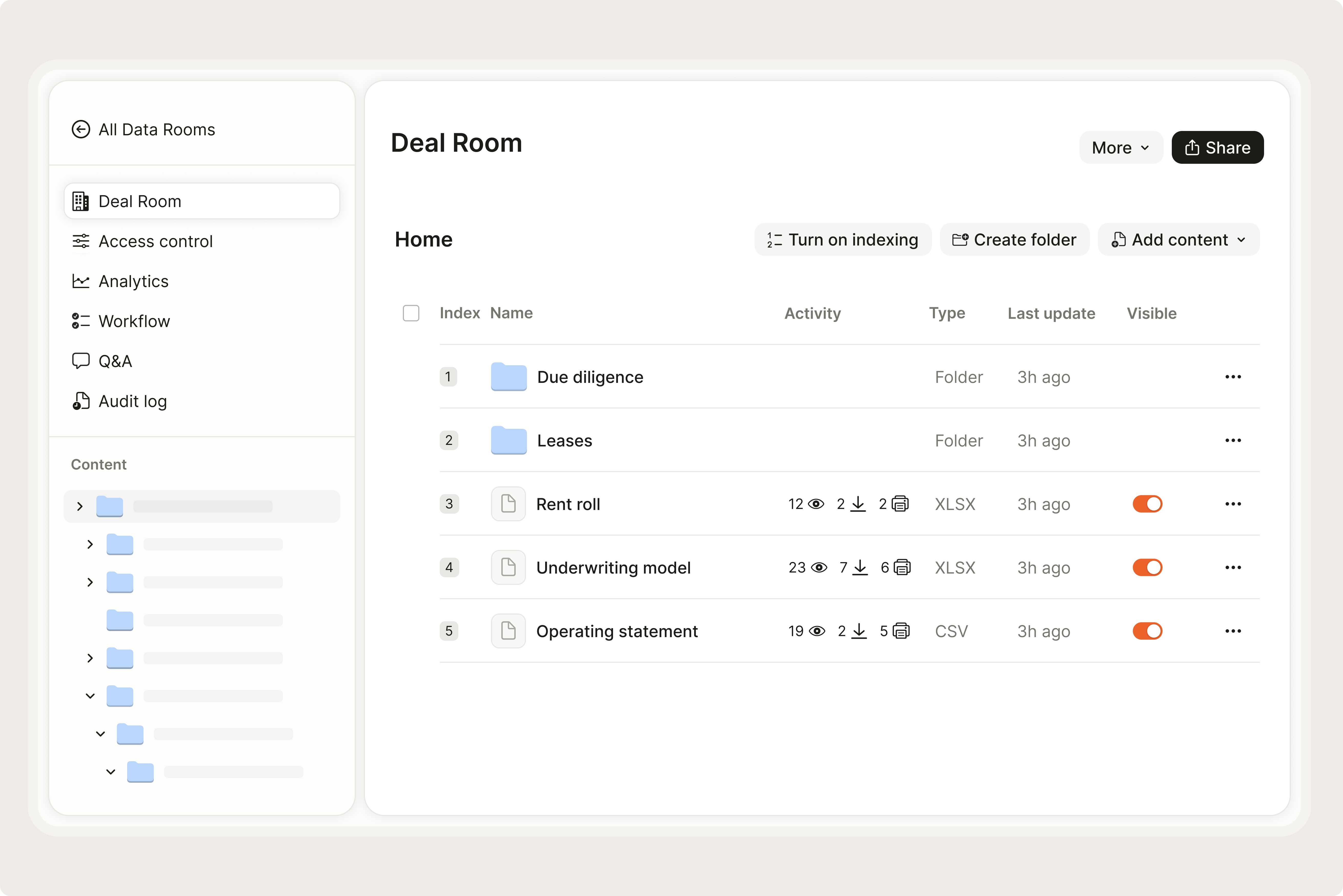
- 1.Upload Ohio property files to a secure roomDrop ALTA title commitment, OEPA ACRES records, Phase I ESA, VAP NFA letter, FEMA flood maps, zoning certificate, and lease pack into Ellty.
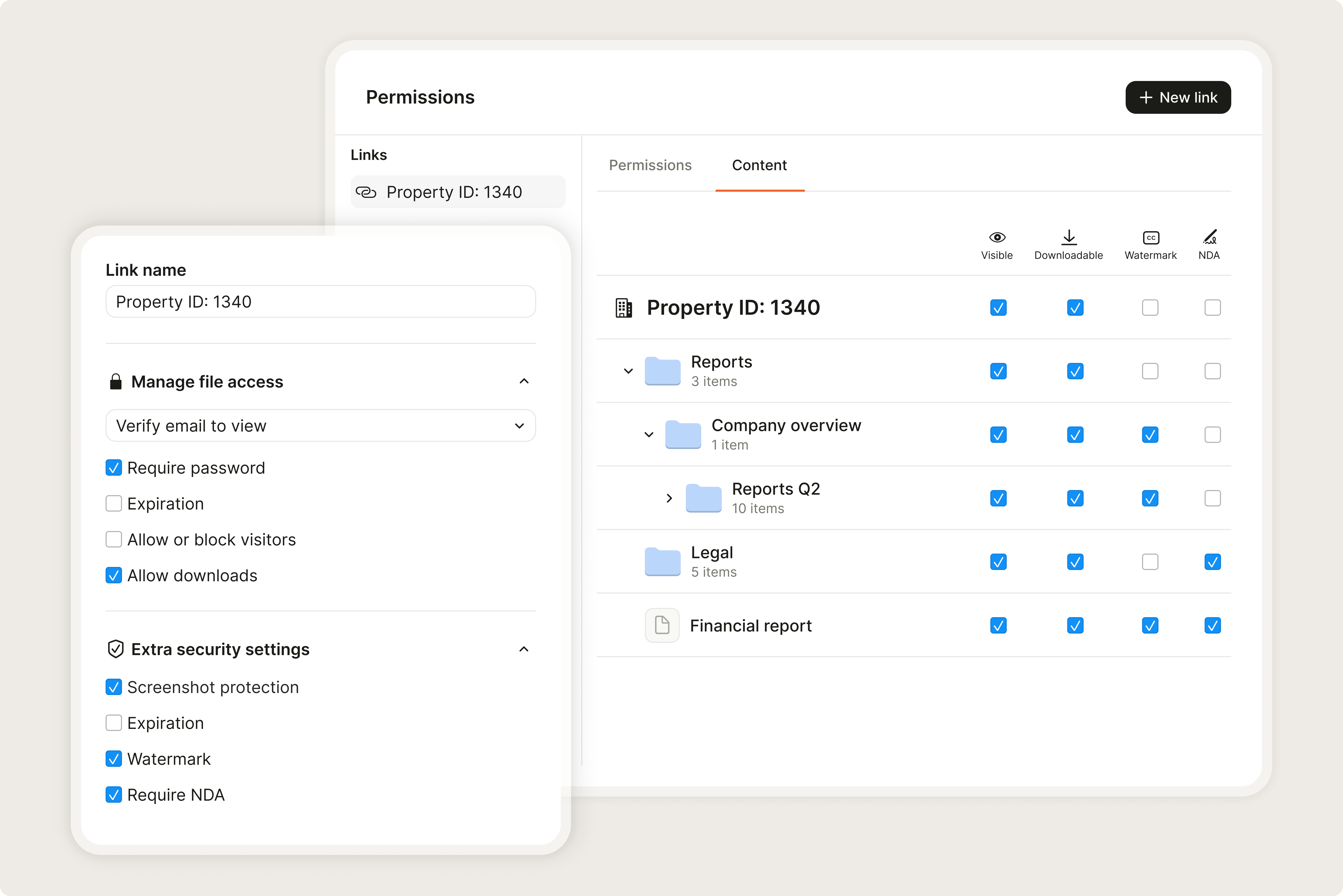
- 2.Give each advisor a scoped, tracked linkOhio attorney sees title and county recorder records. Environmental consultant sees OEPA, Phase I, and VAP docs. VAP specialist sees covenant and remediation records. Lender sees valuation and rent roll.
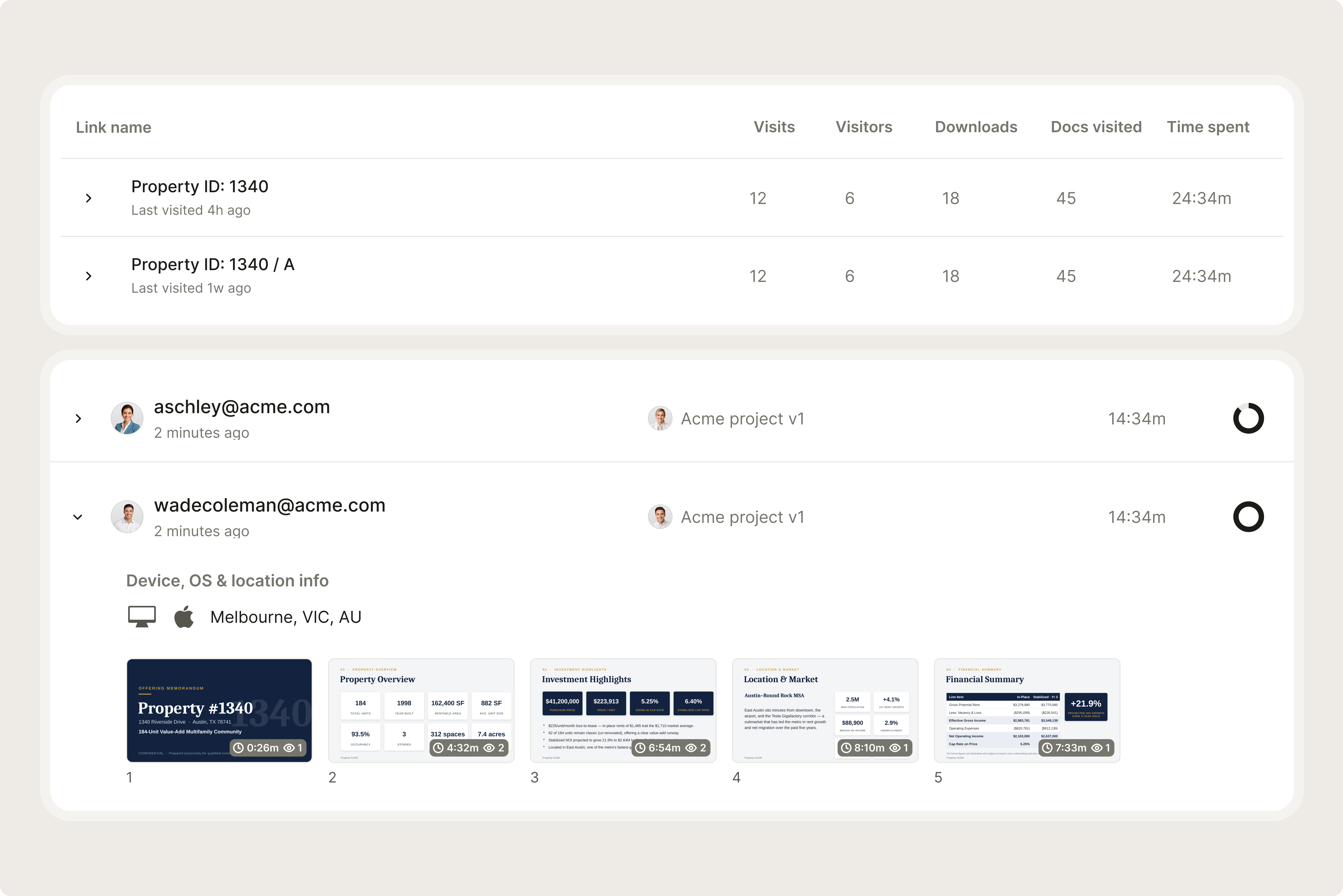
- 3.Monitor who reviews which documentsSee exactly which files each advisor opened and when. Catch VAP compliance questions or Phase II triggers before they stall lender approval.
What makes Ohio different
The VAP is Ohio's most important commercial real estate environmental tool - and the one most important to understand before closing any Ohio brownfield deal. Ohio's Voluntary Action Program is not just an administrative cleanup program; it's the mechanism by which brownfield commercial sites move from environmental liability to lendable, insurable, investable assets. The VAP NFA letter (covenant not to sue) is what most Ohio institutional lenders require before funding a brownfield acquisition. If the site you're buying has industrial history and no VAP NFA letter: you're either starting the VAP process (which takes 12-24 months) or negotiating a significant price adjustment to cover the cost and risk.
Northeast Ohio's industrial legacy is real and ongoing. The Mahoning Valley steel mills are largely demolished; the Akron rubber plants are largely redeveloped; but the groundwater and soil contamination from decades of heavy industry doesn't disappear with the buildings. Phase I ESA for any commercial property in Cuyahoga, Summit, Mahoning, Lake, Lorain, or Trumbull counties with any industrial history should be treated as the baseline; Phase II is often the actual diligence deliverable in this corridor.
Columbus is a fundamentally different Ohio market from Cleveland. Columbus is a rapidly growing tech, logistics, and data center hub; the Intel New Albany semiconductor campus investment has accelerated data center and industrial development across central Ohio. Environmental contamination in Columbus commercial deals is generally lower-risk than northeast Ohio (Columbus doesn't have a comparable industrial legacy). But Columbus-area development moves fast and permit processing sometimes can't keep pace; confirm C of O and final inspections on recently completed commercial construction.
Ohio's conveyance fee is genuinely low. At 0.1-0.4% of purchase price, it's among the lowest transfer cost structures in the US. No mortgage recording tax adds to the advantage. Total acquisition costs on an Ohio commercial deal run approximately 1-2% of purchase price - a real cost advantage vs. Illinois (transfer stamps ~0.5-1%), New York (RPTT ~1.4-2.6%), or most European markets.
Ohio's Voluntary Action Program (ORC Chapter 3746) provides a mechanism for the voluntary cleanup of contaminated properties and the issuance of a covenant not to sue by Ohio EPA upon satisfactory completion of cleanup to applicable standards. The covenant not to sue is transferable to successors in title with proper notification to Ohio EPA. The VAP No Further Action (NFA) letter confirms that the cleanup has been completed to applicable standards and that Ohio EPA will not pursue enforcement action against the property owner for the addressed contamination. The Ohio EPA VAP NFA letter is the standard documentation required by institutional lenders for the financing of Ohio brownfield commercial acquisitions.
Timeline and cost in Ohio
Weeks 1-2 cover kickoff: ALTA title commitment order, Ohio EPA ACRES and BUSTR database search, Phase I ESA commission, PFAS screening assessment for military base proximate sites, FEMA flood zone check, zoning certificate request, and lease abstraction initiation. Legal and advisory fees in this phase run USD 5,000-15,000.
Load all files into Ellty before advisors engage. Ohio commercial deals can move on 45-60 day timelines for non-brownfield assets; for brownfield acquisitions with VAP, allow 12-24 months for VAP completion if not already done.
Weeks 2-5 cover deep review: Phase I ESA delivery, VAP status confirmation and NFA letter review, flood risk assessment, zoning compliance, lease abstraction, and property tax review. Costs in this phase: USD 10,000-30,000.
Weeks 5-8 handle resolution: Phase II ESA (if triggered), VAP enrollment and timeline planning (if no NFA exists), title exception clearance, and closing preparation.
Ohio total acquisition costs: conveyance fee (0.1-0.4%) + ALTA title insurance + legal fees + environmental. Total acquisition cost runs approximately 1-2% of purchase price on Ohio commercial deals. Ohio has no state income tax equivalent advantage from a transfer tax perspective, but the low conveyance fee and no mortgage recording tax make Ohio one of the lowest-friction commercial property transfer states.
Running an Ohio property deal from one room
Hold ALTA title, Ohio EPA VAP records, Phase I ESA, and lease files in one secure, tracked Ellty data room.
Start free 14-day trialCommon questions about due diligence on Ohio commercial property
- Ohio commercial deals for non-brownfield assets typically take 30-60 days. For brownfield assets requiring Ohio EPA VAP enrollment without an existing NFA letter: allow 12-24 months for VAP completion, which is the main timeline driver. Phase I ESA, county recorder title search, zoning confirmation, and lease abstraction are the standard 30-60 day items.
- The Ohio Voluntary Action Program (VAP, ORC Chapter 3746) provides a mechanism for voluntary cleanup of contaminated commercial properties and the issuance of a covenant not to sue by Ohio EPA. The VAP No Further Action (NFA) letter confirms cleanup is complete and that Ohio EPA won't pursue enforcement against the current owner for addressed contamination. The NFA is transferable to successors with notice. Most Ohio institutional lenders require a VAP NFA letter before financing brownfield commercial acquisitions; without it, the property is effectively unlendable in the institutional debt market.
- Ohio charges a conveyance fee (documentary stamps) at $1 per $1,000 of consideration (state portion) plus a county portion of up to $3 per $1,000; total conveyance fees run 0.1%-0.4% depending on the county. Cuyahoga County charges the maximum combined rate of $4 per $1,000 (0.4%). There is no Ohio mortgage recording tax. Total acquisition costs on Ohio commercial deals run approximately 1-2% of purchase price, among the lowest in major US commercial markets.
- Northeast Ohio has significant industrial contamination legacy from steel (Mahoning Valley), rubber/tire manufacturing (Akron), chemicals (Cleveland industrial corridor), and auto parts (multiple counties). Phase I ESA is baseline diligence for any northeast Ohio commercial property with industrial history; Phase II intrusive investigation is often required before lenders will commit. Ohio EPA's VAP program is the standard liability resolution tool; confirm VAP NFA status before bidding on any northeast Ohio commercial asset with industrial history.
- Wright-Patterson Air Force Base in Montgomery County (Dayton area) has documented PFAS groundwater contamination from historical use of AFFF firefighting foam. The plume has been confirmed to extend beyond the base boundary. Commercial properties with private well water sources within 3-5 miles of Wright-Patterson should commission PFAS water testing. Ohio EPA has been expanding PFAS monitoring requirements; confirm any public water supply PFAS compliance for commercial properties near the base.
- No. Ohio does not legally require an attorney to supervise commercial real estate closings; title companies can and do handle commercial closings without attorney oversight. However, for complex commercial transactions with significant title issues, brownfield status, or environmental liability, engaging an Ohio real estate attorney is strongly advisable. The DTE-100 conveyance fee form must be stamped by the county auditor before the deed can be recorded; the closing agent (title company or attorney) handles this.