New Zealand CRE deals have no stamp duty or land transfer tax - that's the good news. The risks that catch non-NZ buyers are different: leaky building weathertightness problems from the 1988-2004 construction era are expensive to fix; earthquake prone building ratings below 34% NBS require mandatory strengthening; and the GST going concern election must be in the sale agreement before it's signed.
New Zealand uses the Torrens title system managed by LINZ (Land Information New Zealand). Title searches and dealings are conducted online through the LINZ system.
The LIM report (Land Information Memorandum) is the most important NZ-specific diligence document. It comes from the local council and reveals zoning, consents, health orders, flooding, and drainage information.
Foreign buyers may need Overseas Investment Office (OIO) consent under the Overseas Investment Act for certain NZ commercial property acquisitions. Check the threshold and sensitive land rules before committing.
Set up an Ellty data room before diligence opens. Load all LINZ title documents, LIM reports, and lease files before advisors arrive. Each advisor gets a scoped link from day one.
Where NZ deals actually go wrong
Not every check carries the same weight. The table below sorts risks by deal impact - dealbreakers first, then what moves the price, then basic hygiene - so your solicitor, engineer, and technical advisor know what to clear first.
| Area | Documents to pull | New Zealand red flag | Matters most for | Tier | |
|---|---|---|---|---|---|
| Title and LINZ search | Title and LINZ search | LINZ title search, easements, encumbrances, restrictive covenants, leasehold confirmation | NZ Torrens title is managed by LINZ; confirm all easements, covenants, and encumbrances registered on the computer folio | All buyers | Dealbreaker |
| Earthquake prone building | Earthquake prone building | Earthquake prone building register, IEP assessment, full seismic engineering report, %NBS rating | Buildings below 34% NBS are earthquake prone; they must be remediated or demolished within statutory deadlines | Pre-2000 commercial, Wellington, Christchurch | Dealbreaker |
| Leaky building - weathertightness | Leaky building - weathertightness | Weathertightness risk assessment, intrusive moisture investigation, cladding type identification | Buildings with monolithic cladding, Mediterranean-style architecture, or low-pitched roofs built 1988-2004 are high leaky building risk | All commercial buildings 1988-2004 | Dealbreaker |
| LIM report - council records | LIM report - council records | LIM report, district plan extract, building consent history, resource consent register | LIM report reveals all council information: flood zone, drainage, health orders, consent violations, and special land features | All assets | Dealbreaker |
| Code Compliance Certificate | Code Compliance Certificate | CCC history, building consent file, BWOF (Building Warrant of Fitness), council inspection records | Many older NZ commercial buildings lack a valid CCC; uncoded buildings carry insurance, lending, and compliance risk | All asset types | Price-adjuster |
| Leases and tenancies | Leases and tenancies | All leases, rent roll, ADLS lease compliance, rent review clauses, sublease consents | NZ commercial leases commonly use ADLS standard form; confirm rent review mechanism and rights of renewal | Income-producing assets | Price-adjuster |
| Environmental - HAIL sites | Environmental - HAIL sites | HAIL register search, Phase I ESA, Phase II investigation if HAIL activity identified | NZ HAIL (Hazardous Activities and Industries List) sites include service stations, dry cleaners, and timber treatment sites | Industrial, retail, legacy commercial | Price-adjuster |
| GST going concern structure | GST going concern structure | GST registration of both parties, going concern clause in sale agreement, zero-rated supply analysis | 15% NZ GST applies to commercial property sales unless structured as a going concern; must be in the agreement before signing | All deals | Price-adjuster |
| Overseas investment - OIA | Overseas investment - OIA | OIO threshold analysis, sensitive land determination, buyer nationality confirmation | Non-NZ/Australian buyers must check OIO consent requirements; large commercial deals often trigger the Overseas Investment Act | Non-NZ/Australian buyers | Price-adjuster |
| Insurance and valuation | Insurance and valuation | Current policies, earthquake cover confirmation, flood zone check, API/PINZ valuation | Earthquake insurance for commercial property must be private; confirm coverage and sum insured for earthquake and aftershocks | All | Standard check |
| Seller KYC and AML | Seller KYC and AML | NZBN company extract, AML/CFT compliance by solicitor, UBO identification, PEP check | NZ AML/CFT Act requires solicitors and real estate agents to verify client identity for all CRE transactions | All deals | Standard check |
Due diligence on a New Zealand property?
Set up your Ellty data room before diligence starts.
Start free 14-day trialNew Zealand CRE checklist
The table ranked risks by severity. This is the full list to work through, grouped by area.
Title and LINZ search
- Pull the LINZ title search (computer folio) for the property legal description before contract
- Confirm all easements, encumbrances, rights-of-way, and restrictive covenants registered on the title
- For leasehold title: confirm the ground lease terms, annual rental, renewal rights, and lessor consent for transfer
- Check for any Maori land overlay or nearby Maori freehold land that could affect the title
- Confirm the cadastral survey plan (deposited plan) matches the physical boundaries of the property
- Run a company search on the selling entity via the Companies Office register before committing
Earthquake prone building
- Check the local council's Earthquake Prone Building (EPB) register for the property address
- For Wellington and Christchurch: check the EPB register and confirm the building's % NBS (New Building Standard) rating
- Commission an Initial Evaluation Procedure (IEP) seismic assessment for any pre-2000 commercial building
- Buildings below 34% NBS are legally earthquake prone; owners must remediate or demolish within statutory deadlines (typically 15-25 years)
- Buildings rated 34-67% NBS are earthquake risk; not legally required to strengthen but significantly affects insurance and lending
- Budget full seismic engineering assessment (NZD 20,000-80,000) for multi-storey commercial buildings in Wellington
Leaky building - weathertightness
- Identify the cladding type for any commercial building constructed between 1988 and 2004
- High-risk indicators: monolithic cladding systems (Rockcote, Plaster), Mediterranean-style rooflines, limited eaves, joined joinery
- Commission a weathertightness risk assessment and, if risk is identified, an intrusive moisture investigation
- For confirmed leaky buildings: get a full remediation cost estimate from a licensed building practitioner
- NZ leaky building remediation typically costs NZD 1,000-3,000 per m2; factor this into your price model before bidding
LIM report - council records
- Order the LIM (Land Information Memorandum) from the local council on day one of diligence
- The LIM reveals: zoning, resource consents, building consent history, drainage, flooding risk, health orders, and special features
- Check the LIM for any outstanding building consent, resource consent, or health order conditions
- Confirm the LIM flood designation; Auckland, Hamilton, and Christchurch have significant flood-prone commercial land
- Budget 5-10 working days for standard LIM processing; urgent LIM is available for an additional fee
Code Compliance Certificate
- Confirm the CCC (Code Compliance Certificate) history from the council building consent file
- For buildings without a CCC: assess the cost and timeline to obtain; some older buildings cannot practically get a CCC
- Buildings without a CCC are difficult to insure for their full replacement value and difficult to mortgage
- Check the Building Warrant of Fitness (BWOF): annual certificate required for buildings with specified systems (lifts, fire suppression, emergency lighting)
- A lapsed BWOF indicates the building may have unresolved specified system maintenance issues
Give each advisor a scoped link in Ellty. Structural engineers see the seismic and weathertightness reports. Lease lawyers see the full lease pack. Lenders see the financial documents. No advisor accesses files they don't need.
Leases and tenancies
- Collect all commercial leases and confirm they use the ADLS standard lease form or identify deviations
- Check rights of renewal and rent review clauses; NZ commercial leases use open market, CPI, and fixed-step rent reviews
- Confirm make-good obligations; NZ institutional commercial leases include detailed reinstatement requirements
- Cross-reference the rent roll against 12 months of actual receipts
- Confirm sublease consents and any assignment restrictions are documented in writing
Environmental - HAIL sites
- Check the LIM for any HAIL (Hazardous Activities and Industries List) activity history on the parcel
- HAIL activities include petrol stations, dry cleaners, vehicle workshops, timber treatment, and wool scour sites
- Commission a Phase I ESA for any site with HAIL activity history or confirmed industrial land use
- For former service station or chemical sites: order Phase II sampling; NZ soil standards apply under the RMA
- Budget Phase II investigation (NZD 10,000-30,000) if Phase I identifies potential contamination
GST going concern structure
- Confirm both buyer and seller are GST-registered before contract is signed
- Include the GST zero-rated (going concern) clause in the ADLS sale and purchase agreement before signing
- If the property is being sold vacant or partially vacant: confirm whether it still qualifies as a going concern
- For new commercial buildings: full 15% NZ GST applies regardless of going concern status
- Get the GST analysis from a NZ tax advisor; failing the going concern test adds 15% to a NZD 10M deal price
Overseas investment - OIA
- Confirm buyer nationality and entity structure against OIO sensitive land thresholds
- Australian citizens and Australian-resident companies are treated as New Zealanders under the CER agreement
- For commercial property above the relevant monetary threshold: check if OIO consent is required
- OIO consent adds 3-6 months to the deal timeline; factor this into the settlement date
- For coastal, rural, or conservation-adjacent commercial land: heightened OIO sensitivity applies
Insurance and valuation
- Pull current insurance policies and 3-year loss run history from the seller
- Confirm the building has private earthquake insurance; EQC covers residential only in NZ
- Confirm sum insured reflects current replacement cost, not a historic or depreciated value
- For Wellington: check if the commercial insurer has a Wellington earthquake exposure cap; some insurers do
- Order an independent PINZ or ANZVT-certified valuation for lender requirements
Seller KYC and AML
- Pull a Companies Office register extract (NZBN) confirming the selling entity is in good standing
- NZ AML/CFT Act 2009 requires NZ solicitors and real estate agents to verify buyer and seller identity
- Confirm all beneficial owners; NZ's AML reforms expanded KYC obligations for all professional advisors
- Run a PEP and sanctions check against the seller and all identified beneficial owners
How due diligence in New Zealand works
Step 1 - LINZ title and LIM report
Order the LINZ title search and the LIM from the local council simultaneously on day one. The LIM is the most important NZ document - it's the single source for all council records on the property.
The LIM processing time varies by council. Auckland Council processes standard LIMs in 10 working days. Wellington City Council, Christchurch City Council, and other councils have their own timelines. Order immediately.
Step 2 - Earthquake and weathertightness assessment
For any pre-2000 commercial building in Wellington, Christchurch, or Hawke's Bay: check the EPB register and commission an IEP assessment before bidding. Wellington has the highest earthquake risk concentration of any NZ commercial market.
For any building with 1988-2004 monolithic cladding: commission a weathertightness risk assessment before signing. NZ leaky building repairs are expensive, slow, and non-negotiable - the building can't be refinanced or re-tenanted without remediation.
Step 3 - Leases and GST structure
Confirm the GST going concern election eligibility in the first week. Both parties must be GST registered, the property must be operating as a going concern, and the zero-rated clause must be in the sale and purchase agreement before it's signed.
Compare Australia's commercial property diligence process if you run Pacific-region portfolios. Both countries use Torrens title and GST going concern exemptions on commercial leases, but NZ has no stamp duty while Australia's ranges 4-5.5% by state.
Step 4 - Environmental and HAIL
Check the LIM for HAIL activity and run the Phase I ESA in parallel if any HAIL activity is identified. Former petrol stations, dry cleaners, and industrial sites are common in urban NZ commercial precincts.
Load all environmental documents, Phase I ESA findings, LIM extracts, and HAIL search results into Ellty. Lenders, environmental consultants, and the buyer's solicitor each get tracked, watermarked access from one secure link.
Step 5 - LINZ registration and electronic settlement
NZ commercial transactions are settled using the Landonline system (LINZ's electronic dealings system). Solicitors handle all dealings and registration online. Title registers on the settlement date.
NZ has no stamp duty. The buyer pays no government acquisition tax - just legal fees, valuation costs, and any LIM and title search fees.
How to set up your New Zealand data room in Ellty.
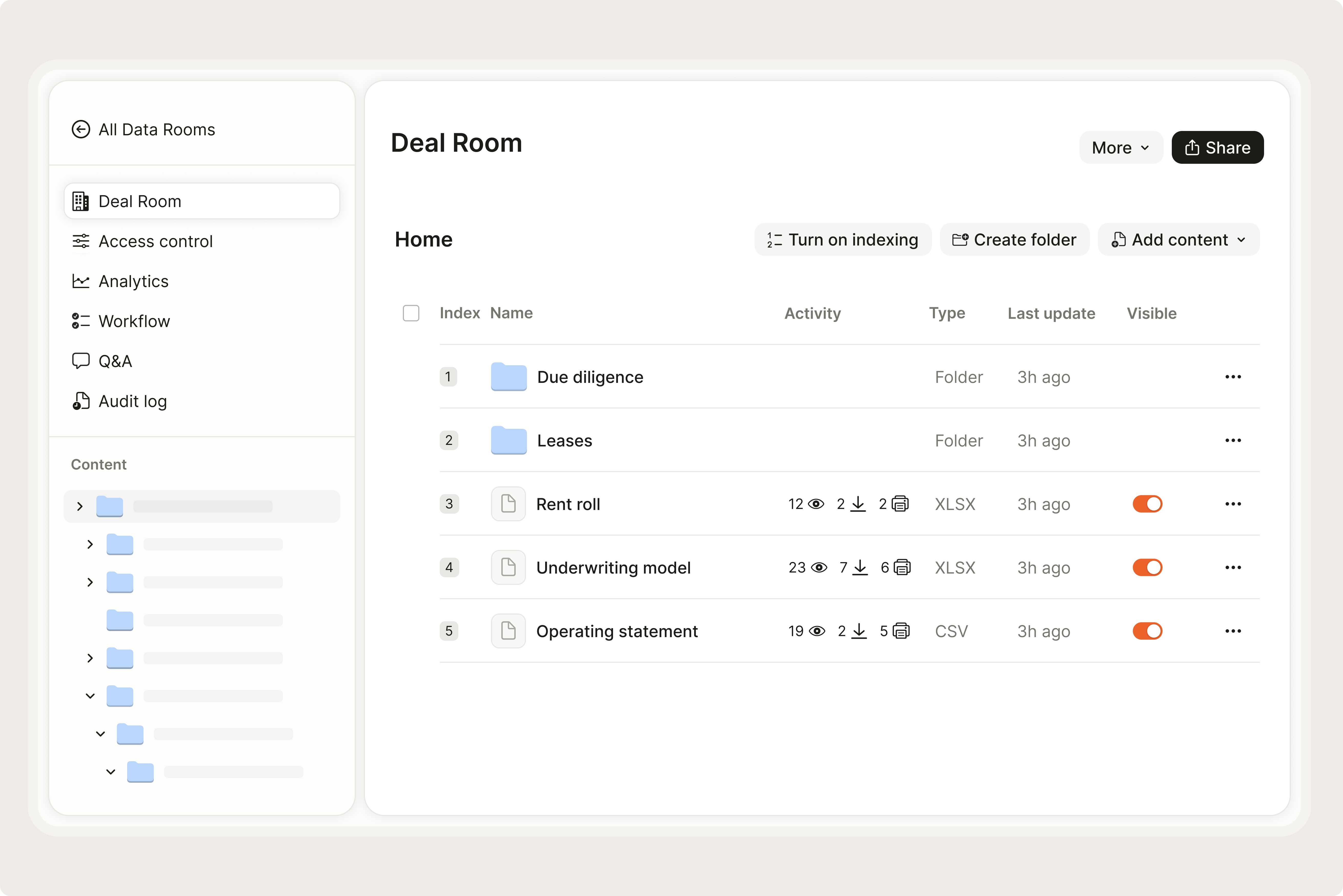
NZ CRE deals move fast from contract to settlement. Load all files into Ellty before advisors arrive. Each party gets a scoped, tracked link from day one.
- 1.Upload NZ property files to a secure roomDrop LINZ title docs, LIM reports, building consents, CCC history, leases, and Phase I ESA into Ellty.
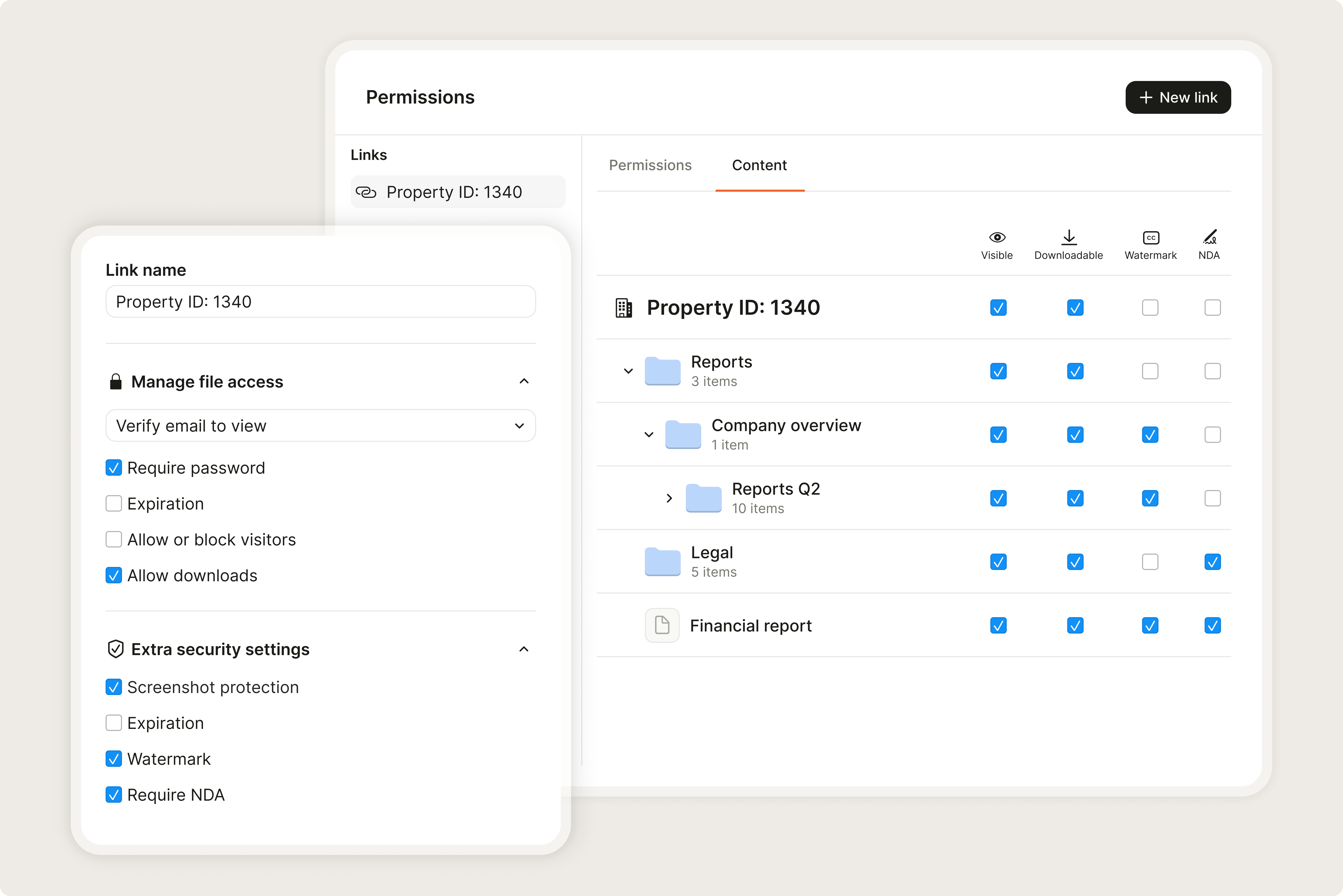
- 2.Give each advisor a scoped, tracked linkStructural engineers see earthquake and weathertightness reports. Lease lawyers see the full lease pack. Lenders see the financial package. Ellty enforces the scope.
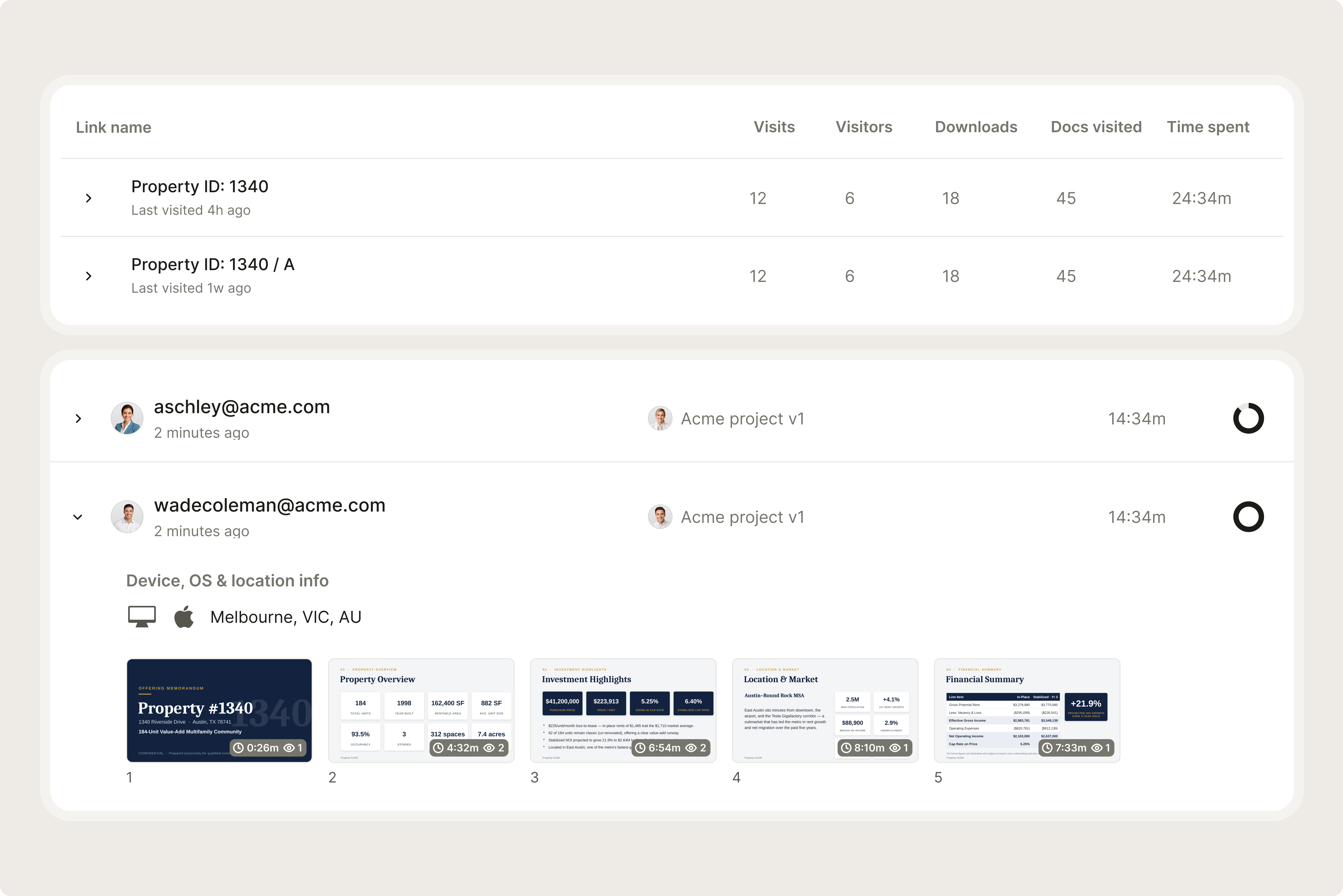
- 3.Monitor who reviews which documentsSee exactly which files each advisor opened and when. Catch delays before they affect the Landonline settlement date.
What makes New Zealand different
No stamp duty is the headline advantage. NZ abolished land transfer tax in 1999. There's no RETT, no transfer duty, no acquisition tax on commercial property. Legal fees and advisory costs are the only closing cost items beyond the purchase price.
Leaky building is the biggest technical risk in NZ commercial real estate for assets built 1988-2004. The weathertightness crisis affected commercial as well as residential construction; buildings with monolithic cladding systems need intrusive moisture investigation before you rely on a standard PCA.
Wellington's earthquake risk isn't fully priced into the market. Many Wellington commercial buildings carry 34-67% NBS ratings and some are still on the EPB register below 34%. Any Wellington commercial acquisition without a current seismic engineering report is incomplete diligence.
The LIM is the most important NZ-specific document that non-NZ buyers don't know to prioritize. It contains everything the council knows about the property - flood risk, drainage issues, consent violations, health orders, and special land features. It should be ordered on day one of every NZ CRE diligence process.
The Torrens system of land registration operates in New Zealand under the Land Transfer Act 2017. The register held by Land Information New Zealand (LINZ) is the conclusive source of information about land ownership and registered interests. An indefeasible title is granted to the registered owner subject to the exceptions set out in the Act. No sale of land transfers title without registration of a dealing in the LINZ system.
Timeline and cost in New Zealand
Weeks 1-2 cover kickoff: LINZ title search, LIM report application, EPB register check, leaky building risk identification, AML/CFT client verification, and GST going concern analysis. Budget NZD 3,000-8,000 for this phase.
Load all files into Ellty before advisors arrive. Scoped, tracked links for each party remove at least one week of email document exchange from a standard NZ diligence process.
Weeks 2-4 cover deep review: LIM receipt and review, IEP seismic assessment, weathertightness investigation (if risk identified), Phase I ESA, lease abstraction, BWOF compliance check, and OIA analysis for foreign buyers. Cost runs NZD 5,000-20,000 depending on complexity.
Leaky building remediation assessment is the most variable cost item in NZ commercial due diligence. An intrusive investigation costs NZD 3,000-8,000; if weathertightness damage is confirmed, get a full remediation cost estimate before committing to price.
Weeks 4-6 handle resolution: Phase II ESA if needed, seismic assessment, CCC gap analysis, GST election documentation, and Landonline settlement. Electronic settlement via Landonline registers title on the settlement date.
No stamp duty makes NZ one of the lowest-cost countries to acquire commercial real estate on a transaction cost basis. Budget NZD 15,000-40,000 in professional fees for a standard deal. The only significant costs are legal fees, valuation, LIM, and technical assessments.
Running a New Zealand property deal from one room
Hold LINZ title docs, LIM reports, and lease files in one secure, tracked Ellty data room.
Start free 14-day trialCommon questions about due diligence on New Zealand property
- Most NZ CRE deals complete diligence in 4-8 weeks. LIM processing times, weathertightness investigations, and seismic engineering assessments for Wellington buildings are the longest lead-time items.
- The LIM (Land Information Memorandum) is a report issued by the local council summarizing all council records for a property: zoning, building consent history, resource consents, drainage, flooding risk, health orders, and special land features. It is the most important NZ-specific due diligence document and should be ordered on day one.
- Between 1988 and 2004, many NZ buildings were constructed with monolithic cladding systems that trapped moisture and caused severe structural damage. Weathertightness (leaky building) repairs are expensive - typically NZD 1,000-3,000 per m2. All commercial buildings with these cladding types built in this period need intrusive investigation before purchase.
- Under the Building (Earthquake-prone Buildings) Amendment Act, buildings below 34% of New Building Standard (NBS) are earthquake prone. Owners must remediate or demolish within statutory deadlines - 15 years in high seismic risk areas like Wellington, 25 years in medium risk areas. Buildings 34-67% NBS are earthquake risk but not legally earthquake prone.
- No. New Zealand abolished stamp duty (land transfer tax) in 1999. There is no government acquisition tax on commercial property. The main closing costs are legal fees, valuation fees, LIM, and technical assessments.
- 15% GST applies to commercial property sales unless the transaction is zero-rated as a going concern. Both parties must be GST registered, the property must be operating as a going concern, and the zero-rated clause must be in the sale agreement before signing. New commercial buildings are always subject to full GST.