Australia CRE deals have two costs that catch non-Australian buyers: state-based stamp duty of 4-5.5% that varies by jurisdiction, and a 10% GST obligation that eliminates the going concern exemption if the sale isn't structured correctly. This checklist covers every check before you close in 2026.
Australia's commercial markets split across Sydney, Melbourne, Brisbane, Perth, and Adelaide. Each state runs its own land registry, stamp duty regime, and planning law.
Foreign buyers must obtain FIRB (Foreign Investment Review Board) approval before any non-residential property purchase above the relevant threshold. Missing FIRB approval voids the transaction.
ACT (Canberra) is a common trap for non-Australian buyers: all land in the ACT is Crown leasehold. There is no freehold title in Canberra - ever.
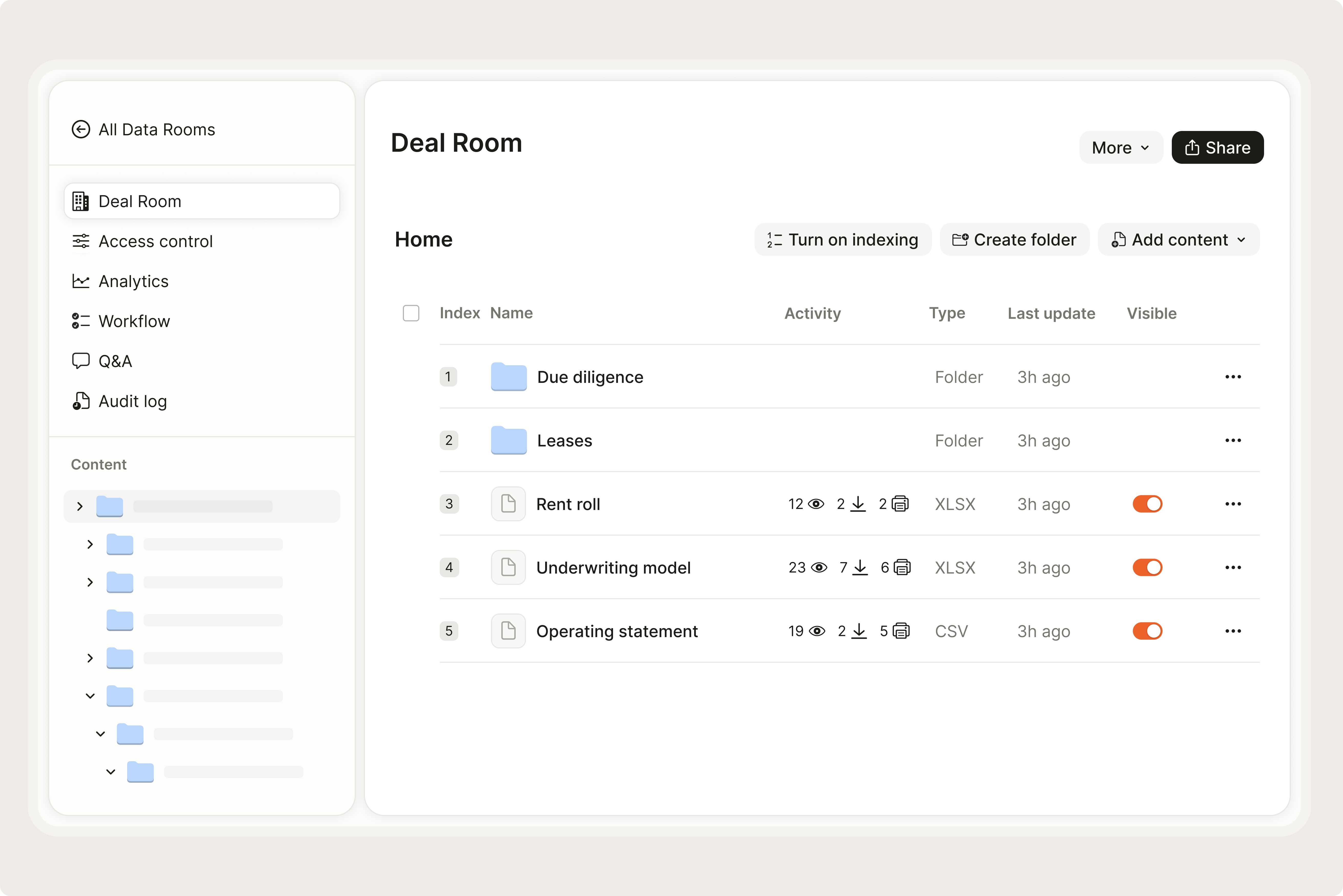
Set up an Ellty data room before diligence opens and load all title searches, planning documents, and lease files. Each advisor gets a scoped, tracked link from day one.
Where Australian deals actually go wrong
Not every check carries the same weight. The table below sorts risks by deal impact - dealbreakers first, then what moves the price, then basic hygiene - so your lawyer and valuer know what to clear first.
| Area | Documents to pull | Australia red flag | Matters most for | Tier | |
|---|---|---|---|---|---|
| Title and ownership | Title and ownership | Torrens title search, state land registry extract, encumbrance search, caveat check | Australia uses Torrens indefeasible title; check for caveats, encumbrances, and mortgages on the title | All buyers | Dealbreaker |
| FIRB approval | FIRB approval | FIRB application, buyer entity structure, threshold confirmation, FTA eligibility check | Foreign buyers above FIRB thresholds must obtain approval before settlement; no approval means no deal | Non-Australian buyers | Dealbreaker |
| Crown leasehold - ACT | Crown leasehold - ACT | Crown lease terms, permitted use clause, lease variation approval from Territory | All ACT land is Crown leasehold; no freehold title exists in Canberra and no exceptions apply | Canberra / ACT buyers | Dealbreaker |
| Environmental - contaminated land | Environmental - contaminated land | Phase I ESA (AS 4482), state contamination register search, Phase II ESA if triggered | Inner-city Sydney, Melbourne, and Brisbane sites with industrial history carry state-law contamination liability | Industrial, legacy commercial | Dealbreaker |
| Leases and tenancies | Leases and tenancies | All leases, retail tenancy legislation check, rent roll, make-good obligations, sublease consents | Australian retail leases fall under state Retail Tenancy Acts with mandatory protections that aren't negotiable | Retail assets, mixed-use | Price-adjuster |
| Building and occupancy certificate | Building and occupancy certificate | PCA, occupancy certificate, building permit history, NABERS energy rating, fire safety | Missing occupancy certificates are common in older Australian commercial buildings; not always disclosed | All asset types | Price-adjuster |
| Land tax and outgoings | Land tax and outgoings | State Revenue Office land tax notices, 3y outgoings statements, council rate notices | Australian land tax accrues from settlement date; confirm outstanding arrears before contract is exchanged | Income-producing assets | Price-adjuster |
| Stamp duty and GST structure | Stamp duty and GST structure | State stamp duty calculation, GST going concern analysis, withholding tax check | 10% GST applies if the going concern exemption isn't documented correctly before contract exchange | All deals | Price-adjuster |
| Insurance and valuation | Insurance and valuation | Current policies, loss run, flood zone check, bushfire risk designation, NABERS valuation | Bushfire and flood risk coverage varies sharply by location; north QLD and rural NSW carry highest exposure | All | Standard check |
| Utilities and access | Utilities and access | Utility connection records, network operator letter, easement search, council road access | Australian utility easements are registered on Torrens title; confirm they don't restrict development rights | All | Standard check |
| Seller KYC and AML | Seller KYC and AML | Entity docs, ASIC extract, UBO identification, GST registration, foreign resident withholding | Foreign resident capital gains withholding: buyer must withhold 12.5% of purchase price if seller is non-resident | All deals | Standard check |
Due diligence on an Australian property?
Set up your Ellty data room before diligence starts.
Start free 14-day trialAustralia CRE checklist
The table ranked risks by severity. This is the full list to work through, grouped by area.
Title and ownership
- Pull the Torrens title search from the relevant state land registry before contract exchange
- Check for caveats lodged against the title; caveats can block settlement if not resolved
- Search for encumbrances, easements, and profits à prendre registered on title
- Confirm the legal description and lot number match all sale, lease, and planning documents
- For ACT properties: confirm the Crown lease terms, permitted use, and any Territory consent required
- Run a judgment and writ search against the selling entity in the state Supreme Court
FIRB approval
- Confirm whether the buyer is a "foreign person" under the Foreign Acquisitions and Takeovers Act
- Check the applicable FIRB threshold for commercial land; thresholds vary by buyer nationality and FTA status
- Lodge the FIRB application immediately on contract exchange; approvals typically take 30 days
- For deals in "sensitive areas" or agricultural land: lower thresholds apply; check with legal counsel
- Confirm the FIRB approval condition allows the intended use; conditions can restrict future development
Crown leasehold - ACT
- Confirm the Crown lease permitted use aligns with the intended commercial use
- Check the Crown lease term and any remaining term; short remaining term affects financing
- For any use change: confirm Territory approval via Crown lease variation before exchange
- Confirm the Lease Variation Charge (LVC) is either not applicable or has been paid by the seller
Environmental - contaminated land
- Search the state contamination register (EPA or equivalent) for the site
- Commission a Phase I ESA per Australian Standard AS 4482 before exchange
- For inner-city Sydney, Melbourne, and Brisbane sites: run a historical land use search; industrial heritage is common
- Check NSW CLM Act, VIC Environment Protection Act, or relevant state law for liability transfer rules
- Budget Phase II ESA (AUD 15,000-50,000) if Phase I identifies recognized environmental conditions
Leases and tenancies
- Collect all commercial leases and confirm they comply with state tenancy legislation
- For retail leases: confirm compliance with the relevant state Retail Tenancy Act (mandatory disclosure requirements)
- Check make-good obligations; Australian commercial leases often include detailed reinstatement requirements
- Cross-reference the rent roll against 12 months of actual receipts from the seller
- Confirm rent review mechanism: CPI-linked, fixed increase, or market review; each affects income projections
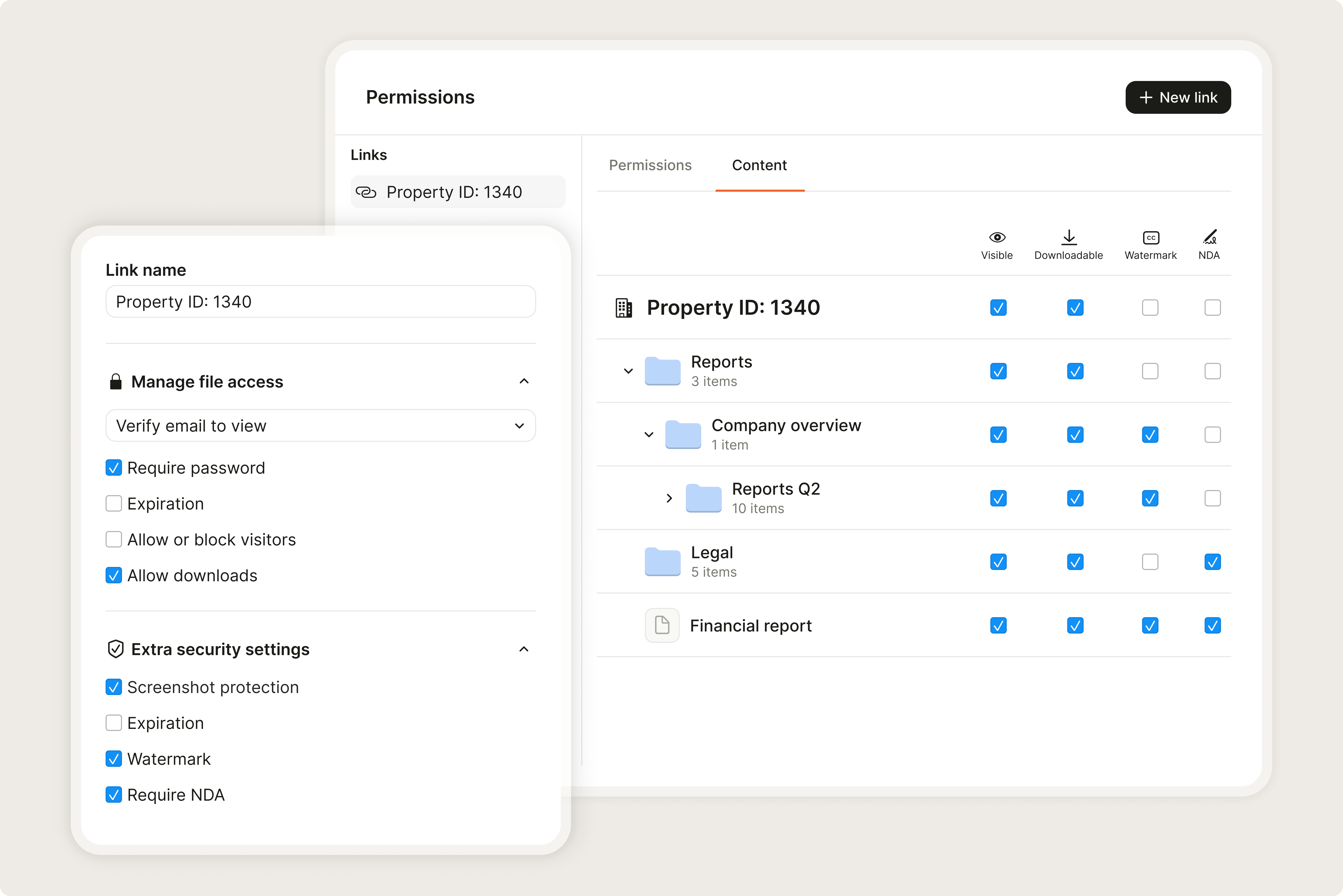
Give each advisor a scoped link in Ellty. Retail tenancy lawyers see lease files; building inspectors see PCA reports; lenders see financials. No advisor accesses files they don't need.
Building and physical condition
- Commission a Property Condition Assessment; check asbestos, fire safety, and structural integrity
- Confirm all occupancy certificates are current and cover all current uses in the building
- Check the NABERS (National Australian Built Environment Rating System) energy rating if relevant for leasing
- Pull the full DA (Development Approval) and CC (Construction Certificate) history from the local council
- For pre-1990 buildings: confirm asbestos register is current and accessible on site
Land tax and outgoings
- Request the current land tax assessment from the seller's State Revenue Office
- Confirm no outstanding land tax arrears; land tax is a first charge on the land in most states
- Review 3 years of outgoings statements and reconcile against lease terms and council rate notices
- Check whether land tax is a recoverable outgoing under the leases; many institutional leases exclude it
- Audit CAM reconciliations against lease provisions for all multi-tenant assets
Stamp duty and GST structure
- Confirm the stamp duty rate for the relevant state: NSW (~4.5%), VIC (~5.5%), QLD (~4.5%)
- Confirm whether the GST going concern exemption applies; both parties must be GST-registered
- Document the going concern agreement in the contract before exchange; GST can't be applied retrospectively
- Check the foreign resident capital gains withholding obligation if the seller is a non-resident
- For NSW: confirm any additional duty (landholder duty) applies if acquiring shares in a landholding entity
Insurance and valuation
- Pull current insurance policies and 3-year loss run history from the seller
- Check bushfire risk designation from the relevant state authority (BAL rating for exposed sites)
- Check flood zone designation from council; north QLD and river-adjacent sites carry highest risk
- Order an independent Australian Property Institute (API) valuation for lender requirements
Utilities and access
- Verify all utility connections are active and include valid supply contracts with the network operator
- Check for utility easements on title; confirm they don't restrict intended development or use
- Confirm legal road access via public road or a registered easement on title
- For industrial sites: confirm stormwater and sewer connections to the relevant council network
Seller KYC and AML
- Pull a full ASIC company extract on the selling entity and confirm it is current and in good standing
- Identify all beneficial owners; Australian AML/CTF Act requires lawyer KYC compliance
- Confirm foreign resident CGT withholding applies and calculate the 12.5% amount if seller is non-resident
- Check the seller's GST registration status before relying on the going concern exemption
How due diligence in Australia works
Step 1 - Title search and FIRB application
Pull the Torrens title search and lodge the FIRB application simultaneously on day one for foreign buyers. FIRB approval typically takes 30 days; it must be in hand before settlement.
Confirm the ACT status if the property is in Canberra. All ACT land is Crown leasehold; the title search will show the Crown lease, not a freehold - this surprises buyers from outside Australia.
Step 2 - Planning and council confirmation
Pull the DA history from the council and confirm the occupancy certificate covers all current uses. Non-compliant uses without a current OC are more common in Australian commercial property than buyers expect.
For development sites: confirm zoning permits the intended use. NSW uses LEPs and SEPPs; VIC uses Planning Schemes; QLD uses Planning Scheme zones under the Planning Act 2016. Each is different.
Step 3 - Leases and GST structure
Check the going concern exemption eligibility before contract exchange. If the sale doesn't qualify as a going concern (e.g., the property is vacant), 10% GST applies to the full purchase price on top of stamp duty.
Compare Germany's acquisition cost structure if you run international CRE portfolios. Both markets have significant acquisition cost stacks (Germany: 8-12%, Australia: 6-9%), but Germany's is RETT-heavy while Australia's splits between stamp duty and GST exposure.
Step 4 - Environmental review
Commission the Phase I ESA per AS 4482 immediately after contract. Inner-city Sydney (Erskineville, Alexandria, St Peters), Melbourne (Fishermans Bend, Footscray), and Brisbane (Fortitude Valley, Newstead) carry persistent contamination from industrial history.
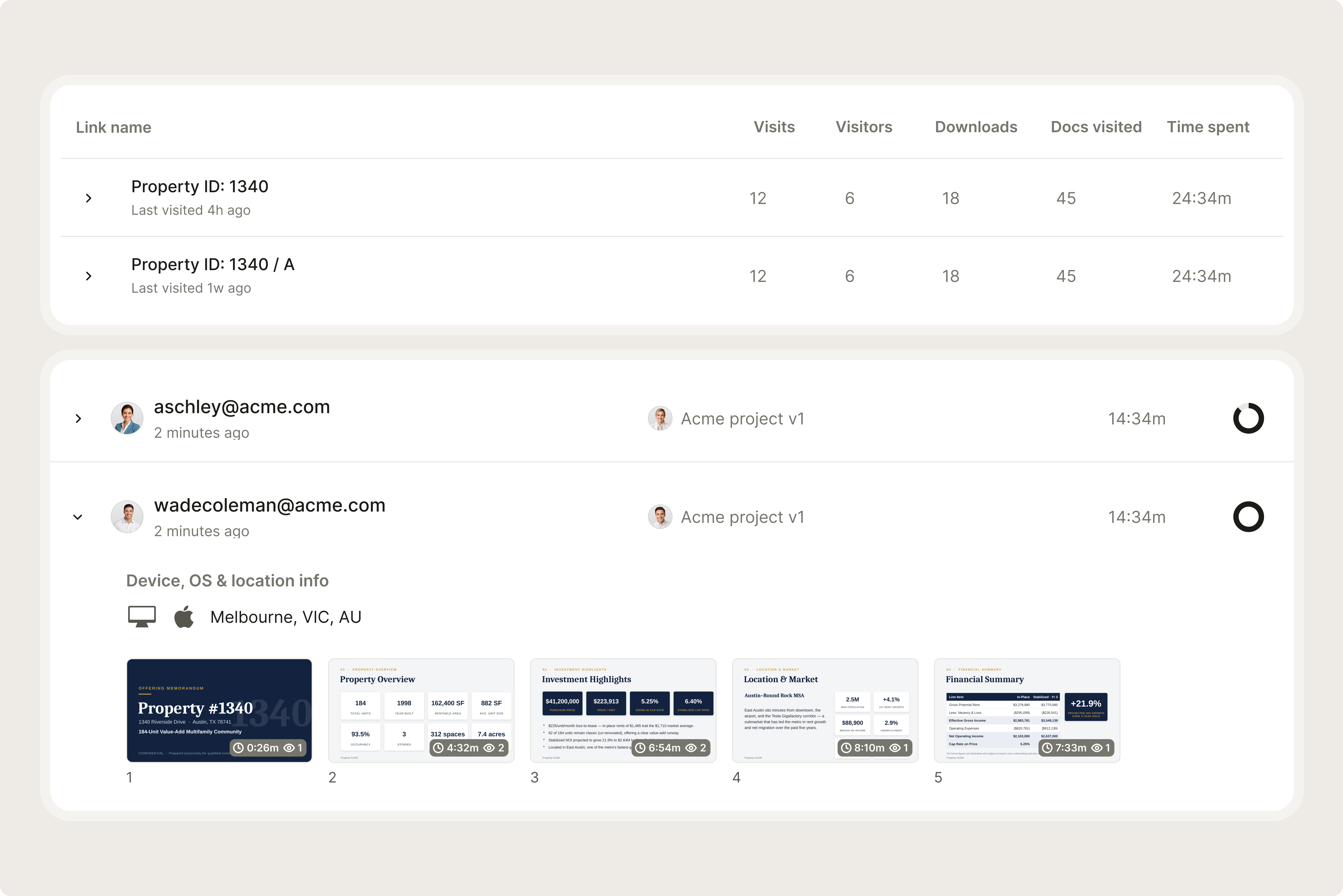
Load all Phase I ESA findings, contamination register results, and state EPA searches into Ellty before lenders and advisors arrive. Track who opened what file with full watermarking.
Step 5 - Settlement and title registration
Australian property settlements are handled by lawyers or licensed conveyancers using state-based electronic settlement systems (PEXA). Settlement and title registration occur simultaneously in PEXA on settlement day.
Land tax is calculated as of settlement date and accrues to the buyer from that day. Confirm any outstanding arrears before settlement - land tax is a first charge on the land and survives ownership transfer.
How to set up your Australia data room in Ellty.
Australian CRE deals move fast from contract to settlement. Load files into Ellty before advisors arrive. Each party gets a scoped, tracked link from day one.
- 1.Upload Australian property files to a secure roomDrop title searches, DA history, leases, Phase I ESA, and FIRB approval into Ellty. Each folder maps to a diligence area.
- 2.Give each advisor a scoped, tracked linkYour solicitor sees title docs. Your accountant sees GST and stamp duty analysis. Ellty enforces the scope.
- 3.Monitor who reviews which documentsSee exactly which files each advisor opened and when. Catch delays before they affect the PEXA settlement date.
What makes Australia different
The GST going concern exemption is the easiest and most expensive mistake to miss. If the documentation isn't in place before contract exchange, 10% GST applies to the full purchase price. It can't be fixed after the fact.
Australia's state-based stamp duty variation means you're running a different cost model for every state. VIC at ~5.5% adds AUD 550,000 on a AUD 10M deal versus AUD 450,000 in NSW. Model it by state before bidding.
FIRB is often the critical path item on Australian CRE deals for foreign investors. The 30-day approval timeline sets the floor for the settlement date - engage legal counsel and lodge the application before exchange, not after.
Land tax is an ongoing obligation that surprises non-Australian buyers. It accrues from settlement day, is payable annually on the land value above state thresholds, and represents a real cost that must be modeled in the income forecast.
The Torrens system of land title provides indefeasible (guaranteed) title to registered proprietors. Once a transfer is registered on the title, the registered owner holds an indefeasible interest in the land. Any prior unregistered interests are defeated by registration, subject to limited statutory exceptions including fraud.
Timeline and cost in Australia
Weeks 1-2 cover kickoff: Torrens title search, FIRB application (if required), state contamination register search, Phase I ESA, council DA search, and GST going concern analysis. Budget AUD 8,000-20,000 for this phase.
Load all files into Ellty before advisors arrive. Give each party a scoped, tracked link from day one - that removes at least one week of email document exchange from a standard Australian diligence process.
Weeks 2-4 cover deep review: Phase I ESA delivery, PCA, occupancy certificate check, lease abstraction, retail tenancy compliance review, land tax arrears check, and outgoings audit. Cost runs AUD 10,000-30,000 depending on asset complexity.
Phase II environmental sampling adds AUD 15,000-50,000 if Phase I flags recognized conditions. Budget early for inner-city industrial-heritage sites in Sydney, Melbourne, and Brisbane.
Weeks 4-6 handle resolution: Phase II if needed, FIRB approval receipt, title exceptions, and PEXA settlement. Electronic settlement via PEXA registers title on the settlement day itself.
Australia's total acquisition cost runs 6-9% of purchase price across stamp duty, GST (if applicable), FIRB fee, legal fees, and advisory costs. Stamp duty is the largest single item - it's non-recoverable and state-specific.
Running an Australian property deal from one room
Hold title searches, planning docs, and lease files in one secure, tracked Ellty data room.
Start free 14-day trialCommon questions about due diligence on Australian property
- Most Australia CRE deals complete diligence in 4-6 weeks. FIRB approval for foreign buyers is typically the critical path item and takes 30 days from lodgement.
- FIRB (Foreign Investment Review Board) approval is required for foreign persons acquiring commercial property in Australia above certain thresholds. Thresholds vary by buyer nationality, asset type, and FTA status. No approval means no settlement.
- If a commercial property is sold as a going concern (tenanted and continuing as a business), both parties can agree to apply 0% GST instead of 10%. This agreement must be documented in the contract before exchange - it can't be applied retrospectively.
- Stamp duty varies by state: approximately 4.5% in NSW, up to 5.5% in VIC, and 4.5% in QLD for commercial property. Confirm the rate for the specific state before bidding.
- All land in the Australian Capital Territory (ACT/Canberra) is held under Crown leasehold - there is no freehold title in the ACT. Buyers must review the Crown lease permitted use and remaining term before contracting.
- Land tax is an annual state tax on the unimproved land value above state thresholds. It accrues from the settlement date and must be modeled as an ongoing cost. Confirm outstanding arrears before settlement - it is a first charge on the land in most states.