New Jersey commercial property has one environmental trigger that exists in no other US state at the same scale: ISRA (Industrial Site Recovery Act), which requires environmental cleanup before any industrial or commercial property that was previously used as an industrial establishment can be transferred - regardless of whether the seller knew about the contamination. NJ also has the highest density of Superfund NPL sites of any state in the country.
ISRA is the New Jersey environmental check that surprises buyers who've only done commercial deals in other states. Under ISRA (N.J.S.A. 13:1K-6 et seq.), the transfer of any "industrial establishment" - defined broadly to include manufacturing, chemical processing, and many other industrial uses - triggers a mandatory environmental assessment and cleanup obligation before or concurrent with the transfer. The seller cannot simply disclose the contamination and move on; ISRA compliance must be demonstrated through an NJ DEP Letter of Non-Applicability (LNA), a Negative Declaration, or an approved remediation that produces a No Further Action letter and Response Action Outcome (RAO) from an NJ Licensed Site Remediation Professional (LSRP).
New Jersey's Realty Transfer Fee (RTF) applies to all conveyances of real property. Sellers pay the standard RTF on a sliding scale: approximately 0.4% on the first $150,000, scaling up to approximately 0.96% on amounts above $350,000. Buyers of commercial property over $1,000,000 pay an additional 1% RTF (the "commercial transfer fee" - colloquially the "millionaire's tax" for commercial). On a $5M New Jersey commercial deal: seller pays approximately $46,000-48,000 in standard RTF and buyer pays an additional $50,000 in the supplemental RTF. Total transfer tax on a $5M NJ commercial deal runs approximately 2% combined, one of the highest in the US.
NJ commercial markets in 2026: Northern NJ (Newark, Jersey City) is driven by port logistics, pharma, and Manhattan-adjacent office and mixed-use. The Princeton Corridor (Middlesex/Somerset/Mercer counties) is a major pharma and biotech hub (Pfizer, J&J, Bristol-Myers Squibb, Merck historical operations). The NJ Shore market from Monmouth County south continues post-Sandy recovery and resilience investment.
Set up an Ellty real estate data room before diligence opens. Load ALTA title, ISRA clearance documents, NJ DEP LSRP records, Phase I ESA, and lease files before advisors arrive.
Where NJ property deals go wrong
Not every check carries the same weight. The table below sorts risks by deal impact - dealbreakers first, then what moves the price, then basic hygiene - so your NJ attorney and environmental consultant know what to clear first.
| Area | Documents to pull | NJ red flag | Matters most for | Tier | |
|---|---|---|---|---|---|
| Title - ALTA and county recording | Title - ALTA and county recording | ALTA owner's title commitment, title search from county recording, ALTA/NSPS survey, UCC fixture search | NJ property records are maintained at the county clerk or recording office; NJ requires attorney involvement in real estate closings; NJ has a mandatory 3-day attorney review period for residential contracts; commercial closings typically run 45-90 days for industrial-legacy assets; confirm no unresolved NJ tax liens or state tax certificates | All buyers | Dealbreaker |
| ISRA - industrial site recovery act | ISRA - industrial site recovery act | NJ DEP ISRA letter of non-applicability (LNA), ISRA negative declaration, LSRP RAO (Response Action Outcome), NJ DEP case management system records | ISRA is triggered by transfer of an NJ industrial establishment (defined broadly including manufacturing, chemical processing, and related uses); ISRA requires LNA confirmation or LSRP-certified RAO before transfer; if ISRA applies and no clearance exists, closing is blocked until ISRA compliance is achieved or an ISRA-compliant remediation funding source is secured | All former industrial sites; NJ chemical, pharma, and manufacturing legacy | Dealbreaker |
| NJ Superfund and DEP contamination | NJ Superfund and DEP contamination | Phase I ESA (ASTM E1527-21), NJ DEP contaminated sites database, EPA CERCLIS Superfund NPL search, NJ DEP known contamination database | NJ has the highest density of Superfund NPL sites in the US; the industrial corridor running through Hudson, Essex, Union, and Middlesex counties (Jersey City, Newark, Elizabeth, Linden, Rahway) has extensive chemical, petroleum, and heavy metal contamination; Phase I alone is often insufficient for NE NJ industrial commercial | NE NJ industrial, former chemical sites, Hudson/Essex/Union counties | Dealbreaker |
| Chromite ore processing residue - Hudson County | Chromite ore processing residue - Hudson County | NJ DEP chromite ore processing residue (COPR) database, Phase I ESA COPR focus, geologic fill assessment for Hudson County commercial | Jersey City (Hudson County) was a major chromate manufacturing center in the 20th century; COPR (hexavalent chromium) was used as construction fill throughout Jersey City; over 150 Jersey City sites have documented COPR contamination; any commercial property in Hudson County with historic fill requires COPR investigation | Hudson County commercial, Jersey City industrial and development | Dealbreaker |
| PFAS - NJ statewide contamination | PFAS - NJ statewide contamination | NJ DEP PFAS database, EPA PFAS site locator, Phase I ESA PFAS addendum, well water PFAS testing | NJ adopted PFAS MCLs (PFOA 14 ppt, PFOS 13 ppt) among the most stringent in the US; NJ has documented PFAS contamination from military bases (McGuire-Dix-Lakehurst, Picatinny Arsenal) and from firefighting foam use at airports and industrial facilities; NJ PFAS database tracks affected areas | Properties near military bases; well-water sites; airport-adjacent commercial | Price-adjuster |
| Flood risk - Sandy zone and coastal NJ | Flood risk - Sandy zone and coastal NJ | FEMA FIRM, NJ Flood Hazard Area Control Act permits, Hurricane Sandy impact records, NFIP status, NJ DEP Coastal Zone Management permits | NJ ranks second in the US for NFIP flood insurance policies; Hurricane Sandy (2012) caused over $30B in NJ damage; the Shore commercial market, Hudson River waterfront, Meadowlands, and Newark Bay basin all have SFHA exposure; NJ Flood Hazard Area (FHA) Control Act adds state-level regulation beyond FEMA maps | Coastal, Shore, waterfront, Meadowlands commercial | Price-adjuster |
| Zoning and redevelopment plans | Zoning and redevelopment plans | Municipal zoning ordinance, NJ Redevelopment Plan (if applicable), NJ MLUL variance history, conditional use permits | NJ municipalities each maintain separate zoning codes under MLUL (Municipal Land Use Law); NJ redevelopment plans (under Local Redevelopment and Housing Law, LRHL) are common in Northern NJ and can supersede underlying zoning; confirm which legal regime governs the parcel | All commercial | Price-adjuster |
| Realty Transfer Fee - state and supplemental | Realty Transfer Fee - state and supplemental | NJ RTF calculation (seller), NJ supplemental RTF calculation (buyer on deals $1M+), NJ Division of Taxation forms | NJ RTF is progressive: ~0.4% on the first $150K scaling to ~0.96% on amounts over $350K (seller pays); buyer pays 1% supplemental RTF on total consideration for commercial sales over $1M; combined NJ transfer tax burden on a $5M commercial deal runs approximately 2% split between buyer and seller | All buyers | Standard check |
| Insurance - flood, pollution, and commercial | Insurance - flood, pollution, and commercial | Commercial property insurance, NFIP flood insurance for SFHA properties, pollution legal liability for brownfield, loss run (10 years) | NJ commercial properties with ISRA-remediating contamination typically require pollution legal liability (PLL) insurance as a lender condition; coastal NJ commercial flood insurance is required in SFHAs; post-Sandy waterfront commercial faces elevated flood insurance scrutiny | Brownfield, coastal, Shore commercial | Standard check |
| Leases - pharma and logistics NJ | Leases - pharma and logistics NJ | All lease contracts, pharma tenant credit review, port logistics lease review, environmental indemnification provisions | NJ commercial markets have pharma sector tenant concentration in the Princeton Corridor and logistics tenant concentration in Northern NJ (Port Newark, NJ Turnpike corridor); pharma leases often include specialized lab and hazmat provisions; logistics leases often include truck court dimensions and dock specifications critical to tenant operations | Princeton Corridor pharma, Northern NJ logistics | Standard check |
| Seller KYC and AML | Seller KYC and AML | NJ SOS entity filing, UBO identification, FinCEN compliance, OFAC screen | NJ metro commercial attracts significant international investment (Manhattan-adjacent Jersey City, Port Newark logistics); FinCEN geographic targeting orders have applied to NJ commercial market segments; run OFAC and sanctions screens on all principals before funds transfer | All deals | Standard check |
Due diligence on a New Jersey property?
Set up your Ellty data room before diligence starts.
Start free 14-day trialNew Jersey CRE checklist
The table ranked risks by severity. This is the full list to work through, grouped by area.
Title - ALTA and county recording
- Order the ALTA owner's title commitment from an NJ-licensed title insurer on day one
- NJ property records are maintained at the county clerk or county recording office depending on county; title searches run against the county grantor-grantee records
- NJ requires attorney involvement in all real estate closings; the attorney reviews the title commitment, handles the closing, and ensures all instruments are properly recorded; engage NJ real estate counsel early
- UCC fixture filings: search NJ UCC database through the NJ Division of Revenue and Enterprise Services for any fixture filings against the commercial parcel
- ALTA/NSPS survey: required for all significant NJ commercial transactions; confirm boundaries, easements, and encroachments
ISRA - industrial site recovery act
- First check for any NJ commercial property with industrial history: was it an "industrial establishment" as defined by ISRA (N.J.S.A. 13:1K-6 et seq.)?
- ISRA industrial establishment definition: any facility used for industrial operations involved in the generation, use, storage, or disposal of hazardous substances or hazardous wastes; this includes manufacturing, chemical processing, rubber and plastics, printing, metal working, petroleum handling, dry cleaning, and many other industrial categories
- Search NJ DEP's online database for any existing ISRA cases associated with the property address or block and lot
- If ISRA applies: the seller must obtain one of the following before transfer can be completed:
1. Letter of Non-Applicability (LNA): confirms ISRA doesn't apply or is already satisfied 2. Negative Declaration: confirms no contamination that requires remediation 3. Response Action Outcome (RAO) from a Licensed Site Remediation Professional (LSRP): confirms remediation is complete or institutional/engineering controls are in place 4. Remediation in Progress (RIP): ISRA allows transfer under certain conditions with ongoing remediation, but requires remediation funding source (remediation trust or insurance) - Timeline alert: ISRA compliance can take months to years depending on contamination extent; confirm ISRA status before executing purchase contract; an ISRA-triggered deal without existing clearance should have appropriate price adjustment or seller-funded escrow for remediation costs
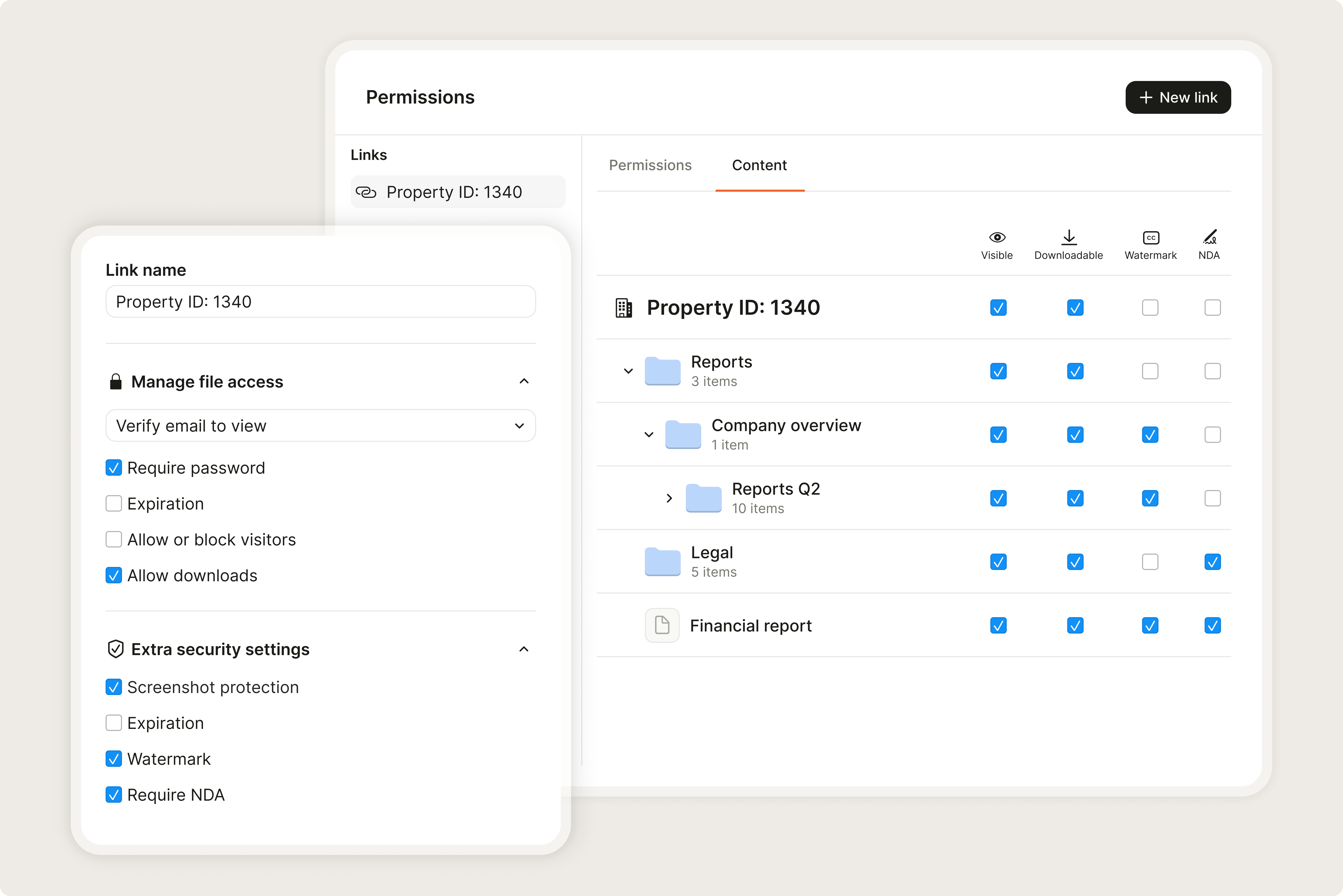
Set up each advisor's access in Ellty. NJ real estate attorney sees title and ISRA clearance documents. LSRP sees Phase I/II, RAO records, and NJ DEP case files. Lender sees BEA equivalent and valuation. No cross-contamination.
NJ Superfund and DEP contamination database
- Commission Phase I ESA meeting ASTM E1527-21 from an NJ DEP-familiar environmental professional
- NJ-specific databases to search: NJ DEP Site Remediation Program (SRP) database, NJ Known Contaminated Site database, NJ DEP LSRP case tracking system, EPA CERCLIS NPL search, NJ Spills database
- NJ industrial corridor: the stretch from Jersey City through Newark, Elizabeth, Linden, Woodbridge, and Rahway along the NJ Turnpike has one of the highest concentrations of industrial contamination in the US; former chemical plants (BASF, Allied Chemical/Honeywell, Maxim, Diamond Shamrock/Occidental), petroleum refineries, and industrial manufacturing have left soil and groundwater contamination across large areas
- Passaic River/Lower Passaic River: the Passaic River Superfund site (Site of the Diamond Alkali Superfund Site in Newark) has dioxin and other contamination extending downstream; commercial properties near the Passaic River in Newark, Kearny, and adjacent municipalities require careful Phase I review
- For Phase I ESA in Northern NJ industrial areas: Phase II is frequently required by institutional lenders; don't wait for Phase I to trigger Phase II if industrial use history is obvious
Chromite ore processing residue - Hudson County
- Hudson County commercial property due diligence has one unique check: COPR (Chromite Ore Processing Residue) investigation
- Jersey City was home to multiple chromate manufacturing facilities in the 20th century (Mutual Chemical, Crompton and Knowles, and others); COPR (which contains carcinogenic hexavalent chromium) was widely used as construction fill throughout Jersey City from the 1900s through the 1970s
- NJ DEP has identified over 150 Hudson County sites with COPR contamination; COPR is now regulated under a specific NJ DEP cleanup standard
- For any commercial property in Jersey City, Kearny, or elsewhere in Hudson County: Phase I ESA must address COPR; if COPR fill is suspected from historic use records, geologic boring to characterize fill material is warranted
- COPR remediation is expensive; COPR-contaminated sites require excavation or cap-and-control approaches; COPR site cleanup can run tens of millions of dollars for large commercial parcels
PFAS - NJ statewide contamination
- Search NJ DEP's PFAS database and EPA's PFAS contamination site locator for the property and surrounding area
- NJ PFAS MCLs: NJ adopted drinking water MCLs of 14 ppt for PFOA and 13 ppt for PFOS - among the most stringent in the country
- Military-base PFAS: Joint Base McGuire-Dix-Lakehurst (Burlington County) has documented PFAS contamination from AFFF; Picatinny Arsenal (Morris County) has confirmed PFAS contamination; commercial properties near these facilities require PFAS screening
- Airport PFAS: NJ airports including Teterboro and regional airports have used AFFF for fire suppression; commercial properties near airports with firefighting facilities should include PFAS in the Phase I scope
- NJ PFAS contamination from non-military sources: NJ has documented PFAS contamination from industrial manufacturing, particularly at former Flemington-area manufacturing sites and other legacy industrial locations
- For commercial properties with private wells in any NJ county: commission PFAS well water testing (lab results take 3-5 weeks)
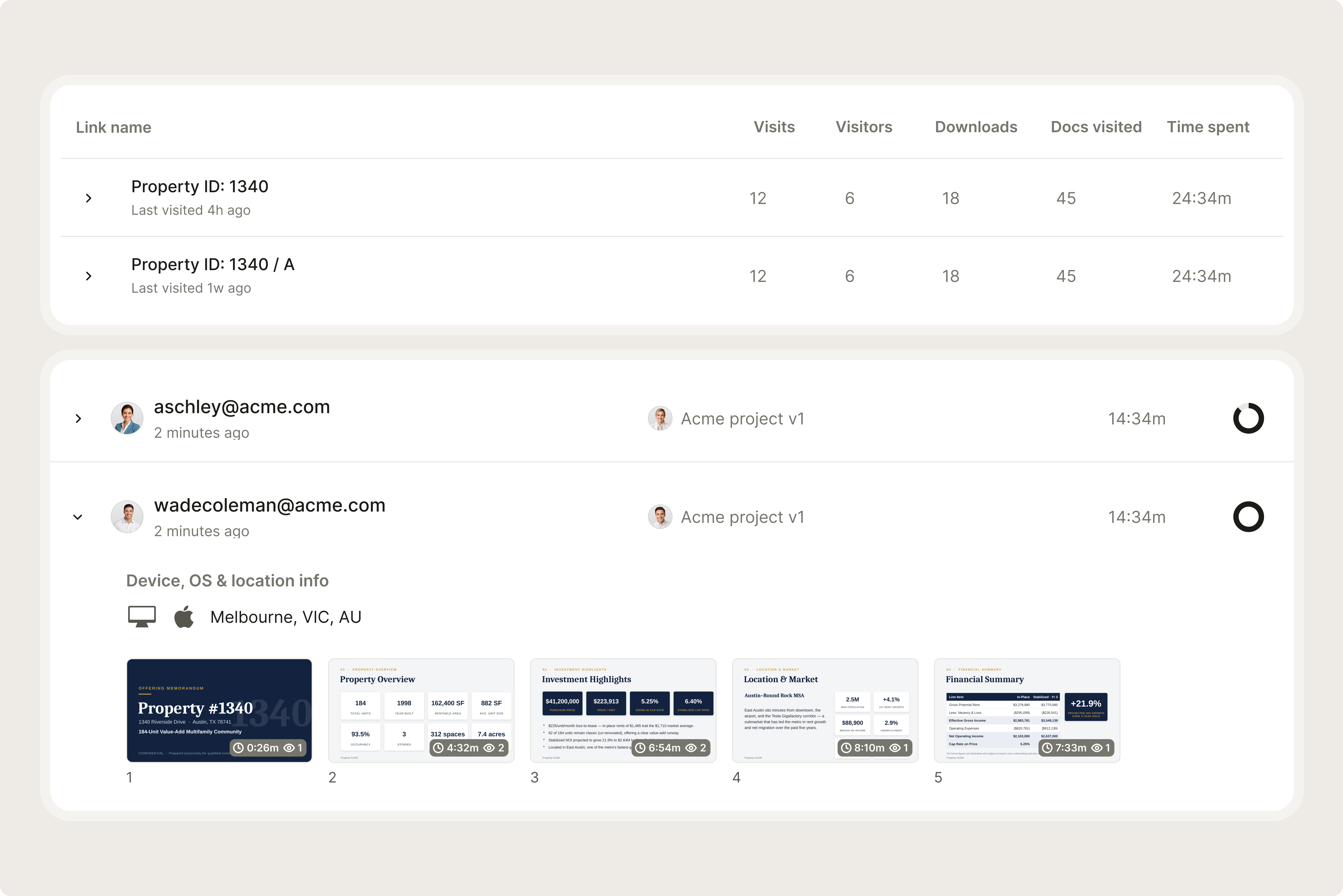
Track each advisor's document access in Ellty. If the LSRP accesses the NJ DEP case files and the Phase II borings simultaneously with the ISRA database records, they're scoping a remediation that will affect the closing timeline.
Flood risk - Sandy zone, coastal NJ, and Meadowlands
- Pull FEMA FIRMs for the property's flood zone designation; NJ has extensive SFHA designations along the coast, in the Meadowlands, and near major river systems
- Hurricane Sandy (2012): Sandy caused over $30 billion in NJ property damage; the Shore market from Monmouth County south through Ocean and Atlantic counties, and the Hudson River waterfront, saw catastrophic flood damage; FEMA updated flood maps post-Sandy for many NJ areas
- NJ Flood Hazard Area Control Act: in addition to FEMA regulation, NJ DEP administers the NJ Flood Hazard Area (FHA) Control Act which imposes state-level restrictions on development in flood hazard areas; NJ FHA permits may be required for commercial development even where FEMA maps don't require it
- Meadowlands: commercial properties in the New Jersey Meadowlands District (Bergen and Hudson counties) have complex flood risk; the New Jersey Sports and Exposition Authority (NJSEA) has jurisdiction over some Meadowlands development; confirm both FEMA and NJSEA jurisdiction for Meadowlands commercial
- For Shore commercial properties in Monmouth, Ocean, Atlantic, and Cape May counties: confirm current NFIP flood zone designation against post-Sandy updated maps; Shore commercial flood insurance availability has changed since Sandy
Zoning and redevelopment plans
- Confirm the zoning designation from the NJ municipality's planning department
- NJ MLUL (Municipal Land Use Law, N.J.S.A. 40:55D-1 et seq.): each NJ municipality maintains its own zoning code under MLUL; NJ zoning variances and conditional use permits are granted by the local Zoning Board of Adjustment or Planning Board
- NJ Redevelopment Plans (under Local Redevelopment and Housing Law, LRHL): many NJ municipalities, particularly in Northern NJ, have designated redevelopment areas with approved redevelopment plans that supersede underlying MLUL zoning; if the property is in a redevelopment area, the redevelopment plan - not the base zoning - governs permitted uses and development standards
- For Jersey City, Newark, Hoboken, Asbury Park, and other NJ redevelopment-intensive municipalities: confirm whether a redevelopment plan exists for the parcel before assuming base zoning applies
Compare New York's commercial property diligence process when running NYC-metro portfolio acquisitions. NY and NJ are often in the same deal, and buyers in both states face elevated transfer taxes (NY RPTT up to 2.625% for commercial + buyer pays; NJ RTF ~0.96% seller + 1% buyer supplemental). Key NJ differences: ISRA has no New York equivalent; NJ's COPR (Hudson County chromium) is unique to NJ; NJ PFAS MCLs are more stringent than NY; NJ municipal MLUL zoning is separate from any NY zoning framework.
Realty Transfer Fee - calculating NJ transfer taxes
- Calculate seller's NJ RTF at the applicable progressive rate; the RTF is tiered and scales with consideration:
- Up to $150,000: $2.00 per $500 (0.4%) - $150,001 to $200,000: $3.35 per $500 (0.67%) - $200,001 to $350,000: $3.90 per $500 (0.78%) - Over $350,000: $4.80 per $500 (0.96% of the amount over $350K, plus the step amounts below) - Buyer's supplemental RTF: 1% of total consideration for commercial property sales over $1,000,000; paid by buyer - NJ RTF is paid to the county recording office at the time of deed recording - No separate NJ mortgage recording tax; note that NJ cities may impose local transfer taxes (Jersey City has imposed additional transfer taxes in some periods; confirm current local surcharges)
Insurance - pollution legal liability and flood
- Commission an MAI appraisal from an NJ-licensed appraiser; NJ commercial market data is robust for Northern NJ and Princeton Corridor; Shore markets have thinner institutional comp data
- Pollution legal liability (PLL) insurance: standard for NJ commercial acquisitions involving ISRA or ongoing NJ DEP remediation; PLL covers newly discovered contamination post-closing; NJ brownfield lenders typically require PLL; budget for PLL as a closing cost line item
- Flood insurance: for SFHA properties on the Shore, in the Meadowlands, or near the Passaic, Hackensack, or Raritan Rivers: NFIP coverage is required for federally-backed mortgages; private flood insurance is an option for higher-value NJ commercial properties
Leases - NJ commercial terms
- Abstract every commercial lease; focus on pharma sector tenants (Princeton Corridor) and logistics tenants (Port Newark corridor)
- For pharma and biotech tenants in the Princeton Corridor: review lab and clean room build-out provisions, hazardous materials storage permits, HVAC specifications, and tenant environmental indemnification; pharma tenants often negotiate lease provisions around specialized facility requirements
- For logistics tenants near Port Newark and the NJ Turnpike corridor: review truck court dimensions, dock door count, clear height, and power supply specifications; logistics lease creditworthiness is often tied to e-commerce or distribution contract volume
Load all lease abstracts, ISRA documents, LSRP records, and NJ DEP records into Ellty. NJ attorney sees title, ISRA, and RTF records. LSRP sees Phase I/II, DEP database, and RAO records. Lender sees valuation and lease abstracts. Each gets a scoped, tracked link.
How due diligence works in New Jersey
Step 1 - Title and ISRA status
Day one: order ALTA title commitment and simultaneously search NJ DEP's online database for any ISRA cases associated with the property's block and lot. Both searches are fast; the NJ DEP online search takes 30 minutes.
If ISRA applies and no LNA or RAO exists: engage an NJ DEP LSRP immediately and get a timeline estimate for ISRA compliance before proceeding further. An ISRA case with active remediation can add months to the closing timeline; price accordingly or walk.
For non-industrial NJ commercial (Class 4A office, retail, certain mixed-use): ISRA may not apply; confirm with NJ real estate counsel. The LNA application process can run 4-6 weeks for a response.
Step 2 - Environmental: Superfund, COPR, PFAS
Commission Phase I ESA with NJ DEP database search (SRP database, Known Contaminated Sites, Spills database) alongside standard federal databases. For Hudson County commercial: COPR investigation is a separate, Hudson County-specific check; commission it alongside Phase I.
For PFAS screening near McGuire-Dix-Lakehurst, Picatinny Arsenal, or NJ airports: commission PFAS addendum to Phase I. Private-well commercial properties in any NJ county need PFAS well testing.
For Northern NJ industrial areas (Hudson/Essex/Union/Middlesex county corridor): Phase II intrusive investigation is effectively the expected deliverable for lender approval; commission Phase I and Phase II in parallel if industrial use history is established.
Step 3 - Flood and FHA permit review
Pull FEMA FIRMs and confirm NJ Flood Hazard Area Control Act permit status. For Shore commercial: pull post-Sandy FEMA map for the updated zone designation; the pre-Sandy map may show lower flood risk than the current map.
For Meadowlands commercial: add NJSEA jurisdiction confirmation alongside FEMA and NJ FHA reviews.
Load all Phase I/II, ISRA clearance, COPR investigation, PFAS data, and flood documents into Ellty. Advisors get scoped, tracked access. Monitor whether the LSRP accesses the NJ DEP ISRA case files repeatedly - escalate conversation about remediation timeline before the formal report.
Step 4 - Zoning, redevelopment plan, and leases
Confirm whether the property is in a designated NJ redevelopment area (LRHL). If yes: the redevelopment plan is the governing document, not MLUL zoning. Request the redevelopment plan and any redevelopment agreements from the municipality.
Abstract all leases. For pharma or logistics tenants: review specialized facility provisions alongside standard rent and term review.
Step 5 - RTF calculation and closing
Calculate NJ RTF (seller's obligation) and supplemental RTF (buyer's obligation for deals over $1M). Both are paid at county recording. NJ attorney handles closing. Budget for combined NJ transfer taxes of approximately 2% of consideration split between buyer and seller.
How to set up your New Jersey data room in Ellty.
NJ commercial deals involve ALTA title, ISRA clearance documents, LSRP RAO records, NJ DEP contaminated sites, COPR investigation (Hudson County), PFAS screening, flood hazard permits, and lease abstraction. Load everything into Ellty before advisors arrive.
- 1.Upload NJ property files to a secure roomDrop ALTA title commitment, NJ DEP ISRA case records, LSRP RAO, Phase I ESA, COPR investigation, PFAS records, NJ FHA permit, FEMA flood maps, and lease pack into Ellty.
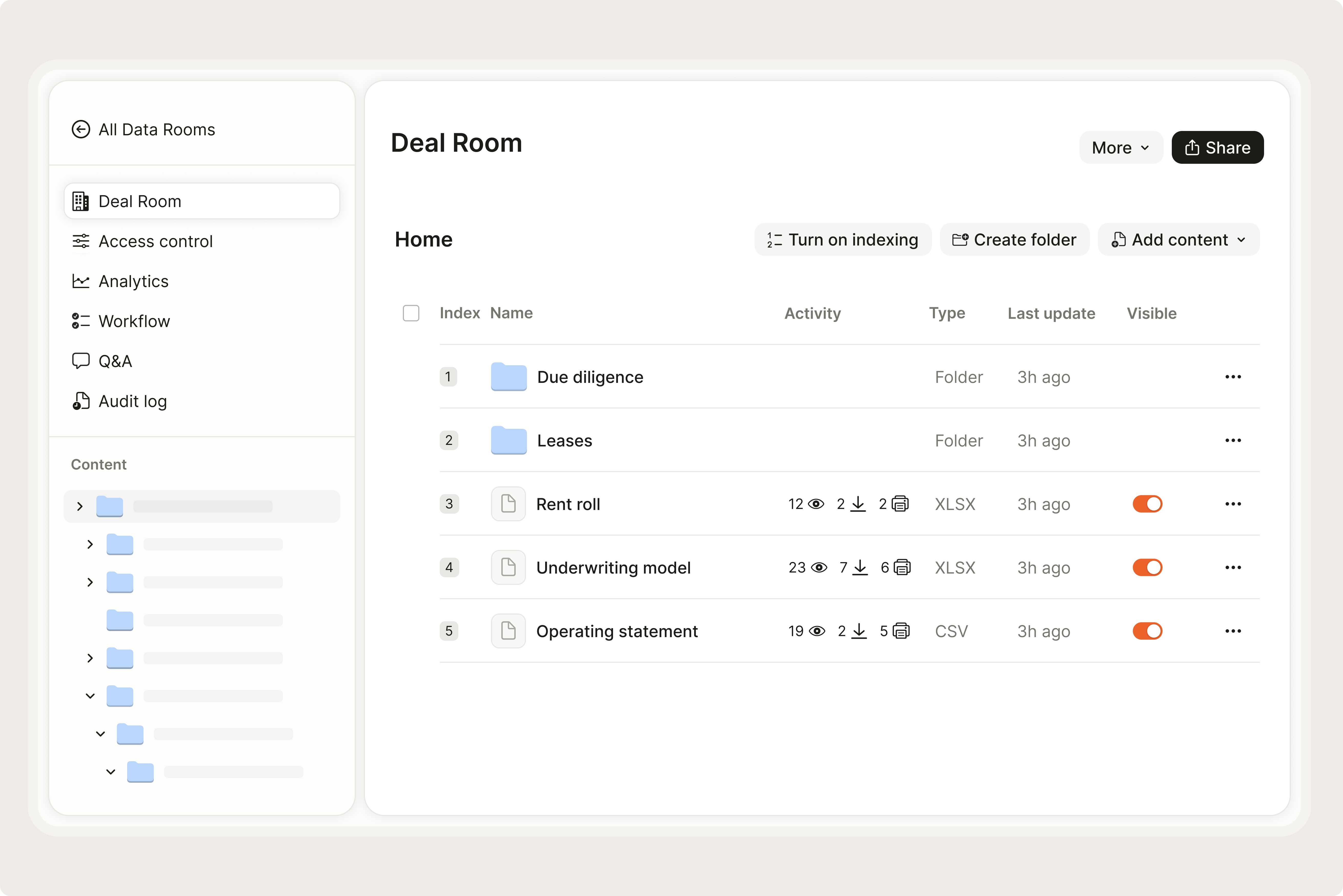
- 2.Give each advisor a scoped, tracked linkNJ attorney sees title chain and ISRA clearance. LSRP sees Phase I/II, DEP database, and RAO records. Lender sees valuation and lease abstracts. Each advisor gets exactly what they need.
- 3.Monitor who reviews which documentsSee exactly which files each advisor opened and when. Catch ISRA compliance questions or COPR remediation scope issues before they stall the lender's underwriting.
What makes New Jersey different
ISRA is the environmental law that catches buyers from other states off guard in New Jersey commercial deals. In most US states, a seller can disclose known environmental contamination and still close; the buyer takes the property with the environmental liability (mitigated by indemnification, price adjustment, or escrow). In NJ, for industrial establishments, the transfer literally cannot complete (without special remediation funding arrangements) until ISRA compliance is demonstrated. An LNA confirms ISRA doesn't apply. An RAO from an LSRP confirms the site has been remediated. If neither exists and ISRA applies: you're waiting for remediation, not just pricing in the liability. Understand ISRA status before contract, not after.
Hudson County's COPR problem is a commercial real estate issue that's been under remediation for decades and still affects development economics in Jersey City. Hexavalent chromium in construction fill throughout Jersey City is not a theoretical risk; it's a documented, mapped contamination that has affected hundreds of commercial and development sites. Jersey City's commercial renaissance (Goldman Sachs tower, massive residential and mixed-use development) has proceeded alongside COPR remediation; it's expensive but manageable with the right engineering controls. The key is to identify COPR before bidding, not after.
NJ's combined transfer tax burden (seller RTF of ~0.96% on amounts over $350K plus buyer's 1% supplemental for deals over $1M) is among the highest in the US for commercial property. On a $10M NJ commercial deal: seller pays approximately $96,000 in RTF, buyer pays $100,000 in supplemental RTF, for a combined $196,000 in transfer taxes. This is roughly double Ohio's conveyance fee and significantly higher than Pennsylvania's realty transfer tax structure. Model NJ transfer taxes explicitly in acquisition cost modeling.
NJ's flood exposure is not just a Shore issue. The Meadowlands in Hudson and Bergen counties, the Passaic River basin, the Raritan River basin, and the Hudson River waterfront all have significant commercial flood risk. Hurricane Sandy exposed that NJ commercial flood risk extends well inland from the Shore. Post-Sandy FEMA map updates changed flood zone designations for many NJ commercial properties; confirm the current designation using updated maps, not pre-2012 data.
The Industrial Site Recovery Act (ISRA), N.J.S.A. 13:1K-6 et seq., applies whenever an industrial establishment in New Jersey undergoes a change of ownership or operations, or closes. An industrial establishment is defined as any site upon or from which there has been a discharge of a hazardous substance, or which is classified under certain SIC codes associated with industrial operations. ISRA requires the owner or operator to: (1) submit an ISRA notice to NJ DEP; (2) conduct a preliminary assessment and site investigation; and (3) obtain either a Letter of Non-Applicability (confirming ISRA does not apply), a Negative Declaration (confirming no contamination requiring remediation), or a Response Action Outcome from a Licensed Site Remediation Professional (confirming remediation is complete or controlled). Failure to obtain ISRA compliance before transfer can result in NJ DEP voiding the transaction and imposing penalties on both transferor and transferee.
Timeline and cost in New Jersey
Weeks 1-2 cover kickoff: ALTA title commitment order, NJ DEP ISRA database search, NJ DEP known contaminated sites search, Phase I ESA commission (with NJ-specific databases), COPR assessment (Hudson County), PFAS screening assessment, NJ Flood Hazard Area check, FEMA flood zone confirmation, and lease abstraction initiation. Legal fees in this phase run USD 7,000-20,000.
Load all files into Ellty before advisors engage. NJ commercial deals for non-industrial assets run 45-60 days; ISRA-required industrial deals should allow 90-180 days depending on contamination scope.
Weeks 2-6 cover deep review: Phase I ESA delivery, ISRA LNA or RAO status confirmation, LSRP engagement (if ISRA requires active remediation), COPR investigation (if Hudson County), PFAS results (if commissioned), NJ FHA permit review, zoning and redevelopment plan confirmation, lease abstraction, and PLL insurance quotes. Costs in this phase: USD 20,000-60,000.
Weeks 6-12+ handle resolution: Phase II ESA (if triggered by Phase I), ISRA remediation (if RAO not yet obtained), COPR remediation assessment, PLL insurance binding, RTF calculation, title exception clearance, and closing.
NJ total acquisition costs for buyers: NJ supplemental RTF (1% on deals over $1M) + ALTA title insurance + NJ attorney fee + environmental (Phase I/II + LSRP + COPR if applicable + PFAS) + PLL insurance (if required). Buyer total acquisition cost runs approximately 2-3% of purchase price for standard commercial; ISRA and COPR remediation costs can add significantly to non-standard assets.
Running a New Jersey property deal from one room
Hold ALTA title, ISRA clearance, LSRP records, and lease files in one secure, tracked Ellty data room.
Start free 14-day trialCommon questions about due diligence on New Jersey commercial property
- NJ commercial deals for non-industrial assets typically take 45-60 days. For assets subject to ISRA where no LNA or RAO exists: allow 90-180 days or more depending on the extent of contamination and remediation required. ISRA timelines depend heavily on whether the site has existing NJ DEP case management and how much Phase II investigation is needed before an LSRP can certify a Response Action Outcome.
- ISRA (Industrial Site Recovery Act, N.J.S.A. 13:1K-6 et seq.) requires that any New Jersey industrial establishment - broadly defined to include manufacturing, chemical processing, and many other industrial uses - obtain ISRA clearance before a change of ownership. Clearance can be: a Letter of Non-Applicability (LNA), confirming ISRA doesn't apply; a Negative Declaration, confirming no contamination requiring remediation; or a Response Action Outcome (RAO) from a Licensed Site Remediation Professional (LSRP), confirming remediation is complete. Without ISRA clearance, NJ DEP can void the transaction and impose penalties. ISRA status must be confirmed before contract, not after.
- COPR (Chromite Ore Processing Residue) is a waste product of chromate manufacturing that was produced in large quantities in Jersey City, NJ during the 20th century. COPR contains carcinogenic hexavalent chromium and was widely used as cheap construction fill throughout Hudson County from the 1900s through the 1970s. NJ DEP has identified over 150 Hudson County sites with COPR contamination. For commercial property in Jersey City and other Hudson County locations: Phase I ESA must address COPR; suspected fill areas warrant geologic boring; COPR remediation is expensive (excavation or engineered cap) and must be factored into acquisition cost.
- NJ transfer taxes have two components: (1) Seller's Realty Transfer Fee (RTF): progressive scale ranging from 0.4% on the first $150K to approximately 0.96% on amounts over $350K of consideration; (2) Buyer's supplemental RTF: 1% of total consideration for commercial property sales over $1,000,000. On a $5M NJ commercial deal: seller pays approximately $46,000-48,000 in RTF; buyer pays $50,000 in supplemental RTF; combined transfer tax burden is approximately $96,000-98,000, or roughly 2% of the purchase price.
- Yes. New Jersey requires attorney involvement in real estate closings. NJ has a long-standing requirement that attorneys supervise or participate in real estate transactions; this differs from states where title companies alone can close commercial deals. NJ real estate attorneys handle contract review, ISRA review, title examination, and closing supervision. NJ also has a mandatory 3-day attorney review period for residential contracts; commercial contracts commonly include an attorney review period by negotiated agreement.
- Northern NJ has multiple significant environmental risks. For Hudson County: COPR (chromium contamination) is unique to NJ and affects hundreds of Jersey City commercial sites. For the industrial corridor (Essex, Union, Middlesex counties): the Superfund and industrial contamination density is among the highest in the US. For properties subject to ISRA: the industrial site transfer trigger is the most significant procedural environmental risk - it can block or significantly delay a commercial transfer. For any industrial-legacy NJ commercial property: Phase II ESA alongside ISRA clearance status review is the starting environmental diligence position.