Massachusetts CRE deals carry risks that trip up buyers from other states: Chapter 21E environmental liability, dense deed restriction history, and a deed excise tax that few national buyers model correctly. This checklist covers every check before you close in 2026.
Massachusetts is one of the most active commercial markets in the US. Boston, Cambridge, Worcester, and Springfield anchor distinct submarkets. Each has its own zoning board, historic district rules, and deal-flow patterns.
Chapter 21E is Massachusetts's environmental liability law. It imposes strict, joint, and several liability on current and former owners of contaminated sites. You don't need to have caused the contamination to be liable for cleanup costs.
The Massachusetts deed restriction system is older and more layered than most states. Conservation restrictions, historic preservation restrictions, and affordable housing restrictions run with the land indefinitely. A title search alone won't surface all of them.
Load all property files into your Ellty data room before diligence opens. Each advisor gets a scoped link on day one - no email chains, no version confusion when files update.
Where Massachusetts property deals actually go wrong
Not every check carries the same weight. The table below sorts risks by impact on deal execution.
| Area | Documents to pull | Massachusetts red flag | Matters most for | Tier | |
|---|---|---|---|---|---|
| Title and ownership | Title and ownership | Deed, title commitment, 50-year chain-of-title, Registry of Deeds search, Probate Court records | Massachusetts probate titles are common; unrecorded probate orders break chain of title on older parcels | All buyers | Dealbreaker |
| Deed restrictions and covenants | Deed restrictions and covenants | Full deed restriction history, Conservation Commission records, MassHousing restriction search | Conservation, historic, and affordable housing restrictions run with the land indefinitely in Massachusetts | Development, repositioning, all buyers | Dealbreaker |
| Zoning and land use | Zoning and land use | Zoning certificate, variance history, Chapter 40B status, historic district designation | Chapter 40B overrides local zoning near transit; many Boston metro parcels carry unresolved 40B status | Development, repositioning | Dealbreaker |
| Environmental - Chapter 21E | Environmental - Chapter 21E | Phase I ESA, MassDEP BWSC database search, Release Tracking Number check, Activity Use Limitation | Chapter 21E imposes strict liability on new owners; an Activity Use Limitation can cap what you build | Industrial, former mill, older commercial | Dealbreaker |
| Leases and tenancies | Leases and tenancies | All leases, amendments, rent roll, estoppels, condominium unit deeds if applicable | Massachusetts commercial condominiums have unit-level deed restrictions and association fees that bind buyers | Income-producing assets, mixed-use | Price-adjuster |
| Building and physical condition | Building and physical condition | Property Condition Assessment, building permit history, certificate of occupancy, MBTA proximity records | Boston-area buildings near MBTA tunnels face vibration and groundwater issues; require structural review | All asset types | Price-adjuster |
| Service charge and costs | Service charge and costs | 3y operating statements, municipal property tax bills, CAM reconciliations, betterment assessments | Massachusetts betterment assessments for street, water, and sewer improvements can be multi-year obligations | Income-producing assets | Price-adjuster |
| Deed excise tax | Deed excise tax | Massachusetts deed excise tax stamps, DOR Form TP-584, Registry of Deeds recording receipt | Massachusetts deed excise tax is $4.56 per $1,000 of consideration; Barnstable County adds a surcharge | All deals | Price-adjuster |
| Insurance and valuation | Insurance and valuation | Current policies, loss run history, FEMA flood zone certificate, coastal wind coverage | Massachusetts coastal and harbor parcels face flood and named-storm exposure; standard policies fall short | Coastal, Boston Harbor, Cape Cod parcels | Standard check |
| Utilities and access | Utilities and access | Utility connection records, MassDOT access permits, private road easements, MBTA easement search | MBTA easements cross many inner-Boston parcels; they restrict subsurface work and can affect redevelopment | Urban, transit-adjacent parcels | Standard check |
| Seller KYC and AML | Seller KYC and AML | Entity docs, deed match, Massachusetts SCC search, bankruptcy search, judgment lien search | Massachusetts LLC must be in good standing with SCC before the Registry accepts a deed for recording | All deals | Standard check |
Running due diligence on a Massachusetts property?
Set up your data room before diligence starts.
Start free 14-day trialThe full Massachusetts property due diligence checklist
Title and ownership
- Pull the deed and confirm the legal description matches the current ALTA survey exactly
- Order a 50-year chain-of-title search from the Registry of Deeds
- Search Probate Court records for any unrecorded orders in the title chain
- Confirm no open mechanic's lien claims against recent construction at the parcel
- Verify the parcel ID matches all closing, survey, and tax documents before proceeding
- Check for any tax title proceedings; Massachusetts towns can take title for unpaid real estate taxes
Deed restrictions and covenants
- Pull full deed restriction history from the Registry of Deeds going back to original conveyance
- Search Conservation Commission records for any conservation restriction on the parcel
- Check MassHousing and DHCD databases for affordable housing deed restrictions
- Confirm no historic preservation restriction runs with the land from MHC or local commission
- Review any open-space or Chapter 61 restriction; buyer must honor right of first refusal on sale
- For Chapter 61A or 61B land: notify the municipality and allow the statutory refusal period before closing
Zoning and land use
- Confirm current zoning from the municipal planning or building department in writing
- Pull the full variance and special permit history from the local zoning board of appeals
- Check Chapter 40B status; Massachusetts allows affordable housing developers to override local zoning
- Verify all certificates of occupancy for buildings and improvements are current and recorded
- Confirm no open code violations or stop-work orders at the local building department
- For Boston parcels: check BPDA urban design review requirements before committing to any new use
Environmental - Chapter 21E
- Commission a Phase I ESA per ASTM E1527-21; former mill parcels in Lowell, Fall River, and New Bedford need extra scrutiny
- Search the MassDEP BWSC online database for Release Tracking Numbers on the parcel
- Check for any Activity Use Limitation recorded at the Registry of Deeds; it caps permitted uses
- Run a UST search for former gas stations and dry-cleaning sites statewide
- Confirm whether a Licensed Site Professional has been assigned and what Response Actions are open
- Budget Phase II at $10,000-$30,000 if recognized environmental conditions appear in Phase I
Load MassDEP search results and Phase I findings into Ellty so lenders and advisors can access them with scoped links and you can track who reviewed each file.
Leases and tenancies
- Collect all leases, amendments, and sublease consents before diligence opens
- For commercial condo assets: pull all unit deeds and condominium trust documents
- Cross-reference the rent roll against 3 months of actual bank receipts from the seller
- Confirm estoppel certificates are deliverable before the scheduled closing date
- Identify any month-to-month occupancies or undocumented tenants on the property
- Check for tenant purchase options or rights of first refusal embedded in lease terms
Building and physical condition
- Commission a Property Condition Assessment; check structural impact from MBTA tunnels if inner-Boston
- Pull the full building permit history from the local inspectional services department
- Verify Massachusetts stretch energy code compliance if the municipality has adopted it
- Confirm ADA compliance documentation for all commercial spaces on the property
- Check HVAC systems; many older Greater Boston commercial buildings run aging central plant equipment
- Inspect roofs and envelopes; Massachusetts freeze-thaw cycles and coastal exposure drive early failure
Service charge and operating costs
- Pull 3 years of operating statements and reconcile against municipal tax bills
- Check for any outstanding betterment assessments for water, sewer, or street improvements
- Audit CAM pass-throughs against lease terms for all multi-tenant assets
- Confirm property is assessed at its current use; Massachusetts assessors can reassess on sale
Deed excise tax and recording
- Calculate Massachusetts deed excise tax at $4.56 per $1,000 of consideration (paid by seller)
- For Barnstable County deals: add the additional $1.52 per $1,000 county excise surcharge
- File the Massachusetts DOR Form TP-584 at the Registry of Deeds before deed is accepted for recording
- Confirm who pays excise stamps; Massachusetts statute puts it on the seller, but parties can negotiate
See how Indiana's due diligence process compares if you're running CRE deals across multiple states.
Insurance and valuation
- Pull current insurance policies and a 3-year loss run history from the seller
- Check FEMA flood zone status on all coastal, harbor, and river-adjacent Massachusetts parcels
- Verify named-storm and wind coverage; standard policies exclude storm surge on Cape and Islands deals
- Order an independent appraisal scoped to the intended use and lender requirements
Utilities and access
- Verify all utility connections are active and legally transferable at closing
- Check MassDOT records for any state highway access permit requirements on the parcel
- Search for MBTA easements; they commonly cross subsurface and surface parcels in inner Boston
- Confirm legal road access via recorded easement or dedicated public right of way
Seller KYC and AML
- Confirm seller identity matches the Registry of Deeds deed record exactly
- For LLC or corporate sellers: confirm good standing with the Massachusetts Secretary of the Commonwealth
- Run bankruptcy, federal tax lien, and judgment lien searches before committing to close
- Confirm entity authority to sell; Massachusetts LLCs require manager or member authorization in writing
Load all documents into Ellty at the start of diligence. Each advisor gets a scoped link - no open folders, no version confusion when files update.
How property due diligence in Massachusetts works
Step 1 - Title search
Start the title search immediately after contract execution. Massachusetts uses a race-notice recording system; the first to record wins priority.
Commission a 50-year chain-of-title at the Registry of Deeds. Run a Probate Court check in parallel - unrecorded probate orders are the most common title defect on older Massachusetts commercial parcels.
Step 2 - Survey and inspection
Order an ALTA/NSPS survey alongside the title search. Confirm the parcel number, legal description, and all easement locations match the deed - including any MBTA or conservation easements on record.
Commission the Property Condition Assessment in parallel. Boston-area buildings near MBTA tunnels need structural and groundwater review before you can rely on standard PCA findings.
Step 3 - Leases and income review
Pull all leases and flag any commercial condo trust documents first. Massachusetts commercial condo associations carry ongoing fees and restrictions that bind a buyer as new unit owner.
Compare Massachusetts due diligence with Maryland's approach if you're buying in both markets - deed restriction depth and environmental liability differ significantly.
Step 4 - Environmental review
Run the Phase I ESA and MassDEP BWSC search in parallel. Former textile mills, tanneries, and industrial waterfront sites across Lowell, Lawrence, and New Bedford carry Chapter 21E contamination risk.
Load MassDEP RTN findings and Phase I results into Ellty so lenders and advisors can access them. Track who reviewed which file and when - no open folders, no missed sign-offs on environmental items.
Step 5 - Closing and registration
Massachusetts closing requires deed excise tax stamps affixed before the deed is presented at the Registry of Deeds. Barnstable County deals need the additional county surcharge calculated separately.
Confirm the Massachusetts SCC good-standing certificate for any LLC or corporate seller before closing day. Out-of-state buyers regularly miss this and delay the Massachusetts close by 3-7 days.
How to set up your Massachusetts data room in Ellty.
Load Massachusetts property files before advisors arrive. Give each one a scoped link on day one.
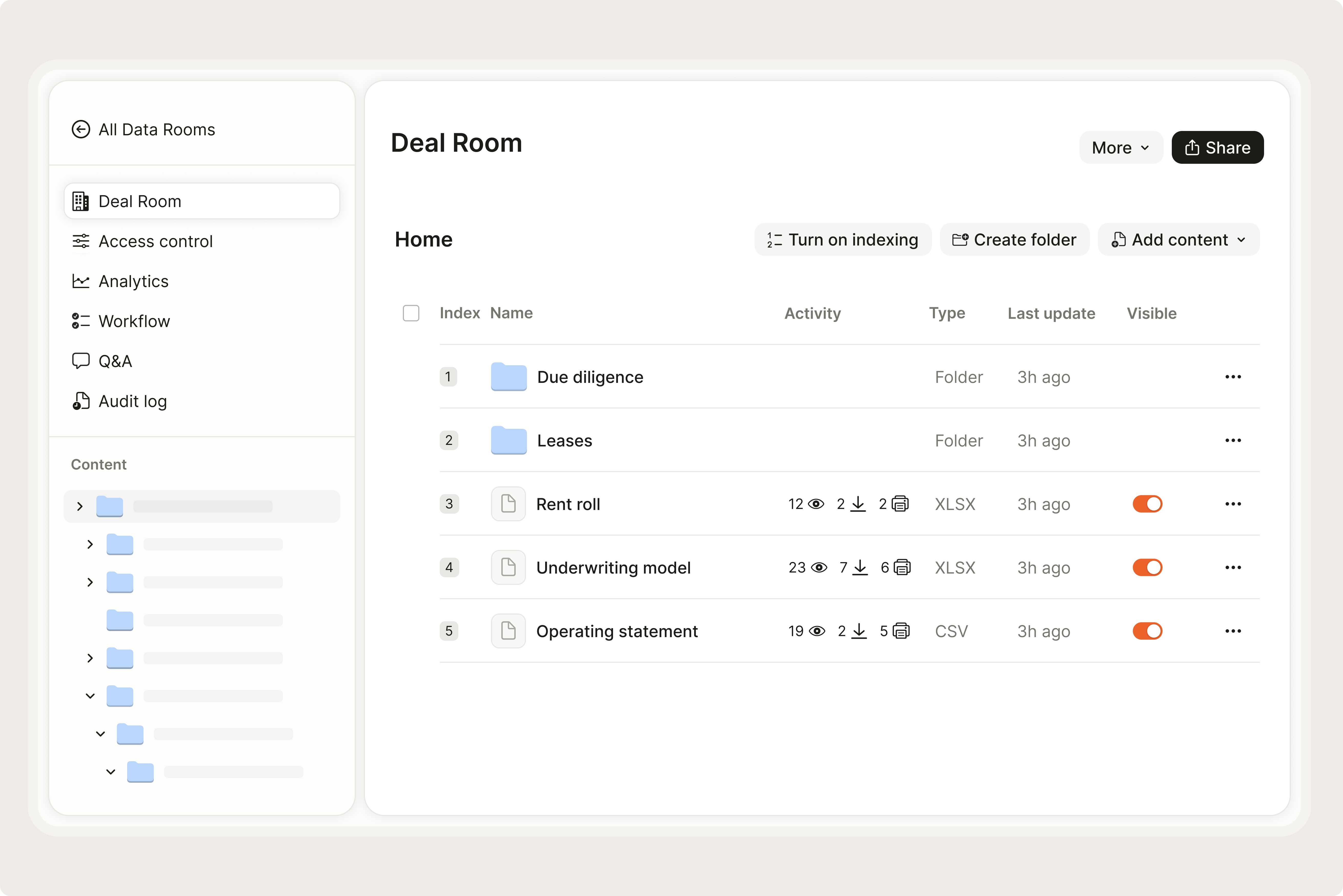
- 1.Create a data room and upload the property filesDrop title docs, leases, MassDEP search results, and deed restriction records into Ellty. Each folder maps to a diligence area.
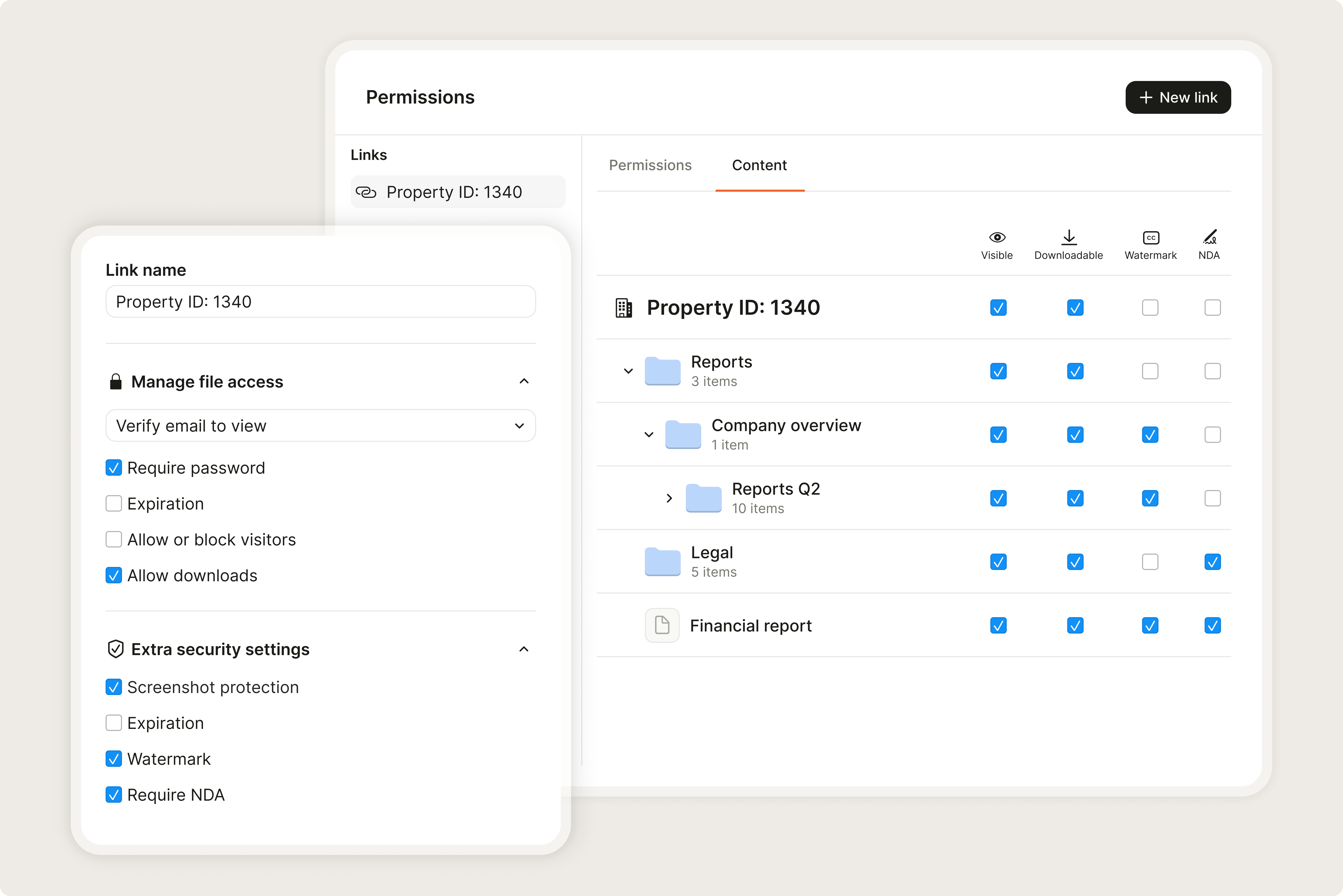
- 2.Give each advisor a scoped, secure linkYour title attorney sees title files only. The ESA consultant sees environmental files only. Ellty enforces the scope.
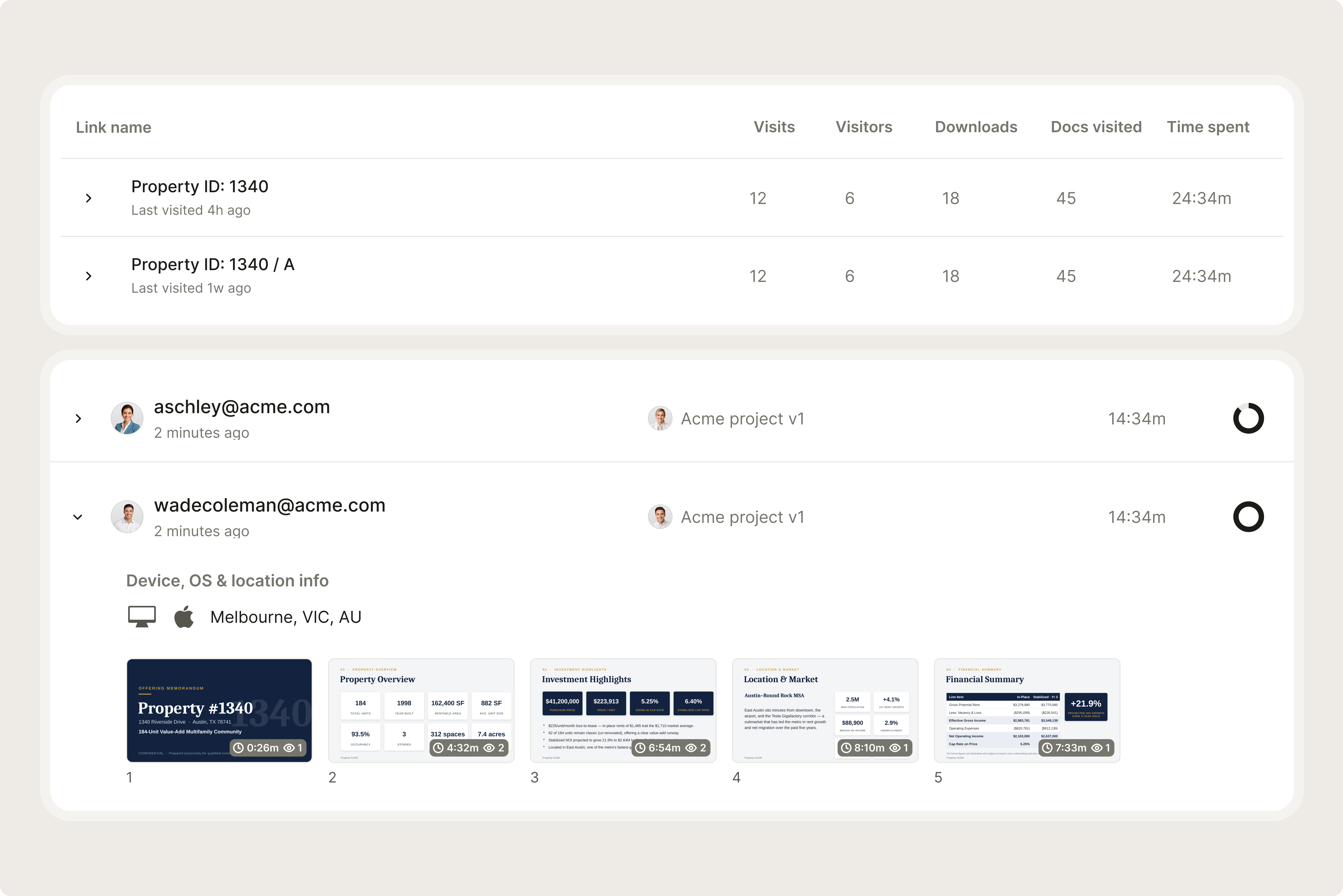
- 3.Track who reviews which documentsSee which files each advisor opened and when. Spot delays before they slow the Massachusetts close.
What makes due diligence in Massachusetts different
Chapter 21E is the biggest trap for out-of-state buyers. Unlike CERCLA, it imposes strict liability on current property owners regardless of who caused the contamination. A buyer can close on a clean-looking building and inherit six-figure cleanup costs within months.
Activity Use Limitations are a specific Massachusetts risk most national deal teams miss. An AUL is a recorded document that caps what you can do with a contaminated parcel - retail use only, no residential, no groundwater disturbance. They run with the land and show up in title searches only if you know to look.
Deed restrictions in Massachusetts stack deeper than almost any other US state. Conservation restrictions, historic preservation restrictions, Chapter 61 right-of-first-refusal obligations, and affordable housing restrictions can all exist simultaneously on one parcel. None will appear on a standard zoning certificate.
Chapter 21E imposes strict liability on current and former owners, operators, and parties who arranged for disposal of hazardous material. A new owner who acquires a contaminated property becomes a liable party under Massachusetts law from the date of transfer, regardless of knowledge at closing.
Timeline and cost in Massachusetts
Week 1-2 covers kickoff: Registry of Deeds title search, Probate Court check, deed restriction abstract, ALTA survey engagement, Phase I ESA, and MassDEP BWSC database search. Budget $3,500-$8,000 for this phase.
Load all files into Ellty on day one and give each advisor a trackable scoped link. That removes weeks of email follow-up from a standard Massachusetts diligence process.
Weeks 2-4 cover deep review: Phase I ESA delivery, Property Condition Assessment, lease abstraction, deed restriction review, betterment assessment check, and FEMA flood zone confirmation.
Cost for weeks 2-4 runs $5,000-$18,000 depending on Phase I scope and asset complexity. Phase II ESA adds $10,000-$30,000 if recognized environmental conditions surface; budget it early on any former mill or industrial parcel.
Weeks 4-6 handle resolution: Phase II if needed, AUL review, title exception negotiations, deed excise tax preparation, and closing at the Registry of Deeds.
Massachusetts deed excise tax runs $4.56 per $1,000 paid by the seller; Cape Cod deals add $1.52 per $1,000. Buy-side legal fees typically run $3,000-$8,000 for a standard Massachusetts commercial close.
Massachusetts deal documents in one secure place
Track who reviews title, leases, MassDEP files, and deed restriction records in Ellty.
Start free 14-day trialCommon questions about property due diligence in Massachusetts
- Chapter 21E is Massachusetts's environmental liability law. It makes current property owners strictly liable for contamination cleanup costs, even if a prior owner caused the release.
- An AUL is a recorded document that restricts how a contaminated parcel can be used. It runs with the land and caps permitted uses - retail or commercial only, no residential or groundwater disturbance.
- Massachusetts deed excise tax is $4.56 per $1,000 of consideration, paid by the seller. Barnstable County adds a $1.52 per $1,000 surcharge on all Cape Cod deals.
- Massachusetts parcels can carry conservation, historic, and affordable housing restrictions simultaneously. They run with the land indefinitely and limit what you can build or change at the property.
- Chapter 40B lets affordable housing developers bypass local zoning in municipalities below 10% subsidized housing. It can affect the permitted use and density of neighboring commercial parcels.
- Standard Massachusetts deals close in 30-60 days. Chapter 21E environmental findings, AUL reviews, or deed restriction abstracts regularly push timelines past 60 days on complex parcels.