Maryland CRE deals carry risks that catch buyers from other states off guard: ground rent leasehold interests, a layered transfer and recordation tax system, and MDE environmental rules that apply to many older urban parcels. This checklist covers every check before you close in 2026.
Ground rent is Maryland's most distinctive trap. Baltimore and surrounding counties have thousands of commercial parcels held on 99-year renewable leases. You can buy the building and still not own the land.
The state transfer tax runs 0.5% paid by the buyer. On top of that, county recordation taxes add $4.95-$10 per $1,000 depending on location. Baltimore City stacks on a 1.5% city transfer tax. Out-of-state buyers rarely model all three correctly.
Maryland's Department of the Environment (MDE) maintains a public database of contaminated sites, UST records, and voluntary cleanup program parcels. Baltimore's industrial corridor and older commercial stock make Phase I ESA non-negotiable on most deals.
Load all property files into your Ellty data room before diligence opens. Each advisor gets a scoped link from day one - no email chains, no version confusion when documents update.
Where Maryland property deals actually go wrong
Not every check carries the same weight. The table below sorts risks by impact on deal execution.
| Area | Documents to pull | Maryland red flag | Matters most for | Tier | |
|---|---|---|---|---|---|
| Title and ownership | Title and ownership | Deed, title commitment, 40-year chain-of-title, Maryland Land Records search, SDAT records | Maryland ground rent leases mean many parcels convey leasehold, not fee simple, title | All buyers | Dealbreaker |
| Ground rent and leasehold | Ground rent and leasehold | Ground lease, ground rent redemption history, Maryland Land Records leasehold search | Baltimore City and county parcels often sit on 99-year renewable ground leases; fee simple not assumed | Baltimore, PG County, Baltimore County buyers | Dealbreaker |
| Zoning and land use | Zoning and land use | County zoning certificate, variance history, conditional use permit records, forest conservation plan | Maryland Forest Conservation Act triggers on development parcels; requires mitigation plan before permits | Development, repositioning | Dealbreaker |
| Environmental | Environmental | Phase I ESA, MDE database search, UST records, wetlands delineation, Critical Area map | MDE Critical Area rules restrict development within 1,000 feet of the Chesapeake Bay shoreline | Industrial, waterfront, vacant land | Dealbreaker |
| Leases and tenancies | Leases and tenancies | All leases, amendments, rent roll, estoppels, Maryland commercial lease terms | Baltimore commercial leases often include ground rent pass-through provisions that bind new owners | Income-producing assets | Price-adjuster |
| Building and physical condition | Building and physical condition | Property Condition Assessment, building permit history, certificate of occupancy, lead paint disclosure | Maryland requires lead paint disclosure and risk reduction on pre-1978 Baltimore commercial stock | All asset types | Price-adjuster |
| Service charge and costs | Service charge and costs | 3y operating statements, SDAT property tax assessments, CAM reconciliations, PILOT agreements | Baltimore City PILOT agreements on tax-exempt properties can expire; confirm status on every deal | Income-producing assets | Price-adjuster |
| Transfer and recordation tax | Transfer and recordation tax | State transfer tax receipt, county recordation tax calculation, Baltimore City transfer tax receipt | Three separate taxes apply in Baltimore City: state 0.5%, city 1.5%, and recordation - often missed | All deals | Price-adjuster |
| Insurance and valuation | Insurance and valuation | Current policies, loss run history, FEMA flood zone certificate, Chesapeake Bay coverage | Chesapeake Bay and tidal waterway parcels face flood exposure; standard policies exclude storm surge | Waterfront, Eastern Shore parcels | Standard check |
| Utilities and access | Utilities and access | Utility connection records, SHA access permits, private road easement records | Maryland SHA controls state highway access; Eastern Shore rural parcels often need SHA entrance permits | Retail, logistics, rural commercial | Standard check |
| Seller KYC and AML | Seller KYC and AML | Entity docs, deed match, Maryland SDAT search, bankruptcy search, judgment lien search | Maryland LLC must be in good standing with SDAT before deed is accepted for recording | All deals | Standard check |
Running due diligence on a Maryland property?
Set up your data room before diligence starts.
Start free 14-day trialThe full Maryland property due diligence checklist
Title and ownership
- Pull the deed and confirm the legal description matches the current survey exactly
- Order a 40-year chain-of-title search from Maryland Land Records
- Search SDAT for current ownership, assessment history, and any tax liens
- Confirm whether the parcel transfers fee simple or as a leasehold under a ground lease
- Check for any open mechanic's lien claims against recent construction at the parcel
- Verify the parcel ID matches all closing, survey, and tax documents before proceeding
Ground rent and leasehold
- Search Maryland Land Records for any ground lease or ground rent encumbrance on the parcel
- Confirm the annual ground rent amount, renewal terms, and who holds the rent reversion
- Check whether the ground rent has been redeemed; Maryland law allows redemption at 16.67x annual rent
- For Baltimore City parcels: assume ground rent exists until title search confirms otherwise
- Review any ground rent pass-through provisions in existing commercial leases on the property
- Confirm the ground rent payment is current; arrears can trigger forfeiture proceedings
See the financial due diligence guide for how to model ground rent obligations into your deal economics.
Zoning and land use
- Confirm current zoning from the county or city planning department in writing
- Pull the full variance and conditional use permit history from the local zoning board
- Check Maryland Forest Conservation Act requirements if the parcel has tree canopy
- Verify all certificates of occupancy for buildings and improvements are current
- Confirm no open code violations or stop-work orders at the local building department
- For Baltimore City parcels: check historic preservation district restrictions before committing
Environmental
- Commission a Phase I ESA per ASTM E1527-21; Baltimore industrial corridor parcels need extra scrutiny
- Search the MDE public database for releases, cleanups, UST records, and voluntary cleanup participants
- Check the Chesapeake Bay Critical Area map; development within 1,000 feet of tidal waters is restricted
- Order a wetlands delineation report; Maryland regulates both tidal and non-tidal wetlands separately
- Run a UST search for former gas station, dry-cleaning, and industrial parcels statewide
- Budget Phase II at $8,000-$25,000 if recognized environmental conditions appear in Phase I
Load MDE search results and Phase I findings into Ellty so lenders and advisors can access them with scoped links.
Leases and tenancies
- Collect all leases, amendments, and sublease consents before diligence opens
- Flag any ground rent pass-through clauses in commercial leases binding the buyer as new landlord
- Cross-reference the rent roll against 3 months of actual bank receipts from the seller
- Confirm estoppel certificates are deliverable before the scheduled closing date
- Identify any month-to-month occupancies or undocumented tenants on the property
- Check for tenant purchase options or rights of first refusal embedded in lease terms
Building and physical condition
- Commission a Property Condition Assessment; note lead paint requirements on pre-1978 stock
- Pull the full building permit history from the local building department
- Verify Maryland lead paint risk reduction compliance for any commercial building pre-dating 1978
- Confirm ADA compliance documentation for all commercial spaces on the property
- Check HVAC systems; older Baltimore commercial stock often has aging central plant equipment
- Verify roof condition and envelope; Maryland freeze-thaw cycles drive early envelope failure
Service charge and operating costs
- Pull 3 years of operating statements and reconcile against SDAT assessment records
- Check for any PILOT agreements and their expiration dates on the parcel
- Audit CAM pass-throughs against lease terms for all multi-tenant assets
- Check for pending municipal special assessments or benefit district charges on the parcel
Transfer and recordation tax
- Calculate Maryland state transfer tax at 0.5% of consideration payable by buyer
- Add county transfer tax; rates vary - Anne Arundel is 1%, Montgomery is 1%, Baltimore City is 1.5%
- Calculate recordation tax separately; rates range from $4.95 to $10 per $1,000 by county
- File all tax forms and payments with the county clerk's office at settlement
- Note: first-time homebuyer exemptions don't apply to commercial deals - confirm with settlement agent
Insurance and valuation
- Pull current insurance policies and a 3-year loss run history from the seller
- Check FEMA flood zone status on all waterfront, tidal, and low-lying Maryland parcels
- Verify wind and named storm coverage on Eastern Shore and Bay-adjacent properties
- Order an independent appraisal scoped to the intended use and lender requirements
Utilities and access
- Verify all utility connections are active and legally transferable at closing
- Check Maryland SHA records for any state highway access permit requirements on the parcel
- Confirm legal road access via recorded easement or dedicated public right of way
- For rural Eastern Shore parcels: verify private road maintenance obligations are documented
Seller KYC and AML
- Confirm seller identity matches the Maryland Land Records deed exactly
- For LLC or corporate sellers: confirm good standing with Maryland SDAT
- Run bankruptcy, federal tax lien, and judgment lien searches before committing to close
- Confirm entity authority to sell; Maryland LLCs require manager or member authorization in writing
Load all documents into Ellty at the start of diligence. Each advisor gets a scoped link - no open folders, no version confusion when files update.
How property due diligence in Maryland works
Step 1 - Title search
Start the title search immediately after contract execution. Maryland uses a race-notice recording system; the first to record a valid instrument wins priority.
Commission a 40-year chain-of-title at Maryland Land Records. Run a SDAT search in parallel to confirm ownership, tax status, and any pending assessment appeals before you go further.
Step 2 - Survey and inspection
Order an ALTA/NSPS survey alongside the title search. Confirm the parcel number, legal description, and all easement locations match the deed - and flag any ground lease boundary issues in Baltimore.
Commission the Property Condition Assessment in parallel. Maryland lead paint risk reduction rules apply to pre-1978 commercial stock; envelope and mechanical systems on older Baltimore assets need close review.
Step 3 - Leases and income review
Pull all leases and flag any ground rent pass-through provisions first. Ground rent obligations in commercial leases can transfer to a new landlord without explicit assignment language.
See how Louisiana's due diligence compares for a contrast with another state that has non-standard property interests. Adapt your standard request list for Maryland PILOT expiry dates and recordation tax items.
Step 4 - Environmental review
Run the Phase I ESA and MDE database search in parallel. Former steel mills, chemical plants, and industrial waterfront sites in Baltimore carry significant contamination risk.
Load MDE search results and Phase I findings into Ellty so lenders and advisors can access them. Track who reviewed which file and when - no open folders, no missed sign-offs on environmental items.
Step 5 - Closing and registration
Maryland settlement requires payment of state transfer tax, county transfer or recordation tax, and any applicable city transfer tax before the deed is presented for recording.
Confirm the SDAT good-standing certificate for any LLC or corporate seller before closing day. Out-of-state buyers regularly miss this step and delay the Maryland close by 3-5 days.
How to set up your Maryland data room in Ellty.
Load Maryland property files before advisors arrive. Give each one a scoped link on day one.
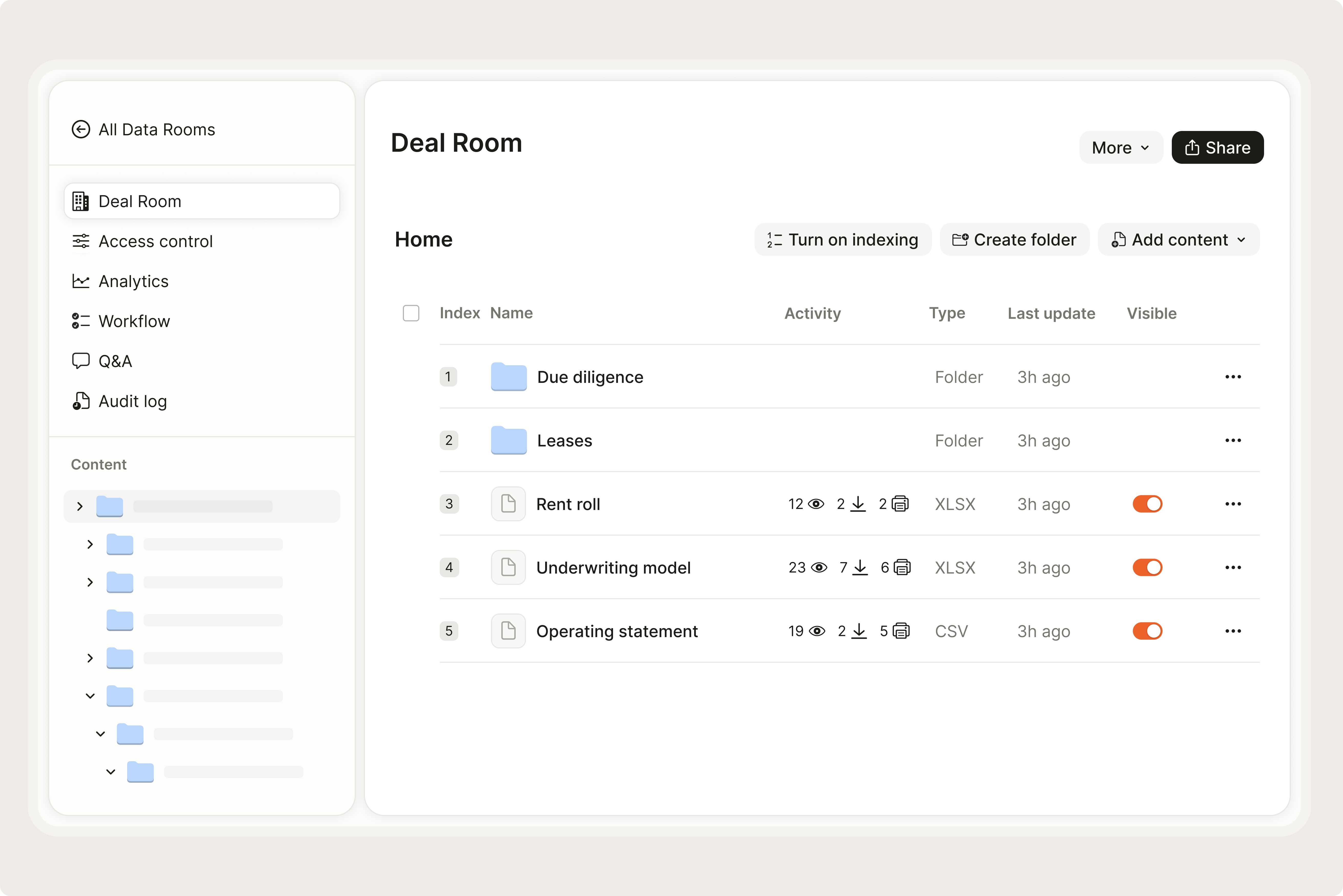
- 1.Create a data room and upload the property filesDrop title docs, leases, MDE search results, and ground rent records into Ellty. Each folder maps to a diligence area.
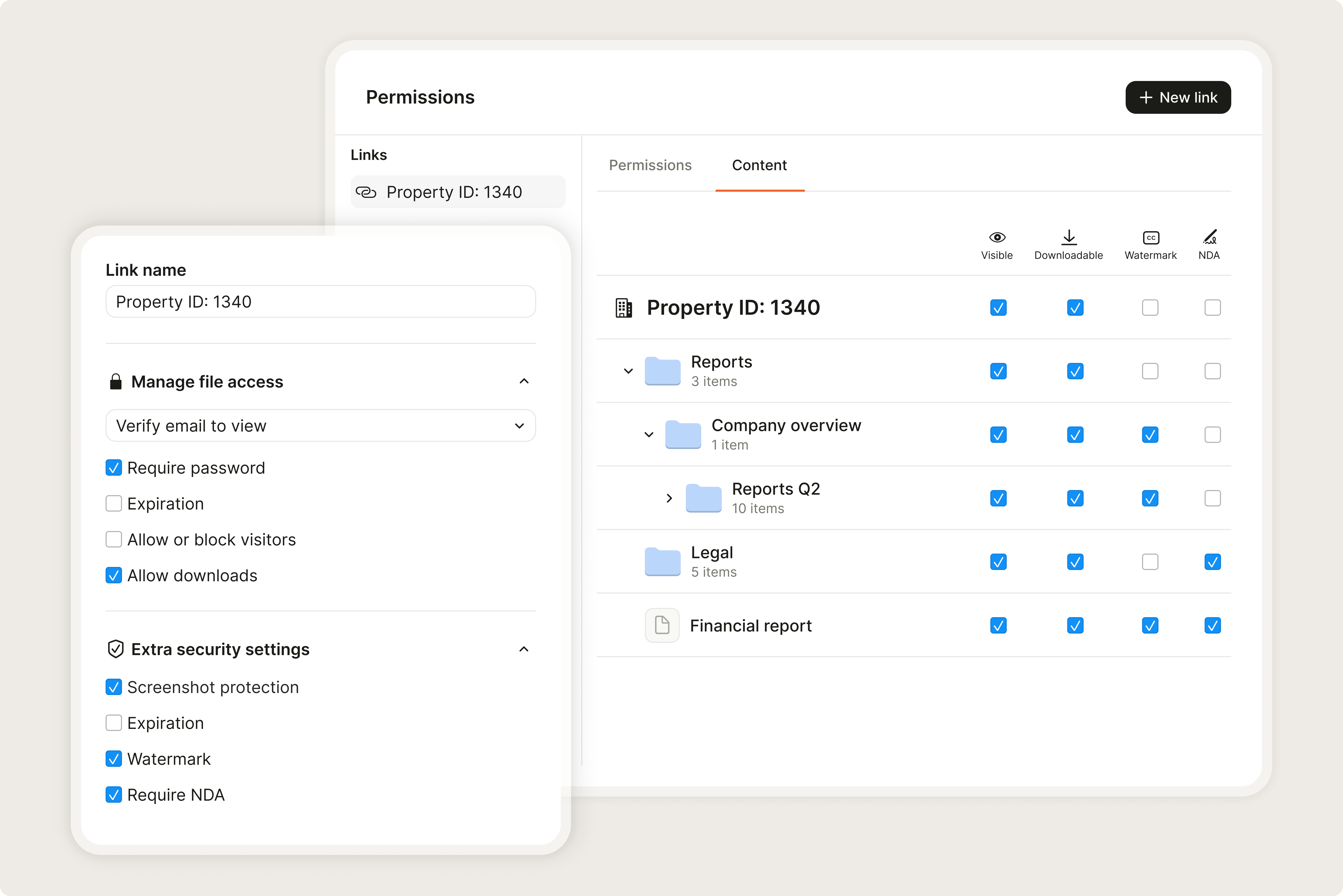
- 2.Give each advisor a scoped, secure linkYour title attorney sees title files only. The ESA consultant sees environmental files only. Ellty enforces the scope.
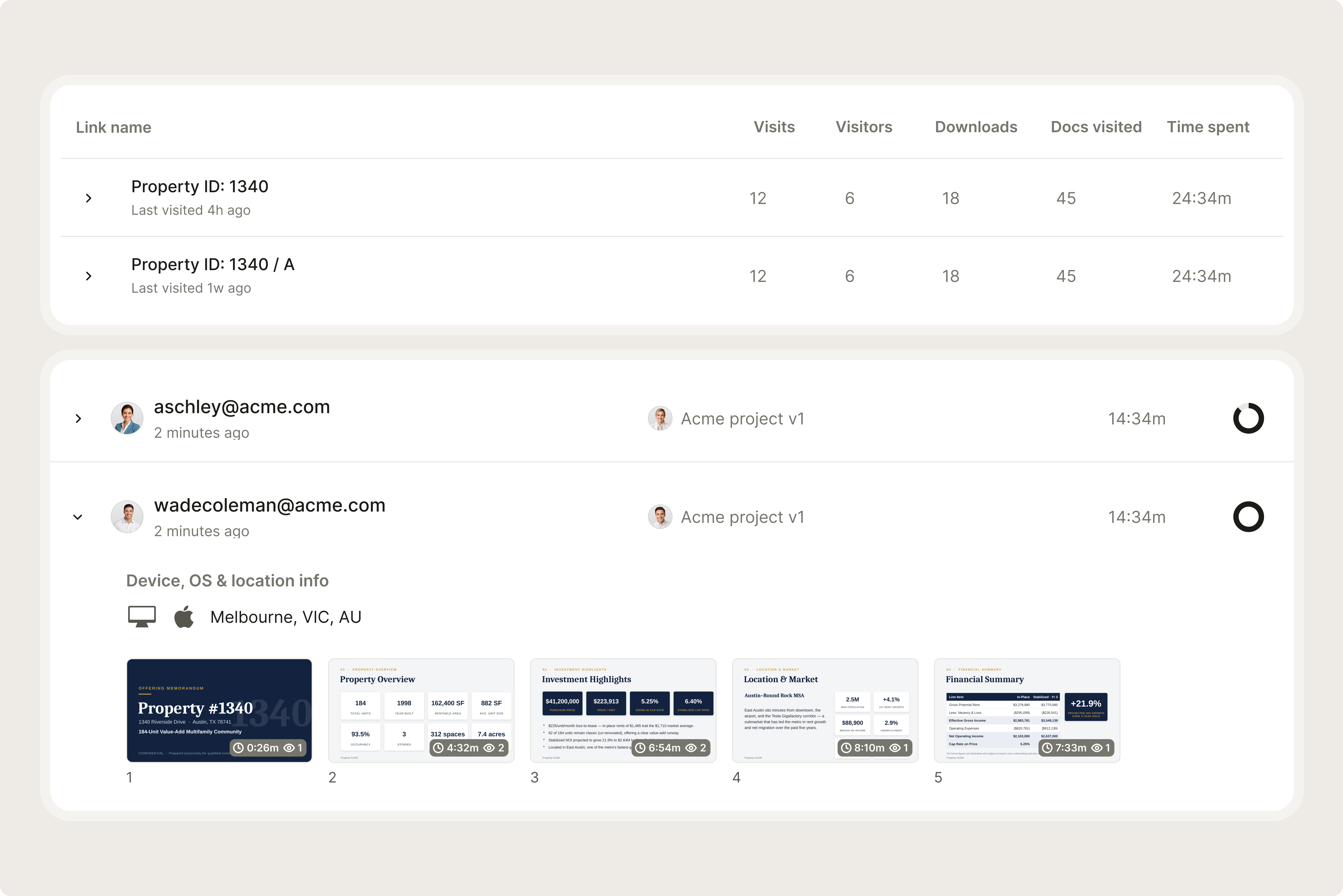
- 3.Track who reviews which documentsSee which files each advisor opened and when. Spot delays before they slow the Maryland close.
What makes due diligence in Maryland different
Ground rent is the first trap. Maryland has more ground rent leases than any other US state. Baltimore City alone has tens of thousands of parcels on 99-year renewable leases. Buyers who assume fee simple ownership can close on land they don't actually own.
The tax stack at closing catches out-of-state deal teams. State transfer tax, county transfer or recordation tax, and Baltimore City's separate city transfer tax can combine to 3%+ of consideration. That's a material cost missed by buyers running standard national deal models.
The Chesapeake Bay Critical Area is a hard constraint on waterfront deals. Development within 1,000 feet of tidal waters needs MDE Critical Area approval before permits issue. Buyers who skip the Critical Area map before committing to development plans can lose months of schedule.
Maryland's ground rent system is unique among US states. A commercial buyer acquiring a property subject to a ground lease acquires the leasehold interest only. The ground rent holder retains the fee simple estate and may enforce forfeiture for arrears under the terms of the original lease instrument.
Timeline and cost in Maryland
Week 1-2 covers kickoff: Maryland Land Records title search, ground rent abstract, SDAT ownership check, ALTA survey engagement, Phase I ESA, and MDE database search. Budget $3,000-$7,500 for this phase.
Load all files into Ellty on day one and give each advisor a trackable scoped link. That removes weeks of email follow-up from a standard Maryland diligence process.
Weeks 2-4 cover deep review: Phase I ESA delivery, Property Condition Assessment, lease abstraction, ground rent review, PILOT agreement check, and FEMA flood zone confirmation.
Cost for weeks 2-4 runs $4,500-$15,000 depending on Phase I scope and asset complexity. Phase II ESA adds $8,000-$25,000 if recognized environmental conditions surface; budget it early.
Weeks 4-6 handle resolution: Phase II if needed, title exception negotiations, transfer and recordation tax preparation, and closing at the county land records office.
Maryland state transfer tax runs 0.5% paid by the buyer. In Baltimore City add 1.5% city transfer tax on top. Recordation tax adds $4.95-$10 per $1,000 by county. Buy-side legal fees typically run $2,500-$7,000 for a standard Maryland commercial close. See the financial due diligence guide to model all Maryland closing costs correctly.
Maryland deal documents in one secure place
Track who reviews title, leases, MDE files, and ground rent records in Ellty.
Start free 14-day trialCommon questions about property due diligence in Maryland
- A Maryland ground rent is a 99-year renewable lease on the land beneath a building. The buyer acquires the leasehold only; the ground rent holder keeps the fee simple and can pursue forfeiture for arrears.
- Yes. Maryland law allows ground rent redemption at 16.67 times the annual rent. Confirm with a Maryland title attorney whether redemption is possible before you close on a leasehold parcel.
- Maryland state transfer tax is 0.5% paid by the buyer. Baltimore City adds 1.5% city transfer tax. Recordation tax varies by county from $4.95 to $10 per $1,000 of consideration.
- Baltimore industrial corridor parcels carry contamination risk from former steel and chemical operations. Search the MDE database and commission a Phase I ESA on every deal before committing.
- Maryland's Critical Area law restricts development within 1,000 feet of the Chesapeake Bay tidal shoreline. Any parcel in that buffer needs MDE Critical Area approval before permits issue.
- Standard Maryland deals close in 30-45 days. Ground rent abstracts, MDE environmental findings, or Critical Area review regularly push timelines past 60 days on complex parcels.