Japan commercial property due diligence has no foreign ownership restrictions - any buyer from anywhere can own land and buildings outright. The actual risks are structural: pre-1981 seismic compliance, missing building completion certificates (kensa saisho), shakuchiken leasehold complexities, and consumption tax on buildings. Miss one of these and you're re-pricing post-close.
Japan transfer tax structure: Real Property Acquisition Tax (不動産取得税, fudosan shutoku zei) at 4% of the assessed value (固定資産税評価額, kotei shisan zei hyoka gaku) for commercial land and buildings - calculated on the officially assessed value, not the transaction price; Registration and License Tax (登録免許税, toroku menkyo zei) at 2% of assessed value for land transfers and building transfers; Stamp Duty (印紙税, inshi zei) on the purchase agreement, typically 30,000-480,000 yen depending on transaction value. Total buyer-side acquisition taxes typically 3-6% of transaction value (assessed values are generally 60-80% of market values in major markets, so effective rate on market price is lower).
Consumption Tax (消費税, shohizei) at 10% applies to the building portion of commercial real estate transactions where the seller is a taxable business operator (事業者); this does NOT apply to the land portion; in commercial transactions, the split between land and building value in the contract determines the consumption tax base; consumption tax is a major cost item for commercial deals in Japan and must be factored into the price model before any offer.
Japan's land and building registration is maintained by the Legal Affairs Bureau (法務局, Homu-kyoku) of the Ministry of Justice. Land and building are registered separately (like Taiwan); both must be checked independently. The Toki Jiko Shomeisho (登記事項証明書, registry record certified copy) for land shows the registered owner, area, and all encumbrances; the building version shows the building owner, construction date, floor area, and encumbrances. Request certified copies of both from the Legal Affairs Bureau on day one.
Set up a data room before advisors engage. Load land and building Toki Jiko Shomeisho, building permit, kensa saisho (completion certificate), seismic assessment (for pre-1981 buildings), Important Matters Explanation (juyo jiko setsumei sho), soil contamination records, and lease files before advisors request them.
Where Japan property deals go wrong
Not every check carries the same weight. The table below sorts risks by deal impact - dealbreakers first, then what moves the price, then basic hygiene - so your Japanese attorney and advisor know what to clear first.
| Area | Documents to pull | Japan red flag | Matters most for | Tier | |
|---|---|---|---|---|---|
| Land and building registry search | Land and building registry search | Toki Jiko Shomeisho (登記事項証明書) for land lot, Toki Jiko Shomeisho for building, cadastral map (公図, kozu) from Legal Affairs Bureau | Japan's Legal Affairs Bureau maintains separate registries for land (土地登記) and building (建物登記); the land registry shows the lot number, area, registered owner (所有権, shoyuken), and all encumbrances including mortgages (抵当権, teitoken), easements (地役権, chiekiken), superficies rights (地上権, chijoken), and lis pendens (仮処分, karishobu); the building registry shows the building identification number, construction year, structure (RC/SRC/Wood/Steel), total floor area, registered owner, and building encumbrances; request certified copies from the Legal Affairs Bureau for the property jurisdiction; also request the kozu (公図, cadastral map) to confirm land lot boundaries and access; Japan land and building can have different registered owners - the building may have a leasehold owner separate from the land owner (shakuchiken structure) | All buyers - foundational check | Dealbreaker |
| Pre-1981 seismic compliance | Pre-1981 seismic compliance | Building registration Toki Jiko Shomeisho (shows construction year), seismic assessment (耐震診断, taishin shindan) from licensed structural engineer, seismic retrofit completion certificate (耐震改修工事完了証明書) if already retrofitted, building permit (建築確認, kenchiku kakunin) and kensa saisho (検査済証) | Japan's Building Standards Act seismic design requirements (新耐震基準, shin taishin kijun) were substantially strengthened with revisions effective June 1, 1981; buildings that received their building permit (kenchiku kakunin) before June 1, 1981 are built to the old seismic standard (旧耐震基準, kyu taishin kijun) and are classified as 'pre-1981 buildings'; pre-1981 buildings have materially higher risk of structural failure in a major earthquake; Japanese institutional lenders (megabanks, regional banks, life insurance company lenders) will generally not finance pre-1981 commercial buildings without a seismic assessment showing compliance with current standards or a completed seismic retrofit; confirm the building's construction permit date from the building registry (registered construction date) or the kenchiku kakunin document | All pre-1981 Japan commercial buildings | Dealbreaker |
| Kensa saisho - building completion certificate | Kensa saisho - building completion certificate | Kensa saisho (検査済証, building completion inspection certificate) from the building's original construction inspection, building permit (建築確認通知書), building completion notification (工事完了届) | The kensa saisho (検査済証) is issued by the building regulatory authority after the building passes a completion inspection confirming construction matches the approved building permit; buildings without a kensa saisho technically lack confirmation that the as-built structure complied with the approved building permit and the Building Standards Act at completion; in Japan, the absence of a kensa saisho is a significant commercial real estate defect because: (1) Japanese banks typically require kensa saisho as a condition for mortgage financing of commercial buildings; (2) it creates legal uncertainty about whether the building is in strict compliance with the Building Standards Act; (3) there is no retroactive remedy - once construction is complete without the inspection, the kensa saisho cannot normally be issued; pre-1981 buildings frequently lack kensa saisho because completion inspections were not consistently enforced in that era; always confirm kensa saisho existence | All Japan commercial, especially pre-1990 buildings | Dealbreaker |
| Shakuchiken - leasehold land rights | Shakuchiken - leasehold land rights | Land registry Toki Jiko Shomeisho (to identify shakuchiken annotation), shakuchiken contract, shakuchiken type (旧法 old law vs 新法 new law), land owner's consent to transfer, ground rent (地代, chidai) confirmation | Japan has a category of property rights where the building owner (builder/building title holder) leases the land from a separate land owner under shakuchiken (借地権); this is common in older Tokyo commercial areas; if a building has shakuchiken registered in the land registry (a 地上権 or 賃借権 annotation in the rights section of the land toki jiko shomeisho), the buyer of the building is buying only the building and the leasehold right, not the underlying land; old law shakuchiken (旧法借地権) under pre-1992 law have very strong tenant protections and can effectively be perpetual; new law fixed-term shakuchiken (定期借地権) have defined terms (typically 50 years) and no renewal rights; acquiring a building on shakuchiken land requires separate negotiation and consent from the land owner for the transfer; ground rent (地代, chidai) is an ongoing cost that must be modeled into deal economics | Older Tokyo/Osaka commercial in established areas | Dealbreaker |
| Soil contamination - SCCA and Tokyo ordinance | Soil contamination - SCCA and Tokyo ordinance | Soil Contamination Countermeasures Act (SCCA) investigation record, Tokyo Metropolitan Government designated area search, Phase I ESA from licensed Japanese environmental consultant | Japan's Soil Contamination Countermeasures Act (土壌汚染対策法, Dojo osen taisaku ho) requires mandatory soil contamination investigations when: (1) land use changes from factory or hazardous material handling facility use, (2) a listed designated area is transacted; additionally, Tokyo Metropolitan Government ordinances impose stricter disclosure and investigation requirements than national law for transactions within Tokyo involving specified land areas; for former factory sites, dry cleaners, gas stations, or industrial land in Tokyo: soil contamination investigation is legally required as part of the transaction process and not optional; outside Tokyo, Phase I ESA is still recommended for any former industrial commercial; Japan's contaminated sites registry (designated areas under SCCA) is publicly searchable at the prefectural environmental authority | Former industrial commercial, Tokyo commercial, factory sites | Price-adjuster |
| Consumption tax on building portion | Consumption tax on building portion | Seller's consumption tax registration status (課税事業者, kazei jigyo sha), building vs. land value allocation in the purchase agreement, consumption tax calculation from Japanese tax counsel | Japan Consumption Tax (消費税) at 10% applies to the building portion of commercial real estate transactions when the seller is a taxable business operator (課税事業者, kazei jigyo sha); land transfers are not subject to consumption tax; the tax base is the agreed building value, which in a purchase agreement is typically allocated between land and building - this allocation is therefore commercially significant (higher building allocation = higher consumption tax) and subject to negotiation; confirm the seller's consumption tax registration status; for transactions where the seller is an individual selling their own assets, consumption tax may not apply; for corporate sellers: it almost always applies; a 10% consumption tax on the building value of a large commercial transaction (e.g. a JPY 5 billion commercial building with 60% allocated to the building = JPY 300 million in consumption tax) is a major closing cost that must be modeled before signing | All commercial - corporate seller Japan | Price-adjuster |
| Zoning - use district and building regulations | Zoning - use district and building regulations | Zoning certificate from city/ward office, use district (用途地域, yoto chiki) confirmation, FAR (容積率, yoseki ritsu) and BCR (建蔽率, kenpei ritsu) confirmation from Important Matters Explanation (juyo jiko setsumei sho) | Japan's Urban Planning Act (都市計画法) divides land into 13 use district categories (用途地域, yoto chiki) ranging from Category 1 Low-Rise Residential to Commercial (商業地域) to Industrial (工業地域); commercial buildings must be in a commercially designated zone; each zone has specific FAR (容積率, allowable floor area ratio) and BCR (建蔽率, building coverage ratio) limits; a building that exceeds its zone's FAR or BCR limit is in excess of legal floor area (既存不適格, kison futekikaku) - it complied when built but now exceeds current zone limits due to code changes; existing non-conforming status affects redevelopment rights and financing; confirm zone designation and FAR/BCR status from the Important Matters Explanation or directly from the city/ward office | All Japan commercial, especially redevelopment sites | Price-adjuster |
| Leases and tenancies | Leases and tenancies | All commercial lease agreements, rent roll, fixed-term lease (定期借家契約, teiki shakkya keiyaku) vs. ordinary lease (普通借家契約, futsu shakkya keiyaku) classification, key money (権利金, kenrikin) and deposit (敷金, shikikin) schedules | Japan commercial leases are either fixed-term leases (定期借家, teiki shakkya) with a defined term and no renewal right, or ordinary leases (普通借家, futsu shakkya) which have strong tenant protections including a right to renew on reasonable terms and significant restrictions on landlord's ability to refuse renewal; for investment commercial: fixed-term leases are preferred because they don't create perpetual tenant rights; ordinary leases in Japan can create a situation where a tenant has de facto perpetual occupancy rights; confirm the lease category for each tenant; also review key money (権利金, kenrikin) arrangements - key money paid by tenants upon lease execution is sometimes partly refundable and partly non-refundable; and confirm security deposits (敷金, shikikin) amounts and return obligations | Tenanted Japan commercial | Price-adjuster |
| Fixed Asset Tax and City Planning Tax | Fixed Asset Tax and City Planning Tax | Fixed Asset Tax payment record (固定資産税納税通知書), Fixed Asset Tax assessed value certificate (固定資産評価証明書), City Planning Tax confirmation | Fixed Asset Tax (固定資産税, kotei shisan zei) is an annual property tax at 1.4% of the officially assessed value (固定資産税評価額); assessed values are set by municipalities every 3 years based on the Standard Land Price survey; City Planning Tax (都市計画税, toshi keikaku zei) adds another 0.3% of assessed value for properties in urbanized areas (市街化区域, shigaika kuiki); Fixed Asset Tax and City Planning Tax are paid quarterly to the municipality; obtain the Fixed Asset Tax assessed value certificate to confirm the current assessed value - this is also the tax base for Real Property Acquisition Tax and Registration and License Tax; prorate Fixed Asset Tax at closing (typically the buyer reimburses the seller for the post-closing portion of the current year's Fixed Asset Tax) | All Japan commercial | Standard check |
| Existing non-conforming status | Existing non-conforming status | Important Matters Explanation (juyo jiko setsumei sho), building permit vs. current FAR/BCR limits, reconstruction confirmation from Japanese attorney or architect | An existing non-conforming building (既存不適格, kison futekikaku) in Japan is a building that complied with zoning regulations when built but now exceeds current FAR, BCR, seismic, or other standards due to subsequent changes in law; the building can continue to exist and operate but cannot be rebuilt or extended to its current scale if demolished; for institutional investors: kison futekikaku status significantly affects exit strategy because a redevelopment buyer can only rebuild to the current (smaller) scale; for financing: some Japanese lenders discount the appraised value of kison futekikaku buildings; the Important Matters Explanation (重要事項説明書) must disclose kison futekikaku status when applicable | Older Japan commercial, redevelopment commercial | Standard check |
| Seller KYC and AML | Seller KYC and AML | Japan Commercial Register (登記簿, tokibo) corporate entity confirmation, UBO identification, OFAC and EU sanctions screens, real estate transaction notification to Ministry of Land, Infrastructure, Transport and Tourism (MLIT) for large transactions | Japanese Real Estate Specified Joint Enterprise Act (不動産特定共同事業法) and related AML regulations require real estate agents and financial institutions to conduct customer due diligence; confirm seller entity at Japan Commercial Register (corporate tokibo); run OFAC and relevant sanctions screens on all principals; for large commercial transactions: Japan requires notification to MLIT for certain categories of real estate transactions by foreign entities under the Foreign Exchange and Foreign Trade Act (外国為替及び外国貿易法, FEFTA) - confirm with Japanese counsel whether prior notification or post-transaction notification applies | All deals, especially foreign buyer transactions | Standard check |
Due diligence on a Japan property?
Set up your Ellty data room before diligence starts.
Start free 14-day trialJapan commercial property due diligence checklist
The table ranked risks by severity. This is the full checklist to work through, grouped by area.
Registry search - land and building
- Day one: request Toki Jiko Shomeisho (登記事項証明書, registry record certified copy) for the land lot from the Legal Affairs Bureau; and separately request Toki Jiko Shomeisho for the building; both are available in person or via Japan's Online Registry System (登記ねっと, Toki-netto) for a fee per document
- Land registry review: confirm the registered owner (所有権, shoyuken) section matches the seller; review the Rights Section (権利部, kenribu) for all registered encumbrances including mortgages (抵当権, teitoken), maximum-amount mortgages (根抵当権, neteitoken which are revolving mortgages), superficies rights (地上権, chijoken - leasehold rights over land), easements (地役権, chiekiken), and provisional registrations (仮登記, karitoki)
- Building registry review: confirm the building registered owner matches the seller; note the construction year (for pre-1981 seismic assessment purposes); confirm the registered floor area; identify any building-level encumbrances
- Cadastral map (公図, kozu): request from the Legal Affairs Bureau to confirm the land lot shape, boundaries, and relationship to adjacent lots and public roads; confirm the land fronts a public road with adequate width for the intended commercial use
Give each advisor a scoped link in Ellty. Japan attorney sees land and building registry records, kozu, and shakuchiken documents. Building inspector sees building permit and kensa saisho. Structural engineer sees building registry, building permit, and seismic assessment. Environmental consultant sees SCCA investigation records and soil reports. Lender sees land and building registry, kensa saisho, Fixed Asset Tax certificate, and valuation.
Pre-1981 seismic check and kensa saisho
- Confirm the building's construction permit date (建築確認申請日) from the building permit (建築確認通知書) document; the date on the building registry's construction year field is the registered construction year, not necessarily the permit date; if the permit was issued before June 1, 1981: the building is pre-1981 and requires seismic assessment
- Commission a seismic assessment (耐震診断, taishin shindan) from a licensed structural engineer; there are two common assessment methods: Hoshinokai method (used for RC buildings) and the Simplified Method; the assessment produces a seismic performance index (Is value); Is value of 0.6 or higher generally indicates compliance with current seismic standards; Is value below 0.6 is a flag for most Japanese institutional lenders
- If the pre-1981 building has already been seismically retrofitted (耐震補強, taishin hokyo): request the seismic retrofit completion certificate; post-retrofit buildings may qualify for lender financing even without a new kensa saisho
- Kensa saisho: request from the seller; if unavailable, the seller may be able to request a building records search at the city/ward/town office that issued the original building permit; absence of kensa saisho for a pre-1990 building is common but still requires disclosure in the Important Matters Explanation and affects lender eligibility
Shakuchiken and land rights
- Check the Rights Section of the land Toki Jiko Shomeisho for any 地上権 (chijoken, superficies) or 賃借権 (chinshakkuken, leasehold) registrations; either indicates a shakuchiken structure where a party other than the land owner holds the right to use the land for a building
- If the commercial building sits on shakuchiken land: you are buying the building and the leasehold right, not the freehold land; request the shakuchiken contract to confirm: (1) the type of shakuchiken (old law 旧法借地権 vs. new law ordinary 新法普通借地権 vs. new law fixed-term 新法定期借地権); (2) the remaining term (for fixed-term); (3) the ground rent amount and escalation provisions; (4) any renewal history
- Land owner's consent: transfer of a shakuchiken building to a new owner requires the land owner's consent (under old law and ordinary new law) or notice (for fixed-term); confirm whether consent has been obtained or is included in the transaction structure
- Ground rent (地代, chidai): this is an ongoing operating cost of owning the building; confirm the current ground rent amount, the escalation mechanism (CPI-linked, periodic agreement, or periodic review), and the history of rent disputes with the land owner
Consumption tax and deal structure
- Confirm the seller's consumption tax status: is the seller a taxable business operator (課税事業者) registered with the National Tax Agency for consumption tax purposes; for corporate sellers this is almost always yes; for some individual property owners it may not apply
- Review the purchase agreement's land/building price allocation: consumption tax applies only to the building portion at 10%; the allocation between land and building in the contract directly determines the consumption tax amount; the allocation should reflect reasonable fair market values for each component; Japanese counsel should review to confirm the allocation is defensible for tax purposes
- Input tax credit: if the buyer is also a taxable business operator using the property for a taxable business, the consumption tax paid on purchase may be recoverable as an input tax credit; confirm with Japanese tax counsel before closing as the eligibility depends on the buyer's tax status and intended use
Load all files into Ellty. Japan attorney sees registry records, shakuchiken agreement, and Important Matters Explanation. Seismic engineer sees building permit and pre-1981 assessment files. Environmental consultant sees SCCA records. Track who reviews the kensa saisho and pre-1981 seismic files most closely - that's where lender qualification decisions get made.
Important Matters Explanation (juyo jiko setsumei sho)
- Under Japan's Building Lots and Buildings Transaction Business Act (宅地建物取引業法, Takuchi tatemono torihikigyo ho), the licensed real estate transaction agent (宅地建物取引士, Takuchi tatemono torihikishi) must deliver the Important Matters Explanation (重要事項説明書, juyo jiko setsumei sho) and explain it orally before the purchase contract is signed
- The juyo jiko setsumei sho covers: title status and registered encumbrances; zoning and urban planning restrictions; building use district; access road conditions; utilities (water, sewer, gas); environmental restrictions; building code compliance status; lease status for tenanted properties; flood/disaster risk under the Natural Disaster Risk Map
- Review the juyo jiko setsumei sho carefully with your Japanese attorney: it is the most comprehensive single document in a Japan commercial transaction; any disclosure of kison futekikaku status, absence of kensa saisho, shakuchiken structure, or SCCA designated area status is legally required to be in this document; failure to disclose required information creates seller liability
Compare Australia's commercial property due diligence process for Asia-Pacific portfolio strategy. Japan and Australia are both top-tier Asia-Pacific commercial markets with open foreign ownership policies and English-friendly transaction processes - but differ on transfer taxes (Japan 4% RPAT + 2% registration tax vs. Australia's state-level stamp duty at 5-7%), seismic risk (Japan very high especially for pre-1981 buildings vs. Australia generally low except specific zones), and consumption tax (Japan 10% on building value has no Australian equivalent as a transaction tax).
How due diligence works in Japan
Step 1 - Registry search and pre-1981 seismic check
Day one: request Toki Jiko Shomeisho for land and building from Legal Affairs Bureau. Confirm building construction year and permit date. If pre-1981: commission seismic assessment immediately. Confirm kensa saisho status.
The pre-1981/kensa saisho check gates lender eligibility and should be confirmed before any deposit is paid.
Step 2 - Shakuchiken, zoning, and environmental
Check land registry for shakuchiken annotations. Request Important Matters Explanation from the real estate agent. For former industrial or Tokyo commercial: commission SCCA soil investigation or Phase I ESA.
Confirm use district and FAR/BCR from the juyo jiko setsumei sho. Identify any kison futekikaku status.
Step 3 - Leases, consumption tax, and AML
Classify all leases as fixed-term or ordinary. Review key money and security deposit records. Compute consumption tax exposure with Japanese tax counsel. Confirm land/building price allocation in the draft purchase agreement.
Run OFAC and sanctions screens. Confirm FEFTA notification requirements with Japanese counsel for foreign buyers.
Step 4 - Transfer taxes, registration, and closing
Calculate Real Property Acquisition Tax (4% of assessed value), Registration and License Tax (2% of assessed value for land and buildings), and Stamp Duty on the purchase agreement. Registration of the title transfer at the Legal Affairs Bureau by a licensed judicial scrivener (司法書士, shihoshoshi).
Load all files into Ellty before closing. Japan attorney sees registry records and disclosure documents. Seismic engineer sees building permit and assessment files. Lender sees kensa saisho, seismic report, and Fixed Asset Tax certificate.
How to set up your Japan data room in Ellty.
Japan commercial deals involve land and building Toki Jiko Shomeisho, building permit, kensa saisho, seismic assessment, juyo jiko setsumei sho, SCCA soil records, fixed asset tax certificates, shakuchiken agreements, and lease files.
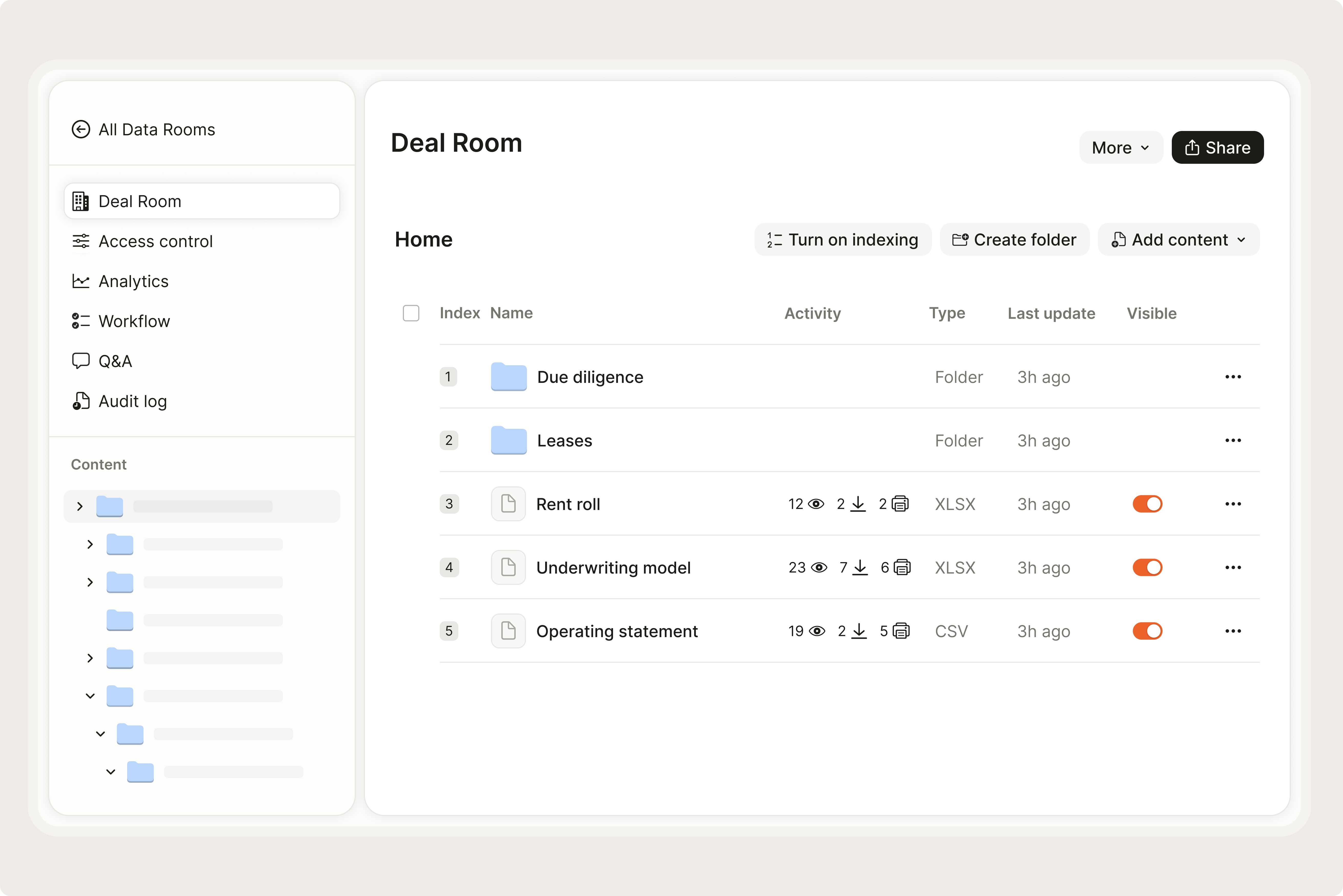
- 1.Upload Japan property files to a secure roomDrop land and building Toki Jiko Shomeisho, cadastral map (kozu), building permit, kensa saisho, seismic assessment, Important Matters Explanation (juyo jiko setsumei sho), SCCA soil investigation, Fixed Asset Tax assessed value certificate, shakuchiken agreement (if applicable), and commercial lease pack into Ellty.
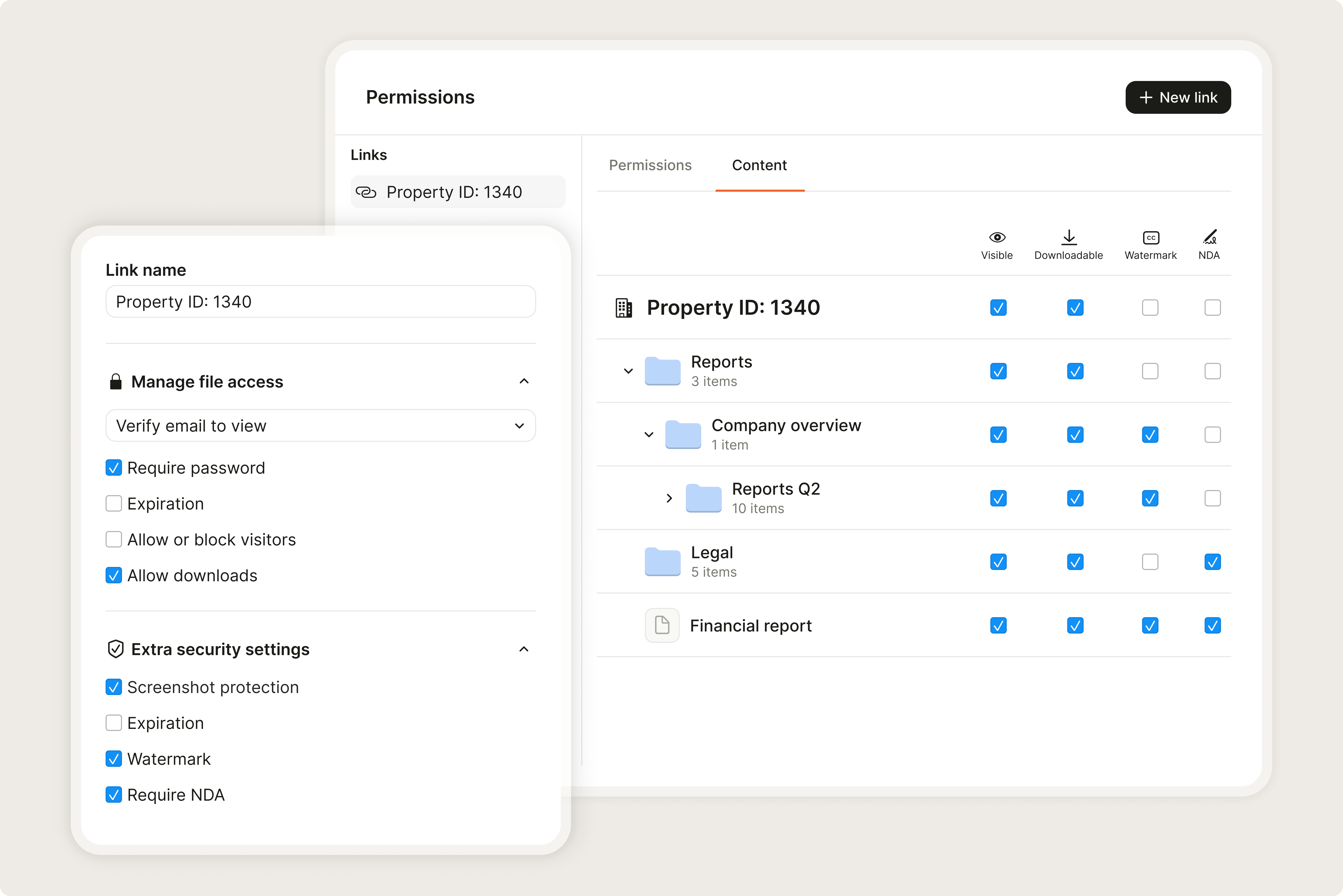
- 2.Give each advisor a scoped, tracked linkJapan attorney sees registry records and Important Matters Explanation. Seismic engineer sees building permit and pre-1981 assessment. Environmental consultant sees SCCA soil records. Lender sees kensa saisho, seismic assessment, and Fixed Asset Tax certificate. Each party sees only their files.
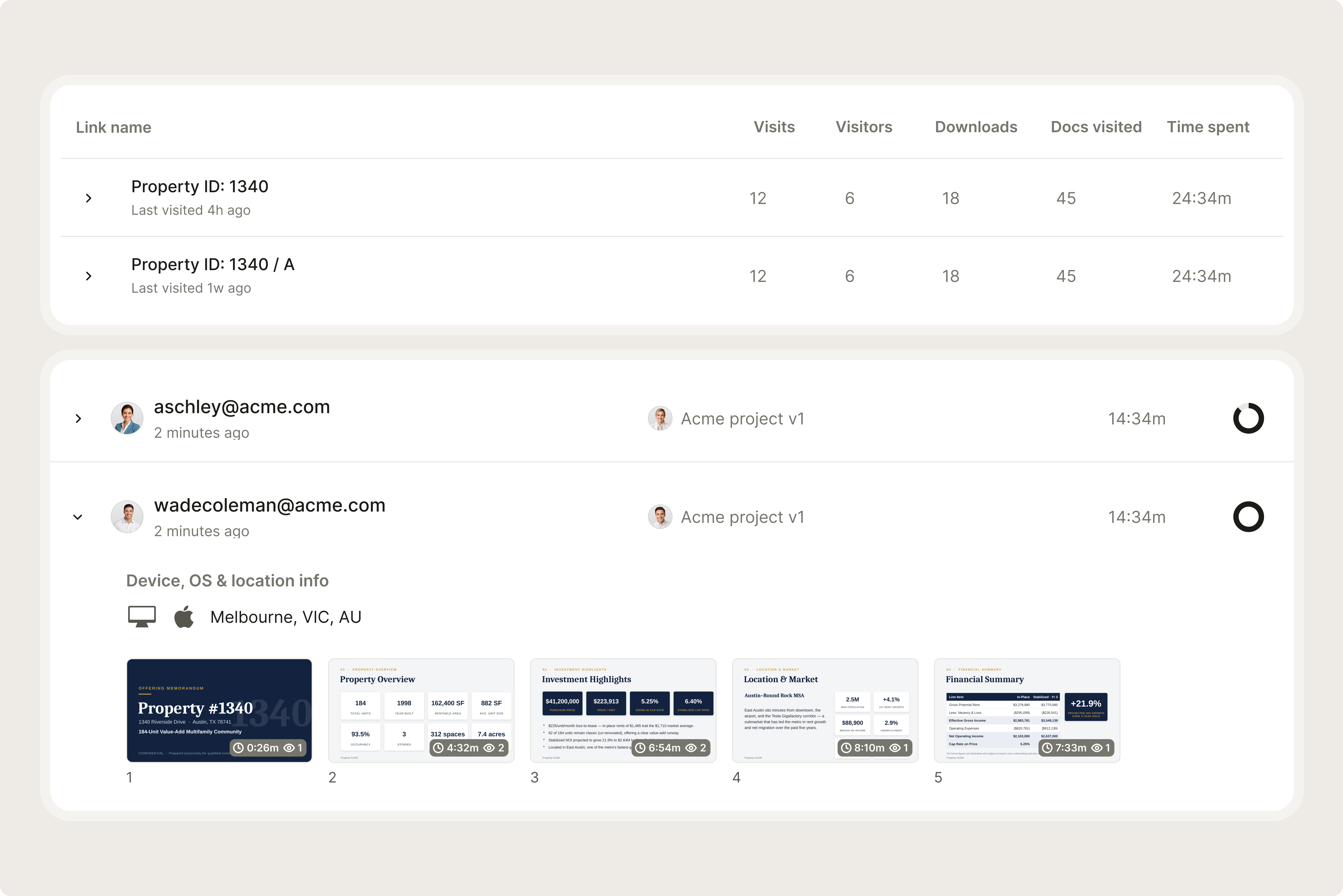
- 3.Monitor who reviews which documentsSee exactly which files each advisor opened and when. Catch kensa saisho gaps or pre-1981 seismic issues before they affect lender eligibility and deal pricing.
What makes Japan different
The kensa saisho (検査済証) issue is one of Japan's most persistent commercial real estate complications. Japan's Building Standards Act has required a completion inspection (完了検査, kanryo kensa) since 1950 - a building inspector visits the completed building to confirm it was built as designed per the approved building permit. The inspection was legally required but enforcement was inconsistent, particularly in the high-growth decades of the 1960s-1980s when Japan was building at speed. The result is that a significant proportion of commercial buildings constructed before 1990 lack a kensa saisho, either because the owner never requested the inspection or because the building was modified after permit approval. A 2013 Ministry of Land, Infrastructure, Transport and Tourism survey found that approximately 38% of existing buildings in Japan lacked kensa saisho. Japanese institutional lenders have tightened their stance on kensa saisho significantly since the 2000s - most megabanks and life insurance company real estate lenders now treat absence of kensa saisho as a disqualifying factor for standard commercial mortgage financing. This means a building without kensa saisho may need to be acquired without bank financing or using alternative lenders with different underwriting requirements. For a commercial transaction with standard institutional financing, absence of kensa saisho effectively caps your lender universe and should be treated as a dealbreaker-tier issue at the due diligence stage.
Japan's consumption tax (消費税) on the building portion of commercial transactions deserves more attention than most foreign buyers give it before their first Japan deal. At 10% of the building value, it is a large transaction cost that has no direct equivalent in most of the markets foreign investors compare Japan against. For a JPY 10 billion commercial acquisition where 60% of the value is allocated to the building (a reasonable allocation for an older Tokyo office building), the consumption tax on the building alone is JPY 600 million (approximately USD 4 million at current exchange rates). This amount is due at closing and must be paid upfront, even if the buyer expects to recover it later as an input tax credit. Not every buyer qualifies for the input tax credit recovery - eligibility depends on the buyer's own consumption tax registration status and the nature of the business being conducted in the property. Japanese tax counsel review of the buyer's consumption tax position should be one of the first steps in any Japan commercial acquisition, not an afterthought addressed in the final weeks before closing.
The shakuchiken (借地権) system is a legacy of Japan's land policy history that creates a category of commercial property transactions that look like standard building acquisitions but are legally quite different. In a shakuchiken structure, the building owner holds the buildings on land leased from a separate land owner; the building owner has a registered right to use the land (either chijoken or chinshakkuken) but does not own the land. Old law shakuchiken (旧法借地権), governed by the pre-1992 Building Protection Law and Land Lease Law, were essentially perpetual - a land owner had almost no legal mechanism to refuse renewal and could only reclaim the land by paying substantial compensation. New law fixed-term shakuchiken (定期借地権, teiki shakuchiken) under the 1992 Act have defined terms (typically 50 years) and no renewal right; the land reverts to the owner at term end. For commercial due diligence purposes, the key questions for any shakuchiken building are: what type of shakuchiken is it, how much ground rent is payable and on what escalation basis, how much of the remaining term is left (for fixed-term), and does the land owner need to consent to the transfer of the building and shakuchiken right to the buyer. Tokyo commercial in certain older districts (Shibuya, Minato, Shinjuku in established retail corridors) frequently involves shakuchiken structures and the market is sophisticated enough to price them - but the diligence process is more complex than a standard freehold acquisition.
The Building Standards Act of Japan (建築基準法, Kenchiku kijun ho, Law No. 201 of 1950) established minimum technical standards for buildings and urban planning. Article 7 of the Act requires that the builder request a completion inspection (完了検査, kanryo kensa) after completing construction, and that the competent building official issue a completion inspection certificate (検査済証, kensa saisho) upon confirming compliance with the approved building permit and applicable building standards. The seismic design standards (耐震基準, taishin kijun) applicable to the structural design of buildings were substantially strengthened by ministerial ordinance effective June 1, 1981, establishing what are now referred to as the new seismic standards (新耐震基準, shin taishin kijun). Buildings for which the structural design was approved under a building permit application submitted before June 1, 1981 are designed to the prior (旧耐震基準, kyu taishin kijun) standards and are subject to higher seismic risk under the new standard criteria.
Timeline and cost in Japan
Weeks 1-2 cover kickoff: Toki Jiko Shomeisho request for land and building from Legal Affairs Bureau, kozu cadastral map, building permit and kensa saisho request from seller, pre-1981 seismic assessment commission (if applicable), juyo jiko setsumei sho request from real estate agent, Fixed Asset Tax assessed value certificate, SCCA soil contamination status, shakuchiken agreement review (if applicable), use district confirmation, lease abstraction, FEFTA notification assessment for foreign buyers, and AML/KYC. Legal and advisory fees in this phase: JPY 3,000,000-10,000,000 (approx. USD 20,000-65,000).
Load all files into Ellty before advisors engage. Standard Japan commercial: 45-90 days. Pre-1981 seismic assessment: 3-6 weeks. SCCA soil investigation: 4-8 weeks. Legal Affairs Bureau registration: 2-4 weeks after closing.
Weeks 2-6 cover deep review: land and building registry analysis, encumbrance clearance plan, kensa saisho status, pre-1981 seismic assessment delivery, shakuchiken contract analysis, juyo jiko setsumei sho review, kison futekikaku analysis, soil contamination assessment, lease classification review, consumption tax position analysis, Fixed Asset Tax and City Planning Tax proration, and lender pre-approval. Costs in this phase: JPY 5,000,000-20,000,000 (approx. USD 33,000-130,000).
Weeks 6-12 handle resolution: mortgage releases, Land registry encumbrance cancellations, seismic retrofit assessment (if pre-1981 building), consumption tax position confirmation, purchase agreement negotiation (land/building price allocation, representations on kensa saisho and seismic status), closing at Real Property Registration at Legal Affairs Bureau via judicial scrivener.
Japan total buyer acquisition costs: 4% Real Property Acquisition Tax (on assessed value, typically 60-80% of market price) + 2% Registration and License Tax (on assessed value) + Stamp Duty on purchase agreement + 10% Consumption Tax on building value + legal, scrivener, and advisory fees. For a mid-market Tokyo commercial at JPY 3 billion with 55% building allocation: RPAT approx. JPY 70 million, registration tax approx. JPY 35 million, consumption tax approx. JPY 165 million. Total acquisition overhead excluding advisory fees: approximately 10-15% of assessed value or 7-10% of market price.
Running a Japan property deal from one room
Hold registry records, kensa saisho, seismic assessment, and lease files in one secure, tracked Ellty data room.
Start free 14-day trialCommon questions about due diligence on Japan commercial property
- Standard Japan commercial deals take 45-90 days. Pre-1981 seismic assessment: 3-6 weeks. Kensa saisho search at city/ward office if not available from seller: 2-4 weeks. SCCA soil contamination investigation (if required): 4-8 weeks. FEFTA notification processing for foreign buyers: 30 days (prior notification category). Legal Affairs Bureau registration at closing: 2-4 weeks. The critical-path item for most deals is the pre-1981 seismic assessment and lender review.
- Yes. Japan imposes no restrictions on foreign ownership of land or buildings. Any individual or corporation, regardless of nationality, can own Japanese real estate outright. The only Japan-specific requirement for foreign buyers is compliance with FEFTA (Foreign Exchange and Foreign Trade Act) notification requirements for certain categories of transactions - for some land categories (inward land acquisitions by foreign investors), prior notification to the Minister of Finance and relevant sector minister is required; for others, post-transaction notification applies. Confirm which category applies with Japanese counsel before closing.
- The kensa saisho (検査済証) is the building completion inspection certificate issued by the competent building authority after confirming the completed building matches the approved building permit and meets Building Standards Act requirements. It is the primary documentary evidence that a Japan commercial building was completed in compliance with its building permit. Japanese institutional lenders (megabanks, regional banks, insurance company lenders) generally require kensa saisho as a standard mortgage underwriting condition. Absence of kensa saisho - common in pre-1990 buildings - effectively restricts your lender universe and must be disclosed in the Important Matters Explanation. Approximately 38% of existing Japanese buildings lack kensa saisho according to MLIT data.
- Japan commercial property transfer costs: (1) Real Property Acquisition Tax (不動産取得税): 4% of officially assessed value (固定資産税評価額) for commercial land and buildings; assessed values are typically 60-80% of market values; (2) Registration and License Tax (登録免許税): 2% of assessed value for land and building transfers; (3) Stamp Duty (印紙税): JPY 30,000-480,000 on the purchase agreement depending on value; (4) Consumption Tax (消費税): 10% of the building portion value when seller is a taxable business operator. Total buyer acquisition tax burden on a large commercial deal: typically 7-12% of market price when consumption tax is included.
- Shakuchiken (借地権) is a leasehold right that allows a building owner to hold buildings on land owned by a separate party. The building owner pays ongoing ground rent (地代, chidai) to the land owner. Old law shakuchiken (旧法借地権) under pre-1992 law are effectively perpetual with strong tenant protection. New law fixed-term shakuchiken (定期借地権) have defined terms (typically 50 years) and no renewal right. Acquiring a shakuchiken building requires confirming the type and remaining term, the ground rent amount and escalation terms, and obtaining the land owner's consent to the transfer. Ground rent is an ongoing cost that must be modeled into NOI and cap rate analysis.
- Japan's Soil Contamination Countermeasures Act (SCCA, 土壌汚染対策法) mandates soil contamination investigation when: (1) land use changes from factory or hazardous material handling facility use, or (2) a SCCA-designated area is transacted. Tokyo has stricter local ordinances that expand SCCA coverage. For any former factory, dry cleaner, gas station, or industrial site: soil investigation is legally required as part of the transaction process. For other commercial: Phase I ESA is recommended, including search of the SCCA designated areas registry at the relevant prefectural environmental authority. Contaminated site remediation costs in Japan can be substantial given high remediation standards.