Montana CRE deals carry risks that catch out-of-state buyers: severed water rights on any parcel near irrigation or streams, DEQ environmental records on former mining and petroleum sites, and a large rural land market where zoning is minimal and access rights are informal. This checklist covers every check before you close in 2026.
Montana spans distinct commercial submarkets. Billings, Missoula, Bozeman, Great Falls, and Helena each follow different zoning boards and deal-flow norms.
Montana has no state real estate transfer tax. That puts it in a small group of states with no transfer tax at the state level. County recording fees are set by the clerk and recorder and vary by county and document length.
Water rights in Montana are a separate legal property interest. They don't automatically transfer with the land. On any Montana parcel near irrigation ditches, streams, or wells, you need a specific water rights search before closing.
Load all property files into your Ellty data room before diligence opens. Each advisor gets a scoped link on day one - no email chains, no version confusion when files update.
Where Montana property deals actually go wrong
Not every check carries the same weight. The table below sorts risks by impact on deal execution.
| Area | Documents to pull | Montana red flag | Matters most for | Tier | |
|---|---|---|---|---|---|
| Title and ownership | Title and ownership | Deed, title commitment, 40-year chain-of-title, county clerk and recorder search, tax certificate | Montana uses a trust indenture structure; out-of-state buyers miss trustee release requirements at payoff | All buyers | Dealbreaker |
| Water rights | Water rights | DNRC water rights search, adjudication records, irrigation ditch agreements, well permits | Montana water rights are separate from land title; they may not transfer automatically with the deed | Agricultural, irrigation-adjacent, rural parcels | Dealbreaker |
| Zoning and land use | Zoning and land use | Zoning certificate, variance history, county land use map, subdivision plat | Many Montana counties have no zoning; use rights must be confirmed in writing with the county directly | Development, rural, repositioning deals | Dealbreaker |
| Environmental - DEQ records | Environmental - DEQ records | Phase I ESA, DEQ CECRA database, UST records, CERCLA NPL search, mine waste records | Montana's mining heritage means DEQ open cleanup sites appear near many rural commercial parcels | Industrial, mining-adjacent, older commercial | Dealbreaker |
| Leases and tenancies | Leases and tenancies | All leases, amendments, rent roll, estoppel certificates, sublease consents | Montana smaller markets include informal tenancy arrangements that don't appear on rent rolls | Income-producing assets | Price-adjuster |
| Building and physical condition | Building and physical condition | Property Condition Assessment, building permit history, certificate of occupancy, roof and foundation report | Montana's harsh winters and heavy snow loads stress roofs and foundations on older building stock | All asset types | Price-adjuster |
| Service charge and operating costs | Service charge and operating costs | 3y operating statements, county tax statements, CAM reconciliations, special assessments | Montana commercial property taxed at appraised value with a 1.5% residential mill levy; confirm class | Income-producing assets | Price-adjuster |
| Recording fees | Recording fees | County clerk and recorder fee schedule, trust indenture recording confirmation | Montana has no state transfer tax; only county recording fees apply - fees vary by county | All deals | Price-adjuster |
| Insurance and valuation | Insurance and valuation | Current policies, loss run history, FEMA flood zone certificate, wildfire risk assessment | Montana wildfire risk has risen sharply; standard commercial policies increasingly exclude fire damage | Rural, forested parcels, all western Montana assets | Standard check |
| Utilities and access | Utilities and access | Utility connection records, MDT access permits, private road easements, rural water records | Montana rural parcels frequently rely on private roads with easements that don't transfer automatically | Rural, agricultural, outstate parcels | Standard check |
| Seller KYC and AML | Seller KYC and AML | Entity docs, deed match, MT SOS search, bankruptcy search, judgment lien search, UCC filing search | Montana LLC must be in good standing with the Secretary of State before a deed can be recorded | All deals | Standard check |
Due diligence on a Montana property?
Set up your Ellty data room before diligence starts.
Start free 14-day trialThe full Montana property due diligence checklist
Title and ownership
- Pull the deed and confirm the legal description matches the current ALTA survey exactly
- Identify whether the transaction uses a trust indenture or warranty deed structure
- Order a 40-year chain-of-title search from the county clerk and recorder
- Run a tax certificate search; confirm no delinquent real property taxes or county tax sales are open
- Confirm the parcel ID matches all closing, survey, and tax documents before proceeding
- Check that no open mechanic's lien claims exist against recent construction at the parcel
Water rights
- Search the Montana DNRC water rights database for all rights associated with the parcel
- Confirm whether water rights are included in the conveyance or held separately
- Pull any existing irrigation ditch agreements or stock water agreements that run with the land
- For any parcel near streams or ditches: confirm adjudication status in the basin
- Check well permits with the DNRC; confirm water use is legally documented and transferable
- Confirm no active water rights disputes or decrees affect the parcel before closing
Load water rights documents and DNRC search results into Ellty before advisors arrive. Give title counsel and the water rights attorney scoped links - track who reviewed each file.
Zoning and land use
- Confirm current zoning from the city or county planning department in writing
- Note that many Montana counties have no zoning outside incorporated areas
- Pull the full variance and conditional use permit history from the local board of adjustment
- Verify all certificates of occupancy for buildings and improvements are current
- Confirm no open code violations or stop-work orders at the local building department
- For Bozeman and Missoula parcels: check recent density and growth policy overlays
Environmental - DEQ records
- Commission a Phase I ESA per ASTM E1527-21; mining-adjacent parcels need extra scrutiny
- Search the Montana DEQ CECRA database for the parcel address and surrounding area
- Check DEQ UST records for petroleum releases at or near the site
- Run a CERCLA NPL search; several Montana mining sites carry federal Superfund designation
- Search DEQ's voluntary cleanup and brownfield program database for open records
- Budget Phase II ESA at $8,000-$25,000 if recognized environmental conditions appear in Phase I
Leases and tenancies
- Collect all leases, amendments, and sublease consents before diligence opens
- Cross-reference the rent roll against 3 months of actual bank receipts from the seller
- Confirm estoppel certificates are deliverable before the scheduled closing date
- Identify any month-to-month occupancies or undocumented tenants at the property
- Check for tenant purchase options or rights of first refusal in any lease
- Flag verbal tenancy arrangements common in smaller Montana markets
Building and physical condition
- Commission a Property Condition Assessment; prioritize roof and structural review for snow loads
- Pull the full building permit history from the local building department
- Verify HVAC system condition; Montana winters put hard load on heating systems
- Confirm ADA compliance documentation for all commercial spaces on the property
- Check for wildfire damage history; western Montana assets face growing exposure
- For industrial or warehouse assets: inspect loading dock structures and slab conditions
Service charge and operating costs
- Pull 3 years of operating statements and reconcile against county tax statements
- Confirm property tax classification and mill levy rate with the county assessor
- Audit CAM pass-throughs against lease terms for all multi-tenant assets
- Check for any outstanding special assessments or local improvement district charges
Recording fees and closing costs
- Confirm Montana has no state real estate transfer tax; only county recording fees apply
- Pull the county clerk and recorder fee schedule before closing; fees vary by county
- Verify the trust indenture or warranty deed is filed promptly after closing
- Confirm whether any exemptions from recording fees apply to the transaction structure
See how Missouri's due diligence process compares - both states have no transfer tax and a trust indenture structure, but Montana adds water rights and wildfire exposure.
Use Ellty to give each advisor access only to the files they need. Title counsel sees title docs; water rights counsel sees DNRC records. Track which files each advisor reviewed in real time.
Insurance and valuation
- Pull current insurance policies and a 3-year loss run history from the seller
- Check FEMA flood zone status on all parcels near the Yellowstone, Clark Fork, and Missouri rivers
- Verify wildfire coverage; standard commercial policies increasingly exclude fire in high-risk zones
- Order an independent appraisal scoped to the intended use and lender requirements
Utilities and access
- Verify all utility connections are active and legally transferable at closing
- Check MDT records for any state highway access permit requirements on the parcel
- Confirm rural water district or private well rights transfer with the parcel at sale
- Confirm legal road access via recorded easement or dedicated public right of way
Seller KYC and AML
- Confirm seller identity matches the clerk and recorder deed record exactly
- For LLC or corporate sellers: confirm good standing with the Montana Secretary of State
- Run bankruptcy, federal tax lien, and judgment lien searches before committing to close
- Confirm entity authority to sell; Montana LLCs require manager or member authorization
How property due diligence in Montana works
Step 1 - Title search
Start the title search immediately after contract execution. Commission a 40-year chain-of-title at the county clerk and recorder.
Confirm the deed structure - Montana uses a trust indenture, not a standard mortgage. Out-of-state deal teams miss this on the first Montana close.
Step 2 - Survey and inspection
Order an ALTA/NSPS survey alongside the title search. Confirm the legal description, easement locations, and any access road or right-of-way issues match the deed.
Commission the Property Condition Assessment in parallel. Montana's snow loads and temperature extremes accelerate deterioration on buildings more than 20 years old.
Step 3 - Leases and income review
Pull all leases and flag any informal tenancy arrangements first. Montana commercial practice in smaller markets includes undocumented occupants not on the rent roll.
See how Iowa's diligence process compares if you run multi-state acquisitions - both states have agricultural land issues but different environmental and water rights frameworks.
Step 4 - Environmental review
Run the Phase I ESA and DEQ CECRA database search in parallel. Former mines, smelters, and petroleum sites in Butte and the Clark Fork corridor carry open cleanup records.
Load DEQ search results and Phase I findings into Ellty so lenders and advisors access files with tracking and watermarking. No open folders, no missed sign-offs.
Step 5 - Closing and registration
Montana closings can be handled by a title company or attorney. The trust indenture or warranty deed must be recorded at the county clerk and recorder promptly after closing.
Out-of-state buyers regularly miss water rights severances and the trust indenture structure. Both create post-close liability when not caught in diligence.
How to set up your Montana data room in Ellty.
Load Montana property files before advisors arrive. Give each one a scoped link on day one.
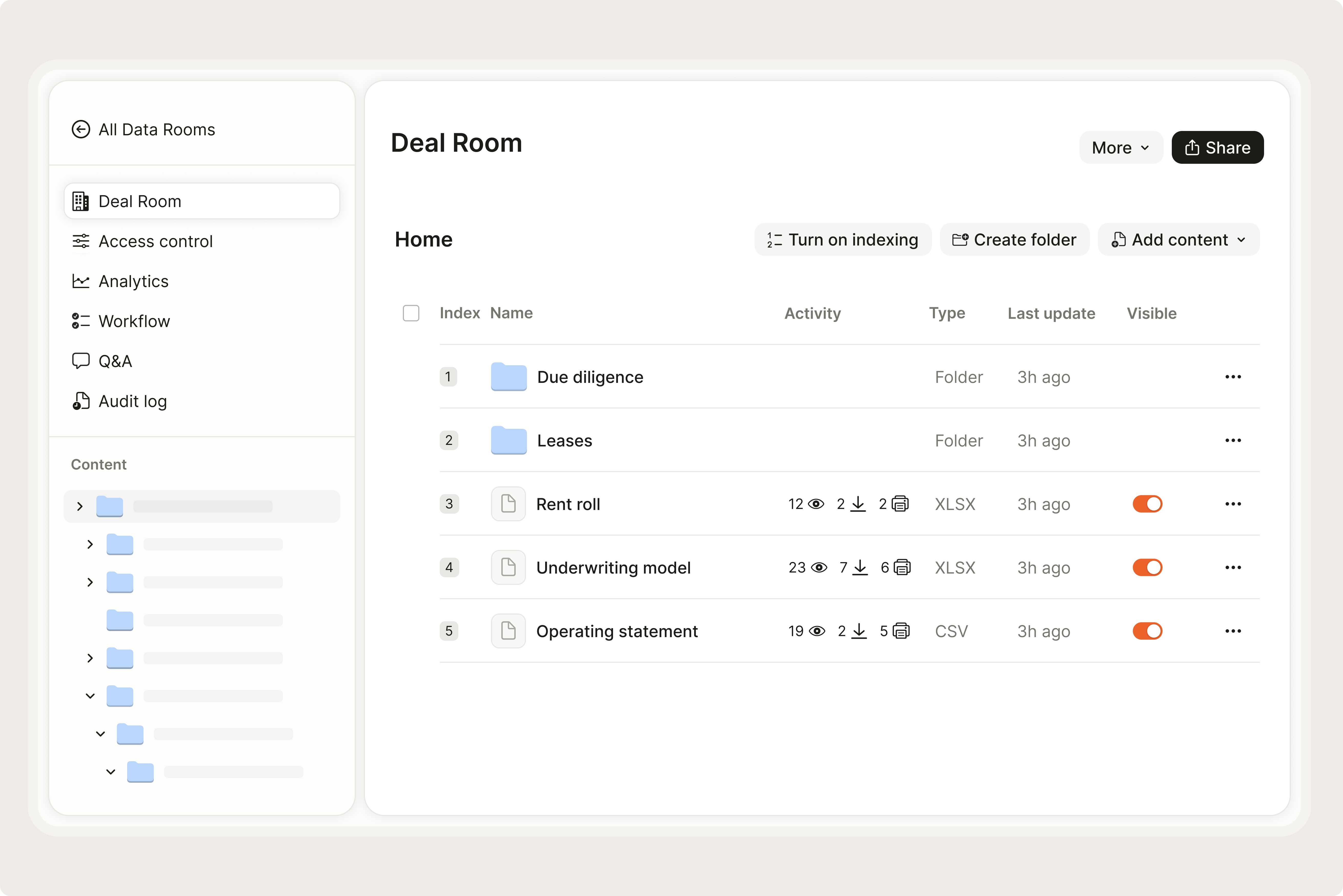
- 1.Create a data room and upload the property filesDrop title docs, leases, DEQ search results, and water rights records into Ellty. Each folder maps to a diligence area.
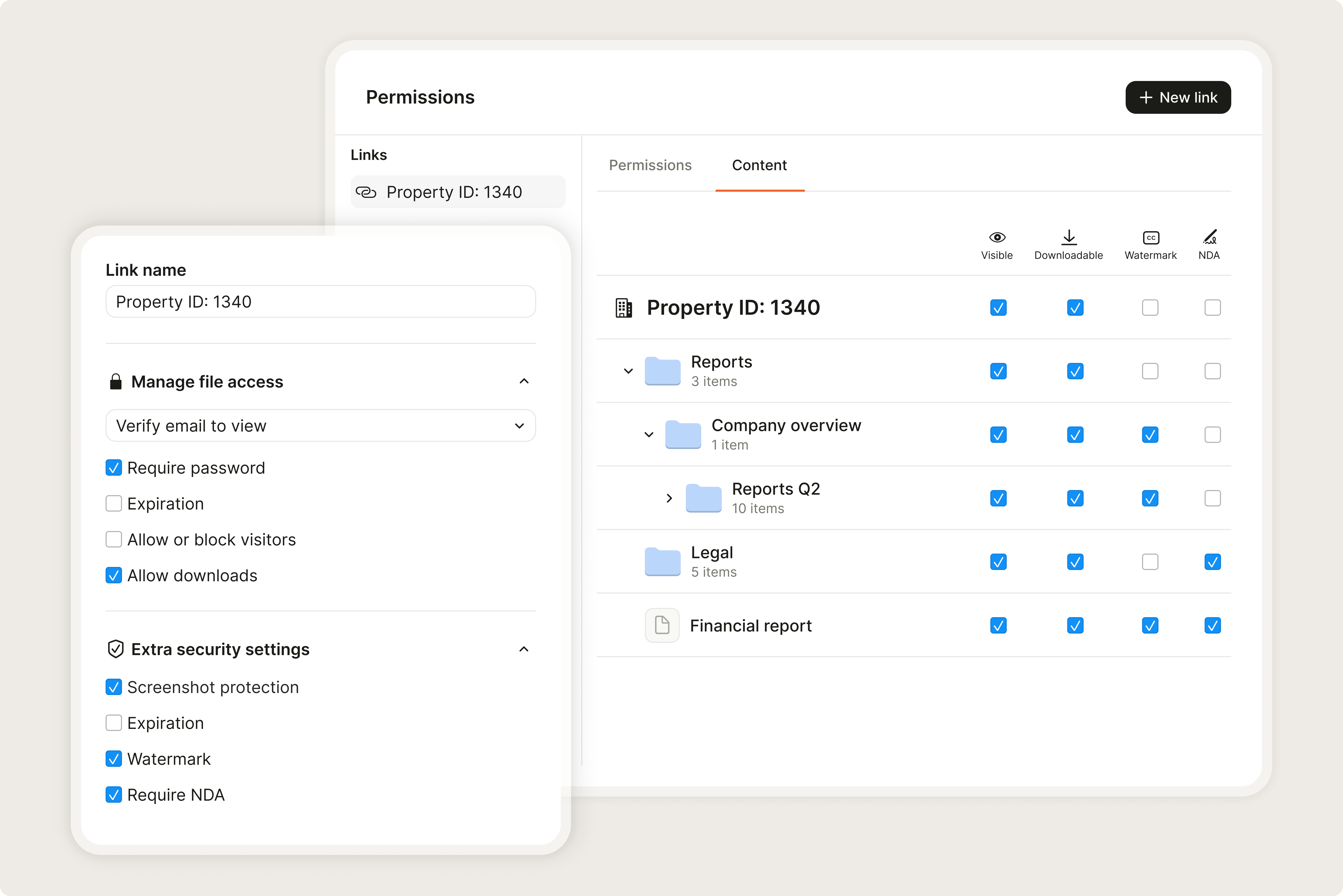
- 2.Give each advisor a scoped, secure linkYour title attorney sees title files only. Water rights counsel sees DNRC records only. Ellty enforces the scope.
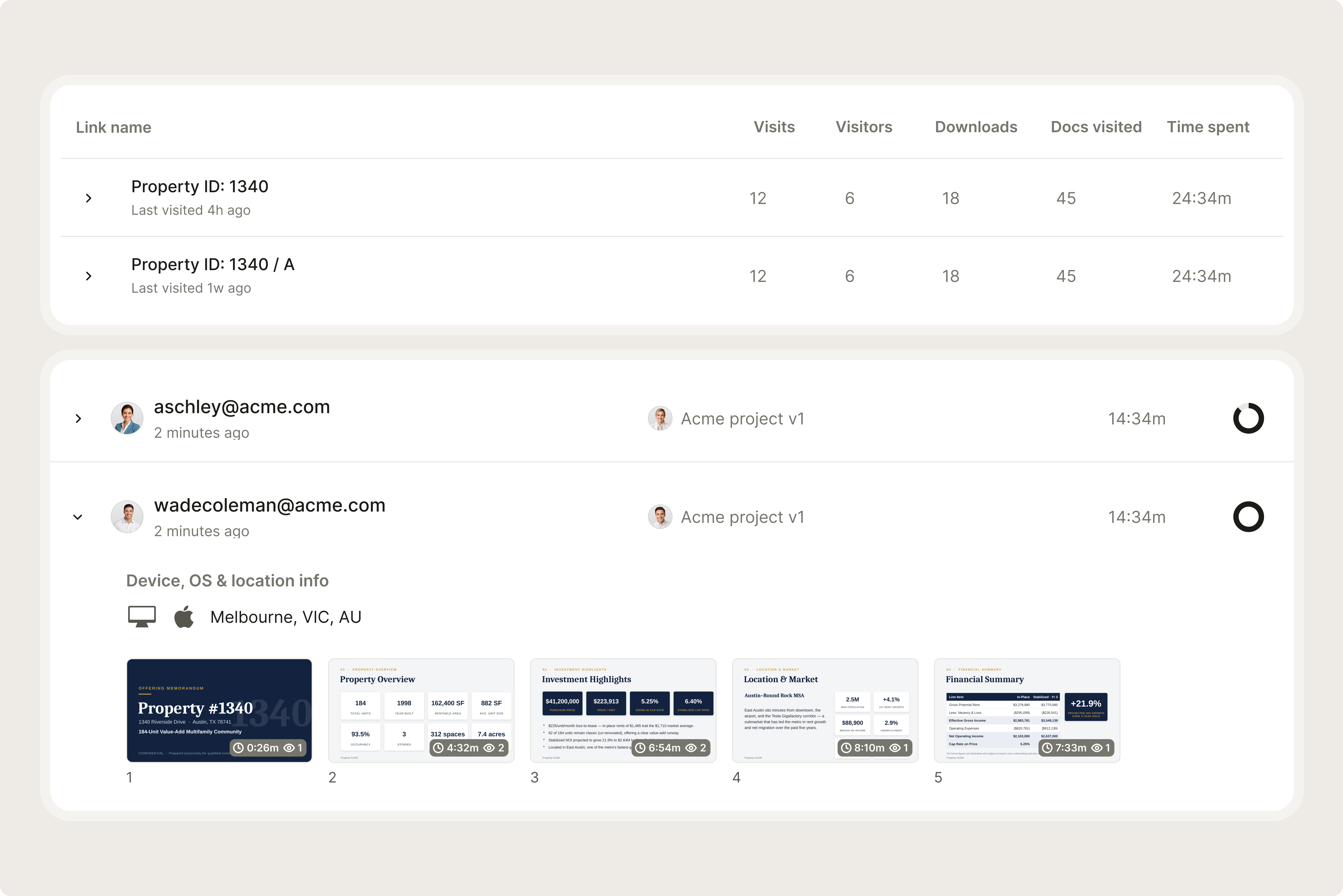
- 3.Track who reviews which documentsSee which files each advisor opened and when. Spot delays before they slow the Montana close.
What makes due diligence in Montana different
Water rights are the most common trap for out-of-state buyers. Montana follows the prior appropriation doctrine - water rights are separate from land title and allocated by seniority of use. A parcel near irrigation infrastructure may transfer without those water rights, and the deed won't say so. You need a specific DNRC search to know what you're buying.
Montana's lack of a state transfer tax is a benefit, but wildfire insurance is a growing cost that buyers from lower-risk states don't model correctly. Western Montana counties have seen standard commercial fire policies shift to high-risk underwriting with materially higher premiums.
The trust indenture structure trips up buyers from states that use standard mortgage closings. Montana's trustee-held-title approach means the title company or attorney must confirm release procedures for your specific county - practices vary across Montana's 56 counties.
Water rights in Montana are separate from real property and do not automatically transfer with a land deed. Buyers must independently search the DNRC water rights database and confirm transfer procedures before closing. Failure to do so can result in acquiring land without the water rights needed to operate it.
Timeline and cost in Montana
Week 1-2 covers kickoff: county clerk and recorder title search, DNRC water rights search, DEQ CECRA search, ALTA survey, Phase I ESA engagement, and title company engagement. Budget $2,500-$6,000 for this phase.
Load all files into Ellty on day one and give each advisor a trackable scoped link. That removes weeks of email follow-up from a standard Montana diligence process.
Weeks 2-4 cover deep review: Phase I ESA delivery, Property Condition Assessment, lease abstraction, water rights confirmation, FEMA flood zone check, and wildfire insurance review.
Cost for weeks 2-4 runs $4,000-$14,000 depending on Phase I scope and asset complexity. Phase II ESA adds $8,000-$25,000 if recognized environmental conditions surface; budget early on Butte-adjacent or Clark Fork corridor parcels.
Weeks 4-6 handle resolution: Phase II if needed, title exception resolution, recording fee confirmation, and closing at the county clerk and recorder by a title company or licensed Montana attorney.
Montana has no state transfer tax, which reduces closing cost versus most states. Buy-side legal fees typically run $2,000-$5,000 for a standard Montana commercial close. Recording fees are fixed-fee per page. Water rights transfer fees can add $500-$2,000 depending on the number of rights being conveyed.
Montana deal files in one secure place
Track who reviews title, leases, DEQ records, and water rights docs in Ellty.
Start free 14-day trialCommon questions about property due diligence in Montana
- No. Montana is one of a handful of states with no state real estate transfer tax. Only county recording fees apply at closing, and those vary by county and document length.
- A trust indenture is Montana's standard secured lending structure. A trustee holds legal title until the loan is repaid. It differs from a standard mortgage and requires specific trustee release procedures at payoff.
- No. Montana water rights are a separate legal interest under prior appropriation law. They must be explicitly included in the conveyance and transferred through the DNRC.
- DEQ CECRA records, UST petroleum releases, and historic mining waste sites in Butte and the Clark Fork corridor carry the highest risk. Several Montana mining sites carry federal Superfund designation.
- Western Montana counties face rising wildfire risk. Standard commercial policies are increasingly excluding fire coverage or adding costly riders; buyers must verify coverage independently.
- Standard Montana deals close in 30-60 days. DEQ environmental findings or water rights disputes regularly push timelines past 60 days on complex parcels.