Georgia's intangible recording tax and the GSCCCA title system catch out-of-state buyers off guard. This checklist covers what to pull before you close a Georgia CRE deal in 2026.
Georgia title records are public and searchable through the GSCCCA. Each county's Clerk of Superior Court maintains the deed index for that county.
The state charges both a real estate transfer tax and an intangible recording tax on secured debt. Miss either one and your closing cost model is wrong.
Environmental liability concentrates around Atlanta's industrial corridors. Phase I ESAs in Fulton and DeKalb counties regularly surface recognized environmental conditions.
HB 586, signed May 2025, raised the intangible tax threshold from 36 to 62 months. Bridge and construction loans under that term now have more room to avoid the tax. See the mergers and acquisitions page for how deal structure interacts with Georgia tax rules.
Where Georgia property deals go wrong
Not every check carries the same weight. The table below sorts them by impact.
| Area | Documents to pull | Georgia red flag | Matters most for | Tier | |
|---|---|---|---|---|---|
| Title and ownership | Title and ownership | GSCCCA deed index, chain-of-title, Superior Court clerk records | Gaps in chain on older Fulton and DeKalb industrial parcels | All buyers | Dealbreaker |
| Encumbrances and easements | Encumbrances and easements | Lien index, UCC filings, recorded easements, GSCCCA search | Utility corridor easements on rural-to-commercial conversions | All | Dealbreaker |
| Zoning and permits | Zoning and permits | Zoning certification letter, C of O, variance records, permit history | Fulton County zoning cert takes 3-5 days; municipal vs. county splits | Development, repositioning | Dealbreaker |
| Environmental | Environmental | Phase I ESA, GA EPD records, UST search, brownfield registry | High REC frequency in Fulton, DeKalb, and Chatham industrial areas | Industrial, retail, mixed-use | Dealbreaker |
| Leases and tenancies | Leases and tenancies | All leases, amendments, rent roll, guarantees, estoppels | Below-market leases with long options on Atlanta retail corridors | Retail, office, multifamily | Price-adjuster |
| Building and physical condition | Building and physical condition | PCA, roof records, MEP inspection, ADA compliance docs | Deferred HVAC and envelope work on older Midtown Atlanta stock | Office, industrial, retail | Price-adjuster |
| Service charge and operating costs | Service charge and operating costs | 3y operating statements, CAM reconciliations, property tax bills | Georgia property tax set at 40% of fair market value; resets at sale | All income-producing assets | Price-adjuster |
| Transfer tax and intangible tax | Transfer tax and intangible tax | Transfer tax calc, intangible tax on note, HB 586 maturity check | Intangible tax capped at $25K; $1.50/$500 on large notes adds up fast | All deals with debt | Price-adjuster |
| Insurance and valuation | Insurance and valuation | Current policies, loss run history, flood zone status | Coastal Georgia assets (Savannah, Brunswick) need FEMA flood check | Coastal, multifamily, industrial | Standard check |
| Utilities and access | Utilities and access | Utility connection records, access easements, well/septic permits | Rural Georgia parcels often on well and septic; confirm county records | Rural, industrial, land | Standard check |
| Seller KYC and AML | Seller KYC and AML | Entity docs, deed match, bankruptcy search, federal tax lien | LLC sellers require proper member authorization under Georgia law | All deals | Standard check |
Running due diligence on a Georgia property?
Load title docs, leases, and EPD records into one data room before the request list lands.
Start free 14-day trialThe full Georgia property due diligence checklist
Before diligence opens, set up your Ellty data room and load each document category below. Advisors start reviewing day one - not after you've chased files for a week.
Title and ownership
- Search the GSCCCA real estate index for the applicable county's deed records
- Pull the current deed, all prior deeds, and every recorded easement or restriction
- Confirm no unreleased mortgages, mechanic's liens, or judgment liens at the Superior Court clerk
- Review Schedule B exceptions in the title commitment before the inspection period closes
- Verify the legal description matches the ALTA/NSPS survey exactly
- Request a full chain-of-title back at least 40 years on older Fulton or DeKalb parcels
Encumbrances and easements
- Search the GSCCCA lien index for all UCC filings and fixture liens against the property
- Pull all recorded easements, rights of way, and deed restrictions from the county clerk
- Confirm no unresolved mechanic's or materialman's liens are outstanding
- Check for utility corridor easements on rural-to-commercial conversions outside Atlanta
Zoning and permits
- Request a written zoning certification from Fulton County or the relevant municipality
- Fulton County Planning and Zoning Division turns around zoning certs in 3-5 business days
- Confirm the current use is permitted - not just grandfathered as non-conforming
- Pull all variances, special use permits, and building permit history
- Verify certificates of occupancy match the current use and any recent renovations
- Check for pending rezoning or overlay district changes near the parcel
Environmental
- Commission a Phase I ESA per ASTM E1527-21 for all Georgia commercial acquisitions
- Search GA EPD records for release notifications, UST registrations, and site remediation files
- Flag any recognized environmental conditions (RECs) for Phase II before price agreement
- Check the Georgia brownfield registry for any voluntary cleanup program activity
- Confirm no underground storage tanks or petroleum release reports on adjacent parcels
- Budget Phase II at $5,000-$20,000 if RECs surface; plan 4-6 extra weeks
Leases and tenancies
- Collect all leases, amendments, side letters, and guarantees into Ellty before diligence opens
- Cross-reference the rent roll against 3 months of actual bank receipts
- Review for below-market leases and long renewal options on Atlanta retail corridors
- Confirm tenant estoppel certificates are deliverable before the closing date
- Identify any month-to-month tenancies or undocumented occupancy arrangements
Building and physical condition
- Order an ALTA/NSPS survey - flag encroachments on older in-fill Atlanta parcels
- Commission a Property Condition Assessment on all systems over 15 years old
- Inspect roof, HVAC, electrical, and plumbing; deferred work is common on older Midtown stock
- Confirm ADA compliance documentation for all customer-facing spaces
- For Savannah and coastal Georgia assets: run a FEMA flood zone check
Service charge and operating costs
- Pull 3 years of operating statements and reconcile against actual property tax bills
- Georgia assesses property taxes at 40% of fair market value; confirm the county assessment
- Audit CAM pass-throughs against lease obligations for multi-tenant assets
- Identify any deferred capex that transfers to the new owner post-close
Transfer tax and intangible tax
- Model the Georgia transfer tax at $1.00 per $1,000 of the sale price
- Calculate the intangible recording tax at $1.50 per $500 of the loan principal
- Confirm loan maturity exceeds 62 months under HB 586 to qualify as a long-term note
- The intangible tax is capped at $25,000 per note; confirm this on large-loan deals
- Both taxes are due at or before recording; factor into your full closing cost model
Insurance and valuation
- Pull current insurance policies and 3-year loss run history from the seller
- Confirm flood zone status for coastal Georgia assets in Savannah and Brunswick markets
- Order an independent appraisal scoped to the intended use and lender requirements
- Verify replacement cost coverage on older Atlanta commercial buildings
Utilities and access
- Verify all utility connections are active and legally transferable at closing
- Confirm road access is legally established - not relying on informal easements
- For rural Georgia parcels: verify well and septic permits with the county health department
- Check for utility easements that may restrict development on parts of the parcel
Seller KYC and AML
- Confirm seller identity matches the deed recorded at the Superior Court clerk exactly
- Obtain organizational documents if the seller is an LLC, LP, or corporation
- Verify proper member or manager authorization under Georgia law
- Run bankruptcy, federal tax lien, and judgment searches before committing to close
How property due diligence in Georgia works
Step 1 - Title search
Start the GSCCCA title search right after executing the purchase agreement. Georgia records deeds at each county's Clerk of Superior Court; most counties offer online access via GSCCCA.
Your title attorney traces the chain back at least 40 years. Older Fulton and DeKalb parcels show gaps and unreleased instruments more often than buyers expect.
Step 2 - Survey and inspection
Order the ALTA/NSPS survey alongside the title search. Older in-fill Atlanta parcels surface encroachments not visible in the deed more often than buyers expect.
Pair the survey with a Property Condition Assessment on assets with aging MEP systems. Deferred HVAC and roof work are the most common source of price adjustments in Georgia.
Step 3 - Leases and income review
Georgia has no standard commercial lease form - terms vary widely. Get every lease and amendment from the seller before the inspection period ends.
Property tax assessments at 40% of fair market value can reset materially after transfer. Model the new basis, not the seller's current tax bill, before finalizing your offer.
Step 4 - Environmental review
Commission the Phase I ESA in parallel with the title search. GA EPD records and UST searches drive the most common delays on industrial and retail sites in metro Atlanta.
If RECs surface, budget Phase II immediately. Keep ESA reports in your Ellty data room and give your environmental advisor a scoped, trackable link for review.
Step 5 - Closing and registration
Georgia's transfer tax of $1.00 per $1,000 is due at closing before the deed is recorded. The intangible recording tax on the loan is also due at the Superior Court clerk at closing.
Attorney involvement is standard on Georgia commercial closings. Buy-side legal fees run $2,000-$5,000. Allow 5-10 business days for instruments to be indexed after recording.
How to set up your Georgia data room in Ellty
Load your Georgia property files before diligence opens. Give each advisor a scoped link on day one.
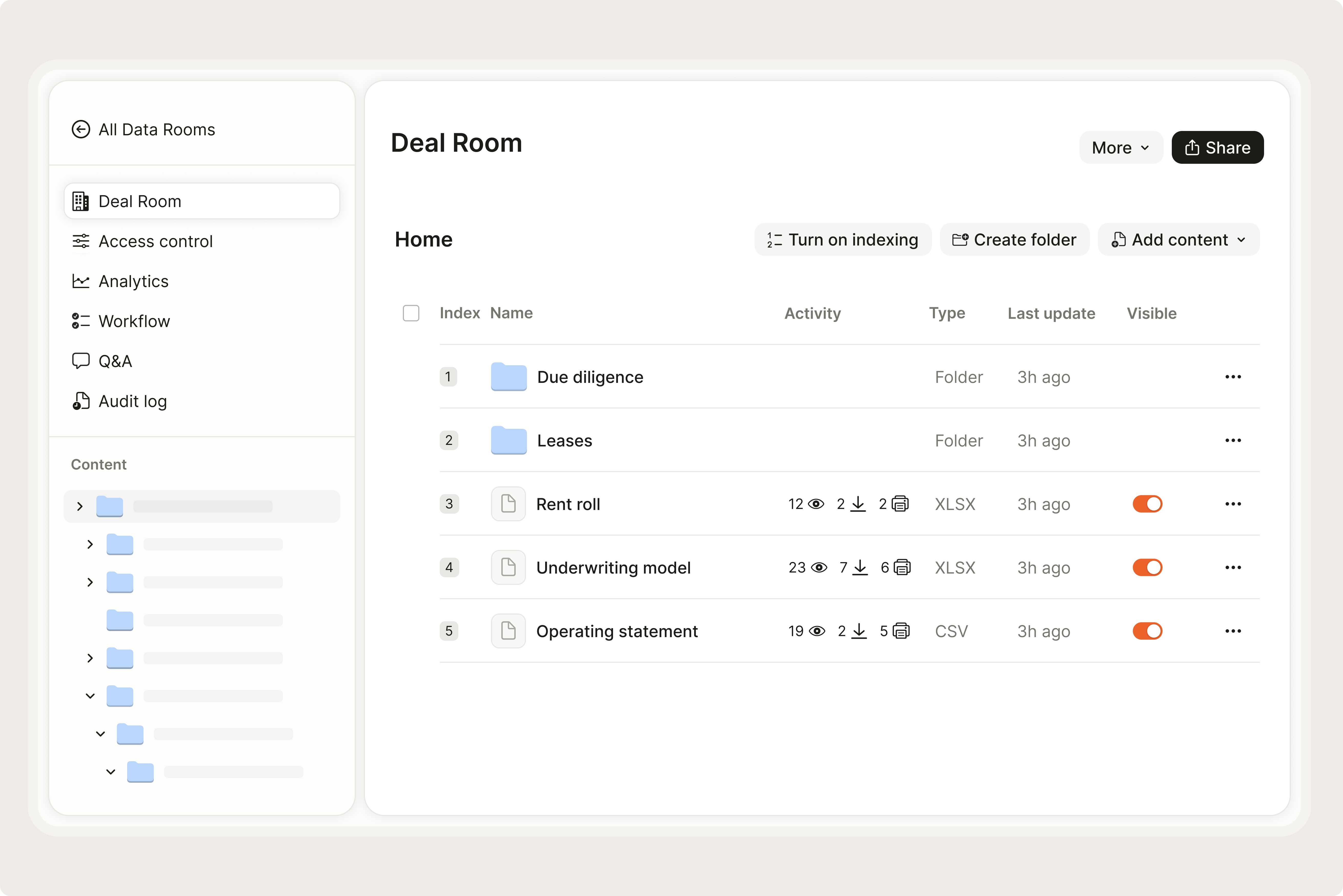
- 1.Create a data room and upload Georgia property filesDrop title docs, Phase I ESA, and leases into Ellty. Each folder maps to a diligence category.
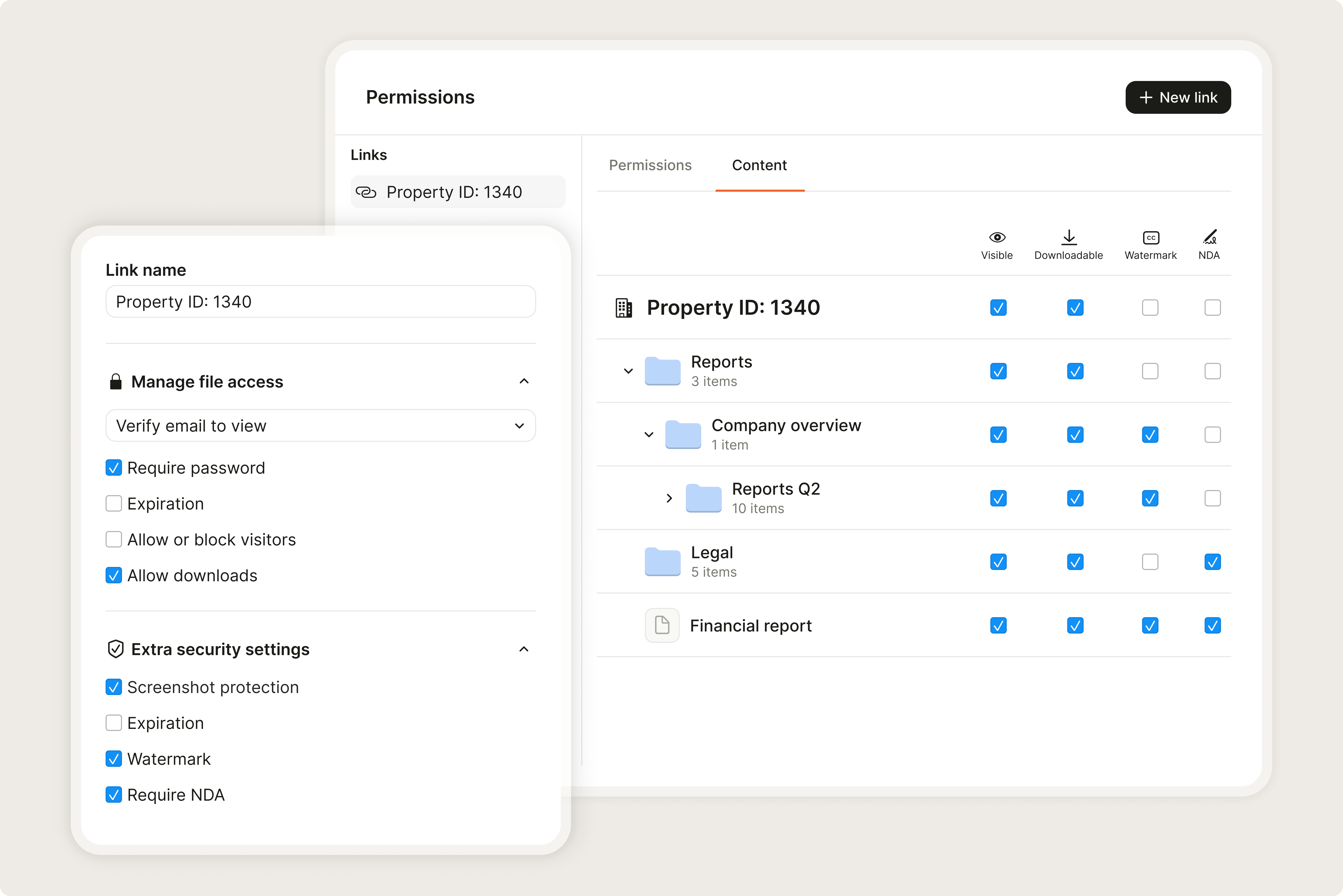
- 2.Give each advisor a scoped linkYour title attorney sees title docs only. The ESA consultant sees environmental files only.
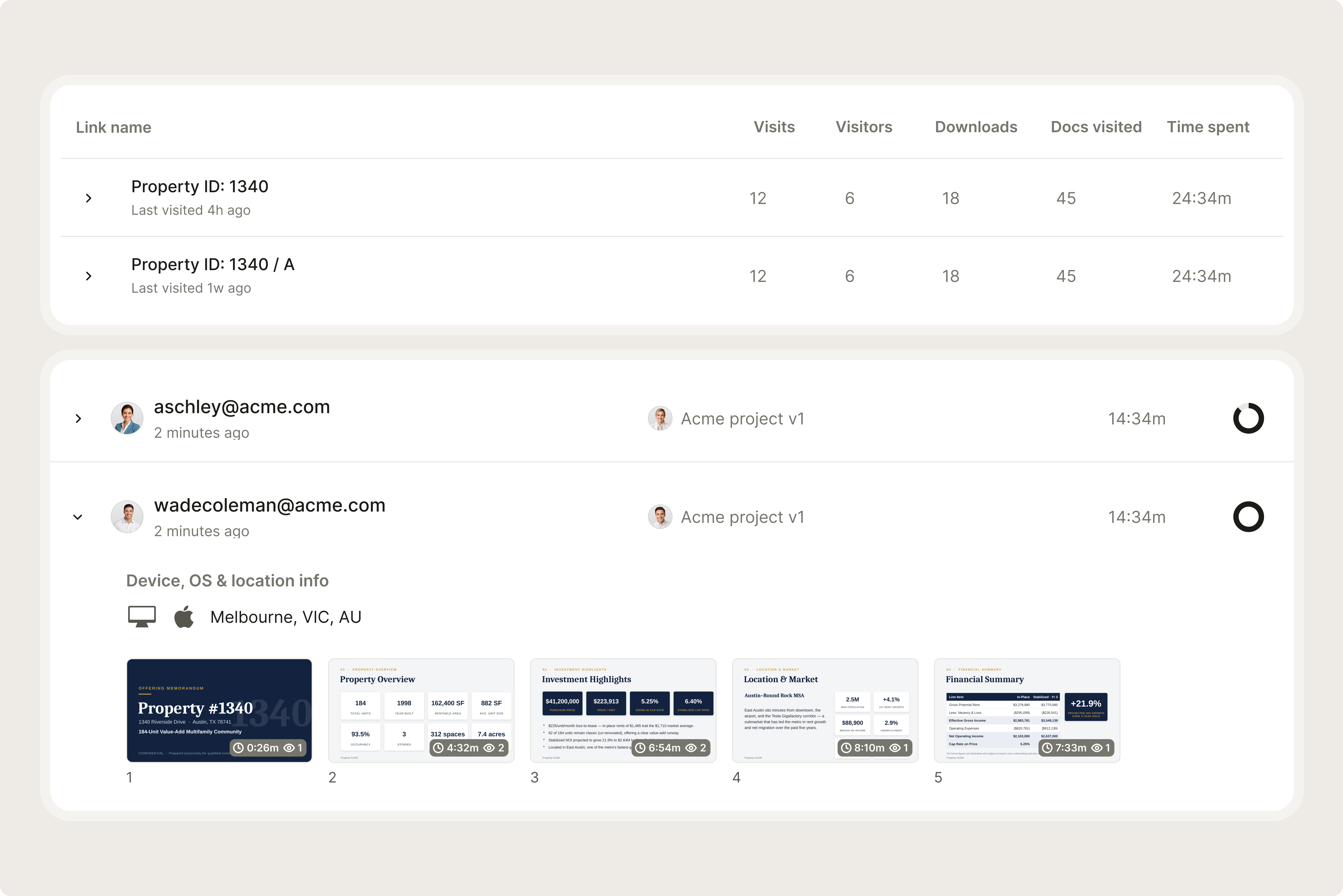
- 3.Track who reviews which documentsSee which files each advisor opened and when. Spot delays before they stall the close.
What makes Georgia deals different
Georgia's dual-tax structure is the first thing advisors miss. The transfer tax on the deed and the intangible recording tax on the mortgage are separate obligations - both due at closing.
HB 586 changed the intangible tax threshold to 62 months in July 2025. Bridge loans under that term may now qualify as short-term and escape the tax. Check loan maturity before finalizing deal structure.
Property tax at 40% of fair market value creates a gap between the seller's bill and what you'll pay post-transfer. Fulton County reassessments after a sale can move the annual tax line by 20%-40% on under-assessed assets.
Foreign buyers get caught by Georgia's non-resident withholding. Sellers who are non-US residents face a 3% withholding on the sale price under Georgia law - it affects deal timing and net proceeds.
Georgia's intangible recording tax applies to the note amount, not the purchase price. On a $10M loan, the tax runs $30,000 and is due before recording. Buyers who don't model it early retrade.
Timeline and cost in Georgia
A Georgia CRE deal runs in three phases. Weeks 1-2 cover kickoff: GSCCCA title search, Phase I ESA, ALTA survey, and zoning cert from Fulton County or the relevant municipality.
Estimated cost for weeks 1-2: $4,000-$9,000 for title, initial legal, and survey. Load all files into your Ellty data room and give each advisor a scoped, trackable link from day one.
Weeks 2-5 cover deep review: Phase I ESA delivery, Property Condition Assessment, lease and financial review, and operating cost reconciliation. Zoning cert and permit history also close in this window.
Cost for weeks 2-5: $4,000-$10,000 for Phase I and PCA depending on asset size. Ellty analytics show you which advisors have reviewed which documents in real time.
Weeks 5-8 handle resolution: Phase II ESA if needed, title exception negotiations, repair credits from the PCA, and closing prep. Phase II adds $5,000-$20,000 and 4-6 weeks.
Transfer tax ($1.00 per $1,000 of sale price) and intangible recording tax ($1.50 per $500 of loan, capped at $25,000) are fixed rates. Buy-side legal fees typically run $2,000-$5,000 for a standard commercial close.
Georgia deal documents, all in one room
Set up your Ellty data room and track every advisor review before closing day.
Start free 14-day trialCommon questions about Georgia property due diligence
- The rate is $1.00 per $1,000 of the sale price. It is due before the deed is recorded at the Superior Court clerk.
- It runs $1.50 per $500 of the loan principal and is capped at $25,000. HB 586 raised the long-term note threshold to 62 months in July 2025.
- Each county's Clerk of Superior Court holds deed records. Most counties provide online access via the GSCCCA real estate index at gsccca.org.
- Most deals close diligence in 30-60 days for clean assets. Phase II environmental testing adds 4-6 weeks on industrial and retail sites.
- GA EPD records and UST searches flag the most common issues. Fulton and DeKalb industrial corridors carry elevated recognized environmental condition frequency.
- Attorney involvement is standard on Georgia commercial closings. Both transfer tax and intangible tax must be paid before instruments are recorded at the Superior Court clerk.