Connecticut CRE diligence has two traps most out-of-state buyers miss: inland wetlands permits managed at the town level, and new DEEP release-based cleanup rules live since March 2026.
Connecticut records title in each of its 169 towns - there's no county recorder. A title search means going to the right town clerk, not a single centralized registry.
The conveyance tax is paid by the seller but it moves the net math. State plus municipal rates run from 1% to 2.75% depending on price band and town - you need to model it before you make an offer.
Environmental liability is the other variable. CT DEEP's Release-Based Cleanup Regulations took effect March 1, 2026, shifting cleanup obligations from property transfer to the point of release discovery.
Where Connecticut deals go wrong
Not every check carries the same weight. The table below sorts them by how badly each one can hurt the deal - dealbreakers first, then what moves the price, then basic hygiene - so your lawyer and surveyor know what to clear first.
| Area | Documents to pull | Connecticut red flag | Matters most for | Tier | |
|---|---|---|---|---|---|
| Title and ownership | Title and ownership | Town clerk chain-of-title, deed history, deed index | No county recorder - each of 169 CT towns holds its own land records | All | Dealbreaker |
| Encumbrances and easements | Encumbrances and easements | Recorded liens, easements, restrictions, open mortgages | Historic access easements on older New England parcels often unrecorded | All | Dealbreaker |
| Zoning and planning | Zoning and planning | Municipal zoning certificate, C of O, variance records, PZC minutes | CT zoning is municipal - no county zoning; each town sets its own rules | Development, retail, industrial | Dealbreaker |
| Environmental and contamination | Environmental and contamination | Phase I ESA, CT DEEP records, UST search, release notifications | New DEEP release-based rules (March 2026) shift liability to release date | Industrial, retail, mixed-use | Dealbreaker |
| Leases and tenancies | Leases and tenancies | All leases, amendments, rent roll, guarantees, estoppels | CAM reconciliation gaps common on older CT retail and mixed-use stock | Retail, multifamily, office | Price-adjuster |
| Building and structural condition | Building and structural condition | PCA, roof records, MEP reports, prior repair history | Aging New England building stock; deferred maintenance on older masonry | Office, multifamily, retail | Price-adjuster |
| Service charge and operating costs | Service charge and operating costs | 3y operating statements, CAM reconciliations, property tax bills | CT property tax rates vary sharply by town - mill rates differ 3x across towns | All income-producing assets | Price-adjuster |
| Transfer tax and acquisition costs | Transfer tax and acquisition costs | OP-236 return, conveyance tax calc, town conveyance addendum | State + municipal conveyance tax; seller pays but net affects price | All deals | Price-adjuster |
| Insurance and valuation | Insurance and valuation | Current policies, loss run history, flood zone map confirmation | Coastal CT flood zone exposure; FEMA maps updated 2024-25 | Coastal, multifamily, mixed-use | Standard check |
| Utilities and access | Utilities and access | Utility connection records, easement confirmation, well and septic permits | Rural CT parcels frequently on well and septic - confirm permits with town | Industrial, land, rural commercial | Standard check |
| Seller KYC and AML | Seller KYC and AML | Entity docs, bankruptcy search, federal tax lien, deed match | LLC seller with multiple members requires proper member authorization | All deals | Standard check |
Running due diligence on a Connecticut property?
Set up your data room before diligence starts.
Start free 14-day trialThe full Connecticut property due diligence checklist
The table showed what to clear first - this is the complete list to work through, grouped by area.
Title and ownership
- Order a full chain-of-title search from the correct town clerk - CT has 169 towns, no county recorder.
- Pull the current deed, all prior deeds, and any recorded restrictions or covenants.
- Confirm no unreleased mortgages, mechanic's liens, or judgment liens are recorded.
- Review the title commitment Schedule B exceptions before the inspection period ends.
- Verify the legal description matches the ALTA/NSPS survey exactly.
- Engage a Connecticut-licensed attorney - attorney involvement at closing is standard in CT.
Encumbrances and easements
- Pull all recorded easements, rights of way, and deed restrictions from the town land records.
- Check for historic access easements that may be unrecorded on older New England parcels.
- Confirm no unresolved mechanic's or materialman's liens are outstanding against the property.
- Review UCC filings at the Secretary of State level for any fixture filings on the property.
Zoning and planning
- Request written zoning confirmation from the town's Planning and Zoning Commission (PZC).
- Confirm the current use is lawful under the town's zoning regulations - not just non-conforming.
- Pull all variance records, special permits, and PZC meeting minutes for the past 5 years.
- Check for any pending rezoning applications or overlay district changes affecting the parcel.
- Inland wetlands are regulated at the town level - confirm wetland boundaries with the town agency.
- Load your virtual data room before the request list lands; have zoning docs ready on day one.
Environmental and contamination
- Commission a Phase I ESA per ASTM E1527-21 for all Connecticut commercial acquisitions.
- Search CT DEEP records for release notifications, site remediation files, and UST registrations.
- Flag any recognized environmental conditions (RECs) for Phase II follow-up before pricing.
- Understand CT DEEP's Release-Based Cleanup Regulations, effective March 1, 2026.
- Under the new rules, cleanup obligations arise from release discovery, not property transfer.
- Budget $5,000-$15,000 and 3-6 weeks for Phase II testing if RECs are identified.
Leases and tenancies
- Collect all leases, amendments, side letters, and guarantees in the Ellty data room.
- Cross-reference rent roll against 3 months of actual bank receipts.
- Audit CAM reconciliations - billing errors are common on older CT retail and mixed-use stock.
- Check for below-market leases, unusual renewal options, and any co-tenancy clauses.
- Confirm tenant estoppel certificates are deliverable before the closing date.
Building and structural condition
- Order an ALTA/NSPS survey - flag errors on older masonry and mixed-use stock.
- Commission a Property Condition Assessment covering all building systems over 15 years old.
- Inspect roof, HVAC, and electrical - deferred maintenance is common on older Connecticut stock.
- Confirm ADA compliance on all customer-facing retail, office, and common areas.
- Check flood zone status - coastal CT assets carry elevated FEMA flood zone exposure.
Service charge and operating costs
- Pull 3 years of operating statements and compare to actual property tax bills by town.
- Confirm mill rate and assessed value - CT mill rates vary significantly across towns.
- Audit CAM and operating expense pass-throughs against lease obligations.
- Identify any deferred capex items that will land on the new owner post-close.
Transfer tax and acquisition costs
- Confirm conveyance tax: state rate is 0.75% up to $800K, 1.25% up to $2.5M, 2.25% above.
- Add municipal conveyance tax of 0.25%-0.50% depending on the town.
- Confirm the seller is filing Form OP-236 with the town clerk at closing.
- No deed records until conveyance tax is paid - build payment into your closing checklist.
Insurance and valuation
- Pull current insurance policies and 3-year loss run history from the seller.
- Confirm flood zone designation - coastal Connecticut assets need separate flood coverage review.
- Order an independent appraisal scoped to the intended use and lender requirements.
- Verify replacement cost coverage adequacy on older New England commercial buildings.
Utilities and access
- Verify all utility connections are active and transferable at closing.
- Confirm road access is legally established - not dependent on informal or unrecorded easements.
- For rural CT parcels: confirm well and septic permits are current with the town health department.
- Check for utility easements that restrict development on portions of the parcel.
Seller KYC and AML
- Confirm seller identity matches the deed and town land records exactly.
- Obtain organizational documents if the seller is an LLC, LP, or corporation.
- Verify proper member or manager authorization under the seller's operating agreement.
- Run bankruptcy, federal tax lien, and judgment searches before committing to close.
Set up your Ellty data room before diligence opens. Give each advisor a scoped link so title counsel, your ESA consultant, and the lender all work from the same room without overlap.
How property due diligence in Connecticut works
Step 1 - Title search
Start the town clerk title search immediately after executing the purchase agreement. Connecticut's 169 towns each maintain their own land records - there's no centralized index.
Your attorney traces title back at least 40 years per Connecticut title standards. Flag any gaps, unreleased instruments, or easement discrepancies before the inspection period closes.
Step 2 - Survey and inspection
Order an ALTA/NSPS survey early - older New England parcels surface boundary errors frequently. Pair it with a Property Condition Assessment covering all major building systems.
Deferred maintenance on older masonry stock is the most common source of price adjustments. Front-load the PCA to give your counsel time to negotiate repair credits before closing.
Step 3 - Leases and income review
Connecticut has no standard commercial lease form - terms vary widely across markets. Get every lease, amendment, and side letter from the seller before the inspection period ends.
Cross-reference the rent roll against actual bank deposits. CAM billing disputes on older retail are common and run for years after closing if not caught in diligence.
Step 4 - Environmental review
Commission the Phase I ESA at the same time as the title search. CT DEEP records and UST searches are the most common source of delay on industrial and retail sites.
Under CT's March 2026 Release-Based Cleanup Regulations, liability follows the release event. Confirm with your environmental counsel what disclosures exist before signing the PSA.
Step 5 - Closing and recording
Connecticut real estate closings require attorney representation - it's standard practice, not optional. The seller files Form OP-236 and pays the conveyance tax before any deed is recorded.
Recording at the town clerk costs $70 for the first page, $5 for each additional page, as of July 2025. Allow 5-10 business days for instruments to be indexed after filing.
How to set up your Connecticut data room in Ellty.
You know what to check - here's where to hold it. Load your CT property files before diligence opens so advisors start day one, not day five.
- 1.Create folders and upload your property filesDrop title docs, Phase I ESA, leases, and operating statements into Ellty. Each category gets its own folder so advisors find files without emailing you.
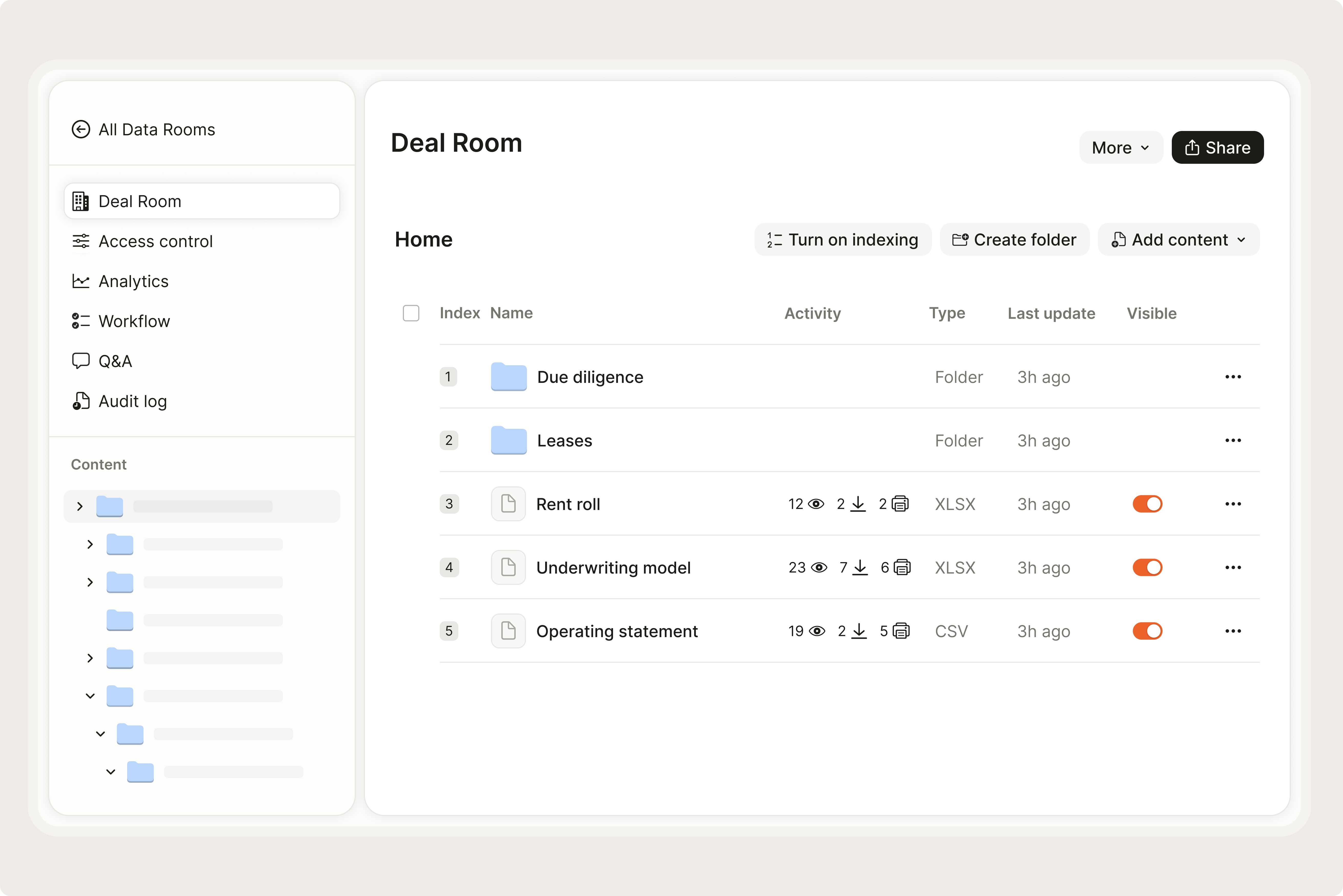
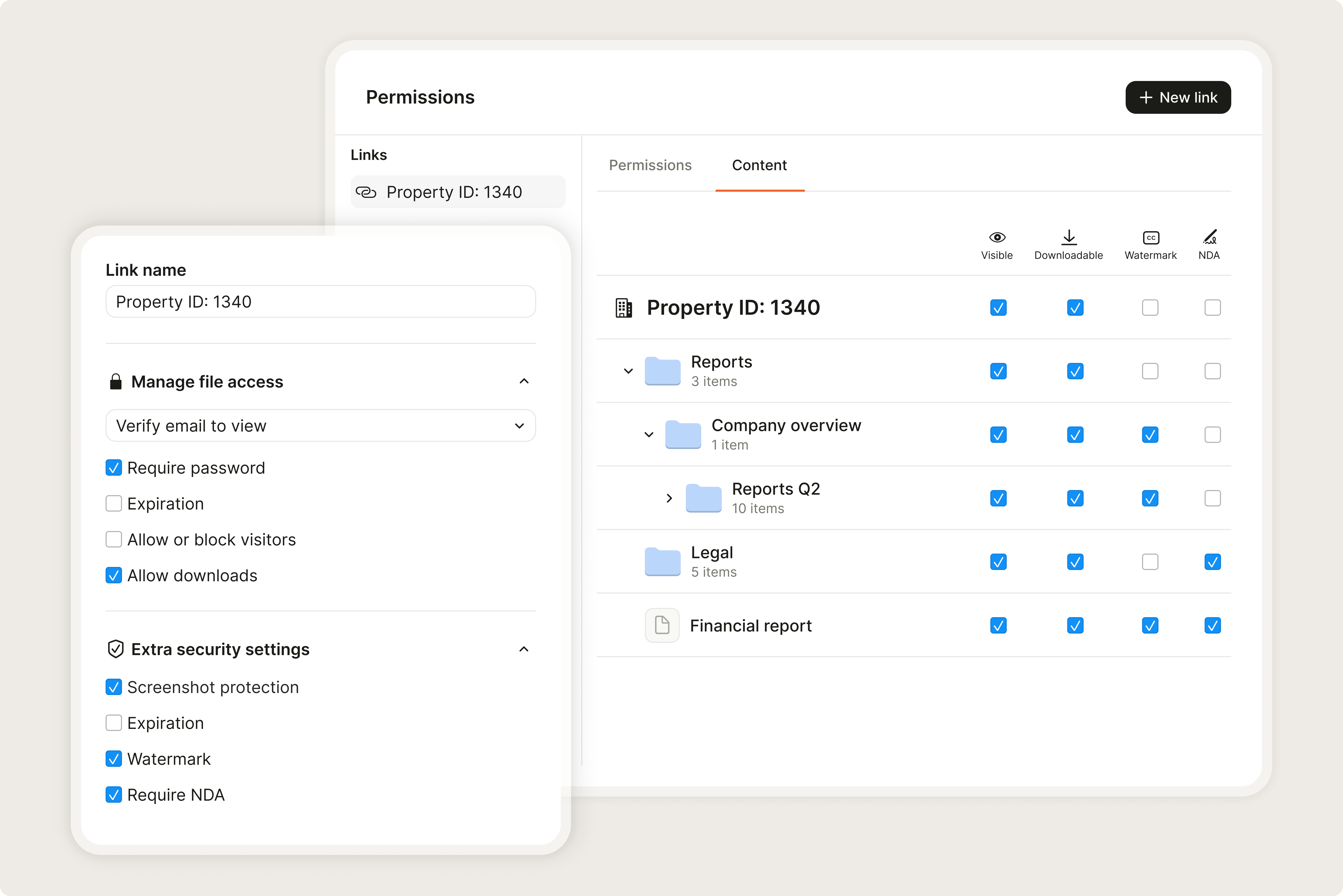
- 2.Give each advisor a scoped, secure linkYour attorney sees title and leases. Your ESA consultant sees environmental files only. Set permissions in Ellty so each reviewer gets exactly what they need.
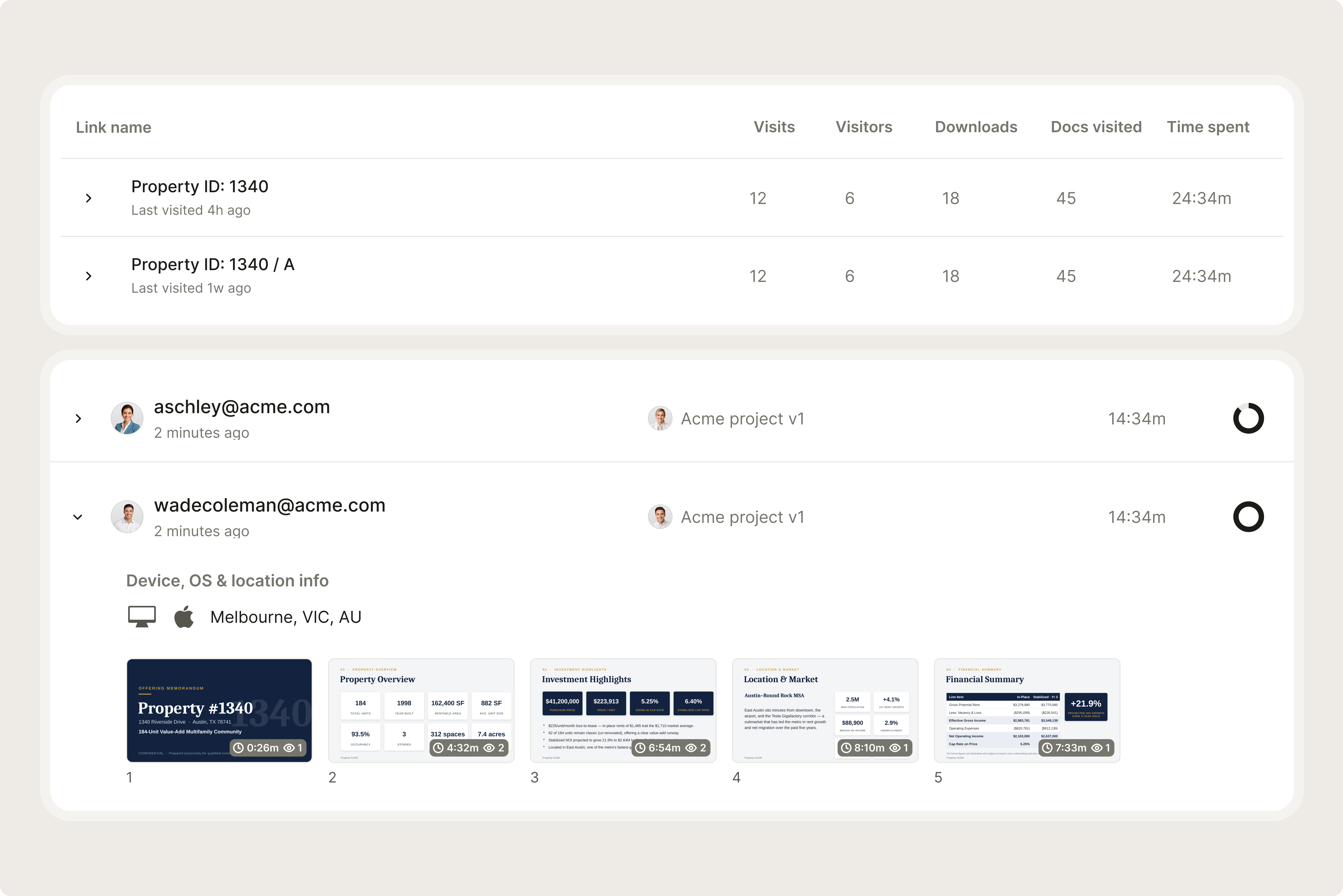
- 3.Track who reviews which documentsSee which files each advisor opened and how long they spent. Spot where questions are forming before they delay your closing timeline.
What makes due diligence in Connecticut different
Connecticut's town-based recording system is the first thing out-of-state buyers get wrong. There's no county deed registry - every title search runs through the specific town where the parcel sits.
The inland wetlands system adds another layer. Each of Connecticut's 169 towns runs its own inland wetlands agency, with its own maps and permit thresholds. A parcel that looks clean on a state map may have wetland setback obligations that kill a development plan.
Environmental liability shifted materially in 2026. CT DEEP's Release-Based Cleanup Regulations, effective March 1, 2026, mean cleanup obligations now arise when a release is discovered - not when property changes hands. For industrial and retail acquisitions, your Phase I ESA and DEEP records search need to be thorough before you commit to price.
Connecticut's Phase I ESA process involves both the standard ASTM protocol and CT DEEP-specific records review. Missing either component leaves buyers exposed to release-based liability that didn't exist under the old transfer-triggered rules.
Timeline and cost in Connecticut
A Connecticut CRE deal runs in three phases. Weeks 1-2 cover kickoff: town clerk title search order, Phase I ESA commission, ALTA/NSPS survey order, and lease collection.
Also in weeks 1-2: zoning confirmation to the town PZC and inland wetlands boundary check. Estimated cost: $4,000-$10,000 for title, survey, and initial legal review.
Weeks 2-5 cover deep review: Phase I ESA delivery, Property Condition Assessment, lease and CAM audit. Add operating expense review, zoning confirmation, and seller KYC checks.
Cost for weeks 2-5: $5,000-$12,000 for Phase I ESA, PCA, and counsel. Load all docs into Ellty and give each advisor a scoped link - no more chasing files over email.
Weeks 5-8 handle resolution: Phase II ESA if RECs are found, title exception negotiations, and repair credits from PCA findings. Phase II adds $8,000-$20,000 and 4-8 weeks.
Total soft cost for a mid-market Connecticut deal runs $18,000-$45,000. The conveyance tax is the biggest closing number - confirm the seller's net and model it before you finalize your offer.
Legal fees for Connecticut commercial transactions typically run $5,000-$20,000 for buy-side counsel. Attorney involvement at closing is standard and required.
Run your Connecticut deal from one room
Hold title, leases and surveys in one secure, tracked data room.
Start free 14-day trialCommon questions about property due diligence in Connecticut
- Each of CT's 169 towns holds its own land records. You search the specific town where the parcel sits - there is no county recorder or centralized deed registry in Connecticut.
- State rate runs 0.75% to 2.25% depending on price band; add 0.25%-0.50% municipal tax. The seller pays and files Form OP-236 before any deed is recorded at the town clerk.
- Effective March 1, 2026, cleanup obligations arise from release discovery, not property transfer. Buyers on industrial and retail sites need a thorough Phase I ESA and DEEP records review before committing to price.
- Each of CT's 169 towns has its own inland wetlands agency with its own maps and permit rules. A parcel may carry wetland setbacks that kill a development plan - confirm boundaries with the town agency early.
- Standard deals close diligence in 30-60 days. Environmental Phase II testing or complex zoning reviews on development sites can push the timeline to 90 days or beyond.
- Yes - attorney representation at closing is standard practice in Connecticut, not optional. The seller's attorney files Form OP-236 and the conveyance tax must be paid before the town clerk records any deed.