Colorado's prior appropriation water doctrine turns routine CRE diligence into a water-rights audit - especially on any parcel outside a municipal water system.
Diligence on a Colorado commercial deal typically runs 30-60 days. Mid-market transactions pull 80-130 documents into the data room.
Water rights operate under "first in time, first in right" in Colorado. That priority system affects value on rural, agricultural, and development parcels.
Mineral rights severance is common across the DJ Basin and Piceance Basin. A standard title search won't show active oil and gas leases unless you request a mineral abstract.
Colorado uses a county clerk and recorder system for all deed recording. There's no centralized statewide index - quality varies by county and parcel age.
The state documentary fee is just $0.01 per $100 of consideration. On a $2M deal that's $200 - but buyers who miss water rights or mineral severance pay far more at closing.
Where Colorado deals go wrong
Water rights are the most common deal surprise for out-of-state buyers. Colorado's prior appropriation doctrine means rights are tied to specific uses and priority dates.
A parcel with irrigation water rights may lose those rights if the use changes. Buyers repositioning agricultural land to commercial use need water counsel before they close.
Mineral rights severance is routine in northern and western Colorado. In the DJ Basin - Weld, Boulder, Larimer, and Broomfield counties - surface and subsurface rights are frequently split.
An active oil and gas lease on the subsurface doesn't appear in a standard title commitment. You own the surface and inherit drilling access unless you negotiate protections.
Colorado also uses special districts heavily for infrastructure. Metro districts, water districts, and business improvement districts can carry special assessment obligations.
These don't always surface in the title commitment. Confirm every district affecting the parcel through the county assessor before you price the deal.
| Area | Documents to pull | Colorado red flag | Matters most for | Tier | |
|---|---|---|---|---|---|
| Title and ownership | Title and ownership | County clerk chain-of-title, deed history, easements | Older rural parcels with indexing gaps in smaller CO counties | All buyers | Dealbreaker |
| Mineral rights | Mineral rights | Mineral rights abstract, subsurface ownership search, lease records | DJ Basin and Piceance Basin: severed subsurface with active O&G leases | Land, industrial, development in north and west CO | Dealbreaker |
| Water rights | Water rights | Division of Water Resources records, water court decrees, ditch shares | Prior appropriation: use-change kills priority; rural parcels most at risk | Agricultural, development, land, rural commercial | Dealbreaker |
| Environmental | Environmental | Phase I ESA, CDPHE records, underground storage tank search | Industrial corridor RECs in Denver, Pueblo, and Grand Junction markets | Industrial, retail, mixed-use | Dealbreaker |
| Zoning and permits | Zoning and permits | Zoning confirmation, C of O, building permits, variance records | Unincorporated county parcels lack city zoning - county rules apply | Development, repositioning, land | Dealbreaker |
| Leases and rent roll | Leases and rent roll | All leases, amendments, guarantees, rent roll, estoppels | CAM billing errors common on Denver metro retail and flex-industrial | Multifamily, retail, industrial | Price-adjuster |
| Physical condition | Physical condition | PCA, roof and MEP records, structural reports | Hail damage and flat roof failures common on Front Range commercial stock | All asset types on the Front Range | Price-adjuster |
| Special districts | Special districts | County assessor district search, metro district obligations, BID levies | Colorado metro district debt adds $5-$50/sqft in special assessments | All income-producing assets in metro areas | Price-adjuster |
| Survey and boundaries | Survey and boundaries | ALTA/NSPS survey, prior surveys, legal description | Metes-and-bounds errors on older rural and mountain parcels | All | Standard check |
| Documentary fee | Documentary fee | Documentary fee calc, CRS 39-13-102 affidavit, price confirmation | $0.01 per $100; seller pays; must be disclosed at closing | All deals | Standard check |
| Insurance and valuation | Insurance and valuation | Current policies, loss run history, hail and wildfire zone confirmation | Hail and wildfire zones affect premiums significantly in CO markets | All assets outside urban Denver core | Standard check |
| Seller KYC | Seller KYC | Entity docs, bankruptcy search, federal tax lien search, deed match | LLC seller with multiple members requires proper member authorization | All deals | Standard check |
Running due diligence on a Colorado property?
Set up your data room before diligence starts.
Start free 14-day trialThe full Colorado property due diligence checklist
Set up an Ellty data room before diligence opens. Load every category below so you're organized when the buyer's request list arrives.
Title and ownership
- Order a full chain-of-title search through the Colorado county clerk and recorder
- Pull the current deed, all prior deeds, and any recorded easements or restrictions
- Review the title commitment Schedule B exceptions before the inspection period closes
- Confirm no unreleased mortgages, mechanic's liens, or judgment liens are outstanding
- Verify the legal description matches the ALTA/NSPS survey exactly
- Hire a local Colorado abstractor for rural and mountain parcels - national vendors miss older gaps
Mineral rights and subsurface
- Confirm whether the parcel falls in the DJ Basin or Piceance Basin production zone
- Order a dedicated mineral rights abstract - separate from the standard title search
- Identify whether surface and subsurface rights are held by the same owner
- Check for active oil and gas leases, royalty interests, or mineral reservations in the deed chain
- Review any pipeline or utility easements recorded against the parcel
- Use Ellty to store mineral abstracts and subsurface legal opinions in a tracked data room
Water rights
- Confirm whether the parcel carries any decreed water rights through the Division of Water Resources
- Pull all water court decrees affecting the parcel from the relevant water division
- Confirm the intended use is covered by existing water rights - use changes can void priority
- Check for ditch company shares attached to the parcel and confirm transferability
- For parcels outside municipal water systems: engage water counsel before LOI
- Confirm municipal water provider has capacity for the intended use intensity
Environmental
- Commission a Phase I ESA per ASTM E1527-21 for all commercial acquisitions
- Review CDPHE records for the site and surrounding parcels with industrial history
- Run an underground storage tank search - high frequency on former gas station sites
- Check for mine drainage or tailings impacts on mountain and western slope parcels
- Budget for Phase II testing if RECs identified - add $5,000-$20,000 and 4-8 weeks
Zoning and permits
- Request written zoning confirmation from the relevant city or county planning office
- Confirm existing use is permitted under current zoning and matches certificate of occupancy
- Check for variances, special use permits, or non-conforming use status
- Pull all building permits, open permit searches, and certificates of occupancy
- For unincorporated parcels: confirm county zoning rules apply, not city rules
Leases and tenancy
- Collect all leases, amendments, side letters, and guarantees from the seller
- Review rent roll and cross-reference against 3 months of bank receipts
- Audit CAM reconciliations on retail and flex-industrial leases for billing errors
- Check for below-market leases, unusual renewal options, or co-tenancy clauses
- Confirm tenant estoppel certificates are obtainable before closing
Building and physical condition
- Order an ALTA/NSPS survey - flag errors on older rural and mountain parcels
- Commission a Property Condition Assessment covering all systems over 15 years old
- Inspect roof and HVAC thoroughly - hail damage on Front Range assets is underreported
- Confirm ADA compliance on all customer-facing retail or office space
- Check wildfire mitigation infrastructure on parcels near the urban-wildland interface
Special districts and transfer fee
- Confirm all metro districts, water districts, and BIDs affecting the parcel
- Pull county assessor records for all special assessment obligations and annual levies
- Verify no outstanding property tax arrears or special assessment liens
- Confirm documentary fee allocation under CRS 39-13-102 - seller pays $0.01 per $100
- Check for private transfer fees or CC&Rs on master-planned or metro district parcels
- Use Ellty to hold district confirmation docs in a single tracked location
Insurance and valuation
- Pull current insurance policies and 3-year loss run history from the seller
- Confirm hail zone designation - Front Range commercial stock carries elevated premium risk
- Check wildfire exposure on parcels in foothills or mountain markets
- Order an independent appraisal scoped to the intended use and financing structure
- Verify replacement cost coverage adequacy on older commercial structures
Utilities and access
- Verify all utility connections are active and in the seller's name or assigned
- Confirm road access is legally established and not dependent on informal easements
- Check for any utility easements that restrict development on portions of the parcel
- For mountain or rural parcels: confirm well and septic permits are current
Seller KYC
- Confirm seller identity matches the deed and title search records
- Obtain organizational documents if the seller is an LLC, LP, or corporation
- Verify proper member or manager authorization for the transaction
- Confirm no bankruptcy filings, judgment liens, or federal tax liens against the seller
How Colorado property due diligence works
Step 1 - Title search
Start with a full chain-of-title search through the county clerk and recorder. Colorado has 64 counties - each maintains its own recording system.
Denver, Jefferson, and Arapahoe counties are well-digitized. Mountain and rural counties carry more gaps on older and metes-and-bounds parcels.
Your title attorney needs to flag unreleased instruments, mineral severances, and easement discrepancies. Order the title commitment and review Schedule B exceptions before your inspection period closes.
Exceptions you don't negotiate become your liability at closing. Local abstractors are essential for parcels in smaller western slope counties.
Step 2 - Survey and inspection
An ALTA/NSPS survey is standard for commercial acquisitions and should be ordered early. Older mountain parcels frequently surface legal description and boundary errors.
Pair the survey with a Property Condition Assessment. Front Range commercial stock carries underreported hail damage - roof and HVAC inspections are the most common source of price adjustments.
Step 3 - Leases and income review
Colorado has no standard commercial lease template. CAM billing practices vary across Denver, Boulder, Colorado Springs, and Fort Collins landlords.
Get every lease, amendment, and side letter in writing before proceeding. Cross-reference the rent roll against 3 months of bank statements to confirm actual collections.
Review for unusual renewal options, early termination clauses, and landlord maintenance obligations. Confirm actual collections match what's in the seller's pro forma.
Step 4 - Environmental and water rights
Commission a Phase I ESA early - CDPHE records and UST searches are the most common source of delays. For mountain or western slope parcels, add mine drainage and tailings review.
Water rights review runs parallel to environmental. For any rural or development parcel, confirm water rights status and intended-use coverage before you price the deal.
Engage water counsel on any parcel outside a municipal water system. Prior appropriation priority is use-specific - a wrong assumption here costs more than counsel fees.
Step 5 - Closing and recording
Colorado deeds require documentary fee disclosure under CRS 39-13-102. The fee is $0.01 per $100 - the seller pays in a standard transaction.
Recording at the county clerk and recorder costs approximately $13 per page in most counties. Attorney involvement at closing is standard.
Expect $1,000-$2,000 for a straightforward commercial closing. Allow 5-10 business days for instruments to be indexed after recording.
How to set up your Colorado data room in Ellty.
Load your Colorado deal documents before the request list lands. Give each advisor a scoped link so review starts on day one.
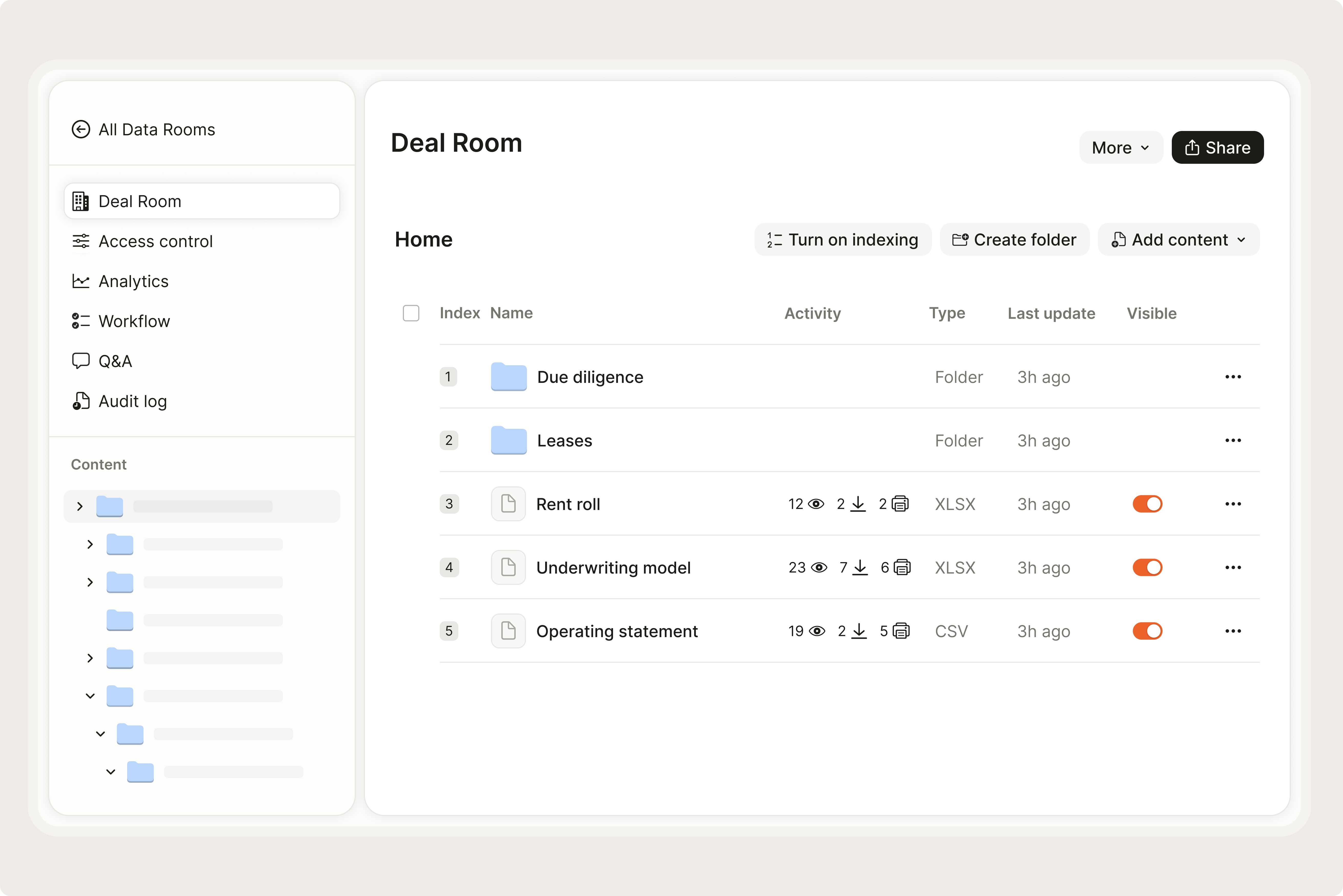
- 1.Upload files by diligence categoryDrop title docs, mineral abstracts, water decrees, and ESA into Ellty. Advisors find what they need without emailing you.
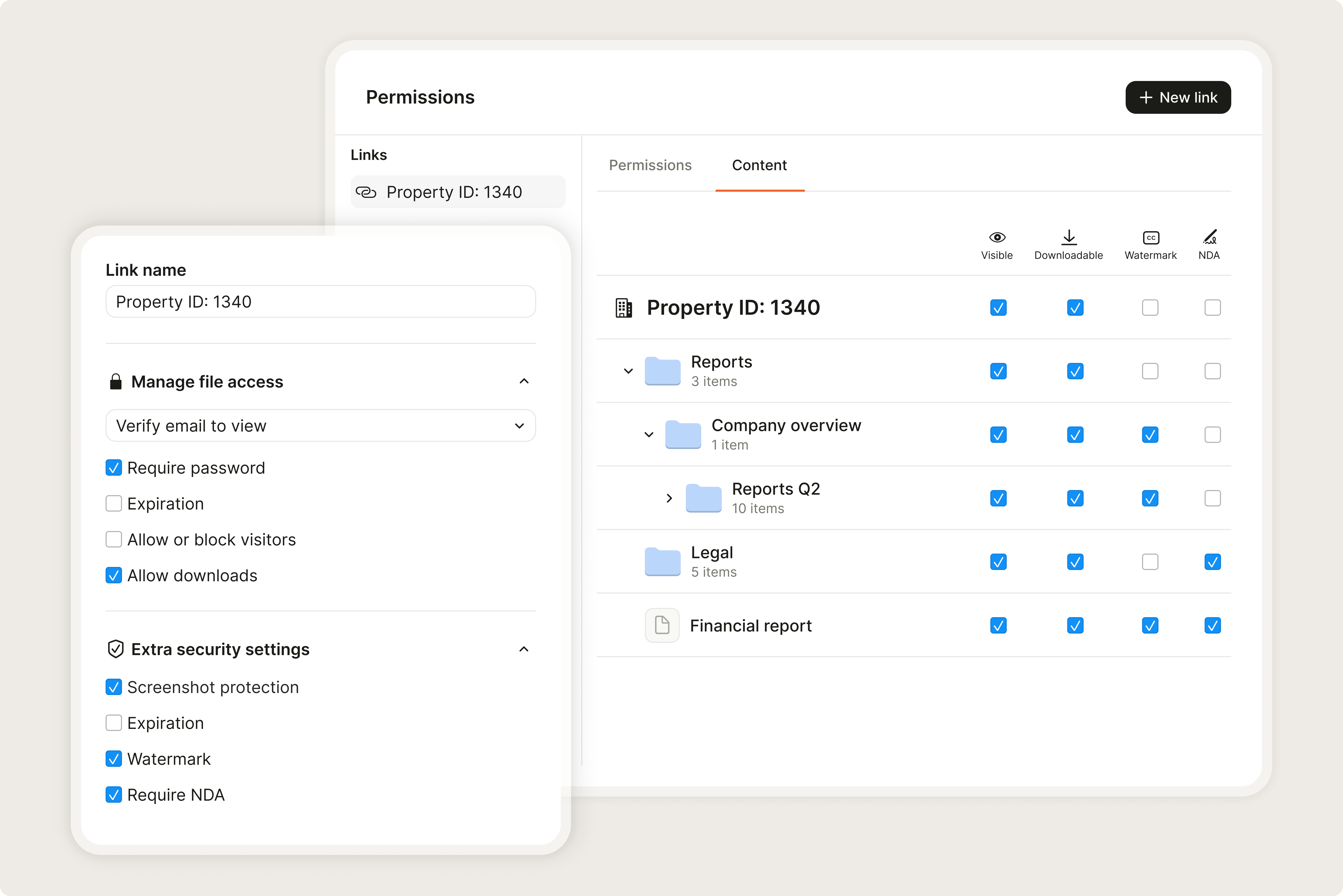
- 2.Set permissions per advisor roleWater counsel sees water docs only. Your ESA consultant sees environmental files only. Scoped access, zero confusion.
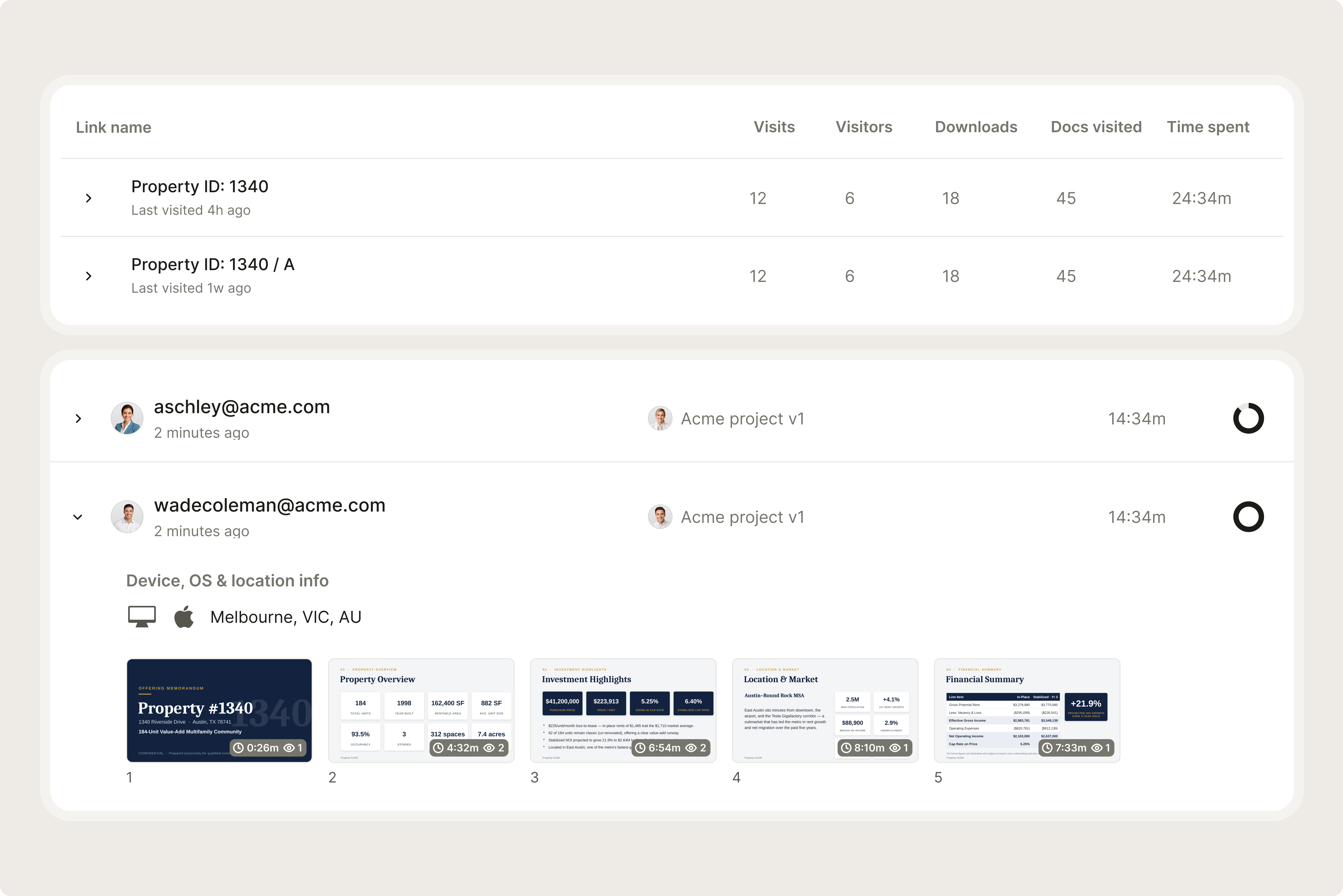
- 3.Monitor who reviewed what in real timeSee exactly which advisors opened which files. Spot where questions are forming before they delay your closing.
What makes Colorado due diligence different
Colorado's prior appropriation water doctrine is unlike any system buyers encounter in eastern states. Water rights are property interests tied to specific uses and priority dates.
A use change - agricultural to commercial, or irrigation to municipal - can void the priority date entirely. Buyers who don't engage water counsel before LOI routinely discover this after the inspection period closes.
Mineral rights severance on Front Range and western slope parcels is a structural risk. In Weld County - the heart of the DJ Basin - oil and gas leases on severed subsurface are routine.
An active lease doesn't block surface development automatically. But it grants the lessee surface access rights that affect site planning, financing, and long-term value.
Colorado's special district system is the third trap. Metro districts can carry bond obligations that add material annual costs to net operating income.
These don't appear in a standard title search. Buyers who skip the county assessor district search on Denver metro parcels regularly get surprised at their first tax bill.
Colorado's prior appropriation doctrine means water rights are tied to specific uses and priority dates. A change of use can forfeit senior priority - buyers must engage water counsel before any repositioning analysis.
Timeline and cost in Colorado
A typical Colorado commercial deal runs in three phases. Weeks 1-2 cover initial review: title search order, Phase I ESA kickoff, ALTA survey order, and water rights search.
Also in weeks 1-2: mineral rights abstract request and lease collection. Estimated cost: $5,000-$12,000 for title, survey, mineral and water searches, and initial legal review.
Weeks 2-5 cover deep review: Phase I ESA delivery, physical inspection and PCA, lease and CAM audit, and tenant estoppels. Also zoning confirmation, special district search, and water rights analysis.
Estimated cost for weeks 2-5: $4,000-$10,000 for Phase I, PCA, and counsel. Load all documents into your Ellty data room and track which advisors are reviewing what.
Weeks 5-8 handle resolution: Phase II ESA if RECs found, title exception negotiations, and repair credits from PCA findings. Add $5,000-$20,000 and 4-8 weeks if a Phase II is triggered.
Total soft cost for a mid-market Colorado deal: $18,000-$45,000 depending on environmental and water complexity. Factor the documentary fee into your closing model - and confirm the PSA allocates it correctly.
Run your Colorado deal from one data room
Hold title, leases and surveys in one secure, tracked room.
Start free 14-day trialQuestions about Colorado property due diligence
- Colorado charges $0.01 per $100 of consideration under CRS 39-13-102. On a $2M deal that's $200 - the seller typically pays.
- Yes if the parcel is outside a municipal water system. Prior appropriation rights are use-specific and a change of use can void senior priority.
- Most deals run 30-60 days. Water rights issues or environmental Phase II testing can push the timeline past 90 days.
- Weld, Boulder, Larimer, and Broomfield counties have frequent mineral severance. Active O&G leases don't appear in a standard title search.
- Metro and water district bond obligations add annual assessment costs. Run the county assessor district search before pricing any Denver metro deal.
- Ellty lets you load all diligence docs into one secure data room, give each advisor a scoped link, and track exactly who reviewed what.