California's county documentary transfer tax ranges from $1.10 to $25 per $1,000 - and PACE liens recorded after the last title search can survive sale undetected.
California commercial due diligence typically runs 30-60 days. A mid-market deal pulls 90-140 documents into the data room.
Prop 13 locks assessed value until transfer - then the county reassesses at full market value. On a $5M deal, that tax jump reshapes your operating model.
PACE liens attach to the property, not the borrower. They survive sale and can be missed by a title search that predates the last annual cycle.
Seismic disclosure is mandatory in Alquist-Priolo Earthquake Fault Zones. Development within 50 feet of an active fault trace requires a geological report.
County documentary transfer tax varies widely across California's 58 counties. San Francisco's tiered rate reaches $25 per $1,000 on deals above $25M.
Where California deals go wrong
PACE liens are the most common hidden cost in California commercial acquisitions. They fund energy improvements and attach to the parcel - not the seller.
A PACE lien recorded after the effective date of a title search won't appear in your commitment. Confirm the payoff status directly with the county tax collector before closing.
Prop 13 reassessment is underestimated by out-of-state buyers. The assessed value on the seller's tax bill may reflect a 1978 base year - decades below market.
At transfer, the county reassesses to full current market value. On a $5M acquisition, the annual property tax bill can double or triple compared to the seller's figure.
California's Natural Hazard Disclosure statement covers fire, flood, earthquake, and dam inundation zones. Sellers must deliver it - but buyers must verify the underlying maps.
NHD map data can be outdated on rapidly reclassified fire zones. Order an independent NHD report from a third-party provider before you release contingencies.
| Area | Documents to pull | California red flag | Matters most for | Tier | |
|---|---|---|---|---|---|
| Title and ownership | Title and ownership | County recorder chain-of-title, deed history, recorded easements | PACE liens recorded post-title-search and surviving sale undetected | All buyers | Dealbreaker |
| Encumbrances and easements | Encumbrances and easements | Title Schedule B, CC&Rs, HOA docs, private transfer fees | Private transfer fee covenants on older master-planned CA parcels | Retail, industrial, mixed-use | Dealbreaker |
| Zoning and planning | Zoning and planning | Zoning confirmation, general plan, SB 9/ADU overlay analysis | Ministerial ADU and SB 9 rights change repositioning underwriting | Residential, mixed-use, land | Dealbreaker |
| Environmental | Environmental | Phase I ESA, DTSC records, UST search, CEQA status | CEQA triggered on development - adds months to entitlement timeline | Development, industrial, retail | Dealbreaker |
| Leases and tenancies | Leases and tenancies | All leases, amendments, guarantees, rent roll, estoppels | AB 1482 statewide rent cap applies to most multifamily built before 2005 | Multifamily, mixed-use | Dealbreaker |
| Building and structural | Building and structural | PCA, seismic report, Alquist-Priolo fault zone confirmation | Soft-story retrofit mandates still active in LA, SF, and Oakland | Multifamily, older office, mixed-use | Dealbreaker |
| Service charge and opex | Service charge and opex | 3 years P&L, CAM reconciliations, utility statements | CAM billing errors on multi-tenant retail in LA and Bay Area | All income-producing assets | Price-adjuster |
| Transfer tax | Transfer tax | County documentary transfer tax calc, city transfer tax search | SF tiered rate reaches $25/1,000; LA adds city surcharge over $10M | All deals, especially in SF and LA | Price-adjuster |
| Insurance and valuation | Insurance and valuation | Current policies, loss run, wildfire zone confirmation, NHD report | Wildfire zones in Malibu, Napa, foothills - insurers pulling coverage | Assets outside dense urban cores | Price-adjuster |
| Utilities and access | Utilities and access | Utility connections, access easements, road dedications | Private road easements on hillside parcels in LA and SF Bay Area | All assets | Standard check |
| Seller KYC/AML | Seller KYC/AML | Seller entity docs, OFAC check, beneficial ownership confirmation | Complex CA LLC and LP structures with layered ownership chains | All deals | Standard check |
Running due diligence on a California property?
Load title, ESA, seismic reports, and leases into one data room before requests land.
Start free 14-day trialThe full California property due diligence checklist
Open an Ellty data room before diligence starts. Load every category below so you're ready when the buyer's request list arrives.
Title and ownership
- Order a full chain-of-title search through the California county recorder
- Pull the current grant deed, all prior deeds, and any recorded easements
- Review the title commitment Schedule B exceptions before the inspection period closes
- Confirm no unreleased mortgages, mechanic's liens, or judgment liens are outstanding
- Verify the legal description matches the ALTA/NSPS survey exactly
- Confirm PACE lien payoff status directly with the county tax collector
Encumbrances and easements
- Review all Schedule B title exceptions for easements, CC&Rs, and restrictions
- Search for private transfer fee covenants on master-planned parcels
- Confirm no utility easements restrict development on any portion of the parcel
- Review HOA documents for commercial condos or mixed-use parcels
- Check for recorded access easements on hillside and rural California parcels
Zoning and planning
- Request written zoning confirmation from the relevant city or county planning department
- Confirm existing use matches the certificate of occupancy and current zoning
- Analyze SB 9 and ADU overlay rights if the parcel includes or abuts residential land
- Check for non-conforming use status or open variance conditions
- Pull all building permits, open permit searches, and certificates of occupancy
- For development parcels: confirm CEQA exemption status or determine EIR scope
Environmental
- Commission a Phase I ESA per ASTM E1527-21 for all commercial acquisitions
- Review DTSC records for the site and adjacent parcels with industrial history
- Run an underground storage tank search - high frequency in former gas station corridors
- Confirm Alquist-Priolo Earthquake Fault Zone status and required geological reports
- Budget Phase II testing if RECs identified - add $5,000-$20,000 and 4-8 weeks
- Use Ellty to store ESA reports, DTSC correspondence, and seismic opinions in a tracked data room
Leases and tenancies
- Collect all leases, amendments, side letters, and guarantees from the seller
- Confirm whether AB 1482 statewide rent cap applies to any residential units
- Verify no local rent control ordinance applies in LA, Oakland, or San Jose
- Review rent roll and cross-reference against 3 months of bank receipts
- Audit CAM reconciliations on retail and flex-industrial leases for billing errors
- Confirm tenant estoppel certificates are obtainable before closing
Building and structural
- Order an ALTA/NSPS survey - flag easement discrepancies and lot line issues
- Commission a Property Condition Assessment covering all systems over 15 years old
- Confirm whether any soft-story retrofit mandate applies in LA, SF, or Oakland
- Review seismic disclosure documents and confirm Alquist-Priolo compliance
- Check ADA compliance on all customer-facing retail or office space
Service charge and operating costs
- Pull 3 years of operating statements and reconcile against actual receipts
- Review county assessor records and confirm the Prop 13 assessed value history
- Model the post-transfer property tax bill at current market value
- Audit CAM billing on all multi-tenant leases for errors and overcharges
- Confirm no outstanding utility liens or municipal code violations are open
Transfer tax
- Calculate county documentary transfer tax at the applicable county rate
- For San Francisco: apply the tiered rate - up to $25 per $1,000 above $25M
- For Los Angeles: confirm city transfer tax surcharge applies above $10M
- Verify who pays transfer tax and confirm allocation in the purchase agreement
- Confirm no outstanding property tax arrears or special assessments are open
Insurance and valuation
- Pull current insurance policies and 3-year loss run history from the seller
- Confirm wildfire zone status via the NHD report and current insurer coverage
- For Malibu, Napa, and foothills assets: verify coverage is available before LOI
- Order an independent appraisal scoped to the intended use and financing structure
- Confirm earthquake insurance requirements if the asset is in a high-risk seismic zone
Utilities and access
- Verify all utility connections are active and in the seller's name or assigned
- Confirm road access is legally established - check for private road easement gaps
- Review any utility easements that restrict development on portions of the parcel
- Check water and sewer capacity for the planned use intensity
Seller KYC/AML
- Confirm seller identity matches the deed and county recorder records
- Obtain organizational documents for LLC, LP, or corporate sellers
- Trace beneficial ownership through any layered California LLC structures
- Run OFAC and sanctions check on all principals
- Confirm authority to sell if a trust, estate, or partnership holds title
How property due diligence in California works
Step 1 - Title search
Start with a full chain-of-title search through the California county recorder. California has 58 counties - each maintains its own recording system.
Major counties like Los Angeles, San Francisco, and San Diego are well indexed. Smaller rural counties and older parcels require local abstractor review.
Request a PACE lien payoff confirmation from the county tax collector as a separate step. PACE liens don't always appear in title commitments if recorded after the search date.
Order the title commitment and review Schedule B exceptions before your inspection period expires. Exceptions you don't negotiate become your liability at closing.
Step 2 - Survey and inspection
An ALTA/NSPS survey is standard for California commercial acquisitions. Order it early - hillside parcels in LA and Bay Area often surface access easement gaps.
Pair the survey with a Property Condition Assessment on all systems. In earthquake country, seismic retrofitting costs on older structures can shift deal economics significantly.
Step 3 - Leases and income review
California has AB 1482 statewide rent control on most multifamily built before 2005. Many cities add stricter local ordinances on top of the state cap.
Get every lease, amendment, and side letter before proceeding. Review renewal options, early termination clauses, and any co-tenancy provisions.
Cross-reference the rent roll against 3 months of bank statements. Confirm actual collections before you trust the seller's pro forma.
Step 4 - Environmental and seismic
Commission a Phase I ESA early - it is the most common source of timeline delays on California due diligence process deals. DTSC records and UST searches must run before you price the deal.
Run Alquist-Priolo confirmation in parallel. Development within 50 feet of an active fault requires a geological report before any discretionary permit is issued.
For development parcels, confirm CEQA status immediately. A full EIR adds 12-18 months and $100,000+ to the entitlement timeline.
Step 5 - Closing and recording
California deeds require a Preliminary Change of Ownership Report at recording. County documentary transfer tax is paid at close - rates vary from $1.10 to $25 per $1,000 by county.
Attorney involvement at closing is standard for commercial deals. Expect $2,000-$5,000 for a straightforward commercial closing in a major California market.
Allow 5-10 business days for instruments to be indexed after recording at the county recorder.
How to set up your California data room in Ellty.
Load your California deal documents before the request list lands. Each advisor gets a scoped link so review starts on day one.
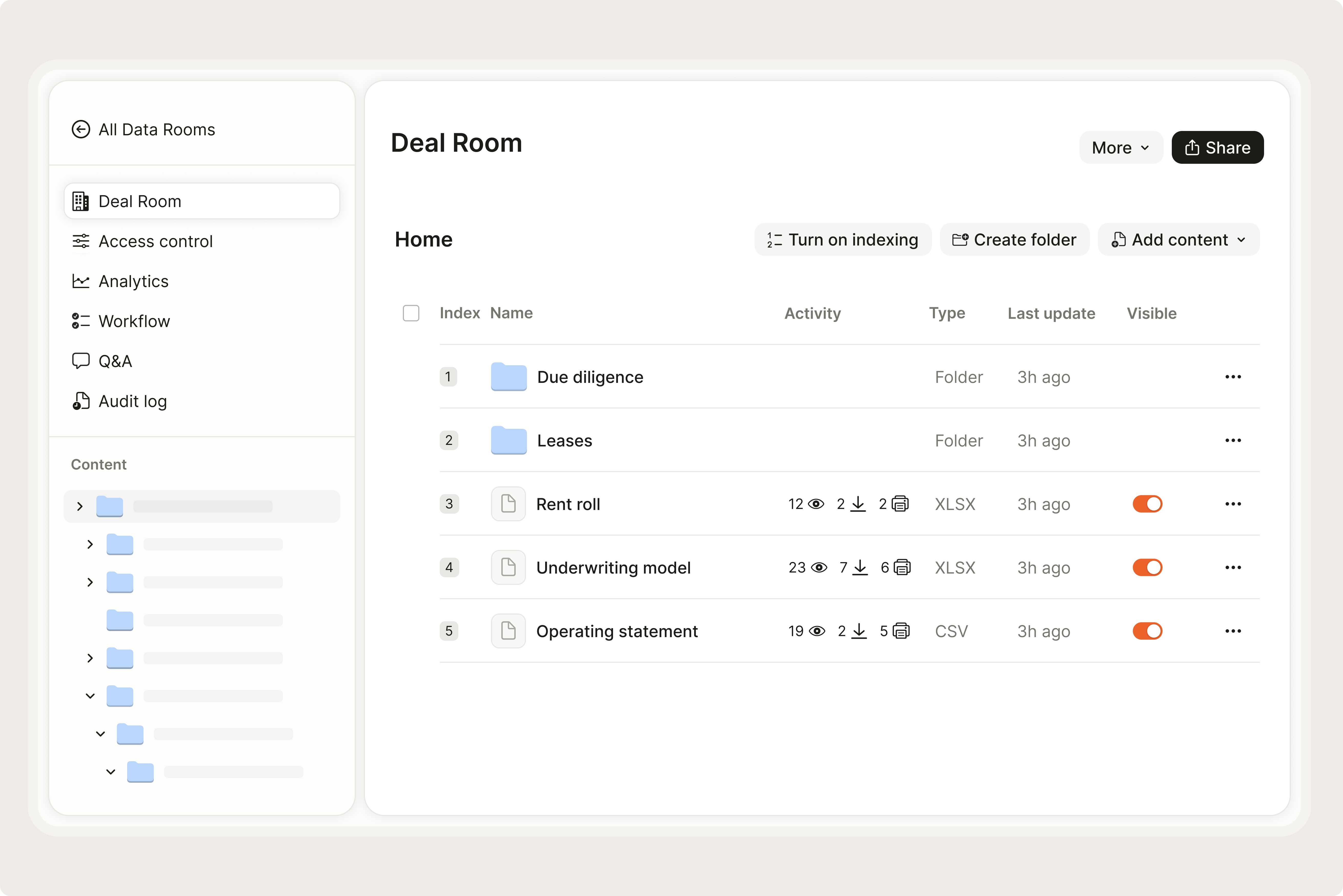
- 1.Upload your California property filesUpload title docs, ESA reports, seismic opinions, and leases into Ellty. Organize by diligence area so advisors find files without asking.
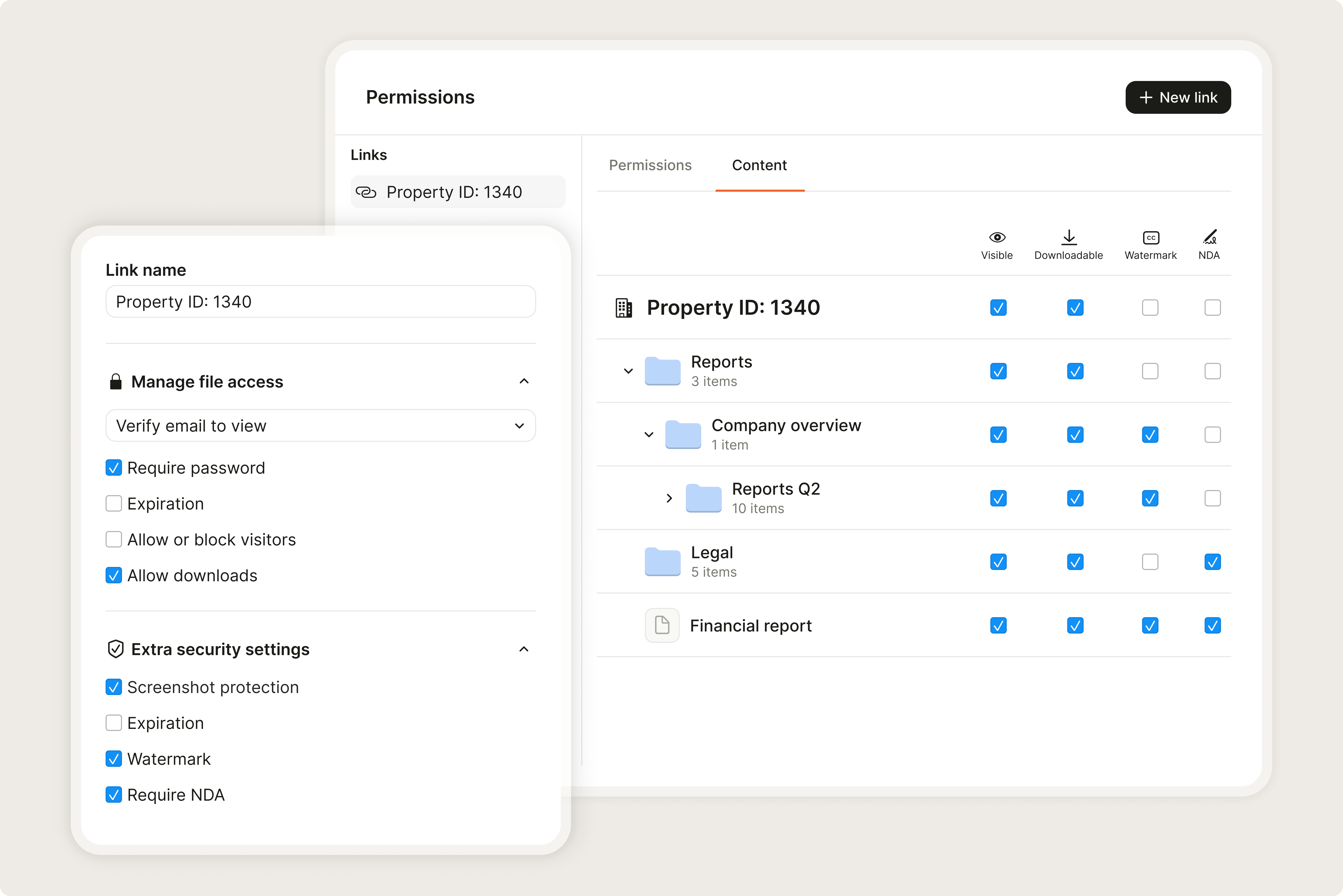
- 2.Give each advisor a scoped linkSend your title attorney a link to title files only. Environmental counsel sees ESA docs only. No overlap, no confusion.
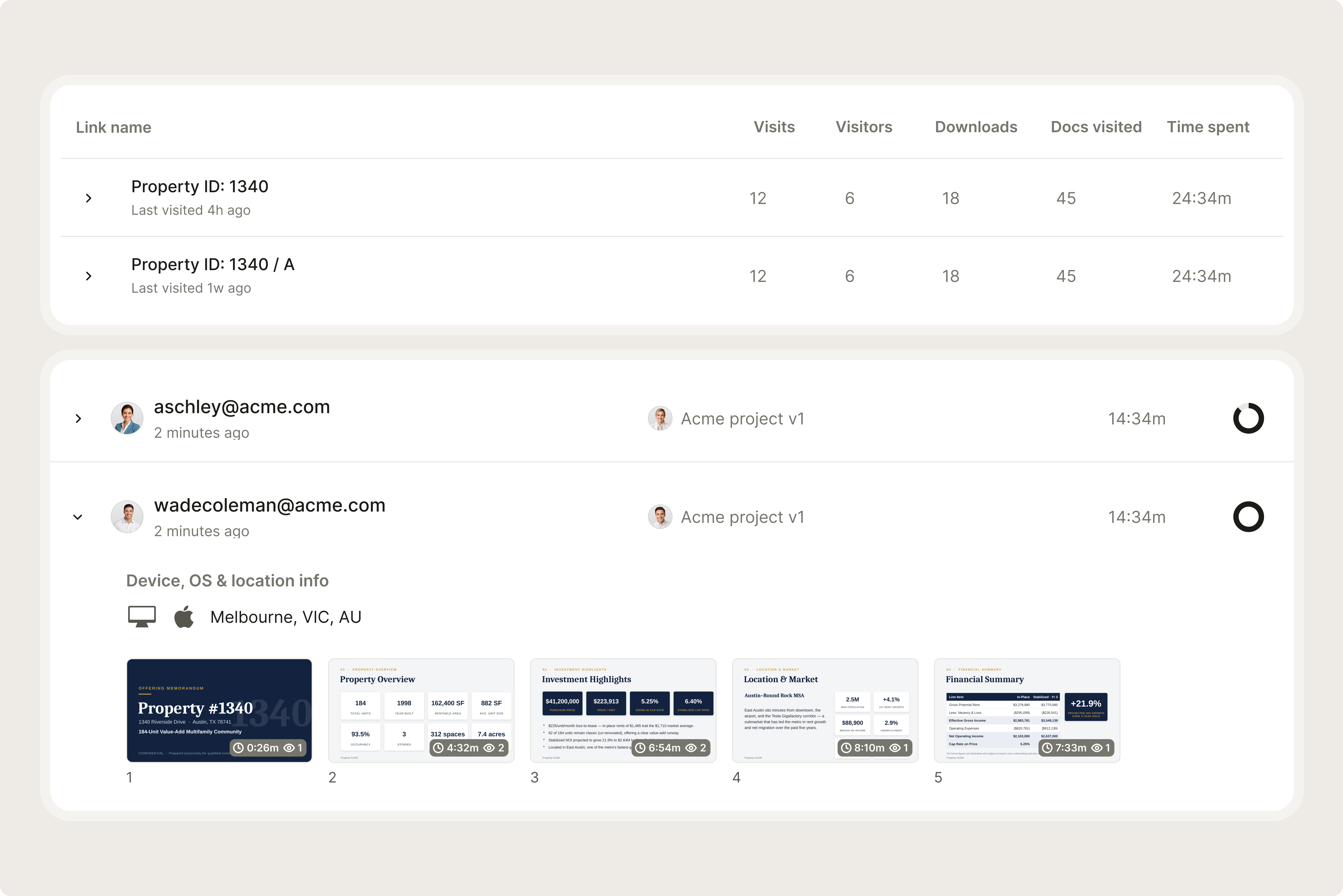
- 3.Track who reviews which documentsSee which docs each advisor opened and how long they spent. Spot where questions form before they delay the closing.
What makes California due diligence different
California is the only major US state where property tax is locked at purchase price until resale. Prop 13 means the seller's tax bill is meaningless as an opex benchmark.
On a $5M acquisition, annual property tax can shift from $40,000 to $65,000 overnight. Model the post-transfer tax bill before you finalize underwriting - not after.
Wildfire insurance is no longer a backstop assumption in California. Insurers pulled out of large parts of the Malibu, Napa, and Sierra Nevada foothills market in 2024-2026.
A parcel in a high fire severity zone may carry no viable insurance options at any price. Confirm coverage availability before you submit an LOI, not at the inspection deadline.
California's AB 1482 rent cap changed the math on multifamily acquisitions across the state. Out-of-state buyers used to underwriting Texas or Florida multifamily often miss it.
For mergers and acquisitions involving California CRE portfolios, rent control compliance is an acquisition-level risk - not just a lease administration issue.
California Prop 13 creates a massive gap between the seller's property tax bill and the buyer's post-close obligation. Buyers who don't model the reassessment into their underwriting are working from a fictional cost basis.
Timeline and cost of California due diligence
A typical California commercial deal runs in three phases. Weeks 1-2 cover initial review: county recorder title search, Phase I ESA kickoff, ALTA survey order, and lease collection.
Also in weeks 1-2: PACE lien payoff request, NHD report order, and Alquist-Priolo zone confirmation. Estimated cost: $6,000-$14,000 for title, survey, NHD, and initial legal review.
Weeks 2-5 cover deep review: Phase I ESA delivery, PCA, lease and CAM audit, tenant estoppels, and seismic assessment. Also AB 1482 compliance review and Prop 13 tax modeling.
Estimated cost for weeks 2-5: $5,000-$12,000 for Phase I, PCA, and environmental counsel. Load all documents into your Ellty data room so advisors track activity across every file.
Weeks 5-8 handle resolution: Phase II ESA if RECs found, title exception negotiations, seismic retrofit cost credits, and transfer tax modeling. Add $5,000-$20,000 if Phase II is required.
Total soft cost for a mid-market California deal: $20,000-$55,000 depending on environmental complexity and market. Factor county documentary transfer tax into your closing model - confirm who pays it in the PSA.
Organize your California deal from day one
One data room for title, ESA, seismic, leases, and PACE docs - with full advisor tracking.
Start free 14-day trialQuestions about California property due diligence
- Each county charges documentary transfer tax. Base rate is $1.10 per $1,000 - San Francisco reaches $25 per $1,000 on deals above $25M.
- PACE liens fund energy improvements and attach to the parcel, not the seller. They survive sale and can be missed by a standard title search.
- Prop 13 locks assessed value until transfer. At sale, the county reassesses to current market value - often doubling or tripling the annual tax bill.
- A state-designated zone within 50 feet of an active fault trace. Development requires a geological report before any discretionary permit is issued.
- AB 1482 applies to most residential units built before 2005. It caps rent increases at 5% plus local CPI, affecting multifamily and mixed-use acquisitions.
- Ellty lets you upload all diligence docs, give each advisor a scoped link, and track exactly who reviewed what across your California deal.