
Equity crowdfunding has moved from niche to mainstream. Billions of pounds and dollars are raised this way every year. Thousands of investors - many with no prior experience of private markets - are backing startups through platforms they found on their phone.
But most guides on this topic are written by platforms that want your money. This one isn't.
This guide is written to help you understand what equity crowdfunding actually is, how it works in practice, what the risks look like when things go wrong, and what the realistic upside is when things go right.
Whether you're a first-time investor, a founder trying to understand the landscape, or someone who just wants to know if this is right for them - start here.
Table of contents
What is equity crowdfunding?
How does equity crowdfunding work in practice?
How does equity crowdfunding differ from other types of crowdfunding?
Why invest in private companies?
Tax relief - SEIS, EIS, and what you can claim
Understanding the risks
Exit strategies and returns
FAQ
Further support and resources
What is equity crowdfunding?

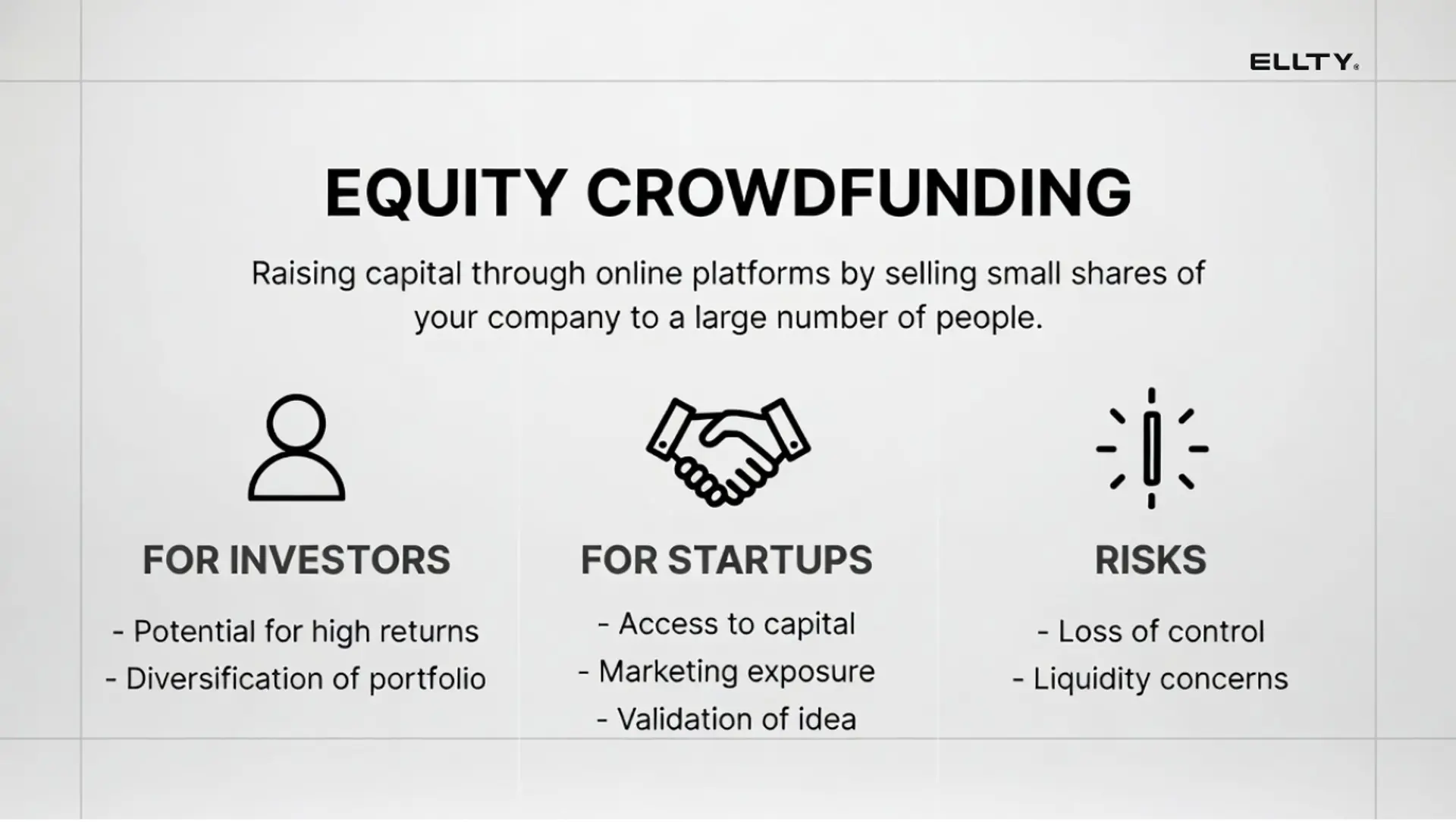
Equity crowdfunding is a way to invest money into a private company in exchange for a small ownership stake - equity - in that company.
Unlike buying shares in Apple or Tesla, you're investing in companies that aren't listed on a public stock exchange. These are typically early-stage startups or scale-ups that are raising money to grow their business.
You invest through an online platform. The company sets a funding target. If enough investors collectively hit that target, the round closes and everyone gets their shares. If the target isn't met (on some platforms), the money is returned.
That's the simple version. The nuance matters, though.
You're not lending money. You're buying a stake. You don't get fixed interest payments. You don't get guaranteed returns. What you get is a proportional share of the company's future value - if it has any.
You're not buying publicly traded stock. You can't sell equity crowdfunding shares on the London Stock Exchange or Nasdaq tomorrow morning. These investments are, in most cases, illiquid for years.
You are, typically, a minority shareholder. Most equity crowdfunding investors hold very small percentages of a company. That affects your rights, your influence, and sometimes your exit options.

A brief history
Equity crowdfunding in the UK became possible following the Financial Services and Markets Act. The FCA regulated the sector from 2014. Platforms like Crowdcube (founded 2011) and Seedrs (founded 2012) were pioneers. In the US, the JOBS Act of 2012 opened up equity crowdfunding to non-accredited investors via Regulation Crowdfunding (Reg CF) in 2016.
Since then, the market has grown significantly. In the UK alone, equity crowdfunding platforms raised over £500 million for businesses in recent years. Globally, the market is expected to exceed $5 billion annually.
How does equity crowdfunding work in practice?
Let's walk through what actually happens - from the company's side and the investor's side.
From the company's side
A startup decides it wants to raise money through equity crowdfunding. Here's the typical process:
Step 1 - Apply to a platform. The company approaches a platform like Seedrs, Crowdcube, or Republic. The platform does some level of due diligence - checking the company is real, reviewing the financials, sometimes vetting the team. The depth of this review varies significantly by platform.
Step 2 - Set the terms. The company decides how much it wants to raise, at what valuation, and what percentage of equity it's offering. For example: raise £500,000 at a £5 million pre-money valuation, offering 9.1% of the company.
Step 3 - Create the campaign. The company puts together a pitch. This usually includes a pitch deck, a business overview, financials, team bios, and a video. The quality of these materials directly affects investor confidence.
Step 4 - Go live. The campaign launches on the platform. It's typically live for 30-60 days. The company promotes it through its own channels, and the platform may give it some exposure to their investor base.
Step 5 - Investors commit. People view the pitch and decide to invest. Most platforms have a minimum investment threshold (often £10-£100).
Step 6 - Round closes (or fails). If the target is hit, funds are transferred and shares are issued. If not, funds are returned (on most platforms - some have overfunding rules or flexible targets).
Step 7 - Post-investment. Investors become shareholders. The company sends updates. Investors have some rights - usually voting on major decisions, anti-dilution protections on some platforms, and access to financial information.
From the investor's side
Step 1 - Create an account. Sign up on a platform. You'll need to verify your identity (KYC checks) and in some jurisdictions, self-certify as a sophisticated investor or confirm you understand the risks.
Step 2 - Browse campaigns. You can view live raises, read pitch decks, review financials, and watch video pitches. Some platforms allow you to ask questions directly to founders.
Step 3 - Do your due diligence. This is your job. The platform won't do it for you. Read the pitch deck carefully. Look at the financials. Research the market. Look at the team's track record. Ask questions.
Step 4 - Invest. Choose your amount. Complete payment. You're now a shareholder.
Step 5 - Wait. Seriously. This is a long game. Most equity crowdfunding investments won't see an exit for 5-10 years, if ever.

Key terms to know


What a good pitch deck looks like

If you're a founder raising via equity crowdfunding, your pitch deck is doing heavy lifting. Most investors will form their first (and often final) impression from it.
Investors want to see a clear problem, a credible solution, real traction data, a sensible market size, a team that's done this before (or can), and a clear plan for how the money will be used.
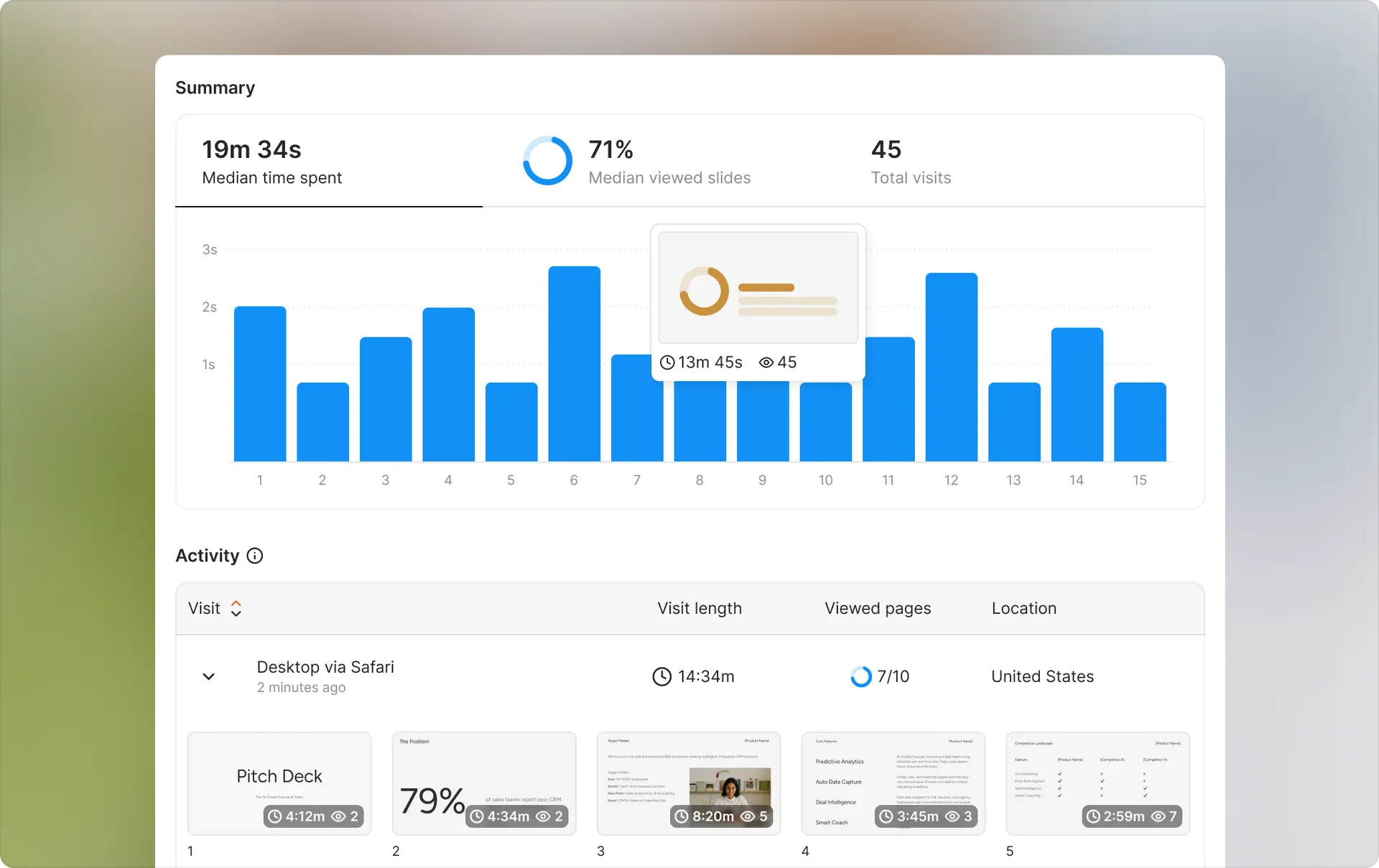
Once a pitch is live, founders need to track who's engaging with it. Are investors reading all the way through? Are they dropping off at the financial slides? Are they sharing it with others?
This is where a tool like Ellty helps. Ellty lets teams upload confidential documents, generate trackable shareable links, and see analytics - which pages investors spent time on, when they opened it, and how many times. It's not glamorous, but it tells you whether your deck is working before you find out the hard way.
How does equity crowdfunding differ from other types of crowdfunding?
"Crowdfunding" is a broad term. Most people have heard of Kickstarter. Equity crowdfunding is a fundamentally different thing. Here's how the main types compare.


Reward crowdfunding
Kickstarter and its cousins. You back a project - usually a product - and get that product (or some other reward) if it gets made. You're a customer, not an investor. You don't own any part of the company. If the company later sells for $100 million, you get nothing extra.
Donation crowdfunding
Charitable giving. You give money to a cause. There's no financial return expected. This is common for personal emergencies, community projects, and non-profits.
Debt crowdfunding (peer-to-peer lending)
You lend money to a business. They pay you back with interest over time. You're a creditor, not a shareholder. If the company does brilliantly, you still just get your fixed interest. If it fails, you're in the creditor queue - which, in practice, often means getting little or nothing.
Equity crowdfunding
You buy shares. You're now a part-owner. If the company grows in value and eventually gets acquired or goes public, you can potentially make many times your initial investment. If it fails - and most startups do fail - you lose everything you invested.
The key difference between equity crowdfunding and the other types is the ownership element. That's what creates the upside. It's also what creates the risk.
Why invest in private companies?
Fair question. Public markets exist. You can buy shares in thousands of companies today on the London Stock Exchange or Nasdaq, with full price transparency and liquidity. Why would you tie up money in a private startup you can't sell for years?
There are a few real reasons.
The return potential is different
When a startup goes from £1 million valuation to £100 million, that's a 100x return. That almost never happens in public markets. The companies that generate those returns are, by definition, private for most of their growth phase.
Early Uber investors who got in when it was worth a few million dollars made extraordinary returns. The same with Airbnb, Deliveroo, Monzo. None of those investments were available to everyday investors through public markets at the early stage.
Equity crowdfunding changes that. For the first time, regular investors can get in at early valuations - not quite ground floor, but closer than public markets allow.
Portfolio diversification
Most people's investment portfolios are built entirely from public equities, bonds, and property. Private company equity behaves differently from all of those. It doesn't move with the stock market. A small allocation to early-stage companies can provide genuine diversification.
You can back things you believe in
This is softer, but real. Some investors genuinely want to support companies building things they care about - climate tech, healthtech, consumer brands they use. Equity crowdfunding lets you put money behind things that align with your values, not just your financial goals.
You get in before the institutional money
Venture capital firms and private equity funds take the best deals before they're ever available to retail investors. Equity crowdfunding isn't perfect access to early-stage companies, but it's better access than waiting for an IPO.
The realistic picture
That said - you need to be honest with yourself about why private companies are available to you through a crowdfunding platform at all.
The best startups still tend to raise from VCs, angels, and institutional investors first. What reaches equity crowdfunding platforms is either:
- Companies that are community-driven and genuinely want crowd participation
- Companies that couldn't raise from institutional investors and are trying crowdfunding instead
- Companies that have already raised institutionally and are using crowdfunding for marketing/community building on top
All three exist. The first and third categories can be great investments. The second category requires much more scrutiny.
Tax relief - SEIS, EIS, and what you can claim
This section applies primarily to UK investors. If you're in another jurisdiction, skip to section 6 and look up your local equivalent (the US has Qualified Small Business Stock relief, for example).
The UK government offers significant tax incentives to encourage investment in early-stage companies. These schemes are called SEIS (Seed Enterprise Investment Scheme) and EIS (Enterprise Investment Scheme).

SEIS - seed enterprise investment scheme
SEIS is for the earliest-stage companies. The tax benefits are generous.


Example: You invest £10,000 in an SEIS-qualifying company. You can claim £5,000 back against your income tax bill. Your effective investment is £5,000. If the company succeeds and you sell your shares for £50,000, you pay no capital gains tax on the £40,000 gain. If the company fails and you lose £10,000, you can claim loss relief - which could mean the government effectively subsidises a significant portion of your loss.
The SEIS limit was increased from £100,000 to £200,000 for investments made from 6 April 2023.
EIS - enterprise investment scheme
EIS applies to slightly larger, more established companies than SEIS. Still early-stage by most standards.


Example: You invest £20,000 in an EIS-qualifying company. You claim back £6,000 against income tax. Effective cost: £14,000. If you sell after 3 years for £80,000, the £60,000 gain is tax-free.
How to claim
You'll receive an SEIS3 or EIS3 certificate from the company (via the platform) after the raise closes. Submit this with your self-assessment tax return. Keep records carefully - HMRC may ask for evidence.
What can disqualify relief
- You or a connected person already held shares in the company before the investment
- You're a director (for EIS - there's an exception for SEIS)
- The company doesn't meet the qualifying criteria
- You sell the shares within 3 years
Always speak to a tax advisor before making investment decisions based on SEIS or EIS eligibility. Platform descriptions of SEIS/EIS qualification are not always reliable. The final say is HMRC's.
Understanding the risks
This section matters more than any other. Read it properly.
Most startups fail
The statistics vary by source and definition, but the general picture is clear: the majority of early-stage companies don't make it. Estimates range from 60% to 90% of startups failing within 10 years. When they fail, equity crowdfunding investors typically lose everything they invested.
This isn't a scare tactic. It's the base rate. Plan your investments around it.
You can't sell when you want to
Equity crowdfunding shares are illiquid. There's no public market for them. You can't log into your platform account tomorrow and sell your Brewdog shares because you need cash.
Some platforms (Seedrs has a secondary market, for example) offer limited liquidity, but it's patchy and you may not get a fair price. Assume that when you invest, that money is locked up for 5-10 years, possibly longer.
Dilution will reduce your stake
When the company raises more money in future funding rounds, your percentage ownership shrinks. This is normal and expected. But it means your 1% stake today might become 0.3% by the time the company has any value.
Some platforms offer anti-dilution protections. Most don't. Read the terms.
Valuations can be inflated
Companies set their own valuations when they raise on equity crowdfunding platforms. There's no independent third party valuing the business in most cases. It's based on what the founders believe, what the market will accept, and sometimes, what makes the maths look attractive.
A company raising at a £10 million valuation with £500,000 in annual revenue is implying a 20x revenue multiple. That might be justified. It might not. You need to form your own view.
Information asymmetry
Founders know far more about their business than you do. The pitch deck shows you what they want you to see. The risks they're worried about, the product problems they haven't solved, the customer churn they're experiencing - none of that is in the video.
This doesn't mean founders are dishonest. It means the information you're making decisions with is inherently incomplete.
Platform risk
Equity crowdfunding platforms themselves can fail. If a platform goes under, the shares you hold should theoretically still exist (they're held in trust or on a nominee basis), but the administrative process of managing your investment becomes complicated and potentially expensive.
Fraud and misrepresentation
It's rare, but it happens. Companies have misled investors about their traction, their financials, their team credentials. Platforms do their best to screen for this, but they're not infallible.

How to manage these risks
You can't eliminate these risks. But you can manage them.
Diversify. Don't put all your early-stage investment into one company. Experienced angel investors often invest in 20+ companies expecting that most will fail, a few will break even, and one or two will return enough to cover everything else.
Only invest what you can afford to lose completely. This is standard advice for a reason. If losing this money would change your life materially, don't invest it here.
Do your own due diligence. Don't rely on the platform's due diligence or the crowd wisdom of other investors. Read the deck, the financials, the terms. Ask questions. Research the market. Look up the founders.
Check SEIS/EIS status before investing. Tax relief meaningfully changes your risk profile. Make sure it applies.
Set a portfolio limit. Many financial advisors suggest that no more than 5-10% of your investable assets should be in high-risk illiquid investments like equity crowdfunding.
Exit strategies and returns
At some point, you want to get your money back - ideally with more attached. Here's how that can happen.
Exit route 1 - trade sale (acquisition)
A larger company acquires the startup. This is the most common exit route for equity crowdfunding companies. The acquirer buys 100% of the shares at an agreed price. You sell your shares and receive cash (or sometimes shares in the acquiring company).
Example: You invested £5,000 at a £2 million valuation, giving you 0.25% of the company. Five years later, the company is acquired for £50 million. Your 0.25% (subject to dilution - let's say it's now 0.15% after multiple funding rounds) is worth £75,000. After SEIS income tax relief on the original investment and CGT exemption on the gain, your actual after-tax return is even better.
Exit route 2 - IPO (initial public offering)
The company lists on a public stock exchange. Your private shares convert to publicly traded shares, which you can then sell on the open market.
IPOs are relatively rare for equity crowdfunding-backed companies. Most startups that go public do so after multiple institutional funding rounds. When it does happen, it's typically the highest-profile exit route.
UK example: Crowdcube-backed companies including Brewdog, Monzo, and Revolut have raised through equity crowdfunding at early stages. Though not all have had conventional IPOs, their growth trajectories have demonstrated the potential upside of early investment.
Exit route 3 - secondary market sale
Some platforms offer secondary markets where you can sell your shares to other investors before a formal exit. Seedrs runs a secondary market. Liquidity is limited and prices aren't guaranteed, but it gives some options.
Exit route 4 - share buyback
Occasionally, the company itself buys back shares from investors - typically when it's doing well and has the cash to do so. Less common, but it happens.
What realistic returns look like
There's no reliable average return figure for equity crowdfunding because the asset class is young, illiquid, and the data is patchy. But here's what the evidence suggests:
- The majority of investments return nothing (company failure)
- A minority return 1-3x (modest success or modest acquisition)
- A small number return 10x+ (significant exits)
The math only works if you're diversified. A portfolio of 20 investments where 15 fail, 4 return 1-2x, and 1 returns 15x could still produce a solid overall return.
Seedrs published data suggesting their portfolio companies had a blended IRR of around 14% as of their last published report - but this figure has caveats and includes unrealised gains, so treat it as indicative, not gospel.
Hypothetical equity crowdfunding portfolio - 20 investments at £500 each
Total invested: £10,000


Portfolio summary by outcome category


Blended return calculation


The key takeaway: One company returning 15× contributed more than half of all the money made across the entire portfolio. Without that single exit, the portfolio would have lost £4,250. This is why diversification isn't optional in equity crowdfunding - it's the only way the math works.
How long before you see a return?
Plan for 5-10 years. Many equity crowdfunding investments will take longer than that, if they exit at all. This is not a quick return vehicle. It's a long-term, high-risk, potentially high-reward asset class.
FAQ
Q: How much money do I need to start investing in equity crowdfunding?
Most platforms allow investments from as little as £10-£100. In practice, you'll want to be thinking about portfolio construction rather than single bets - which means having enough to invest in 10-20+ companies over time. Some experienced investors suggest a minimum budget of £5,000-£10,000 to build a meaningfully diversified portfolio.
Q: Do I need to be an accredited investor to use equity crowdfunding platforms?
In the UK, you need to self-certify as a sophisticated investor, high net worth individual, or confirm you understand the risks and won't invest more than 10% of your net investable assets. In the US, Regulation Crowdfunding opens the market to non-accredited investors up to annual investment limits. Check the specific rules on your chosen platform.
Q: Can I invest from outside the UK?
Most UK platforms accept international investors, but there are restrictions depending on your country of residence. US investors, in particular, face restrictions on many UK platforms. Check the platform's eligibility requirements.
Q: What's the difference between Crowdcube and Seedrs?
Both are UK-based equity crowdfunding platforms. Seedrs uses a nominee structure (the platform holds shares on your behalf, which simplifies administration). Crowdcube originally issued shares directly to investors. Both have secondary markets to varying degrees. Both offer SEIS/EIS qualifying investments. They merged briefly before being separated again - the market has evolved. Check both platforms for current campaigns and terms before deciding.
Q: What happens to my investment if the platform shuts down?
Regulated platforms are required to have wind-down procedures. Your shares should be protected through nominee structures. In practice, the administration becomes more complex and you may need to engage with an insolvency practitioner. This is one reason to prefer well-established, FCA-regulated platforms.
Q: Can a company raise too much? What happens if a campaign overshoots its target?
Yes, companies can overfund. Most platforms allow it up to a certain limit. What happens depends on the platform and the terms set by the company. Sometimes additional investors are welcomed and additional shares are issued. This dilutes existing shareholders. Check the maximum funding cap before investing.
Q: I'm a founder. How do I share my pitch deck with investors during a crowdfunding raise?
This is where tools like Ellty come in. You upload your docs to Ellty, generate a unique trackable link for each investor or investor group, and see exactly who's opened it, how long they spent on each page, and whether they've shared it further. It replaces the guesswork with actual data. You can also set up a secure data room for due diligence materials - without per-user fees eating into your raise budget. Ellty starter plan is free, Standard from $69/month with unlimited documents, eSignatures, and data rooms; Data Room from $149/month with granular permissions, NDA gating, and dynamic watermarking.
Q: What's SEIS advance assurance and should I get it?
SEIS advance assurance is a confirmation from HMRC that your company is likely to qualify for SEIS relief before you raise money. It's not mandatory, but it gives investors confidence. Getting advance assurance before launching a campaign is generally worth the effort. Apply directly through HMRC.
Q: How do I value my company for a crowdfunding raise?
This is one of the hardest questions in equity crowdfunding. There's no universal formula. Common approaches include: revenue multiples (comparing to similar companies), discounted cash flow analysis (for companies with more predictable revenue), and comparable transaction analysis (what similar companies have been acquired for). Be realistic - overvaluation at the crowdfunding stage makes future funding rounds harder and can create legal exposure if the valuation was misleading.
Q: What rights do I have as an equity crowdfunding investor?
It depends on the platform and the deal terms. Typically: the right to vote on major decisions (winding up, selling the company, large share issuances), the right to receive financial information annually, and anti-dilution protections on some platforms. You typically don't get a board seat or day-to-day operational influence. Read the investment agreement carefully before committing.
Further support and resources
UK regulatory and official resources
- FCA (Financial Conduct Authority) - fca.org.uk - For checking if a platform is regulated and understanding investor protections
- HMRC SEIS/EIS guidance - gov.uk - Official guidance on claiming tax relief
- British Business Bank - british-business-bank.co.uk - Overview of the UK startup funding landscape
- UKBAA (UK Business Angels Association) - ukbaa.org.uk - For understanding the angel investing landscape that equity crowdfunding sits within
Equity crowdfunding platforms (UK)
- Seedrs - seedrs.com
- Crowdcube - crowdcube.com
- SyndicateRoom - syndicateroom.com
Equity crowdfunding platforms (US)
- Republic - republic.com
- Wefunder - wefunder.com
- StartEngine - startengine.com
Recommended reading
- "The Lean Startup" - Eric Ries - Useful context on how the companies you're investing in think
- "Venture Deals" - Brad Feld and Jason Mendelson - The mechanics of startup funding explained clearly
- UK Crowdfunding Association (UKCFA) resources - ukcfa.org.uk
For founders preparing to raise
If you're a founder preparing for an equity crowdfunding raise, your pitch deck is the centre of your campaign. Before you go live, make sure you know how it's performing with early investors.
Ellty lets you:
- Upload your files and generate trackable shareable links
- See which pages investors are spending time on (and which they're skipping)
- Get real-time notifications when a new investor opens your deck
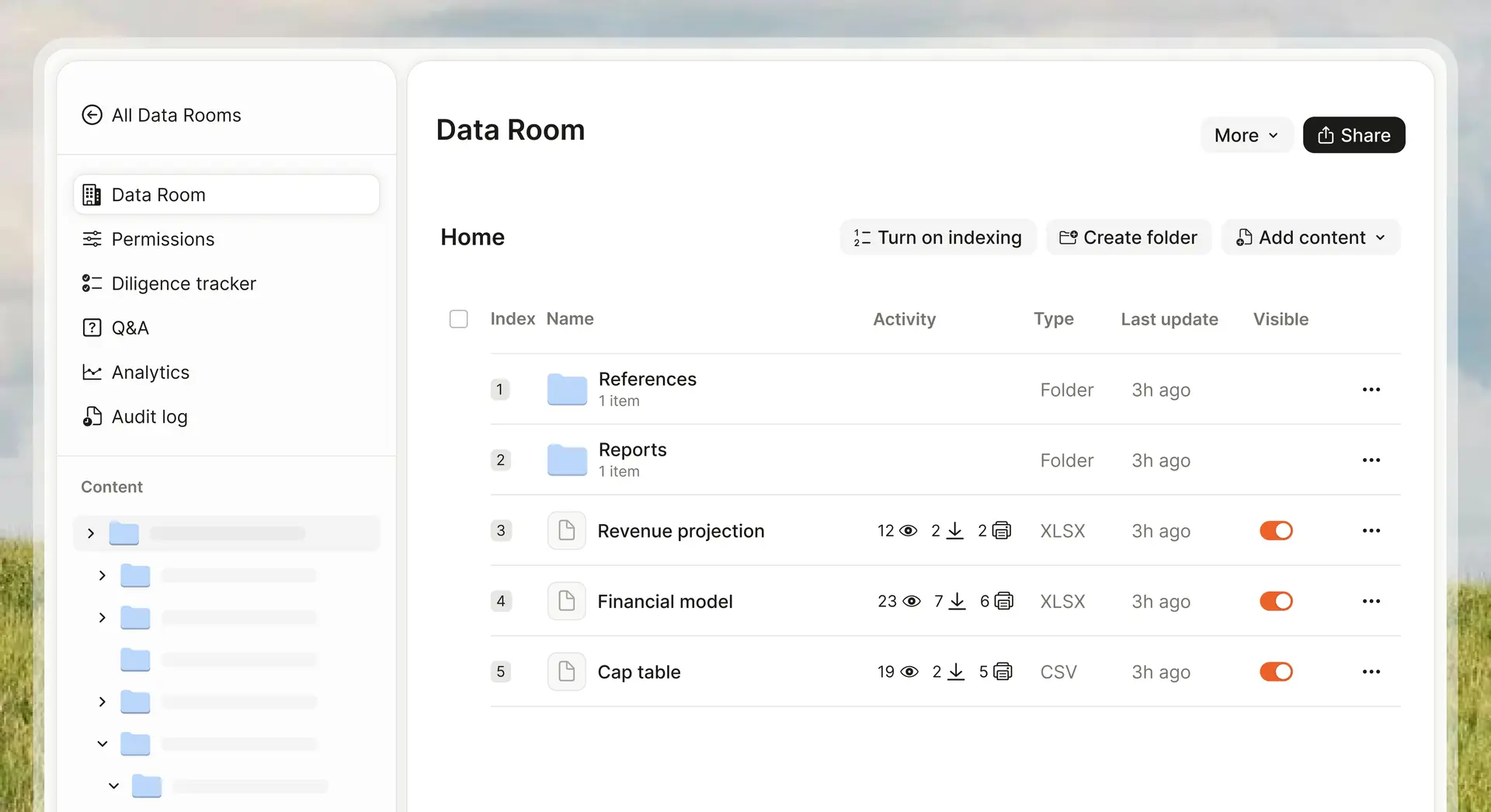
- Set up a secure virtual data room for due diligence without per-user fees
- Share different versions of your deck with different investor groups and track them separately
The starter plan is free. Standard is $69/month. Data Room is $149/month. No per-user fees.

A note on doing your own research
This guide gives you a foundation. It doesn't substitute for proper financial advice, tax advice, or your own due diligence on specific investments.
If you're considering investing meaningful amounts in equity crowdfunding, talk to a financial advisor who understands early-stage investment. If you're claiming SEIS or EIS relief, speak to a tax advisor or accountant.
The platforms and resources listed in this guide are for informational purposes. Inclusion here isn't an endorsement.
Equity crowdfunding can be a genuinely useful part of an investment portfolio. It can also result in total loss. The difference between good outcomes and bad ones often comes down to how carefully you go in.
Author

Anika Tabassum Nionta is a Content Manager at Ellty, where she writes about secure document sharing, virtual data rooms, M&A, due diligence, fundraising, and sales enablement. With over 6 years of writing experience, she helps professionals understand how to share confidential documents securely, track engagement, and manage deals more effectively. Anika holds both a BA and MA in English from Dhaka University. Outside of work, she enjoys reading, exploring new cafes in Dhaka, and connecting with entrepreneurs and dealmakers in her community.

