Angel investors in Toronto are writing pre-seed and seed checks across tech, healthtech, fintech, and consumer sectors in 2025 and 2026. Maple Leaf Angels backed EmergConnect in a $1.75M seed round in March 2025. Canadian angel capital fell to a five-year low in 2025, which means selectivity is high, but the 14 angel investors here are still writing checks.
Raising a pre-seed or seed round from Toronto angels is harder in 2026 than it was three years ago. Canadian angel investment dropped 22.1 percent in 2025 to $113.79M across 490 deals. That's not a reason to panic - it's a reason to be better prepared than the founders competing with you.
Angel investors differ from VCs in one critical way: they're writing personal checks. They lose their own money when a deal goes wrong. That makes them more selective on founder quality and early traction, but it also makes them more flexible on terms and faster to close. A Toronto angel network decision can happen in 48 hours. A VC term sheet rarely closes that fast.
Toronto has more active angel networks than any other Canadian city. Maple Leaf Angels, York Angel Investors, GTA Angels, and Keiretsu Forum Canada all run structured pitch processes. Angel Investors Ontario connects 2,300 angels across 21 groups with over $800M deployed into 800+ startups. That infrastructure is genuinely useful for early-stage founders who need their first institutional check. Set up your fundraising data room before you approach any of them.
The angel funding market in 2026 rewards founders who show up prepared. Networks that used to fund based on vision alone now want to see at least one paying customer or a signed letter of intent before they commit. That shift happened after 2021's peak, when $262.1M was deployed and many bets went wrong. The angel investors still active in 2026 have sharper filters - and they move faster when they see something they like.
Before you send your first pitch, get your materials organized. Use an Ellty data room to share your deck and early financials with trackable links. Angel investors aren't full-time analysts - they'll open your materials once and decide quickly. Knowing exactly who opened your deck and which slides they reviewed tells you who's warm before you spend 20 minutes on a follow-up call.
| Stage | Check | Sector Focus | Contact | |
|---|---|---|---|---|
| Maple Leaf Angels | Pre-seed, Seed | $250K-$1M | Tech, fintech, healthtech, SaaS | mapleleafangels.com |
| York Angel Investors | Pre-seed, Seed | $100K-$500K | Software, SaaS, telecom, pharma, ICT | yorkangels.com |
| GTA Angels | Pre-seed, Seed | $100K-$1M | Tech, healthcare, consumer products | gtaangels.com |
| Keiretsu Forum Canada | Seed, Series A | $500K-$6M | Tech, life sciences, healthcare, real estate | keiretsuforum.ca |
| Angel One Network | Pre-seed, Seed | $50K-$1M | SaaS, ICT, healthcare, cleantech | angelonenetwork.ca |
| The Firehood | Pre-seed, Seed | $100K-$250K | Women-led tech, SaaS, healthtech | firehood.net |
| Angel Investors Ontario | Pre-seed, Seed | $100K-$1M | Sector-agnostic across Ontario | angelinvestorsontario.ca |
| DMZ Angel Investor Network | Pre-seed | $25K-$150K | Tech, SaaS, AI, digital health | dmz.torontomu.ca |
| Panache Ventures | Pre-seed, Seed | Up to $1.5M | Tech, SaaS, AI, B2B software | panache.vc |
| Golden Ventures | Seed | $500K-$3M | Tech, AI, SaaS, consumer, marketplaces | golden.ventures |
| Highline Beta | Pre-seed | $50K-$500K | B2B, SaaS, enterprise innovation | highlinebeta.com |
| Antler Canada | Pre-company, Pre-seed | $100K-$250K | Tech, AI, B2B, deep tech | antler.co/location/canada |
| BDC Capital - Thrive | Pre-seed, Seed | $250K-$1M | Women-led startups, tech, impact | bdc.ca |
| Brightspark Capital | Seed | $100K-$500K | Tech, SaaS, digital media, platforms | brightspark.com |
See who opens your pitch deck
Upload your deck to Ellty and track exactly which angels open your materials.
Start free 14-day trialWhat is a Toronto angel investor?
A Toronto angel investor is an accredited individual or network member who writes personal checks into pre-seed and seed-stage startups. They're not fund managers deploying LP capital - they risk their own money, which changes how they evaluate founders and deals. Most Toronto angels are former founders or executives with exits, industry connections, and genuine operating experience in sectors they back.
Angel investors in Toronto differ from VCs in three practical ways. First, check size: Toronto angels typically write $25K to $500K per deal, syndicated with other angels to reach $1M. Second, speed: structured networks like Maple Leaf Angels commit to decisions in 48 hours through their MLA48 Fund. Third, support: most Toronto angels offer active mentorship and warm intros to their networks alongside capital.
Toronto's angel infrastructure is among the most organized in North America. Angel Investors Ontario coordinates 21 groups and 2,300 accredited investors who have collectively deployed over $800M since 2007. That network density means warm intro paths exist across almost every sector - fintech, healthtech, SaaS, cleantech, consumer tech. The startups page covers the broader Toronto ecosystem context for early-stage founders raising their first round.
What Toronto angels actually care about in 2026 is different from 2021. The 57 percent drop in deployment since the peak has made networks more selective. Every active angel has at least one deal that burned through cash on a weak team or unvalidated market. They want a clear problem, a founder with relevant domain experience, and at least one early signal of demand.
Canada needs to take more shots on goal. If we want more Canadian anchor companies, we have to fund the early stages of the pipeline.
14 Toronto angel investors writing checks
1. Maple Leaf Angels
Toronto's largest and most structured angel network - they run a formal pitch and diligence process, and their MLA48 Fund commits to investment decisions within 48 hours of submission.
- Recent Deals: Backed EmergConnect $1.75M seed round (March 2025, with AQC Capital and Leva Capital); most recent first-time investment was in Gruvi; 50+ companies backed since 2007 with $30M+ deployed
- LinkedIn: Maple Leaf Angels LinkedIn
- Sector Focus: Fintech, mobile technology, hardware, medical devices, SaaS, healthtech
- Stage Focus: Pre-seed, Seed
- Location: Toronto, ON
- Website: mapleleafangels.com
2. York Angel Investors
Canada's first angel network to integrate AI into startup discovery and due diligence - they've backed software, SaaS, and pharma companies and produced four exits including Doorr and Pinch Financial.
- Recent Deals: Four exits in 2020-2021 (Doorr, Pinch Financial, Dapasoft, eScribe); launched Women of York Program; active with AI-driven deal sourcing platform; regular co-investor alongside Maple Leaf Angels
- LinkedIn: York Angel Investors LinkedIn
- Sector Focus: Software, SaaS, telecom, internet applications, pharma, retail
- Stage Focus: Pre-seed, Seed
- Location: Markham, ON (Greater Toronto Area)
- Website: yorkangels.com
3. GTA Angels
One of the most active angel groups in the Greater Toronto Area - they focus on tech, healthcare, and consumer products with a collaborative mentorship model that goes beyond the check.
- Recent Deals: Active across GTA with multiple investments per year in tech and healthcare; investments typically $100K-$1M per company; structured pitch process with transparent investment terms and mentorship support
- LinkedIn: GTA Angels LinkedIn
- Sector Focus: Technology, healthcare, consumer products, digital platforms
- Stage Focus: Pre-seed, Seed
- Location: Toronto, ON
- Website: gtaangels.com
4. Keiretsu Forum Canada
The Toronto and York Region chapters of the world's largest angel network - members access local Ontario startups and global companies, with checks from $500K to $6M in syndicated investments.
- Recent Deals: Members allocated $16.8M to early-stage companies in 2021; funded life sciences, tech, and cleantech across four Ontario chapters; backed a global life sciences company raising $8M+ across global chapters
- LinkedIn: Keiretsu Forum Canada LinkedIn
- Sector Focus: Emerging tech, life sciences, healthcare, real estate, consumer, fintech
- Stage Focus: Seed, Series A
- Location: Toronto, ON / York Region / Waterloo / London, ON
- Website: keiretsuforum.ca
5. Angel One Network
Southern Ontario's most active angel group with $35M+ invested in 175+ companies - they cover Toronto, Mississauga, Oakville, Burlington, Hamilton, and surrounding areas with 20-30 pitches reviewed each year.
- Recent Deals: $35M+ deployed into 175+ companies through structured deal flow; part of the Equation Angels network with four partner groups; syndicated co-investment model with peer angel groups across Southern Ontario
- LinkedIn: Angel One Network LinkedIn
- Sector Focus: SaaS, ICT, healthcare, cleantech, industrial manufacturing
- Stage Focus: Pre-seed, Seed
- Location: Burlington, ON (active across Southern Ontario including Toronto)
- Website: angelonenetwork.ca
Organize your pitch materials now
Set up an Ellty data room with your deck and financials before any angel network meeting.
Start free 14-day trial6. The Firehood
Toronto-based women angel network with 100+ members that has deployed $2M+ into 14 women-led tech startups since 2021 - they run annual pitch competitions with up to $100K in cash investments per event.
- Recent Deals: Awarded $100K at DMZ Women Innovation Summit (March 2025), including LyfeMD ($60K) and Roga ($40K); invested additional $130K in Granularity AI platform; 14 portfolio investments since 2021
- LinkedIn: The Firehood LinkedIn
- Sector Focus: Women-led tech, SaaS, digital health, AI platforms, consumer tech
- Stage Focus: Pre-seed, Seed
- Location: Toronto, ON (national coverage)
- Website: firehood.net
7. Angel Investors Ontario
Ontario's umbrella angel network that coordinates 21 groups and 2,300+ investors - pitching through AIO's member organizations gives you exposure to 16 non-profit angel groups and 14 investment clubs across Ontario.
- Recent Deals: Member groups collectively deployed $800M+ into 800+ high-potential startups since 2007; coordinates syndication across all Ontario angel groups; regularly co-invests alongside BDC Capital on Ontario-based rounds
- LinkedIn: Angel Investors Ontario LinkedIn
- Sector Focus: Sector-agnostic across Ontario
- Stage Focus: Pre-seed, Seed
- Location: Toronto, ON (province-wide)
- Website: angelinvestorsontario.ca
8. DMZ Angel Investor Network
Toronto Metropolitan University's angel network launched in August 2025 - it connects accredited angels with DMZ-vetted startups, providing coaching for first-time angels alongside early deal access.
- Recent Deals: Launched August 2025 with a mandate to generate more capital for early-stage Canadian founders; connects DMZ-sourced startups with accredited angels; part of the DMZ Ventures ecosystem that has backed 400+ startups globally
- LinkedIn: DMZ LinkedIn
- Sector Focus: Tech, SaaS, AI, digital health, B2B platforms
- Stage Focus: Pre-seed
- Location: Toronto, ON
- Website: dmz.torontomu.ca
9. Panache Ventures
Canada's leading pre-seed fund writing first checks up to $1.5M - they operate at angel speed, and their Toronto presence means founders get fast decisions without waiting for LP committee cycles.
- Recent Deals: Delivered CIX Summit 2026 opening remarks and hosted Founders Roundtable (March 2026); 8+ investments in the past 12 months; active across Toronto, Montreal, Vancouver, and Calgary with first checks up to $1.5M
- LinkedIn: Panache Ventures LinkedIn
- Sector Focus: Tech, SaaS, AI, B2B software, marketplaces
- Stage Focus: Pre-seed, Seed
- Location: Toronto, ON / Montreal / Vancouver / Calgary
- Website: panache.vc
10. Golden Ventures
Toronto's leading seed fund with 180+ companies backed and Fund V at $100M+ - they focus on strong technical founders and take a direct approach to seed decisions that skips committee delays.
- Recent Deals: Fund V closed $100M+; backed swXtch.io (April 2026); active across consumer, AI, and software platforms with a founder-first approach to seed stage decisions across Toronto
- LinkedIn: Golden Ventures LinkedIn
- Sector Focus: Tech, AI, SaaS, consumer, marketplace platforms
- Stage Focus: Seed
- Location: Toronto, ON
- Website: golden.ventures
11. Highline Beta
Toronto-based accelerator and pre-seed fund that co-creates startups with enterprise corporate partners - they write pre-seed checks to founders in their programs and connect startups with corporates as first customers.
- Recent Deals: Active with MLA investment meetings hosted at Highline Beta's Toronto offices; runs cohort-based accelerator programs with pre-seed funding; backed B2B and enterprise SaaS founders across Ontario in 2025
- LinkedIn: Highline Beta LinkedIn
- Sector Focus: B2B, enterprise SaaS, corporate innovation, digital platforms
- Stage Focus: Pre-seed
- Location: Toronto, ON
- Website: highlinebeta.com
12. Antler Canada
Global day-zero VC that invests before a team or product exists - they're active in Toronto and write pre-company and pre-seed checks to founders going through their residency cohort program.
- Recent Deals: Backed Assyro AI seed round (January 2025); 19 investments through Antler Canada; portfolio exit ZofiQ (January 2026); 133 global investments in 2025 across 30 countries; Canadian cohorts based in Toronto
- LinkedIn: Antler Canada LinkedIn
- Sector Focus: Tech, AI, B2B software, deep tech, enterprise platforms
- Stage Focus: Pre-company, Pre-seed
- Location: Toronto, ON (global program)
- Website: antler.co/location/canada
13. BDC Capital - Thrive Lab
BDC's dedicated investment vehicle for women-led impact companies - they write $250K to $1M checks at pre-seed and seed to women-led startups with a positive social or environmental impact angle.
- Recent Deals: Launched $150M life sciences fund (April 2026); Thrive Lab active with women-led impact investments across Canada; co-invests alongside Ontario angel networks and The Firehood on women-led rounds
- LinkedIn: BDC Capital LinkedIn
- Sector Focus: Women-led tech, impact-driven startups, healthtech, SaaS
- Stage Focus: Pre-seed, Seed
- Location: Toronto, ON (national presence)
- Website: bdc.ca
14. Brightspark Capital
Toronto-based hybrid angel fund with a focused single-company-per-vehicle model - founders get a structured investor community behind them rather than a single check-writer, which helps with subsequent rounds.
- Recent Deals: Active at seed stage across Canadian tech and digital media since the early 2000s; backed Toronto-based tech founders across multiple fund vehicles; Enthusiast Gaming is one notable portfolio alumni from early-stage backing
- LinkedIn: Brightspark Capital LinkedIn
- Sector Focus: Tech, SaaS, digital media, consumer platforms, B2B software
- Stage Focus: Seed
- Location: Toronto, ON
- Website: brightspark.com
How to structure an angel pitch in Toronto
Angel investors in Toronto aren't fund partners who need to convince a committee. They're making personal decisions with personal money, which means your pitch needs to answer one question clearly: why will this make money and why are you the right person to build it? Industry knowledge and founder-market fit matter more than polished decks at angel stage.
Toronto angel networks run structured pitch events where you get 15-20 minutes to present and 10-15 minutes of questions. That format rewards founders who explain their business simply and defend assumptions honestly. If you don't know your CAC, your revenue per user, or your burn rate, angels in the room will ask - and "I'll get back to you on that" kills momentum instantly. Before any angel network pitch, read the startup data room template and prepare the documents they'll request after the meeting.
The best angel pitches open with the problem before the solution. A single sentence naming the pain, naming the customer, and naming the size of the opportunity sets the frame for everything that follows. Most first-time founders spend the first five minutes explaining the product. Experienced angels want to know the problem first - that context makes everything else easier to evaluate.
Reference other Toronto founders when you can. If a Maple Leaf Angels portfolio founder introduced you to the network, say so. If you went through the DMZ or a CDL cohort, mention it. Social proof from people the angels already trust reduces friction faster than any revenue number. When you follow up after a pitch, use an Ellty trackable link so you can see whether they opened your materials and which sections they spent time reviewing.
How to verify an angel is still active
The Toronto angel market in 2026 has investors who were active in 2021 but have quietly paused new investments without announcing it publicly. Before you spend time building a relationship, check three things: their LinkedIn activity for recent investment announcements, their Crunchbase profile for the last investment date, and ask directly when you reach out if they're currently deploying capital.
Angel networks like Maple Leaf Angels and York Angel Investors post public pitch events and investment meeting dates on their websites and LinkedIn pages. If those events are still happening regularly, the network is active. If the last announced event was six months ago, call before applying. The DMZ Angel Network launched in August 2025 and is actively sourcing early-stage deals from founders connected to their accelerator ecosystem.
Individual angels who've invested alongside networks are also worth approaching directly. The four exits from York Angel Investors included Doorr, Pinch Financial, Dapasoft, and eScribe. Those portfolio founders are now potential angels themselves. A direct LinkedIn message to a Toronto founder who raised angel capital and sold their company converts better than cold email to an investment committee.
Use Ellty to send trackable materials when you reach out to verify interest. A well-organized link with your one-pager and financials tells you if the investor is actually paying attention. If they open the link within 24 hours and spend time on your revenue slide, that's a signal worth a follow-up call. The venture capital use case in Ellty is designed exactly for this workflow - you send, they view, you know.
What angels check during due diligence
Toronto angels dig into three things during diligence: founder background, market size, and early demand signals. On founder background, they want to know if you've worked in the industry you're disrupting. An angel who has backed 10 companies knows that founder-market fit predicts success more reliably than any pitch narrative alone.
On market size, don't show a $100B total addressable market slide with no path to capturing it. Toronto angels have seen enough inflated TAM slides to ignore them. Show a bottom-up model that starts with your first 10 customers, their contract size, and how many similar companies exist in your initial target geography. Check the investor relations page for document templates that help you present this clearly.
On early demand, the standard in 2026 is at least one paying customer or a signed LOI before you approach most Toronto angel groups. Networks that funded vision-only pitches in 2021 are requiring earlier proof now. A signed pilot agreement or a waitlist with genuine sign-ups from your target customer profile will work for the earliest check - but you need at least one of these three things ready before you pitch.
Use the due diligence documentation process to prepare your answers before they ask. Toronto angels run fast processes, and showing up with organized documents signals that you're a founder who executes. Set up an Ellty data room with your financial model, cap table, and any signed customer agreements before your first pitch event - having materials ready the same day a network requests them is a genuine competitive advantage.
How to pitch a Toronto angel investor
Specific steps for pre-seed and seed founders approaching angel networks and individual investors in Toronto in 2026.
- 1.Submit through the network's formal process firstMaple Leaf Angels, York Angel Investors, and GTA Angels all run structured pitch processes. Submit your deck through their application portal before reaching out to members directly - cold approaches to individual members before applying rarely result in funding.
- 2.Prepare your data room before the pitch eventAngel networks move fast after a successful pitch - some like MLA48 commit to decisions in 48 hours. Have your financial model, cap table, and founding documents organized in an Ellty data room before you apply so you can send materials the same day they request them.
- 3.Lead with the problem and customer, not the productMost angel pitches fail in the first three minutes because founders lead with features. State the problem and the customer in one sentence, then explain how you solve it. Angels who've seen 200 pitches remember the founder who knew their customer cold.
- 4.Show one clear signal of market demandA signed LOI, a paying customer, or a waitlist of real prospects all prove someone wants your product. In 2026, Toronto angel groups expect early demand signals before committing - vision alone hasn't been enough since the 2021 market peak.
- 5.Follow up with a trackable Ellty link within 24 hoursAfter any pitch or coffee meeting, send a short email with a link to your materials in Ellty. You'll see exactly who opened your deck and which slides they reviewed - that tells you where to focus your follow-up conversation and who's actually warm.
How Ellty helps you land a Toronto angel investor
You have the list. Now prepare materials that prove your numbers before the first meeting.\n\nUpload your deck and early financials to Ellty and send each angel network a separate trackable link.
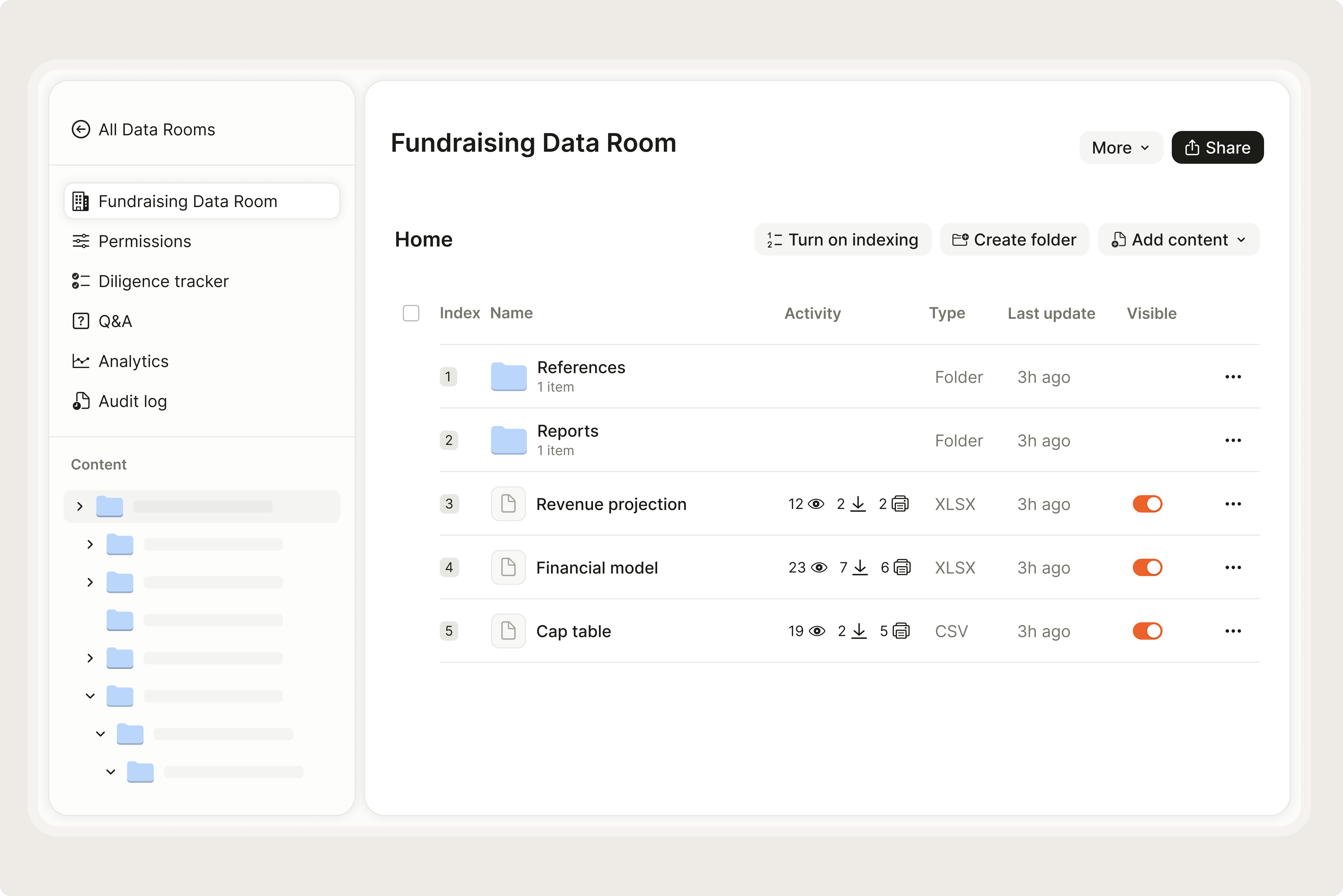
- 1.Build your angel data room before any applicationCreate an Ellty data room and upload your pitch deck, financial projections, and cap table. Toronto angel networks ask for these within 48 hours of a pitch - having them ready before you apply puts you ahead of most founders in the room.
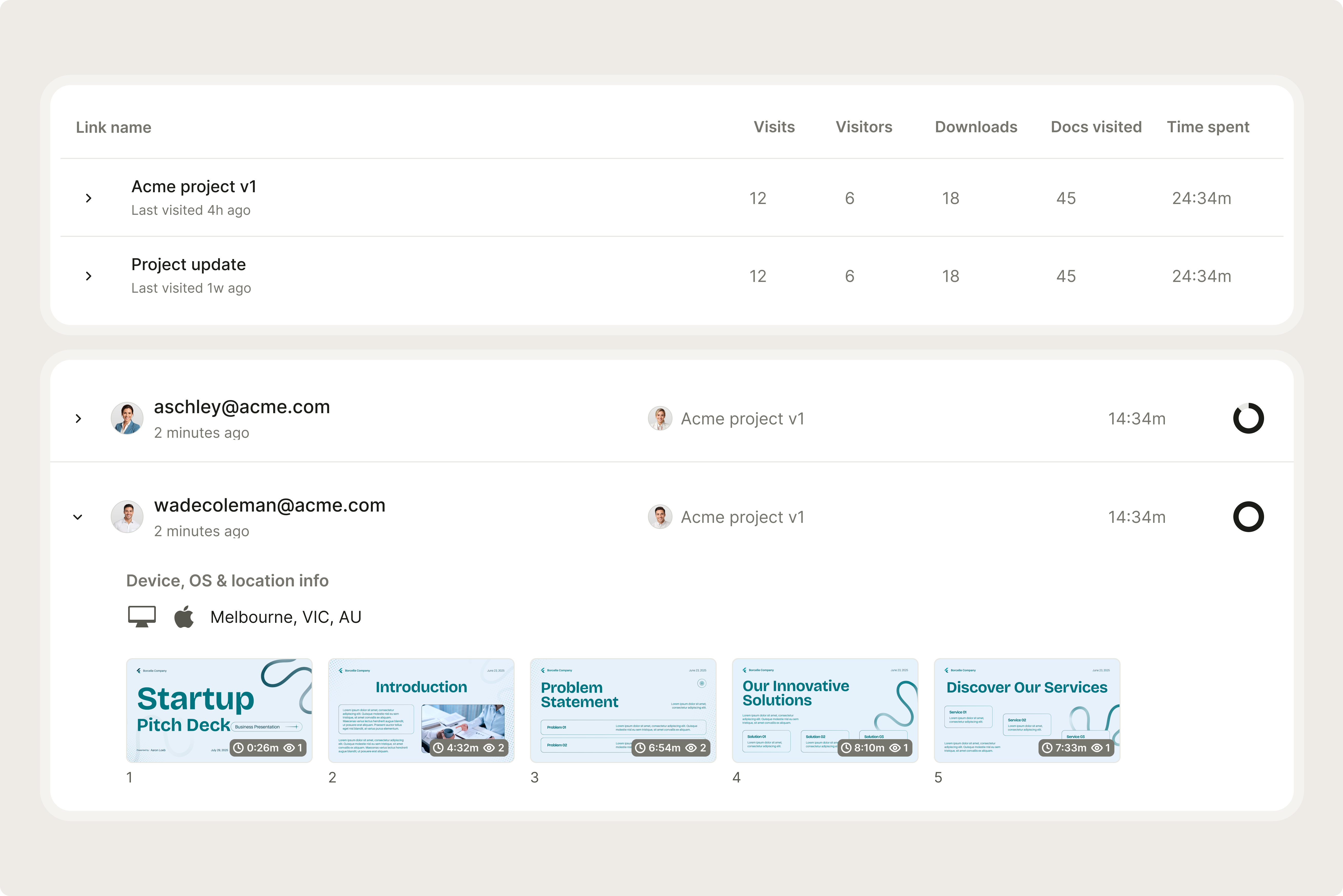
- 2.Set link access per angel group you contactGenerate a unique link per network and require email verification before access. This prevents your early financials and cap table from circulating to contacts you didn't authorize during the angel syndication process.
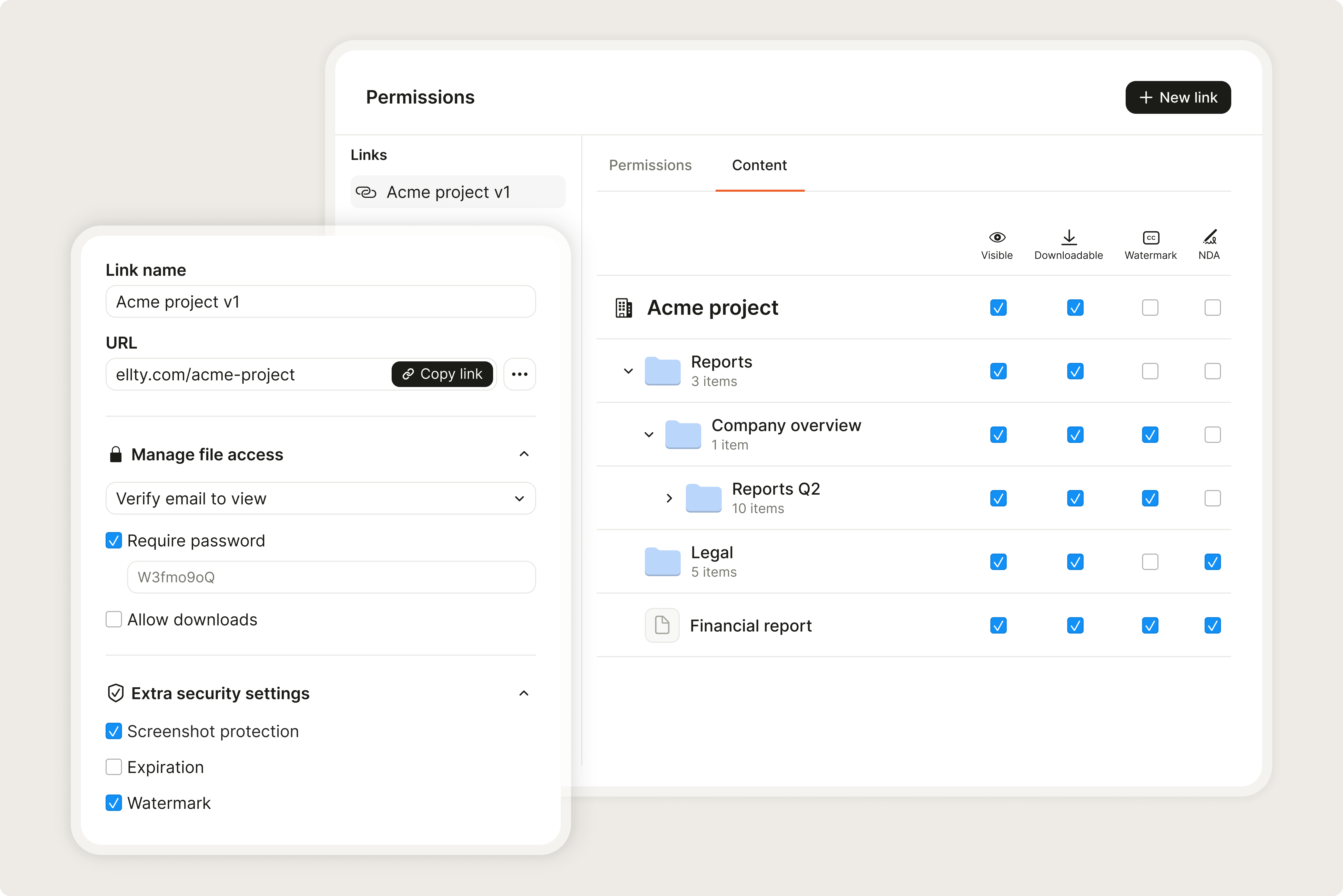
- 3.Get notified the moment an investor reviews your deckGet instant notifications when an angel opens your link and see which sections they spend the most time on. If they linger on your revenue slide, follow up on that specific point the same day while you're front of mind.
Common questions about Toronto angel investors
- Check their LinkedIn page and website for recent pitch event announcements. If the last public meeting was more than three months ago, message the group directly and ask whether they're accepting applications before you invest time preparing a formal submission.
- Angels write personal checks and decide individually or through a network vote - decisions can happen in 48 hours. VCs manage LP capital and need internal committee approval, which typically takes 4-8 weeks. Angels are better for pre-seed; VCs are better once you have $500K+ in ARR or a lead investor already committed.
- Yes. Toronto angel groups don't have exclusivity agreements during the pitch process. Apply to Maple Leaf Angels and York Angel Investors simultaneously - if two networks express interest, you'll have negotiating leverage on terms and can fill your round faster through syndication.
- Before you submit your first application. Groups like MLA48 make decisions in 48 hours and request your financial model and formation documents immediately if they're interested. Having an organized Ellty data room ready prevents you from losing momentum at the worst possible moment.
- In 2026, most Toronto angel groups want at least one signal of real demand - a signed LOI, a paying pilot customer, or a waitlist with genuine sign-ups. Pure vision pitches without any market validation are harder to fund now than they were in 2021 at the peak of Canadian angel deployment.
- Target 15-25 individual investors or 3-5 angel networks depending on your round size. Toronto's syndication culture means one network saying yes often brings in co-investors from connected groups. Quality of fit matters more than volume - a relevant angel with domain expertise is worth more than five general investors with no sector experience.