
Global insurtech funding hit $7.2B in 2025, up 35% year-over-year. These 13 London investors are actively writing checks for insurtech companies in 2026.
London is Europe's insurtech capital. Marshmallow hit $2B+ valuation after raising $90M in April 2025. Flock was acquired by Admiral Group for £80M in February 2026. Hyperexponential raised $73M Series B from Battery Ventures and a16z in January 2024. The cluster of capital, Lloyd's market expertise, and regulatory infrastructure keeps London ahead.
AI is reshaping which insurtech companies get funded. Underwriting automation, claims AI, and parametric insurance platforms are raising. Generic insurtech without defensible data or clear loss ratio improvement is not.
Q1 2026 saw $1.6B deployed across just 81 insurtech deals globally - the lowest deal count since 2016. Bigger checks, fewer bets. You need to be in the top tier to close.
Set up an Ellty data room with your loss ratio data, premium growth, and customer retention before outreach. Insurtech investors read the metrics before taking a call.
| Stage | Check size | Sector focus | Website | |
|---|---|---|---|---|
| Anthemis Group | Pre-seed to Series B | $500K-$10M | Insurtech, embedded insurance | anthemis.com |
| Octopus Ventures | Seed to Series B | £1M-£10M | Fintech, insurtech, deep tech | octopusventures.com |
| Portage Ventures | Seed to Series C | $5M-$50M+ | Insurtech, fintech, financial services | portageinvest.com |
| Balderton Capital | Series A to growth | $1M-$20M | Fintech, insurtech, SaaS | balderton.com |
| Battery Ventures | Series A to Series B | $10M-$75M+ | Insurance software, pricing AI | battery.com |
| Highland Europe | Series A to Series B | $10M-$50M | Software, insurtech, enterprise | highlandeurope.com |
| Andreessen Horowitz | Series A to growth | $10M-$100M+ | AI, fintech, insurtech | a16z.com |
| DST Global | Series B to growth | $50M-$200M+ | Consumer fintech, insurtech | dst-global.com |
| BlackRock | Growth | $30M+ | Fintech, insurtech, financial services | blackrock.com |
| Commerz Ventures | Seed to Series B | $1M-$15M | Insurtech, fintech, fleet | commerzventures.com |
| LocalGlobe | Pre-seed to seed | $500K-$5M | UK tech, fintech, insurtech | localglobe.vc |
| General Catalyst | Series A to growth | $10M-$100M+ | Consumer tech, insurtech, enterprise | generalcatalyst.com |
| Target Global | Series A to Series B | $5M-$30M | Fintech, insurtech, marketplace | targetglobal.vc |
See which insurtech VCs open your pitch
Build an Ellty data room. Track which investors open your insurtech materials.
Start free 14-day trialWhat is a London insurtech investor?
A London insurtech investor backs companies using technology to improve insurance distribution, underwriting, claims, and risk modeling. They range from dedicated insurtech VCs to generalist funds with insurance sector partners.
London's Lloyd's of London ecosystem gives insurtech founders something most markets can't offer: direct access to the world's oldest and largest specialist insurance marketplace. That access matters for B2B insurtech companies selling into underwriters and brokers.
Most London insurtech investors want to see either improving loss ratios (for MGAs and carriers) or clear cost reduction in claims and underwriting workflow (for B2B software). Compare London fintech investors if your insurtech product is primarily a financial infrastructure play.
Insurtech investment hit $1.63bn in Q1 2026. AI-native platforms are capturing nearly all the capital. Non-AI insurtechs are struggling to close rounds at any stage.
13 London insurtech investors
1. Anthemis Group
Anthemis is London's only dedicated insurtech and fintech VC, with $500M AUM. They backed Flock from seed through Series B - Flock was acquired by Admiral Group for £80M in February 2026. They also backed YuLife, Qover, and Raincoat. Their portfolio spans embedded insurance, MGA infrastructure, and climate risk.
- Recent Deals: Flock £80M exit via Admiral acquisition (Feb 2026); kWh Analytics acquisition by Beazley (2026); seed in embedded insurance infrastructure (Mar 2026); YuLife $226M total portfolio
- LinkedIn: Anthemis Group LinkedIn
- Sector Focus: Insurtech, embedded insurance, specialty MGA, climate risk
- Stage Focus: Pre-seed to Series B
- Location: London, UK
- Website: anthemis.com
2. Octopus Ventures
Octopus Ventures backed Flock and Kita, a London carbon insurance specialist. They deploy £200M+ annually across health, fintech, deep tech, consumer, and B2B software. Their insurtech thesis focuses on data-driven underwriting and commercial fleet technology.
- Recent Deals: Flock £80M exit via Admiral (Feb 2026); Kita £4M seed lead; 18 investments in 2025; 6 in early 2026; £1M-£10M check range
- LinkedIn: Octopus Ventures LinkedIn
- Sector Focus: Fintech, insurtech, deep tech, consumer, healthtech
- Stage Focus: Seed to Series B
- Location: London, UK
- Website: octopusventures.com
3. Portage Ventures
Portage led Marshmallow's $90M Series C in April 2025, nearly doubling its valuation to $2B+. They are a global fintech VC with offices in Montreal, Toronto, New York, Paris, and London. Their insurance thesis covers MGAs, embedded insurance, and consumer insurtech with demonstrated premium growth.
Use Ellty to share your premium volume data and loss ratios before approaching Portage. They review underwriting performance before the first call.
- Recent Deals: Marshmallow $90M Series C lead (Apr 2025); 17 investments in 2025; Cata seed (Apr 2026); 73 active portfolio companies; seed to Series C focus
- LinkedIn: Portage Ventures LinkedIn
- Sector Focus: Insurtech, fintech, embedded insurance, consumer finance
- Stage Focus: Seed to Series C
- Location: London, New York, Montreal, Paris
- Website: portageinvest.com
4. Balderton Capital
Balderton backed Zego's journey from seed to $1.1B unicorn, participating in its $150M Series C. With $1.3B in current funds, they are Europe's most active Series A investor. They look for insurtech companies with network effects and market-leading retention data.
- Recent Deals: Zego $150M Series C participant; Grand Games $70M Series B (May 2026); 14 investments in 2026; European-founded tech focus; $1M-$20M checks
- LinkedIn: Balderton Capital LinkedIn
- Sector Focus: Fintech, insurtech, SaaS, consumer
- Stage Focus: Series A to growth
- Location: London, UK
- Website: balderton.com
5. Battery Ventures
Battery led hyperexponential's $73M Series B in January 2024 - the largest single UK insurtech raise in that period. Battery Partner Marcus Ryu, former CEO of Guidewire Software, joined hyperexponential's board. They focus on mission-critical software for the commercial insurance market.
- Recent Deals: hyperexponential $73M Series B lead (Jan 2024); $150M+ check range at growth; enterprise insurance software mandate; board involvement post-investment; US and European deal flow
- LinkedIn: Battery Ventures LinkedIn
- Sector Focus: Insurance software, pricing AI, enterprise tech
- Stage Focus: Series A to Series B
- Location: Boston and London coverage
- Website: battery.com
Share your insurtech metrics securely
Use Ellty to share loss ratios and premium growth before investor meetings.
Start free 14-day trial6. Highland Europe
Highland Europe led hyperexponential's Series A and increased their holding at the $73M Series B. Partners Laurence Garrett and David Blyghton have been on the board since 2021. They focus on B2B software in Europe from Series A through growth, with a specialist track record in insurance software.
- Recent Deals: hyperexponential $73M Series B (Jan 2024); hyperexponential Series A lead; enterprise software mandate; $10M-$50M checks; board involvement post-investment
- LinkedIn: Highland Europe LinkedIn
- Sector Focus: B2B software, enterprise, insurtech, SaaS
- Stage Focus: Series A to Series B
- Location: London, UK
- Website: highlandeurope.com
7. Andreessen Horowitz
A16z backed hyperexponential's $73M Series B with GP Angela Strange joining the board. They backed the round as part of their financial services thesis, covering insurance infrastructure, embedded finance, and AI-native vertical software. Their $15B raised in January 2026 includes continued fintech allocation.
Upload your AI training methodology and data provenance to an Ellty data room. A16z evaluates data strategy and model defensibility before any product demonstration.
- Recent Deals: hyperexponential $73M Series B (Jan 2024); $15B raised across five new funds (Jan 2026); financial services and insurance infrastructure mandate; $10M-$100M+ checks
- LinkedIn: Andreessen Horowitz LinkedIn
- Sector Focus: AI, fintech, insurtech, enterprise software
- Stage Focus: Series A to growth
- Location: San Francisco with global coverage
- Website: a16z.com
8. DST Global
DST Global led Zego's $150M Series C, making Zego the UK's first insurtech unicorn at $1.1B. DST writes large checks at Series C and beyond for category leaders with demonstrated market share. They rarely lead early-stage rounds but move fast at growth stage when metrics are strong.
- Recent Deals: Zego $150M Series C lead; growth-stage insurtech mandate; $50M-$200M+ checks; category leader requirement; US and European deal flow
- LinkedIn: DST Global LinkedIn
- Sector Focus: Consumer tech, fintech, insurtech, marketplace
- Stage Focus: Series B to growth
- Location: London and global
- Website: dst-global.com
9. BlackRock
BlackRock participated in Marshmallow's $90M Series C in April 2025 via managed funds. This marks one of the largest asset manager investments in a UK insurtech. They look for growth-stage companies with a clear path to profitability and $500M+ revenue trajectories.
Share your financial projections via Ellty before any BlackRock outreach. They review modeled loss ratios and revenue forecasts before scheduling introductory calls.
- Recent Deals: Marshmallow $90M Series C participant (Apr 2025); growth-stage mandate; $30M+ checks; path to profitability required; financial services focus
- LinkedIn: BlackRock LinkedIn
- Sector Focus: Fintech, insurtech, financial services
- Stage Focus: Growth
- Location: London and global
- Website: blackrock.com
10. Commerz Ventures
Commerz Ventures, the VC arm of Commerzbank, backed Flock through multiple rounds and participated in the £80M Admiral exit in February 2026. They focus on insurtech and fintech with a particular interest in commercial fleet, embedded finance, and B2B insurance distribution infrastructure.
- Recent Deals: Flock £80M exit via Admiral (Feb 2026); Flock Series B participant; $1M-$15M checks; fintech and insurtech mandate; corporate VC with commercial pipeline access
- LinkedIn: Commerz Ventures LinkedIn
- Sector Focus: Insurtech, fintech, commercial fleet, embedded finance
- Stage Focus: Seed to Series B
- Location: Frankfurt and London coverage
- Website: commerzventures.com
11. LocalGlobe
LocalGlobe (now Phoenix Court) is London's most active seed fund with 138 seed investments averaging $5.88M. They back ambitious founders across fintech and insurtech at pre-seed and seed before market validation. They made 25 investments in 2025. One of the best paths to the London insurtech ecosystem.
- Recent Deals: 25 investments in 2025; 2 in early 2026; Anzen Industries seed; $500K-$5M checks; UK and European seed mandate; fintech and insurtech track record
- LinkedIn: LocalGlobe LinkedIn
- Sector Focus: UK tech, fintech, insurtech, consumer
- Stage Focus: Pre-seed to seed
- Location: London, UK
- Website: localglobe.vc
12. General Catalyst
General Catalyst backed Zego's $150M Series C alongside DST Global. They have a London presence for European deal sourcing and look for insurtech companies with enterprise distribution and strong unit economics. Their check sizes run $10M-$100M+ at Series A through growth.
Read more on private equity due diligence to understand what institutional investors check during diligence. See London seed investors if you're earlier stage.
- Recent Deals: Zego $150M Series C participant; Multiverse portfolio (May 2026); enterprise distribution mandate; $10M-$100M+ checks; US and European deal flow
- LinkedIn: General Catalyst LinkedIn
- Sector Focus: Consumer tech, insurtech, enterprise, AI
- Stage Focus: Series A to growth
- Location: London and global
- Website: generalcatalyst.com
13. Target Global
Target Global backed Zego and YuLife. They write $5M-$30M at Series A and B across fintech, insurtech, and marketplace companies. Their London and Tel Aviv offices cover European deal flow actively. YuLife has raised $226M total with Target as an early backer.
- Recent Deals: Zego portfolio; YuLife $226M total portfolio; $5M-$30M checks; Series A and B mandate; fintech and insurtech focus; European deal flow
- LinkedIn: Target Global LinkedIn
- Sector Focus: Fintech, insurtech, marketplace, consumer
- Stage Focus: Series A to Series B
- Location: London, Berlin, Tel Aviv
- Website: targetglobal.vc
How to verify a fund is still deploying
Dead portfolio companies are a red flag. If an investor's last five investments are shutdowns or zombie companies, they're not deploying - they're managing losses. Check Crunchbase or Dealroom for their most recent deals before cold outreach.
Fund vintage matters too. A fund raised in 2019 is likely in harvest mode by 2026. Ask which fund number they're deploying from and when it closed. A fund that closed in 2024 or 2025 has capital to put to work.
Use Ellty to share your materials only with investors you've confirmed are deploying. Don't waste a warm intro on a fund that's winding down.
What to prepare before reaching out
Insurtech investors want to see loss ratios before they see the product. If you're an MGA, come with combined ratio data over at least 12 months. If you're selling to insurers, show cost reduction per claim or per policy.
Don't pitch your tech stack. Pitch your data advantage. Who collects the data, how it's used in underwriting, and why competitors can't replicate it. That's the difference in London in 2026.
Send your data room via Ellty before any call. Track who opens your loss ratio slides. Follow up on what they engaged with - not a generic "did you get a chance to review?" message.
How to get a warm intro to London insurtech investors
Cold outreach to London insurtech VCs has a low hit rate. Anthemis, Balderton, and Octopus all say warm intros convert at significantly higher rates than cold emails.
The fastest path is through portfolio founders. Pick three portfolio companies from the fund you're targeting. Find the founder on LinkedIn and ask for a 15-minute call. If you can help them in some way, they'll often make the intro.
Lloyd's market connections are another underrated path. Syndicates, brokers, and MGAs in the Lloyd's ecosystem have direct relationships with insurtech investors. If you're working with a Lloyd's broker, ask for an intro to relevant VCs.
How to pitch a London insurtech investor
Five steps to close an insurtech round in London in 2026. Built on what these investors actually review.
- 1.Lead with loss ratios, not product featuresShow 12 months of underwriting data. Investors read metrics before slides.
- 2.Match your check size to the right fundPre-seed goes to LocalGlobe. Growth rounds go to DST and BlackRock.
- 3.Verify the fund is still deploying capitalCheck recent deal dates. Funds in harvest mode won't write new checks.
- 4.Send your data room link before the callUpload metrics to Ellty. Send one trackable link and monitor engagement.
- 5.Know the Lloyd's market context before pitchingLondon investors expect you to understand the market you're entering.
How Ellty helps you land a London insurtech investor
You know the investors. Now prepare your materials. Insurtech investors review loss ratios and data strategy before any first call.
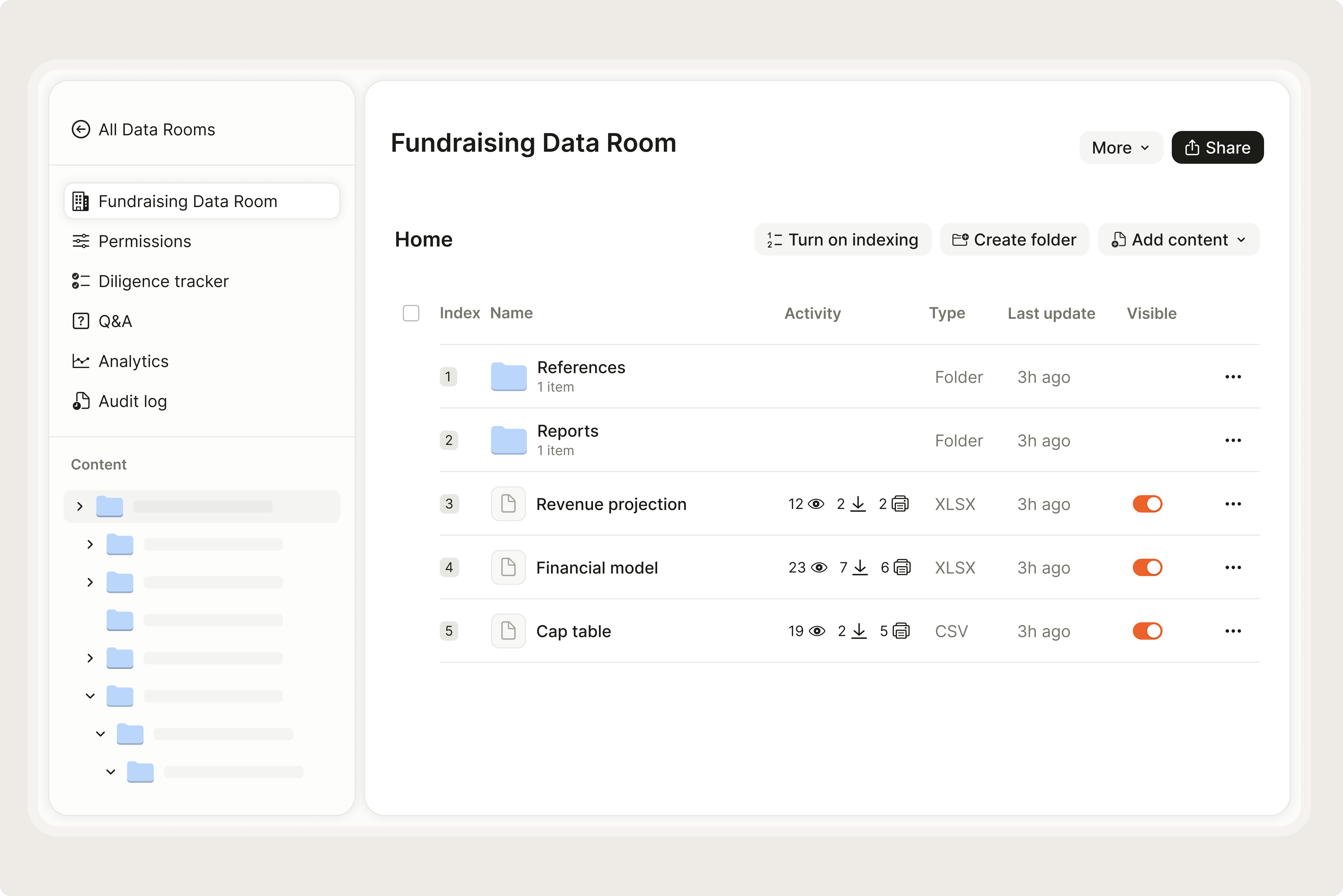
- 1.Upload underwriting data and loss ratiosAdd your loss ratio data and premium growth. Share one link, not attachments.
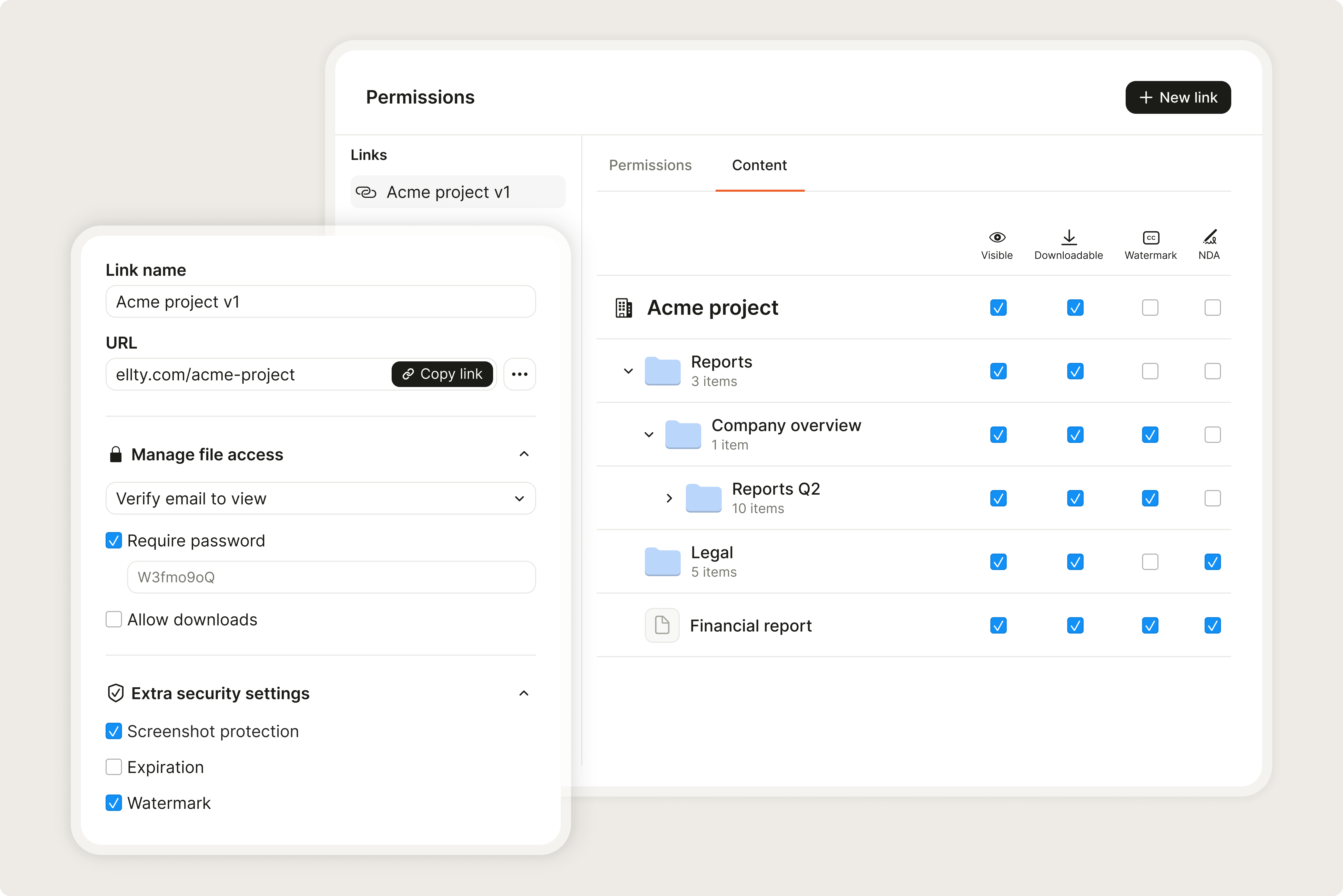
- 2.Set permissions on sensitive financialsRequire email to view underwriting data. Block downloads of loss models.
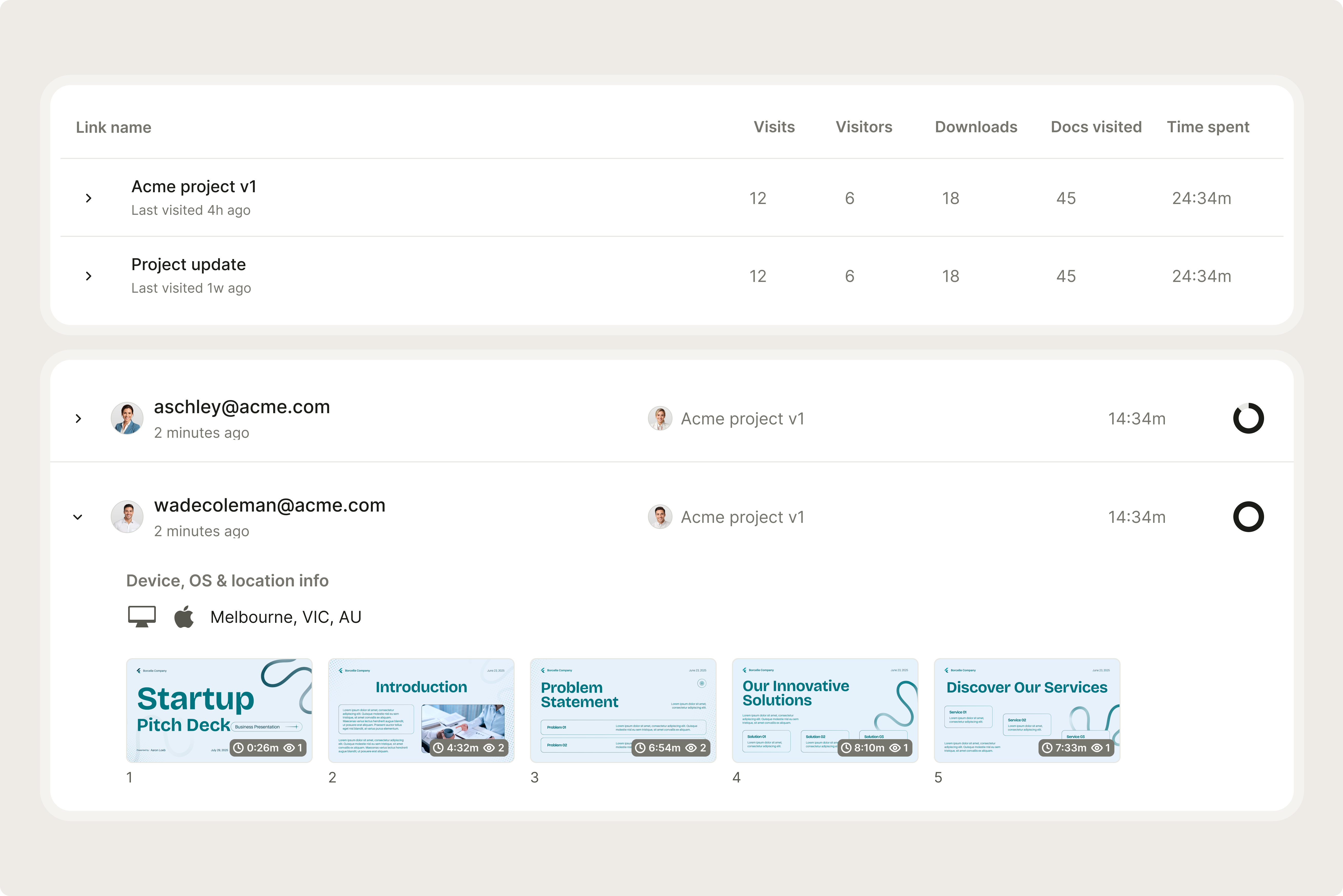
- 3.See which investors review your financialsTrack who opens your loss ratio slides. Follow up based on what they read.
Common questions about London insurtech investors
- Not required, but helpful. B2B insurtechs with Lloyd's broker or syndicate customers close rounds faster.
- Loss ratio trend, premium volume, and customer retention data. No combined ratio is needed at pre-seed.
- Insurtech investors check loss ratios and regulatory capital. Fintech investors focus on revenue and NRR.
- Both simultaneously. Anthemis for domain knowledge. Balderton or Octopus for larger checks and faster process.
- Before your first outreach. Upload loss ratios and premium data before sending any cold email.
- Check their last three deals on Crunchbase. No deals in 12 months usually means no new checks.


