Toronto investors have written real checks into food and beverage companies in 2025 and 2026 - not hype, actual deployments. InvestEco Capital led a $14.2M Series A for Little Sesame in 2025. District Ventures Capital has backed emerging food brands across Canada. BrandProject has invested in consumer food and beverage at seed stage. If you're raising for a food or beverage startup in Toronto, these 15 investors are actively working deal flow right now.
Toronto food investors understand margins, supply chain, and retail velocity differently than generic tech VCs.
Many tech investors will pass on food companies because they don't grasp unit economics or co-packing.
This list covers 15 active investors who've backed food and beverage companies from Toronto in 2025 and 2026.
Most investors in this space have lost money on trendy categories that never scaled past DTC.
They want to see retail traction, repeat orders from buyers, and clear paths to profitability.
Your pitch needs financial runway and a realistic timeline to cash flow before you pitch any of these firms.
| Stage | Check Size | Sector Focus | Contact | |
|---|---|---|---|---|
| InvestEco Capital | Series A, Seed | $2M–$6M | Sustainable food, health, organic | investeco.com |
| District Ventures Capital | Seed, Series A | $500K–$2M | CPG, food, beverage, wellness | districtventurescapital.com |
| BrandProject | Seed, Series A | $250K–$3M | Consumer brands, food, beauty | brandproject.com |
| FTW Ventures | Seed, Series A | $1M–$5M | Food tech, agritech, alt protein | ftw.vc |
| Golden Ventures | Seed | $500K–$2M | Food, AI, consumer, software | golden.ventures |
| Relay Ventures | Seed, Series A | $1M–$5M | Food tech, fintech, real estate | relay.vc |
| Globalive VC | Seed, Series A | $500K–$3M | Consumer, food, fintech, software | globalivevc.com |
| Collaborative Fund | Pre-seed, Seed | $100K–$500K | Consumer, food, sustainability | collaborativefund.com |
| Celtic House Venture Partners | Seed to Series A | $1M–$5M | Food tech, software, enterprise | celtichousevp.com |
| Kensington Capital | Seed to Series B | $2M–$10M | Food, tech, media, biotech | kcpl.ca |
| Panache Ventures | Pre-seed, Seed | $200K–$1M | Consumer, food, agritech | panache.ca |
| Mantella Venture Partners | Seed, Series A | $1M–$3M | Consumer, food tech, software | mantella.ca |
| Export Development Canada | Series A, B | $2M–$15M | Food, CPG, consumer goods | edc.ca |
| BDC Capital | Seed to Series C | $1M–$10M | Food tech, agritech, consumer | bdc.ca |
| Farm Credit Canada | Growth, expansion | $5M–$50M | Agritech, food, sustainable ag | fcc-fac.ca |
Send your pitch with confidence
Create a trackable data room and see which investors actually open your financial model.
Start free 14-day trialWhat Toronto food investors actually fund
Toronto food investors have zero patience for DTC-only brands anymore - they've watched too many fail.
Investors want to see retail velocity from actual stores, not just Shopify sales or Instagram followers.
Check sizes depend heavily on stage - seed is $500K to $2M, Series A is $2M to $6M minimum.
Your margins matter more to these investors than your marketing story or founder background.
Most food investors in Toronto look for companies with $500K to $2M in annual revenue at entry.
They want proof that grocery stores will actually buy your product and that customers will re-order.
We backed brands from kitchen to acquisition - we know what retail actually wants. If you're building pure e-commerce, you're building a customer acquisition problem, not a business.
15 Toronto food and beverage investors in 2026
1. InvestEco Capital
Toronto-based food and agricultural specialist - they've backed over 30 companies in the space since 2002.
- Recent Deals: Led $14.2M Series A for Little Sesame (May 2025); invested in Chickapea (follow-on, 2025); portfolio includes Vital Farms, LesserEvil, The Jackfruit Company, Sol Cuisine
- Sector Focus: Sustainable food, organic brands, health-focused CPG, agricultural innovation
- Stage Focus: Series A, Seed
- Location: Toronto, ON
- Website: investeco.com
2. District Ventures Capital
Led by Arlene Dickinson from Dragons' Den - focused entirely on food and health CPG brands.
- Recent Deals: Active in food and beverage seed/Series A since 2018; portfolio includes multiple consumer brands in CPG space; backing emerging Canadian food founders
- Sector Focus: CPG, food, beverage, health and wellness
- Stage Focus: Seed, Series A
- Location: Calgary, AB (active across Canada including Toronto)
- Website: districtventurescapital.com
3. BrandProject
Toronto and New York-based early-stage fund - they back consumer brands including food and beverages at seed.
- Recent Deals: Good Bacteria investment (January 2026); portfolio includes food and health brands; 52+ investments across consumer categories
- Sector Focus: Consumer brands, food products, beverage, health
- Stage Focus: Seed, Series A
- Location: Toronto, ON / New York, NY
- Website: brandproject.com
4. FTW Ventures
Food and agritech specialist - they've invested in 27+ companies building sustainable food solutions.
- Recent Deals: Brilliant Harvest ($4M seed, February 2026); ALTR Alcohol Removal Technology ($5M, July 2025); Heritable Agriculture (AI plant breeding, spinout from Alphabet)
- Sector Focus: Food tech, agritech, alternative proteins, beverage technology
- Stage Focus: Seed, Series A
- Location: San Francisco, CA (active in Canadian deals)
- Website: ftw.vc
5. Golden Ventures
Toronto's leading seed fund - they've backed 180+ companies across North America including food brands.
- Recent Deals: Active across multiple rounds; invested in swXtch.io (productivity, April 2026); backing digital media, gaming, and food tech
- Sector Focus: Food tech, consumer, AI, software
- Stage Focus: Seed
- Location: Toronto, ON
- Website: golden.ventures
6. Relay Ventures
Toronto-based thematic VC with portfolio in gaming, fintech, real estate, and food technology.
- Recent Deals: Mave AI investment (real estate, January 2026); active seed and Series A stage; partners with operational backgrounds in their sectors
- Sector Focus: Food tech, fintech, real estate, autonomous systems
- Stage Focus: Seed, Series A
- Location: Toronto, ON
- Website: relay.vc
Organize your due diligence before investors ask
Set up an Ellty data room with your financial model, cap table, and cohort analysis before your first meeting.
Start free 14-day trial7. Globalive VC
Toronto-based venture studio backing founders in multiple sectors including consumer and food.
- Recent Deals: Active in seed and Series A with 4+ investments in 12-month period; focus on Canadian entrepreneurs
- Sector Focus: Consumer, food, fintech, software
- Stage Focus: Seed, Series A
- Location: Toronto, ON
- Website: globalivevc.com
8. Collaborative Fund
Early-stage fund investing in consumer and food brands with social impact focus.
- Recent Deals: Active at pre-seed and seed across North America; focus on sustainable consumer brands
- Sector Focus: Consumer, food, sustainability, social impact
- Stage Focus: Pre-seed, Seed
- Location: New York, NY (active in Canada)
- Website: collaborativefund.com
9. Celtic House Venture Partners
Toronto-based 30-year investor - they've backed 25 IPOs and have food tech in their portfolio focus.
- Recent Deals: Active in seed and Series A; portfolio spans tech, food tech, enterprise; established investor with exits
- Sector Focus: Food tech, software, enterprise applications
- Stage Focus: Seed to Series A
- Location: Toronto, ON
- Website: celtichousevp.com
10. Kensington Capital Partners
Multi-strategy fund managing $2.6B+ - Venture Fund III covers direct VC deals in food and tech.
- Recent Deals: ProteinQure investment (AI drug discovery, May 2025); active in food and technology; venture fund toward $290M target
- Sector Focus: Food, technology, media, biotech
- Stage Focus: Seed to Series B
- Location: Toronto, ON
- Website: kcpl.ca
11. Panache Ventures
Canada's leading pre-seed fund based in Montreal - active across Canadian food and consumer founders.
- Recent Deals: Active with 8+ investments in 12-month period; pre-seed focus across consumer, agritech, and food tech
- Sector Focus: Consumer, food, agritech
- Stage Focus: Pre-seed, Seed
- Location: Montreal, QC (active across Canada)
- Website: panache.ca
12. Mantella Venture Partners
Toronto-based $20M fund with hands-on approach to early-stage tech and consumer companies.
- Recent Deals: Active in seed and early Series A; focus on consumer tech and emerging brands
- Sector Focus: Consumer, food tech, software
- Stage Focus: Seed, Series A
- Location: Toronto, ON
- Website: mantella.ca
13. Export Development Canada
Government-backed investor with portfolio focus on CPG and consumer brands internationally.
- Recent Deals: Led investments in food and beverage brands like Love Good Fats, Chickapea, Sol Cuisine; board member and observer roles
- Sector Focus: Food, CPG, consumer goods, exports
- Stage Focus: Series A, Series B
- Location: Toronto, ON (national presence)
- Website: edc.ca
14. BDC Capital
Canada's development bank VC arm - they fund tech-enabled food and agritech businesses at every stage.
- Recent Deals: Active across seed to Series C; launched $150M life sciences fund (April 2026); broad food tech coverage
- Sector Focus: Food tech, agritech, consumer technology
- Stage Focus: Seed to Series C
- Location: Toronto, ON (national reach)
- Website: bdc.ca
15. Farm Credit Canada
$2B commitment to agritech and food sector through new FCC Capital division announced 2025.
- Recent Deals: $2B investment program through 2030; early-stage through late-stage growth focus; signaling institutional support for food innovation
- Sector Focus: Agritech, food systems, sustainable agriculture
- Stage Focus: Growth, expansion
- Location: Regina, SK (national reach)
- Website: fcc-fac.ca
Food margins are not venture margins
Most food businesses run 30-40% gross margins - venture scale usually needs 70%+ gross margins.
This mismatch kills most food fundraises when investors realize your 40% margin needs 100M in revenue.
Toronto investors understand this constraint and look for companies that can reach $50M+ revenue sustainably.
Your financial model needs to show path to profitability on unit economics, not just revenue growth.
If your business looks like it needs $500M in revenue to break even, Toronto investors will pass immediately.
They've seen too many food brands burn cash on customer acquisition with no path to real unit economics.
How to pitch Toronto food investors
Specific steps for food and beverage founders raising from Toronto VCs and CPG specialists in 2026.
- 1.Show retail velocity data before you pitch anythingHave sales data from actual grocery stores, not just DTC channels. Investors want POS data showing repeat purchases.
- 2.Build a cost of goods sold model that stacksShow every line of manufacturing, packaging, shipping. Investors will hire a food consultant to verify your margins.
- 3.Prepare for 4-6 month due diligence timelinesFood investors move slower than tech. Plan for regulatory checks, manufacturing audits, and supply chain verification.
- 4.Have supply agreements locked before seed closeShow that your co-packer or manufacturer is committed. A letter of intent isn't enough - investors want binding agreements.
- 5.Document unit economics down to the pennyRevenue per customer, cost per unit, shelf life, returns rates. These investors know food - don't round or estimate.
How Ellty helps you land a Toronto food investor
Now that you know the investors, prepare materials that prove your unit economics and production readiness. Upload your financial model, POS data, and supply agreements to Ellty - then send trackable links to investors.
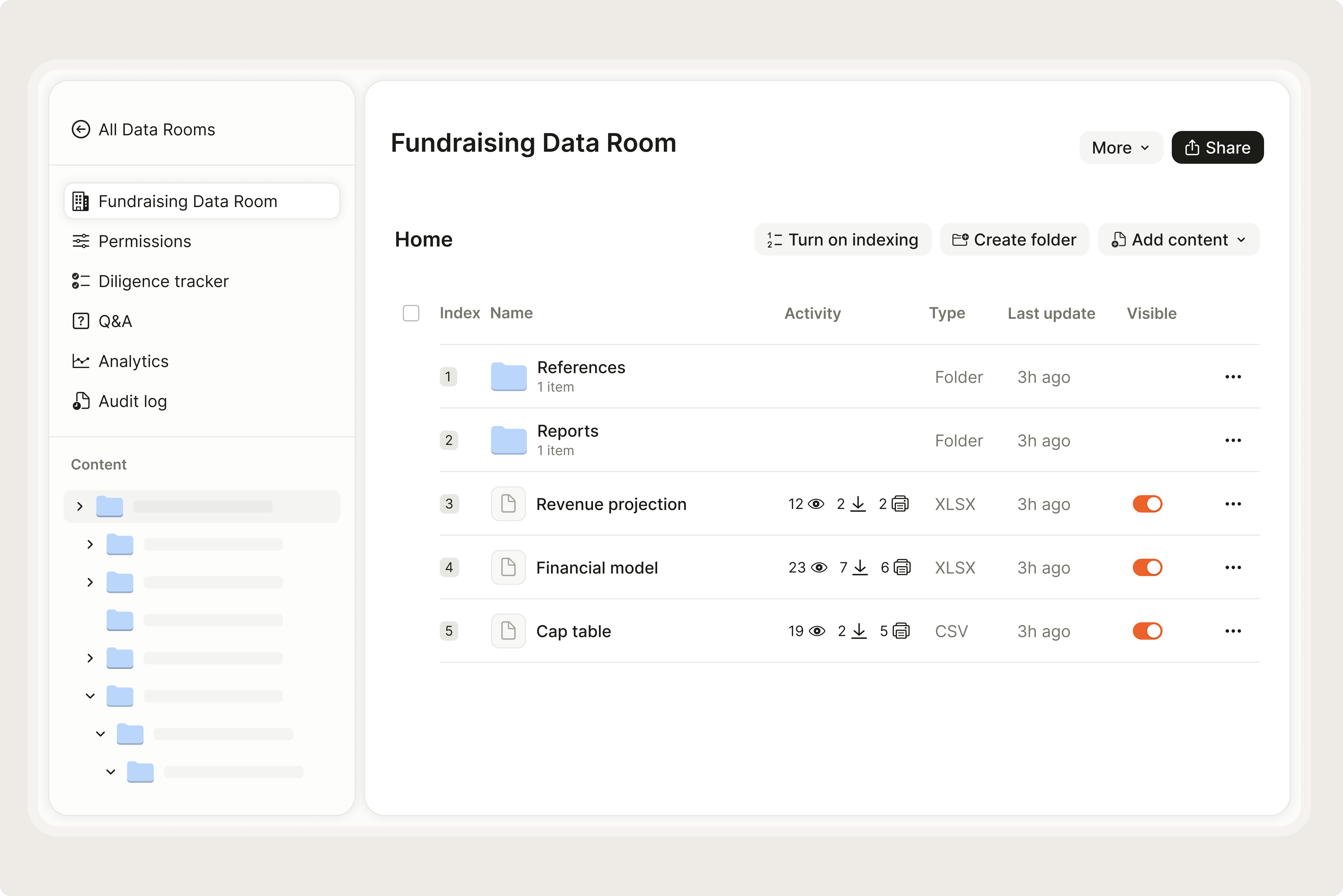
- 1.Build your data room before your first outreachCreate an Ellty data room and upload your pitch deck.
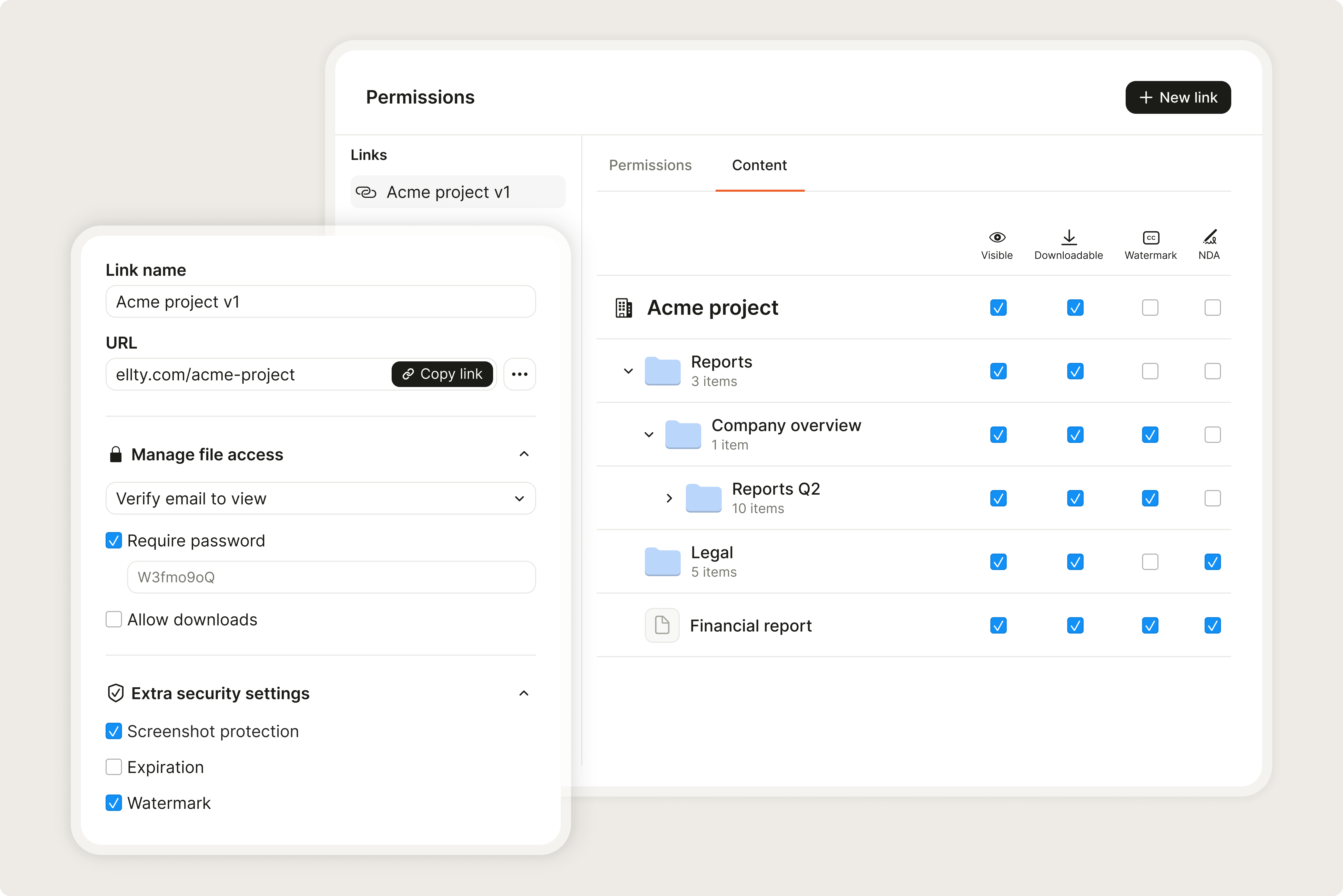
- 2.Set permissions and control who sees your financialsGenerate a separate trackable link for each investor.
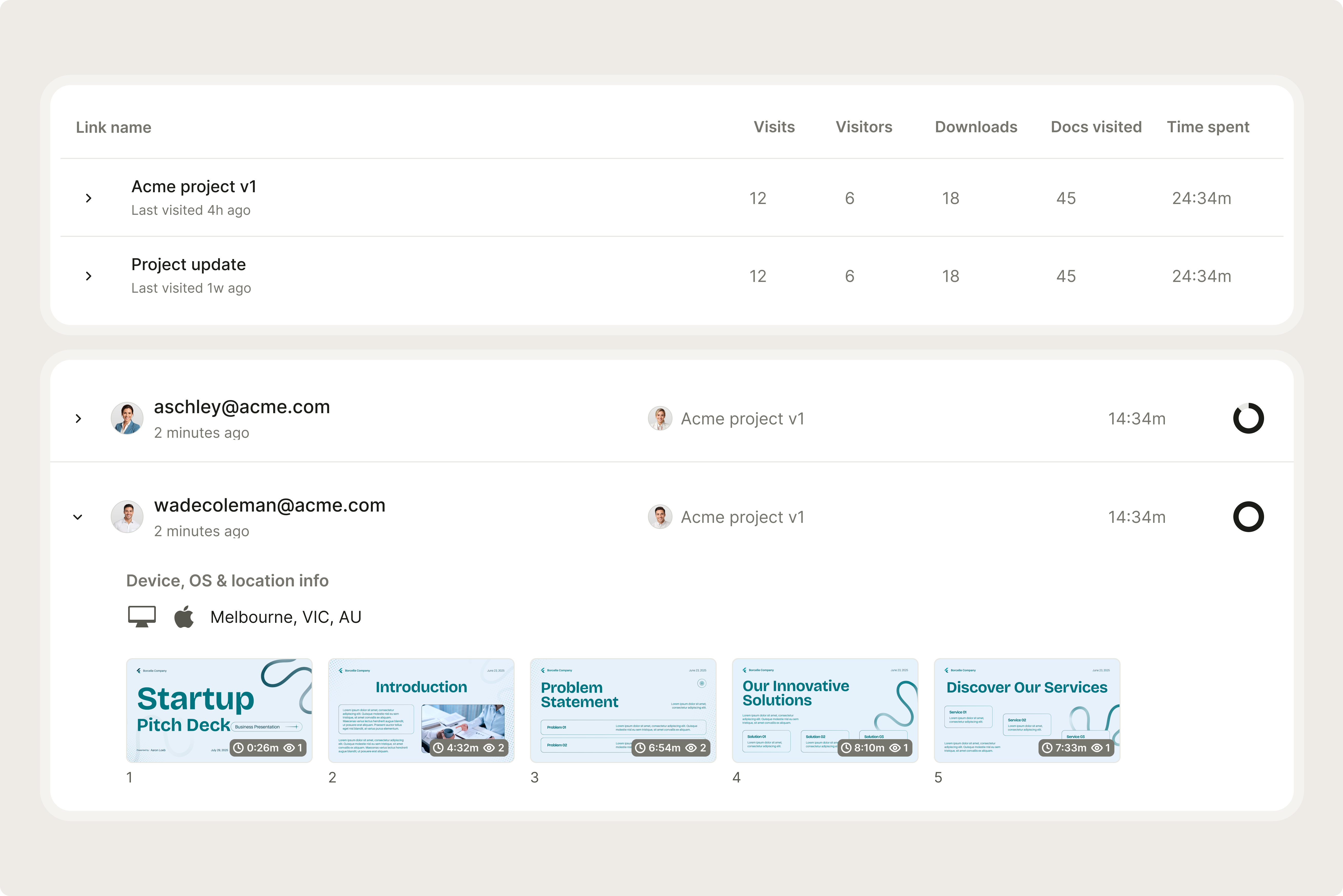
- 3.Get real-time alerts when investors open your docsReceive an instant notification when an investor opens your materials. See which slides got the most time.
Questions about Toronto food investors
- They care about unit economics and retail traction way more. A great story doesn't matter if your margins are broken. Unit economics always win.
- Ideally no - get at least $100K in annual retail sales first. Early traction from actual stores makes any pitch significantly stronger with food VCs.
- Seed investors ($500K-$2M checks) want product-market fit. Series A ($2M-$6M) want retail traction and path to cash flow sustainability.
- Start with 6-8 that match your stage and margins. Food VC is still a tight community - spray and pray gets you a reputation fast.
- Before your first investor meeting. Food investors will ask for supply agreements, POS data, and COGS models - have them organized in Ellty.
- No - they look at repeat customer rates and reorder velocity. A million Instagram followers with no repeat sales is a red flag, not a green light.