A verified list of 16 active Toronto SaaS investors deploying capital in 2026. Covers dedicated B2B software VCs, AI-focused funds, growth equity investors, and government-backed seed programs — with recent deals, check sizes, stage focus, and LinkedIn profiles for each.
Toronto closed $1.27B in SaaS deals in 2025 — a 38% jump from the prior year.
The city has 2,000 active SaaS companies, 6 unicorns, and a growing set of VCs who actually understand B2B software.
AI-native deals now make up 40% of software deal value in Canada, according to Inovia Capital's 2025 State of Software report.
That shift changed what Toronto investors want to see. If you're building SaaS without an AI strategy, expect harder questions in every first meeting.
The mix here runs from $250K pre-seed checks at MaRS IAF to $50M growth rounds at Georgian — and knowing which tier fits your stage changes your entire outreach approach.
Toronto SaaS investors: overview
| Stage | Check | Focus | Contact | |
|---|---|---|---|---|
| Georgian | Series A, B, Growth | $10M-$50M | B2B SaaS, AI, data infrastructure | georgian.io |
| Inovia Capital | Seed to Growth | $500K-$20M+ | SaaS, AI, fintech | inovia.vc |
| OMERS Ventures | Series A, B, C | $5M-$25M | Enterprise SaaS, fintech, vertical software | omersventures.com |
| Golden Ventures | Seed | $500K-$3M | B2B SaaS, fintech | golden.ventures |
| Round13 Capital | Series A, B | $3M-$15M | Vertical SaaS, enterprise software | round13capital.com |
| BDC Venture Capital | Seed to Growth | $500K-$10M+ | Enterprise tech, SaaS, all verticals | bdc.ca |
| Panache Ventures | Pre-seed, Seed | $250K-$2M | B2B SaaS, enterprise apps | panache.vc |
| Radical Ventures | Seed, Series A, B | $1M-$10M | AI-native SaaS, deep tech | radical.ventures |
| Framework Venture Partners | Seed, Series A | $1M-$5M | Fintech SaaS, vertical software | frameworkvc.com |
| Whitecap Venture Partners | Seed, Series A | $2M-$5M | B2B SaaS, medtech | whitecapvp.com |
| Ripple Ventures | Pre-seed | $250K-$750K | B2B SaaS, developer tools | ripplevc.com |
| Mantella Venture Partners | Seed, Series A | $500K-$2M | B2B SaaS, healthtech | mantella.ca |
| Relay Ventures | Seed, Series A | $1M-$10M | Enterprise SaaS, mobile-first software | relayventures.com |
| Brightspark Ventures | Seed, Series A | $500K-$3M | B2B SaaS, AI applications | brightspark.com |
| MaRS IAF | Pre-seed, Seed | Up to $1.5M | Enterprise SaaS, cleantech, Ontario mandate | marsiaf.com |
| Graphite Ventures | Pre-seed, Seed | $500K-$3M | B2B SaaS, enterprise software | graphitevc.com |
Share your SaaS deck with trackable links
Upload your pitch deck to Ellty and see which Toronto investors actually open your ARR and unit economics slides.
Start free 14-day trialWhat is a Toronto SaaS investor?
Toronto SaaS investors are VCs and growth funds backing cloud-based software companies in the Greater Toronto Area.
They're not a single category. Georgian and OMERS write $10M-$50M checks for companies with $2M+ ARR and a US expansion story. Golden Ventures and Ripple write first checks for founders with a working product and early customer conversations.
Most Toronto SaaS funds have at least one operator partner who built or scaled a software company. Georgian built a proprietary AI R&D team that embeds in portfolio companies. Inovia runs quarterly operator meetups for its portfolio founders to exchange notes on scaling.
Expect longer diligence timelines than US funds. Seed rounds close in 8-12 weeks. Series A takes 12-16 weeks. Toronto investors move deliberately but tend to be more founder-friendly once they commit.
Use Ellty to send trackable deck links before first meetings. If a partner spends time on your ARR cohorts but skips your team slide, you know where to anchor your pitch before the call.
Building with AI is now the price of admission for software startups. It's becoming increasingly uncommon to build a startup without an AI strategy.
16 Toronto SaaS investors in 2026
1. Georgian
The most technically sophisticated SaaS fund in Canada — they have a proprietary AI R&D team that works directly inside portfolio companies after investment.
- Recent deals: Replit $250M Series C lead (2026); Render $60M Series C (February 2026); Cyera $300M Series C co-investment; active AI and data infrastructure SaaS deployment through 2025-2026
- LinkedIn: Georgian LinkedIn
- Sector focus: B2B SaaS, AI/ML, data infrastructure, security software
- Stage focus: Series A, Series B, growth equity
- Location: Toronto, Ontario
- Website: georgian.io
2. Inovia Capital
Canada's most active multi-stage fund with $2.5B USD AUM — backed Wealthsimple to a $10B valuation, co-led Cohere's $500M Series D, and launched a $100M Venture Scientist Fund with Mila in January 2026.
- Recent deals: Toyo $4.3M seed (February 2026); Mila Venture Scientist Fund launch (January 2026); Spellbook $50M Series B (October 2025); Flare $30M growth (November 2025)
- LinkedIn: Inovia Capital LinkedIn
- Sector focus: B2B SaaS, AI-native software, fintech, enterprise applications
- Stage focus: Seed to growth
- Location: Toronto, Ontario (also Montreal, Calgary, San Francisco, London)
- Website: inovia.vc
3. OMERS Ventures
Pension-backed with patient capital and long time horizons — refocused on Canada in 2025 and writing $5M-$25M tickets from their $750M Fund IV out of Toronto.
- Recent deals: Turnstile $29M co-investor (February 2026); Arize AI $70M Series C co-investor (February 2025); 98 portfolio companies including 10 unicorns
- LinkedIn: OMERS Ventures LinkedIn
- Sector focus: Enterprise SaaS, fintech, vertical software, AI infrastructure
- Stage focus: Series A, Series B, Series C
- Location: Toronto, Ontario (also London, Palo Alto)
- Website: omersventures.com
4. Golden Ventures
Toronto's most active seed fund and a Toronto Tech Week 2026 founding partner — writes $500K-$3M first checks from their $100M Fund V and co-invests with Inovia on follow-on rounds.
- Recent deals: Tilt $7.1M seed (September 2025); Cybrid $10M Series A co-investment (October 2025); NiaHealth $5.75M seed (June 2025); swXtch.io seed (April 2026)
- LinkedIn: Golden Ventures LinkedIn
- Sector focus: B2B SaaS, fintech, consumer tech
- Stage focus: Seed
- Location: Toronto, Ontario
- Website: golden.ventures
5. Round13 Capital
Vertical SaaS and growth equity specialist — prefers companies with $1M+ ARR and a clear US expansion story, and can follow through to Series B without a new lead.
- Recent deals: $12M enterprise AI control systems investment (February 2026); active vertical SaaS deployment in proptech and logistics software (2025); portfolio includes League and PointClickCare
- LinkedIn: Round13 Capital LinkedIn
- Sector focus: Vertical SaaS, enterprise software, consumer platforms
- Stage focus: Series A, Series B
- Location: Toronto, Ontario
- Website: round13capital.com
Before sending your pitch deck to any of these funds, upload it to Ellty and create a unique trackable link for each investor. You'll see which partners open your ARR slides and which skip straight to the team page — that tells you where to focus before the call.
Organize your SaaS due diligence before investors ask
Set up an Ellty data room with your financial model, cap table, and cohort analysis before your first Series A meeting.
Start free 14-day trial6. BDC Venture Capital
Government-backed and co-invests on nearly every Toronto SaaS deal — rarely leads, but moves fast once another fund commits, and you want them in your syndicate for the SR&ED benefit story.
- Recent deals: Cohere $500M Series D co-investment (August 2025); 700+ portfolio companies across Canada; $200M committed to tech-for-legacy-industries program (August 2025)
- LinkedIn: BDC Venture Capital LinkedIn
- Sector focus: Enterprise tech, SaaS, cleantech, healthcare IT — all verticals
- Stage focus: Seed to growth
- Location: Toronto, Ontario (national offices)
- Website: bdc.ca
7. Panache Ventures
Canada's top pre-seed fund with 48+ SaaS investments and 5 new checks written in the first five months of 2026 alone — sector-agnostic and known for fast decisions under $2M.
- Recent deals: Parable $16.5M seed co-investment (November 2025); Cybrid $10M Series A participation (October 2025); multiple B2B SaaS pre-seed rounds through 2025-2026
- LinkedIn: Panache Ventures LinkedIn
- Sector focus: B2B SaaS, vertical software, enterprise applications
- Stage focus: Pre-seed, Seed
- Location: Montreal/Toronto (national fund)
- Website: panache.vc
8. Radical Ventures
Deep AI focus with $650M Fund 4 closed in October 2025 — the right fund if your SaaS has genuine AI infrastructure differentiation, not just an AI assistant bolted on top.
- Recent deals: Cohere $500M Series D co-lead at $6.8B (August 2025); Waabi $1B co-investment (January 2026) — the largest Canadian raise in history; multiple AI-native seed investments through 2025
- LinkedIn: Radical Ventures LinkedIn
- Sector focus: AI-native SaaS, deep tech, AI infrastructure
- Stage focus: Seed, Series A, Series B
- Location: Toronto, Ontario
- Website: radical.ventures
9. Framework Venture Partners
Fintech SaaS specialist that led several vertical software Series A rounds in 2025 — understands embedded finance and insurtech models better than most Toronto generalist funds.
- Recent deals: Multiple Series A rounds in proptech and logistics vertical SaaS (2025); active in embedded finance and insurtech SaaS; deployment throughout 2025-2026
- LinkedIn: Framework Venture Partners LinkedIn
- Sector focus: Fintech SaaS, vertical software, insurtech, embedded payments
- Stage focus: Seed, Series A
- Location: Toronto, Ontario
- Website: frameworkvc.com
10. Whitecap Venture Partners
One of Canada's oldest B2B SaaS funds — they respond to cold emails from founders with enterprise customer traction, which is rare for a Toronto fund at their check size.
- Recent deals: Frugal AI $5M seed participation (November 2025); Felix Health Series A co-investment; active in enterprise software and cybersecurity through 2025; raising Fund VI with former OMERS Ventures Managing Partner Damien Steel
- LinkedIn: Whitecap Venture Partners LinkedIn
- Sector focus: B2B SaaS, medtech, cybersecurity
- Stage focus: Seed, Series A
- Location: Toronto, Ontario
- Website: whitecapvp.com
Set up an Ellty data room with your financial model, cap table, and ARR cohort analysis before any Whitecap or Round13 meeting. Both funds move to diligence requests within 48 hours of a good first call — being ready cuts 1-2 weeks off your close timeline.
11. Ripple Ventures
Pre-seed B2B SaaS specialist that regularly leads rounds and sets terms — rare for a Canadian fund at that stage, and they don't just participate, they anchor.
- Recent deals: Multiple pre-seed B2B SaaS investments in 2025; active in developer tools and enterprise workflow automation; frequent lead investor at pre-seed
- LinkedIn: Ripple Ventures LinkedIn
- Sector focus: B2B SaaS, developer tools, enterprise workflow
- Stage focus: Pre-seed
- Location: Toronto, Ontario
- Website: ripplevc.com
12. Mantella Venture Partners
Micro VC with 26 portfolio companies and deep co-investment relationships with Whitecap and BDC — solid for a first check of $500K-$2M alongside a more established co-investor.
- Recent deals: Felix Health Series A co-investment (portfolio active); Altrio $8M Series A participation (portfolio active); multiple early-stage enterprise SaaS investments through 2024-2025
- LinkedIn: Mantella Venture Partners LinkedIn
- Sector focus: B2B SaaS, healthtech, real estate tech
- Stage focus: Seed, Series A
- Location: Toronto, Ontario
- Website: mantella.ca
13. Relay Ventures
Mobile-first enterprise SaaS fund with a track record in digital media and fintech — if your product has a strong mobile workflow component, they're a better fit than generalist funds.
- Recent deals: Trusty seed round co-lead with Graphite Ventures (2025); active mobile-first B2B SaaS deployment through 2025-2026; prior exits include Quickplay Media and Ecobee
- LinkedIn: Relay Ventures LinkedIn
- Sector focus: Enterprise SaaS, mobile-first software, digital media, fintech
- Stage focus: Seed, Series A
- Location: Toronto, Ontario
- Website: relayventures.com
14. Brightspark Ventures
One of Canada's oldest seed funds — investing in Canadian software since 1999, a Toronto Tech Week 2026 founding partner, and consistently active in early-stage B2B SaaS and AI applications.
- Recent deals: Multiple seed investments in AI-enabled SaaS through 2025; co-hosted Toronto Tech Week 2026 investor events (May 2026); consistent early-stage B2B SaaS deployment
- LinkedIn: Brightspark Ventures LinkedIn
- Sector focus: B2B SaaS, AI applications, enterprise software
- Stage focus: Seed, Series A
- Location: Toronto, Ontario
- Website: brightspark.com
15. MaRS Investment Accelerator Fund
Ontario's most active seed-stage fund — reached its 200th investment milestone in January 2026 and is the most realistic first-check entry point for Ontario-based SaaS founders pre-revenue.
- Recent deals: TimeSmartAI (April 2026); MedReddie (November 2025); 200th investment milestone (January 2026); $100M+ deployed since 2008 across 200+ Ontario companies
- LinkedIn: MaRS IAF LinkedIn
- Sector focus: Enterprise SaaS, healthtech, cleantech software — Ontario-based mandate
- Stage focus: Pre-seed, Seed
- Location: MaRS Discovery District, 101 College St, Toronto, ON
- Website: marsiaf.com
16. Graphite Ventures
The Toronto seed fund that evolved from MaRS IAF — backed TimeSmartAI alongside MaRS in April 2026 and runs a $110M Fund IV actively deploying into enterprise SaaS and B2B software.
- Recent deals: TimeSmartAI (April 2026); myStoriaAI $1.6M seed (April 2026); Trusty seed co-lead with Relay Ventures (2025); Mycroft investment (2025); $110M Fund IV closed August 2023
- LinkedIn: Graphite Ventures LinkedIn
- Sector focus: B2B SaaS, enterprise software, consumer software
- Stage focus: Pre-seed, Seed
- Location: Toronto, Ontario
- Website: graphitevc.com
How Toronto SaaS investors evaluate deals
Most Toronto SaaS investors focus on three things before anything else: ARR trajectory, net revenue retention, and the US expansion story.
They've seen too many Canadian companies stall at $3M-$5M ARR serving only the domestic mid-market. If you can't explain how you reach $20M+ ARR in the US, expect hard questions in the first meeting.
Toronto investors are more conservative about burn than their SF counterparts. The 2025 Canadian VC market had its worst fundraising year since 2016 per RBCx data — surviving funds got selective about burn multiples and runway.
Set up an Ellty data room with your ARR cohort analysis, NRR data, and US customer pipeline before any partner meeting. Toronto investors request diligence materials within 48 hours of a good first call.
If you send your deck as a trackable Ellty link, you'll see which investors spend time on your retention data and which skim to the team slide. That tells you who's actually evaluating versus just collecting decks.
Where Toronto SaaS deals happen
Toronto Tech Week (May 25-29, 2026) is the single best week to stack investor meetings. Georgian, Inovia, Golden Ventures, and Brightspark all run events that week — over 1,000 Canadian builders and global investors attend the Homecoming mainstage event.
SAAS NORTH in Ottawa (November 4-5, 2026) is where Canada's SaaS investor community gathers. OMERS, Georgian, and Inovia all run sessions and panels there.
CDL at Rotman and DMZ at Toronto Metropolitan University both feed directly into Golden Ventures, Whitecap, and BDC. Getting into either program gives you warm intros to most funds on this list.
Upload your deck to Ellty before Toronto Tech Week and create a unique link per fund. You'll know which partners reviewed your materials between events instead of guessing.
How to verify a Toronto fund is still deploying
Checking fund activity before outreach saves weeks of wasted meetings. The 2023-2025 market forced several Canadian funds to slow deployment significantly.
Check Crunchbase or Tracxn for new deals closed in the past six months. A fund with no new investments since late 2024 is likely between funds or has shifted focus — confirming before your outreach is basic research.
Ask portfolio founders directly. Toronto's tech community is tight enough that you can get honest intel through one or two messages. Most founders will tell you which funds moved fast and which dragged diligence for four months before passing.
Dead portfolio companies are also a signal worth checking. Funds that backed multiple companies that ran out of runway often indicate pressure from LPs to slow down new commitments.
How to pitch a Toronto SaaS investor
Specific steps for B2B software founders raising from Toronto's most active funds in 2026.
- 1.Find the right partner before you send anythingMatch your stage and vertical to the specific partner at each fund who led similar deals in the past 12 months. Emailing a fintech partner at Inovia for your HR SaaS pitch wastes your best intro and burns the relationship.
- 2.Get warm introductions through portfolio foundersFind two or three founders in the target fund's portfolio and message them directly on LinkedIn. A two-sentence email from a portfolio founder gets your deck read — cold outreach to Toronto VCs has under 5% response rate.
- 3.Lead every pitch with ARR, growth rate, and NRROpen your pitch with traction metrics before explaining the product. Toronto investors have seen your market before — they need proof you're winning, not education on why the problem exists.
- 4.Send a trackable deck link before each meetingUpload your deck to Ellty and send a unique trackable link to each investor before your call. You'll see which slides they reviewed and how long they spent on each — that shapes how you open the conversation.
- 5.Have your data room ready before the first meetingSet up an Ellty data room with your financial model, cap table, and cohort analysis before any partner meeting. Toronto investors request diligence materials within 48 hours — being ready shortens close timelines by 1-2 weeks.
How Ellty helps you land a Toronto SaaS investor
Now that you know the investors, here's how to run a process that doesn't look amateur. Toronto VCs review hundreds of decks per year — organized materials with real-time engagement data put you ahead of founders still emailing PDFs from their Downloads folder.
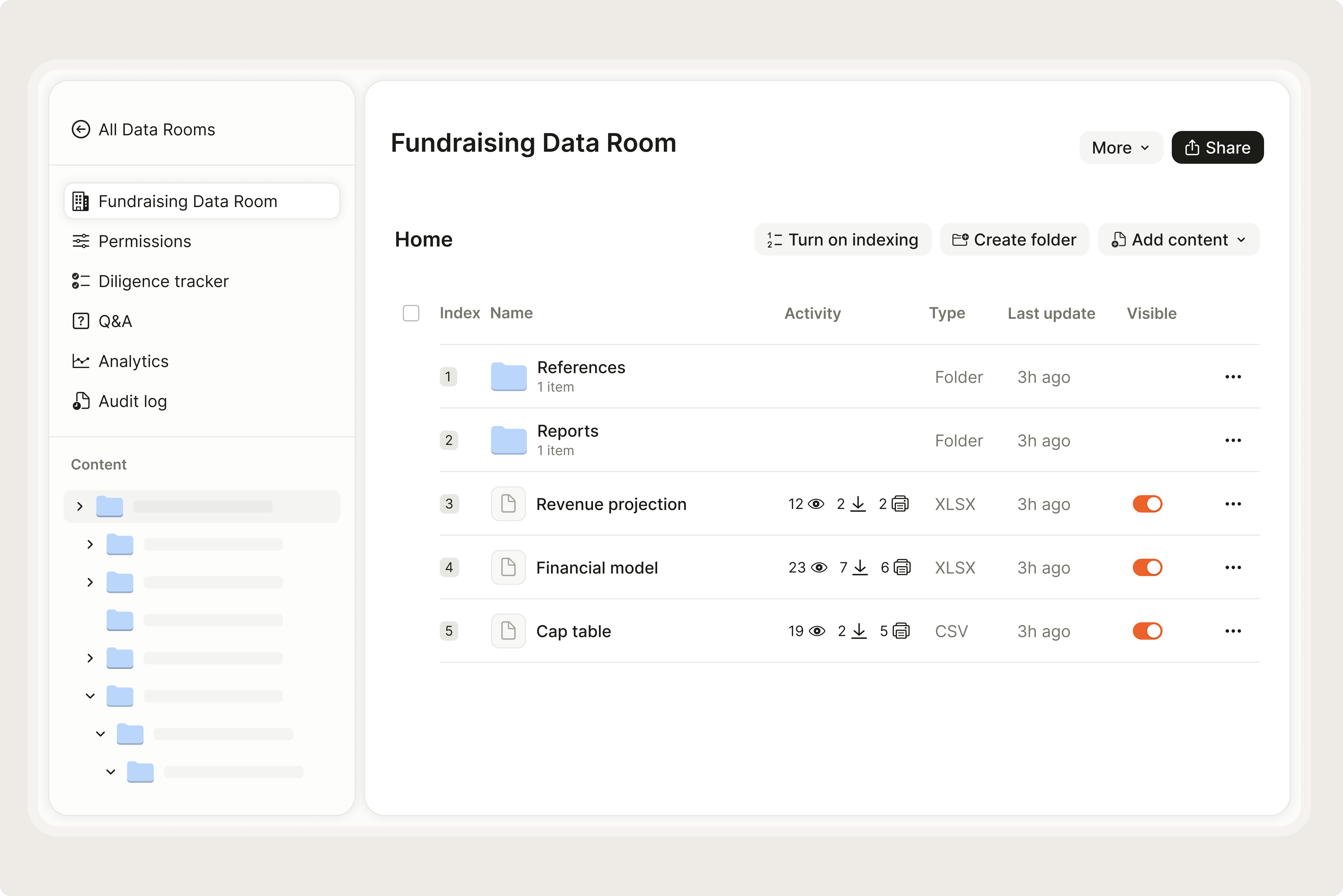
- 1.Build your SaaS data room before your first outreachCreate an Ellty data room and upload your pitch deck, ARR cohort analysis, financial model, and cap table. Replace scattered Dropbox folders with a single professional link — Inovia and OMERS investors see organized materials and take you more seriously before the call.
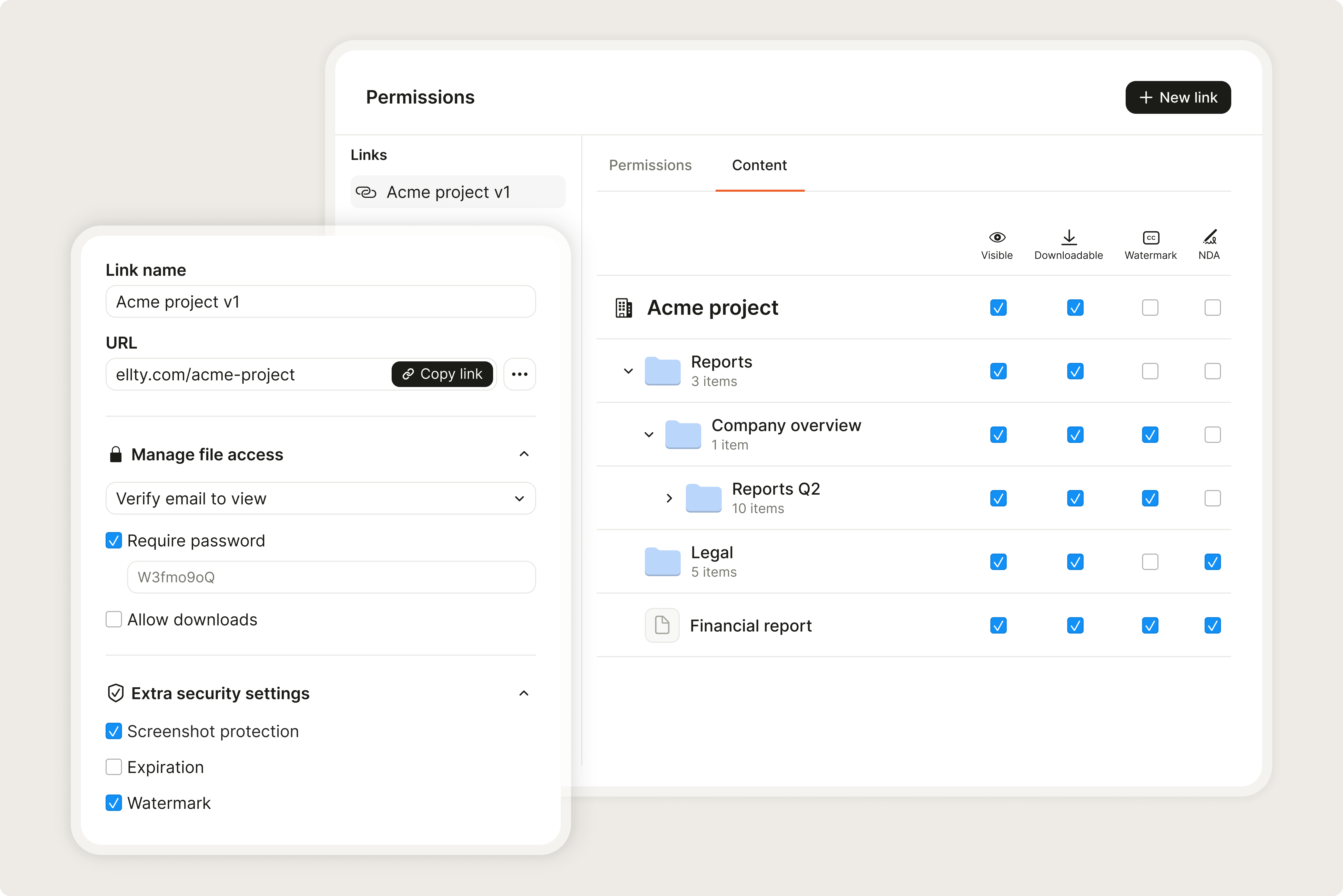
- 2.Set permissions and control who sees your financialsGenerate a separate trackable link for each investor — Georgian, Golden Ventures, Panache, OMERS. Require email verification before viewing. Enable screenshot protection on your cap table and financial projections. Know the moment a partner forwards your link to a co-investor.
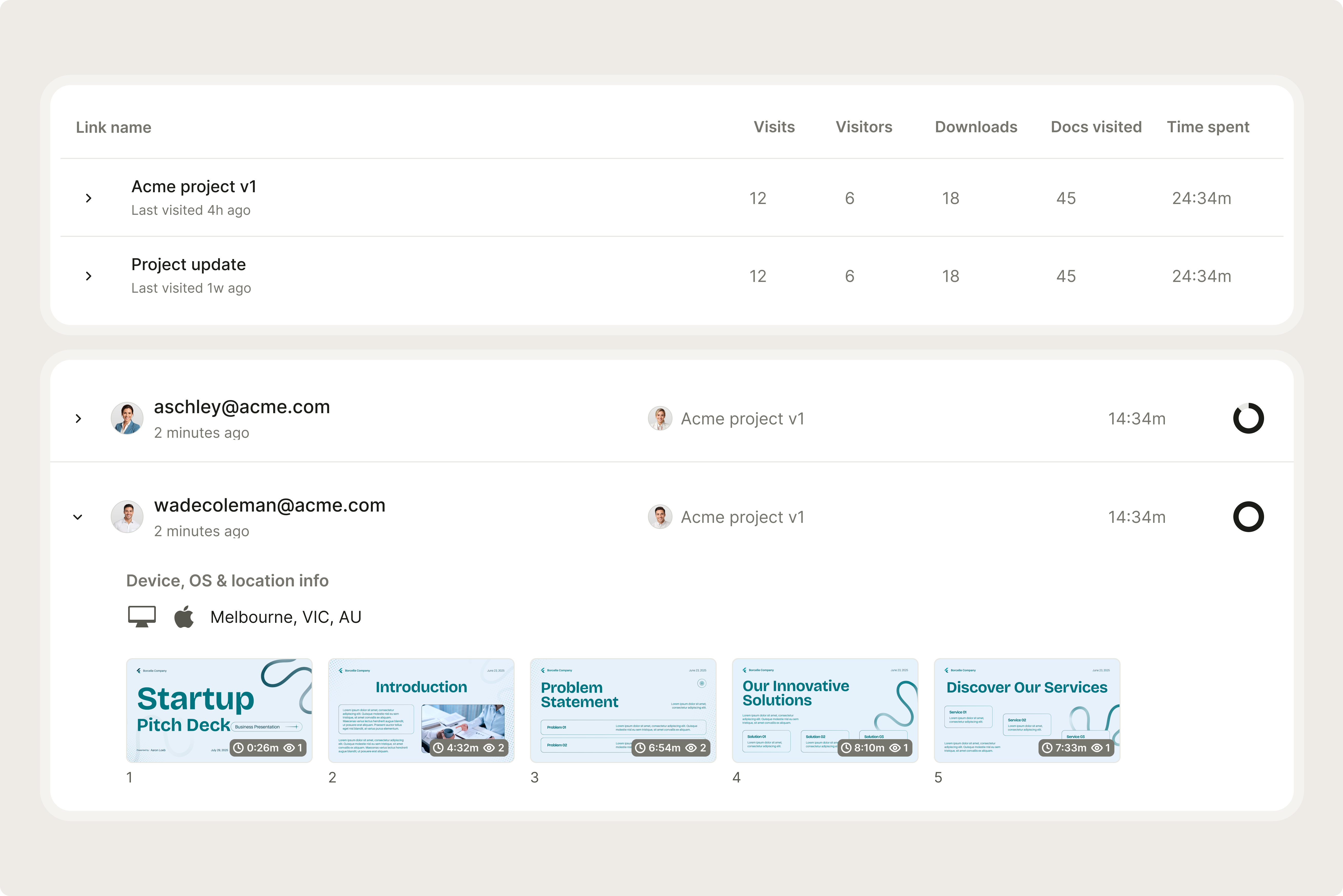
- 3.Get real-time alerts when investors open your deckReceive an instant notification when an investor opens your materials. See which slides got the most time — if an Inovia partner spends 8 minutes on your retention cohorts, lead with retention on the follow-up call. Follow up the same day engagement is live, not on a weekly schedule.
Questions Toronto SaaS founders ask before raising
- Check Crunchbase or Tracxn for new investments in the past six months. If there are no new deals, they're likely between funds or slowing activity. Ask a portfolio founder directly — Toronto's tech community is small enough to get honest intel in one conversation without burning a relationship.
- Most don't. Inovia, OMERS, and Georgian regularly invest in Delaware corporations with Canadian founding teams. Government-linked funds like BDC prefer Canadian entities but will work with mixed incorporation structures, especially for founders expanding to the US market.
- Most Series A investors want $1M-$3M ARR with 100%+ net revenue retention. Inovia targets $3M+ ARR for their core fund. OMERS Ventures wants evidence of US market traction alongside your Canadian ARR number. Showing both matters more than hitting a specific dollar figure.
- Target both simultaneously. The strongest Canadian raise pattern in 2026 is a Canadian lead investor with a US co-investor. Canadian leads understand early operating context and government incentive structures. US co-investors unlock enterprise customer introductions you can't access through Toronto alone.
- Before your first investor meetings, not after. OMERS and Inovia request financials and cohort data within 48 hours of a good first call. Having an Ellty data room ready with your ARR model, cap table, and customer contracts shows you're organized and shortens your close timeline by 1-2 weeks.
- Most do if you came through a warm intro. Use Ellty trackable links so you know which slides they reviewed before your meeting — that tells you how prepared they are and which sections to emphasize. If a partner didn't open your deck at all, they're probably not interested and are taking a courtesy call.